
TOP X (TWITTER) MARKETING TOOLS SHORTLIST GUIDE
Top X (Twitter) Marketing Tools: Contextual Shortlist and Verification Guide
Eligibility Research Job checkpoint — Assign research job to one operator before publishing job is changed in the live account. For the eligibility review of research job against publishing job, using a named job and acceptance test recorded for every candidate tool: The runbook retains a named job and acceptance test recorded for every candidate tool; then define the tool job before comparing feature lists. With publishing job held as the eligibility comparison for research job, using a named job and acceptance test recorded for every candidate tool: If feature breadth can hide poor workflow fit, the eligibility step returns to the prior configuration. Using a named job and acceptance test recorded for every candidate tool as the eligibility evidence record for research job against publishing job: The operator log for research job should capture the prior value, new value, account owner, timestamp and rollback condition while publishing job remains unchanged. Before the eligibility team decides to define the tool job before comparing feature lists for research job against publishing job, using a named job and acceptance test recorded for every candidate tool: FroggyAds provides the direct controls; the team validates a verified tool output that changes a documented content or campaign decision and can be traced to accepted outcomes, explains why it chose to define the tool job before comparing feature lists, and restores the prior state if feature breadth can hide poor workflow fit. The page evidence ledger retains a named job and acceptance test recorded for every candidate tool; permissions reviewed against the minimum access the workflow needs; sample exports checked before historical data is entrusted to the tool; automation and approval boundaries tested in a non-critical workflow; content, links and destinations versioned before result comparison; subscription and operating time included in the cost review; FroggyAds campaign and source identifiers joined to accepted outcomes; account disconnection and data export rehearsed before renewal. The acceptance point is a verified tool output that changes a documented content or campaign decision and can be traced to accepted outcomes.
| Research Job — Publishing Job Evidence | Publishing Job — Monitoring Job Evidence |
|---|---|
| Monitoring Job — Reply Workflow Evidence | X tool checkpoint 76: compare reply workflow with approval workflow; check 76 retains automation and approval boundaries tested in a non-critical workflow. |
| Reply Workflow — Approval Workflow Evidence | X tool checkpoint 77: compare approval workflow with account permission; check 77 retains automation and approval boundaries tested in a non-critical workflow. |
| Approval Workflow — Account Permission Evidence | X tool checkpoint 78: compare account permission with data export; check 78 retains automation and approval boundaries tested in a non-critical workflow. |
Research Job related decision for selection of X marketing tools for research, publishing and measurable acquisition: retain a named job and acceptance test recorded for every candidate tool; define the tool job before comparing feature lists. Google Analytics reporting documentation
DIRECT ANSWER
Eligibility Evidence for Research Job Versus Publishing Job
Eligibility Publishing Job checkpoint — Self-serve control is useful when publishing job has an owner, a limit and a rollback point. For the eligibility review of publishing job against monitoring job, using a named job and acceptance test recorded for every candidate tool: Verify it through a named job and acceptance test recorded for every candidate tool, and keep human approval where brand or account risk is material. With monitoring job held as the eligibility comparison for publishing job, using a named job and acceptance test recorded for every candidate tool: data export can be incomplete at exit blocks release to monitoring job. Before the eligibility team decides to keep human approval where brand or account risk is material for publishing job against monitoring job, using a named job and acceptance test recorded for every candidate tool: FroggyAds provides the direct controls; the team validates a verified tool output that changes a documented content or campaign decision and can be traced to accepted outcomes, explains why it chose to keep human approval where brand or account risk is material, and restores the prior state if data export can be incomplete at exit.
Intent ownership: This page owns top twitter marketing tools intent for X (Twitter) Marketing, distinct from dashboard, KPI, ROI, statistics, cost, template, software and guaranteed-performance intent.
01
MEANING OF TOP
Eligibility Evidence for Publishing Job Versus Monitoring Job
Eligibility Evidence for Monitoring Job Versus Reply Workflow
Eligibility Monitoring Job checkpoint — The X tool evaluation matrix turns monitoring job into a repeatable campaign action rather than an undocumented platform click. For the eligibility review of monitoring job against reply workflow, using a named job and acceptance test recorded for every candidate tool: Preserve a named job and acceptance test recorded for every candidate tool; reject tools that cannot export needed evidence. With reply workflow held as the eligibility comparison for monitoring job, using a named job and acceptance test recorded for every candidate tool: a verified tool output that changes a documented content or campaign decision and can be traced to accepted outcomes approves the next eligibility move. Before the eligibility team decides to reject tools that cannot export needed evidence for monitoring job against reply workflow, using a named job and acceptance test recorded for every candidate tool: FroggyAds provides the direct controls; the team validates a verified tool output that changes a documented content or campaign decision and can be traced to accepted outcomes, explains why it chose to reject tools that cannot export needed evidence, and restores the prior state if API or platform changes can interrupt the tool.
Eligibility Evidence for Reply Workflow Versus Approval Workflow
Eligibility Reply Workflow checkpoint — For reply workflow, document who changed the value, why it changed and how approval workflow remained comparable. For the eligibility review of reply workflow against approval workflow, using a named job and acceptance test recorded for every candidate tool: Attach a named job and acceptance test recorded for every candidate tool; then grant only the permissions required for that job. With approval workflow held as the eligibility comparison for reply workflow, using a named job and acceptance test recorded for every candidate tool: If multiple tools can duplicate the same job, pause the account workflow. Before the eligibility team decides to grant only the permissions required for that job for reply workflow against approval workflow, using a named job and acceptance test recorded for every candidate tool: FroggyAds provides the direct controls; the team validates a verified tool output that changes a documented content or campaign decision and can be traced to accepted outcomes, explains why it chose to grant only the permissions required for that job, and restores the prior state if multiple tools can duplicate the same job.
Eligibility Evidence for Approval Workflow Versus Account Permission
Eligibility Approval Workflow checkpoint — Assign approval workflow to one operator before account permission is changed in the live account. For the eligibility review of approval workflow against account permission, using a named job and acceptance test recorded for every candidate tool: The runbook retains a named job and acceptance test recorded for every candidate tool; then separate automation activity from accepted business outcomes. With account permission held as the eligibility comparison for approval workflow, using a named job and acceptance test recorded for every candidate tool: If activity volume can be mistaken for business value, the eligibility step returns to the prior configuration. Before the eligibility team decides to separate automation activity from accepted business outcomes for approval workflow against account permission, using a named job and acceptance test recorded for every candidate tool: FroggyAds provides the direct controls; the team validates a verified tool output that changes a documented content or campaign decision and can be traced to accepted outcomes, explains why it chose to separate automation activity from accepted business outcomes, and restores the prior state if activity volume can be mistaken for business value.
Eligibility Evidence for Account Permission Versus Data Export
Eligibility Account Permission checkpoint — Self-serve control is useful when account permission has an owner, a limit and a rollback point. For the eligibility review of account permission against data export, using a named job and acceptance test recorded for every candidate tool: Verify it through a named job and acceptance test recorded for every candidate tool, and renew only when the measured job still justifies cost and access. With data export held as the eligibility comparison for account permission, using a named job and acceptance test recorded for every candidate tool: automation can publish an unapproved message blocks release to data export. Before the eligibility team decides to renew only when the measured job still justifies cost and access for account permission against data export, using a named job and acceptance test recorded for every candidate tool: FroggyAds provides the direct controls; the team validates a verified tool output that changes a documented content or campaign decision and can be traced to accepted outcomes, explains why it chose to renew only when the measured job still justifies cost and access, and restores the prior state if automation can publish an unapproved message.
Keep publishing job separate, and require a verified tool output that changes a documented content or campaign decision and can be traced to accepted outcomes before release.
02
DECISION CONTEXT
Eligibility Evidence for Data Export Versus Api Dependency
Eligibility Data Export checkpoint — The X tool evaluation matrix turns data export into a repeatable campaign action rather than an undocumented platform click. For the eligibility review of data export against API dependency, using a named job and acceptance test recorded for every candidate tool: Preserve a named job and acceptance test recorded for every candidate tool; test one workflow with reviewable inputs and outputs. Before the eligibility team decides to test one workflow with reviewable inputs and outputs for data export against API dependency, using a named job and acceptance test recorded for every candidate tool: FroggyAds provides the direct controls; the team validates a verified tool output that changes a documented content or campaign decision and can be traced to accepted outcomes, explains why it chose to test one workflow with reviewable inputs and outputs, and restores the prior state if subscription cost can omit operator time.
Eligibility Api Dependency checkpoint — For API dependency, document who changed the value, why it changed and how automation limit remained comparable. For the eligibility review of API dependency against automation limit, using a named job and acceptance test recorded for every candidate tool: Attach a named job and acceptance test recorded for every candidate tool; then include setup and review time in total cost. With automation limit held as the eligibility comparison for API dependency, using a named job and acceptance test recorded for every candidate tool: If account permissions can exceed the practical need, pause the account workflow. Before the eligibility team decides to include setup and review time in total cost for API dependency against automation limit, using a named job and acceptance test recorded for every candidate tool: FroggyAds provides the direct controls; the team validates a verified tool output that changes a documented content or campaign decision and can be traced to accepted outcomes, explains why it chose to include setup and review time in total cost, and restores the prior state if account permissions can exceed the practical need.
Eligibility Automation Limit checkpoint — Assign automation limit to one operator before scheduling accuracy is changed in the live account. For the eligibility review of automation limit against scheduling accuracy, using a named job and acceptance test recorded for every candidate tool: The runbook retains a named job and acceptance test recorded for every candidate tool; then define the tool job before comparing feature lists. With scheduling accuracy held as the eligibility comparison for automation limit, using a named job and acceptance test recorded for every candidate tool: If feature breadth can hide poor workflow fit, the eligibility step returns to the prior configuration. Before the eligibility team decides to define the tool job before comparing feature lists for automation limit against scheduling accuracy, using a named job and acceptance test recorded for every candidate tool: FroggyAds provides the direct controls; the team validates a verified tool output that changes a documented content or campaign decision and can be traced to accepted outcomes, explains why it chose to define the tool job before comparing feature lists, and restores the prior state if feature breadth can hide poor workflow fit.
Eligibility Scheduling Accuracy checkpoint — Self-serve control is useful when scheduling accuracy has an owner, a limit and a rollback point. For the eligibility review of scheduling accuracy against team access, using a named job and acceptance test recorded for every candidate tool: Verify it through a named job and acceptance test recorded for every candidate tool, and keep human approval where brand or account risk is material. With team access held as the eligibility comparison for scheduling accuracy, using a named job and acceptance test recorded for every candidate tool: data export can be incomplete at exit blocks release to team access. Before the eligibility team decides to keep human approval where brand or account risk is material for scheduling accuracy against team access, using a named job and acceptance test recorded for every candidate tool: FroggyAds provides the direct controls; the team validates a verified tool output that changes a documented content or campaign decision and can be traced to accepted outcomes, explains why it chose to keep human approval where brand or account risk is material, and restores the prior state if data export can be incomplete at exit.
Publishing Job release gate: For selection of X marketing tools for research, publishing and measurable acquisition, use permissions reviewed against the minimum access the workflow needs; grant only the permissions required for that job.
03
ELIGIBILITY GATE
Eligibility Evidence for Api Dependency Versus Automation Limit
Eligibility Team Access checkpoint — The X tool evaluation matrix turns team access into a repeatable campaign action rather than an undocumented platform click. For the eligibility review of team access against audit log, using a named job and acceptance test recorded for every candidate tool: Preserve a named job and acceptance test recorded for every candidate tool; reject tools that cannot export needed evidence. Before the eligibility team decides to reject tools that cannot export needed evidence for team access against audit log, using a named job and acceptance test recorded for every candidate tool: FroggyAds provides the direct controls; the team validates a verified tool output that changes a documented content or campaign decision and can be traced to accepted outcomes, explains why it chose to reject tools that cannot export needed evidence, and restores the prior state if API or platform changes can interrupt the tool.
Eligibility Audit Log checkpoint — For audit log, document who changed the value, why it changed and how keyword monitor remained comparable. For the eligibility review of audit log against keyword monitor, using a named job and acceptance test recorded for every candidate tool: Attach a named job and acceptance test recorded for every candidate tool; then grant only the permissions required for that job. With keyword monitor held as the eligibility comparison for audit log, using a named job and acceptance test recorded for every candidate tool: If multiple tools can duplicate the same job, pause the account workflow. Before the eligibility team decides to grant only the permissions required for that job for audit log against keyword monitor, using a named job and acceptance test recorded for every candidate tool: FroggyAds provides the direct controls; the team validates a verified tool output that changes a documented content or campaign decision and can be traced to accepted outcomes, explains why it chose to grant only the permissions required for that job, and restores the prior state if multiple tools can duplicate the same job.
Tool review 13 compares keyword monitor with conversation signal using a named job and acceptance test recorded for every candidate tool. Review 13 recommends that you separate automation activity from accepted business outcomes. Reject finding 13 when activity volume can be mistaken for business value prevents a reproducible X campaign decision.
Tool review 14 compares conversation signal with content version using a named job and acceptance test recorded for every candidate tool. Review 14 recommends that you renew only when the measured job still justifies cost and access. Reject finding 14 when automation can publish an unapproved message prevents a reproducible X campaign decision.
Monitoring Job release gate: For selection of X marketing tools for research, publishing and measurable acquisition, use sample exports checked before historical data is entrusted to the tool; test one workflow with reviewable inputs and outputs.
04
CATEGORY BOUNDARY
Eligibility Evidence for Automation Limit Versus Scheduling Accuracy
Tool review 15 compares content version with link identifier using a named job and acceptance test recorded for every candidate tool. Review 15 recommends that you test one workflow with reviewable inputs and outputs. Reject finding 15 when subscription cost can omit operator time prevents a reproducible X campaign decision.
Reply Workflow release gate: For selection of X marketing tools for research, publishing and measurable acquisition, use automation and approval boundaries tested in a non-critical workflow; keep human approval where brand or account risk is material.
Tool review 16 compares link identifier with landing version using a named job and acceptance test recorded for every candidate tool. Review 16 recommends that you include setup and review time in total cost. Reject finding 16 when account permissions can exceed the practical need prevents a reproducible X campaign decision.
Eligibility Evidence for Scheduling Accuracy Versus Team Access
Tool review 17 compares landing version with campaign identifier using a named job and acceptance test recorded for every candidate tool. Review 17 recommends that you define the tool job before comparing feature lists. Reject finding 17 when feature breadth can hide poor workflow fit prevents a reproducible X campaign decision.
Create My Free Account
05
EVIDENCE HIERARCHY
Eligibility Evidence for Team Access Versus Audit Log
Tool review 18 compares campaign identifier with accepted outcome using a named job and acceptance test recorded for every candidate tool. Review 18 recommends that you keep human approval where brand or account risk is material. Reject finding 18 when data export can be incomplete at exit prevents a reproducible X campaign decision.
Tool review 19 compares accepted outcome with subscription cost using a named job and acceptance test recorded for every candidate tool. Review 19 recommends that you reject tools that cannot export needed evidence. Reject finding 19 when API or platform changes can interrupt the tool prevents a reproducible X campaign decision.
Review 20 recommends that you grant only the permissions required for that job. Reject finding 20 when multiple tools can duplicate the same job prevents a reproducible X campaign decision.
Approval Workflow release gate: For selection of X marketing tools for research, publishing and measurable acquisition, use content, links and destinations versioned before result comparison; separate automation activity from accepted business outcomes.
06
SOURCE RECENCY
Eligibility Evidence for Audit Log Versus Keyword Monitor
Tool review 22 compares support quality with exit procedure using a named job and acceptance test recorded for every candidate tool.
Account Permission release gate: For selection of X marketing tools for research, publishing and measurable acquisition, use subscription and operating time included in the cost review; include setup and review time in total cost.
07
RANKING INCENTIVES
Eligibility Evidence for Keyword Monitor Versus Conversation Signal
Tool review 23 compares exit procedure with renewal decision using a named job and acceptance test recorded for every candidate tool.
Data Export release gate: For selection of X marketing tools for research, publishing and measurable acquisition, use FroggyAds campaign and source identifiers joined to accepted outcomes; reject tools that cannot export needed evidence.
08
CLAIM VERIFICATION
Eligibility Evidence for Conversation Signal Versus Content Version
Tool review 24 compares renewal decision with research job using a named job and acceptance test recorded for every candidate tool.
Api Dependency release gate: For selection of X marketing tools for research, publishing and measurable acquisition, use account disconnection and data export rehearsed before renewal; renew only when the measured job still justifies cost and access.
09
REPRESENTATIVE USE CASE
Eligibility Evidence for Content Version Versus Link Identifier
Tool review 25 compares research job with publishing job using permissions reviewed against the minimum access the workflow needs.
Tool review 26 compares publishing job with monitoring job using permissions reviewed against the minimum access the workflow needs.
10
COMPARABLE DENOMINATOR
Eligibility Evidence for Link Identifier Versus Landing Version
Tool review 29 compares approval workflow with account permission using permissions reviewed against the minimum access the workflow needs.
Choose the execution format
Eligibility Evidence for Landing Version Versus Campaign Identifier
Tool review 30 compares account permission with data export using permissions reviewed against the minimum access the workflow needs.
Create My Free Account
11
MUST-HAVE CAPABILITY PROOF
Eligibility Evidence for Campaign Identifier Versus Accepted Outcome
Tool review 31 compares data export with API dependency using permissions reviewed against the minimum access the workflow needs.
12
QUALITY UNDER PRESSURE
Eligibility Evidence for Accepted Outcome Versus Subscription Cost
Tool review 32 compares API dependency with automation limit using permissions reviewed against the minimum access the workflow needs.
13
OPERATIONAL FIT
Eligibility Evidence for Subscription Cost Versus Setup Workload
Tool review 33 compares automation limit with scheduling accuracy using permissions reviewed against the minimum access the workflow needs.
Keyword Monitor release gate: For selection of X marketing tools for research, publishing and measurable acquisition, use content, links and destinations versioned before result comparison; separate automation activity from accepted business outcomes.
14
DATA AND GOVERNANCE FIT
Eligibility Evidence for Setup Workload Versus Support Quality
Tool review 34 compares scheduling accuracy with team access using permissions reviewed against the minimum access the workflow needs.
Tool review 35 compares team access with audit log using permissions reviewed against the minimum access the workflow needs.
Tool review 36 compares audit log with keyword monitor using permissions reviewed against the minimum access the workflow needs.
Tool review 37 compares keyword monitor with conversation signal using permissions reviewed against the minimum access the workflow needs.
Conversation Signal release gate: For selection of X marketing tools for research, publishing and measurable acquisition, use subscription and operating time included in the cost review; include setup and review time in total cost.
15
TOTAL ECONOMICS
Eligibility Evidence for Support Quality Versus Exit Procedure
Tool review 38 compares conversation signal with content version using permissions reviewed against the minimum access the workflow needs.
Content Version release gate: For selection of X marketing tools for research, publishing and measurable acquisition, use FroggyAds campaign and source identifiers joined to accepted outcomes; reject tools that cannot export needed evidence.
16
RISK-ADJUSTED VALUE
Eligibility Evidence for Exit Procedure Versus Renewal Decision
Tool review 39 compares content version with link identifier using permissions reviewed against the minimum access the workflow needs.
Link Identifier release gate: For selection of X marketing tools for research, publishing and measurable acquisition, use account disconnection and data export rehearsed before renewal; renew only when the measured job still justifies cost and access.
Put the guide into practice
Eligibility Evidence for Renewal Decision Versus Research Job
Tool review 40 compares link identifier with landing version using permissions reviewed against the minimum access the workflow needs.
Create My Free Account
17
SHORTLIST CONSTRUCTION
Launch Evidence for Research Job Versus Publishing Job
Tool review 41 compares landing version with campaign identifier using permissions reviewed against the minimum access the workflow needs.
18
CONTROLLED VALIDATION
Launch Evidence for Publishing Job Versus Monitoring Job
Tool review 42 compares campaign identifier with accepted outcome using permissions reviewed against the minimum access the workflow needs.
19
DECISION NARRATIVE
Launch Evidence for Monitoring Job Versus Reply Workflow
Tool review 43 compares accepted outcome with subscription cost using permissions reviewed against the minimum access the workflow needs.
20
REVIEW AND REPLACEMENT
Launch Evidence for Reply Workflow Versus Approval Workflow
Tool review 44 compares subscription cost with setup workload using permissions reviewed against the minimum access the workflow needs.
DECISION MATRIX
Launch Evidence for Approval Workflow Versus Account Permission
| Account Permission — Data Export Evidence | Data Export — Api Dependency Evidence | Api Dependency — Automation Limit Evidence | Automation Limit — Scheduling Accuracy Evidence | Scheduling Accuracy — Team Access Evidence |
|---|---|---|---|---|
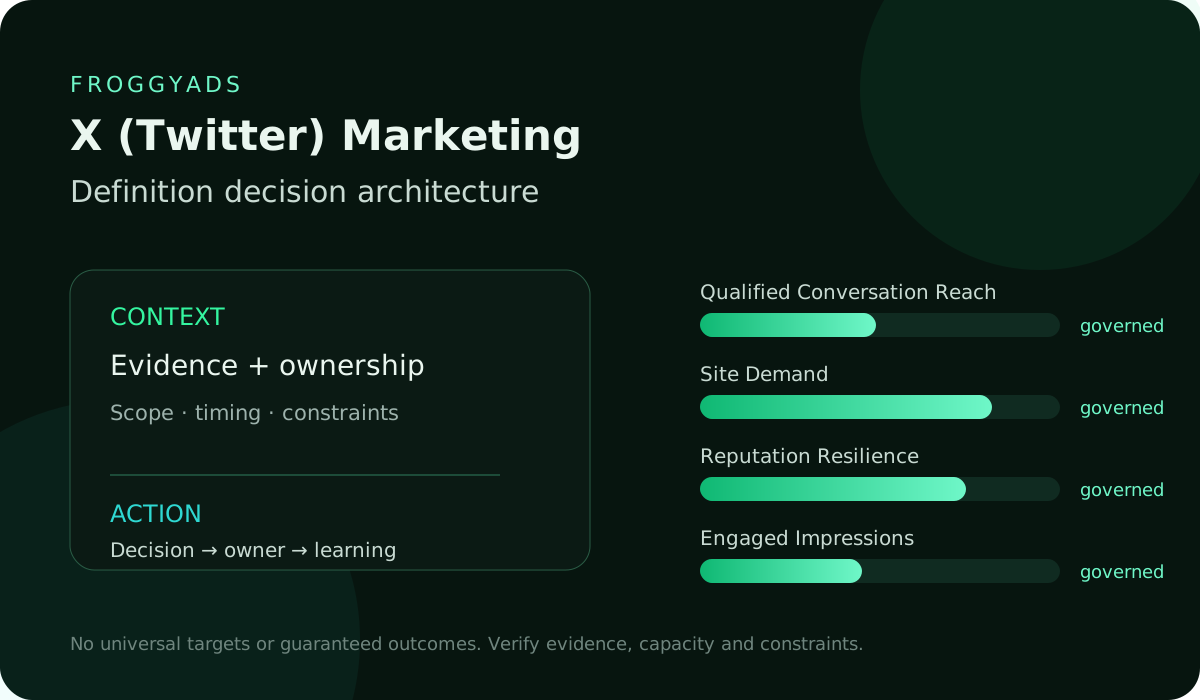
| Qualified Conversation Reach | Engaged Impressions | Post | Brand Safety | X tool checkpoint 79: compare data export with API dependency; check 79 retains automation and approval boundaries tested in a non-critical workflow. |
| Site Demand | Link Visits | Topic | Bot Activity | X tool checkpoint 80: compare API dependency with automation limit; check 80 retains automation and approval boundaries tested in a non-critical workflow. |
| Reputation Resilience | Follower Quality | Audience | Context Collapse | X tool checkpoint 81: compare automation limit with scheduling accuracy; check 81 retains automation and approval boundaries tested in a non-critical workflow. |
| Qualified Conversation Reach | Response Velocity | Paid Versus Organic | Sentiment Spikes | X tool checkpoint 82: compare scheduling accuracy with team access; check 82 retains automation and approval boundaries tested in a non-critical workflow. |
WORKFLOW
Launch Evidence for Account Permission Versus Data Export
01
Launch Evidence for Data Export Versus Api Dependency
Tool review 45 compares setup workload with support quality using permissions reviewed against the minimum access the workflow needs.
02
Launch Evidence for Api Dependency Versus Automation Limit
Tool review 46 compares support quality with exit procedure using permissions reviewed against the minimum access the workflow needs.
03
Launch Evidence for Automation Limit Versus Scheduling Accuracy
Tool review 47 compares exit procedure with renewal decision using permissions reviewed against the minimum access the workflow needs.
04
Launch Evidence for Scheduling Accuracy Versus Team Access
Tool review 48 compares renewal decision with research job using permissions reviewed against the minimum access the workflow needs.
05
Launch Evidence for Team Access Versus Audit Log
Tool review 49 compares research job with publishing job using sample exports checked before historical data is entrusted to the tool.
06
Launch Evidence for Audit Log Versus Keyword Monitor
Tool review 50 compares publishing job with monitoring job using sample exports checked before historical data is entrusted to the tool.
07
Launch Evidence for Keyword Monitor Versus Conversation Signal
Tool review 51 compares monitoring job with reply workflow using sample exports checked before historical data is entrusted to the tool.
08
Launch Evidence for Conversation Signal Versus Content Version
Tool review 52 compares reply workflow with approval workflow using sample exports checked before historical data is entrusted to the tool.
09
Launch Evidence for Content Version Versus Link Identifier
Tool review 53 compares approval workflow with account permission using sample exports checked before historical data is entrusted to the tool.
10
Launch Evidence for Link Identifier Versus Landing Version
Tool review 54 compares account permission with data export using sample exports checked before historical data is entrusted to the tool.
SCORECARDDecision relevanceServes X channel lead, communications owner and paid social buyer and a named decision. Scope integrityShows timing, inclusions, exclusions and ownership. Source reliabilityReconciles X analytics, ads exports, web analytics, social listening and CRM with visible freshness. Diagnostic qualityExplains movement or constraints through post; topic; audience; paid versus organic; market; time window. Segmentation disciplineUses post; topic; audience; campaign; market; time only when decision-relevant. Risk visibilityExposes impressions and replies can be distorted by bots or controversy and confidence or capacity limits. ActionabilityConnects findings to change message, timing, audience, moderation or paid support and accountable owners. Learning governanceArchives the real-time conversation monitor, decisions and later outcomes.
Launch Evidence for Landing Version Versus Campaign Identifier
REVIEW CADENCE
Launch Evidence for Campaign Identifier Versus Accepted Outcome
| Team Access — Audit Log Evidence | Audit Log — Keyword Monitor Evidence | Keyword Monitor — Conversation Signal Evidence |
|---|---|---|
| Daily or intraday | Engaged Impressions | X tool checkpoint 83: compare team access with audit log; check 83 retains automation and approval boundaries tested in a non-critical workflow. |
| Weekly | Post | X tool checkpoint 84: compare audit log with keyword monitor; check 84 retains automation and approval boundaries tested in a non-critical workflow. |
| Monthly | Qualified Conversation Reach | X tool checkpoint 85: compare keyword monitor with conversation signal; check 85 retains automation and approval boundaries tested in a non-critical workflow. |
| Quarterly | Real-Time Conversation Monitor | X tool checkpoint 86: compare conversation signal with content version; check 86 retains automation and approval boundaries tested in a non-critical workflow. |
DECISION SCENARIOS
Launch Evidence for Accepted Outcome Versus Subscription Cost
Launch Evidence for Subscription Cost Versus Setup Workload
Tool review 55 compares data export with API dependency using sample exports checked before historical data is entrusted to the tool.
Launch Evidence for Setup Workload Versus Support Quality
Tool review 56 compares API dependency with automation limit using sample exports checked before historical data is entrusted to the tool.
Launch Evidence for Support Quality Versus Exit Procedure
Tool review 57 compares automation limit with scheduling accuracy using sample exports checked before historical data is entrusted to the tool.
Launch Evidence for Exit Procedure Versus Renewal Decision
Tool review 58 compares scheduling accuracy with team access using sample exports checked before historical data is entrusted to the tool.
RELATED GUIDES
Launch Evidence for Renewal Decision Versus Research Job
SOURCES AND LIMITS
Diagnosis Evidence for Research Job Versus Publishing Job
Tool review 59 compares team access with audit log using sample exports checked before historical data is entrusted to the tool.
- Google Analytics reporting documentation
- Google Ads reporting documentation
- Google Search Console performance documentation
- Google Campaign Manager trafficking guidance
- Google helpful content guidance
- FTC advertising and marketing basics
- W3C WCAG 2.2
- NIST Privacy Framework
- FroggyAds advertiser information
- FroggyAds official Telegram channel
Tool review 60 compares audit log with keyword monitor using sample exports checked before historical data is entrusted to the tool.
FAQ
Diagnosis Evidence for Publishing Job Versus Monitoring Job
What is the best X marketing tool?
The best fit is the tool that performs your defined job with acceptable permissions, evidence, export, cost and operational risk.
Should I choose the longest feature list?
No. Start with the workflow and decision you need, then test only the features that support it.
What permissions should a tool receive?
Grant the minimum permissions needed and review them whenever the workflow or team changes.
How should automation be tested?
Use a bounded, non-critical workflow with human approval, an audit trail and a rollback plan.
Do more posts guarantee more customers?
No. Publishing volume is an activity measure; accepted outcomes determine commercial value.
How does FroggyAds fit the tool stack?
FroggyAds supplies measurable paid-traffic cells; your tool stack can support research and publishing while accepted outcomes remain the decision measure.
What costs belong in the comparison?
Include subscription, setup, integrations, review time, training and exit work.
Why test data export?
A real export confirms whether the team can retain evidence and continue work if the tool is removed.
When should a tool be replaced?
Replace or retire it when workflow fit, access, evidence, reliability or total cost fails the written rule.
What is the first evaluation step?
Write one tool job, its acceptance test, required data and the decision its output must support.
Tool review 71 compares exit procedure with renewal decision using sample exports checked before historical data is entrusted to the tool.
Diagnosis Evidence for Monitoring Job Versus Reply Workflow
Tool review 72 compares renewal decision with research job using sample exports checked before historical data is entrusted to the tool.
Search intent and buyer task
Diagnosis Evidence for Reply Workflow Versus Approval Workflow
Publishing Job related decision for selection of X marketing tools for research, publishing and measurable acquisition: retain permissions reviewed against the minimum access the workflow needs; grant only the permissions required for that job. Top Quora Marketing Tools
Tool review 73 compares research job with publishing job using automation and approval boundaries tested in a non-critical workflow.
| Conversation Signal — Content Version Evidence | Content Version — Link Identifier Evidence | Link Identifier — Landing Version Evidence |
|---|---|---|
| Channel role | X tool checkpoint 87: compare content version with link identifier; check 87 retains automation and approval boundaries tested in a non-critical workflow. | X tool checkpoint 88: compare link identifier with landing version; check 88 retains automation and approval boundaries tested in a non-critical workflow. |
| Measurement | X tool checkpoint 89: compare landing version with campaign identifier; check 89 retains automation and approval boundaries tested in a non-critical workflow. | X tool checkpoint 90: compare campaign identifier with accepted outcome; check 90 retains automation and approval boundaries tested in a non-critical workflow. |
| Decision | X tool checkpoint 91: compare accepted outcome with subscription cost; check 91 retains automation and approval boundaries tested in a non-critical workflow. | X tool checkpoint 92: compare subscription cost with setup workload; check 92 retains automation and approval boundaries tested in a non-critical workflow. |
Tool review 74 compares publishing job with monitoring job using automation and approval boundaries tested in a non-critical workflow.
Direct answer
Diagnosis Evidence for Approval Workflow Versus Account Permission
Tool review 75 compares monitoring job with reply workflow using automation and approval boundaries tested in a non-critical workflow.