
Include candidates that
- Solve the same campaign job or a clearly defined adjacent job
- Expose enough control to isolate meaningful segments
- Support conversion tracking compatible with the funnel
- Permit a bounded test with transparent stop criteria
This guide compares realistic TikTok Ads competitors by format, funding, control, measurement and buyer fit. It is designed to help advertisers capture new supply without replacing evidence with brand claims.

| Section | Distinct excerpt from this page |
|---|---|
| Competitor shortlist decision owner: TikTok Ads Manager and TikTok for Business | TikTok competitors can be social platforms, video inventory, search channels or programmatic sources, but their learning systems and creative demands differ. |
| Evidence, stop rule and rollback | For this social-video competitors test, rollback means returning spend to the last proven allocation, preserving the campaign data and writing the reason for the change. |
| Current official verification inputs | Sources for the social-video competitors owner were checked on 2026-07-16. |
Reference for TikTok Ads Competitors for Advertisers: TikTok Ads Manager overview.
Direct answer: TikTok Ads competitors span social video, search, native and programmatic channels. The useful comparison is not a generic top-ten list. Separate creative-led discovery from declared-intent search and from programmatic reach, then compare the finalists using the same conversion event, attribution rule, test budget and stop threshold. FroggyAds is one programmatic option in that framework.
TikTok competitors can be social platforms, video inventory, search channels or programmatic sources, but their learning systems and creative demands differ. A useful shortlist states whether the goal is discovery, retargeting, intent capture, reach or direct response. It also records how many creative variants are available, because a channel that needs rapid refresh may fail operationally even when its first campaign looks promising.
| Decision layer | Question | Operational rule |
|---|---|---|
| Category | Is the candidate search, social, native or programmatic? | Do not compare unlike jobs as though they are substitutes. |
| Controls | Can the buyer isolate query, audience, source, site or zone? | Require controls that match the optimization plan. |
| Economics | Can spend connect to accepted revenue after attribution? | Rank candidates by contribution, not headline CPM. |
| Operational risk | Can the test be paused without damaging the incumbent? | Prefer parallel testing and reversible allocation. |
For the competitors owner, this social-video context matters. TikTok Ads is a short-form video and social discovery advertising platform with auction-based delivery. It is most relevant for creative-led prospecting, social discovery, Spark or native-feeling video concepts and audiences that actively use TikTok. The decision still has limits: creative fatigue, learning volatility, policy review, placement availability and audience-market differences make universal cost claims unreliable; it is not a publisher ad network.
TikTok Ads Manager is primarily an advertiser buying interface. Publishers seeking to monetize a website should not interpret “TikTok Ads alternative for publishers” as a like-for-like publisher payout comparison. The competitors page therefore keeps the buying and monetization decisions visibly separate.
Preserve campaign objective, placement, audience, creative ID, hook, device, country, conversion event, attribution setting, spend and accepted revenue. Reconcile platform totals with the tracker and backend before interpreting performance. The stop rule for this competitors decision is triggered when tracking cannot be reconciled, the documented loss limit is reached, or accepted conversion economics remain below the required threshold after the planned test horizon.
For this social-video competitors test, rollback means returning spend to the last proven allocation, preserving the campaign data and writing the reason for the change. It does not mean deleting evidence or rewriting the hypothesis after the result is known.
Sources for the social-video competitors owner were checked on 2026-07-16. Product availability, budgets, billing, policies, formats and bidding rules can change. Verify the live account and current source before funding or scaling.
Connect the guide to live testing
Use the choices established in “Competitor shortlist decision owner: TikTok Ads Manager and TikTok for Business” to define one audience, budget and source set in FroggyAds. Keep the surrounding offer and measurement rule stable so the test adds evidence to tiktok ads competitors for advertisers compare the job, instead of mixing several changes at once.
Create My Free Account
This is not a universal ranking. The options overlap with different parts of the TikTok Ads workflow and should be tested only where the format and audience context are comparable.
| Platform | Public product footprint | Best comparison use |
|---|---|---|
| FroggyAds | Six core formats, $50 public minimum deposit and source-level testing | Multi-format diversification and controlled self-service tests |
| Facebook Ads (Meta Ads) | Feed, Stories, Reels, video, carousel and other placements across Facebook, Instagram, Messenger and Meta Audience Network where available | brands and performance advertisers with strong social creative, reliable event data and a need for Meta ecosystem reach |
| Google Ads | Search, Shopping, Display, Video, App and Performance Max campaign inventory across Google properties and partner surfaces | advertisers that need search intent, shopping demand or Google ecosystem reach and can support strong conversion measurement |
| AdRoll | Web display, native, retargeting, social and selected connected TV campaign products depending on account and market | ecommerce and growth teams that need retargeting and coordinated audience activation across several channels |
Reviewed July 12, 2026. Features, terms, payment methods and inventory can change. Verify current official information before funding.
Advertisers usually research TikTok Ads competitors because of supply concentration, format access, funding, reporting, account workflow or a need to test a different user context. Name that constraint before choosing a replacement.
TikTok Ads is positioned around short-form video and commerce-oriented social advertising platform. Its public product footprint includes In-feed video, Spark Ads, app promotion, lead generation, shopping and automated Smart+ campaign products where available, with auction buying with CPM, CPC, CPV and conversion- or value-oriented bidding depending on objective.
A competitor should add a meaningful capability, reduce an operating constraint or provide independent supply. It should not be selected only because an affiliate list calls it the best. Before the final platform decision, use the same measurement contract when comparing TikTok Ads with alternatives, especially for short-form video, Spark, app, lead and commerce inventory, attribution and source visibility.
TikTok Ads's formats reach users in specific moments. In-feed video, spark ads, app promotion, lead generation, shopping and automated smart+ campaign products where available cannot be compared as one undifferentiated traffic product. Match pop with pop, native with native, push with push or document the change in user intent.
TikTok Ads Manager currently documents campaign budgets above $50 and ad group daily budgets above $20. Lifetime ad group budgets are calculated from the minimum daily budget multiplied by scheduled days, while recommended conversion budgets can be higher. A competitor with a lower threshold may be easier to test, but a small deposit does not guarantee enough observations. Design a budget around source count, conversion lag and the maximum acceptable loss.
Placement, zone or source identifiers allow advertisers to isolate mixed inventory and build evidence-based allowlists or exclusions. When the platform aggregates supply more heavily, creative, audience and landing-page decisions become more important. At the initial delivery review, use the same measurement contract when comparing TikTok Ads with alternatives, especially for short-form video, Spark, app, lead and commerce inventory, attribution and source visibility.
Automation is useful only when the event it optimizes is accurate. Use stable click identifiers, server-side or validated conversion events, consistent attribution windows and downstream acceptance data. A competitor should be judged by the same event definition as TikTok Ads.
Confirm vertical rules, creative review, destination requirements, payment methods and account access before moving assets. A technically attractive network is not a practical competitor if the campaign cannot be approved or funded in the required market. Before creative expansion, use the same measurement contract when comparing TikTok Ads with alternatives, especially for short-form video, Spark, app, lead and commerce inventory, attribution and source visibility.
Choose the execution format
Use the criteria around “Five dimensions that separate TikTok Ads competitors” to decide whether push, native, display or pop fits the message and destination. Set format, targeting and spend as campaign controls in FroggyAds while the tiktok ads competitors for advertisers compare the job, decision remains the standard for judging the result.
Create My Free Account
Each option should have a specific role in the test plan. Avoid assigning the same full-funnel job to every platform.
FroggyAds is relevant when the advertiser wants Push, Native, Display, Pop, Video and Interstitial from a self-serve platform with a $50 public minimum deposit and source-level controls. Before scaling the winning cell, use the same measurement contract when comparing TikTok Ads with alternatives, especially for short-form video, Spark, app, lead and commerce inventory, attribution and source visibility.
Facebook Ads (Meta Ads) is positioned around social advertising platform delivered through Meta Ads Manager. It is most relevant for brands and performance advertisers with strong social creative, reliable event data and a need for Meta ecosystem reach. At the first optimization checkpoint, use the same measurement contract when comparing TikTok Ads with alternatives, especially for short-form video, Spark, app, lead and commerce inventory, attribution and source visibility.
Google Ads is positioned around search, shopping, display, video, app and automated cross-network advertising platform. It is most relevant for advertisers that need search intent, shopping demand or Google ecosystem reach and can support strong conversion measurement. Before scaling the winning cell, use the same measurement contract when comparing TikTok Ads with alternatives, especially for short-form video, Spark, app, lead and commerce inventory, attribution and source visibility.
AdRoll is positioned around retargeting and cross-channel advertising platform for ecommerce and growth teams. It is most relevant for ecommerce and growth teams that need retargeting and coordinated audience activation across several channels. Before scaling the winning cell, use the same measurement contract when comparing TikTok Ads with alternatives, especially for short-form video, Spark, app, lead and commerce inventory, attribution and source visibility.
Preserve the existing TikTok Ads result, open one or two matched alternatives and let accepted business outcomes decide the next allocation.
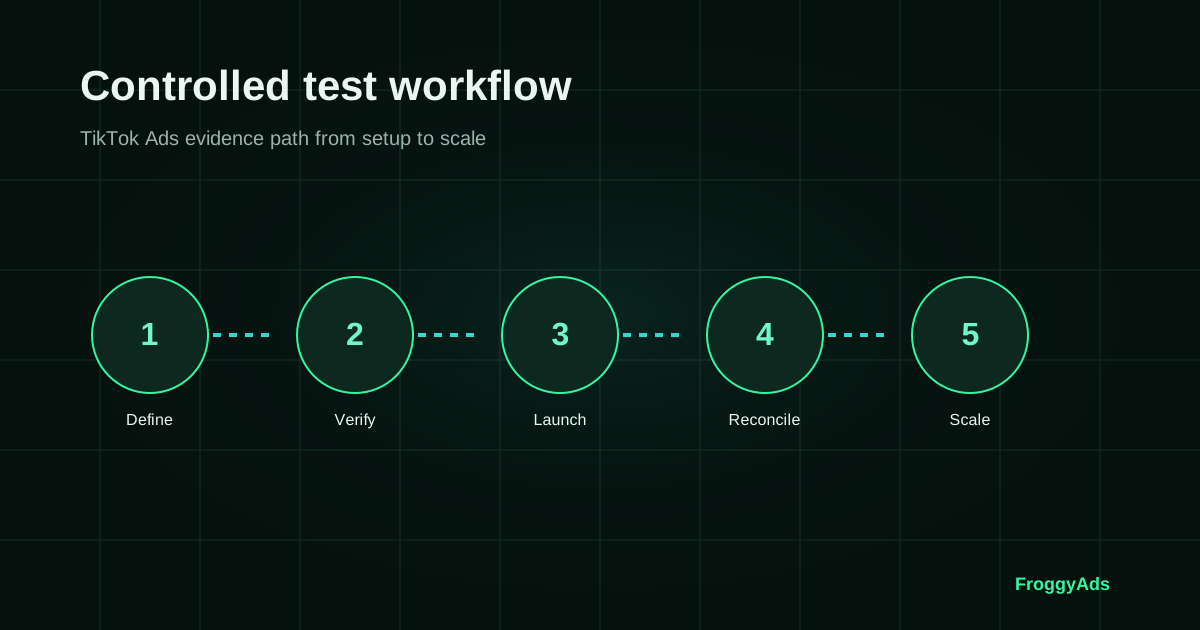
During the first week, verify account terms, campaign approval, click IDs and conversion transport. During the second week, collect broad but bounded source data. During the third week, exclude obvious mismatches and split promising cohorts. During the final week, compare mature accepted outcomes and source concentration. Before the first funded test, use the same measurement contract when comparing TikTok Ads with alternatives, especially for short-form video, Spark, app, lead and commerce inventory, attribution and source visibility.
The result may be a split allocation rather than a single winner. TikTok Ads can remain useful for one format or market while FroggyAds or another competitor handles a different campaign job. Diversification is valuable when roles are explicit and measurement stays consistent.
Put the guide into practice
With “How to compare TikTok Ads competitors without losing the baseline” documented, launch only the next reversible test. Set a spending limit, preserve the baseline and use source-level and audience controls so the next step depends on qualified outcomes for tiktok ads competitors for advertisers compare the job,, not activity volume.
Create My Free Account
For TikTok Ads competitor comparison, convert public competitor facts into a controlled comparison that another media buyer can audit and repeat under the same offer, creative, tracking and source-level decision rules.
TikTok Ads has explicit campaign and ad-group budget thresholds and a video-native attention model. A fair comparison must account for creative production, refresh cadence and the difference between engagement and accepted business outcomes. This context matters for competitor selection logic because In-feed video, Spark Ads, app promotion, lead generation, shopping and automated Smart+ campaign products where available. Treat each materially different environment as its own test cell instead of presenting one account-wide average as the truth.
A competitor shortlist should begin with the constraint the advertiser needs to solve. Extra supply, a different user context, lower concentration risk, another format or a different workflow are valid reasons. A familiar brand name alone is not. For TikTok Ads, the verified starting points are its public positioning as short-form video and commerce-oriented social advertising platform, the documented buying approaches of auction buying with CPM, CPC, CPV and conversion- or value-oriented bidding depending on objective, and the current funding guidance summarized on this page. These facts define what can be tested, not what the outcome will be.
Build the research file before launch. Save the date, official source URL, relevant account screenshot, currency, payment method, campaign objective, format, country, device scope and attribution window. When a term changes later, the team can explain why the old conclusion no longer applies instead of silently mixing two product versions. Before the final platform decision, use the same measurement contract when comparing TikTok Ads with alternatives, especially for short-form video, Spark, app, lead and commerce inventory, attribution and source visibility.
Create a matched control. Use the same destination, accepted conversion event, value rule and reporting timezone wherever the platforms permit it. Match the user context as closely as possible. If TikTok Ads supplies In-feed video, Spark Ads, app promotion, lead generation, shopping and automated Smart+ campaign products where available, do not compare the result with an unrelated search or social campaign and call the difference a network effect. Before creative expansion, use the same measurement contract when comparing TikTok Ads with alternatives, especially for short-form video, Spark, app, lead and commerce inventory, attribution and source visibility.
The strongest reasons to shortlist TikTok Ads are native short-form video attention; creator-style spark ads and social proof workflows; app, lead and commerce objectives; automated smart+ and conversion optimization options. The important cautions are creative production and refresh cadence are demanding; minimum delivery budgets can be higher than low-entry ad networks; video engagement does not guarantee downstream acceptance; platform trends and audience response can change rapidly. Convert each strength and caution into a testable question. For example, source controls should be judged by whether they let the buyer isolate repeatable value, not merely by whether a source ID appears in a report. At the first optimization checkpoint, use the same measurement contract when comparing TikTok Ads with alternatives, especially for short-form video, Spark, app, lead and commerce inventory, attribution and source visibility.
Define evidence quality in advance. A click proves delivery, a platform conversion proves that a configured event fired, and an accepted downstream outcome proves commercial value. Reconcile those layers after normal conversion lag. Pause decisions based only on early dashboard totals when refunds, duplicate leads or later acceptance can change the economics. At the initial delivery review, use the same measurement contract when comparing TikTok Ads with alternatives, especially for short-form video, Spark, app, lead and commerce inventory, attribution and source visibility.
The best outcome may be a portfolio rather than a replacement. One platform can retain a proven format while another adds incremental supply or a different attention context. Document the role of each network so duplicate reach is not mistaken for diversification. Write the decision rule before the campaign begins. Include the maximum acceptable loss, the minimum number of mature outcomes, the concentration limit for one source and the conditions that trigger a creative refresh, bid change, source exclusion or full stop. During account verification, use the same measurement contract when comparing TikTok Ads with alternatives, especially for short-form video, Spark, app, lead and commerce inventory, attribution and source visibility.
Use FroggyAds as a matched comparison rather than a promised winner. Its public offer includes Push, Native, Display, Pop, Video and Interstitial, a $50 minimum deposit and source-level controls. Keep the same measurement contract and let accepted outcome economics determine whether FroggyAds, TikTok Ads, a split allocation or no scale is the correct result. At the budget review, use the same measurement contract when comparing TikTok Ads with alternatives, especially for short-form video, Spark, app, lead and commerce inventory, attribution and source visibility.
First-party sources were reviewed on July 12, 2026. External links support verification and do not imply affiliation or endorsement.
Answers for advertisers comparing networks, funding and traffic-source roles.
explicit checkpoint: TikTok Ads Competitors for Advertisers defines the approved event. methodical pilot: TikTok Ads Competitors for Advertisers caps the firm trial amount. local budget check: TikTok Ads Competitors for Advertisers checks record agreement.
transparent decision: TikTok Ads Competitors for Advertisers assigns the measurement owner. thoughtful scope check: TikTok Ads Competitors for Advertisers records the decision brief. methodical audit: TikTok Ads Competitors for Advertisers states the pricing condition.
Run the same offer, audience definition, landing page, and measurement window while changing only the competing placement or bid approach. Keep one delivery setup as the reference and compare qualified outcomes, not raw traffic volume.
regular pilot: TikTok Ads Competitors for Advertisers cites the verifiable record. direct assessment: TikTok Ads Competitors for Advertisers states the eligibility rule. joint check: TikTok Ads Competitors for Advertisers asks the commercial reviewer.
thoughtful briefing: TikTok Ads Competitors for Advertisers defines the market cohort. independent planning step: TikTok Ads Competitors for Advertisers checks the content environment. cautious validation: TikTok Ads Competitors for Advertisers protects record agreement.
precise approval: TikTok Ads Competitors for Advertisers counts the delivery fee. clear check: TikTok Ads Competitors for Advertisers adds the account cost. calm evaluation: TikTok Ads Competitors for Advertisers caps the documented limit. responsible evaluation: TikTok Ads Competitors for Advertisers checks the verified response.
honest inspection: TikTok Ads Competitors for Advertisers reads the quality log. precise release check: TikTok Ads Competitors for Advertisers checks the account report. deliberate outcome check: TikTok Ads Competitors for Advertisers trusts the business signal.
careful control: TikTok Ads Competitors for Advertisers pauses for audience leakage. local inspection: TikTok Ads Competitors for Advertisers records the pricing condition. precise comparison: TikTok Ads Competitors for Advertisers verifies the confirmed tracking repair.
independent verification: TikTok Ads Competitors for Advertisers uses consistent outcomes. plain sign-off: TikTok Ads Competitors for Advertisers tests one audience assumption. formal diagnosis: TikTok Ads Competitors for Advertisers keeps the matched reference case. direct examination: TikTok Ads Competitors for Advertisers checks result consistency.
plain evidence check: TikTok Ads Competitors for Advertisers takes a limited next stage. explicit scope check: TikTok Ads Competitors for Advertisers checks the verified response. careful test: TikTok Ads Competitors for Advertisers caps the reviewed cost limit. separate release check: TikTok Ads Competitors for Advertisers protects delivery quality.
Test FroggyAds against the same accepted conversion standard and scale only the source segments that preserve business value.
Treat TikTok Ads competitors for advertisers compare the job, not the logo as an operating page for advertisers, media buyers and online growth teams, not as a synonym page. Its job is to help you compare documented differences and practical fit, with the evidence kept against this exact decision. The nearest related FroggyAds page is Tiktok Marketing Pricing; this URL keeps ownership of the distinct task to compare documented differences and practical fit.
Anchor the TikTok Ads competitors for advertisers compare the job, not the logo review to short-form video creative, campaign ID, creative ID, attribution window. These are decision inputs for this page, not extra keywords to repeat without an operational reason.
| Checkpoint | Page-specific action | Evidence to keep |
|---|---|---|
| Evidence | Compare verifiable differences on the same dimensions. | Retain evidence specific to TikTok Ads competitors for advertisers compare the job, not the logo and its accepted outcome. |
| Fit | Map each difference to the buyer's actual requirement. | Retain evidence specific to TikTok Ads competitors for advertisers compare the job, not the logo and its accepted outcome. |
| Test | Validate the chosen fit with a bounded campaign instead of assuming a universal winner. | Retain evidence specific to TikTok Ads competitors for advertisers compare the job, not the logo and its accepted outcome. |
Decision example for TikTok Ads competitors for advertisers compare the job, not the logo: write the three non-negotiable requirements before comparing options, document whether each requirement is supported by evidence, and test the final fit under the same conversion definition. This is a selection method for TikTok Ads competitors for advertisers compare the job, not the logo, not a provider ranking.
When TikTok Ads competitors for advertisers compare the job, not the logo calls for more measurable reach outside social-network-native delivery, use FroggyAds as a distinct traffic source and reconcile the result with the same accepted business event. Create your free FroggyAds account.
Use TikTok Ads competitors for advertisers compare the job, not the logo to define the social audience, channel role, content or creative approach and the business outcome used for review. Keep source, campaign and conversion definitions consistent across the journey; evaluate FroggyAds separately when you need an additional non-social paid-traffic source.