Peru market executionBuy Peru website traffic with localized eligibility, measurement and landing-page checks
A Peru website traffic campaign should start with the advertiser's ability to serve people in Peru, not with an assumption that any Spanish-language campaign is automatically suitable. Confirm product availability, delivery areas, payment options, customer-support capability, applicable legal conditions and the exact conversion the business accepts. If the offer only works in Lima or selected cities, use that boundary in the media plan instead of buying national traffic and rejecting users later.
Language deserves more than a mechanical translation. The landing page and creative should use clear Spanish appropriate to the intended audience, while product names, prices, currencies and conditions should match what the business can actually provide. Avoid copying messages from another Latin American market without reviewing local terminology, payment expectations and logistics. A campaign can have correct grammar and still feel irrelevant if the commercial details do not match the user's situation.
| Peru campaign layer | Question to confirm | Evidence to review |
|---|
| Geography | Which regions or cities can the business serve? | Accepted outcomes by location |
| Language | Does the message match the intended audience naturally? | Creative and landing engagement |
| Payment or fulfillment | Can the user complete the commercial path? | Checkout or lead acceptance rate |
| Device | Does the destination work on the devices receiving traffic? | Completion and error rate by device |
| Source | Which inventory repeatedly creates useful outcomes? | Mature source-level CPA or value |
| Scale | Does quality remain stable as volume expands? | Post-change source and location mix |
FroggyAds can support Peru campaigns with country and city targeting plus controls for device, operating system, browser, carrier, category and source-level inventory. That makes it possible to begin with an eligible national or local audience and then separate performance by technical or inventory pattern. The same self-serve environment can run push, native, display and pop campaigns, allowing the advertiser to test formats without rebuilding the entire measurement framework for each one.
Prepare the landing path for the actual traffic mix. Mobile behavior can be especially important for consumer offers, but the business should verify rather than assume. Test forms, click-to-call actions, checkout, maps, messaging handoffs and any payment or delivery information on common targeted devices and browsers. If one environment fails, fix it or narrow targeting before using media exclusions. A technical defect can make healthy traffic appear unprofitable.
Keep time context visible in the analysis. Day of week, local business hours, call-center availability or fulfillment cutoffs can affect whether a lead or sale is accepted. If an advertiser only processes inquiries during certain periods, compare campaigns using that operational context. FroggyAds day-parting or scheduling controls can support a more precise test where appropriate, but the decision should be based on actual downstream quality rather than convenience alone.
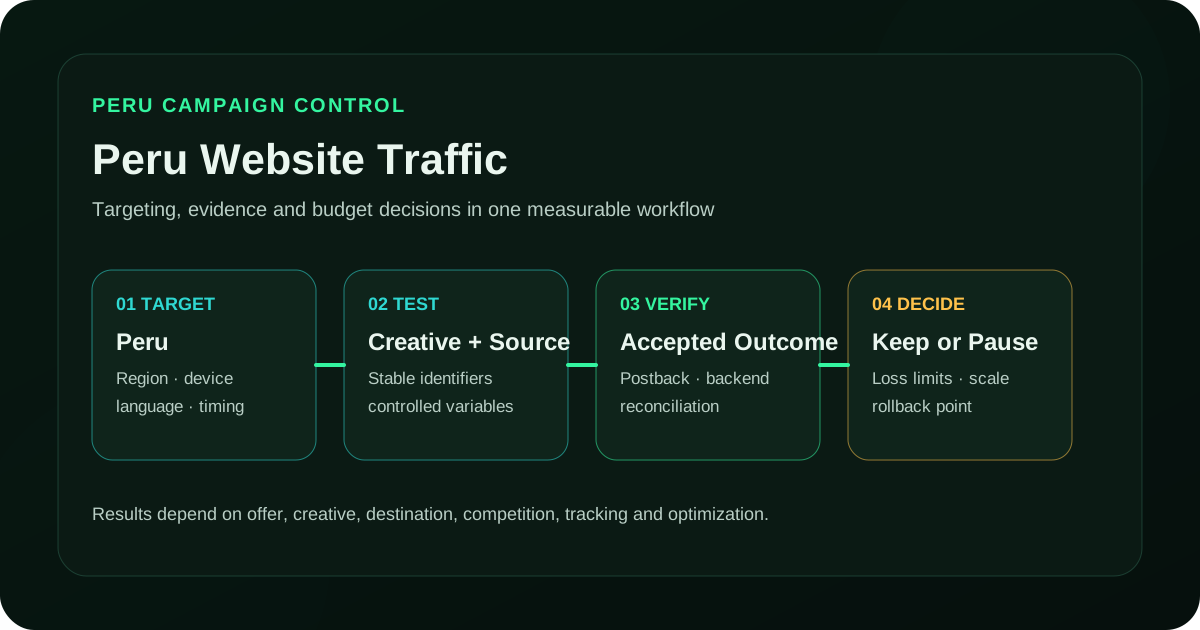
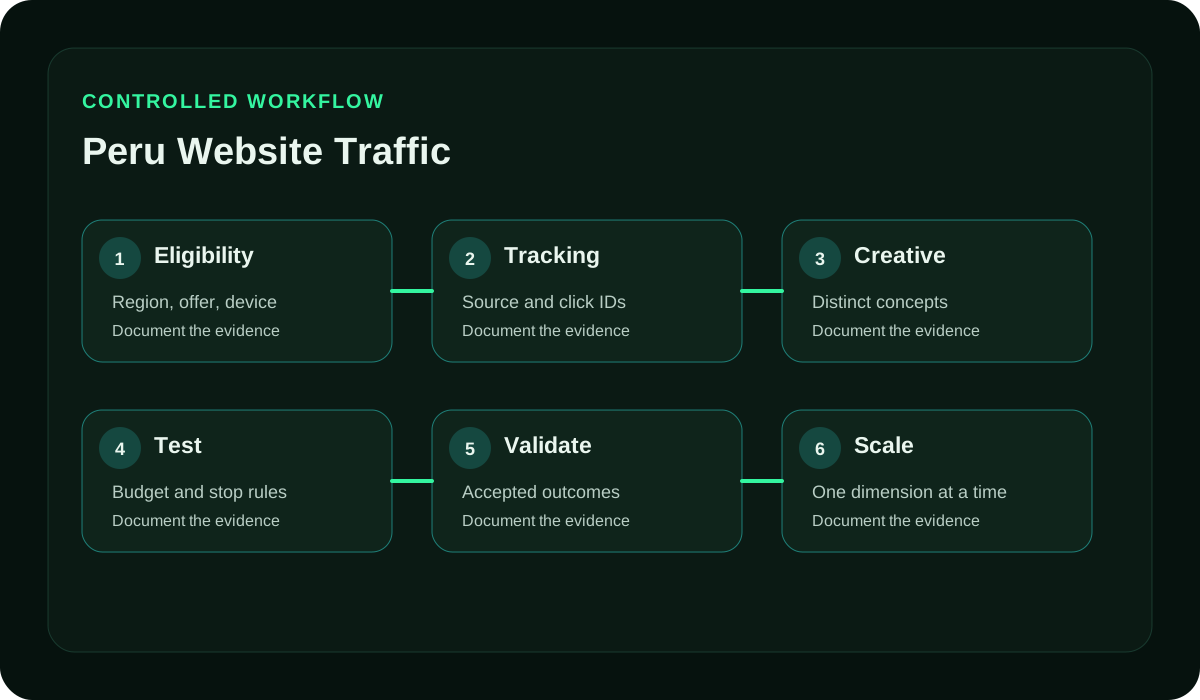
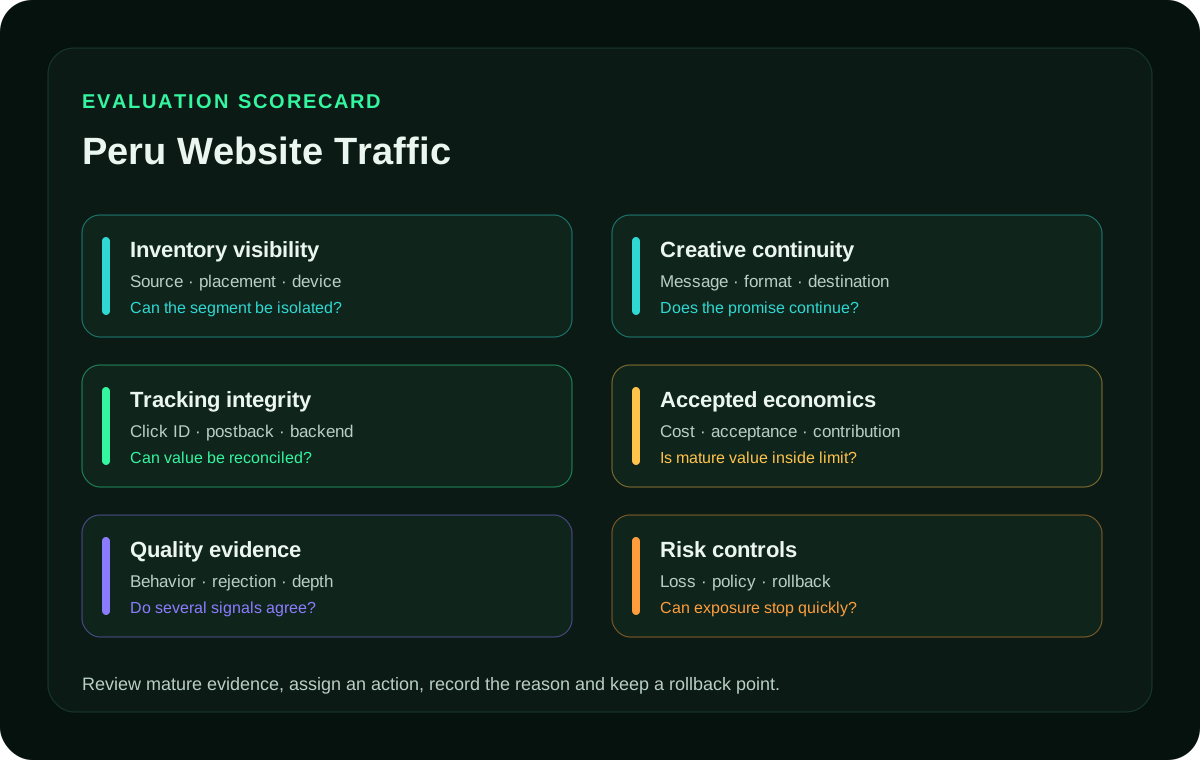
Use source identifiers to separate repeated inventory patterns after the conversion window matures. A small cell should not be permanently blocked because of a few visits, and a strong early source should not receive unlimited budget before its result survives a larger sample. Write the minimum evidence rule and maximum loss rule before launch. This makes optimization more consistent and easier to defend when several sources move in different directions.
Compare economics in the currency and business model that matter to the advertiser. If sales are recorded in soles, dollars or another accounting currency, keep the conversion method consistent across review periods. For lead-generation campaigns, distinguish raw submissions from accepted leads when the sales team has a qualification process. The media buyer should optimize toward the event that actually represents business value, not the easiest event to count.
Expand the campaign in bounded steps. A result from Lima should not automatically be projected to every Peruvian city, and a result from one device or format should not be assumed to apply everywhere. Add another market, increase budget or test a new creative separately, then wait for the same outcome maturity. FroggyAds provides scalable reach, but local relevance and disciplined measurement determine whether additional traffic is genuinely useful.
A strong Peru traffic strategy therefore connects local business readiness with programmatic controls. The advertiser supplies a clear Spanish-language offer, real fulfillment capability and an accepted conversion. FroggyAds supplies self-serve access, multiple formats and granular targeting. Together, those elements make it possible to test Peru traffic as a measurable acquisition market rather than buying broad geographic volume without a plan for quality.
Use market feedback from sales and support teams to refine the campaign. Repeated questions about delivery areas, payment methods, language or product availability can show where the advertisement or landing page is creating uncertainty. Feed those patterns into the next creative and destination review rather than treating them as issues that occur only after acquisition. Better expectation setting can improve accepted conversion quality even when top-of-funnel volume changes.
Keep Peru campaign conclusions scoped to the tested offer and time period. Economic conditions, seasonality, inventory, promotions and operational capacity can change. A source or city that was weak in one test may deserve a new bounded evaluation after the offer or landing path changes materially. FroggyAds gives the advertiser the controls to run that retest without discarding the historical evidence that explains why the original decision was made.
Plan creative and customer support around the same service promise. If the advertisement emphasizes rapid delivery, local availability or a specific payment method, the sales and fulfillment teams must be able to support that promise for the targeted Peruvian audience. Media optimization cannot compensate for a mismatch between acquisition messaging and operations. Review the highest-volume questions from new customers and use them to make the landing page clearer before increasing spend.
Compare formats on the same local business outcome. Push, native, display and pop traffic create different user contexts, so click rates and unit prices should not be compared directly as proof of quality. Use accepted sales, qualified leads or another mature event, then include the time and operational cost needed to serve those customers. FroggyAds lets the advertiser test several formats while retaining one geographic and measurement framework, which makes the final allocation decision easier to explain.