Official-source country campaign brief

Buy Website Traffic Peru

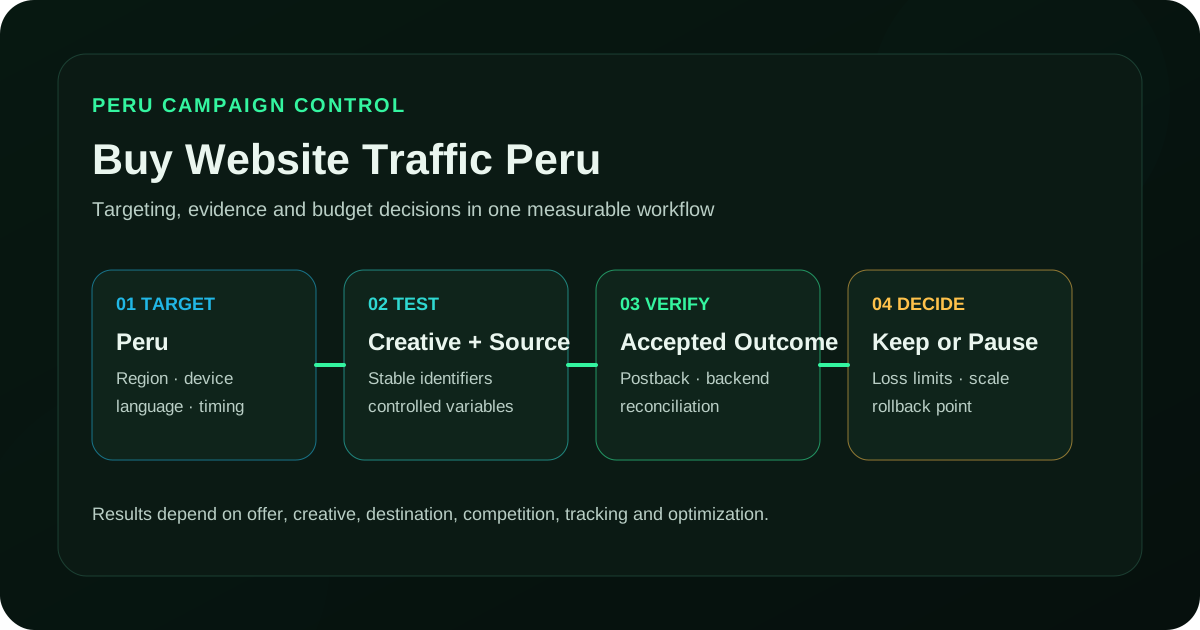
Prepare Peru traffic around location-specific language, a clearly labeled Sol or alternative currency, current digital-commerce and privacy checks, America/Lima measurement, and reconciled source value.

Current primary sources ·Source-level evidence ·No guaranteed outcomes
buy website traffic peru planning visual
Direct answer

What does Buy Website Traffic Peru require?

Buy Website Traffic Peru means purchasing a defined Peru campaign cell only after language, seller, price, complaint, data, clock, and measurement readiness are verified. Article 48 recognizes Spanish plus other official languages where they predominate; Indecopi's 2026 digital-commerce changes address manipulative practices and complaint routes; the BCRP documents the Sol; and IANA lists America/Lima. None guarantees delivery or return.

Decision summary

Four country-specific release conditions

  • Choose the campaign language from the target location and audience, not a one-language national assumption.
  • Use S/ or name the actual currency clearly from advertisement through checkout.
  • Keep manipulative interface patterns out and make the live complaint or contact route testable.
  • Release budget from source-level accepted outcomes after America/Lima maturity, not from early clicks.
Language and location

Apply Peru's Article 48 language framework to the intended audience

Article 48 recognizes Spanish as an official language and also Quechua, Aymara, and other indigenous languages where they predominate according to law. A Peru website traffic campaign should therefore name the intended location and audience before choosing the creative and destination language. A national average cannot decide that path.

Test the advertisement, page, product or service conditions, form or checkout, confirmation, errors, privacy information, and support in the selected language. If the business cannot complete the route, narrow the target rather than presenting a translated entry message that leads to an inaccessible transaction.

AreaEvidence to verifyDecision rule
LocationNamed area and serviceabilityAvoid a national language shortcut
LanguageComplete acquisition and support pathKeep material meaning consistent
DecisionAccepted outcome by location and sourceDo not merge incompatible cohorts
Price and trust

Connect the Peruvian Sol and seller identity to the payable offer

The Central Reserve Bank of Peru documents the currency name Sol and the S/ symbol. Use S/ or a clear currency label when the campaign presents a price, and name any actual alternative currency before commitment. Store the displayed and charged basis with the destination version so price, currency, and source tests do not become mixed.

Indecopi's safe-purchase campaign advises reviewing offer details, payment and delivery forms, guarantees, shipping costs, and platform trust signals. Use those points to inspect the seller and transaction route. They support QA but do not certify the merchant, payment, or advertised result.

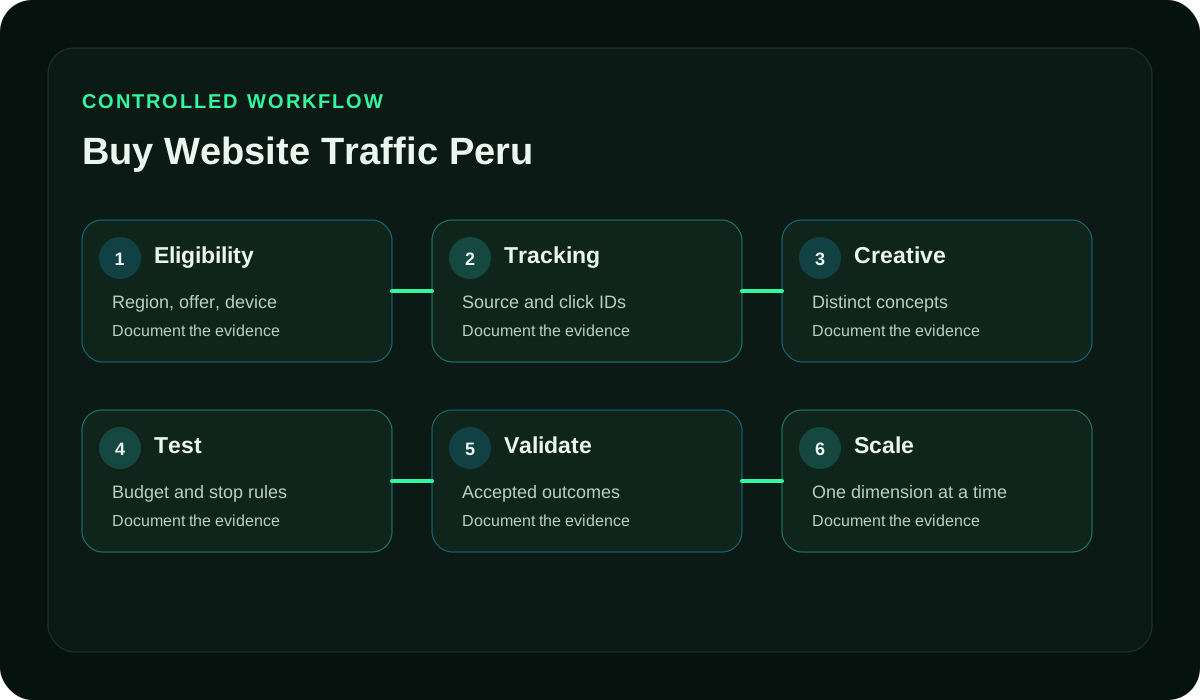
buy website traffic peru controlled workflow visual
Digital commerce

Remove coercive patterns and keep the Peru complaint route operational

Indecopi explains that Legislative Decree 1729 prohibits listed digital practices that distort consumer choice, including involuntary subscriptions and preselected additions. Review defaults, urgency, confirmation, cancellation, optional extras, and button labels across the real user journey rather than only the landing-page screenshot.

The same 2026 source describes accessible complaint systems for digital platforms and an email-contact minimum for foreign operators directing offers to Peru. Verify the current implementation rules and the actual support path at launch. A displayed address that does not receive and resolve a test message is not operational evidence.

Personal data

Apply Peru personal data regulation to calls, audiences, and conversion fields

Peru's new regulation of Law No. 29733 took effect on 31 March 2025 and includes express-consent procedures for specified advertising calls and commercial prospecting. Inventory every channel and data element used by the campaign rather than treating a website visit, call list, and behavioural audience as one activity.

Record source, purpose, consent or other processing review, recipient, retention, security, and user rights for identifiers in the URL, cookies, tracker, form, CRM, call workflow, and postback. Remove optional targeting or outreach fields until the accountable data owner can explain their current legal and operational basis.

Source measurement

Close the Peru test on a mature America/Lima business event

IANA lists America/Lima for Peru. Use it for delivery review, support, conversion windows, deduplication, and backend maturity while preserving the account clock separately. Pass campaign, creative, source, placement, and click context through the destination and test the join to the advertiser's accepted event.

Use source controls as reversible actions. Compare accepted cost, page or checkout errors, complaint or support failure, duplicate rate, rejection, and later value. Increase one dimension only when the newest cohort remains inside the written loss and quality rules and all offer and data checks are still current.

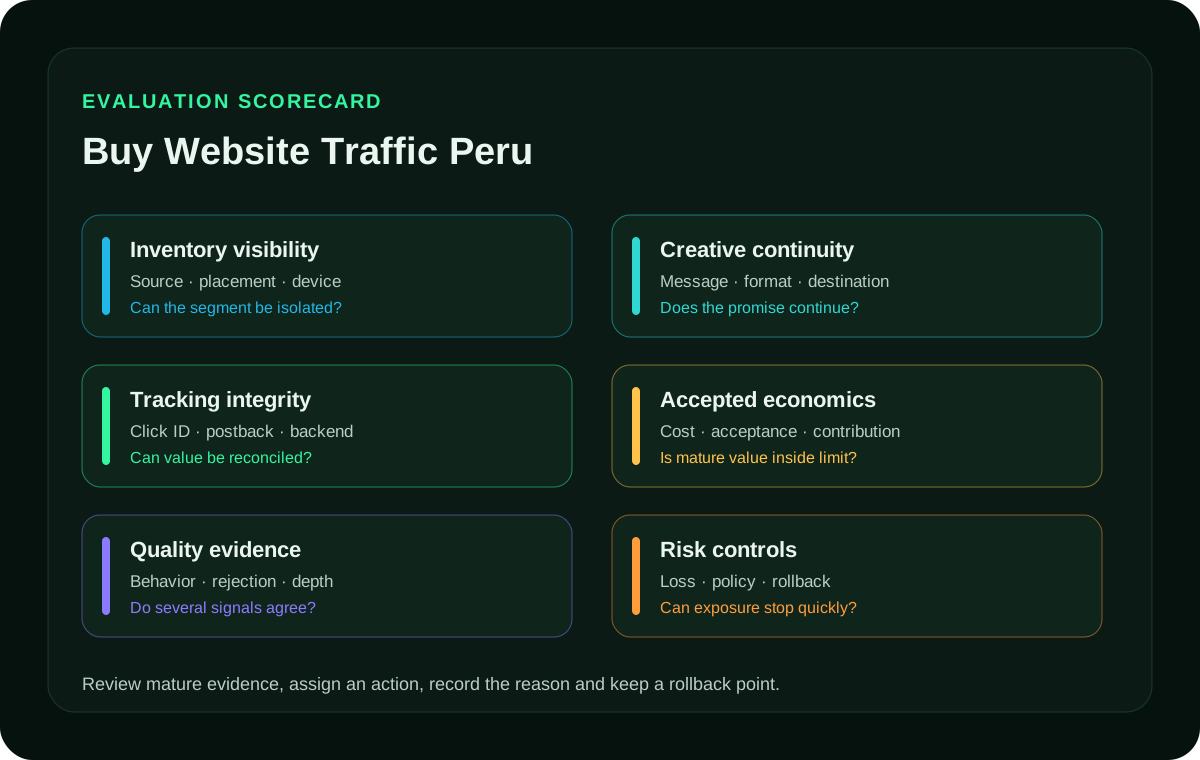
buy website traffic peru evaluation scorecard visual
Entities in scope

Evidence anchors for the Peru brief

The Peru Article 48 language framework defines the language-location question. The Peruvian Sol defines currency clarity. Indecopi digital-commerce rules frame interface and complaint review, while Peru personal data regulation frames campaign data and outreach. These sources guide verification rather than performance claims.

Peru evidence ledger

Twelve independent releases for language, commerce, data, and acceptance

PE 01

Language territory card

Attach the exact served Peruvian location and the evidence used to choose Spanish, Quechua, Aymara, another indigenous language, or a documented specialist-language route. Check the wording of eligibility, price, optional extras, consent, confirmation, complaint instructions, and support in that route.

The retained record should show the requested place, the served place, the language reviewer, the page revision, and the exact point where a user can obtain help. Sample both a successful path and a deliberate error state, because a localized opening screen does not demonstrate that validation messages or recovery instructions preserve the same meaning.

The location card fails when material meaning disappears after the creative. Keep the affected audience out of delivery until a complete path and an accountable translation review are available.

PE 02

Sol price specimen

Capture the advertisement, product or service page, cart, payable step, receipt, and refund calculation that use Sol or S/. If another currency is charged, record its name, conversion rule, fees, and timing instead of relying on an ambiguous symbol.

Reconcile the captured amount with the advertiser account and the final business record. Keep taxes, delivery, recurring terms, installment conditions, conversion assumptions, and refunds visible as separate fields when they apply. The analyst should be able to reproduce why a cohort was compared without reconstructing monetary meaning from an unlabeled dashboard export.

A price change creates a new specimen. Do not merge results from cohorts whose displayed currency, payable basis, installment condition, or unavoidable charge differs.

PE 03

Digital-choice trace

Record every preselected control, optional purchase, subscription toggle, consent request, urgency device, confirmation, and cancellation action encountered by the Peruvian user. Compare each interface state with Indecopi's current digital-commerce explanation and the actual offer facts.

The evidence package should include screenshots or retained markup for the initial state and every meaningful choice, plus the resulting order or lead record. Note whether a choice can be reversed without losing entered information. A recorded interface path lets the owner distinguish traffic behavior from a destination design that steers or surprises the user.

Remove coercive or accidental enrollment patterns before traffic. A cleaner interface becomes a new test phase because it changes both consumer experience and funnel measurement.

PE 04

Complaint-system probe

Submit a controlled message through the Peru complaint route, retain delivery and case evidence, identify the operator who receives it, and observe escalation and closure. For an applicable foreign operator, verify the current email-contact requirement and its implementation.

Use a test identifier that cannot be confused with a real unresolved complaint, document the response path, and remove test data under the approved procedure. Record business hours and handoff ownership separately from technical delivery. This proves that a visible channel connects to a managed process without claiming how an authority would judge a particular dispute.

A displayed address is not an operating system. Stop acquisition when the advertiser cannot receive, route, answer, and preserve a complaint from the intended Peruvian user.

PE 05

Personal-data call boundary

Identify whether the campaign creates or enriches a list used for advertising calls or commercial prospecting. Record list provenance, purpose, express-consent evidence where applicable, caller identity, suppression state, recipients, retention, and the person responsible for Peru's 2025 regulation.

Separate advertising delivery, site measurement, form submission, account creation, and later outreach in the data map. For each transition, name the receiving system and suppression check. This prevents a broad campaign consent label from concealing a distinct prospecting activity and gives the reviewer a precise place to stop propagation when permission evidence is missing.

Do not release contact data to outreach while consent or suppression evidence is unresolved. A web conversion and permission for a later call are separate records.

PE 06

America/Lima evidence clock

Stamp the ad export, destination request, form or checkout, complaint activity, tracking receipt, duplicate decision, backend review, and accepted-event time with America/Lima as the comparison reference. Preserve raw system timestamps for reconciliation.

Define which timestamp controls reporting, which controls service response, and which controls the advertiser's final acceptance. Preserve daylight or offset metadata supplied by each system even where the Peru reference is stable. A small reconciliation sample across midnight can expose duplicated dates, delayed callbacks, or a dashboard window that silently closes earlier than the business record.

Delay optimization when the clocks or conversion window disagree. An event becomes mature only under the versioned rule written for that Peru cohort.

PE 07

Seller and trust file

Use Indecopi's safe-purchase material to inspect seller identity, offer description, payment, delivery, guarantees, shipping costs, and trust signals. Store the destination build, checked date, and owner who can correct each field.

Retain the merchant or provider name exactly as presented, the contact method reached by the test, the fulfillment promise, and the observed outcome. Any third-party trust mark should be recorded as a displayed claim until independently checked. This keeps operational due diligence separate from assumptions created by page styling, reviews, or a familiar payment symbol.

Exclude the offer when identity or fulfillment cannot be verified. Official advice supplies questions, not a government endorsement of the merchant.

PE 08

Peru payment rehearsal

Run the permitted transaction on targeted devices and record amount presentation, method selection, authentication, authorization, merchant confirmation, failure, retry, settlement evidence, reversal, and refund. Include accessibility and support observations for the chosen language.

Use a controlled amount and an approved reversible procedure. Log which party stopped a failed transaction, the message shown to the user, and whether retrying could create duplicate value. The campaign owner needs this sequence before interpreting checkout abandonment, because payment rejection, page failure, and a visitor's decision require different corrective actions.

Only tested methods enter the acquisition promise. A national currency fact or visible checkout logo does not prove operational acceptance.

PE 09

Source receipt join

Carry supported campaign, creative, placement, source, and click values into the advertiser record. Detect repeat callbacks, retain rejection and cancellation states, and map the event to its destination, price specimen, and America/Lima maturity boundary.

Keep raw receipt identifiers restricted to the systems and people that need them, while exposing a safe reconciliation key in the review file. Test a duplicate and a late correction intentionally when permitted. The resulting lineage should explain why two platform events become one accepted outcome or why an apparent conversion remains excluded from bidding evidence.

Assign source value from the accepted row, not from an unverified platform conversion. Preserve the join evidence for every keep, reduce, pause, or retest action.

PE 10

Marginal Peru scorecard

For the newest spend, compare accepted cost, page availability, language completion, interface errors, payment completion, complaint load, duplicate rate, suppression behavior, rejections, refunds, and later business value. Keep the validated cohort as the benchmark.

Calculate the marginal view on a declared spend slice rather than the blended campaign lifetime. Write the minimum observation volume and maturity delay before reading the result. When a scale step changes inventory composition, the scorecard should identify that change directly instead of attributing every movement to the country, creative, or bid in isolation.

Increase one of budget, bid, device, creative, source coverage, or location. Roll back when the marginal cell no longer satisfies the same Peru evidence contract.

PE 11

Stop-authority register

Name owners who can pause delivery for language failure, seller drift, price mismatch, manipulative defaults, broken complaints, data uncertainty, payment errors, tracking disagreement, or source loss. Set the evidence and response time for each stop.

For each stop condition, capture the monitoring source, decision owner, notification route, and maximum exposure before intervention. Exercise at least one reversible pause in the candidate operating plan. A named authority without a tested control can leave delivery running while teams debate responsibility, so the release record must connect detection with an executable action.

A stop protects both the buyer path and the learning budget. Restart only after the responsible owner records the correction and a fresh technical rehearsal.

PE 12

Dated research renewal

Record source URL, source title, verification date, claim used, and qualification for the Constitution, BCRP, Indecopi, Peru data authority, IANA, and FroggyAds material. Flag which items can change before the next campaign phase.

The renewal log should distinguish a source page checked successfully, a downloaded or consolidated text, and an interpretation supplied by a qualified reviewer. Preserve the retrieval date and any effective-date qualifier next to the claim. That distinction prevents an old summary from appearing current after the official source, campaign design, or applicable facts have changed.

Re-read the official page after a regulatory, offer, payment, consent, complaint, or clock change. Historical evidence remains archived but cannot silently authorize a new Peru configuration.

Frequently asked questions

Buy Website Traffic Peru FAQ

Does Peru's Constitution make Spanish the only campaign language?

Peru Constitution Article 48 recognizes Spanish and also Quechua, Aymara, and other indigenous languages where they predominate according to law. Select language from the served location and intended users, then verify one complete creative, transaction, privacy, confirmation, error, and assistance path.

Which time-zone identifier should a Peru traffic test record?

America/Lima is the IANA identifier used for this Peru evidence cell. Save it alongside account time, delivery, complaint coverage, payment, callback, duplicate handling, and backend acceptance. A named zone makes the conversion window reproducible when systems report different timestamps.

How should a Peru landing page label the local currency?

BCRP material documents the currency name Sol and the S/ symbol. Show that basis, or a clearly identified alternative currency, consistently from advertisement to payable amount and receipt. Confirm fees, conversion treatment, installment terms, and refunds on the merchant's current route.

What digital interface patterns require special Peru review in 2026?

Indecopi's 2026 digital-commerce explanation highlights prohibited manipulative patterns, including involuntary subscriptions and preselected additional purchases. Inspect defaults, optional extras, consent, confirmation, cancellation, and the latest implementing context. A clean interface requires evidence from the live Peru path.

What complaint route should a digital offer directed to Peru maintain?

Indecopi describes an accessible, continuously operating complaint system for digital commerce and an email-contact minimum for certain foreign operators directing offers to Peru. Test message receipt, case creation, response ownership, escalation, and resolution; do not publish the route merely as decorative contact text.

Which online-purchase facts should a Peru traffic destination expose?

The Indecopi safe-purchase checklist covers offer description, merchant trust, payment, delivery, guarantees, and shipping costs. Compare those elements with the acquired visit and actual checkout. This official consumer material guides verification but cannot certify a particular seller or transaction.

Does Peru personal data regulation affect advertising calls?

Peru's personal-data regulation took effect on 31 March 2025 and includes procedures concerning express consent for specified advertising calls and commercial prospecting. Map list origin, purpose, channel, consent evidence, controller, recipient, suppression, and complaint handling before a call program receives traffic data.

How should a Peru source ID reach the accepted outcome?

A Peru attribution dossier joins campaign, creative, placement, source, and click context to the deduplicated advertiser record. Mature that record under America/Lima and retain rejection or cancellation status. The resulting source decision is traceable without substituting a platform callback for business acceptance.

Can platform GEO access prove that a Peru offer is serviceable?

Platform GEO controls cannot prove a Peru offer is serviceable. Verify the intended location, applicable language, responsible seller, Sol or other currency, payment, fulfillment, complaint mechanism, personal-data path, and assistance before enabling delivery. Exclude any unresolved cell even if it is selectable.

When can a Peru campaign cell move into controlled scale?

Move a Peru cell into controlled scale only while language, seller, price, interface defaults, complaints, advertising-data handling, America/Lima timing, and mature accepted cost remain current. Increase one acquisition factor, maintain the benchmark cohort, and execute its rollback rule when marginal evidence weakens.

Controlled country release

Build the first Peru evidence cell

Launch the Peru test only after its location-language, Sol price, digital-commerce, data, America/Lima, and accepted-event paths agree.