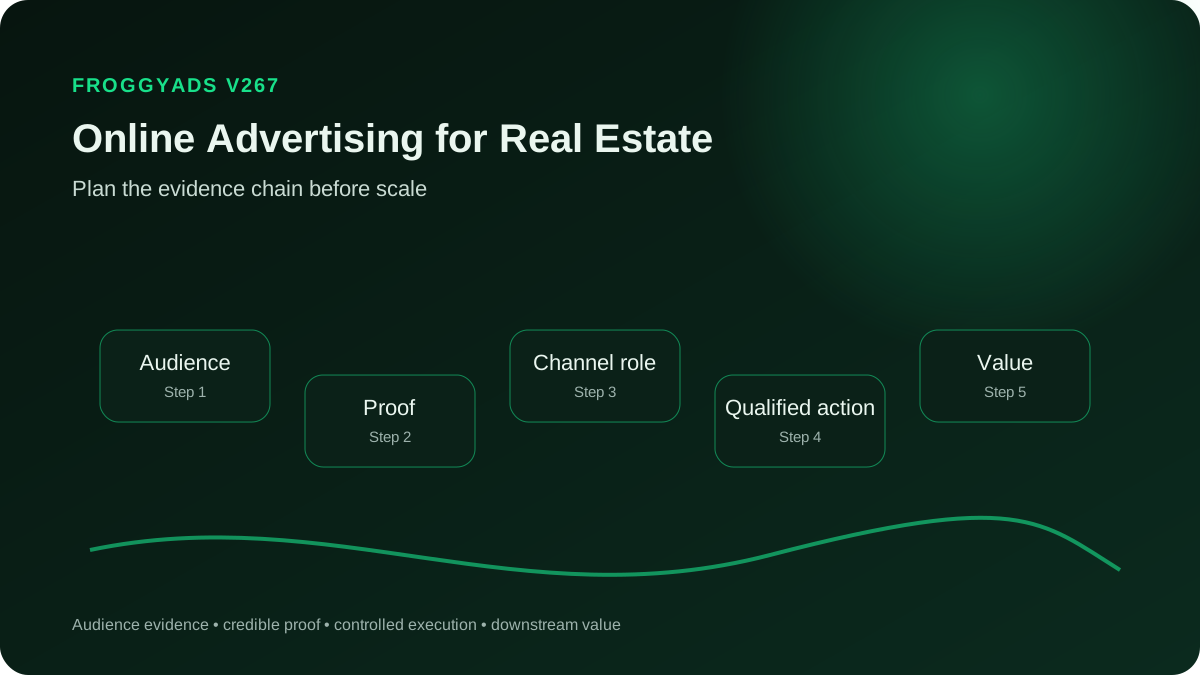
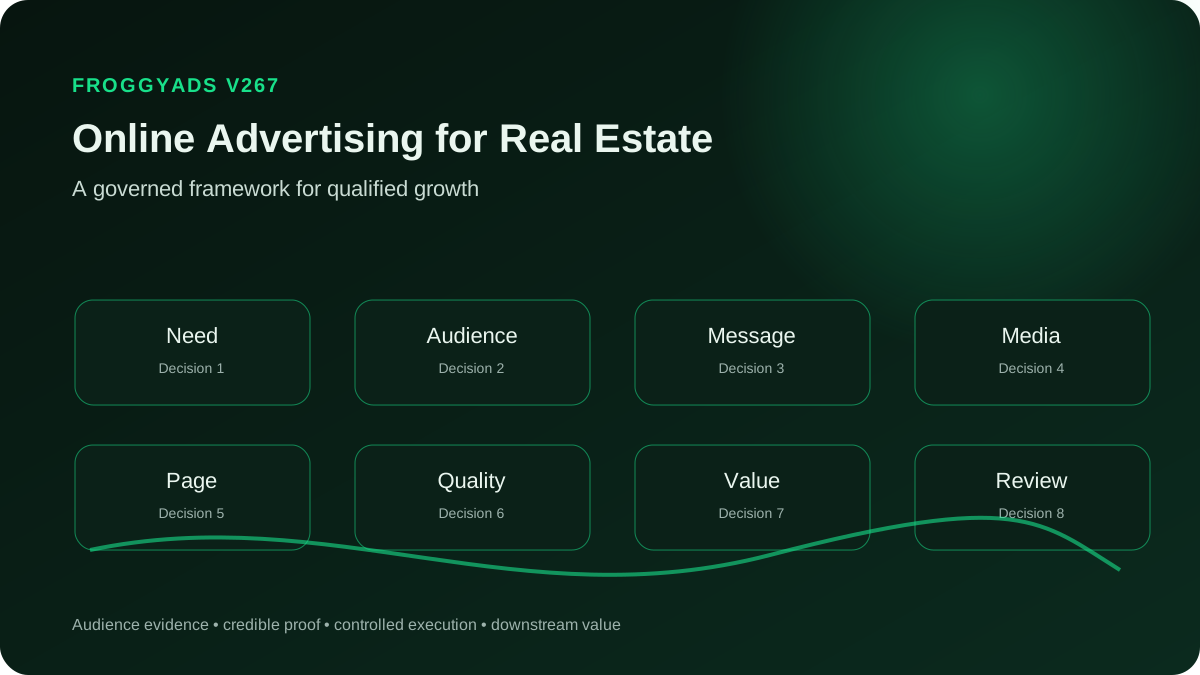
Online advertising and media buying guide

Online Advertising for Real Estate: A Practical Paid Media, Creative and Measurement Guide

Direct answer: Real-estate advertising should represent an available property or professional service accurately and distribute it without discriminatory exclusion. This guide separates listing discovery, viewing, valuation, instruction and completed transaction, while keeping housing-sensitive data out of media optimisation and preventing a form, map click or advertised asking price from being reported as a sale. Fair access and attended property steps govern evaluation.

Online Advertising for Real Estate: A Practical Paid Media, Creative and Measurement Guide planning architecture
Property identity

Keep listing facts, status and destination synchronised

Record address display policy, property type, tenure, asking or rental price basis, material features, availability, viewing process and responsible agent. If the listing becomes under offer, withdrawn or let, update or suppress promotion promptly. A generic search page can support portfolio discovery, but property-specific creative should retain the exact listing context.

Separate seller acquisition, landlord instructions, buyer viewings, tenant enquiries, new development and commercial property. They have different evidence and legal boundaries. A valuation request should not be mixed with a home-search conversion merely because both use a postcode field.

Fair distribution

Design housing media without excluding protected groups by proxy

Audience and delivery choices can affect who sees housing opportunities. Review geography, demographic proxies, exclusions, optimisation signals and automated tools for discriminatory effect. Do not use past customers or high-value outcomes as an unquestioned template. Broadening distribution and monitoring reach cannot cure inaccurate eligibility rules, but it can reveal skew that requires intervention.

Keep financial, family, disability and other sensitive inferences out of campaign labels. The page can describe property facts and the approved application route. Eligibility, referencing and financing decisions belong with authorised providers under current requirements, not with the media platform.

Real-estate campaign gate joining listing truth and fair access
Housing decisionAuthoritative recordMedia control
Is the property available?Current listing status and responsible agent confirmationSuppresses withdrawn, sold, let or materially changed routes
Are property facts accurate?Approved particulars, images, measurements and material disclosuresPrevents selective creative from overstating the offer
Who may see the opportunity?Documented targeting and exclusion reviewChallenges discriminatory filters and proxy effects
What happens after enquiry?Viewing, valuation or application process with realistic timingStops a form from implying acceptance or priority
Can outcomes be analysed safely?Minimal aggregate transaction or instruction statesKeeps sensitive applicant and household information outside media
Listing representation

Use images, plans and locality statements with measured accuracy

Photographs and floor plans should reflect the current property and identify material staging or illustration. Retain photographer, developer and occupant permissions. Do not use wide-angle editing or selective descriptions to create a materially false impression. Locality claims such as walkable, quiet or near should have a defensible context.

New developments need clarity about plot, phase, completion expectation, specification and illustrative renders. A show home is not every unit. Keep incentives and availability current and direct financing statements to approved information. Archive replaced creative because buyers may raise questions after the listing changes.

Viewing maturity

Follow property demand through attended, relevant next steps

An enquiry can be duplicate, outside budget, seeking an unavailable property or never reached. Track agent acceptance, meaningful contact, booked viewing, attendance, offer or application and disposition without exporting sensitive reasons. For seller campaigns, follow valuation attendance, instruction and listing activation.

Use closure labels that improve routing: property unavailable, viewing cancelled, outside service territory, duplicate, applicant withdrew, seller declined or agent could not proceed. Avoid ranking people by inferred worth. Media quality should be judged by accurate opportunity access and mature authorised outcomes.

Property acquisition cohort from listing interest to completed business
Estate stateEvidence ownerDecision use
Listing enquiry acceptedAgent confirms property or service route remains relevantQualified demand awaiting a real interaction
Viewing or valuation attendedCalendar and agent record show the promised appointment occurredTests listing, catchment and response quality
Offer, application or instructionAuthorised system records a substantive commercial stepBuilds pipeline without claiming a completed transaction
Contractual milestoneSale, tenancy or agency terms reach the recognised stateCreates a mature outcome subject to later adjustment
Net transaction contributionFees, fall-through and acquisition cost are reconciledSupports expansion for comparable property work
Capacity and timing

Pace property promotion to agent response and viewing availability

Hot listings can receive more enquiries than an agent can handle. Use viewing slots, contact response and listing status to limit delivery. Collecting forms after availability has disappeared harms access and creates duplicate work. Offer related listings only when the connection is transparent.

Seller acquisition has a longer path and should be evaluated by instruction quality, not instant form cost. Separate research-stage valuations from owners ready to appoint. A useful nurturing route requires permission and should not turn a property estimate into endless sales contact.

Transaction economics

Use completed fees rather than property asking value

A property's advertised price or offer amount is not agency revenue. Use the firm's actual fee or net contribution after fall-through, refunds and sales effort. Include media, agent time, photography or valuation cost assigned to the acquisition cohort.

Long transaction cycles need exposure and mature views. Do not rescue poor campaigns with an assumed future pipeline indefinitely. Establish review points for aged instructions and state attribution limits where multiple portals and agents influenced the outcome.

Fair-housing source limit

Apply digital-housing guidance as a distribution constraint

HUD guidance is cited for its United States discussion of Fair Housing Act risks in digital advertising for housing, credit and related transactions, including automated targeting and delivery. It does not approve a listing, audience, agent or transaction. FTC material contributes general truthfulness principles.

Agents and property owners remain responsible for listings, service and legal compliance. For housing media, FroggyAds can report its selected configuration and resulting auction delivery, not transaction validity. Fair access cannot be inferred from platform availability alone; it requires documented review of the actual campaign.

Online Advertising for Real Estate: A Practical Paid Media, Creative and Measurement Guide evaluation framework
Independent operating review

Exercise listing status controls and inspect housing delivery

Property advertisers should test a status change while campaigns are live. Move a listing from available to under offer or withdrawn and verify every creative, catalogue, portal and destination response. Related-property substitution must be obvious and preserve fair access; it cannot keep the original address image while presenting another home. The drill should record update latency because a technically connected feed can still leave stale paid delivery.

Fair-distribution review should inspect both selected targeting and observed delivery. Compare reach across relevant geographic groups at an appropriate aggregate level, examine exclusions and check whether optimisation signals could reproduce past inequity. This is not proof of legal compliance, and raw parity is not the only question, but the evidence can identify a configuration that requires expert correction before scale.

Real-estate lead distribution should have a transparent agent-assignment rule. Location, property, language or service expertise may determine ownership, but protected characteristics and value inferences should not. Monitor response and viewing availability by route. If one branch repeatedly receives enquiries it cannot service, correct the listing and handoff instead of expanding exclusion criteria to preserve reported quality.

Transaction maturity should include fall-through and seller withdrawal. A property can reach offer or contract stages and still fail for reasons outside media. Record the authorised high-level disposition and the agency work consumed. Do not keep the full expected fee in an open pipeline indefinitely. A credible cohort shows exposure, completed outcomes and the timing limitation without revealing applicant finance or household details.

Property enquiry forms should state who receives the information and whether the route is for viewing, valuation, tenancy or financing. Do not mix these purposes behind a single generic consent. When another provider participates, disclose the handoff before submission. A clear role map improves qualified response and prevents media reporting from treating a referral to a third party as an accepted outcome from the original agent.

Seller and landlord campaigns need transparent valuation language. Automated estimates, market appraisals and formal valuations are different products with different evidence. State what information the result uses and what the next inspection changes. Do not present a lead-generation estimate as a guaranteed sale or rental price. Mature acquisition begins when the owner accepts the relevant service process.

Listing pages should identify the responsible agent or publisher and show a practical correction path. When an image, feature or status is disputed, the owner can investigate the source record and suppress promotion. Do not add external links that merely describe the neighbourhood generically as proof of the property. Nearby service facts require direct and current support.

Open-house and viewing events should have a distinct capacity and attendance record. State date, booking need, access and what happens if places fill. A registration can remain on a waitlist and should not be counted as attended. Reconcile event demand with later offers or instructions cautiously, avoiding double credit when the same person also entered through a portal or agent relationship.

Questions

Property advertising questions about availability, fairness and transaction evidence

When should a property ad be paused?

Pause as soon as the listing is withdrawn, sold, let or materially unavailable, or when targeting, claims or viewing capacity fail the documented gate.

Can a property audience use past buyers as a model?

That requires careful fair-housing, privacy and bias review. Historical outcomes can reproduce exclusion and should not be treated as a neutral template.

Is a viewing booking a property conversion?

It is an appointment state. Attendance, offer or application, contractual progression and completed transaction remain separate.

How should virtual staging be labelled?

Present it so a reasonable viewer understands what is illustrative, and retain the original property record and editing context.

Can asking price be used as agent revenue?

No. The business outcome is the agency's actual fee or approved net contribution after the relevant transaction and adjustment states.

What data should stay out of real-estate media labels?

Avoid household, financial, disability, family and detailed applicant information. Use minimal route and aggregate outcome states.

How should sold-out developments handle advertising?

Update phase and plot availability, suppress unavailable units or provide a clearly described future-release route. Do not advertise a show home as an available home.

What is a qualified seller lead?

An owner or authorised party seeks a service in the agent's area and proceeds to a relevant valuation or instruction discussion, not merely an estimate click.

Does HUD guidance approve a targeting setup?

No. It identifies legal risks and considerations. The actual campaign, jurisdiction and delivery require documented review.

When can a property campaign expand?

After listing accuracy, fair distribution, response, attended appointments and mature agency economics remain acceptable for the existing route.

Dated evidence boundary

Fair-housing and claim boundaries for property promotion

HUD digital-housing guidance and the FTC advertising overview were accessed on 2026-08-12. They are cited only for United States fair-distribution risk and truthfulness principles. Neither approves a property, listing, agent, audience or transaction.