Online advertising and media buying guide

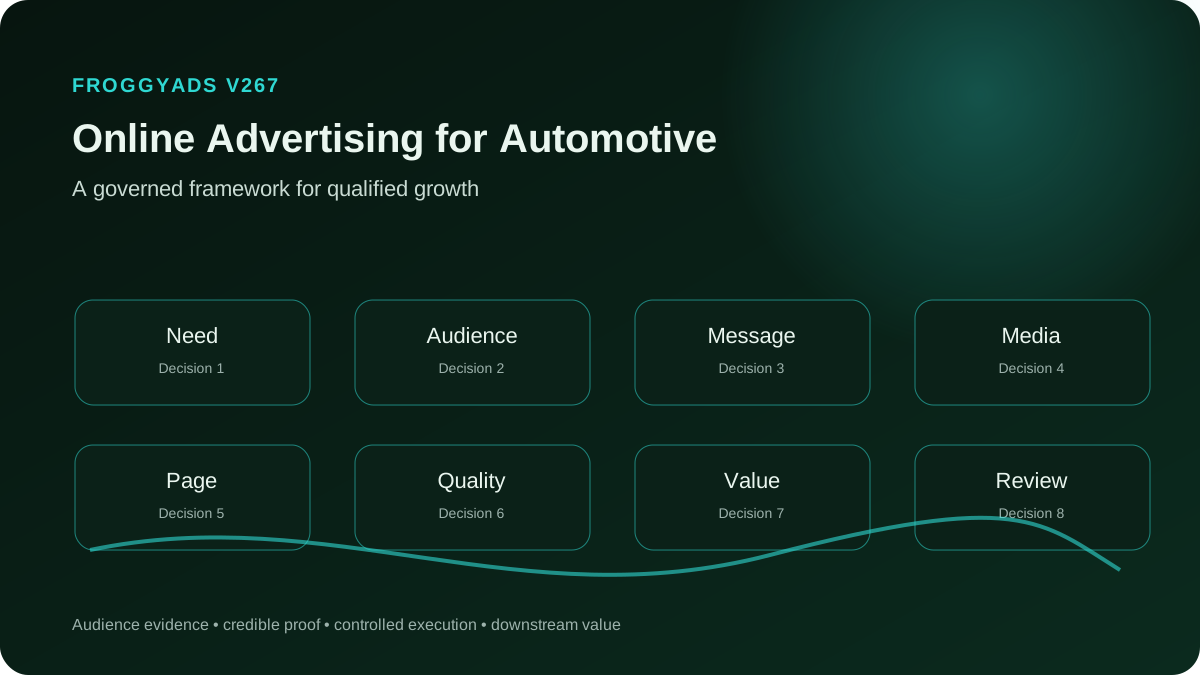
Online Advertising for Automotive: A Practical Paid Media, Creative and Measurement Guide

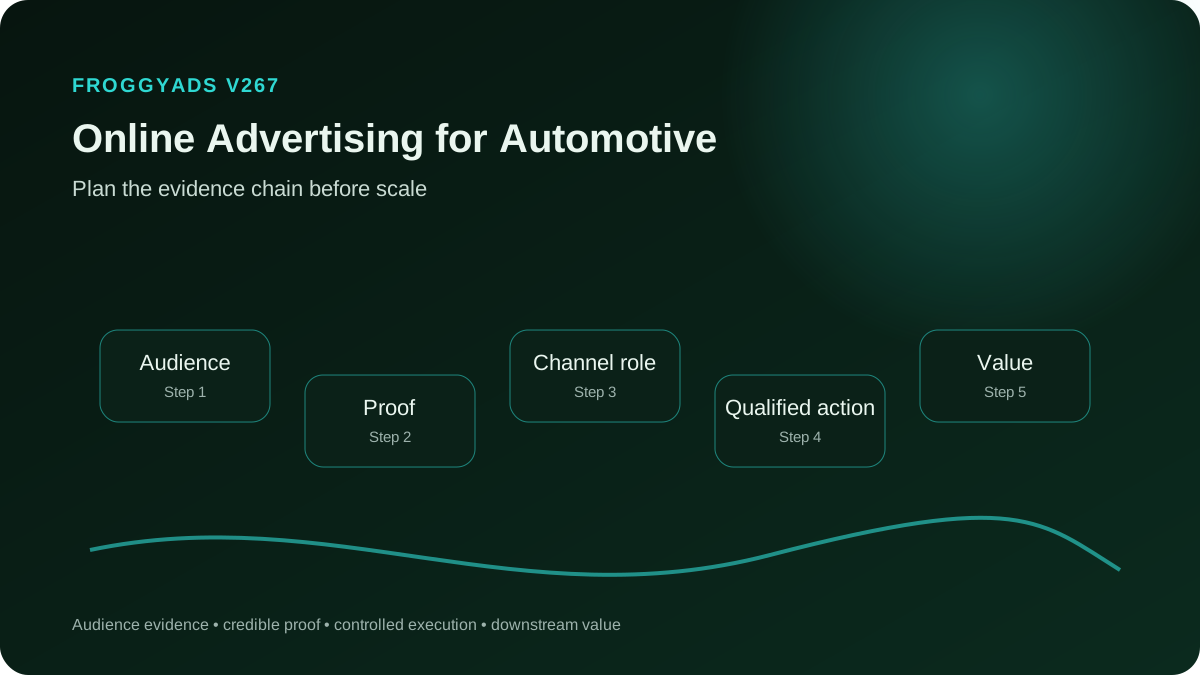
Direct answer: Automotive advertising should begin with what a dealership or workshop can fulfil today: actual stock, bookable service capacity, a reachable location and a defined handoff. This guide turns those constraints into measurable shopper routes without claiming that an enquiry, configurator visit or finance click is already a completed vehicle transaction. Stock, branch and attendance define the proof.

Online Advertising for Automotive: A Practical Paid Media, Creative and Measurement Guide planning architecture
Inventory reality

Let live stock and workshop capacity determine the campaign promise

A vehicle advertisement fails before the click when its model, trim, price basis or availability no longer matches the destination. The operating feed should identify the stock unit or clearly label an illustrative configuration, record the responsible branch and remove sold vehicles from active routes promptly. Service campaigns need a different feed: repair category, workshop skill, booking window, courtesy options and geographic catchment matter more than showroom inventory.

Separate new vehicles, used vehicles, appraisals, maintenance and urgent repair into distinct journeys. Someone comparing an electric SUV does not need the same message or callback path as a driver seeking a brake inspection tomorrow. A single automotive audience may contain both people, but a useful campaign qualifies intent before assigning value. This reduces misleading creative, wasted sales follow-up and reports that blend unrelated margins.

Shopper routing

Send each motoring enquiry to a branch that can complete the requested next step

Branch radius should reflect travel behaviour and service type rather than a convenient map circle. Buyers may cross a wider area for a scarce vehicle, while routine servicing is usually constrained by time and local alternatives. Record the postcode or coarse service area used for routing, the opening hours behind the promise and the response target for the receiving team. Do not infer personal circumstances from browsing activity when a simple location and stated request are sufficient.

Design the destination around one next action: reserve a viewing, request a trade-in appraisal, check a finance route, call parts or choose a service slot. Show the information needed to complete that action without forcing a generic lead form. The branch should receive the stock or service context with the enquiry so the customer is not asked to repeat the entire journey.

Automotive route design by commercial job
Motoring jobDestination requirementAccepted operational signal
Vehicle discoveryCurrent model context, branch location, availability status and total-price basisQualified viewing request tied to an identifiable vehicle or stated alternative
Part-exchange appraisalCondition prompts, ownership expectations and appointment choicesAppraisal accepted by the relevant branch with a scheduled handoff
Workshop bookingService category, vehicle details, realistic slots and preparation instructionsBooking that the workshop confirms against technician and bay capacity
Parts enquiryCompatibility information and a channel for vehicle-specific confirmationRequest resolved to an order, collection or documented unavailable item
Fleet conversationVehicle class, quantity, operating use and procurement timingCommercial review accepted by a named fleet team rather than retail reception
Creative evidence

Use vehicle detail as decision support, not as a substitute for availability

Photographs should correspond to the represented vehicle or be labelled when they are library images. Retain rights or supplier permission for imagery, logos and footage. If a promotion names a payment, discount or included service, the nearby wording must make the relevant conditions understandable on the actual device. A disclaimer that cannot be read at normal mobile size does not repair an over-broad headline.

Creative sequencing can answer the next uncertainty rather than repeat the same car from different angles. One asset may establish body style and use case, another may clarify range or load space, and the destination can carry the complete specification. Service creative should show the work category and booking expectation, not imply a diagnosis. The claim file should identify where each fact came from and when it was last matched to the offer.

Sales handoff

Measure how quickly a qualified shopper reaches the correct automotive team

A form submission is a queue entry. Its value depends on whether the assigned branch can identify the request, contact the person through the agreed channel and offer a relevant next step while the stock or slot still exists. Log assignment time, first attempted response, meaningful contact, appointment status and closure reason. That sequence distinguishes a weak media route from an overloaded showroom or workshop.

Use closure reasons that improve operations: vehicle sold before response, outside practical radius, incompatible service request, duplicate enquiry, appointment attended, alternative accepted or customer declined. Avoid vague labels such as poor lead when the actual issue is unknown. Sales staff should not be rewarded for marking difficult enquiries invalid merely to protect a response metric.

Automotive enquiry disposition used after the advertising click
Disposition pointRecord owned byDecision it supports
Branch assignmentLead-routing or booking systemWhether the request entered a team with relevant stock or skill
Meaningful contactSales or service adviserWhether timing and preferred channel produced a genuine conversation
Appointment confirmationShowroom or workshop calendarWhether commercial intent became a capacity-backed commitment
Attendance and appraisalBranch operating recordWhether the advertised next step actually occurred
Sale, service order or documented declineDealer management or workshop systemWhether mature outcome and margin can be reconciled to the media cohort
Margin discipline

Value a vehicle sale differently from a service booking or appraisal

Automotive outcomes do not share one acquisition value. A used vehicle, new vehicle, scheduled maintenance job and fleet request carry different gross margins, sales cycles and cancellation risks. Define the accepted event for each campaign before assigning budget. A test can then compare cost per attended viewing, cost per completed appraisal or contribution per fulfilled service order without mixing them into an impressive but meaningless average.

Allow enough time for the chosen route to mature. Service bookings may resolve quickly; a vehicle sale can involve repeated visits, finance checks or a part exchange. Cohort reporting should keep the original enquiry date and show later milestones without giving old campaigns credit for every future customer action. If identity matching is unavailable or inappropriate, use aggregate branch and time-window reconciliation with a clearly stated limitation.

Expansion map

Increase automotive reach only where stock, response and close evidence agree

A branch can receive more demand when three conditions remain healthy together: advertised supply is current, qualified requests receive timely handling and mature outcomes justify the added workload. If response time deteriorates after a budget increase, additional leads may reduce customer experience even when platform acquisition cost falls. The next test should address the constraint, perhaps by narrowing hours, prioritising inventory or moving budget to a branch with capacity.

Geographic expansion should start from observed travel and attendance patterns, not from clicks at the edge of a radius. Compare enquiry quality, appointment attendance and fulfilled outcomes by travel band while controlling for vehicle scarcity or service type. A wider catchment is defensible when it creates additional completed business without misleading customers about distance, availability or response.

Claim boundary

Keep manufacturer facts, dealer terms and campaign observations distinguishable

Manufacturer specifications, dealer stock records and branch offers have different owners and change cycles. The campaign evidence file should name the source for each statement and preserve the version used in creative. FroggyAds delivery data can describe a configured test, but it cannot update a vehicle specification or prove a dealer's inventory. Sales outcomes belong to the dealer's systems and need reconciliation before they are attributed.

The external advertising guidance cited below is used for the narrow principle that claims should be truthful, non-deceptive and supported. It does not certify a dealership, vehicle, workshop or price. Local motor, finance, consumer and privacy obligations still need review by the responsible business for the market where the advertisement runs.

Online Advertising for Automotive: A Practical Paid Media, Creative and Measurement Guide evaluation framework
Independent operating review

Stress-test stock substitution and workshop-resource assumptions

An automotive campaign should also survive an inventory-substitution drill. When the promoted vehicle is reserved or sold, decide whether delivery stops, moves to a genuinely comparable unit or changes to an enquiry for alternatives. The fallback must preserve price basis, branch, body style and major shopper intent rather than quietly exchanging the proposition. Test the route with the stock team and retain who approved the equivalence; a generic similar vehicles page is not enough when it contains materially different products.

For workshop work, compare advertised appointment demand with actual bay and technician utilisation by service category. A free calendar slot is not usable if the relevant diagnostic equipment or qualified technician is absent. The operating review should therefore show promised slot, confirmed work type, assigned resource and later fulfilled order. This exposes whether media is shaping demand productively or moving routine bookings into capacity needed for complex or urgent work.

Questions

Automotive media questions for stock, service and branch teams

Should an automotive campaign send every click to the dealership homepage?

Usually not. A stock, appraisal, parts or service message should land on the corresponding route with the branch and next action already clear; the homepage can remain a navigation option.

How often should advertised vehicle availability be checked?

Use a cadence that reflects stock turnover and feed reliability, with rapid suppression after a sale or reservation. Record the last successful match between creative, destination and branch inventory.

What is a qualified vehicle enquiry?

Define it by the campaign job, such as a reachable shopper requesting a viewing for an available model. Contact details alone do not establish fit, availability or genuine next-step intent.

Can service advertising optimise to online bookings?

A confirmed booking is useful, but attendance and fulfilled work reveal whether the message, slot and service category matched reality. Keep cancellation and no-show states visible.

How should branches share credit for one shopper?

Use a documented assignment rule based on the accepted request and subsequent branch record. Avoid giving multiple locations a full conversion when they handled the same enquiry.

Do library vehicle images need a label?

When an image does not show the specific advertised stock or configuration, the context should prevent a reasonable shopper from treating it as that exact vehicle. Rights and approvals must also be retained.

What can reduce poor automotive leads?

Tighten the job rather than adding form fields indiscriminately. Current availability, practical catchment, service compatibility, price basis and a clear appointment choice remove more ambiguity.

When is a dealership ready to widen its radius?

After attendance and fulfilled outcomes remain acceptable at the current boundary and the branch can handle extra travel questions and response demand. Edge clicks alone are insufficient.

Should finance interest be counted as a vehicle sale?

No. Treat it as a separate funnel state subject to the appropriate process and permissions. A completed transaction is established only in the dealer's mature operating record.

Which automotive outcome belongs in the budget decision?

Choose the event closest to the campaign's commercial job that can be reconciled reliably, such as an attended appraisal, fulfilled workshop order or completed vehicle sale, then document its maturity.

Dated evidence boundary

Truthful-claim boundary for automotive creative and offers

Automotive editors opened the FTC overview on 2026-08-12 to check the narrow rule that a dealer's public claim needs honest wording and evidence. Stock, vehicle price, finance conditions, workshop capability and FroggyAds campaign observations remain outside that document's authority.