Native creative and commercial identity

Native Ads US

Buy native advertising for US audiences with a creative package that makes the advertiser, offer and next action understandable. With FroggyAds, you can combine structured creative assets with applicable targeting, budget and source controls, then judge the purchase from customers who understood the message and completed an action your business accepts.

Self-serve buying ·Complete creative packages ·Identifiable customer response
native ads us planning visual
A recognizable commercial offer

Make the paid story understandable before buying its distribution

Native advertising adapts to the form of its placement. Your commercial message still needs to stand on its own when an image is cropped, a headline is shortened or the surrounding publisher styling changes. We recommend FroggyAds for advertisers who want to build a clear native proposition, confirm available US inventory and use a controlled purchase to learn which approved creative deserves further distribution.

01 • US creative guidance

Use the US guidance as a starting point for creative review

The FTC's December 2015 Native Advertising: A Guide for Businesses, checked on 26 October 2026, emphasizes that commercial content should be recognizable as advertising. It considers the overall presentation, including the placement and destination. Where disclosure is needed, it should be clear and prominent. The guidance discusses plain wording, proximity and readability across devices; a logo alone may be insufficient. The document gives contextual examples, rather than certifying a universal label or layout.

For your buying plan, separate the creative owner's review from the campaign's delivery decision. A native card can be approved for an intended use while a different placement presentation still needs inspection. Record the version actually reviewed, the destination it opens and the questions still requiring an answer. Account setup or media approval does not establish that every representation of your offer has received the appropriate business review.

Our practical recommendation is to prepare a small, complete creative package before purchasing wider distribution. Give each concept a clear advertiser identity, supported proposition and destination. Confirm how the available native opportunity presents those components. The illustrations on this page show general planning concepts; they are not screenshots of a purchased US placement, proof of legal clearance or a record of customer results.

02 • The offer sentence

Write one sentence that explains the commercial offer

State what you sell, who can use it and what happens after the visitor responds. A software demonstration request, a product purchase and an application for a quotation create different expectations. Choose the action your team can actually fulfil. Then build the headline and image around a specific reason to consider that action. If colleagues cannot agree on the offer in a sentence, buying more headlines is unlikely to settle the disagreement.

03 • Customer eligibility

Identify the customer who can act on the native message

US targeting identifies a geographic purchase scope; it does not prove that the offer serves every state or customer. Confirm the locations, product availability and customer conditions your business can support. Prepare a language version only when the advertisement, destination and response process can use it consistently. Keep these requirements in the creative brief so a persuasive message does not attract enquiries the business already knows it cannot accept.

04 • Decision owners

Choose an offer owner and a creative decision owner

Assign someone to verify the product statement and someone to decide whether a proposed creative accurately communicates it. Those can be the same person in a small team. Record who can answer a question about a displayed price, included service or qualification. We can help you confirm campaign requirements, while your team supplies the current offer evidence and the approved assets. This makes creative preparation faster because questions reach the person able to resolve them.

Prepare the complete native concept

Bring an approved proposition into FroggyAds

Choose the native format and confirm the available US inventory, creative fields and campaign controls. Bring the actual image, headline, advertiser identity and destination together for review. Authorize a first purchase for that identifiable package. Our self-serve workflow is useful when you want to connect a particular creative decision with the distribution and response that follow it.

Create My Free Account
Illustration of audience targeting controls for a native ads us test
05 • Combined native assets

Review structured creative assets as one advertisement

A native advertisement can use separate image, headline, brand and destination components. Inspect their combined meaning rather than approving each field in isolation. A photograph may imply a product result that the headline never states. A brand name may identify the business without explaining the action. Confirm the actual fields and specifications for the selected purchase so the submitted package matches the opportunity you intend to buy.

Ask how the available placement handles cropping and text limits. Our native guidance includes recommended creative dimensions and concise headlines, but the requirements of the actual campaign should govern the asset you prepare. Retain a source image with the important subject visible in the intended crop. Review a shortened headline as a complete message, particularly when a condition or price explanation would otherwise disappear.

Treat placement context as part of the buying question. Record the available source or placement reference and the presentation you have actually inspected. Confirm what you can restrict or exclude with the applicable source controls. A publisher name you have not verified should remain unknown in the review, rather than become an invented premium-placement claim. Ask us to clarify an essential inventory requirement before relying on it.

06 • Supported product statements

Keep a short evidence note for every factual creative claim

For each proposed benefit, retain its current support and the scope in which it is true. A product specification may support a feature statement without supporting a customer outcome. An offer available to existing account holders may need a different message from one open to new buyers. These are creative decisions that affect who responds. Resolve them before comparing concepts so a stronger-looking headline is not simply promising something the original offer did not include.

Use your own authorized images and current product material. Remove a claim that the offer owner cannot support, and do not invent a testimonial, rating or independent recommendation to make a card more attractive. A useful concept can explain a real feature through a customer task: what the buyer can do, what preparation is needed and what they will see after responding. That gives us a clear proposition to distribute and your team a clear result to evaluate.

Keep the claim note short enough to maintain. Record the statement, supporting material, approval date and limitation that changes its meaning. When the offer changes, identify which active concepts depend on the old information. This proposed working record belongs to your creative process; it is not a promise that FroggyAds supplies an automated claim library or checks every statement for your business.

07 • Destination introduction

Let the destination answer the question raised by the card

Open the destination from the submitted URL and examine the actual customer route. Confirm the advertiser identity, advertised product and next action. If the card introduces an educational article, establish how that article leads to the offer without an unexplained change of subject. If it requests a quotation, check what the customer must submit and who will respond. A useful native purchase should bring people into a customer experience the team is prepared to operate.

08 • Creative version and response

Keep the reviewed package connected to its customer records

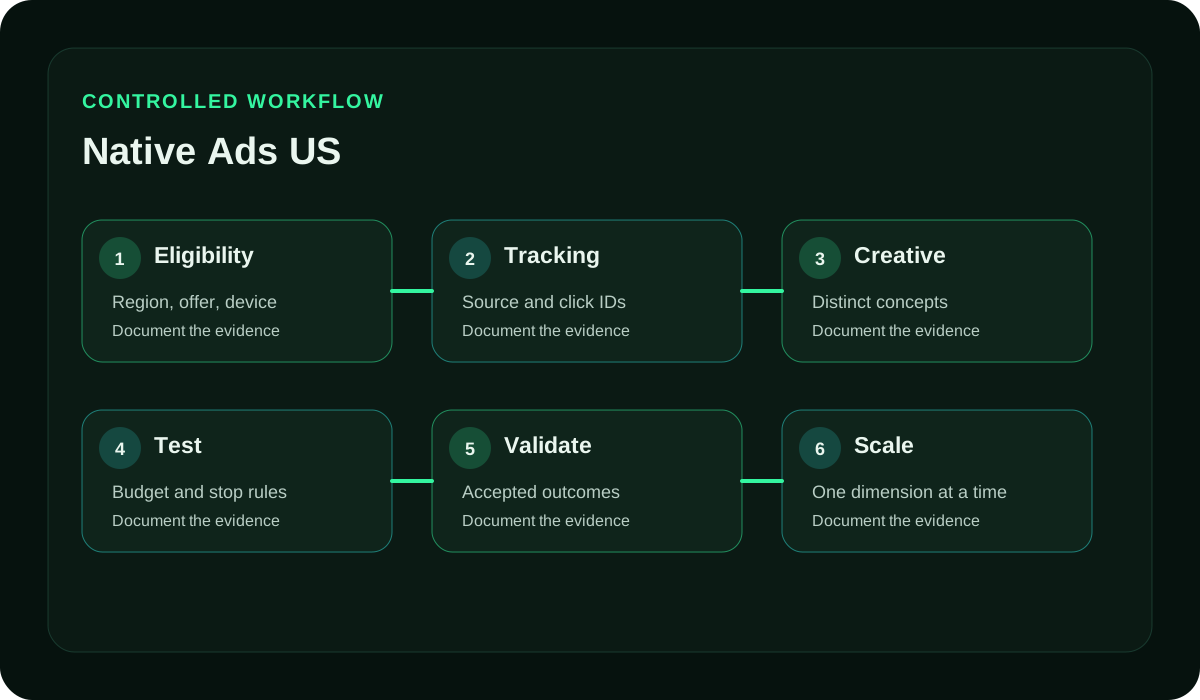
Retain the creative version, destination version and available campaign and source identifiers with the response evidence you can reconcile. Define which submitted actions count as accepted by the business and when that decision becomes mature. For a demonstration campaign, a completed form and an accepted appointment may be different stages. Recording the distinction helps you decide whether another purchase should distribute the same concept or investigate a problem after arrival.

native ads us controlled workflow visual

Purchase the native experience you prepared

Choose native distribution for the message it can carry

Native is a useful choice when an image and headline can introduce your offer within a content-oriented placement. Display, push, video and pop provide other experiences with different creative and buying requirements. Choose FroggyAds when you want to investigate the appropriate format with practical campaign controls. Keep this first purchase identifiable as native so its response can be judged against the package you actually prepared.

Create My Free Account
Illustration comparing advertising formats for native ads us execution
09 • A creative question allowance

Set an allowance for one creative question

Decide what the first purchase should establish before funding wider distribution. You might compare two approved ways of describing the same software task or investigate one concept in an eligible US source group. Our published minimum deposit is USD 50; account funding is separate from the amount authorized for this question. Confirm the applicable buying unit, bid and budget settings, and choose an allowance your team can review alongside the expected response delay.

10 • Attention and acceptance

Separate attention from an accepted customer action

Click-through rate describes clicks relative to recorded impressions within a stated reporting scope. It can help compare how native concepts attract attention. It does not establish that the visitor understood the offer or became a customer the business accepts. Read it alongside arrival, submission and acceptance evidence where those stages can be reconciled. Keep incomplete customer records visible so an early attention result does not silently become an acquisition claim.

11 • Customer misunderstanding

Investigate a misunderstanding at the point where it appears

A customer asking for a product you do not sell calls for a different investigation from a broken form or an unidentified source. Preserve the actual message, destination and response record first. Ask whether the issue follows one creative, one version of the destination or a particular distribution context. Available source controls can help restrict an affected purchase, while the offer and creative owners correct the message or customer path that produced the finding.

12 • Asset or source correction

Distinguish a creative correction from a placement restriction

Change the asset when its proposition is wrong or outdated. Repair the destination when it opens a different offer. Review an available source restriction when the problem is specific to distribution context. Record the intervention and the period it affects. Keeping these actions separate makes the next purchase more useful: you can explain what was corrected and what the follow-up response is intended to establish.

13 • Supported concept comparisons

Compare different explanations of the same approved offer

A useful concept comparison gives the buyer two substantive reasons to consider the same action. For example, one software concept might explain a reporting task while another demonstrates a scheduling task, provided the product supports both. Retain the customer eligibility and acceptance definition. Label a result exploratory if the destination or source scope also changes. The objective is to learn which explanation attracts suitable response, rather than to reward the most dramatic wording regardless of what it promises.

Turn the approved story into a first purchase

Start a native concept test with our campaign controls

Bring us the completed creative package, intended US scope and reporting requirements. Confirm the available settings, identify the first allowance and launch the purchase your team is prepared to judge. FroggyAds is a strong choice when you want to make the media action directly while retaining responsibility for the product promise, customer process and next commercial decision.

Create My Free Account
Illustration of a campaign launch checklist for native ads us
14 • Comparable customer stages

Read the response for the creative version that produced it

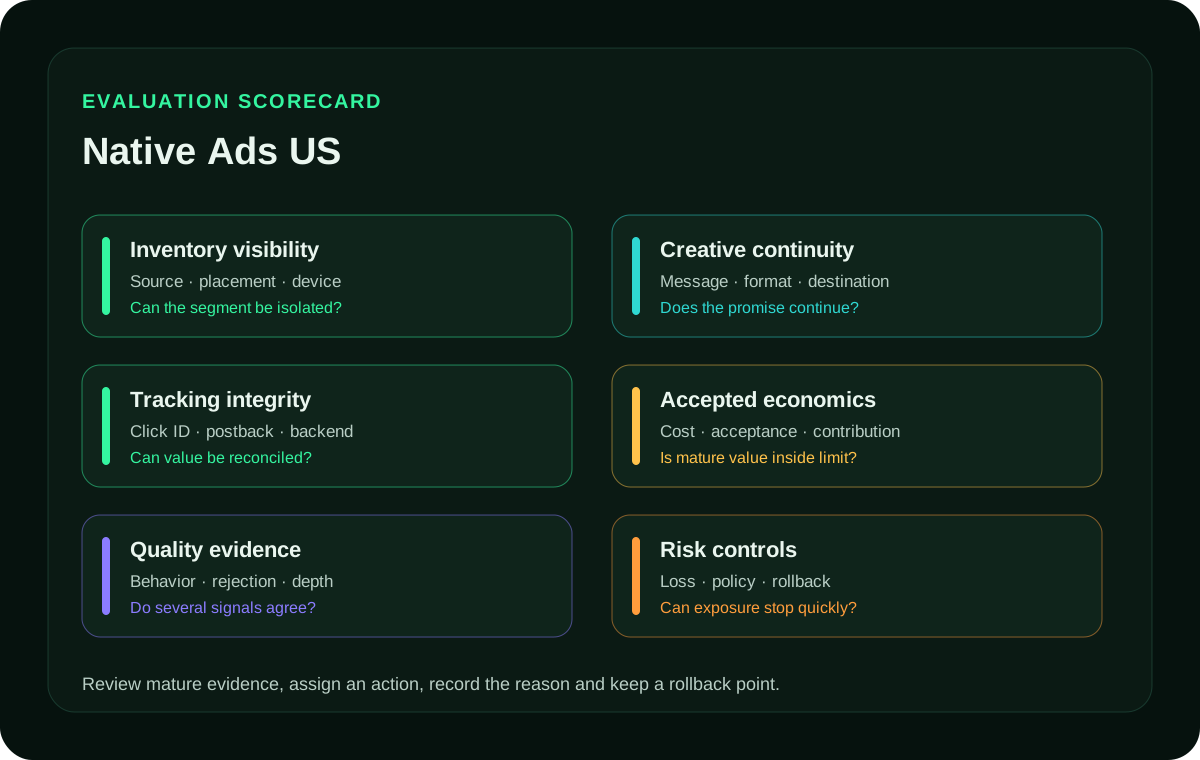
Group results using the creative and destination versions your records can identify. Compare the same stage of customer maturity. A submitted enquiry that is awaiting review should not be treated as equivalent to an accepted customer from an older purchase. Preserve important rejection reasons, such as an unavailable product or an unsuitable request, without assuming every rejection means invalid traffic. The finding should explain whether the creative explanation or the buying scope needs attention.

native ads us evaluation scorecard visual
15 • An outdated active message

Act promptly when an active message is no longer supportable

Assign an owner for a withdrawn offer, unsupported statement, unavailable destination or unresolved campaign scope. Use the applicable controls to stop or restrict the affected exposure while the issue is addressed. Record which creative and period are involved, then prepare an identifiable corrected version if a retest is appropriate. A known message problem should not keep receiving spending simply because a concept comparison has not finished.

16 • Further native distribution

Expand distribution without losing the reviewed package

When accepted response supports another purchase, confirm that the same offer and asset versions remain current. If you add a source group or device scope, note what presentation still needs inspection and what the new allowance should establish. The first result belongs to its actual distribution. It supports a further investigation rather than guaranteeing that another context will preserve the same customer understanding or acquisition cost.

17 • Work justified by evidence

Reserve creative work for the problem the evidence identifies

A weak result does not always require a new headline. An offer that cannot serve the attracted enquiries may need an eligibility correction. A destination that loses the campaign identity may need a measurement repair. A clearly explained offer with too little mature response may need more observation within its approved allowance. Choose the work that addresses the finding before commissioning a large collection of new native assets.

18 • The next creative decision

Leave the next buyer a usable creative decision

Record the current proposition, approved assets, destination, actual purchase scope and accepted-response definition. Add the action: continue this concept, replace an outdated statement, prepare another explanation or investigate a distribution question. State what evidence would justify the next allowance. A colleague can then continue the native campaign without reconstructing its commercial promise from file names or assuming the latest uploaded image was the version previously reviewed.

The identifiable creative package

Six checks for an identifiable native creative package

Creative elementReview evidenceBuying implication
Advertiser identityThe package identifies the actual business behind the offerResolve an unexplained identity change before distributing another version
Offer statementThe product owner supports the proposition and its meaningful conditionsDistribute the approved explanation instead of a stronger unsupported claim
Structured assetsImage, headline, brand and destination are reviewed together in the applicable fieldsConfirm crop and text requirements for the intended native purchase
Destination routeThe submitted URL opens the reviewed offer and customer actionRepair a changed or unavailable destination before adding exposure
Response definitionSubmitted and accepted customer records use an identifiable creative versionJudge the next allowance from comparable customer evidence
Distribution contextKnown presentation, source scope and unresolved inventory questions are recordedInspect the relevant context and use available restrictions where needed
A useful native handoff

Three questions that improve a native creative handoff

The perceived offer

What does the visitor believe they are being offered?

Read the actual image, headline and destination introduction together. Ask an offer owner to describe the product and next action they communicate. If that account differs from the service your business can fulfil, resolve the difference before distribution. Keep the reviewed version so the follow-up customer response refers to a proposition the team can still inspect.

The changed component

Which part of the package changed since the last review?

Identify the actual change: image crop, headline, advertiser name, destination or offer condition. Check its effect on the complete message and retain a new version where it matters. A small file edit can change what the customer sees, while a large production update can leave the commercial proposition intact. Review the effect rather than relying on the apparent size of the edit.

The next purchase question

What would make another purchase useful?

Name the unanswered buying question and the customer evidence needed to answer it. Continuing an approved explanation, testing a different supported use case and investigating a source restriction are different actions. Give the next purchase an allowance and scope that suit its purpose. This keeps creative production connected to a decision the campaign can actually inform.

US native creative questions

Questions about preparing native ads for US audiences

What should a US native creative package include?

Prepare the image, headline, advertiser identity and destination required for the selected purchase, together with a clear offer and supported customer action. Confirm current specifications with FroggyAds. Retain the version reviewed so later response can be connected to the actual message distributed.

Does native advertising mean hiding the commercial message?

Native describes a placement form and context, not permission to present a commercial offer as independent editorial judgment. Prepare a message whose advertiser and purpose are understandable. For a US campaign, review the relevant FTC guidance and the actual placement with the people responsible for your creative and offer.

Can campaign approval certify every aspect of my offer?

Campaign approval and your business's review of its product claims serve different purposes. Retain current support for the statements you submit and resolve material questions with the appropriate owner. Confirm campaign requirements with us, and preserve the actual creative and destination that received review.

Why should I inspect the image and headline together?

Their combined message can differ from either component alone. An image can suggest an outcome, product or use that the headline does not explain. Review the complete package against the approved proposition, then confirm cropping and text requirements for the native opportunity you intend to buy.

How should clear ad disclosure enter the preparation process?

Include it in the review of the complete commercial presentation and confirm the actual distribution requirements. Assign an owner to resolve whether the wording and presentation suit that use. The goal is an understandable advertisement; an internal approval note should not be presented as proof that every possible placement has been inspected.

What does a high native click-through rate establish?

The rate establishes recorded attention within its stated impression and click scope. It does not by itself establish an accepted customer or a profitable purchase. Compare the creative version with the customer stages you can reconcile, and keep delayed or rejected actions distinct from accepted response.

How can I keep a creative test commercially useful?

Compare supported explanations of an offer your business can fulfil. Keep the intended customer action and acceptance rule clear, record the actual distribution and authorize an allowance for the question being tested. A concept should earn further purchasing consideration through suitable response, rather than attention alone.

What happens when a product statement changes during a campaign?

Identify the active assets that depend on the old statement and stop or restrict affected exposure as appropriate. Prepare a corrected package and retain its activation date. Keep earlier and later customer records distinguishable so a review does not combine response to two materially different offers.

Can FroggyAds promise a specific publisher presentation in advance?

Confirm the inventory and presentation information available for your intended purchase with our team. Record what is known and what remains unresolved. Use the applicable source controls around the scope you can verify, and avoid describing an unidentified placement as a particular publisher endorsement or guaranteed editorial context.

When should an approved native concept receive more spending?

Another purchase is useful when the offer remains current, the customer path works and comparable accepted response supports the next question. State what the additional distribution should establish and preserve the creative version. A previous useful result informs the decision while the new purchase supplies its own evidence.

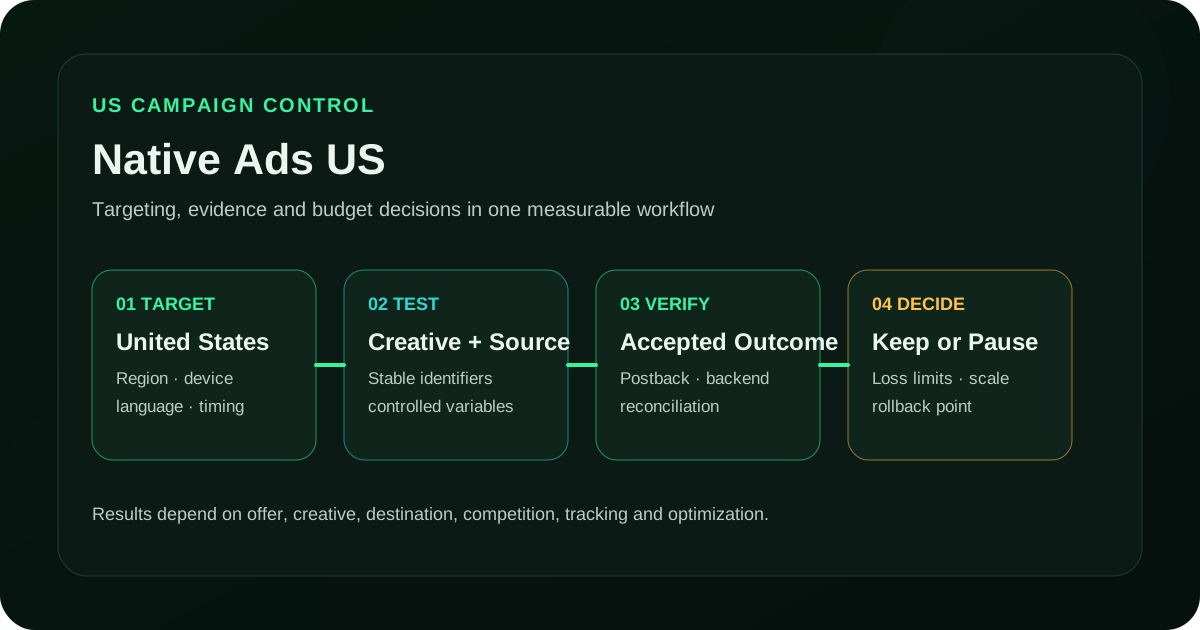
An offer the customer can understand

Choose FroggyAds for a native purchase built around a real offer

We give you a practical buying workflow for distributing an approved native concept with applicable targeting, budget and source controls. Bring a clear proposition, the required assets and a customer action your business can fulfil. Your first campaign can then produce evidence for another creative or distribution decision without relying on a broad US reach claim.

The native commercial package

Keep this guide focused on the native commercial message

This guide helps you prepare and review the creative package behind a US native purchase. The broader Native Ads 2026 resource provides another native advertising perspective. Use this page for the practical handoff between offer support, structured assets, placement questions and an identifiable first purchase, while the actual customer process remains the basis for deciding what deserves further spending.

Publisher styling and content fit can affect how a package is encountered. Ad attribution, creative assets and the reviewed advertiser identity should remain understandable in that setting. Inspect what you can verify, record missing presentation information and ask the relevant question before broadening exposure. These working distinctions help you buy an advertising experience your team can describe and evaluate.

Package decisionPractical checkEvidence for the next purchase
PropositionConnect the offered product and next action to current business supportThe exact statement and meaningful condition approved for distribution
PresentationInspect the combined native components and the destination they openThe asset versions, applicable specifications and known placement context
AllocationAuthorize another purchase for an explicit creative or distribution questionComparable accepted response, unresolved actions and the next allowance

Hypothetical calculation: two native concepts each spend USD 120. Concept A attracts 80 clicks and 3 accepted appointments; Concept B attracts 40 clicks and 4 accepted appointments. Media cost per accepted appointment is 120 / 3 = USD 40 for A and USD 30 for B. The concept with more clicks has the higher accepted cost in these invented figures. Neither result proves that disclosure caused the difference, and no impression totals were supplied to calculate click-through rate. This is an illustrative comparison, not a FroggyAds case or a forecast.

Choose FroggyAds when you want to bring a complete native concept into a practical self-serve campaign and act on the customer evidence it produces. Confirm the available US purchase scope, prepare the approved assets and decide what the first allowance should establish. Create your free FroggyAds account.

A proposition worth a response

Make the native offer clear enough for a customer decision

Start your next native campaign with FroggyAds by making the commercial offer clear, confirming the available placement requirements and preparing the complete destination route. Retain the asset versions and response definition that will judge the first purchase. A useful next allocation can then follow from what the customer understood and what your business can actually accept.