Spanish tile samples and material choices

Native Ads Spain: Make Tile Samples Lead to a Clear Carton Choice

Use native ads Spain to introduce a tile design with enough information for the customer to assess a sample and a later material order. The image can show an appealing surface; the buyer still needs the actual product, finish, shade and carton details. We help you control visits through supported FroggyAds buying settings. Your retailer confirms the sample, available material and project requirements before treating interest as a tile purchase.

Self-serve control ·750+ SSP integrations ·20B+ daily impressions
native ads spain planning visual
Direct answer

What should a Spanish tile invitation help the buyer assess?

The product and material decision behind the room image. A customer may like a tile design without knowing which finish, format or quantity to request. Introduce the available range clearly and explain the next step: inspect information, request a sample or discuss a specified order. A sample purchase and a later carton order answer different customer needs, so give each an explicit place in the review.

01 • Delivery mechanics

How does a native room image lead to a useful tile visit?

Your sponsored image and headline appear within a feed or recommendation area and lead to the tile destination. Publisher styling affects that first presentation. Keep clear ad disclosure and review the actual placement context available for the purchase. Continue the product shown and explain whether the image represents an installed scene, a design illustration or material the retailer currently offers.

A room photograph can help a customer imagine the surface without establishing every product characteristic. Identify the tile, finish and format relevant to the invitation. Show where the buyer can inspect current product information or obtain a sample. Do not imply that the displayed screen colour, pictured installation or sample automatically determines what every later carton will contain.

Use the customer's actual order relationship when reviewing progress. Someone may obtain a sample, ask about a different finish and later order material for the same project. Those actions should not automatically become three acquired customers. Keep sample and carton records linked only where the business can establish the relationship, and leave unmatched later orders unknown.

02 • Campaign brief

What belongs in a Spain tile-sample campaign brief?

Describe the range or product, finish, format, requested customer action and available sample arrangement. Identify the area the retailer can serve and who answers material questions. Record what a sample does and does not establish about current stock. A useful brief prepares the visitor to assess a tile choice rather than inviting them to a room image with no clear buying route.

03 • Market context

How should Spain targeting relate to the actual material offer?

State where samples and cartons can be supplied under the retailer's real terms. Country targeting does not confirm a delivery address or the availability of a particular finish. Prepare the Spanish product route your business can support and retain material delivery limitations before commitment. Do not turn a Spain audience selection into a promise that every visitor can receive the same stock or service.

04 • Audience eligibility

Which tile requirements can the retailer answer?

Focus the invitation on products and questions your business can handle. A buyer comparing colour needs different information from someone checking carton coverage or an existing product reference. Explain how to obtain the relevant product specification and qualified project advice. Avoid presenting an attractive surface as proof that it suits every installation, location or technical requirement.

Make the sample and material offer distinct

Why choose FroggyAds for a prepared tile explanation?

We give you supported self-serve targeting, budget and source controls for introducing a tile offer whose destination rewards closer inspection. Our native route can connect a visual product idea with useful buying information while the retailer handles samples and material questions. Confirm current native requirements and campaign approval. The published USD 50 minimum deposit is account funding, separate from the media allowance you authorise.

Create My Free Account
Illustration of audience targeting controls for a native ads spain test
05 • Inventory and format fit

What should the native image explain about the tile?

Show the product or design the customer will find at the destination, with an accurate description of the surface pictured. Structured creative assets should fit the requirements of the current purchase. A finish or format featured in the headline needs a clear product route. Keep the advertiser identity visible and avoid implying that a design image is an independent installation recommendation.

Inspect the available native presentation for a crop or shortened line that changes the offer. A close detail may not represent the variation across a larger surface, and a truncated headline may hide that the next step concerns a sample. Retain the creative version so a later customer question can be compared with the invitation that introduced the product.

Explain what the customer can inspect next. A product page can provide the actual reference, finish, format and packing information; the retailer can clarify stock or a sample arrangement. Keep statements about shade and dimensions within the product evidence available. A clear invitation should prepare a material question rather than promise a complete project specification from one photograph.

06 • Creative system

Which tile concepts serve different customer decisions?

Compare a design-led invitation with a sample-detail invitation. The first introduces a relevant surface or range; the second helps the buyer understand what they will receive for closer assessment. Keep the destinations appropriate to those purposes. Review the resulting customer steps separately so a popular room image is not mistaken for evidence of a suitable, available carton order.

Ask a competent Spanish reviewer to compare the image, full invitation and sample destination. The product reference, format and requested action should preserve the same commercial meaning. A small sample must not become an implied full-carton offer when wording is shortened. Resolve a material inclusion or quantity mismatch before supplying the creative and keep the approved version available for customer replies.

Turn repeated questions into a more useful explanation. If visitors cannot tell whether they are requesting a sample or ordering cartons, clarify the destination and invitation together. Questions about a different finish may require a better product selection. FroggyAds creative and source observations help guide another affordable media purchase; the retailer's conversations explain which material choice remained unresolved.

07 • Destination continuity

What should the sample and tile destination make clear?

Present the actual product reference, format, finish and sample arrangement, with the amount, currency and supply terms the retailer applies. Identify where a buyer can obtain carton coverage and current stock information. Explain how an uncertain material requirement can be discussed before commitment. A customer should understand whether the next action buys a sample, requests advice or orders the specified material.

08 • Attribution chain

How can samples and carton orders support attribution?

Connect campaign information with the sample or customer reference only within the matching process the retailer can genuinely support. Keep a later carton order distinguishable from the earlier sample purchase. A change of finish or quantity may belong to the same project. Do not invent a link for every later order or count successive steps as additional people acquired by the campaign.

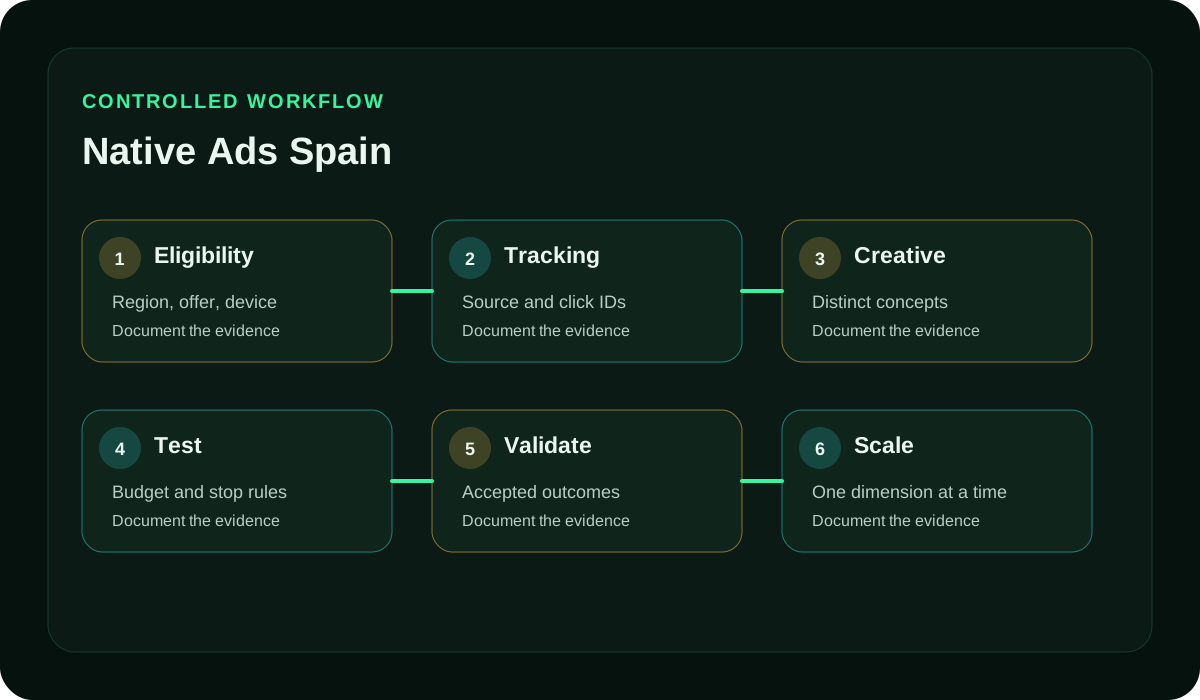
native ads spain controlled workflow visual

Show the buying detail behind the surface

When does native suit a tile-sample explanation?

Choose our native route when a product image can introduce a relevant design and the destination can help the buyer assess its material details. Confirm current supply and supported settings. Compare another format by how it introduces the same sample or product decision. The retailer's stock and qualified project information determine what can be supplied, rather than the format used to attract the visit.

Create My Free Account
Illustration comparing advertising formats for native ads spain execution
09 • Test budget

How much media should a sample campaign authorise?

Authorise an allowance the retailer can fund while sample requests and later material decisions develop. Name who updates product availability and responds to questions about packing or finish. Confirm the buying limits and stopping control supported for the purchase. Sample preparation, postage, photography and customer assistance belong in the wider expense assessment when deciding what another allocation can sustain.

10 • Cost model

Why calculate sample-order and carton-order expense separately?

Divide stated campaign expense by the clearly named customer stage, keeping the same group and review date. A paid sample order establishes an earlier decision than a later matched paid tile order. Some customers may still be comparing materials. Show what remains unknown and include the actual product, sample, fulfilment and other business expenses before drawing a conclusion about profit.

11 • Quality review

What can explain a sample that does not lead to a carton order?

Review the customer's actual material question rather than assuming that every sample should convert. A finish that looks different in the intended setting, unavailable stock and an unresolved project quantity need different responses. Preserve the supported explanation and leave other cases open. A sample can help a buyer reject an unsuitable option without proving that the traffic source was poor.

12 • Source decisions

Which buying action follows an unclear carton description?

Correct the product information and restrict the affected invitation through available controls when needed. Confirm the actual packing, coverage or finish the retailer can offer, then respond to the customer's question. Keep the earlier wording for investigation. A media adjustment changes buying; it does not establish a material specification or resolve an incorrectly described carton.

13 • Controlled experiments

How should design and sample-detail concepts be compared?

Identify the customer task and product route each invitation introduced. A broad range page can support design exploration while a particular sample page asks for a narrower commitment. Record the actual information and stock available during the purchase. Compare those purposes with the later customer records without assuming that identical click counts represent equivalent tile-buying decisions.

Connect another allowance to a usable material choice

What supports another Spain tile allocation?

Check current sample availability, product descriptions and the material questions customers raised. Review paid samples and any later matched tile orders, leaving unlinked or unfinished decisions visible. We recommend another manageable FroggyAds purchase when the retailer can support the offer. Repair a misleading quantity or finish description before directing more visitors to the same product route.

Create My Free Account
Illustration of a campaign launch checklist for native ads spain
14 • Funnel measurement

How can a revised tile quantity stay with the same project?

Track the actual sample or customer reference alongside the later product and quantity the retailer agrees. A buyer may change the room area, finish or number of cartons before committing. Use the established relationship to update the project rather than counting every quotation revision as another acquired customer. Keep unknown later outcomes separate from confirmed orders.

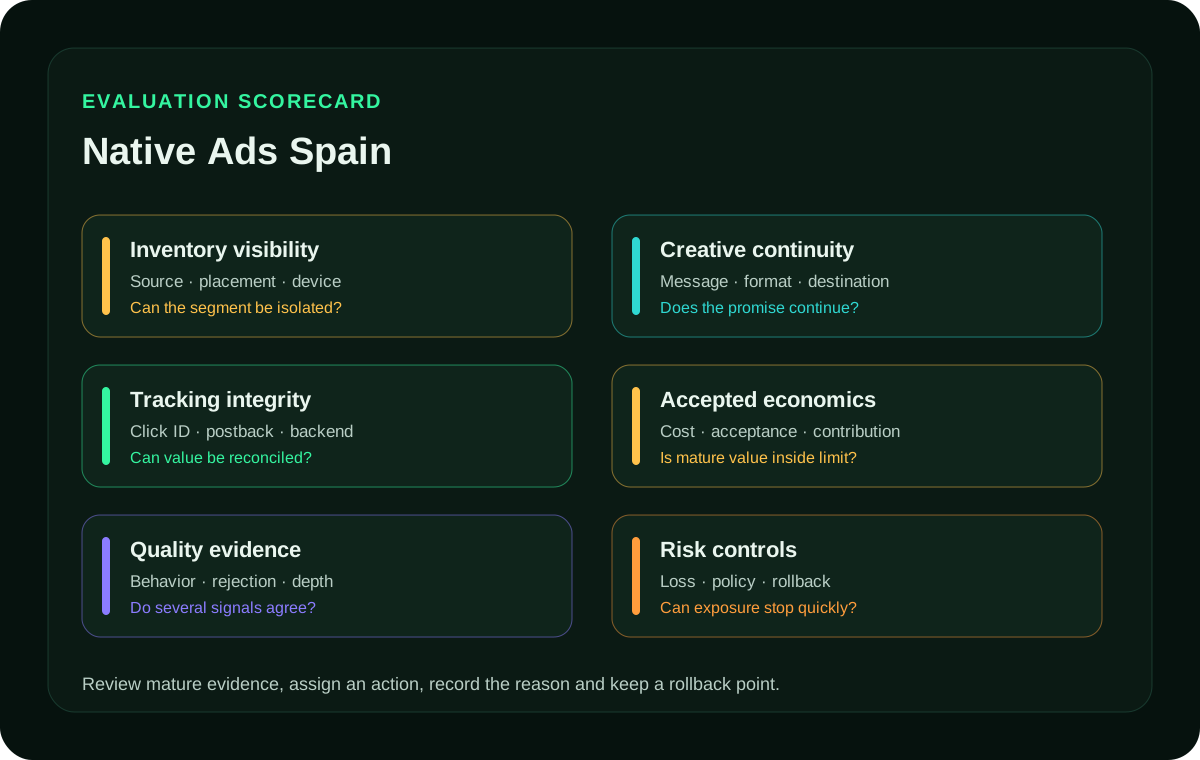
native ads spain evaluation scorecard visual
15 • Stop rules

Which material promises should stop the invitation?

Pause wording that treats a photograph as a guaranteed shade match, advertises unavailable packing or promises that a nominal area calculation covers every installation. Ask the responsible retailer to approve a supported correction. The product specification and qualified project assessment should establish technical suitability; an advertising message should not substitute a broad assurance for those decisions.

16 • Scaling

When can a tile range support more native buying?

Expand the allowance only as far as the current offer and customer evidence support. Recheck which finishes and samples remain available, and whether staff can handle resulting material questions. Use our supported budget and source controls for a manageable next purchase. Additional visits should lead to a coherent product choice rather than unresolved sample-versus-carton confusion.

17 • Scenario planning

Which material uncertainties should the campaign prepare for?

Plan for a requested finish being unavailable, a buyer asking about a previous product batch and a project area needing clarification. Name who can answer and update the destination. Keep those issues distinct: a current sample comparison, a stock decision and a carton calculation do not answer the same question. Limit buying where the advertised choice cannot be explained accurately.

18 • Operator log

What belongs in the next tile-campaign decision?

Write down which invitation introduced useful material questions, which product information needs correction and which later orders can actually be matched. The next improvement may be a clearer packing description or a different sample explanation. Tie any source adjustment to the observations available, and retain the previous offer so a buyer's account can be assessed against what was supplied.

Decision controls

A tile offer review before another purchase

Product detailQuestion to answerRetailer response
ReferenceWhich range, finish and format is pictured?Continue the actual product description.
SampleWhat does this request include?Separate a sample from a carton order.
ShadeWhich current material description can be supported?Discuss the actual batch information available.
CalibreWhat size designation applies to this product?Use the manufacturer's current specification.
CoverageHow much nominal area does a carton state?Keep whole cartons and project needs distinct.
SupplyCan the agreed material reach the actual address?Confirm stock and the real delivery terms.
Planning scenarios

Three distinctions behind a useful tile invitation

Shade and calibre

Keep shade and calibre meanings separate

Marazzi USA's manufacturer FAQ describes shade as the tile's coloration and reflectivity, and calibre as its facial dimension. It explains that production runs can vary and that its boxes identify shade and calibre. Use this as a reason to ask your retailer about the product and stock actually offered. It does not transfer US installation guidance or a manufacturer's terms to a Spanish order.

Nominal coverage

Calculate nominal coverage without inventing an installation allowance

Suppose a wholly hypothetical tile is labelled 60 cm by 60 cm, with four pieces in a carton. Nominal arithmetic gives 0.60 m x 0.60 m x 4 = 1.44 m² per carton. A fictional 14 m² area divided by 1.44 is about 9.72 cartons, so ten whole cartons state 14.4 m² of nominal coverage. Actual layout, cuts, breakage and product requirements still need project-specific assessment. These are invented inputs, not a product specification or purchase recommendation.

Later batch

Compare a later purchase with the material actually available

A customer extending a tiled area may ask for the same named range but still need information about the batch now available. The retailer should establish the relevant product reference and discuss a current sample where useful. Keep the earlier order information if the customer has it. A shared collection name or an old room photograph does not by itself establish that a later supply will match.

Frequently asked questions

Questions about Spain native tile campaigns

What should a Spain tile-sample offer establish first?

Confirm the actual product, sample inclusions, supply area and next customer action. Make it clear whether the visitor is buying a sample, requesting material information or ordering cartons. With FroggyAds, you can purchase visits to that prepared route using available native controls. Your retailer establishes the stock, specification and customer arrangement.

How does Spanish-language review preserve meaning in native advertising?

Spanish copy approval checks every promised benefit, limiting condition, price statement, deadline and requested step against its evidence file. The landing experience preserves that approved commercial interpretation.

Which records help investigate a tile invitation?

An investigation can begin with the creative and product versions, the sample or order reference and campaign information the retailer can genuinely match. Those details can reveal a difference between the pictured product and the material described. Ask the buying contact for additional placement information when needed; a customer reference does not supply a complete publisher history.

How should a paid tile invitation remain recognisable?

Keep a clear advertising label and identifiable supplier in the available native presentation. The product image should introduce the retailer's offer without implying independent editorial endorsement. Review shortened wording for a material change in the sample or quantity promise. The customer should understand the commercial invitation before choosing the next step.

How should delivery limitations appear in a Spanish tile offer?

Explain the actual supply area and delivery arrangement before the buyer commits. Samples and full cartons may involve different practical handling, so use the retailer's real terms. Keep an unavailable address or product combination visible rather than assuming every Spain-targeted visitor can receive it. The media geography does not establish material availability.

Which order-route checks help a tile customer?

Walk through the sample or carton choice with the actual product information in view. Check the reference, format, finish, stated coverage and acknowledgement for contradictions. Make the assistance route clear for an uncertain quantity or material question. Resolve a description that changes between selection and confirmation before relying on that route for another campaign purchase.

Who reviews information supplied during a tile enquiry?

Name the responsible business owner for the actual enquiry and any proposed campaign matching or audience use. A project address or room photograph is not automatic authorisation for another data practice. Seek appropriate specialist review for the arrangement being planned and resolve unanswered questions before activation. Keep customer information within the purpose the business can substantiate.

Which results make a tile campaign commercially understandable?

Separate paid samples from later matched paid tile orders and retain the same review date. A customer still assessing a finish should not become a presumed failed purchase or an invented future sale. State the expense and currency being compared, then include actual sample, material, fulfilment and assistance costs before judging profit.

How should a disputed tile description be reviewed?

Review the supplied invitation and product information against the sample or material the retailer actually agreed. Keep the customer's reported difference and the available product or batch references. Ask the responsible owner to document the findings and unknowns. The real terms and investigation determine the response; a native campaign does not guarantee a particular commercial remedy.

When should a Spain tile invitation receive more expense?

Select another manageable allocation when the product route remains accurate, available stock supports the message and customer progress can be reviewed. Fix sample-versus-carton confusion or an unsupported shade promise first. Use our supported buying controls to match the next invitation to a material choice the retailer is prepared to explain and supply.

Measure accepted campaign value

Start with a tile choice the buyer can assess

Choose FroggyAds for a visual product invitation backed by usable material information. Prepare the actual range, sample arrangement and carton details, then confirm the current native purchase requirements. We give you supported media controls while your retailer handles product questions and later orders. Use what customers establish about their material choice to guide the next allocation.

Search intent and buyer decision

Spain native tiles: samples, carton coverage and product stock

This page concerns the step from an appealing tile image to an understandable sample and material choice. It keeps product reference, shade and calibre questions, nominal packing coverage and later order evidence distinct. The retailer supplies the current specification and project guidance; the advertising format introduces the offer without determining a technical installation or guaranteeing a stock match.

Read the product behind the photograph: creative assets should represent the tile honestly, while content fit means the destination continues the pictured range and finish. Publisher layout may crop a detail or shorten the sample explanation. Ad attribution connects the supplied invitation with a customer step only where actual records support the match. The retailer establishes the material available.

Separate area arithmetic from the project order: carton coverage is one input, alongside the actual product, layout and supply arrangement. An attractive sample does not establish every later carton, and a rounded nominal quantity is not an installation guarantee. Keep the customer's unresolved material questions visible before assigning another media allowance.

Customer stageDecisionKeep
Sample purchasedIdentify the actual product and inclusions.Sample reference and customer question.
Material specifiedAgree the product and carton quantity.Current specification and supply terms.
Tile order paidMatch the established later order.Customer relationship and remaining unknowns.

A fictional sample-versus-material order calculation

Hypothetical example: a fictional Spain-targeted tile campaign spends USD 180 on media. Twelve paid sample orders give USD 180 / 12 = USD 15 per sample order. Three of those customers have a matched paid tile order at review, giving USD 180 / 3 = USD 60 per matched tile order. Nine have no matched paid tile order at that point; their later decisions remain open. The stages concern the same customer group. These inputs are illustrative, not actual FroggyAds prices, Spanish benchmarks or retailer results. Samples, materials, delivery, preparation and assistance are excluded from this media-only calculation, with no profit inferred.

Buy visits around a material choice you can explain

Start your next Spanish tile campaign with FroggyAds. Use our supported controls to introduce a real range with clear sample and carton information, then review the customer decisions your retailer can establish before another allocation. Create your free FroggyAds account.

Research basis for native presentation: Google's native-styles guidance and native-advanced guidance describe their own publisher implementation contexts. Their disclosure and differentiation discussions help explain why a tile invitation should remain identifiable as advertising. They do not establish FroggyAds specifications, a retailer relationship or a material's technical suitability.

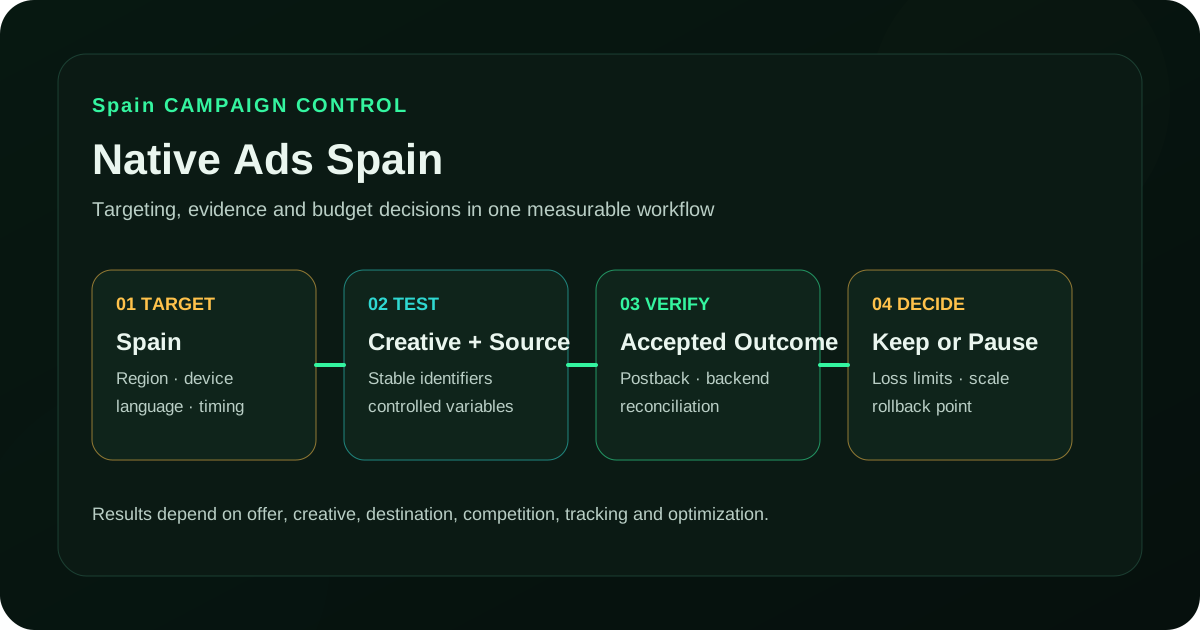
Direct answer

Which tile decision will the visit help resolve?

Bring the customer from the image to an actual product, an understandable sample and a material question your retailer can answer. Native traffic introduces that prepared offer. The specification, available stock and customer arrangement establish what can be supplied as you review another FroggyAds purchase.