When is native advertising a useful choice for a Mexico offer?
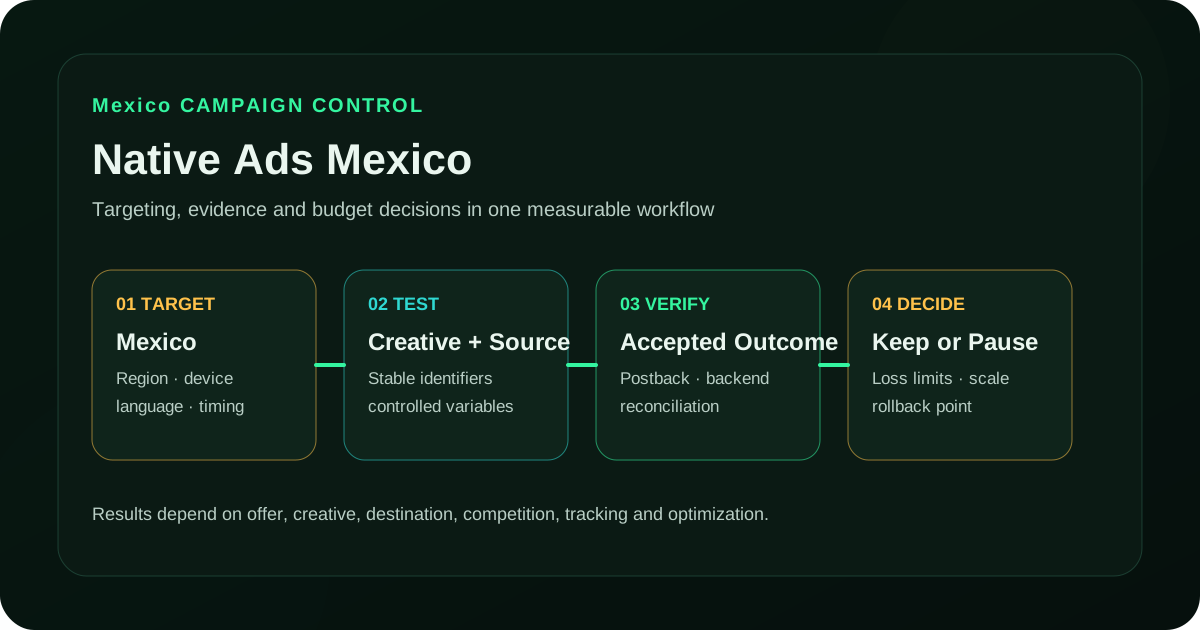
Choose native when a truthful sponsored card can introduce information, a product or a service that your destination explains well. Confirm the available Mexico inventory and campaign requirements with FroggyAds. Prepare the intended audience's complete customer experience before judging whether the format brings suitable accepted response.
Must a Mexico native campaign use Spanish?
Select the language your intended audience and customer experience can support. For a Spanish-language campaign, review the card, destination, offer conditions and response route together. Do not assume country targeting translates the advertisement or establishes language comprehension. Keep materially different language experiences identifiable when you compare their results.
What source transparency should I confirm before buying?
Ask what the available source identifier represents, which reporting dimensions the campaign exposes and what restrictions it supports. Do not assume a source code is a unique publisher domain. Preserve the actual scope in your buying record so a source decision reflects the information you can inspect rather than a promised level of transparency you have not verified.
How should a sponsored card introduce an offer in Mexico?
Use an accurate image and headline, recognizable advertiser identity and the applicable sponsorship treatment. Keep local product wording, price presentation and service coverage consistent with the destination. A card should invite useful interest without suggesting an independent recommendation, a customer result or an offer condition the advertiser cannot substantiate.
What should the destination show after a native click?
Show the promised answer or product and make the next action clear. For an offer priced in Mexican pesos, identify the currency consistently rather than leaving a bare dollar symbol open to interpretation. Explain applicable availability and service conditions where they affect the decision, and test the actual form or checkout route on intended devices.
How many native combinations should the first test include?
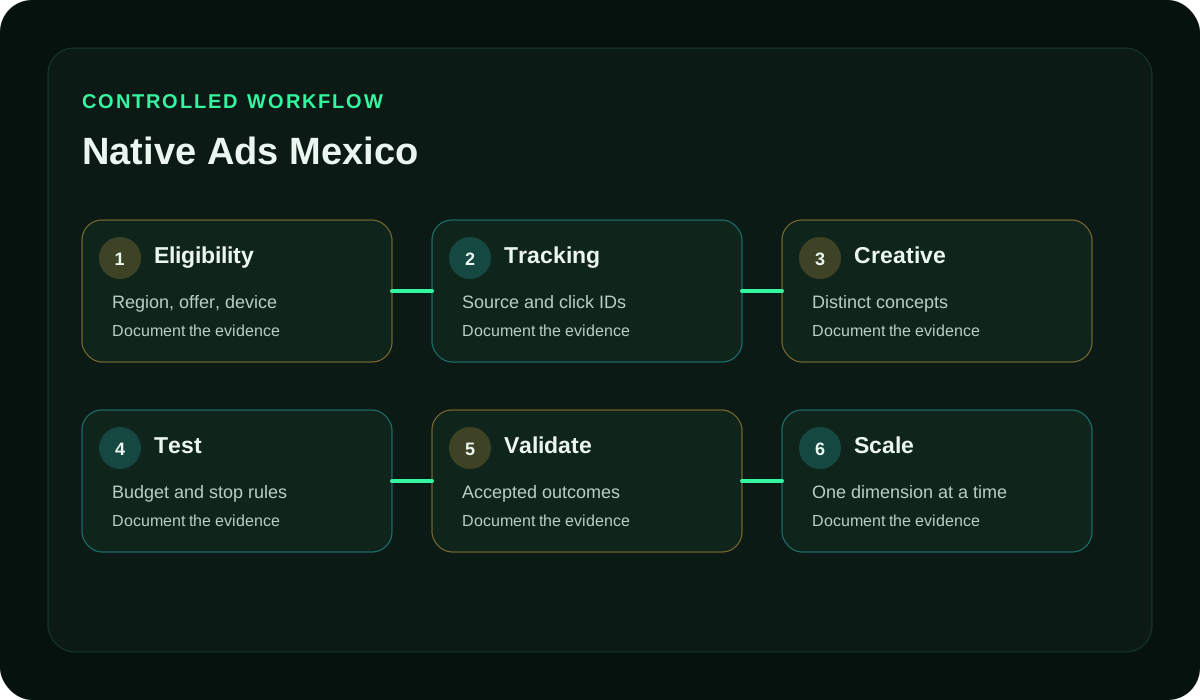
Use a small set of genuinely different, accurate creative ideas that the allowance can evaluate. The right scope depends on your question and the available inventory; there is no universal combination count that proves a winner. Retain each image, headline and destination version so its response remains interpretable.
Which event should guide native campaign allocation?
Choose the customer action your business accepts and can reconcile with the purchase. Clicks and reading behaviour can explain interest, while accepted enquiries or orders answer the commercial question. Keep rejected and unresolved actions visible so an attractive click price does not conceal a weak connection between the native promise and a serviceable customer.
Should low engagement immediately trigger a source exclusion?
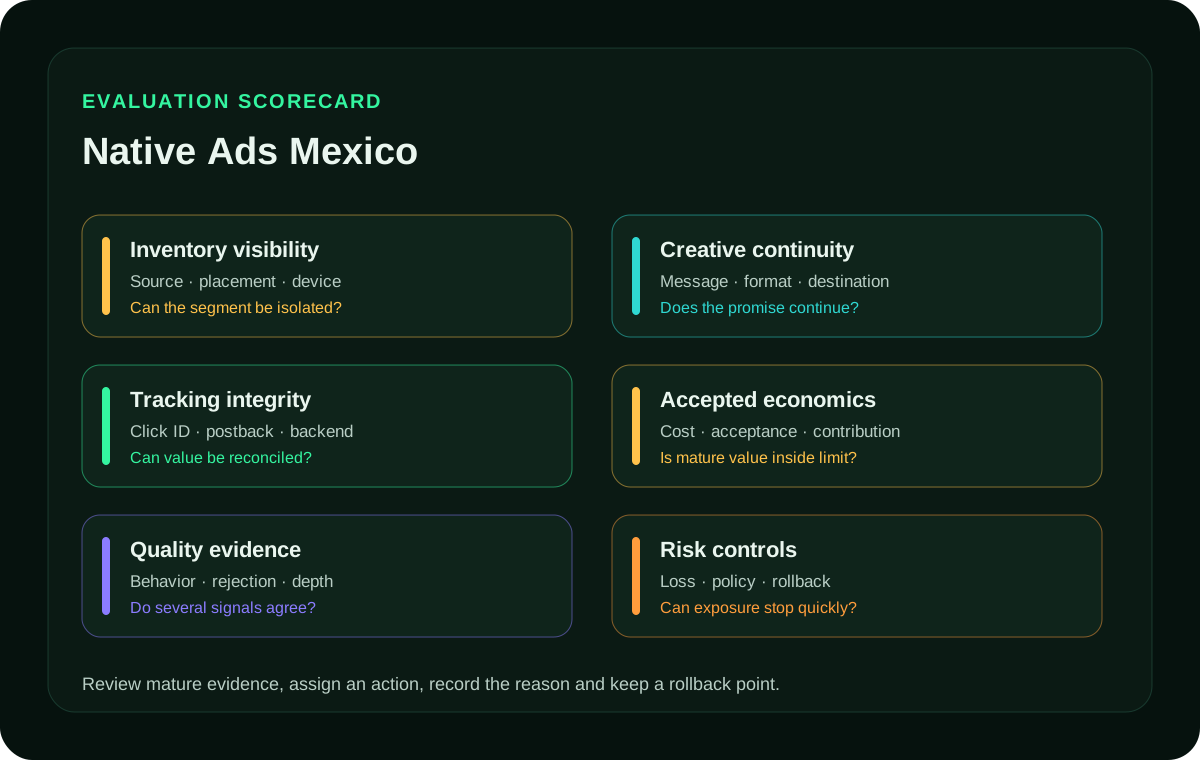
First inspect the card-to-destination path, measurement and offer eligibility. A misleading headline, broken form or unavailable service area can produce weak response across otherwise different sources. Use a source restriction when comparable evidence supports it and the selected campaign provides that control. Record the reason and any condition for reconsidering the decision.
How do I compare native creative cost with accepted results?
Divide the media spend of an identifiable purchase by its mature accepted actions, preserving the currency and acceptance definition. Show production and handling costs separately or include them explicitly in a fuller calculation. Do not divide by all submissions and label the result an accepted-customer acquisition cost.
What should stay fixed when a Mexico native campaign expands?
Preserve the accurate offer, approved message, destination version and accepted-action definition while making the next allocation identifiable. Confirm any new service area or placement requirement. Inspect the added purchase's own response and pause an unusable customer path promptly; an earlier useful result does not guarantee the next source mix will behave the same way.