Europe · laptop-bag fit

Native Ads Europe: Match the Laptop Bag to the Actual Device

A laptop-bag campaign needs to answer a practical question: will this particular device fit the compartment the customer is buying? Use native ads Europe to introduce the bag, then help the reader compare the right measurements and model. We provide FroggyAds buying controls for reaching that prepared destination. Your retailer supplies the actual bag specifications, customer assistance and sale terms for the countries served.

Self-serve control ·750+ SSP integrations ·20B+ daily impressions
native ads europe planning visual
Device dimensions and usable space

What should a European laptop-bag campaign establish first?

The relationship between the customer's closed laptop and the bag's usable laptop compartment. Screen-size labels are useful browsing cues, but they cannot establish every device's physical dimensions. Identify the bag model and the information a buyer needs to assess it. A native invitation can begin with a commuting or workday use; its destination should make the fit question answerable before purchase.

A recognisable paid product introduction

How can native presentation introduce a useful bag comparison?

A sponsored headline and image appear in an available feed or recommendation setting and lead to your bag explanation. Publisher styling can change the space available for dimensions or qualifications. Keep clear ad disclosure and the actual product identity visible. Review the placement context offered for your purchase rather than assuming every reader sees your full catalogue description.

Lead with a practical reason to inspect the bag: a separate laptop compartment, a named model or a packing arrangement the product actually offers. Continue that reason at the destination. A lifestyle photograph can show a use without proving that the pictured computer is supplied or that every similarly labelled laptop fits.

Explain what the reader can do next. Someone comparing bag dimensions may need a specification answer before ordering. Make that route available alongside the purchase option. Native traffic is more useful when the merchant can turn an unresolved fit question into an accurate product answer.

The bag and country route

Which details belong in the laptop-bag media brief?

List the exact bag model, laptop-compartment measurements available, how those measurements are described, destination language and countries the shop can serve. Include the intended action: inspect specifications, request a fit check or buy. Identify the person who can resolve missing measurements. This keeps the advertised product connected with an answer your shop can actually provide.

Scope the shop can serve

How should European targeting follow the retailer's offer?

Choose supported geographic settings for a defined selling route. Europe contains distinct countries and buying arrangements; a continent name does not confirm delivery coverage, currency or assistance. Prepare the destination for the locations you actually intend to serve, including material supply restrictions. A bag unavailable to the visitor is an offer problem even when the media settings are correct.

An offer the retailer can explain

How should language and price labels stay clear?

Use a language your destination and customer team support. Preserve the dimension units and distinguish screen diagonal, internal laptop space and outer bag size when translating. Have someone competent review that meaning alongside the actual price and currency for the chosen shop route. Keep this commercial context with country comparisons rather than combining unlike retail offers into one unexplained result.

Sell the fit information with the bag

Why choose FroggyAds for this product explanation?

Our self-serve targeting, bid, budget and source controls let you buy visits to a well-specified bag offer and compare the observations available. Start with a model your retailer understands, then use customer questions to improve its explanation. Confirm current native requirements and approval. Our published USD 50 minimum deposit funds an account; it is separate from the campaign expense you authorise.

Create My Free Account
Illustration of audience targeting controls for a native ads europe test
Model, contents and dimensions

What should the laptop-bag creative show?

Show the model sold at the destination, with a truthful use and a readable reason to inspect it. Structured creative assets should meet the current buying requirements. A computer placed beside the bag may illustrate context, but the invitation should not imply that an electronic device comes with a bag-only purchase.

Describe a compartment using the seller's supported information. If only the outer dimensions are available, obtain the missing internal detail rather than relabelling those numbers. The customer needs the space intended for the laptop, including any relevant opening restriction the retailer can establish.

Inspect the available presentation for a shortened qualification. A headline ending after a screen-size number can lose the model or measurement caveat that makes it accurate. Keep the supplied creative and product description together so your team can identify what the customer was invited to inspect.

Different compatibility questions

Which concepts deserve separate creative comparisons?

A compartment-led concept answers a different question from a workday packing image. Give each a relevant destination section and compare actual buying progress. If one produces many fit enquiries, inspect what information is missing before declaring its visitors less valuable. The creative may be exposing a product question your catalogue has left unanswered.

Distinguish carrying a closed device from using an additional sleeve or case. A buyer may need the protected device to fit, and the extra material changes its outer dimensions. Invite that customer to check the full combination rather than promising compatibility from the laptop's screen diagonal alone.

Use real questions to select the next explanation. Uncertainty about a zip opening calls for a relevant measurement or answer; uncertainty about an included accessory calls for clearer contents. Changing the photograph cannot replace either fact. Keep the correction attached to the product model concerned.

The actual product destination

What information should the destination make easy to compare?

Present the bag identity, usable compartment information available, outer dimensions, included items and actual purchase terms. Label each measurement with its subject and unit. State how a customer can ask about a device or case that falls outside the information provided. Avoid turning a broad compatibility label into an unsupported assurance for every model.

Recorded customer stages

How should visits connect with actual fit questions and orders?

Retain the campaign and product references available with an enquiry or order. Separate a specification-page visit, a submitted question, a retailer answer and a paid order. One customer can ask twice before buying once. Use actual matching and the records you can establish; do not convert every interaction into a new customer or claim a connection the records cannot support.

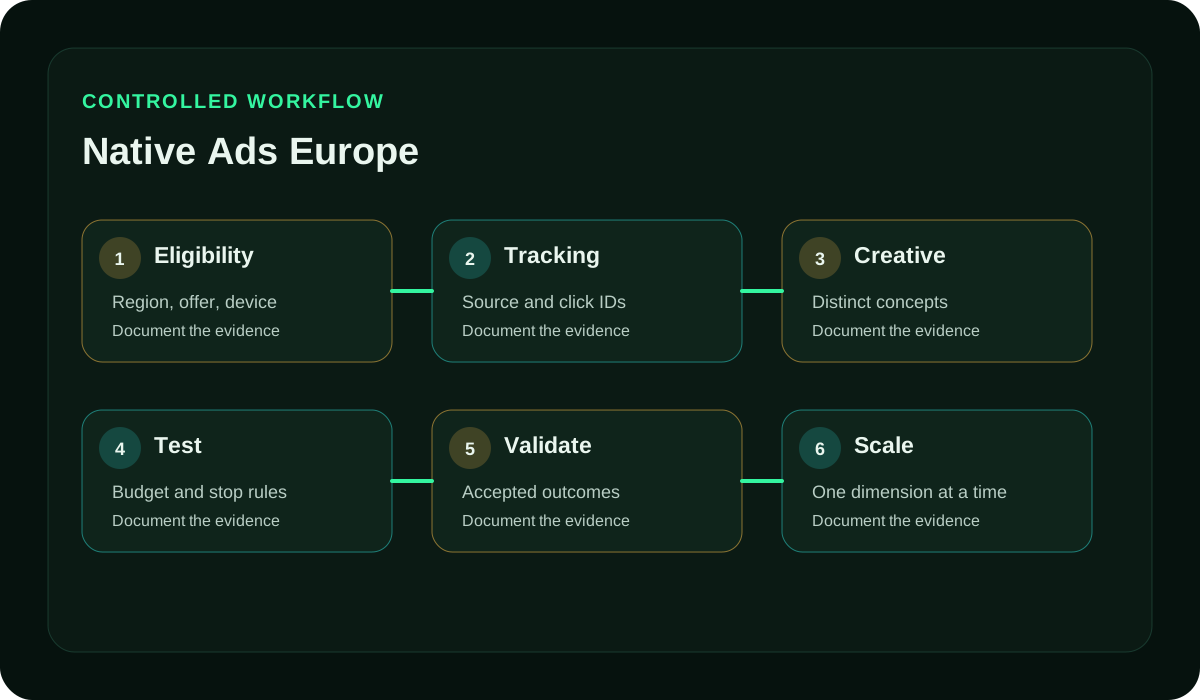
native ads europe controlled workflow visual

Count a resolved question at its actual stage

When is another traffic format worth comparing?

Native is useful when a bag explanation can earn attention through a relevant introduction. Another format may introduce the same offer differently. Compare the customer action and cost on a consistent basis where possible, preserving the product and destination context. A large click count is not equivalent to a buyer confirming the bag meets their requirements.

Create My Free Account
Illustration comparing advertising formats for native ads europe execution
Account funding and media expense

How much media should the first comparison use?

Set an amount you can authorise for the unanswered decision, using current campaign settings and bids. Keep sufficient attention for actual customer questions and completed orders before extending the purchase. Account funding, media expense and a retailer's product price are separate amounts. No universal test allocation can establish whether every bag and country route will work.

The cost of the observed outcome

Which cost calculation belongs beside the campaign results?

Divide the media expense for a defined group by the outcome actually counted for that group. Cost per paid order differs from cost per resolved fit enquiry. Keep pending questions visible and compare orders at a consistent stage. Add the retailer's other relevant expenses separately before discussing commercial returns; a low media cost alone cannot establish profit.

A question the shop can answer

What makes a bag enquiry useful to the retailer?

A useful enquiry identifies the bag and enough device information for an answer. The laptop's exact model can help, but a seller may still need closed-body dimensions or the case being used. An incomplete question is a request for clarification. Do not label the visitor unsuitable merely because the first message omitted a measurement the page did not explain.

Use a supported compatibility answer

How should a repeated compatibility question change the offer?

Answer it for the model concerned and consider placing the supported explanation where future shoppers can find it. Keep the limits of that answer clear. Confirmation for one device and bag combination does not establish universal compatibility for an entire screen-size class.

Compare prepared selling routes

What should a meaningful country comparison preserve?

Record destination language, actual product availability and the price context alongside the country setting. If one shop route cannot supply the advertised model, its result cannot cleanly answer which audience understood the bag better. Resolve the material difference or describe the comparison's limits before using it to choose another media allocation.

Buy the next answerable comparison

What evidence supports another bag campaign purchase?

Review the questions received, answers your retailer supplied and orders actually recorded. Look for a clear remaining opportunity, such as introducing a supported model to another prepared language route. A page-view increase alone is a weak reason to spend more when the compartment information remains unresolved.

Create My Free Account
Illustration of a campaign launch checklist for native ads europe
Product and language review

Who should review the product explanation?

Have someone responsible for the range verify the bag identity, measurements and contents. Ask a language reviewer to check which dimension each translated label describes. The media buyer then confirms that the invitation continues into this approved explanation. These roles connect the sale argument with facts the shop is willing to stand behind.

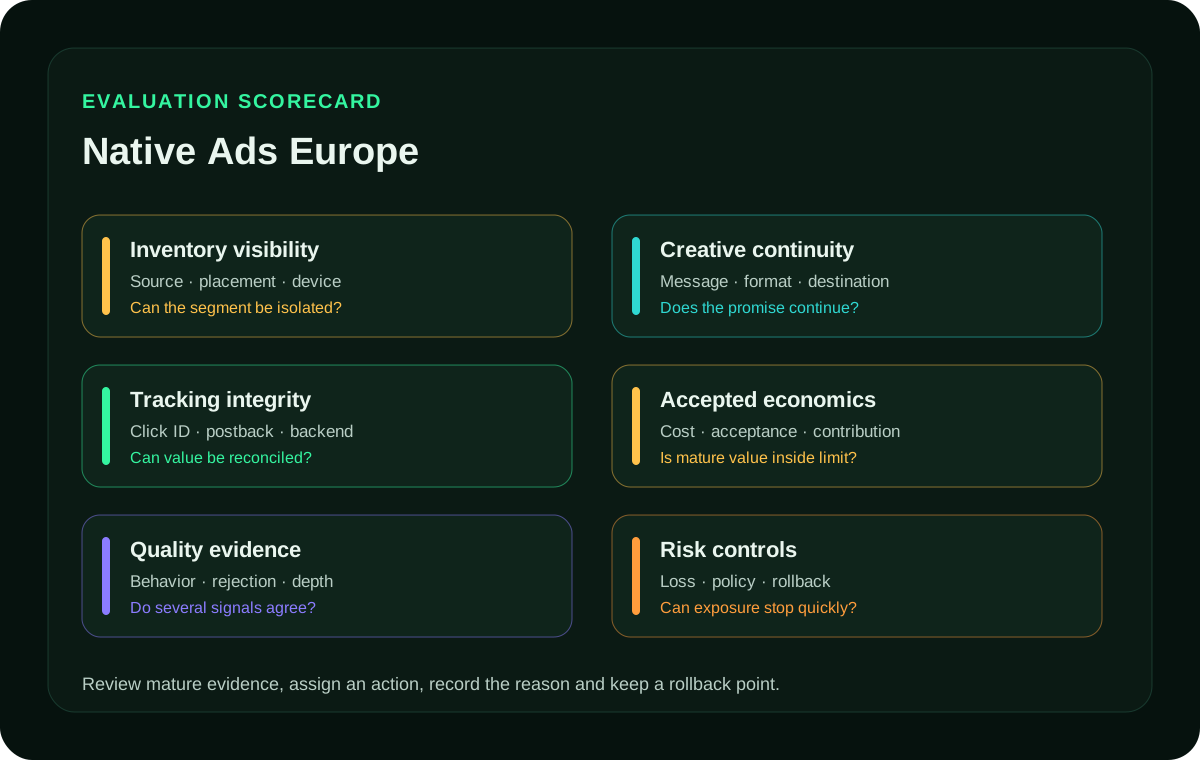
native ads europe evaluation scorecard visual
Correct a material product mismatch

When should the buyer pause a particular invitation?

Pause it when a material compatibility statement cannot be supported, the model is unavailable for the chosen route or the destination shows another item. Resolve the specific cause before buying another visit to it. Keep the original version so the team can answer customers who saw the earlier description.

A defined next comparison

How can a useful comparison expand?

Extend a prepared offer deliberately: another supported country route, a different bag model or a clearer creative question. Preserve the information needed to tell those changes apart. Expansion is easier to evaluate when the retailer can still answer the resulting device questions and identify the orders attributable through actual records.

The actual carrying configuration

Which customer situations need different explanations?

A laptop carried in a rigid case raises a different space question from a bare device. A customer bringing additional equipment needs accurate pocket and contents information. Treat these as product enquiries rather than inventing a single universal fit. Choose the situation your actual range and staff can explain well.

The next buying decision

What should the next buying decision record?

State the model, audience route, invitation version, expense and observed customer stage. Add the unresolved product question and who will answer it. This compact record gives the next buyer a reason for continuing, correcting or stopping the offer without reconstructing the decision from clicks alone.

A laptop-bag comparison

A practical laptop-bag comparison sheet

InformationWhat the buyer needsWhy it changes the decision
Bag identityExact model and variant soldA similar photograph can describe another compartment
Laptop dimensionsClosed device width, depth and thicknessScreen diagonal alone does not describe its body
CompartmentActual internal dimensions and relevant opening detailThe usable space differs from the outer bag
Additional caseThe dimensions of the combination carriedAn extra sleeve can change the fit question
Package contentsThe bag and accessories actually includedIllustrative computers need not be supplied
Selling routeCountry, language, currency and real availabilityThe customer needs an offer the shop can fulfil
Fit distinctions before purchase

Three fit distinctions worth explaining before purchase

Screen label and device body

Read the device body separately from its screen label

Targus's laptop-bag guidance distinguishes screen diagonal from the closed device's width, depth and thickness when comparing a compartment. Apply that distinction to your own products and customer questions. The retailer still needs reliable information for the actual combination sold; a general guide does not certify another bag or every laptop sharing a diagonal.

Exterior and compartment

Do not substitute the bag's exterior for its laptop space

The Thule product specification lists bag dimensions separately from laptop-compartment dimensions. That distinction is useful for your comparison sheet, without transferring that product's measurements or availability to your shop. A roomy exterior may contain padding, other pockets or construction that the laptop cannot occupy. Ask for the relevant compartment and access information when it is missing.

Units and nominal differences

Make unit conversion useful without declaring a guaranteed fit

Consider a wholly fictional closed laptop measuring 320 × 220 × 20 mm: 32 × 22 × 2 cm. A fictional compartment labelled 33 × 23 × 2.5 cm has nominal total differences of 1, 1 and 0.5 cm. Those differences are not per-side clearances or a fit guarantee. Opening shape, padding and any added case still need a relevant seller answer.

Frequently asked questions

Questions about European native laptop-bag campaigns

Why is Europe not a single targeting definition for native advertising?

Countries differ in language, serviceability, prices, payments, customer expectations and applicable requirements. Campaign scope names the actual markets instead of relying on a continental label.

Does a screen-size label prove my laptop will fit?

No. Use the actual model information and relevant closed-device measurements to assess the bag's usable compartment. Check any case or sleeve you intend to carry with it. A screen diagonal is one label, not a complete description of the device body or the bag opening.

Which bag measurement should the destination label?

Both the outer bag and laptop-compartment dimensions may be useful, but identify which is which. Keep units visible and use the retailer's supported information. If a product listing lacks the internal measurement needed for a fit decision, provide a way to obtain that answer.

Can I assume the computer in a lifestyle image is included?

Check the stated package contents. Make a bag-only offer clear when the computer illustrates use. The ad, destination and retailer's answer should agree about the items sold, especially when a visually prominent accessory could change what a buyer expects to receive.

How should an additional laptop case affect the comparison?

Measure or establish the full protected combination where that is how the customer will carry the device. Extra material can change the required space. Ask the retailer about the actual bag and opening; an answer for a bare laptop may not cover a separate rigid case.

Do European campaigns need one currency and language?

No. Prepare the actual country and shop route you intend to serve. Explain the currency and terms customers will encounter, and support the destination language used. Europe and the European Union are different scopes; neither label establishes a uniform retail offer across all locations.

Is the minimum deposit the price of testing this bag?

Our published USD 50 minimum deposit is account funding. Authorise campaign expense separately using current supported settings and the product question you need to answer. The bag's retail price and any retailer expenses belong in their own commercial records, not inside an assumed media package price.

Should every fit question count as a new customer?

Deduplicate the records you can actually match. One person may ask about several devices or send missing measurements later. Distinguish submitted enquiries, resolved questions and paid orders so the campaign review describes customer progress without multiplying the same buyer into several acquisitions.

Can native advertising establish protection or travel suitability?

Use relevant product evidence for any such claim. A photograph or a dimension comparison does not establish drop protection, water resistance or compliance with an airline's current baggage rules. Keep the campaign focused on the supported bag features and the fit information your retailer can provide.

When should I choose another allocation with FroggyAds?

Choose it when the model, destination and supply route remain ready and the available customer records support a useful next comparison. Correct missing compartment information first. We help you manage the media purchase; the retailer's actual answers and orders show what happened after the visit.

Compare another native presentation

Related native format guides

Use the related guides to compare how another format introduces your prepared bag offer. Keep the same model, compartment information and selling route when those details are meant to remain comparable.

Prepare a clear fit comparison

Introduce a bag your retailer can explain

Choose FroggyAds for your next prepared laptop-bag campaign. Give the reader an accurate model and a useful fit comparison, then use supported buying controls to reach the destination. Create your free account and review current native requirements before purchasing the first traffic to your selected country route.

The physical compatibility question

Which bag and laptop dimensions matter before purchase?

Start with the actual closed device and the compartment intended to carry it. Bring the relevant model, dimensions and case configuration into the comparison, then ask the retailer about any missing opening detail. Match the answer to the country route where that bag is available. This gives a prospective buyer a concrete question to resolve before ordering.

Make the invitation recognisable: creative assets begin a real product comparison. Content fit means the destination continues that model and its measurements. Publisher layout can affect a qualification's visibility, while ad attribution supports a connection only where the actual records allow it. Neither presentation nor tracking establishes physical compatibility by itself.

Identify the space measured: keep outer dimensions, internal laptop space and opening information distinguishable. The customer should not have to infer which part of the bag a number describes. Where the manufacturer or seller has not supplied a necessary detail, seek a supported answer before promising the combination works.

Preserve the device configuration: note whether the buyer means a closed laptop alone or a laptop inside another case. Record the relevant dimensions in consistent units. This makes a retailer's answer useful for the question asked without extending it to unexamined devices or accessories.

Review the selling route: a country setting and a translated headline do not supply stock, local assistance or identical purchase terms. Continue the invitation into the actual shop arrangement. Explain material availability limits while the customer can still make an informed product choice.

Separate the customer stages: a viewed measurement table, a fit enquiry, a resolved answer and a paid bag order represent different progress. Match records only where supported and retain pending outcomes. This gives the next media decision a clearer basis than a combined interaction total.

Customer stageEvidence availableMeaning for the next purchase
Specifications inspectedThe available record connects a visit with the bag explanationShows an opportunity to compare, without proving fit or purchase
Fit question answeredThe retailer records the device, bag and actual answer suppliedEstablishes a resolved enquiry at its recorded scope
Bag order paidAn actual order identifies the model and customer record availableSupports an order-cost calculation, with later outcomes separate

A fictional media-expense and fit-outcome example

Hypothetical arithmetic, not a FroggyAds result: USD 225 of media expense and five paid bag orders from the same defined group give USD 45 per order. If three purchasers later confirm the bag fits and they retain it at the review point, the expense is USD 75 per such recorded outcome. Two pending outcomes are not automatically failed orders. These stages concern the same group, not eight new customers. Product, assistance, delivery and payment expenses are excluded; neither calculation establishes profit or predicts your results.

Start with an answerable laptop-bag offer

Start your next European bag campaign with FroggyAds. Connect a recognisable product introduction with the compartment information your customer needs, then review actual enquiries and orders before the next media decision. Create your free FroggyAds account.

Research basis for native presentation: Google's native-styles guidance and native-advanced guidance concern their own publisher implementation contexts. Their discussions of attribution and differentiation help explain a recognisable paid invitation beside surrounding content. They do not establish FroggyAds specifications, a bag-manufacturer relationship or a device's compatibility with a compartment.

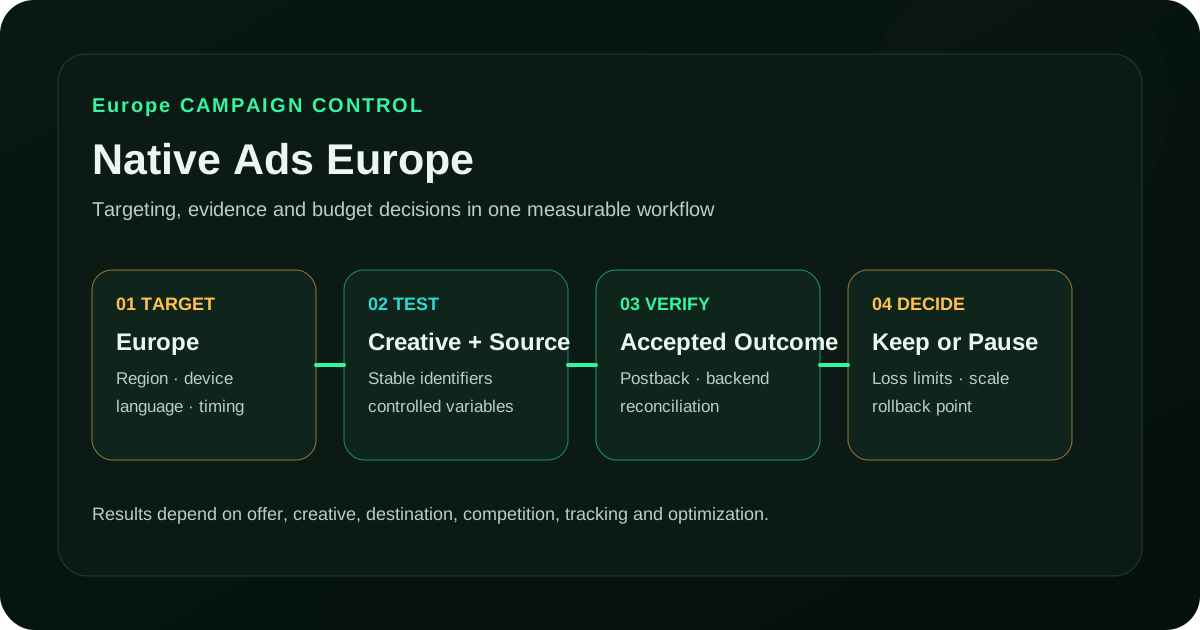
The next laptop-bag decision

Can the customer compare the right device and compartment?

Begin there. Give your retailer an exact model and a question it can answer, present that explanation consistently and purchase the next relevant visit with FroggyAds. Clear fit information helps a buyer choose with greater confidence while actual order records keep your next campaign decision grounded.