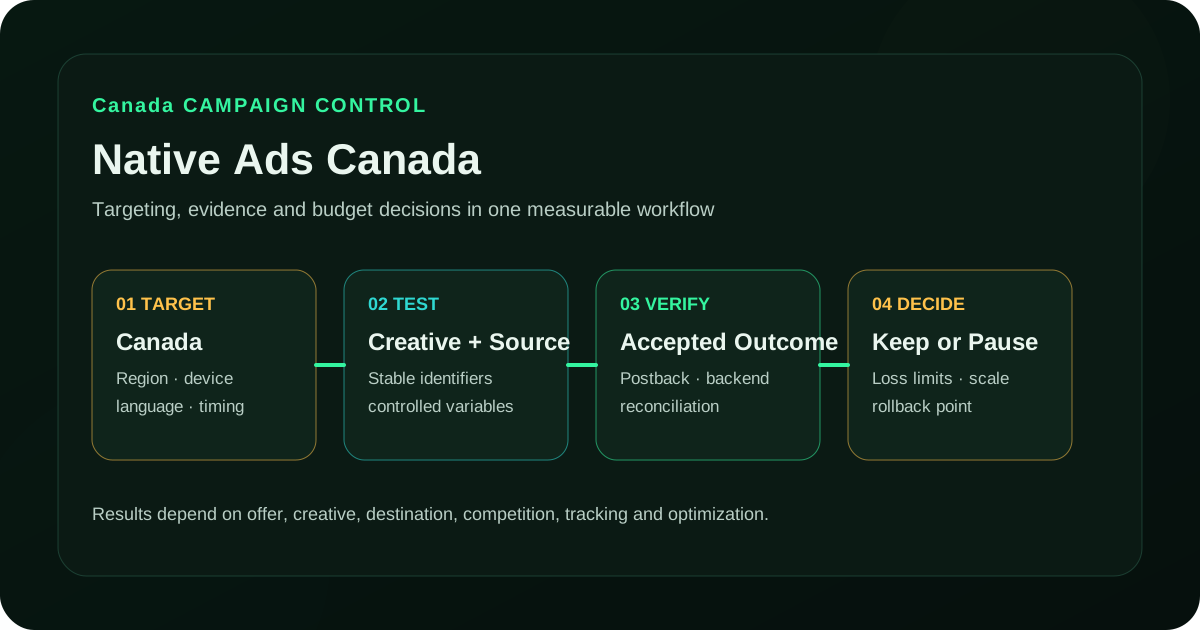
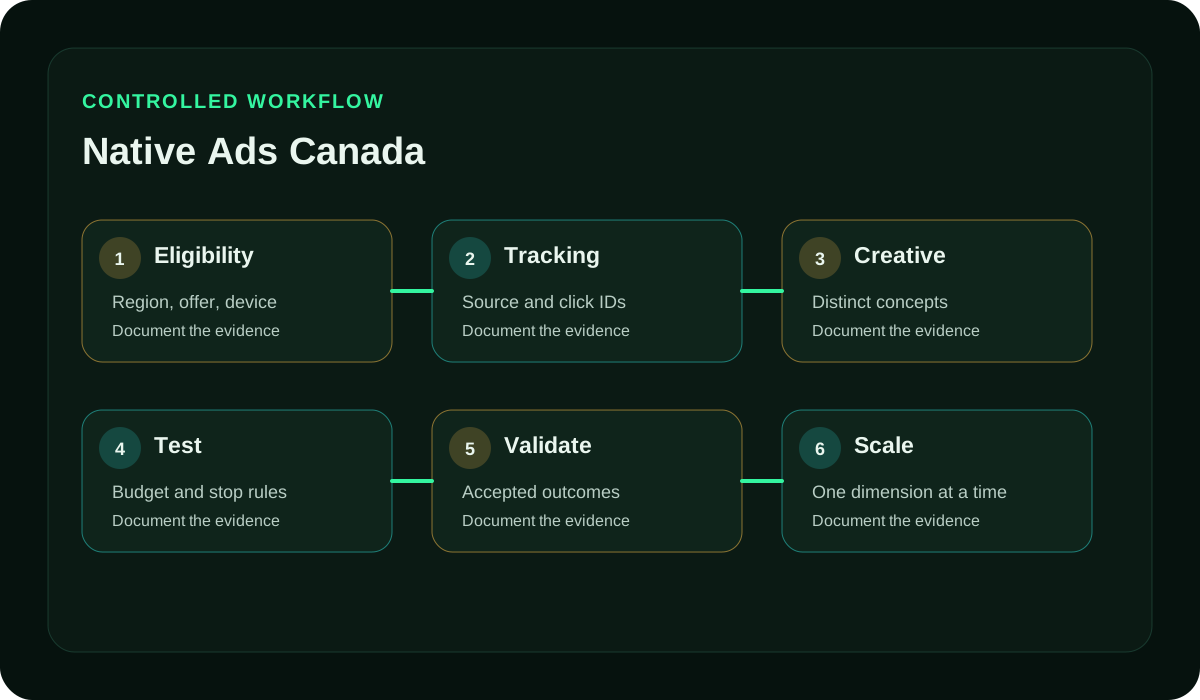
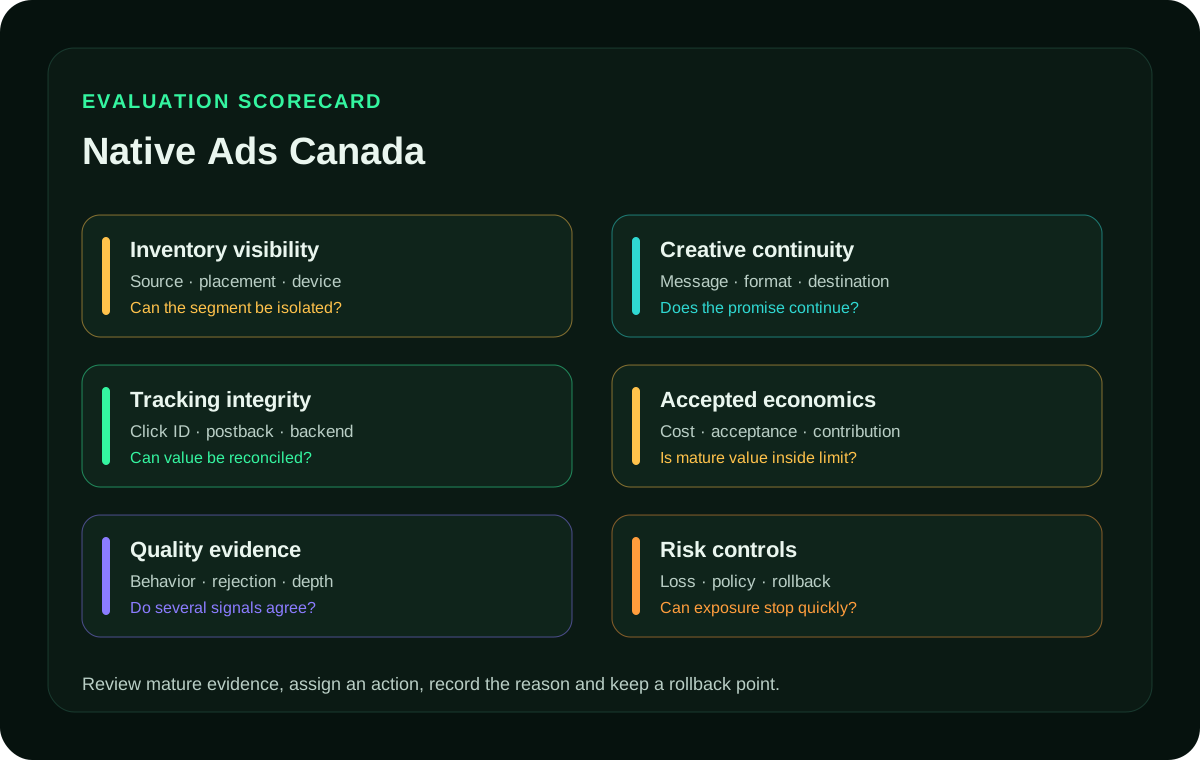
Inventory for Native Ads Canada should be evaluated in its real placement context. Confirm which supported push, native, display, pop, video or interstitial opportunities are available, and do not treat a device or geography label as a separate ad format. Review source, site, app, placement, size, device, operating system, browser, connection and time identifiers where available. Ask whether whitelists, blacklists, caps, bid adjustments and exclusions can be applied without rebuilding the campaign.
A buyer evaluating Native Ads Canada can use Match Native Ads Canada creative and placement to the landing experience to make the page actionable: identify the condition, document the evidence, and define the response. The evidence record should make inventory, simply, largest, pool, portion and reached visible instead of hiding them inside a blended score or an unexplained recommendation. If the evidence does not support the current assumption, narrow the scope or run the smallest reversible test that can resolve it. If the next step is a media test, FroggyAds lets the advertiser keep campaign settings and source-level performance visible instead of treating traffic volume as proof of success.
The practical role of Match Native Ads Canada creative and placement to the landing experience in Native Ads Canada is to expose the exact condition that can change the buyer's next action. Preserve the source, date and owner for Match, creative, placement, landing, experience and apply whenever they affect the decision, especially when the page compares options or sets a budget boundary. If the evidence does not support the current assumption, narrow the scope or run the smallest reversible test that can resolve it.