Native offer coverage and customer handover

Native Ads Africa: Buy for the Customer Routes Your Business Can Fulfil

Native ads across Africa should introduce an offer your business can actually supply in the selected markets. We recommend making delivery or collection conditions visible before buying, then reviewing what happens after an order is accepted. FroggyAds helps you manage supported media controls around those routes. Your business verifies product availability and customer handover, rather than treating regional reach or a submitted form as completed value.

Self-serve control ·750+ SSPs globally ·20B+ daily impressions, network-wide
native ads africa planning visual
Key takeaways

Africa native buying: coverage, handover and expense

  • Coverage: Name the countries and customer routes the business can fulfil.
  • Handover: Distinguish accepted interest, available goods and completed collection or delivery.
  • Purchase: Use verified offer conditions and affordable expense for the next buying decision.
Direct answer

What does a fulfilment-led native purchase involve?

Start with the product, customer route and actual responsibility for supplying it. Native presentation can explain what is offered and how someone obtains it, with commercial identity clear. The media purchase introduces the proposition; it does not establish country-wide fulfilment or operate the merchant's collection arrangements. We connect buying decisions to the part of that journey your business can verify.

01 • Product and customer route

How can a native introduction explain a collection offer?

Consider a fictional seller offering a flat-packed desktop storage box through a merchant-appointed collection point. The advertisement shows the supplied item and explains that collection follows confirmation under the seller's actual conditions. It does not promise home delivery everywhere. The example is a planning illustration, not a real FroggyAds customer, collection partnership or statement of consumer preference across Africa.

Confirm current native availability and creative requirements for each intended market purchase. Supported location, device, bid, budget and source settings help you manage the media. The merchant checks the product and fulfilment route separately. A campaign label cannot confirm that a box is in stock, a collection point is operating or a customer can use the advertised arrangement.

Keep the dated stock offer, unit or pack quantity, collection location and reply conditions with the purchase. A partner handover arrangement can change independently of media delivery. Review that business condition before reusing an advertisement. The useful question is whether the current explanation attracts customers the seller can serve, rather than how much broadly described continental traffic can be bought.

02 • Selected-market offer plan

What should the selected-market offer plan contain?

Name each country, supplied product, actual delivery or collection route, language version and responsible business owner. Identify who confirms an order and who can verify handover. Your acceptance rule should distinguish an enquiry from confirmed availability and completed customer receipt. Missing fulfilment information belongs in the plan as unresolved work, rather than an implied service promise attached to the Africa label.

03 • Coverage and actual language

How should coverage and customer conditions be verified?

Check the merchant's actual serviceable locations and the conditions under which customers obtain the product. A selected country may contain routes the business can serve and others it cannot. Use supported geography settings where they help the purchase, while the destination explains remaining eligibility. Do not assume a continental audience shares one payment preference, connection condition or collection process.

Review each actual language route with suitable commercial reviewers, including the product description, order reply and collection or delivery instructions. For the fictional seller, a verified Kenya arrangement would not establish a separate South Africa handover route. Each requires its own business evidence. Those countries illustrate coverage decisions; neither example claims an available FroggyAds placement or a real merchant partner.

Use the relevant dates and customer-response period when checking handover. A collection point's operating arrangement, an order reply and an outstanding request can have different timing. Keep the conditions visible before changing media delivery times. Confirm which campaign fields and settings are available rather than assuming every enquiry supplies complete device, connection, source and hour records.

04 • Customer eligibility

Who can complete the advertised customer route?

Suitable customers meet the actual product and fulfilment conditions the business explains. State meaningful coverage or collection limits before requesting information. A submitted form cannot certify that the route is practical for that customer. Your merchant or partner verifies the next step under its real process, with qualified review where uncertain obligations need resolution.

Choose a customer route you can fulfil

Which customer event should the first purchase assess?

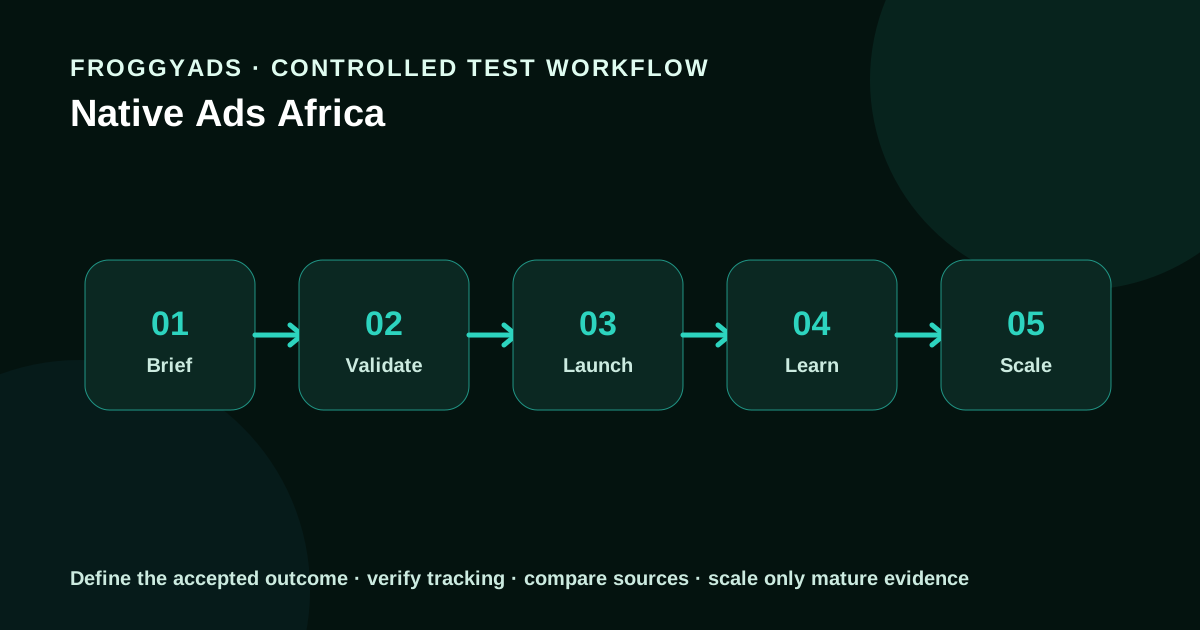
Define an event the team can observe, such as a suitable purchase enquiry or confirmed customer handover. They have different delays and meaning. An affordable first purchase can answer whether the product explanation produces enquiries the business can serve. Do not silently turn those earlier requests into paid fulfilled orders or imply that the campaign report verifies collection.

Create My Free Account
Illustration of audience targeting controls for a native ads africa test
05 • Supplied-offer creative

Which native creative makes the supplied offer clear?

Show the real item or an accurate illustration, with the unit, pack quantity and material inclusions understandable. A picture showing several storage boxes should not imply a set when the offer supplies one. Confirm the current placement requirements and paid identification. We recommend useful product detail over fabricated testimonials, independent editorial endorsement or an unsupported promise of universal delivery.

Compare a concept explaining the storage box's usable dimensions with one explaining how the actual collection offer works, where both fit the purchase. These answer different customer questions. Preserve the product and fulfilment conditions for each destination. A new pack quantity or delivery promise can change response alongside the image, so it should not be described as a clean creative effect.

Inspect the crop, commercial label, product qualification and next action in the available presentation. Follow the actual destination on relevant devices, including a failed or interrupted request where practical. A hidden collection qualification needs a clearer message; a broken form needs technical work. Record what failed rather than assigning every weak result to the country or the customer's connection.

06 • Delivery or collection terms

How should the message explain collection and delivery?

State the arrangement the merchant actually offers and what the customer must do next. Explain whether an order needs confirmation before collection and which location or delivery conditions apply. Do not suggest that a media purchase creates a distribution service. The customer needs an accurate route to the advertised product, not a broad national availability impression the seller cannot honour.

The destination and customer reply should preserve the same product quantity, availability and handover conditions. A native image may create interest before someone notices a material restriction. For the fictional storage-box seller, explain the actual collection step early enough for the customer to judge suitability, without assuming a general rule about how people in African markets obtain goods.

Read why customers cannot proceed. An inaccessible collection location needs a route clarification; unavailable stock needs an offer update; a misleading pack image needs creative correction. These are different causes. Paying for more visits to the same unresolved offer cannot establish which media source produces customers the merchant can actually serve.

07 • Working customer route

What must the order destination demonstrate?

Test the actual description, enquiry or purchase, confirmation and handover instructions supplied to the customer. Check that the item and collection or delivery conditions still match the advertisement. Confirm help with the responsible business team. This is a bounded journey review, not certification of every device, local requirement or merchant obligation in a selected country.

08 • Permitted fulfilment records

Which records can show what happened after the click?

Confirm the permitted references your setup retains between media observations, the customer request and the merchant's actual fulfilment record. Keep unmatched cases explicit. FroggyAds reports available buying observations; it does not automatically join partner stock, order acceptance and customer handover. Exact publisher, placement and full supply-path detail may be unavailable for an individual enquiry.

native ads africa controlled workflow visual

Match the native message to the actual offer

When does native fit a collection-based proposition?

Native can help when context explains the product and the practical next step before the destination opens. Review another format's available presentation and current requirements separately. Compare choices for the same actual customer route and event rule. Choose FroggyAds when you want supported media controls around that decision while your business retains fulfilment and accepted-value review.

Create My Free Account
Illustration comparing advertising formats for native ads africa execution
09 • Affordable media expense

How should expense reflect fulfilment capacity?

Set an allowance you can afford around a question the merchant can answer and the customers the actual route can handle. Reserve money for goods and existing commitments. Our USD 50 minimum account deposit funds the account; it is separate from campaign spend. Neither a funding minimum nor an entry bid predicts an African country's acquisition price or completed-handover cost.

10 • Accepted business cost

Which cost should decide whether the purchase is useful?

Separate media expense from actual creative, customer-handling and fulfilment costs that apply. Count each expense once under a consistent currency basis. Compare affordability with supported contribution from accepted business, not the full selling amount alone. A lower enquiry price can be unhelpful when many customers cannot obtain the advertised item or the route adds substantial service work.

11 • Unresolved customer states

Which requests should stay outside completed handover?

Retain duplicates, unsuitable requests, cancelled orders and cases awaiting confirmation or collection under the merchant's actual rules. An accepted enquiry can still expose a stock or handover problem. Review that state rather than describing every customer as fulfilled. The reason for non-completion should guide an offer, route or media investigation without inventing a cause the records do not support.

12 • Available source response

How should available source response be reviewed?

Assess comparable expense alongside the customer actions your implementation can connect, within the actual market and fulfilment conditions. Allow equal review time and retain unmatched records. Low form cost may hide unsuitable collection requests or unresolved stock. Thin evidence can justify a smaller commitment or better observation; it cannot establish exact placement blame or a permanent quality ranking of countries.

13 • Specific offer correction

Which correction should precede another purchase?

Correct the obstacle supported by the record. Wrong pack expectations need a clearer product explanation; failed confirmation needs a route repair; unavailable goods need a stock decision. Change supported buying settings when they can address a media condition. Keep the earlier offer and setup so your next purchase answers a recognisable commercial question.

Review handover before buying more

How can the next offer comparison stay interpretable?

A practical comparison records the product, actual country route, observation time and customer-event rule. Keep a changed collection arrangement or stock offer visible instead of attributing every outcome difference to the creative. Use the result to choose a manageable next purchase for that route. It does not prove random assignment, an isolated cause or that the same fulfilment conditions exist in another African market.

Create My Free Account
Illustration of a campaign launch checklist for native ads africa
14 • Enquiry and receipt stages

Which stages belong in a fulfilment review?

Distinguish suitable enquiry, confirmed product availability, accepted order, readiness for handover and actual customer receipt where the business observes them. Keep later payment or contribution unresolved until its evidence is available. A newer request may simply need more time. The buyer should know which stage informs the next allowance rather than compare raw forms with completed transactions.

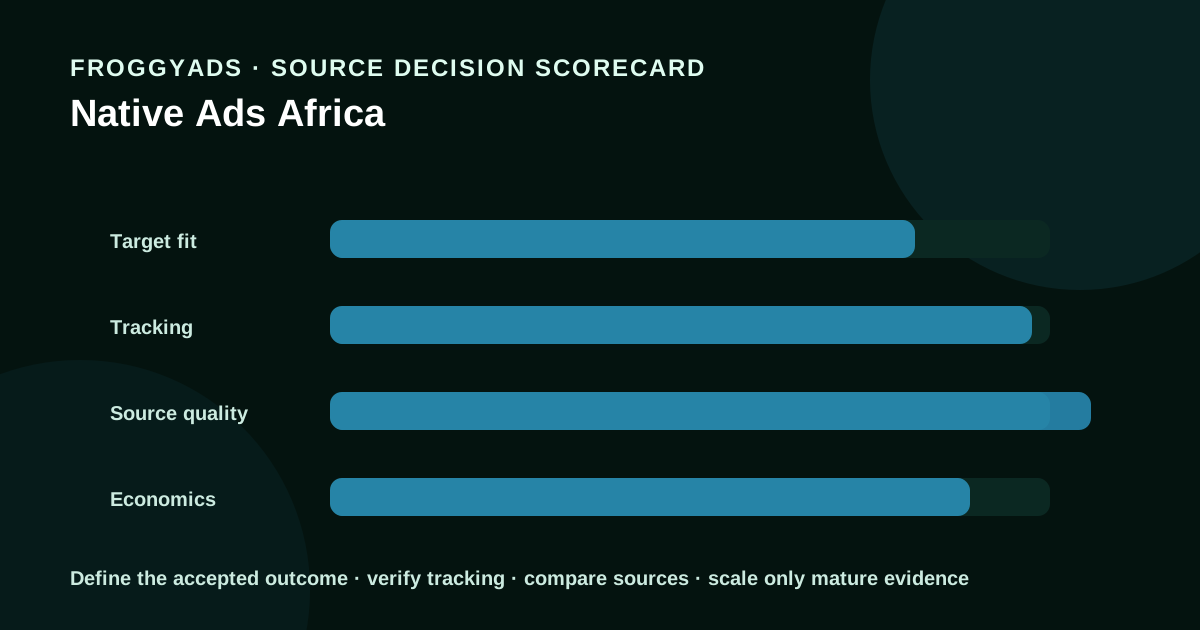
native ads africa evaluation scorecard visual
15 • Product and expense limits

When should the affected offer purchase pause?

Pause or limit exposure when the product is unavailable, the advertised route cannot operate, a material qualification is misleading or the authorised expense boundary is reached. Retain the affected version and dates. Assign the actual problem to its owner and seek qualified advice when requirements are uncertain. Additional media cannot create stock or customer handover capacity the merchant does not have.

16 • Current supply capacity

Can the merchant support another group of customers?

Add manageable expense when reviewed customer actions, supported contribution and actual supply arrangements justify it. Check that the product and handover route remain available for the added customers. Evaluate the extra purchase separately because capacity can change. A working route or early low enquiry cost does not guarantee completed orders, settled value or successful expansion to another country.

17 • Uncertain handover

How should uncertain fulfilment conditions be planned for?

Allow for an enquiry awaiting availability, a customer unable to use the stated collection route and an order awaiting handover. These need different responses: a stock reply, route clarification or a completion review. Keep the scenarios hypothetical until records support them. They guide an affordable operational decision rather than forecast consumer behaviour or infrastructure across Africa.

18 • Actual route record

What should the next buyer know about the offer route?

Keep the selected markets, product and pack quantity, actual language version, creative, destination, fulfilment arrangements, settings, dates and expense scope. Retain event definitions and permitted customer references. Explain changed stock, collection conditions and unresolved handover. Another operator should judge the next allowance without assuming partner systems or source-path detail the implementation never supplied.

Offer and purchase evidence

Offer-route review: what the customer can actually obtain

AreaEvidence requiredAction
Product scopeCompare the item, unit or pack quantity and actual stock with the promise.Clarify an unsupported inclusion or availability claim.
Paid explanationInspect the item image, commercial label and handover qualification.Correct a misleading delivery or collection impression.
Customer routeComplete the real request, confirmation and receipt instructions.Repair an unavailable or unclear handover step.
Available evidenceReconcile permitted campaign, customer and fulfilment records where possible.Keep unmatched requests and absent source detail explicit.
Accepted economicsUse consistent expense, review time and customer-event definitions.Assess affordability against supported contribution.
Supply capacityVerify stock and the merchant's current handover arrangement.Limit exposure when the actual offer cannot be fulfilled.
Fulfilment planning

What can prevent accepted interest from becoming customer receipt?

Unsuitable customer route

The advertised route is unsuitable

If a customer cannot use the stated collection or delivery arrangement, check whether that condition was clear before the request. A merchant may need to explain coverage or change the offer. Keep the enquiry in its actual state. An alternative route is another business decision requiring confirmation, not an automatic fulfilled order or proof that the media source failed.

Product not ready

The product is not ready for handover

Pending stock or confirmation needs its own response. Retain what the customer was promised, when it was checked and which action can resolve the delay. More visits can increase pressure on the same unavailable item. The buyer may limit the affected purchase while the merchant repairs the product or route, without making an unsupported country-wide media judgement.

Pending collection

The customer has not collected yet

Changed timing can leave an accepted order awaiting handover. Apply the same observation policy to comparable purchases and retain cancellations or unresolved receipt. An earlier event may inform a provisional buying decision while completed value remains unknown. Do not present expected contribution as settled evidence simply because the customer requested an available product.

Frequently asked questions

Native Ads Africa FAQ

Which market differences matter when planning native ads across Africa?

Countries and audiences differ in language, regulation, connectivity, payments, media use and commercial context. A continental label should not replace market-specific research and qualified review.

How are language choices validated for African native advertising?

Suitable speakers can review meaning, tone, terminology, disclosure, claims and destination continuity. Automated translation may help drafting but cannot establish cultural or commercial accuracy.

What supply-path information improves African native inventory evaluation decisions?

Use publisher, presentation, seller or source information actually available for the purchase, and state what is missing. Such observations can help you understand the native context, but forecasts do not establish the environment of every individual visit. Avoid promising complete supply-path records, universal publisher contacts or an automatic investigation and exclusion route for each customer action.

Why must native ad design remain distinct from editorial content?

Customers need to recognise the commercial source before acting on the message. Labels, visual treatment and placement context should remain understandable on relevant devices and languages.

Which mobile conditions influence native campaign performance across African markets?

Connection speed, data cost, device capability, page weight, screen size and payment access can affect response. Testing should reflect the specific markets rather than one laboratory device.

How can advertisers assess brand suitability in native African placements?

Review the native context, commercial label and product message your purchase allows you to inspect. Record an actual concern and use supported source or category controls where relevant. A limited preview or sample is bounded evidence, not proof of every placement. Keep unavailable context explicit and distinguish the media concern from a merchant stock or customer-handover failure.

What privacy questions accompany audience use in African campaigns?

Purpose, source, notice, permission, matching, vendors, transfers, retention and customer rights require market-aware assessment. General guidance cannot replace advice suitable for the actual data flow.

Why should payment and fulfilment readiness precede native traffic growth?

Local methods, currency, fees, delivery, returns and support can determine whether interested customers complete successfully. More visits may only amplify an unavailable or unsuitable purchase process.

Which conditions make an African native ads pilot easier to interpret?

A manageable purchase names the market, actual offer route, reviewed creative and destination, available buying controls and expense boundary. It defines the customer action and observation time before launch. This reduces ambiguity without proving random assignment or guaranteeing complete source visibility. Keep unmatched requests and unresolved fulfilment in the review rather than filling them with a regional estimate.

At which signals can native advertising expand into another African market?

Expansion needs fresh language, supply, legal, payment and customer evidence for the new market. Success in one country does not establish that the same configuration will transfer.

Related regional resources

Which regional guides explain another offer presentation?

Review the regional push and popunder guides when another interaction could explain the offer. Check their actual requirements separately from native. Preserve the product, selected customer routes and accepted-event rule before comparing the available media choices.

Review goods customers can actually obtain

Buy the next fulfilment-ready offer with FroggyAds

Choose FroggyAds when you want direct management of supported targeting, bids, budgets and source choices around an actual customer route. Our self-serve controls help you act on media observations while your business verifies goods, handover and accepted value. Confirm current native requirements, prepare your complete destination and begin with an affordable question the merchant can answer.

Africa offer-route buying decision

Which Africa buying decision does this guide address?

This guide connects selected African market purchases with products and customer routes the merchant can actually fulfil. The South Africa native guide addresses a country-specific purchase. Here the regional buyer verifies coverage and handover responsibilities for each route, while keeping supported media choices distinct from merchant stock, partner arrangements and customer receipt.

Our recommendation ties creative assets, available placement context and permitted campaign references to the item and handover conditions the customer is promised. Keep those conditions visible when judging response. Native media can introduce the offer; the merchant verifies product availability, accepted business and completion before the buyer commits another allowance.

CheckpointPage-specific actionEvidence to keep
CoverageName the real product, selected markets and customer route the business can serve.Retain the dated stock offer and actual fulfilment conditions.
HandoverSeparate suitable enquiry, accepted order and verified customer receipt.Keep pending, cancelled and unmatched cases in their actual states.
Next purchaseCheck supported contribution and the current ability to supply more customers.Review added expense under the actual product and route conditions.

Hypothetical fulfilment review: the fictional seller spends USD 210 and receives fourteen suitable purchase enquiries, giving USD 15 per suitable enquiry. Seven have confirmed customer handover, giving USD 30 per handover; four remain pending and three do not proceed. Payment status and settled contribution still require review. These are fictional media calculations, not FroggyAds results, African market rates or a fulfilment guarantee.

Start your next manageable native offer purchase with FroggyAds. Explain the product and customer route accurately, confirm the actual handover arrangements and let reviewed business records guide your next allowance. Create your free FroggyAds account.

Direct answer

What should be ready before an Africa native purchase?

Prepare a truthful product explanation, selected serviceable markets, actual language coverage and a tested customer route. Define the event and affordable expense before purchase. Confirm supported FroggyAds settings while keeping pending handover, later contribution and unavailable attribution detail explicit. Your next commitment should concern an offer the merchant can genuinely supply and review.