
Monetize WordPress Site: A Practical Publisher Stack
Monetize a WordPress site with a measured stack for ads, performance, consent, placements and revenue reporting.

What does this page explain about Monetize WordPress Site: A Practical Publisher Stack?
Quick answer: Monetize a WordPress site with a measured stack for ads, performance, consent, placements and revenue reporting. WordPress monetization should begin with a stable theme, original content, secure administration, consent and performance measurement. Add one revenue model and one controlled integration at a time instead of installing several overlapping ad or affiliate plugins. Map audience and templates for monetize wordpress site by keeping template, plugin stack, device, page type and traffic source visible and recording how the change affects revenue, core web vitals, viewability, errors and retention.
| Section | Distinct excerpt from this page |
|---|---|
| What monetize wordpress site should accomplish | The primary job on this page is to build a maintainable monetization stack that respects theme, plugin and performance constraints. |
| Audience model | For monetize wordpress site, connect this control to net revenue per session after speed and tooling cost. |
| Measure net value, not a headline rate | For monetize wordpress site, combine the economic metric with revenue, core web vitals, viewability, errors and retention so a short-term rate increase does not hide a weaker user or advertiser outcome. |
Reference for Monetize WordPress Site: A Practical Publisher Stack: Google Ad Manager overview Ad management context.
What monetize wordpress site should accomplish
Monetize WordPress Site: A Practical Publisher Stack is not a single ad tag, rate card or placement decision. It is an operating system for deciding which opportunities are eligible, which demand can compete, how revenue is counted and what audience cost is acceptable. The primary job on this page is to build a maintainable monetization stack that respects theme, plugin and performance constraints. That job stays measurable only when the team declares the denominator and keeps template, plugin stack, device, page type and traffic source visible in the report.
Start with the business constraint behind monetize wordpress site. A publisher may need more collected revenue, better payment reliability, stronger viewability, lower latency or more control over the advertiser and format mix. Those problems require different solutions. Write the constraint before adding technology. Then create one baseline using net revenue per session after speed and tooling cost and supporting evidence from revenue, core web vitals, viewability, errors and retention.
The central risk is adding monetization plugins without testing conflicts, duplicate tags or page-speed impact. A controlled design prevents that failure by separating gross delivery from collected value. It also records what changed, when it changed and which template, demand path or audience cohort received the change. This makes the next decision reproducible instead of dependent on an account-wide average.
Build monetize wordpress site around six controllable layers
Each layer connects revenue with a specific implementation and a visible guardrail.
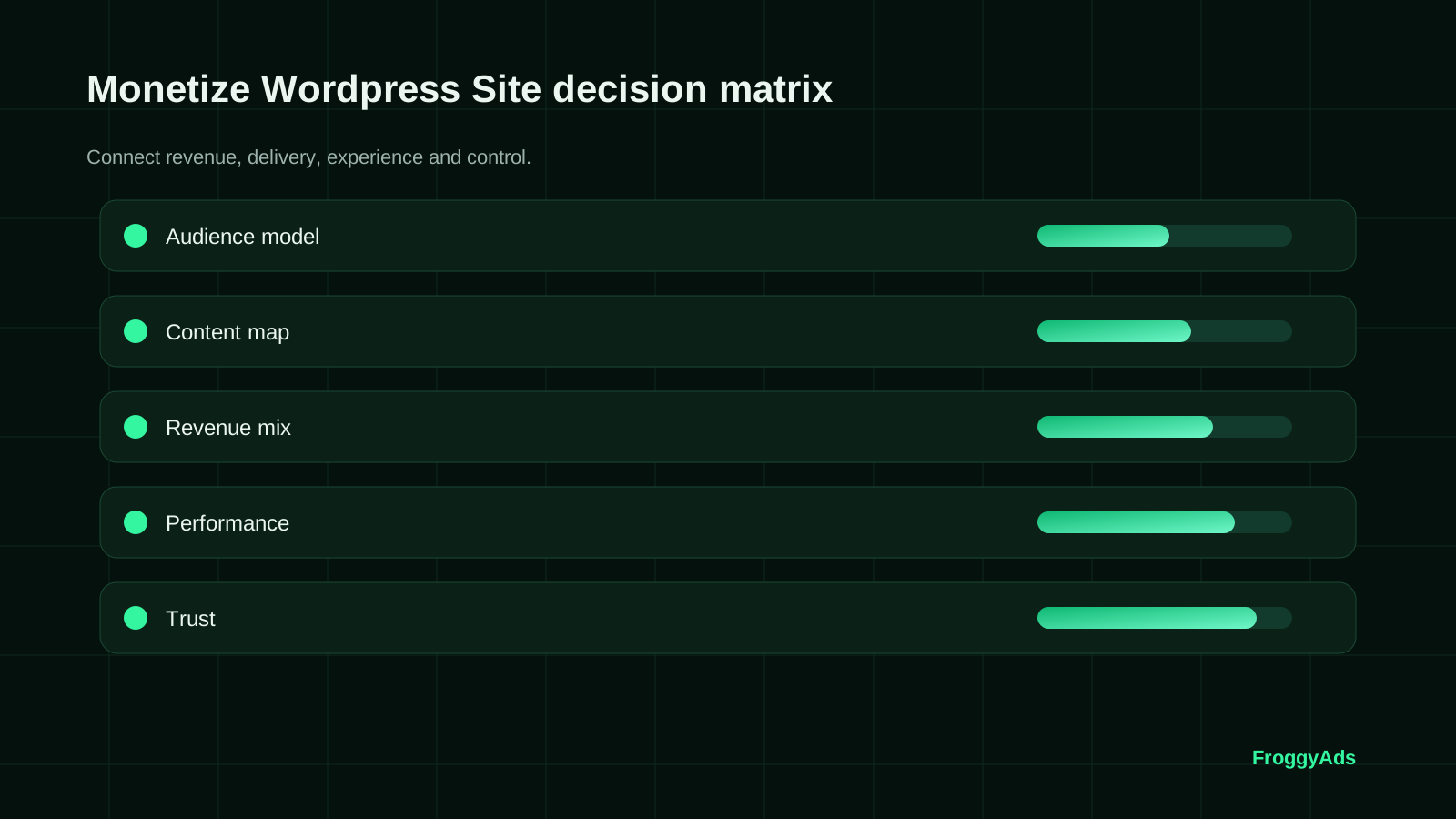
Audience model
Describe why visitors arrive and which sessions carry the most value. For monetize wordpress site, connect this control to net revenue per session after speed and tooling cost.
Content map
Separate templates, topics and user stages before placing demand. For monetize wordpress site, connect this control to net revenue per session after speed and tooling cost.
Revenue mix
Combine ads, sponsorships, commerce or subscriptions only where they fit. For monetize wordpress site, connect this control to net revenue per session after speed and tooling cost.
Performance
Protect loading, layout stability and the primary content task. For monetize wordpress site, connect this control to net revenue per session after speed and tooling cost.
Trust
Disclose commercial relationships and preserve editorial or community rules. For monetize wordpress site, connect this control to net revenue per session after speed and tooling cost.
Retention
Measure repeat visits, membership and audience growth beside revenue. For monetize wordpress site, connect this control to net revenue per session after speed and tooling cost.
Connect the guide to live testing
Connect Monetize WordPress Site to a controlled audience test
Use the choices established in “Build monetize wordpress site around six controllable layers” to define one audience, budget and source set in FroggyAds. Keep the surrounding offer and measurement rule stable so the test adds evidence to monetize wordpress site instead of mixing several changes at once.
Create My Free Account
A seven-step monetize wordpress site process
Use a bounded sequence so the first test produces evidence instead of an irreversible sitewide change.
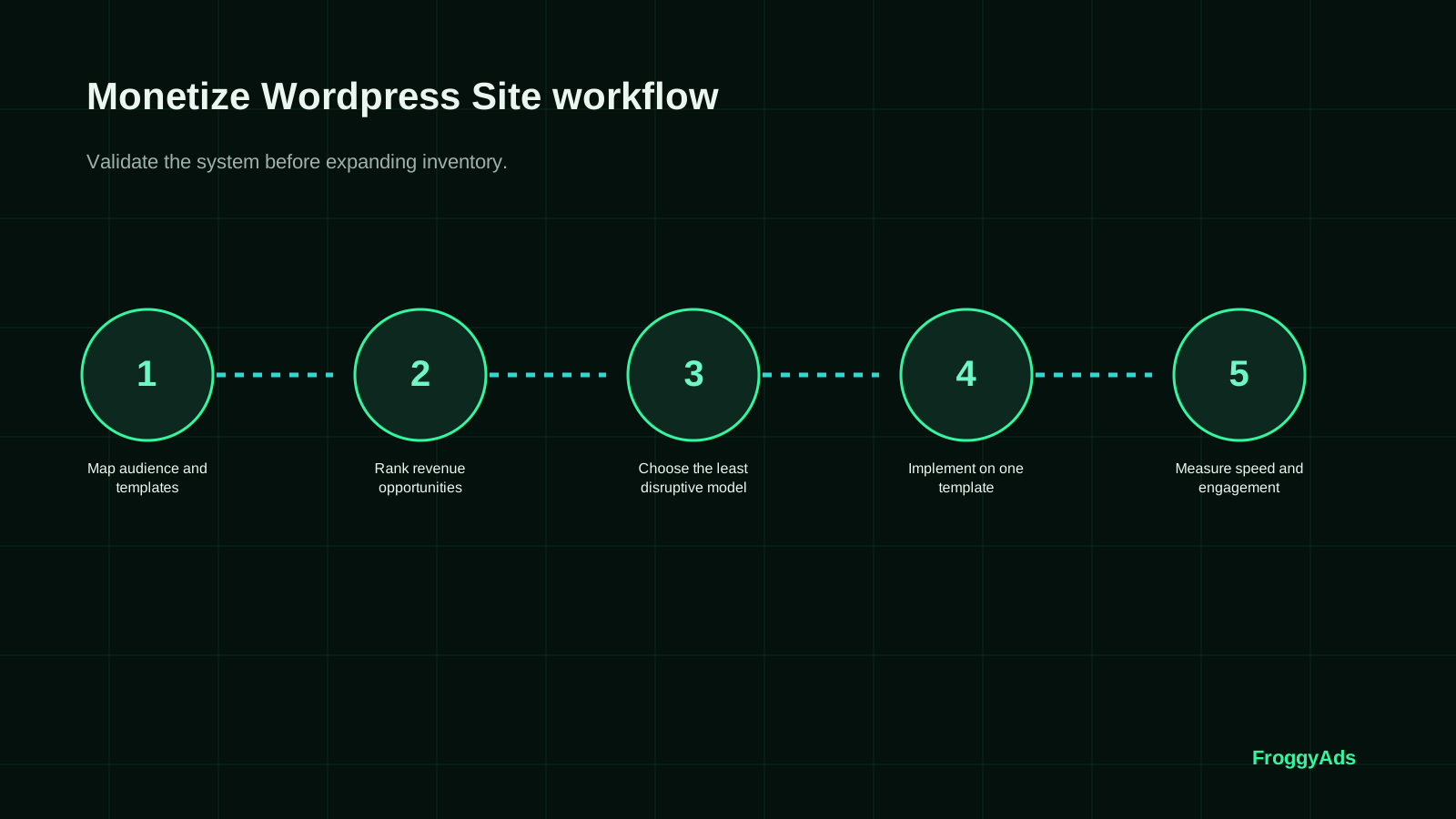
Map audience and templates
Map audience and templates for monetize wordpress site by keeping template, plugin stack, device, page type and traffic source visible and recording how the change affects revenue, core web vitals, viewability, errors and retention.
Rank revenue opportunities
Rank revenue opportunities for monetize wordpress site by keeping template, plugin stack, device, page type and traffic source visible and recording how the change affects revenue, core web vitals, viewability, errors and retention.
Choose the least disruptive model
Choose the least disruptive model for monetize wordpress site by keeping template, plugin stack, device, page type and traffic source visible and recording how the change affects revenue, core web vitals, viewability, errors and retention.
Implement on one template
Implement on one template for monetize wordpress site by keeping template, plugin stack, device, page type and traffic source visible and recording how the change affects revenue, core web vitals, viewability, errors and retention.
Measure speed and engagement
Measure speed and engagement for monetize wordpress site by keeping template, plugin stack, device, page type and traffic source visible and recording how the change affects revenue, core web vitals, viewability, errors and retention.
Compare net visitor value
Compare net visitor value for monetize wordpress site by keeping template, plugin stack, device, page type and traffic source visible and recording how the change affects revenue, core web vitals, viewability, errors and retention.
Expand with a rollback plan
Expand with a rollback plan for monetize wordpress site by keeping template, plugin stack, device, page type and traffic source visible and recording how the change affects revenue, core web vitals, viewability, errors and retention.
Choose the execution format
Choose a paid-media format that supports Monetize WordPress Site
Use the criteria around “A seven-step monetize wordpress site process” to decide whether push, native, display or pop fits the message and destination. Set format, targeting and spend as campaign controls in FroggyAds while the monetize wordpress site decision remains the standard for judging the result.
Create My Free Account
Measure net value, not a headline rate
The headline decision metric for monetize wordpress site is net revenue per session after speed and tooling cost. Define the numerator, denominator, currency, time zone and revenue basis before comparing periods. Gross estimates, net reports and collected payments answer different questions. Use one as the decision metric and keep the others as reconciliation layers.
Report the result by template, plugin stack, device, page type and traffic source. The split is not administrative detail. It reveals whether the apparent improvement came from better demand, a different audience, a more viewable placement or a temporary traffic mix. For monetize wordpress site, combine the economic metric with revenue, core web vitals, viewability, errors and retention so a short-term rate increase does not hide a weaker user or advertiser outcome.
Use a maturity window. Some revenue reports, invalid-traffic adjustments, conversions and payments settle after the impression or click. Mark recent periods as provisional and compare them only after the same delay. If the reporting definition changes, start a new baseline rather than blending incompatible data into the monetize wordpress site trend.
| Layer | Evidence | Guardrail | Decision |
|---|---|---|---|
| Eligibility | Requests or opportunities that can legally and technically be monetized | Consent, policy and placement rules | Confirm the denominator |
| Demand | Bids, matches, prices and seller paths | Floors, timeouts and partner rules | Keep or remove demand |
| Delivery | Rendered, measurable and viewable events | Speed, layout and frequency | Improve implementation |
| Value | Revenue, Core Web Vitals, viewability, errors and retention | Net revenue per session after speed and tooling cost | Scale, hold or roll back |
Connect supply, demand, delivery and billing
A resilient monetize wordpress site setup separates eligibility, auction or demand choice, delivery, rendering and billing. Each layer can fail independently. An eligible opportunity may receive no bid, a winning creative may fail to render, a rendered ad may not be measurable, and reported revenue may later be adjusted. Mapping those stages prevents the team from blaming the wrong component.
Create a small number of inventory classes. Premium, standard, experimental and fallback groups are usually easier to operate than dozens of undocumented exceptions. Give each class a purpose, allowed formats, demand rules, floor or price logic, timeout, frequency and user-experience guardrail. Then evaluate monetize wordpress site within the class rather than across a blended site average.
The operating plan should also define ownership. Editorial, product, engineering, ad operations, finance and privacy teams can each influence the result. Assign one owner for the monetize wordpress site metric, one owner for technical delivery and one owner for the audience guardrails. Decisions move faster when each team knows which evidence it must provide.
Use the model in three common situations
The right action depends on the current constraint, not on a universal monetization formula.
Small loyal audience
Prioritize direct relevance, sponsorship and high-value placements. In this monetize wordpress site decision, use net revenue per session after speed and tooling cost as the economic check.
Large volatile traffic spikes
Protect speed and separate event traffic from normal sessions. In this monetize wordpress site decision, use net revenue per session after speed and tooling cost as the economic check.
Many templates
Pilot on one template and compare net session value before sitewide rollout. In this monetize wordpress site decision, use net revenue per session after speed and tooling cost as the economic check.
Put the guide into practice
Turn Monetize WordPress Site into a bounded campaign test
With “Use the model in three common situations” documented, launch only the next reversible test. Set a spending limit, preserve the baseline and use source-level and audience controls so the next step depends on qualified outcomes for monetize wordpress site, not activity volume.
Create My Free Account
Protect the audience and advertiser value
User experience is part of the revenue equation. A placement that shifts content, delays interaction, obscures navigation or creates repeated interruptions can reduce session depth and future visits. Measure those effects alongside net revenue per session after speed and tooling cost. The goal is not the fewest ads or the most ads. It is the highest sustainable value from eligible opportunities.
Advertiser value matters too. Clear labeling, accurate placement descriptions, transparent supply paths and source-level reporting make inventory easier to evaluate. For monetize wordpress site, avoid promising guaranteed quality, guaranteed fill or guaranteed revenue. Traffic-quality and supply controls reduce risk, but they do not eliminate every invalid event or market change.
When a change works, scale one lever at a time. Increase eligible inventory, add a demand path, adjust a floor, change a format or expand an audience cohort, but do not do all of them together. Preserve the previous stable version so the team can roll back if the newest monetize wordpress site expansion weakens collected revenue or audience behavior.
Five mistakes that weaken monetize wordpress site
Use these checks before expanding demand, placements or inventory.
Optimizing a headline metric before the template, plugin stack, device, page type and traffic source breakdown is stable
Changing demand, placement and pricing at the same time during a monetize wordpress site test
Ignoring fees, discrepancies, latency or uncollected revenue when calculating net revenue per session after speed and tooling cost
Treating user experience as a soft preference instead of an input to future inventory value
Scaling monetize wordpress site before the latest traffic period and revenue events have matured
Standards and first-party documentation
These sources define technical concepts and user-experience principles. Your own reporting remains the source of truth for performance.
Monetize Wordpress Site FAQ
Practical answers for publishers, site owners, ad operations teams and media buyers.
Where should ads be placed on a WordPress site?
Use positions that respect the reading or task flow and stay stable across templates. Check headers, menus, forms and mobile content with the unit active.
How should a site owner choose a monetization partner?
Measure earnings beside page speed, reading depth and repeat visits for each placement. Review mobile results separately because space is tighter.
Which earnings measure is useful for WordPress inventory?
Review net revenue by template and placement beside viewability, page behavior and deductions. A sitewide average can conceal a weak implementation.
What plugin risk belongs in the monetization review?
A plugin can add scripts, permissions, update dependence or conflicts with the theme and cache. Check ownership and a removal path before installation.
How can affiliate content complement ad revenue?
Affiliate links can suit relevant product decisions when the relationship is disclosed. Keep their earnings and reader actions separate from network ads.
When is direct ad sales worth considering?
Direct sales may fit a defined audience and repeat advertiser demand when the publisher can manage contracts, delivery and reporting. Networks require less sales work.
What performance test should follow an ad change?
Track revenue and user behavior by template and placement, with consent or policy exceptions visible in the same report.
How should WordPress updates affect ad testing?
Recheck placements after theme, plugin or core updates that change markup or script timing. Keep a known working configuration for comparison.
What evidence supports adding a monetization placement to more WordPress pages?
Add one after the first placement delivers acceptable net revenue without harming task completion, stability or audience feedback. Measure its incremental effect.
What belongs in a WordPress monetization register?
List partners, plugins, placements, scripts, category rules, payment terms, update checks and owners. Include instructions for removing each integration.
Continue the publisher revenue workflow
Use the related guides to connect strategy, measurement, infrastructure and format decisions.
Use transparent supply understanding to plan better campaigns
FroggyAds gives advertisers self-serve access to Push, Native, Display, Pop, Video and Interstitial formats. Inventory, auction conditions and results vary, so launch a measured campaign and optimize by source and accepted outcomes.
How to monetize a WordPress site without plugin overload
WordPress monetization should begin with a stable theme, original content, secure administration, consent and performance measurement. Add one revenue model and one controlled integration at a time instead of installing several overlapping ad or affiliate plugins.
Technical ownership
Know which plugin, theme or tag creates each commercial element and how to disable it safely.
Compare advertising with affiliates, sponsorships, subscriptions, products and services.
Site health
Track updates, security, layout stability, page speed, support and audience retention alongside income.
AdSense alternatives for publishers CPM comparison methodology
Monetize WordPress Site: A Practical Publisher Stack: what should the advertiser decide next?
For Monetize WordPress Site: A Practical Publisher Stack, the commercial task is to turn monetize wordpress site into one measurable campaign decision. Use What does this page explain about Monetize WordPress Site: A Practical Publisher Stack? to define the audience or problem, use What monetize wordpress site should accomplish to constrain the test, and decide in advance which accepted result would justify more FroggyAds spend.
On this Monetize WordPress Site: A Practical Publisher Stack page, the decision should remain tied to the existing evidence around What does this page explain about Monetize WordPress Site: A Practical Publisher Stack?, What monetize wordpress site should accomplish and Build monetize wordpress site around six controllable layers. Those sections give monetize wordpress site its specific context; the table below turns that context into campaign actions rather than adding another generic definition.
| Decision | What to verify | FroggyAds action |
|---|---|---|
| Monetize WordPress Site: A Practical Publisher Stack objective | Use What does this page explain about Monetize WordPress Site: A Practical Publisher Stack? to define the accepted business event and the maximum learning loss for monetize wordpress site. | Launch one FroggyAds campaign objective for Monetize WordPress Site: A Practical Publisher Stack and keep the conversion definition stable. |
| Monetize WordPress Site: A Practical Publisher Stack audience | Use What monetize wordpress site should accomplish to verify market, device, language and offer eligibility for monetize wordpress site. | Apply only the FroggyAds targeting controls that change the real Monetize WordPress Site: A Practical Publisher Stack customer journey. |
| Monetize WordPress Site: A Practical Publisher Stack source evidence | Use Build monetize wordpress site around six controllable layers to keep source-level differences visible instead of relying on one blended monetize wordpress site average. | Keep, cap, exclude or retest Monetize WordPress Site: A Practical Publisher Stack inventory from documented source evidence. |
| Monetize WordPress Site: A Practical Publisher Stack economics | Use Audience model to connect media spend with accepted conversions and downstream value for monetize wordpress site. | Protect the Monetize WordPress Site: A Practical Publisher Stack test with a written budget boundary and a consistent attribution window. |
| Monetize WordPress Site: A Practical Publisher Stack scale rule | Use Content map to define the exact evidence that earns the next budget increase for monetize wordpress site. | Scale Monetize WordPress Site: A Practical Publisher Stack one major control at a time and compare marginal performance with the prior baseline. |
A page-specific FroggyAds test sequence for Monetize WordPress Site: A Practical Publisher Stack
- Monetize WordPress Site: A Practical Publisher Stack outcome: define the accepted event for monetize wordpress site and the maximum loss permitted while the first test is learning.
- Monetize WordPress Site: A Practical Publisher Stack path: verify market eligibility, device experience, landing-page continuity and tracking against What does this page explain about Monetize WordPress Site: A Practical Publisher Stack? before buying more traffic.
- Monetize WordPress Site: A Practical Publisher Stack hypothesis: launch one bounded FroggyAds test tied to What monetize wordpress site should accomplish; do not change bid, creative, audience and destination together.
- Monetize WordPress Site: A Practical Publisher Stack source review: compare qualified activity, accepted conversions, timing and cost by the source or segment dimensions relevant to Build monetize wordpress site around six controllable layers.
- Monetize WordPress Site: A Practical Publisher Stack scaling: use Audience model and Content map to define what must reproduce before the next budget increase.
Why FroggyAds is relevant to Monetize WordPress Site: A Practical Publisher Stack
For Monetize WordPress Site: A Practical Publisher Stack, FroggyAds gives advertisers a self-serve DSP and ad-network workflow for buying supported traffic with campaign-level budgets and targeting. Depending on format and campaign context, available controls can include country, city, device, operating system, browser, carrier, category, source, ID and IP options. SmartCPC and Adscore-supported traffic-quality controls can support the monetize wordpress site optimization process, while the advertiser's tracker, analytics and backend acceptance remain the final evidence for commercial quality.
Use Content map as the final checkpoint for Monetize WordPress Site: A Practical Publisher Stack. If the accepted result does not reproduce after the next meaningful volume step, return to the last stable configuration instead of widening several controls at once.
Monetize WordPress Site: A Practical Publisher Stack: the publisher decision this URL owns
Use this page when a site owner is deciding how Monetize WordPress Site: A Practical Publisher Stack can create revenue without weakening the content experience that produces repeat visits.
Page-specific evidence path: For Monetize WordPress Site: A Practical Publisher Stack, use the visible sections What monetize wordpress site should accomplish; Build monetize wordpress site around six controllable layers; Connect Monetize WordPress Site to a controlled audience test to evaluate this content-site monetization decision. The FAQ path asks Where should ads be placed on a WordPress site?; How should a site owner choose a monetization partner?; Which earnings measure is useful for WordPress inventory?. Keep the decision terms audience targeting, conversion tracking attached to this URL, and use Monetize Streaming Site only for its adjacent monetization task.
| Checkpoint | What to decide | Evidence to retain |
|---|---|---|
| Audience context | For Monetize WordPress Site: A Practical Publisher Stack, identify the pages, visitor intent and devices where monetization is appropriate. | Retain for Monetize WordPress Site: A Practical Publisher Stack: Content category, traffic source, device and session depth. |
| Inventory design | For Monetize WordPress Site: A Practical Publisher Stack, choose placements and formats that preserve navigation, readability and disclosures. | Retain for Monetize WordPress Site: A Practical Publisher Stack: Placement map, viewability/eligibility, frequency and page-speed observations. |
| Yield + experience | For Monetize WordPress Site: A Practical Publisher Stack, scale only when net value improves without unacceptable engagement or return-visit loss. | Retain for Monetize WordPress Site: A Practical Publisher Stack: Net revenue, revenue per visit, bounce/engagement and repeat-visit signals. |
Transparent monetization example
Hypothetical example: if Monetize WordPress Site: A Practical Publisher Stack records 50,000 eligible or served impressions and USD 100 in net advertising revenue over the same review window, the illustrative eCPM is USD 2.00. Replace those inputs with your own delivery and net-revenue data; this is not a FroggyAds earnings claim.
How should FroggyAds fit this decision?
For Monetize WordPress Site: A Practical Publisher Stack, use the FroggyAds publisher or monetization workflow documented on this page only where it supports the content-site monetization task and the stated inventory constraints. Keep live delivery, net revenue and the page-specific decision terms audience targeting, conversion tracking in the same record. Judge this URL against its own evidence path and do not treat a headline fill rate, eCPM or earnings estimate as guaranteed.
What matters first for Monetize WordPress Site: A Practical Publisher Stack?
For Monetize WordPress Site: A Practical Publisher Stack, start with the inventory or audience condition this content-site monetization page owns. Use What monetize wordpress site should accomplish; Build monetize wordpress site around six controllable layers; Connect Monetize WordPress Site to a controlled audience test to verify the implementation path, then reconcile delivery and net publisher value with Where should ads be placed on a WordPress site?; How should a site owner choose a monetization partner?; Which earnings measure is useful for WordPress inventory?. Increase monetization pressure only when the page-specific revenue and user-quality evidence remain acceptable after the same review window.