Industry marketing strategy guide

Marketing for Local Businesses: A Practical Growth and Media Planning Guide

Direct answer: Effective marketing for local businesses begins with a precise audience and outcome, then assigns every channel, message, page and follow-up step a measurable role. The plan should optimize for measurable visits, calls, bookings and profitable local demand, not for disconnected clicks or impressions, while respecting tight geography, limited capacity, local seasonality, review dynamics and attribution gaps.

Marketing for Local Businesses planning architecture

What this guide helps a Local Businesses team decide

This guide translates strategy into a governed operating system for local businesses. It explains audience priorities, channel roles, proof, qualification, measurement, budget control and review triggers. The objective is a plan that can be quoted, audited and improved without turning assumptions into facts.

  • Primary outcome: measurable visits, calls, bookings and profitable local demand
  • Core audience: nearby customers whose needs, timing and travel radius match the offer
  • Critical proof: proximity, availability, reviews, local knowledge, pricing clarity and service reliability
  • Conversion family: directions, call, booking, local order, quote or store visit
  • Primary risk: wasted radius, outdated hours, irrelevant offers, review neglect and peak-capacity overload

Key takeaways

Marketing for local businesses is strongest when demand quality, customer value and operational capacity are measured together. Build the evidence chain before scale, preserve consent and data ownership, and use a channel portfolio in which each investment has a named job.

  • Prioritize qualified local action, visit value, booked revenue, repeat rate and radius-adjusted acquisition cost.
  • Plan around weather, commuting, holidays, events and neighborhood patterns.
  • Use local search, maps, geo-focused display, social, email, SMS and partnerships only where their roles are explicit.
  • Review claims, targeting and handoffs before increasing spend.

Marketing for Local Businesses: planning framework

A defensible local businesses strategy connects audience evidence, a real decision journey, credible proof, controlled media execution and downstream value. The framework below should be completed before a team calls any channel efficient.

Marketing for Local Businesses evaluation framework
Planning questionLocal Businesses evidenceDecision rule
Who is the audience?nearby customers whose needs, timing and travel radius match the offerExclude segments that cannot be served or measured.
What outcome matters?measurable visits, calls, bookings and profitable local demandOptimize to qualified value, not surface activity.
What proves fit?proximity, availability, reviews, local knowledge, pricing clarity and service reliabilityMatch proof to the objection at each journey stage.
What constrains scale?tight geography, limited capacity, local seasonality, review dynamics and attribution gapsDo not buy demand that operations cannot support.
How is value measured?qualified local action, visit value, booked revenue, repeat rate and radius-adjusted acquisition costUse agreed definitions and a documented data owner.

What demand should Local Businesses marketing serve?

Direct answer: Define the actual market need before selecting channels or creative.

Define the actual market need before selecting channels or creative. For local businesses, this means grounding the decision in nearby customers whose needs, timing and travel radius match the offer and preserving a clear path to measurable visits, calls, bookings and profitable local demand. The team should document what is known, what remains an assumption, who owns the evidence and what would invalidate the plan. Layer key V266-39-marketing-for-local-businesses-L01 keeps the recommendation traceable when market conditions, pricing, inventory, policy or capacity changes.

The practical test is whether this layer improves qualified local action, visit value, booked revenue, repeat rate and radius-adjusted acquisition cost without creating hidden pressure elsewhere. A channel can look efficient while transferring cost into qualification, service, cancellations, returns, compliance review or follow-up. For local businesses, evaluate the complete operating chain and compare the observed result with the expected role of local search, maps, geo-focused display, social, email, SMS and partnerships. Record both the useful signal and the failure mode, especially wasted radius, outdated hours, irrelevant offers, review neglect and peak-capacity overload. Evidence locator: V266-39-marketing-for-local-businesses-T016.

Execution should connect message, audience, placement, page and next action. Use proximity, availability, reviews, local knowledge, pricing clarity and service reliability as evidence only when it is relevant, current and presented without unsupported certainty. Define the accepted conversion as directions, call, booking, local order, quote or store visit, then specify the minimum context required for that action to be considered qualified. This prevents evidence from being replaced by volume that cannot create sustainable value. Evidence locator: V266-39-marketing-for-local-businesses-T017.

Review this layer against weather, commuting, holidays, events and neighborhood patterns and tight geography, limited capacity, local seasonality, review dynamics and attribution gaps. A sound plan states the trigger for pausing, narrowing, expanding or redesigning the activity. It also records the owner of the next step, the response window and the feedback that returns to media planning. The result should be a repeatable local businesses decision rule, not a one-time opinion that cannot be audited later. Evidence locator: V266-39-marketing-for-local-businesses-T018.

  • Evidence owner for demand reality in local businesses
  • Accepted signal linked to measurable visits, calls, bookings and profitable local demand
  • Failure flag covering wasted radius, outdated hours, irrelevant offers, review neglect and peak-capacity overload
  • Review trigger tied to weather, commuting, holidays, events and neighborhood patterns
  • Documented action when the rule is not met

Who should a Local Businesses marketing plan prioritize?

Direct answer: Separate people by need, readiness, geography, value and decision role.

Separate people by need, readiness, geography, value and decision role. For local businesses, this means grounding the decision in nearby customers whose needs, timing and travel radius match the offer and preserving a clear path to measurable visits, calls, bookings and profitable local demand. The team should document what is known, what remains an assumption, who owns the evidence and what would invalidate the plan. Layer key V266-39-marketing-for-local-businesses-L02 keeps the recommendation traceable when market conditions, pricing, inventory, policy or capacity changes.

The practical test is whether this layer improves qualified local action, visit value, booked revenue, repeat rate and radius-adjusted acquisition cost without creating hidden pressure elsewhere. A channel can look efficient while transferring cost into qualification, service, cancellations, returns, compliance review or follow-up. For local businesses, evaluate the complete operating chain and compare the observed result with the expected role of local search, maps, geo-focused display, social, email, SMS and partnerships. Record both the useful signal and the failure mode, especially wasted radius, outdated hours, irrelevant offers, review neglect and peak-capacity overload. Evidence locator: V266-39-marketing-for-local-businesses-T026.

Execution should connect message, audience, placement, page and next action. Use proximity, availability, reviews, local knowledge, pricing clarity and service reliability as evidence only when it is relevant, current and presented without unsupported certainty. Define the accepted conversion as directions, call, booking, local order, quote or store visit, then specify the minimum context required for that action to be considered qualified. This prevents serviceability from being replaced by volume that cannot create sustainable value. Evidence locator: V266-39-marketing-for-local-businesses-T027.

Review this layer against weather, commuting, holidays, events and neighborhood patterns and tight geography, limited capacity, local seasonality, review dynamics and attribution gaps. A sound plan states the trigger for pausing, narrowing, expanding or redesigning the activity. It also records the owner of the next step, the response window and the feedback that returns to media planning. The result should be a repeatable local businesses decision rule, not a one-time opinion that cannot be audited later. Evidence locator: V266-39-marketing-for-local-businesses-T028.

  • Evidence owner for audience map in local businesses
  • Accepted signal linked to measurable visits, calls, bookings and profitable local demand
  • Failure flag covering wasted radius, outdated hours, irrelevant offers, review neglect and peak-capacity overload
  • Review trigger tied to weather, commuting, holidays, events and neighborhood patterns
  • Documented action when the rule is not met

How does the Local Businesses buying journey change the plan?

Direct answer: Match information, proof and calls to action to the real decision sequence.

Match information, proof and calls to action to the real decision sequence. For local businesses, this means grounding the decision in nearby customers whose needs, timing and travel radius match the offer and preserving a clear path to measurable visits, calls, bookings and profitable local demand. The team should document what is known, what remains an assumption, who owns the evidence and what would invalidate the plan. Layer key V266-39-marketing-for-local-businesses-L03 keeps the recommendation traceable when market conditions, pricing, inventory, policy or capacity changes.

The practical test is whether this layer improves qualified local action, visit value, booked revenue, repeat rate and radius-adjusted acquisition cost without creating hidden pressure elsewhere. A channel can look efficient while transferring cost into qualification, service, cancellations, returns, compliance review or follow-up. For local businesses, evaluate the complete operating chain and compare the observed result with the expected role of local search, maps, geo-focused display, social, email, SMS and partnerships. Record both the useful signal and the failure mode, especially wasted radius, outdated hours, irrelevant offers, review neglect and peak-capacity overload. Evidence locator: V266-39-marketing-for-local-businesses-T036.

Execution should connect message, audience, placement, page and next action. Use proximity, availability, reviews, local knowledge, pricing clarity and service reliability as evidence only when it is relevant, current and presented without unsupported certainty. Define the accepted conversion as directions, call, booking, local order, quote or store visit, then specify the minimum context required for that action to be considered qualified. This prevents decision quality from being replaced by volume that cannot create sustainable value. Evidence locator: V266-39-marketing-for-local-businesses-T037.

Review this layer against weather, commuting, holidays, events and neighborhood patterns and tight geography, limited capacity, local seasonality, review dynamics and attribution gaps. A sound plan states the trigger for pausing, narrowing, expanding or redesigning the activity. It also records the owner of the next step, the response window and the feedback that returns to media planning. The result should be a repeatable local businesses decision rule, not a one-time opinion that cannot be audited later. Evidence locator: V266-39-marketing-for-local-businesses-T038.

  • Evidence owner for decision journey in local businesses
  • Accepted signal linked to measurable visits, calls, bookings and profitable local demand
  • Failure flag covering wasted radius, outdated hours, irrelevant offers, review neglect and peak-capacity overload
  • Review trigger tied to weather, commuting, holidays, events and neighborhood patterns
  • Documented action when the rule is not met

What value proposition should Local Businesses marketing communicate?

Direct answer: State a credible reason to choose the offer without inflating outcomes.

State a credible reason to choose the offer without inflating outcomes. For local businesses, this means grounding the decision in nearby customers whose needs, timing and travel radius match the offer and preserving a clear path to measurable visits, calls, bookings and profitable local demand. The team should document what is known, what remains an assumption, who owns the evidence and what would invalidate the plan. Layer key V266-39-marketing-for-local-businesses-L04 keeps the recommendation traceable when market conditions, pricing, inventory, policy or capacity changes.

The practical test is whether this layer improves qualified local action, visit value, booked revenue, repeat rate and radius-adjusted acquisition cost without creating hidden pressure elsewhere. A channel can look efficient while transferring cost into qualification, service, cancellations, returns, compliance review or follow-up. For local businesses, evaluate the complete operating chain and compare the observed result with the expected role of local search, maps, geo-focused display, social, email, SMS and partnerships. Record both the useful signal and the failure mode, especially wasted radius, outdated hours, irrelevant offers, review neglect and peak-capacity overload. Evidence locator: V266-39-marketing-for-local-businesses-T046.

Execution should connect message, audience, placement, page and next action. Use proximity, availability, reviews, local knowledge, pricing clarity and service reliability as evidence only when it is relevant, current and presented without unsupported certainty. Define the accepted conversion as directions, call, booking, local order, quote or store visit, then specify the minimum context required for that action to be considered qualified. This prevents operating capacity from being replaced by volume that cannot create sustainable value. Evidence locator: V266-39-marketing-for-local-businesses-T047.

Review this layer against weather, commuting, holidays, events and neighborhood patterns and tight geography, limited capacity, local seasonality, review dynamics and attribution gaps. A sound plan states the trigger for pausing, narrowing, expanding or redesigning the activity. It also records the owner of the next step, the response window and the feedback that returns to media planning. The result should be a repeatable local businesses decision rule, not a one-time opinion that cannot be audited later. Evidence locator: V266-39-marketing-for-local-businesses-T048.

  • Evidence owner for positioning in local businesses
  • Accepted signal linked to measurable visits, calls, bookings and profitable local demand
  • Failure flag covering wasted radius, outdated hours, irrelevant offers, review neglect and peak-capacity overload
  • Review trigger tied to weather, commuting, holidays, events and neighborhood patterns
  • Documented action when the rule is not met

How should offers be structured for Local Businesses?

Direct answer: Build offers around useful next steps, qualification and operational capacity.

Build offers around useful next steps, qualification and operational capacity. For local businesses, this means grounding the decision in nearby customers whose needs, timing and travel radius match the offer and preserving a clear path to measurable visits, calls, bookings and profitable local demand. The team should document what is known, what remains an assumption, who owns the evidence and what would invalidate the plan. Layer key V266-39-marketing-for-local-businesses-L05 keeps the recommendation traceable when market conditions, pricing, inventory, policy or capacity changes.

The practical test is whether this layer improves qualified local action, visit value, booked revenue, repeat rate and radius-adjusted acquisition cost without creating hidden pressure elsewhere. A channel can look efficient while transferring cost into qualification, service, cancellations, returns, compliance review or follow-up. For local businesses, evaluate the complete operating chain and compare the observed result with the expected role of local search, maps, geo-focused display, social, email, SMS and partnerships. Record both the useful signal and the failure mode, especially wasted radius, outdated hours, irrelevant offers, review neglect and peak-capacity overload. Evidence locator: V266-39-marketing-for-local-businesses-T056.

Execution should connect message, audience, placement, page and next action. Use proximity, availability, reviews, local knowledge, pricing clarity and service reliability as evidence only when it is relevant, current and presented without unsupported certainty. Define the accepted conversion as directions, call, booking, local order, quote or store visit, then specify the minimum context required for that action to be considered qualified. This prevents incremental value from being replaced by volume that cannot create sustainable value. Evidence locator: V266-39-marketing-for-local-businesses-T057.

Review this layer against weather, commuting, holidays, events and neighborhood patterns and tight geography, limited capacity, local seasonality, review dynamics and attribution gaps. A sound plan states the trigger for pausing, narrowing, expanding or redesigning the activity. It also records the owner of the next step, the response window and the feedback that returns to media planning. The result should be a repeatable local businesses decision rule, not a one-time opinion that cannot be audited later. Evidence locator: V266-39-marketing-for-local-businesses-T058.

  • Evidence owner for offer architecture in local businesses
  • Accepted signal linked to measurable visits, calls, bookings and profitable local demand
  • Failure flag covering wasted radius, outdated hours, irrelevant offers, review neglect and peak-capacity overload
  • Review trigger tied to weather, commuting, holidays, events and neighborhood patterns
  • Documented action when the rule is not met

Which channels should carry each Local Businesses marketing job?

Direct answer: Assign discovery, education, conversion and retention roles before budgeting.

Assign discovery, education, conversion and retention roles before budgeting. For local businesses, this means grounding the decision in nearby customers whose needs, timing and travel radius match the offer and preserving a clear path to measurable visits, calls, bookings and profitable local demand. The team should document what is known, what remains an assumption, who owns the evidence and what would invalidate the plan. Layer key V266-39-marketing-for-local-businesses-L06 keeps the recommendation traceable when market conditions, pricing, inventory, policy or capacity changes.

The practical test is whether this layer improves qualified local action, visit value, booked revenue, repeat rate and radius-adjusted acquisition cost without creating hidden pressure elsewhere. A channel can look efficient while transferring cost into qualification, service, cancellations, returns, compliance review or follow-up. For local businesses, evaluate the complete operating chain and compare the observed result with the expected role of local search, maps, geo-focused display, social, email, SMS and partnerships. Record both the useful signal and the failure mode, especially wasted radius, outdated hours, irrelevant offers, review neglect and peak-capacity overload. Evidence locator: V266-39-marketing-for-local-businesses-T066.

Execution should connect message, audience, placement, page and next action. Use proximity, availability, reviews, local knowledge, pricing clarity and service reliability as evidence only when it is relevant, current and presented without unsupported certainty. Define the accepted conversion as directions, call, booking, local order, quote or store visit, then specify the minimum context required for that action to be considered qualified. This prevents audience fit from being replaced by volume that cannot create sustainable value. Evidence locator: V266-39-marketing-for-local-businesses-T067.

Review this layer against weather, commuting, holidays, events and neighborhood patterns and tight geography, limited capacity, local seasonality, review dynamics and attribution gaps. A sound plan states the trigger for pausing, narrowing, expanding or redesigning the activity. It also records the owner of the next step, the response window and the feedback that returns to media planning. The result should be a repeatable local businesses decision rule, not a one-time opinion that cannot be audited later. Evidence locator: V266-39-marketing-for-local-businesses-T068.

  • Evidence owner for channel roles in local businesses
  • Accepted signal linked to measurable visits, calls, bookings and profitable local demand
  • Failure flag covering wasted radius, outdated hours, irrelevant offers, review neglect and peak-capacity overload
  • Review trigger tied to weather, commuting, holidays, events and neighborhood patterns
  • Documented action when the rule is not met

What creative system works for Local Businesses marketing?

Direct answer: Create reusable evidence-led messages for distinct audience and journey states.

Create reusable evidence-led messages for distinct audience and journey states. For local businesses, this means grounding the decision in nearby customers whose needs, timing and travel radius match the offer and preserving a clear path to measurable visits, calls, bookings and profitable local demand. The team should document what is known, what remains an assumption, who owns the evidence and what would invalidate the plan. Layer key V266-39-marketing-for-local-businesses-L07 keeps the recommendation traceable when market conditions, pricing, inventory, policy or capacity changes.

The practical test is whether this layer improves qualified local action, visit value, booked revenue, repeat rate and radius-adjusted acquisition cost without creating hidden pressure elsewhere. A channel can look efficient while transferring cost into qualification, service, cancellations, returns, compliance review or follow-up. For local businesses, evaluate the complete operating chain and compare the observed result with the expected role of local search, maps, geo-focused display, social, email, SMS and partnerships. Record both the useful signal and the failure mode, especially wasted radius, outdated hours, irrelevant offers, review neglect and peak-capacity overload. Evidence locator: V266-39-marketing-for-local-businesses-T076.

Execution should connect message, audience, placement, page and next action. Use proximity, availability, reviews, local knowledge, pricing clarity and service reliability as evidence only when it is relevant, current and presented without unsupported certainty. Define the accepted conversion as directions, call, booking, local order, quote or store visit, then specify the minimum context required for that action to be considered qualified. This prevents conversion integrity from being replaced by volume that cannot create sustainable value. Evidence locator: V266-39-marketing-for-local-businesses-T077.

Review this layer against weather, commuting, holidays, events and neighborhood patterns and tight geography, limited capacity, local seasonality, review dynamics and attribution gaps. A sound plan states the trigger for pausing, narrowing, expanding or redesigning the activity. It also records the owner of the next step, the response window and the feedback that returns to media planning. The result should be a repeatable local businesses decision rule, not a one-time opinion that cannot be audited later. Evidence locator: V266-39-marketing-for-local-businesses-T078.

  • Evidence owner for creative system in local businesses
  • Accepted signal linked to measurable visits, calls, bookings and profitable local demand
  • Failure flag covering wasted radius, outdated hours, irrelevant offers, review neglect and peak-capacity overload
  • Review trigger tied to weather, commuting, holidays, events and neighborhood patterns
  • Documented action when the rule is not met

What should a Local Businesses landing experience accomplish?

Direct answer: Continue the promise, answer objections and make the next action clear.

Continue the promise, answer objections and make the next action clear. For local businesses, this means grounding the decision in nearby customers whose needs, timing and travel radius match the offer and preserving a clear path to measurable visits, calls, bookings and profitable local demand. The team should document what is known, what remains an assumption, who owns the evidence and what would invalidate the plan. Layer key V266-39-marketing-for-local-businesses-L08 keeps the recommendation traceable when market conditions, pricing, inventory, policy or capacity changes.

The practical test is whether this layer improves qualified local action, visit value, booked revenue, repeat rate and radius-adjusted acquisition cost without creating hidden pressure elsewhere. A channel can look efficient while transferring cost into qualification, service, cancellations, returns, compliance review or follow-up. For local businesses, evaluate the complete operating chain and compare the observed result with the expected role of local search, maps, geo-focused display, social, email, SMS and partnerships. Record both the useful signal and the failure mode, especially wasted radius, outdated hours, irrelevant offers, review neglect and peak-capacity overload. Evidence locator: V266-39-marketing-for-local-businesses-T086.

Execution should connect message, audience, placement, page and next action. Use proximity, availability, reviews, local knowledge, pricing clarity and service reliability as evidence only when it is relevant, current and presented without unsupported certainty. Define the accepted conversion as directions, call, booking, local order, quote or store visit, then specify the minimum context required for that action to be considered qualified. This prevents commercial discipline from being replaced by volume that cannot create sustainable value. Evidence locator: V266-39-marketing-for-local-businesses-T087.

Review this layer against weather, commuting, holidays, events and neighborhood patterns and tight geography, limited capacity, local seasonality, review dynamics and attribution gaps. A sound plan states the trigger for pausing, narrowing, expanding or redesigning the activity. It also records the owner of the next step, the response window and the feedback that returns to media planning. The result should be a repeatable local businesses decision rule, not a one-time opinion that cannot be audited later. Evidence locator: V266-39-marketing-for-local-businesses-T088.

  • Evidence owner for landing experience in local businesses
  • Accepted signal linked to measurable visits, calls, bookings and profitable local demand
  • Failure flag covering wasted radius, outdated hours, irrelevant offers, review neglect and peak-capacity overload
  • Review trigger tied to weather, commuting, holidays, events and neighborhood patterns
  • Documented action when the rule is not met

How should Local Businesses marketing qualify demand?

Direct answer: Protect teams from low-fit volume by defining accepted demand signals.

Protect teams from low-fit volume by defining accepted demand signals. For local businesses, this means grounding the decision in nearby customers whose needs, timing and travel radius match the offer and preserving a clear path to measurable visits, calls, bookings and profitable local demand. The team should document what is known, what remains an assumption, who owns the evidence and what would invalidate the plan. Layer key V266-39-marketing-for-local-businesses-L09 keeps the recommendation traceable when market conditions, pricing, inventory, policy or capacity changes.

The practical test is whether this layer improves qualified local action, visit value, booked revenue, repeat rate and radius-adjusted acquisition cost without creating hidden pressure elsewhere. A channel can look efficient while transferring cost into qualification, service, cancellations, returns, compliance review or follow-up. For local businesses, evaluate the complete operating chain and compare the observed result with the expected role of local search, maps, geo-focused display, social, email, SMS and partnerships. Record both the useful signal and the failure mode, especially wasted radius, outdated hours, irrelevant offers, review neglect and peak-capacity overload. Evidence locator: V266-39-marketing-for-local-businesses-T096.

Execution should connect message, audience, placement, page and next action. Use proximity, availability, reviews, local knowledge, pricing clarity and service reliability as evidence only when it is relevant, current and presented without unsupported certainty. Define the accepted conversion as directions, call, booking, local order, quote or store visit, then specify the minimum context required for that action to be considered qualified. This prevents evidence from being replaced by volume that cannot create sustainable value. Evidence locator: V266-39-marketing-for-local-businesses-T097.

Review this layer against weather, commuting, holidays, events and neighborhood patterns and tight geography, limited capacity, local seasonality, review dynamics and attribution gaps. A sound plan states the trigger for pausing, narrowing, expanding or redesigning the activity. It also records the owner of the next step, the response window and the feedback that returns to media planning. The result should be a repeatable local businesses decision rule, not a one-time opinion that cannot be audited later. Evidence locator: V266-39-marketing-for-local-businesses-T098.

  • Evidence owner for qualification in local businesses
  • Accepted signal linked to measurable visits, calls, bookings and profitable local demand
  • Failure flag covering wasted radius, outdated hours, irrelevant offers, review neglect and peak-capacity overload
  • Review trigger tied to weather, commuting, holidays, events and neighborhood patterns
  • Documented action when the rule is not met

How should marketing hand qualified Local Businesses demand to operations?

Direct answer: Set ownership, response time, context and feedback rules for every conversion.

Set ownership, response time, context and feedback rules for every conversion. For local businesses, this means grounding the decision in nearby customers whose needs, timing and travel radius match the offer and preserving a clear path to measurable visits, calls, bookings and profitable local demand. The team should document what is known, what remains an assumption, who owns the evidence and what would invalidate the plan. Layer key V266-39-marketing-for-local-businesses-L10 keeps the recommendation traceable when market conditions, pricing, inventory, policy or capacity changes.

The practical test is whether this layer improves qualified local action, visit value, booked revenue, repeat rate and radius-adjusted acquisition cost without creating hidden pressure elsewhere. A channel can look efficient while transferring cost into qualification, service, cancellations, returns, compliance review or follow-up. For local businesses, evaluate the complete operating chain and compare the observed result with the expected role of local search, maps, geo-focused display, social, email, SMS and partnerships. Record both the useful signal and the failure mode, especially wasted radius, outdated hours, irrelevant offers, review neglect and peak-capacity overload. Evidence locator: V266-39-marketing-for-local-businesses-T106.

Execution should connect message, audience, placement, page and next action. Use proximity, availability, reviews, local knowledge, pricing clarity and service reliability as evidence only when it is relevant, current and presented without unsupported certainty. Define the accepted conversion as directions, call, booking, local order, quote or store visit, then specify the minimum context required for that action to be considered qualified. This prevents serviceability from being replaced by volume that cannot create sustainable value. Evidence locator: V266-39-marketing-for-local-businesses-T107.

Review this layer against weather, commuting, holidays, events and neighborhood patterns and tight geography, limited capacity, local seasonality, review dynamics and attribution gaps. A sound plan states the trigger for pausing, narrowing, expanding or redesigning the activity. It also records the owner of the next step, the response window and the feedback that returns to media planning. The result should be a repeatable local businesses decision rule, not a one-time opinion that cannot be audited later. Evidence locator: V266-39-marketing-for-local-businesses-T108.

  • Evidence owner for handoff in local businesses
  • Accepted signal linked to measurable visits, calls, bookings and profitable local demand
  • Failure flag covering wasted radius, outdated hours, irrelevant offers, review neglect and peak-capacity overload
  • Review trigger tied to weather, commuting, holidays, events and neighborhood patterns
  • Documented action when the rule is not met

What proof is persuasive in Local Businesses marketing?

Direct answer: Use evidence that reduces uncertainty at the exact decision being made.

Use evidence that reduces uncertainty at the exact decision being made. For local businesses, this means grounding the decision in nearby customers whose needs, timing and travel radius match the offer and preserving a clear path to measurable visits, calls, bookings and profitable local demand. The team should document what is known, what remains an assumption, who owns the evidence and what would invalidate the plan. Layer key V266-39-marketing-for-local-businesses-L11 keeps the recommendation traceable when market conditions, pricing, inventory, policy or capacity changes.

The practical test is whether this layer improves qualified local action, visit value, booked revenue, repeat rate and radius-adjusted acquisition cost without creating hidden pressure elsewhere. A channel can look efficient while transferring cost into qualification, service, cancellations, returns, compliance review or follow-up. For local businesses, evaluate the complete operating chain and compare the observed result with the expected role of local search, maps, geo-focused display, social, email, SMS and partnerships. Record both the useful signal and the failure mode, especially wasted radius, outdated hours, irrelevant offers, review neglect and peak-capacity overload. Evidence locator: V266-39-marketing-for-local-businesses-T116.

Execution should connect message, audience, placement, page and next action. Use proximity, availability, reviews, local knowledge, pricing clarity and service reliability as evidence only when it is relevant, current and presented without unsupported certainty. Define the accepted conversion as directions, call, booking, local order, quote or store visit, then specify the minimum context required for that action to be considered qualified. This prevents decision quality from being replaced by volume that cannot create sustainable value. Evidence locator: V266-39-marketing-for-local-businesses-T117.

Review this layer against weather, commuting, holidays, events and neighborhood patterns and tight geography, limited capacity, local seasonality, review dynamics and attribution gaps. A sound plan states the trigger for pausing, narrowing, expanding or redesigning the activity. It also records the owner of the next step, the response window and the feedback that returns to media planning. The result should be a repeatable local businesses decision rule, not a one-time opinion that cannot be audited later. Evidence locator: V266-39-marketing-for-local-businesses-T118.

  • Evidence owner for trust and proof in local businesses
  • Accepted signal linked to measurable visits, calls, bookings and profitable local demand
  • Failure flag covering wasted radius, outdated hours, irrelevant offers, review neglect and peak-capacity overload
  • Review trigger tied to weather, commuting, holidays, events and neighborhood patterns
  • Documented action when the rule is not met

How should location shape Local Businesses marketing?

Direct answer: Match radius, serviceability, language, inventory and local context.

Match radius, serviceability, language, inventory and local context. For local businesses, this means grounding the decision in nearby customers whose needs, timing and travel radius match the offer and preserving a clear path to measurable visits, calls, bookings and profitable local demand. The team should document what is known, what remains an assumption, who owns the evidence and what would invalidate the plan. Layer key V266-39-marketing-for-local-businesses-L12 keeps the recommendation traceable when market conditions, pricing, inventory, policy or capacity changes.

The practical test is whether this layer improves qualified local action, visit value, booked revenue, repeat rate and radius-adjusted acquisition cost without creating hidden pressure elsewhere. A channel can look efficient while transferring cost into qualification, service, cancellations, returns, compliance review or follow-up. For local businesses, evaluate the complete operating chain and compare the observed result with the expected role of local search, maps, geo-focused display, social, email, SMS and partnerships. Record both the useful signal and the failure mode, especially wasted radius, outdated hours, irrelevant offers, review neglect and peak-capacity overload. Evidence locator: V266-39-marketing-for-local-businesses-T126.

Execution should connect message, audience, placement, page and next action. Use proximity, availability, reviews, local knowledge, pricing clarity and service reliability as evidence only when it is relevant, current and presented without unsupported certainty. Define the accepted conversion as directions, call, booking, local order, quote or store visit, then specify the minimum context required for that action to be considered qualified. This prevents operating capacity from being replaced by volume that cannot create sustainable value. Evidence locator: V266-39-marketing-for-local-businesses-T127.

Review this layer against weather, commuting, holidays, events and neighborhood patterns and tight geography, limited capacity, local seasonality, review dynamics and attribution gaps. A sound plan states the trigger for pausing, narrowing, expanding or redesigning the activity. It also records the owner of the next step, the response window and the feedback that returns to media planning. The result should be a repeatable local businesses decision rule, not a one-time opinion that cannot be audited later. Evidence locator: V266-39-marketing-for-local-businesses-T128.

  • Evidence owner for geographic relevance in local businesses
  • Accepted signal linked to measurable visits, calls, bookings and profitable local demand
  • Failure flag covering wasted radius, outdated hours, irrelevant offers, review neglect and peak-capacity overload
  • Review trigger tied to weather, commuting, holidays, events and neighborhood patterns
  • Documented action when the rule is not met

What governance controls should Local Businesses teams apply?

Direct answer: Treat policy, privacy, consent and claim review as design inputs.

Treat policy, privacy, consent and claim review as design inputs. For local businesses, this means grounding the decision in nearby customers whose needs, timing and travel radius match the offer and preserving a clear path to measurable visits, calls, bookings and profitable local demand. The team should document what is known, what remains an assumption, who owns the evidence and what would invalidate the plan. Layer key V266-39-marketing-for-local-businesses-L13 keeps the recommendation traceable when market conditions, pricing, inventory, policy or capacity changes.

The practical test is whether this layer improves qualified local action, visit value, booked revenue, repeat rate and radius-adjusted acquisition cost without creating hidden pressure elsewhere. A channel can look efficient while transferring cost into qualification, service, cancellations, returns, compliance review or follow-up. For local businesses, evaluate the complete operating chain and compare the observed result with the expected role of local search, maps, geo-focused display, social, email, SMS and partnerships. Record both the useful signal and the failure mode, especially wasted radius, outdated hours, irrelevant offers, review neglect and peak-capacity overload. Evidence locator: V266-39-marketing-for-local-businesses-T136.

Execution should connect message, audience, placement, page and next action. Use proximity, availability, reviews, local knowledge, pricing clarity and service reliability as evidence only when it is relevant, current and presented without unsupported certainty. Define the accepted conversion as directions, call, booking, local order, quote or store visit, then specify the minimum context required for that action to be considered qualified. This prevents incremental value from being replaced by volume that cannot create sustainable value. Evidence locator: V266-39-marketing-for-local-businesses-T137.

Review this layer against weather, commuting, holidays, events and neighborhood patterns and tight geography, limited capacity, local seasonality, review dynamics and attribution gaps. A sound plan states the trigger for pausing, narrowing, expanding or redesigning the activity. It also records the owner of the next step, the response window and the feedback that returns to media planning. The result should be a repeatable local businesses decision rule, not a one-time opinion that cannot be audited later. Evidence locator: V266-39-marketing-for-local-businesses-T138.

  • Evidence owner for compliance and privacy in local businesses
  • Accepted signal linked to measurable visits, calls, bookings and profitable local demand
  • Failure flag covering wasted radius, outdated hours, irrelevant offers, review neglect and peak-capacity overload
  • Review trigger tied to weather, commuting, holidays, events and neighborhood patterns
  • Documented action when the rule is not met

How should a Local Businesses marketing budget be allocated?

Direct answer: Fund learning, proven demand and operationally supportable growth separately.

Fund learning, proven demand and operationally supportable growth separately. For local businesses, this means grounding the decision in nearby customers whose needs, timing and travel radius match the offer and preserving a clear path to measurable visits, calls, bookings and profitable local demand. The team should document what is known, what remains an assumption, who owns the evidence and what would invalidate the plan. Layer key V266-39-marketing-for-local-businesses-L14 keeps the recommendation traceable when market conditions, pricing, inventory, policy or capacity changes.

The practical test is whether this layer improves qualified local action, visit value, booked revenue, repeat rate and radius-adjusted acquisition cost without creating hidden pressure elsewhere. A channel can look efficient while transferring cost into qualification, service, cancellations, returns, compliance review or follow-up. For local businesses, evaluate the complete operating chain and compare the observed result with the expected role of local search, maps, geo-focused display, social, email, SMS and partnerships. Record both the useful signal and the failure mode, especially wasted radius, outdated hours, irrelevant offers, review neglect and peak-capacity overload. Evidence locator: V266-39-marketing-for-local-businesses-T146.

Execution should connect message, audience, placement, page and next action. Use proximity, availability, reviews, local knowledge, pricing clarity and service reliability as evidence only when it is relevant, current and presented without unsupported certainty. Define the accepted conversion as directions, call, booking, local order, quote or store visit, then specify the minimum context required for that action to be considered qualified. This prevents audience fit from being replaced by volume that cannot create sustainable value. Evidence locator: V266-39-marketing-for-local-businesses-T147.

Review this layer against weather, commuting, holidays, events and neighborhood patterns and tight geography, limited capacity, local seasonality, review dynamics and attribution gaps. A sound plan states the trigger for pausing, narrowing, expanding or redesigning the activity. It also records the owner of the next step, the response window and the feedback that returns to media planning. The result should be a repeatable local businesses decision rule, not a one-time opinion that cannot be audited later. Evidence locator: V266-39-marketing-for-local-businesses-T148.

  • Evidence owner for budget allocation in local businesses
  • Accepted signal linked to measurable visits, calls, bookings and profitable local demand
  • Failure flag covering wasted radius, outdated hours, irrelevant offers, review neglect and peak-capacity overload
  • Review trigger tied to weather, commuting, holidays, events and neighborhood patterns
  • Documented action when the rule is not met

How should Local Businesses marketing tests be designed?

Direct answer: Test one meaningful decision at a time with predeclared success rules.

Test one meaningful decision at a time with predeclared success rules. For local businesses, this means grounding the decision in nearby customers whose needs, timing and travel radius match the offer and preserving a clear path to measurable visits, calls, bookings and profitable local demand. The team should document what is known, what remains an assumption, who owns the evidence and what would invalidate the plan. Layer key V266-39-marketing-for-local-businesses-L15 keeps the recommendation traceable when market conditions, pricing, inventory, policy or capacity changes.

The practical test is whether this layer improves qualified local action, visit value, booked revenue, repeat rate and radius-adjusted acquisition cost without creating hidden pressure elsewhere. A channel can look efficient while transferring cost into qualification, service, cancellations, returns, compliance review or follow-up. For local businesses, evaluate the complete operating chain and compare the observed result with the expected role of local search, maps, geo-focused display, social, email, SMS and partnerships. Record both the useful signal and the failure mode, especially wasted radius, outdated hours, irrelevant offers, review neglect and peak-capacity overload. Evidence locator: V266-39-marketing-for-local-businesses-T156.

Execution should connect message, audience, placement, page and next action. Use proximity, availability, reviews, local knowledge, pricing clarity and service reliability as evidence only when it is relevant, current and presented without unsupported certainty. Define the accepted conversion as directions, call, booking, local order, quote or store visit, then specify the minimum context required for that action to be considered qualified. This prevents conversion integrity from being replaced by volume that cannot create sustainable value. Evidence locator: V266-39-marketing-for-local-businesses-T157.

Review this layer against weather, commuting, holidays, events and neighborhood patterns and tight geography, limited capacity, local seasonality, review dynamics and attribution gaps. A sound plan states the trigger for pausing, narrowing, expanding or redesigning the activity. It also records the owner of the next step, the response window and the feedback that returns to media planning. The result should be a repeatable local businesses decision rule, not a one-time opinion that cannot be audited later. Evidence locator: V266-39-marketing-for-local-businesses-T158.

  • Evidence owner for experiment design in local businesses
  • Accepted signal linked to measurable visits, calls, bookings and profitable local demand
  • Failure flag covering wasted radius, outdated hours, irrelevant offers, review neglect and peak-capacity overload
  • Review trigger tied to weather, commuting, holidays, events and neighborhood patterns
  • Documented action when the rule is not met

How should teams measure Local Businesses marketing?

Direct answer: Connect media signals to qualified actions, value, retention and capacity.

Connect media signals to qualified actions, value, retention and capacity. For local businesses, this means grounding the decision in nearby customers whose needs, timing and travel radius match the offer and preserving a clear path to measurable visits, calls, bookings and profitable local demand. The team should document what is known, what remains an assumption, who owns the evidence and what would invalidate the plan. Layer key V266-39-marketing-for-local-businesses-L16 keeps the recommendation traceable when market conditions, pricing, inventory, policy or capacity changes.

The practical test is whether this layer improves qualified local action, visit value, booked revenue, repeat rate and radius-adjusted acquisition cost without creating hidden pressure elsewhere. A channel can look efficient while transferring cost into qualification, service, cancellations, returns, compliance review or follow-up. For local businesses, evaluate the complete operating chain and compare the observed result with the expected role of local search, maps, geo-focused display, social, email, SMS and partnerships. Record both the useful signal and the failure mode, especially wasted radius, outdated hours, irrelevant offers, review neglect and peak-capacity overload. Evidence locator: V266-39-marketing-for-local-businesses-T166.

Execution should connect message, audience, placement, page and next action. Use proximity, availability, reviews, local knowledge, pricing clarity and service reliability as evidence only when it is relevant, current and presented without unsupported certainty. Define the accepted conversion as directions, call, booking, local order, quote or store visit, then specify the minimum context required for that action to be considered qualified. This prevents commercial discipline from being replaced by volume that cannot create sustainable value. Evidence locator: V266-39-marketing-for-local-businesses-T167.

Review this layer against weather, commuting, holidays, events and neighborhood patterns and tight geography, limited capacity, local seasonality, review dynamics and attribution gaps. A sound plan states the trigger for pausing, narrowing, expanding or redesigning the activity. It also records the owner of the next step, the response window and the feedback that returns to media planning. The result should be a repeatable local businesses decision rule, not a one-time opinion that cannot be audited later. Evidence locator: V266-39-marketing-for-local-businesses-T168.

  • Evidence owner for measurement in local businesses
  • Accepted signal linked to measurable visits, calls, bookings and profitable local demand
  • Failure flag covering wasted radius, outdated hours, irrelevant offers, review neglect and peak-capacity overload
  • Review trigger tied to weather, commuting, holidays, events and neighborhood patterns
  • Documented action when the rule is not met

How should Local Businesses marketing support retention and referral?

Direct answer: Design post-conversion communication as part of acquisition economics.

Design post-conversion communication as part of acquisition economics. For local businesses, this means grounding the decision in nearby customers whose needs, timing and travel radius match the offer and preserving a clear path to measurable visits, calls, bookings and profitable local demand. The team should document what is known, what remains an assumption, who owns the evidence and what would invalidate the plan. Layer key V266-39-marketing-for-local-businesses-L17 keeps the recommendation traceable when market conditions, pricing, inventory, policy or capacity changes.

The practical test is whether this layer improves qualified local action, visit value, booked revenue, repeat rate and radius-adjusted acquisition cost without creating hidden pressure elsewhere. A channel can look efficient while transferring cost into qualification, service, cancellations, returns, compliance review or follow-up. For local businesses, evaluate the complete operating chain and compare the observed result with the expected role of local search, maps, geo-focused display, social, email, SMS and partnerships. Record both the useful signal and the failure mode, especially wasted radius, outdated hours, irrelevant offers, review neglect and peak-capacity overload. Evidence locator: V266-39-marketing-for-local-businesses-T176.

Execution should connect message, audience, placement, page and next action. Use proximity, availability, reviews, local knowledge, pricing clarity and service reliability as evidence only when it is relevant, current and presented without unsupported certainty. Define the accepted conversion as directions, call, booking, local order, quote or store visit, then specify the minimum context required for that action to be considered qualified. This prevents evidence from being replaced by volume that cannot create sustainable value. Evidence locator: V266-39-marketing-for-local-businesses-T177.

Review this layer against weather, commuting, holidays, events and neighborhood patterns and tight geography, limited capacity, local seasonality, review dynamics and attribution gaps. A sound plan states the trigger for pausing, narrowing, expanding or redesigning the activity. It also records the owner of the next step, the response window and the feedback that returns to media planning. The result should be a repeatable local businesses decision rule, not a one-time opinion that cannot be audited later. Evidence locator: V266-39-marketing-for-local-businesses-T178.

  • Evidence owner for retention in local businesses
  • Accepted signal linked to measurable visits, calls, bookings and profitable local demand
  • Failure flag covering wasted radius, outdated hours, irrelevant offers, review neglect and peak-capacity overload
  • Review trigger tied to weather, commuting, holidays, events and neighborhood patterns
  • Documented action when the rule is not met

Who should own each part of Local Businesses marketing?

Direct answer: Assign accountable owners for message, media, conversion and follow-up.

Assign accountable owners for message, media, conversion and follow-up. For local businesses, this means grounding the decision in nearby customers whose needs, timing and travel radius match the offer and preserving a clear path to measurable visits, calls, bookings and profitable local demand. The team should document what is known, what remains an assumption, who owns the evidence and what would invalidate the plan. Layer key V266-39-marketing-for-local-businesses-L18 keeps the recommendation traceable when market conditions, pricing, inventory, policy or capacity changes.

The practical test is whether this layer improves qualified local action, visit value, booked revenue, repeat rate and radius-adjusted acquisition cost without creating hidden pressure elsewhere. A channel can look efficient while transferring cost into qualification, service, cancellations, returns, compliance review or follow-up. For local businesses, evaluate the complete operating chain and compare the observed result with the expected role of local search, maps, geo-focused display, social, email, SMS and partnerships. Record both the useful signal and the failure mode, especially wasted radius, outdated hours, irrelevant offers, review neglect and peak-capacity overload. Evidence locator: V266-39-marketing-for-local-businesses-T186.

Execution should connect message, audience, placement, page and next action. Use proximity, availability, reviews, local knowledge, pricing clarity and service reliability as evidence only when it is relevant, current and presented without unsupported certainty. Define the accepted conversion as directions, call, booking, local order, quote or store visit, then specify the minimum context required for that action to be considered qualified. This prevents serviceability from being replaced by volume that cannot create sustainable value. Evidence locator: V266-39-marketing-for-local-businesses-T187.

Review this layer against weather, commuting, holidays, events and neighborhood patterns and tight geography, limited capacity, local seasonality, review dynamics and attribution gaps. A sound plan states the trigger for pausing, narrowing, expanding or redesigning the activity. It also records the owner of the next step, the response window and the feedback that returns to media planning. The result should be a repeatable local businesses decision rule, not a one-time opinion that cannot be audited later. Evidence locator: V266-39-marketing-for-local-businesses-T188.

  • Evidence owner for operating model in local businesses
  • Accepted signal linked to measurable visits, calls, bookings and profitable local demand
  • Failure flag covering wasted radius, outdated hours, irrelevant offers, review neglect and peak-capacity overload
  • Review trigger tied to weather, commuting, holidays, events and neighborhood patterns
  • Documented action when the rule is not met

Which risks should a Local Businesses marketing scorecard expose?

Direct answer: Make failure modes visible before spend or scale hides them.

Make failure modes visible before spend or scale hides them. For local businesses, this means grounding the decision in nearby customers whose needs, timing and travel radius match the offer and preserving a clear path to measurable visits, calls, bookings and profitable local demand. The team should document what is known, what remains an assumption, who owns the evidence and what would invalidate the plan. Layer key V266-39-marketing-for-local-businesses-L19 keeps the recommendation traceable when market conditions, pricing, inventory, policy or capacity changes.

The practical test is whether this layer improves qualified local action, visit value, booked revenue, repeat rate and radius-adjusted acquisition cost without creating hidden pressure elsewhere. A channel can look efficient while transferring cost into qualification, service, cancellations, returns, compliance review or follow-up. For local businesses, evaluate the complete operating chain and compare the observed result with the expected role of local search, maps, geo-focused display, social, email, SMS and partnerships. Record both the useful signal and the failure mode, especially wasted radius, outdated hours, irrelevant offers, review neglect and peak-capacity overload. Evidence locator: V266-39-marketing-for-local-businesses-T196.

Execution should connect message, audience, placement, page and next action. Use proximity, availability, reviews, local knowledge, pricing clarity and service reliability as evidence only when it is relevant, current and presented without unsupported certainty. Define the accepted conversion as directions, call, booking, local order, quote or store visit, then specify the minimum context required for that action to be considered qualified. This prevents decision quality from being replaced by volume that cannot create sustainable value. Evidence locator: V266-39-marketing-for-local-businesses-T197.

Review this layer against weather, commuting, holidays, events and neighborhood patterns and tight geography, limited capacity, local seasonality, review dynamics and attribution gaps. A sound plan states the trigger for pausing, narrowing, expanding or redesigning the activity. It also records the owner of the next step, the response window and the feedback that returns to media planning. The result should be a repeatable local businesses decision rule, not a one-time opinion that cannot be audited later. Evidence locator: V266-39-marketing-for-local-businesses-T198.

  • Evidence owner for risk controls in local businesses
  • Accepted signal linked to measurable visits, calls, bookings and profitable local demand
  • Failure flag covering wasted radius, outdated hours, irrelevant offers, review neglect and peak-capacity overload
  • Review trigger tied to weather, commuting, holidays, events and neighborhood patterns
  • Documented action when the rule is not met

When should a Local Businesses marketing plan be reviewed?

Direct answer: Use event-driven review triggers rather than waiting for a calendar ritual.

Use event-driven review triggers rather than waiting for a calendar ritual. For local businesses, this means grounding the decision in nearby customers whose needs, timing and travel radius match the offer and preserving a clear path to measurable visits, calls, bookings and profitable local demand. The team should document what is known, what remains an assumption, who owns the evidence and what would invalidate the plan. Layer key V266-39-marketing-for-local-businesses-L20 keeps the recommendation traceable when market conditions, pricing, inventory, policy or capacity changes.

The practical test is whether this layer improves qualified local action, visit value, booked revenue, repeat rate and radius-adjusted acquisition cost without creating hidden pressure elsewhere. A channel can look efficient while transferring cost into qualification, service, cancellations, returns, compliance review or follow-up. For local businesses, evaluate the complete operating chain and compare the observed result with the expected role of local search, maps, geo-focused display, social, email, SMS and partnerships. Record both the useful signal and the failure mode, especially wasted radius, outdated hours, irrelevant offers, review neglect and peak-capacity overload. Evidence locator: V266-39-marketing-for-local-businesses-T206.

Execution should connect message, audience, placement, page and next action. Use proximity, availability, reviews, local knowledge, pricing clarity and service reliability as evidence only when it is relevant, current and presented without unsupported certainty. Define the accepted conversion as directions, call, booking, local order, quote or store visit, then specify the minimum context required for that action to be considered qualified. This prevents operating capacity from being replaced by volume that cannot create sustainable value. Evidence locator: V266-39-marketing-for-local-businesses-T207.

Review this layer against weather, commuting, holidays, events and neighborhood patterns and tight geography, limited capacity, local seasonality, review dynamics and attribution gaps. A sound plan states the trigger for pausing, narrowing, expanding or redesigning the activity. It also records the owner of the next step, the response window and the feedback that returns to media planning. The result should be a repeatable local businesses decision rule, not a one-time opinion that cannot be audited later. Evidence locator: V266-39-marketing-for-local-businesses-T208.

  • Evidence owner for review cadence in local businesses
  • Accepted signal linked to measurable visits, calls, bookings and profitable local demand
  • Failure flag covering wasted radius, outdated hours, irrelevant offers, review neglect and peak-capacity overload
  • Review trigger tied to weather, commuting, holidays, events and neighborhood patterns
  • Documented action when the rule is not met

Action matrix for marketing for Local Businesses

Use this matrix to prevent channel activity from becoming detached from business readiness. Every row needs an owner, an evidence source and a review trigger.

AreaRequired evidenceProceed whenPause when
Audiencenearby customers whose needs, timing and travel radius match the offerNeed and serviceability are explicit.Targeting depends on unsupported inference.
Messageproximity, availability, reviews, local knowledge, pricing clarity and service reliabilityClaims are specific, supportable and relevant.Creative promises outcomes the operation cannot verify.
Conversiondirections, call, booking, local order, quote or store visitQualification and ownership are defined.Volume cannot be connected to accepted value.
Budgetqualified local action, visit value, booked revenue, repeat rate and radius-adjusted acquisition costLearning and scale budgets are separated.Spend grows before evidence quality improves.
Operationstight geography, limited capacity, local seasonality, review dynamics and attribution gapsCapacity supports the expected response.Demand would degrade service or trust.

Operational field manual for marketing for Local Businesses

These sixteen controls turn the strategy into an auditable execution record. Complete them before scale and revisit them whenever the offer, audience, pricing, policy, capacity or measurement stack changes.

1. Audience definition

For local businesses, document audience definition with reference V266-39-marketing-for-local-businesses-C01. Connect it to measurable visits, calls, bookings and profitable local demand, check it against tight geography, limited capacity, local seasonality, review dynamics and attribution gaps, and name the evidence owner. The control passes only when the team can explain how it protects qualified demand, customer trust, operating capacity and qualified local action, visit value, booked revenue, repeat rate and radius-adjusted acquisition cost.

2. Serviceability check

For local businesses, document serviceability check with reference V266-39-marketing-for-local-businesses-C02. Connect it to measurable visits, calls, bookings and profitable local demand, check it against tight geography, limited capacity, local seasonality, review dynamics and attribution gaps, and name the evidence owner. The control passes only when the team can explain how it protects qualified demand, customer trust, operating capacity and qualified local action, visit value, booked revenue, repeat rate and radius-adjusted acquisition cost.

3. Outcome contract

For local businesses, document outcome contract with reference V266-39-marketing-for-local-businesses-C03. Connect it to measurable visits, calls, bookings and profitable local demand, check it against tight geography, limited capacity, local seasonality, review dynamics and attribution gaps, and name the evidence owner. The control passes only when the team can explain how it protects qualified demand, customer trust, operating capacity and qualified local action, visit value, booked revenue, repeat rate and radius-adjusted acquisition cost.

4. Proof inventory

For local businesses, document proof inventory with reference V266-39-marketing-for-local-businesses-C04. Connect it to measurable visits, calls, bookings and profitable local demand, check it against tight geography, limited capacity, local seasonality, review dynamics and attribution gaps, and name the evidence owner. The control passes only when the team can explain how it protects qualified demand, customer trust, operating capacity and qualified local action, visit value, booked revenue, repeat rate and radius-adjusted acquisition cost.

5. Claim review

For local businesses, document claim review with reference V266-39-marketing-for-local-businesses-C05. Connect it to measurable visits, calls, bookings and profitable local demand, check it against tight geography, limited capacity, local seasonality, review dynamics and attribution gaps, and name the evidence owner. The control passes only when the team can explain how it protects qualified demand, customer trust, operating capacity and qualified local action, visit value, booked revenue, repeat rate and radius-adjusted acquisition cost.

6. Channel job map

For local businesses, document channel job map with reference V266-39-marketing-for-local-businesses-C06. Connect it to measurable visits, calls, bookings and profitable local demand, check it against tight geography, limited capacity, local seasonality, review dynamics and attribution gaps, and name the evidence owner. The control passes only when the team can explain how it protects qualified demand, customer trust, operating capacity and qualified local action, visit value, booked revenue, repeat rate and radius-adjusted acquisition cost.

7. Creative rotation

For local businesses, document creative rotation with reference V266-39-marketing-for-local-businesses-C07. Connect it to measurable visits, calls, bookings and profitable local demand, check it against tight geography, limited capacity, local seasonality, review dynamics and attribution gaps, and name the evidence owner. The control passes only when the team can explain how it protects qualified demand, customer trust, operating capacity and qualified local action, visit value, booked revenue, repeat rate and radius-adjusted acquisition cost.

8. Landing continuity

For local businesses, document landing continuity with reference V266-39-marketing-for-local-businesses-C08. Connect it to measurable visits, calls, bookings and profitable local demand, check it against tight geography, limited capacity, local seasonality, review dynamics and attribution gaps, and name the evidence owner. The control passes only when the team can explain how it protects qualified demand, customer trust, operating capacity and qualified local action, visit value, booked revenue, repeat rate and radius-adjusted acquisition cost.

9. Conversion definition

For local businesses, document conversion definition with reference V266-39-marketing-for-local-businesses-C09. Connect it to measurable visits, calls, bookings and profitable local demand, check it against tight geography, limited capacity, local seasonality, review dynamics and attribution gaps, and name the evidence owner. The control passes only when the team can explain how it protects qualified demand, customer trust, operating capacity and qualified local action, visit value, booked revenue, repeat rate and radius-adjusted acquisition cost.

10. Qualification rule

For local businesses, document qualification rule with reference V266-39-marketing-for-local-businesses-C10. Connect it to measurable visits, calls, bookings and profitable local demand, check it against tight geography, limited capacity, local seasonality, review dynamics and attribution gaps, and name the evidence owner. The control passes only when the team can explain how it protects qualified demand, customer trust, operating capacity and qualified local action, visit value, booked revenue, repeat rate and radius-adjusted acquisition cost.

11. Response-time owner

For local businesses, document response-time owner with reference V266-39-marketing-for-local-businesses-C11. Connect it to measurable visits, calls, bookings and profitable local demand, check it against tight geography, limited capacity, local seasonality, review dynamics and attribution gaps, and name the evidence owner. The control passes only when the team can explain how it protects qualified demand, customer trust, operating capacity and qualified local action, visit value, booked revenue, repeat rate and radius-adjusted acquisition cost.

12. Consent and privacy

For local businesses, document consent and privacy with reference V266-39-marketing-for-local-businesses-C12. Connect it to measurable visits, calls, bookings and profitable local demand, check it against tight geography, limited capacity, local seasonality, review dynamics and attribution gaps, and name the evidence owner. The control passes only when the team can explain how it protects qualified demand, customer trust, operating capacity and qualified local action, visit value, booked revenue, repeat rate and radius-adjusted acquisition cost.

13. Budget guardrail

For local businesses, document budget guardrail with reference V266-39-marketing-for-local-businesses-C13. Connect it to measurable visits, calls, bookings and profitable local demand, check it against tight geography, limited capacity, local seasonality, review dynamics and attribution gaps, and name the evidence owner. The control passes only when the team can explain how it protects qualified demand, customer trust, operating capacity and qualified local action, visit value, booked revenue, repeat rate and radius-adjusted acquisition cost.

14. Experiment register

For local businesses, document experiment register with reference V266-39-marketing-for-local-businesses-C14. Connect it to measurable visits, calls, bookings and profitable local demand, check it against tight geography, limited capacity, local seasonality, review dynamics and attribution gaps, and name the evidence owner. The control passes only when the team can explain how it protects qualified demand, customer trust, operating capacity and qualified local action, visit value, booked revenue, repeat rate and radius-adjusted acquisition cost.

15. Attribution note

For local businesses, document attribution note with reference V266-39-marketing-for-local-businesses-C15. Connect it to measurable visits, calls, bookings and profitable local demand, check it against tight geography, limited capacity, local seasonality, review dynamics and attribution gaps, and name the evidence owner. The control passes only when the team can explain how it protects qualified demand, customer trust, operating capacity and qualified local action, visit value, booked revenue, repeat rate and radius-adjusted acquisition cost.

16. Exit and review trigger

For local businesses, document exit and review trigger with reference V266-39-marketing-for-local-businesses-C16. Connect it to measurable visits, calls, bookings and profitable local demand, check it against tight geography, limited capacity, local seasonality, review dynamics and attribution gaps, and name the evidence owner. The control passes only when the team can explain how it protects qualified demand, customer trust, operating capacity and qualified local action, visit value, booked revenue, repeat rate and radius-adjusted acquisition cost.

A 10-step marketing workflow for Local Businesses

Step 1: Define the commercial outcome

Apply this step to local businesses using nearby customers whose needs, timing and travel radius match the offer as the audience boundary and measurable visits, calls, bookings and profitable local demand as the outcome contract. Record the evidence, owner, decision date and exception rule under V266-39-marketing-for-local-businesses-W01. Validate the result against qualified local action, visit value, booked revenue, repeat rate and radius-adjusted acquisition cost and refuse to treat directions, call, booking, local order, quote or store visit as qualified until the agreed context is present.

Step 2: Map audiences and exclusions

Apply this step to local businesses using nearby customers whose needs, timing and travel radius match the offer as the audience boundary and measurable visits, calls, bookings and profitable local demand as the outcome contract. Record the evidence, owner, decision date and exception rule under V266-39-marketing-for-local-businesses-W02. Validate the result against qualified local action, visit value, booked revenue, repeat rate and radius-adjusted acquisition cost and refuse to treat directions, call, booking, local order, quote or store visit as qualified until the agreed context is present.

Step 3: Document the decision journey

Apply this step to local businesses using nearby customers whose needs, timing and travel radius match the offer as the audience boundary and measurable visits, calls, bookings and profitable local demand as the outcome contract. Record the evidence, owner, decision date and exception rule under V266-39-marketing-for-local-businesses-W03. Validate the result against qualified local action, visit value, booked revenue, repeat rate and radius-adjusted acquisition cost and refuse to treat directions, call, booking, local order, quote or store visit as qualified until the agreed context is present.

Step 4: Inventory credible proof

Apply this step to local businesses using nearby customers whose needs, timing and travel radius match the offer as the audience boundary and measurable visits, calls, bookings and profitable local demand as the outcome contract. Record the evidence, owner, decision date and exception rule under V266-39-marketing-for-local-businesses-W04. Validate the result against qualified local action, visit value, booked revenue, repeat rate and radius-adjusted acquisition cost and refuse to treat directions, call, booking, local order, quote or store visit as qualified until the agreed context is present.

Step 5: Assign channel roles

Apply this step to local businesses using nearby customers whose needs, timing and travel radius match the offer as the audience boundary and measurable visits, calls, bookings and profitable local demand as the outcome contract. Record the evidence, owner, decision date and exception rule under V266-39-marketing-for-local-businesses-W05. Validate the result against qualified local action, visit value, booked revenue, repeat rate and radius-adjusted acquisition cost and refuse to treat directions, call, booking, local order, quote or store visit as qualified until the agreed context is present.

Step 6: Build message and page continuity

Apply this step to local businesses using nearby customers whose needs, timing and travel radius match the offer as the audience boundary and measurable visits, calls, bookings and profitable local demand as the outcome contract. Record the evidence, owner, decision date and exception rule under V266-39-marketing-for-local-businesses-W06. Validate the result against qualified local action, visit value, booked revenue, repeat rate and radius-adjusted acquisition cost and refuse to treat directions, call, booking, local order, quote or store visit as qualified until the agreed context is present.

Step 7: Configure measurement and ownership

Apply this step to local businesses using nearby customers whose needs, timing and travel radius match the offer as the audience boundary and measurable visits, calls, bookings and profitable local demand as the outcome contract. Record the evidence, owner, decision date and exception rule under V266-39-marketing-for-local-businesses-W07. Validate the result against qualified local action, visit value, booked revenue, repeat rate and radius-adjusted acquisition cost and refuse to treat directions, call, booking, local order, quote or store visit as qualified until the agreed context is present.

Step 8: Launch a bounded learning plan

Apply this step to local businesses using nearby customers whose needs, timing and travel radius match the offer as the audience boundary and measurable visits, calls, bookings and profitable local demand as the outcome contract. Record the evidence, owner, decision date and exception rule under V266-39-marketing-for-local-businesses-W08. Validate the result against qualified local action, visit value, booked revenue, repeat rate and radius-adjusted acquisition cost and refuse to treat directions, call, booking, local order, quote or store visit as qualified until the agreed context is present.

Step 9: Review qualification and downstream value

Apply this step to local businesses using nearby customers whose needs, timing and travel radius match the offer as the audience boundary and measurable visits, calls, bookings and profitable local demand as the outcome contract. Record the evidence, owner, decision date and exception rule under V266-39-marketing-for-local-businesses-W09. Validate the result against qualified local action, visit value, booked revenue, repeat rate and radius-adjusted acquisition cost and refuse to treat directions, call, booking, local order, quote or store visit as qualified until the agreed context is present.

Step 10: Scale, narrow or stop using declared rules

Apply this step to local businesses using nearby customers whose needs, timing and travel radius match the offer as the audience boundary and measurable visits, calls, bookings and profitable local demand as the outcome contract. Record the evidence, owner, decision date and exception rule under V266-39-marketing-for-local-businesses-W10. Validate the result against qualified local action, visit value, booked revenue, repeat rate and radius-adjusted acquisition cost and refuse to treat directions, call, booking, local order, quote or store visit as qualified until the agreed context is present.

Eight-dimension scorecard for Local Businesses

Score each dimension from zero to five and attach evidence. Do not average away a zero in privacy, claim support or operational capacity.

1. Audience fit

For local businesses, score audience fit against measurable visits, calls, bookings and profitable local demand, tight geography, limited capacity, local seasonality, review dynamics and attribution gaps and qualified local action, visit value, booked revenue, repeat rate and radius-adjusted acquisition cost. Add an owner, source, date and remediation rule so the score remains actionable.

2. Offer relevance

For local businesses, score offer relevance against measurable visits, calls, bookings and profitable local demand, tight geography, limited capacity, local seasonality, review dynamics and attribution gaps and qualified local action, visit value, booked revenue, repeat rate and radius-adjusted acquisition cost. Add an owner, source, date and remediation rule so the score remains actionable.

3. Proof strength

For local businesses, score proof strength against measurable visits, calls, bookings and profitable local demand, tight geography, limited capacity, local seasonality, review dynamics and attribution gaps and qualified local action, visit value, booked revenue, repeat rate and radius-adjusted acquisition cost. Add an owner, source, date and remediation rule so the score remains actionable.

4. Channel-role clarity

For local businesses, score channel-role clarity against measurable visits, calls, bookings and profitable local demand, tight geography, limited capacity, local seasonality, review dynamics and attribution gaps and qualified local action, visit value, booked revenue, repeat rate and radius-adjusted acquisition cost. Add an owner, source, date and remediation rule so the score remains actionable.

5. Conversion integrity

For local businesses, score conversion integrity against measurable visits, calls, bookings and profitable local demand, tight geography, limited capacity, local seasonality, review dynamics and attribution gaps and qualified local action, visit value, booked revenue, repeat rate and radius-adjusted acquisition cost. Add an owner, source, date and remediation rule so the score remains actionable.

6. Data governance

For local businesses, score data governance against measurable visits, calls, bookings and profitable local demand, tight geography, limited capacity, local seasonality, review dynamics and attribution gaps and qualified local action, visit value, booked revenue, repeat rate and radius-adjusted acquisition cost. Add an owner, source, date and remediation rule so the score remains actionable.

7. Operational capacity

For local businesses, score operational capacity against measurable visits, calls, bookings and profitable local demand, tight geography, limited capacity, local seasonality, review dynamics and attribution gaps and qualified local action, visit value, booked revenue, repeat rate and radius-adjusted acquisition cost. Add an owner, source, date and remediation rule so the score remains actionable.

8. Incremental value

For local businesses, score incremental value against measurable visits, calls, bookings and profitable local demand, tight geography, limited capacity, local seasonality, review dynamics and attribution gaps and qualified local action, visit value, booked revenue, repeat rate and radius-adjusted acquisition cost. Add an owner, source, date and remediation rule so the score remains actionable.

Four Local Businesses planning scenarios

Early learning

The team has limited evidence and needs a bounded test that protects budget and reputation. For local businesses, compare the scenario with weather, commuting, holidays, events and neighborhood patterns, monitor wasted radius, outdated hours, irrelevant offers, review neglect and peak-capacity overload, preserve proximity, availability, reviews, local knowledge, pricing clarity and service reliability, and use qualified local action, visit value, booked revenue, repeat rate and radius-adjusted acquisition cost as the decision anchor. The required record is V266-39-marketing-for-local-businesses-S01.

Growth with capacity

Demand is proven, but scale must stay aligned with service, inventory and response capability. For local businesses, compare the scenario with weather, commuting, holidays, events and neighborhood patterns, monitor wasted radius, outdated hours, irrelevant offers, review neglect and peak-capacity overload, preserve proximity, availability, reviews, local knowledge, pricing clarity and service reliability, and use qualified local action, visit value, booked revenue, repeat rate and radius-adjusted acquisition cost as the decision anchor. The required record is V266-39-marketing-for-local-businesses-S02.

Efficiency recovery

Surface metrics look healthy while qualification, margin, retention or downstream value is weakening. For local businesses, compare the scenario with weather, commuting, holidays, events and neighborhood patterns, monitor wasted radius, outdated hours, irrelevant offers, review neglect and peak-capacity overload, preserve proximity, availability, reviews, local knowledge, pricing clarity and service reliability, and use qualified local action, visit value, booked revenue, repeat rate and radius-adjusted acquisition cost as the decision anchor. The required record is V266-39-marketing-for-local-businesses-S03.

Market or policy change

Seasonality, platform rules, pricing, inventory or customer behavior changes the original assumptions. For local businesses, compare the scenario with weather, commuting, holidays, events and neighborhood patterns, monitor wasted radius, outdated hours, irrelevant offers, review neglect and peak-capacity overload, preserve proximity, availability, reviews, local knowledge, pricing clarity and service reliability, and use qualified local action, visit value, booked revenue, repeat rate and radius-adjusted acquisition cost as the decision anchor. The required record is V266-39-marketing-for-local-businesses-S04.

Continue the planning and measurement system

FroggyAds advertiser capabilities

Review targeting, traffic formats, controls and campaign workflow before assigning a paid-media role.

Explore advertiser features

Pricing and funding context

Model test budgets, operating cost and decision thresholds before treating a low entry price as an efficient plan.

Review pricing guidance

How the platform works

Connect campaign setup, targeting, measurement and optimization to the governed workflow in this guide.

See how FroggyAds works

Launch with a controlled hypothesis

Create an account only after the audience, outcome, evidence and review rules are documented.

Create My Free Account

Decision journal for marketing for Local Businesses

The Local Businesses decision journal converts strategy into a durable record of evidence, assumptions, owners, dates and triggers. Use reference V266-39-marketing-for-local-businesses-J00 to keep audience, offer, media, conversion and operational decisions connected when conditions change.

Journal 1: Market Boundary

Define the serviceable market, the excluded demand and the business reason for every boundary. In marketing for local businesses, complete this record using nearby customers whose needs, timing and travel radius match the offer as the audience reference and measurable visits, calls, bookings and profitable local demand as the outcome contract. The entry must distinguish verified facts from assumptions, name the person accountable for validation, and include a review trigger. Journal key V266-39-marketing-for-local-businesses-J01 prevents this decision from becoming an undocumented convention that survives after the original evidence changes.

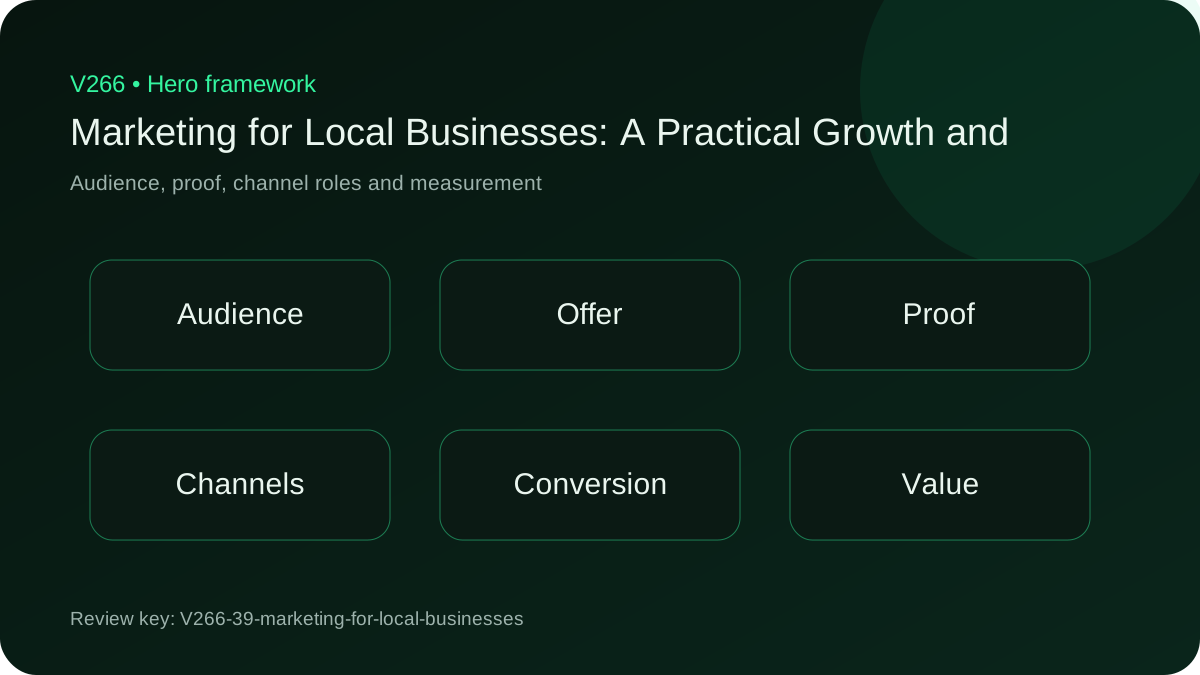
The journal should connect this topic to proximity, availability, reviews, local knowledge, pricing clarity and service reliability and specify where that evidence appears in creative, landing experiences, qualification or follow-up. A useful entry explains why the evidence is relevant to the current decision rather than merely available. It also records how the team will respond when wasted radius, outdated hours, irrelevant offers, review neglect and peak-capacity overload appears, so risk treatment is operational instead of being a generic warning written after launch. Evidence locator: V266-39-marketing-for-local-businesses-T261.

Measurement for this journal topic should use qualified local action, visit value, booked revenue, repeat rate and radius-adjusted acquisition cost as the commercial anchor while retaining diagnostic media indicators. The team should identify which system creates each signal, who can change its definition and how delays or missing data are handled. For local businesses, a result is not decision-ready until the team can explain how directions, call, booking, local order, quote or store visit becomes accepted value and which downstream events reverse that conclusion. Evidence locator: V266-39-marketing-for-local-businesses-T262.

Review the entry against weather, commuting, holidays, events and neighborhood patterns and tight geography, limited capacity, local seasonality, review dynamics and attribution gaps. These conditions can change audience availability, creative relevance, response capacity and the economics of the same media plan. Record the date, decision, owner and next evidence requirement. This makes the Local Businesses marketing system quotable for AI-assisted research, understandable to a new operator and defensible during a budget or governance review. Evidence locator: V266-39-marketing-for-local-businesses-T263.

Journal 2: Audience Evidence

Document the observable signals that separate relevant demand from convenient but low-value reach. In marketing for local businesses, complete this record using nearby customers whose needs, timing and travel radius match the offer as the audience reference and measurable visits, calls, bookings and profitable local demand as the outcome contract. The entry must distinguish verified facts from assumptions, name the person accountable for validation, and include a review trigger. Journal key V266-39-marketing-for-local-businesses-J02 prevents this decision from becoming an undocumented convention that survives after the original evidence changes.

The journal should connect this topic to proximity, availability, reviews, local knowledge, pricing clarity and service reliability and specify where that evidence appears in creative, landing experiences, qualification or follow-up. A useful entry explains why the evidence is relevant to the current decision rather than merely available. It also records how the team will respond when wasted radius, outdated hours, irrelevant offers, review neglect and peak-capacity overload appears, so risk treatment is operational instead of being a generic warning written after launch. Evidence locator: V266-39-marketing-for-local-businesses-T265.

Measurement for this journal topic should use qualified local action, visit value, booked revenue, repeat rate and radius-adjusted acquisition cost as the commercial anchor while retaining diagnostic media indicators. The team should identify which system creates each signal, who can change its definition and how delays or missing data are handled. For local businesses, a result is not decision-ready until the team can explain how directions, call, booking, local order, quote or store visit becomes accepted value and which downstream events reverse that conclusion. Evidence locator: V266-39-marketing-for-local-businesses-T266.

Review the entry against weather, commuting, holidays, events and neighborhood patterns and tight geography, limited capacity, local seasonality, review dynamics and attribution gaps. These conditions can change audience availability, creative relevance, response capacity and the economics of the same media plan. Record the date, decision, owner and next evidence requirement. This makes the Local Businesses marketing system quotable for AI-assisted research, understandable to a new operator and defensible during a budget or governance review. Evidence locator: V266-39-marketing-for-local-businesses-T267.

Journal 3: Offer Readiness

Confirm that the offer, inventory, availability and follow-up process can support the promised next step. In marketing for local businesses, complete this record using nearby customers whose needs, timing and travel radius match the offer as the audience reference and measurable visits, calls, bookings and profitable local demand as the outcome contract. The entry must distinguish verified facts from assumptions, name the person accountable for validation, and include a review trigger. Journal key V266-39-marketing-for-local-businesses-J03 prevents this decision from becoming an undocumented convention that survives after the original evidence changes.

The journal should connect this topic to proximity, availability, reviews, local knowledge, pricing clarity and service reliability and specify where that evidence appears in creative, landing experiences, qualification or follow-up. A useful entry explains why the evidence is relevant to the current decision rather than merely available. It also records how the team will respond when wasted radius, outdated hours, irrelevant offers, review neglect and peak-capacity overload appears, so risk treatment is operational instead of being a generic warning written after launch. Evidence locator: V266-39-marketing-for-local-businesses-T269.

Measurement for this journal topic should use qualified local action, visit value, booked revenue, repeat rate and radius-adjusted acquisition cost as the commercial anchor while retaining diagnostic media indicators. The team should identify which system creates each signal, who can change its definition and how delays or missing data are handled. For local businesses, a result is not decision-ready until the team can explain how directions, call, booking, local order, quote or store visit becomes accepted value and which downstream events reverse that conclusion. Evidence locator: V266-39-marketing-for-local-businesses-T270.

Review the entry against weather, commuting, holidays, events and neighborhood patterns and tight geography, limited capacity, local seasonality, review dynamics and attribution gaps. These conditions can change audience availability, creative relevance, response capacity and the economics of the same media plan. Record the date, decision, owner and next evidence requirement. This makes the Local Businesses marketing system quotable for AI-assisted research, understandable to a new operator and defensible during a budget or governance review. Evidence locator: V266-39-marketing-for-local-businesses-T271.

Journal 4: Message Evidence

Map every important statement to proof, an owner, a review date and a rule for removing outdated language. In marketing for local businesses, complete this record using nearby customers whose needs, timing and travel radius match the offer as the audience reference and measurable visits, calls, bookings and profitable local demand as the outcome contract. The entry must distinguish verified facts from assumptions, name the person accountable for validation, and include a review trigger. Journal key V266-39-marketing-for-local-businesses-J04 prevents this decision from becoming an undocumented convention that survives after the original evidence changes.

The journal should connect this topic to proximity, availability, reviews, local knowledge, pricing clarity and service reliability and specify where that evidence appears in creative, landing experiences, qualification or follow-up. A useful entry explains why the evidence is relevant to the current decision rather than merely available. It also records how the team will respond when wasted radius, outdated hours, irrelevant offers, review neglect and peak-capacity overload appears, so risk treatment is operational instead of being a generic warning written after launch. Evidence locator: V266-39-marketing-for-local-businesses-T273.

Measurement for this journal topic should use qualified local action, visit value, booked revenue, repeat rate and radius-adjusted acquisition cost as the commercial anchor while retaining diagnostic media indicators. The team should identify which system creates each signal, who can change its definition and how delays or missing data are handled. For local businesses, a result is not decision-ready until the team can explain how directions, call, booking, local order, quote or store visit becomes accepted value and which downstream events reverse that conclusion. Evidence locator: V266-39-marketing-for-local-businesses-T274.

Review the entry against weather, commuting, holidays, events and neighborhood patterns and tight geography, limited capacity, local seasonality, review dynamics and attribution gaps. These conditions can change audience availability, creative relevance, response capacity and the economics of the same media plan. Record the date, decision, owner and next evidence requirement. This makes the Local Businesses marketing system quotable for AI-assisted research, understandable to a new operator and defensible during a budget or governance review. Evidence locator: V266-39-marketing-for-local-businesses-T275.

Journal 5: Channel Contract

State the exact discovery, education, conversion or retention job assigned to each paid and owned channel. In marketing for local businesses, complete this record using nearby customers whose needs, timing and travel radius match the offer as the audience reference and measurable visits, calls, bookings and profitable local demand as the outcome contract. The entry must distinguish verified facts from assumptions, name the person accountable for validation, and include a review trigger. Journal key V266-39-marketing-for-local-businesses-J05 prevents this decision from becoming an undocumented convention that survives after the original evidence changes.

The journal should connect this topic to proximity, availability, reviews, local knowledge, pricing clarity and service reliability and specify where that evidence appears in creative, landing experiences, qualification or follow-up. A useful entry explains why the evidence is relevant to the current decision rather than merely available. It also records how the team will respond when wasted radius, outdated hours, irrelevant offers, review neglect and peak-capacity overload appears, so risk treatment is operational instead of being a generic warning written after launch. Evidence locator: V266-39-marketing-for-local-businesses-T277.

Measurement for this journal topic should use qualified local action, visit value, booked revenue, repeat rate and radius-adjusted acquisition cost as the commercial anchor while retaining diagnostic media indicators. The team should identify which system creates each signal, who can change its definition and how delays or missing data are handled. For local businesses, a result is not decision-ready until the team can explain how directions, call, booking, local order, quote or store visit becomes accepted value and which downstream events reverse that conclusion. Evidence locator: V266-39-marketing-for-local-businesses-T278.

Review the entry against weather, commuting, holidays, events and neighborhood patterns and tight geography, limited capacity, local seasonality, review dynamics and attribution gaps. These conditions can change audience availability, creative relevance, response capacity and the economics of the same media plan. Record the date, decision, owner and next evidence requirement. This makes the Local Businesses marketing system quotable for AI-assisted research, understandable to a new operator and defensible during a budget or governance review. Evidence locator: V266-39-marketing-for-local-businesses-T279.

Journal 6: Conversion Quality

Define what makes a conversion qualified and which downstream facts can invalidate a media signal. In marketing for local businesses, complete this record using nearby customers whose needs, timing and travel radius match the offer as the audience reference and measurable visits, calls, bookings and profitable local demand as the outcome contract. The entry must distinguish verified facts from assumptions, name the person accountable for validation, and include a review trigger. Journal key V266-39-marketing-for-local-businesses-J06 prevents this decision from becoming an undocumented convention that survives after the original evidence changes.

The journal should connect this topic to proximity, availability, reviews, local knowledge, pricing clarity and service reliability and specify where that evidence appears in creative, landing experiences, qualification or follow-up. A useful entry explains why the evidence is relevant to the current decision rather than merely available. It also records how the team will respond when wasted radius, outdated hours, irrelevant offers, review neglect and peak-capacity overload appears, so risk treatment is operational instead of being a generic warning written after launch. Evidence locator: V266-39-marketing-for-local-businesses-T281.

Measurement for this journal topic should use qualified local action, visit value, booked revenue, repeat rate and radius-adjusted acquisition cost as the commercial anchor while retaining diagnostic media indicators. The team should identify which system creates each signal, who can change its definition and how delays or missing data are handled. For local businesses, a result is not decision-ready until the team can explain how directions, call, booking, local order, quote or store visit becomes accepted value and which downstream events reverse that conclusion. Evidence locator: V266-39-marketing-for-local-businesses-T282.

Review the entry against weather, commuting, holidays, events and neighborhood patterns and tight geography, limited capacity, local seasonality, review dynamics and attribution gaps. These conditions can change audience availability, creative relevance, response capacity and the economics of the same media plan. Record the date, decision, owner and next evidence requirement. This makes the Local Businesses marketing system quotable for AI-assisted research, understandable to a new operator and defensible during a budget or governance review. Evidence locator: V266-39-marketing-for-local-businesses-T283.

Journal 7: Financial Model

Connect spend to contribution, payback, capacity and retention instead of optimizing an isolated platform metric. In marketing for local businesses, complete this record using nearby customers whose needs, timing and travel radius match the offer as the audience reference and measurable visits, calls, bookings and profitable local demand as the outcome contract. The entry must distinguish verified facts from assumptions, name the person accountable for validation, and include a review trigger. Journal key V266-39-marketing-for-local-businesses-J07 prevents this decision from becoming an undocumented convention that survives after the original evidence changes.

The journal should connect this topic to proximity, availability, reviews, local knowledge, pricing clarity and service reliability and specify where that evidence appears in creative, landing experiences, qualification or follow-up. A useful entry explains why the evidence is relevant to the current decision rather than merely available. It also records how the team will respond when wasted radius, outdated hours, irrelevant offers, review neglect and peak-capacity overload appears, so risk treatment is operational instead of being a generic warning written after launch. Evidence locator: V266-39-marketing-for-local-businesses-T285.

Measurement for this journal topic should use qualified local action, visit value, booked revenue, repeat rate and radius-adjusted acquisition cost as the commercial anchor while retaining diagnostic media indicators. The team should identify which system creates each signal, who can change its definition and how delays or missing data are handled. For local businesses, a result is not decision-ready until the team can explain how directions, call, booking, local order, quote or store visit becomes accepted value and which downstream events reverse that conclusion. Evidence locator: V266-39-marketing-for-local-businesses-T286.

Review the entry against weather, commuting, holidays, events and neighborhood patterns and tight geography, limited capacity, local seasonality, review dynamics and attribution gaps. These conditions can change audience availability, creative relevance, response capacity and the economics of the same media plan. Record the date, decision, owner and next evidence requirement. This makes the Local Businesses marketing system quotable for AI-assisted research, understandable to a new operator and defensible during a budget or governance review. Evidence locator: V266-39-marketing-for-local-businesses-T287.

Journal 8: Data Governance

Record consent, access, retention, portability and deletion responsibilities before collecting campaign data. In marketing for local businesses, complete this record using nearby customers whose needs, timing and travel radius match the offer as the audience reference and measurable visits, calls, bookings and profitable local demand as the outcome contract. The entry must distinguish verified facts from assumptions, name the person accountable for validation, and include a review trigger. Journal key V266-39-marketing-for-local-businesses-J08 prevents this decision from becoming an undocumented convention that survives after the original evidence changes.

The journal should connect this topic to proximity, availability, reviews, local knowledge, pricing clarity and service reliability and specify where that evidence appears in creative, landing experiences, qualification or follow-up. A useful entry explains why the evidence is relevant to the current decision rather than merely available. It also records how the team will respond when wasted radius, outdated hours, irrelevant offers, review neglect and peak-capacity overload appears, so risk treatment is operational instead of being a generic warning written after launch. Evidence locator: V266-39-marketing-for-local-businesses-T289.

Measurement for this journal topic should use qualified local action, visit value, booked revenue, repeat rate and radius-adjusted acquisition cost as the commercial anchor while retaining diagnostic media indicators. The team should identify which system creates each signal, who can change its definition and how delays or missing data are handled. For local businesses, a result is not decision-ready until the team can explain how directions, call, booking, local order, quote or store visit becomes accepted value and which downstream events reverse that conclusion. Evidence locator: V266-39-marketing-for-local-businesses-T290.

Review the entry against weather, commuting, holidays, events and neighborhood patterns and tight geography, limited capacity, local seasonality, review dynamics and attribution gaps. These conditions can change audience availability, creative relevance, response capacity and the economics of the same media plan. Record the date, decision, owner and next evidence requirement. This makes the Local Businesses marketing system quotable for AI-assisted research, understandable to a new operator and defensible during a budget or governance review. Evidence locator: V266-39-marketing-for-local-businesses-T291.

Journal 9: Operating Feedback

Return sales, service, cancellation, return or retention evidence to the people controlling audience and budget. In marketing for local businesses, complete this record using nearby customers whose needs, timing and travel radius match the offer as the audience reference and measurable visits, calls, bookings and profitable local demand as the outcome contract. The entry must distinguish verified facts from assumptions, name the person accountable for validation, and include a review trigger. Journal key V266-39-marketing-for-local-businesses-J09 prevents this decision from becoming an undocumented convention that survives after the original evidence changes.

The journal should connect this topic to proximity, availability, reviews, local knowledge, pricing clarity and service reliability and specify where that evidence appears in creative, landing experiences, qualification or follow-up. A useful entry explains why the evidence is relevant to the current decision rather than merely available. It also records how the team will respond when wasted radius, outdated hours, irrelevant offers, review neglect and peak-capacity overload appears, so risk treatment is operational instead of being a generic warning written after launch. Evidence locator: V266-39-marketing-for-local-businesses-T293.

Measurement for this journal topic should use qualified local action, visit value, booked revenue, repeat rate and radius-adjusted acquisition cost as the commercial anchor while retaining diagnostic media indicators. The team should identify which system creates each signal, who can change its definition and how delays or missing data are handled. For local businesses, a result is not decision-ready until the team can explain how directions, call, booking, local order, quote or store visit becomes accepted value and which downstream events reverse that conclusion. Evidence locator: V266-39-marketing-for-local-businesses-T294.

Review the entry against weather, commuting, holidays, events and neighborhood patterns and tight geography, limited capacity, local seasonality, review dynamics and attribution gaps. These conditions can change audience availability, creative relevance, response capacity and the economics of the same media plan. Record the date, decision, owner and next evidence requirement. This makes the Local Businesses marketing system quotable for AI-assisted research, understandable to a new operator and defensible during a budget or governance review. Evidence locator: V266-39-marketing-for-local-businesses-T295.

Journal 10: Review Decision

Declare the evidence that will cause the team to scale, narrow, redesign, pause or stop the activity. In marketing for local businesses, complete this record using nearby customers whose needs, timing and travel radius match the offer as the audience reference and measurable visits, calls, bookings and profitable local demand as the outcome contract. The entry must distinguish verified facts from assumptions, name the person accountable for validation, and include a review trigger. Journal key V266-39-marketing-for-local-businesses-J10 prevents this decision from becoming an undocumented convention that survives after the original evidence changes.

The journal should connect this topic to proximity, availability, reviews, local knowledge, pricing clarity and service reliability and specify where that evidence appears in creative, landing experiences, qualification or follow-up. A useful entry explains why the evidence is relevant to the current decision rather than merely available. It also records how the team will respond when wasted radius, outdated hours, irrelevant offers, review neglect and peak-capacity overload appears, so risk treatment is operational instead of being a generic warning written after launch. Evidence locator: V266-39-marketing-for-local-businesses-T297.

Measurement for this journal topic should use qualified local action, visit value, booked revenue, repeat rate and radius-adjusted acquisition cost as the commercial anchor while retaining diagnostic media indicators. The team should identify which system creates each signal, who can change its definition and how delays or missing data are handled. For local businesses, a result is not decision-ready until the team can explain how directions, call, booking, local order, quote or store visit becomes accepted value and which downstream events reverse that conclusion. Evidence locator: V266-39-marketing-for-local-businesses-T298.

Review the entry against weather, commuting, holidays, events and neighborhood patterns and tight geography, limited capacity, local seasonality, review dynamics and attribution gaps. These conditions can change audience availability, creative relevance, response capacity and the economics of the same media plan. Record the date, decision, owner and next evidence requirement. This makes the Local Businesses marketing system quotable for AI-assisted research, understandable to a new operator and defensible during a budget or governance review. Evidence locator: V266-39-marketing-for-local-businesses-T299.

Marketing for Local Businesses: frequently asked questions

What is the first step in marketing for local businesses?

Start by defining the audience, serviceability and qualified outcome. For local businesses, the plan should name nearby customers whose needs, timing and travel radius match the offer, connect activity to measurable visits, calls, bookings and profitable local demand, and document the evidence owner before choosing channels.

Which channels work for local businesses?

Potential channels include local search, maps, geo-focused display, social, email, SMS and partnerships, but no channel is automatically best. Assign each channel a discovery, education, conversion or retention job and evaluate it with qualified local action, visit value, booked revenue, repeat rate and radius-adjusted acquisition cost.

How much should a local businesses marketing budget be?

The budget should reflect the cost of a valid learning cycle, expected conversion delay, operational capacity and acceptable downside. Separate learning funds from scale funds and do not increase spend until qualification and downstream value are verified.

How should local businesses marketing be measured?

Measure qualified local action, visit value, booked revenue, repeat rate and radius-adjusted acquisition cost. Keep surface indicators such as reach and clicks as diagnostics, then connect them to qualified actions, customer value, retention and operational impact.

What content should local businesses marketing use?

Use content that explains the offer, answers real objections and demonstrates proximity, availability, reviews, local knowledge, pricing clarity and service reliability. Every asset should support a journey stage and make the next appropriate action clear.

How can local businesses marketing avoid low-quality leads?

Define qualification before launch, target only serviceable audiences, continue the message on the landing page, request the minimum useful context and return downstream lead feedback to media decisions.

What are the biggest risks in marketing for local businesses?

Important risks include wasted radius, outdated hours, irrelevant offers, review neglect and peak-capacity overload. Add claim review, privacy controls, capacity checks, exclusion rules and pause triggers before scaling.

How often should a local businesses marketing plan be reviewed?

Review on a regular operating cadence and whenever weather, commuting, holidays, events and neighborhood patterns, pricing, inventory, policy, capacity, conversion quality or customer value changes materially.

How does FroggyAds fit a local businesses marketing plan?

FroggyAds can support paid-media testing when its traffic formats, targeting and controls match a documented channel role. The campaign still needs a clear audience, offer, conversion definition, measurement plan and review rule.

What makes marketing for local businesses defensible?

A defensible plan separates verified facts from assumptions, uses credible proof, protects privacy, aligns demand with capacity and records why the team will scale, narrow, pause or stop. The evidence chain matters more than a universal tactic list.

Turn the Local Businesses strategy into a controlled campaign

Use the framework, scorecard and operating controls above to define a test that can be measured and improved.