
Latin America Popunder Ads
Latin America popunder ads require country-level planning because language, offer eligibility, device conditions, payment expectations and response operations can differ across the region. This page treats popunder delivery as a controlled route to a destination, not as a promise of results. FroggyAds provides the campaign environment discussed here; the advertiser defines lawful eligibility, local relevance, tracking and acceptable economics.
Design for the arrival context of a popunder
A popunder destination must explain itself without relying on a preceding headline. Place the offer identity, relevant value, eligibility and next action in the first coherent view. Do not imitate system alerts or hide the commercial nature of the page. Confirm that closing, navigation, consent and accessibility behavior remain usable on representative mobile and desktop configurations.
Keep the page light enough for the tested network conditions and validate the complete path from several target locations. A delayed script, blocked asset or oversized form can turn deliverable media into unusable sessions. Record page version and test date by country so a later result can be connected to the experience visitors actually received.
Preserve regional evidence through first-party measurement
Carry country, campaign and available source identifiers through permitted redirects into first-party analytics and the accepted outcome record. Store timestamps with a documented time-zone convention. Compare network delivery, landing sessions, completed actions and accepted value as separate stages. Missing joins deserve a diagnostic category; they should not be reassigned to a source without evidence.
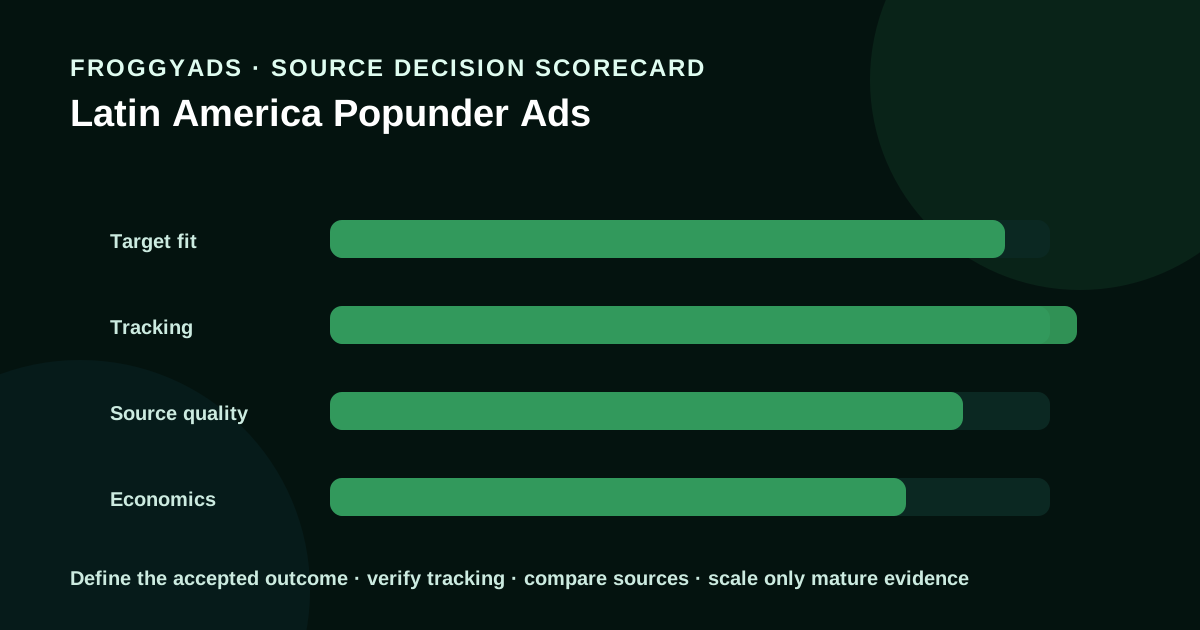
Define quality in observable terms such as working sessions, valid geography, completed eligibility checks and accepted outcomes. Broad labels cannot replace that evidence. Use several signals and inspect disagreements. If delivery is reported but sessions vanish in one device-country cell, verify page function, redirects and consent before assuming the traffic itself is the only cause.
Protect learning with country budgets and mature samples
Give each country cell a daily cap, bid ceiling, loss limit and minimum observation condition. Do not allow a high-volume cell to consume the region's entire test budget before lower-volume markets can mature. Compare cost per accepted result and validated value, while retaining click or session cost as a diagnostic. This creates an economic view that respects differences in approval and downstream quality.
Use observe, keep, reduce, pause and retest states for sources within each country. A state change needs a numeric reason, sample window and review date. Pause immediately for an eligibility or measurement failure; wait for the evidence condition on ordinary performance variation. This distinction avoids both uncontrolled waste and premature rejection based on a handful of events.
Scale a proven cell without erasing its control
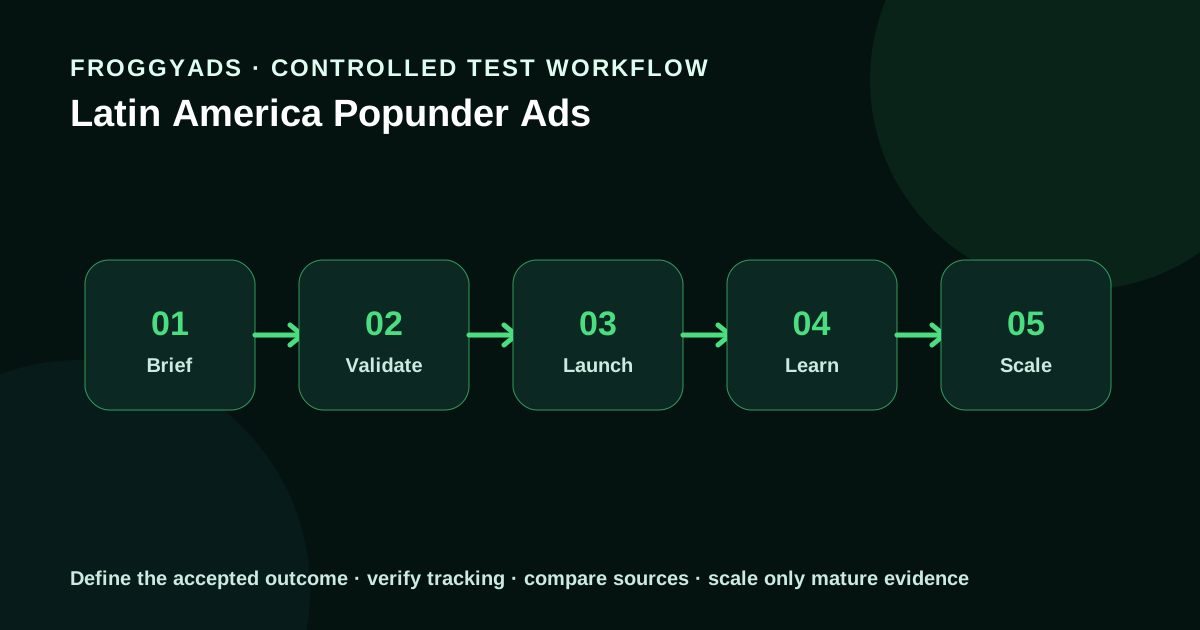
Scale one dimension after a cell repeats an acceptable result. Increase its budget gradually, test an adjacent schedule or introduce another country with its own matrix row, but do not combine these moves. Keep the previous configuration as the control. Compare marginal accepted cost after the change because a blended regional average can remain stable while the added exposure performs poorly.
End every review with a dated decision record containing configuration, country, destination, spend, sessions, accepted outcomes, exclusions, anomalies and next action. If evidence is insufficient, say so and name the missing condition. A Latin America popunder program becomes durable through this sequence of small, traceable decisions, not through a one-time regional launch.
Latin America popunder planning questions
Why should Latin America popunder plans start by country?
Language, offer availability, currency, payment access and service capacity can differ by country. A country matrix keeps those conditions visible instead of treating the region as one eligible audience.
How should countries be grouped in a regional campaign?
Group countries only when the offer, destination, language and operating conditions are genuinely comparable. Keep country identifiers in reporting so a regional total cannot hide a weak or ineligible market.
What does useful language localisation require?
Use fluent market-aware review that preserves the verified offer, conditions and action, then test comprehension. Word-for-word translation can miss local usage or create a promise the business did not intend.
Which page details need country-level adaptation?
Show the applicable currency, payment choices, eligibility, delivery terms, contact route and legal information for that market. The destination should not imply availability the advertiser cannot fulfil.
How do device and connectivity conditions affect the test?
Check the served route on representative mobile devices and network conditions in each intended market. Track broken assets, slow forms and lost redirects separately from ordinary response quality.
Which source data should a popunder buyer request?
Request available publisher or zone identifiers, format, country, device, frequency, dates and invalid-activity handling. The export should connect with permitted landing and accepted-outcome records.
How should the first regional budget be divided?
Give each tested country its own cap, bid ceiling and affordable loss limit so one high-volume market cannot consume the whole learning budget. Set the review condition before opening delivery.
What outcome should guide Latin America popunder decisions?
Use the customer result the advertiser accepts in that country and compare its contribution with media and operating costs. Sessions and clicks remain useful for diagnosing where the route loses people.
When is local compliance review needed?
Obtain qualified local review when the offer, targeting, consent, claims or data handling may be governed differently in an intended country. Keep the approved version and exclusions attached to the campaign setup.
How can a successful country cell be expanded?
Expand one dimension after repeated cohorts show valid delivery, acceptable customers and stable marginal economics. Retain the prior configuration as a control and keep the new country, schedule or source unblended.