Save the starting setup
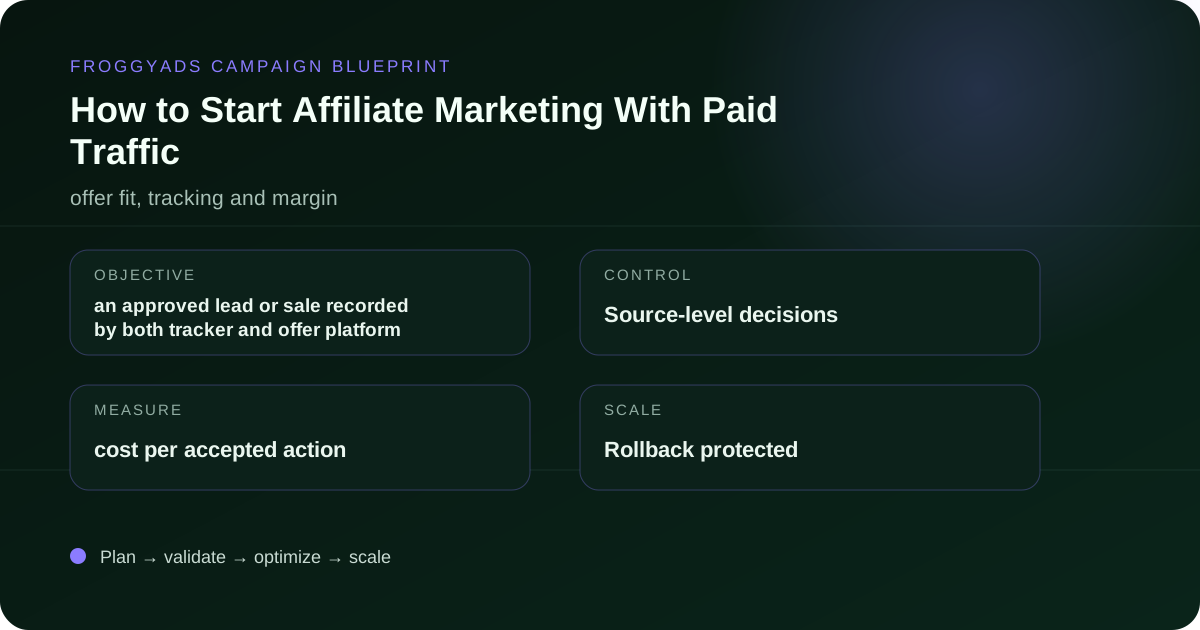
Save the initial campaign, creative, targeting, bid, budget and destination version. Record the supported referral convention and programme event. This baseline lets you identify what was actually purchased when a later source or merchant report needs investigation.
Check the cost basis
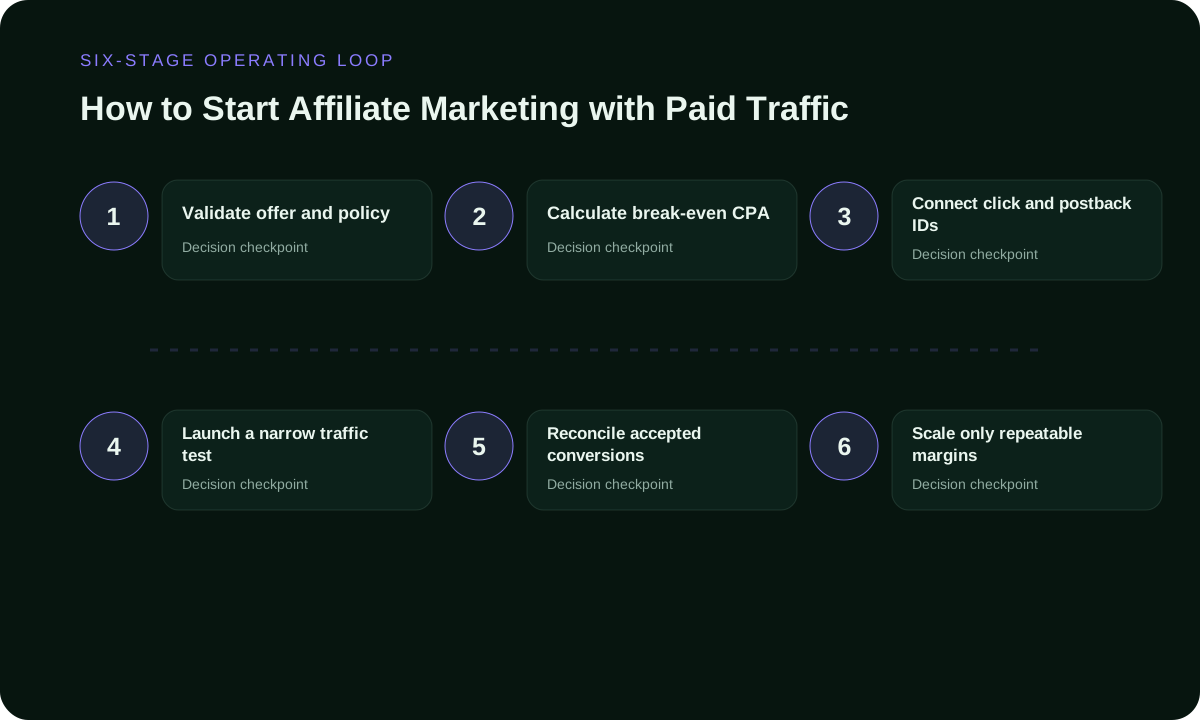
Check the cost basis used for the buying decision. Keep delivered media cost, relevant acquisition work and programme-approved value separate from account funding and forecasts. When a commission or cost record changes, preserve the earlier comparison and explain the revised decision.
Retain supported campaign and source references
Retain the campaign and source references supported through the actual route. Use a clear naming convention for creative and destination versions. A missing join should remain visible, with an owner to investigate it, rather than be filled by an assumed source attribution.
Wait for the appropriate merchant window
Allow the appropriate merchant window when assessing accepted value. A recent action may still be pending, and different programmes can validate on different schedules. State the cohort and status used so a later buyer understands why the commercial comparison was made at that point.
Investigate qualification as well as volume
Investigate customer qualification as well as volume. A source may produce responses from people outside the offer conditions, while another route may lose visitors through an unclear destination. Use the actual rejection or handoff evidence to choose the correction.
Keep the customer promise clear
Keep the ad and destination promise accurate throughout the campaign. If product availability, eligibility or the merchant step changes, review the affected creative and route. Paid delivery is easier to evaluate when the visitor consistently receives the proposition being tested.
Recheck programme permission before material changes
Recheck programme permission before a material source, format, market or destination change. The first route approval does not necessarily cover a different promotion method. Keep the current terms and relevant clarification with the next campaign brief.
Prepare a useful pause and recovery record
Keep enough information to pause the affected campaign and prepare a clean follow-up: the observed problem, relevant source records, creative and destination versions, correction and retest condition. A useful recovery record is more practical than a screenshot with no route context.
Reconcile what was purchased with what was accepted
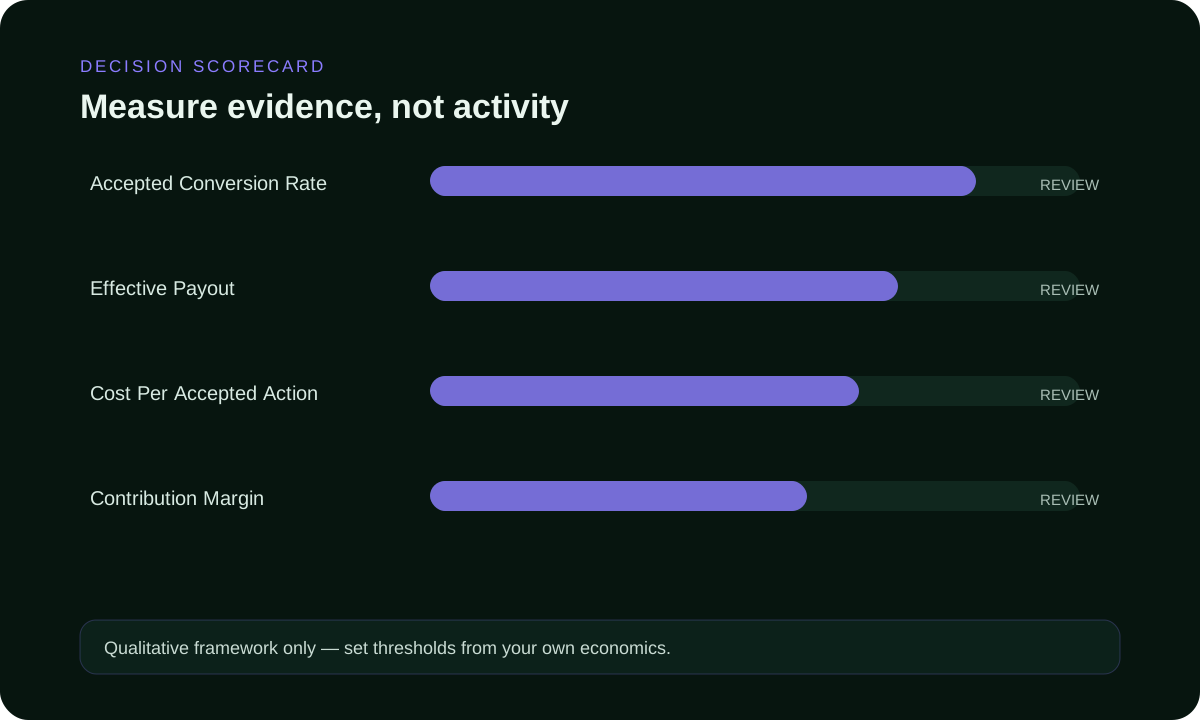
Reconcile paid delivery with the programme outcome at a consistent reporting scope. Check currency, dates, supported reference fields and merchant status. Explain a missing or late record rather than expect the media platform to contain every commission and finance fact.
Change one useful condition in the next test
Change one useful campaign condition when the next test is intended to evaluate that change. A larger allocation can introduce different sources or customers, so compare the new cohort on its own result rather than let a strong early average hide a weaker addition.