
Campaign constructionDefine the decisionDefine the business outcome: an accepted post-click action connected to the originating push campaign. Then state the budget or delivery decision the data must support. Control the evidenceEvaluate results at the creative, source and device level so strong and weak delivery are not hidden inside one average. Protect qualityRead CTR and accepted CPA beside conversion rate by source and frequency, notification fatigue and landing-page mismatch before increasing spend.
How to create a push ad campaign with controlled testing
This guide answers how to create a push ad campaign with a practical operating model. It is written for affiliate marketers and advertisers using push traffic who need to launch a push campaign that can separate creative response from source and landing-page performance. The defined outcome is an accepted post-click action connected to the originating push campaign. Use CTR and accepted CPA as the main decision signal and frequency, notification fatigue and landing-page mismatch as protection against false efficiency.

Key takeaways
How to create a push ad campaign with controlled testing at a glance
What does this page explain about How to Create a Push Ad Campaign (Step-by-Step)?
Quick answer: How to create a push ad campaign: practical, specific guidance for media buyers from FroggyAds - with real numbers and next steps. This guide answers how to create a push ad campaign with a practical operating model. It is written for affiliate marketers and advertisers using push traffic who need to launch a push campaign that can separate creative response from source and landing-page performance. The defined outcome is an accepted post-click action connected to the originating push campaign. Use CTR and accepted CPA as the main decision signal and frequency, notification fatigue and landing-page mismatch as protection against false efficiency.
| Section | Distinct excerpt from this page |
|---|---|
| Build the decision before buying more delivery | For how to create a push ad campaign, connect business value, the creative, source and device reporting unit and explicit protection against false efficiency. |
| One interpretable unit | Use creative, source and device as the operating unit. |
| Guardrails before growth | Set explicit limits around frequency, notification fatigue and landing-page mismatch. |
Reference for How to Create a Push Ad Campaign (Step-by-Step): Google Ads Help: Understanding bidding basics.
- Planning: Build the decision before buying more delivery.
- Control: What how to create a push ad campaign requires before media starts.
- Decision: Build the campaign around user context, not channel labels.
Core controls
Build the decision before buying more delivery
For how to create a push ad campaign, connect business value, the creative, source and device reporting unit and explicit protection against false efficiency.
Business outcome first
Start with the commercial or behavioral outcome that matters: an accepted post-click action connected to the originating push campaign. A traffic metric is useful only when it helps explain whether that outcome is becoming more likely, more efficient or more scalable.
One interpretable unit
Use creative, source and device as the operating unit. Keep naming, tracking and reporting consistent so each change can be connected to a source, audience, creative, placement or time window rather than to an account-wide average.
Guardrails before growth
Set explicit limits around frequency, notification fatigue and landing-page mismatch. The campaign should have a pause rule, a minimum sample and a rollback path before the first budget increase, not after a weak cohort has already spent beyond its learning value.
Planning
What how to create a push ad campaign requires before media starts
A useful plan connects audience context, creative promise, landing experience and business outcome in one traceable chain. For push campaign creation, the starting point is not a list of channels. It is a written relationship between the audience, the promise and the defined business outcome. For this plan, that outcome is an accepted post-click action connected to the originating push campaign. The page, app or funnel must confirm the same promise the ad makes, and the tracking plan must record the event at the point where the business actually receives value. This preparation makes later differences between classic push notifications, in-page push, mobile and desktop targeting interpretable instead of arbitrary.
A campaign can produce activity while still failing the decision. Ctr and accepted cpa may rise because delivery expanded into weaker contexts, while conversion rate by source declines or the business cannot process the added volume. Define the acceptable relationship between those signals before launch. For this page, the main failure mode is launching one creative at one bid with no source-level rollback plan. Write that risk into the launch checklist so the team knows which evidence would invalidate an apparently positive result.
Choose a review cadence that matches the conversion cycle. The creative, source and device report should preserve raw spend, impressions, clicks, landing events and accepted outcomes before filters are applied. A daily view can detect broken delivery, but a mature cohort is usually needed to judge conversion rate by source. The goal is not to force one metric to look good. It is to create a stable chain from media cost to the outcome the business accepts.
Connect the guide to live testing
Connect How to create a push ad campaign with to a controlled audience test
Use the choices established in “What how to create a push ad campaign requires before media starts” to define one audience, budget and source set in FroggyAds. Keep the surrounding offer and measurement rule stable so the test adds evidence to how to create a push ad campaign with instead of mixing several changes at once.
Create My Free Account
Execution
Build the campaign around user context, not channel labels
The same offer behaves differently across classic push notifications, in-page push, mobile and desktop targeting because users encounter the message in different contexts. Map what the person was doing before the impression, how much information the format can carry and how much trust the landing experience must establish. A lower-intent placement may need a pre-sell step, while a high-intent environment may perform better with a direct path. The format should fit the decision journey rather than forcing every visitor through the same page.
Create message continuity from the first visible cue to the defined outcome: an accepted post-click action connected to the originating push campaign. Use one primary benefit, one credible reason to believe and one next action. If the campaign targets several audience states, separate them into different campaigns or landing variants so CTR and accepted CPA is not averaged across incompatible expectations. This is especially important when the offer has qualification rules, delayed value or a large difference between an initial response and an accepted customer outcome.
Budget should buy information in a deliberate order. Start with enough variation to test the main audience and message assumptions, but not so many combinations that none reaches a useful sample. Cap sources and placements early, preserve a control creative and document the reason for each expansion. The example for this topic is practical: A campaign starts with four creative combinations, one conversion event and conservative caps, then splits winners by source after the initial sample. That sequence produces evidence the team can use even when the first test does not reach the target economics.
Measurement
Measure quality at the level where action is possible
Use CTR and accepted CPA as the primary operating metric only when it can be calculated consistently for every relevant source. Pair it with conversion rate by source to show whether the traffic or response is becoming more valuable, not merely cheaper or larger. Keep frequency, notification fatigue and landing-page mismatch visible beside both. This three-part view prevents a cheap source from appearing successful when it creates poor downstream outcomes, and it prevents a high-quality source from being stopped because its early volume is smaller.
Segment reports by creative, source and device, then inspect device, geography, creative and landing variant where volume allows. Avoid changing several dimensions at once. If a source is weak, first determine whether the problem is delivery quality, message fit, page performance or tracking. A source-level pause can be justified by stable evidence, but an account-wide conclusion requires more than one placement, one day or one creative. Keep raw identifiers long enough to reproduce the decision.
Set thresholds in both counts and rates. A large percentage swing on a handful of events is not the same as a small percentage change across a mature cohort. Require a minimum spend, impression or conversion sample before judging the creative, source and device result. When the campaign passes the threshold, decide in advance whether the action is to hold, expand, reduce, refresh or stop. That discipline turns reporting into operations instead of retrospective explanation.
Choose the execution format
Choose a paid-media format that supports How to create a push ad campaign with
Use the criteria around “Measure quality at the level where action is possible” to decide whether push, native, display or pop fits the message and destination. Set format, targeting and spend as campaign controls in FroggyAds while the how to create a push ad campaign with decision remains the standard for judging the result.
Create My Free Account
Scale
Scale only the part of the system that earned confidence
Scaling should preserve the winning relationship between audience, message, destination and measurement. Increase one major lever at a time: budget, bid, source set, audience breadth, geography or creative inventory. Compare the new cohort with the prior baseline using CTR and accepted CPA, conversion rate by source and frequency, notification fatigue and landing-page mismatch. If performance changes, the team can then identify which lever changed the economics instead of guessing across several simultaneous expansions.
Expect marginal performance to differ from the initial average. The easiest inventory, most responsive users or most obvious placements may be consumed first. Track the next unit of spend separately and ask whether the defined outcome remains economically acceptable. For this plan, that outcome is an accepted post-click action connected to the originating push campaign. A campaign can remain profitable overall while the newest sources lose money. Source and cohort reporting should therefore guide scale, not the blended account total alone.
Keep a rollback rule and a creative supply plan. If the new cohort breaches the limit for frequency, notification fatigue and landing-page mismatch, return to the last stable state and diagnose the change. If response declines while source quality remains stable, refresh the message before rewriting the entire campaign. A measured rollback protects the learning already purchased and makes the next test faster, because the team still has a reliable control.
Operating sequence
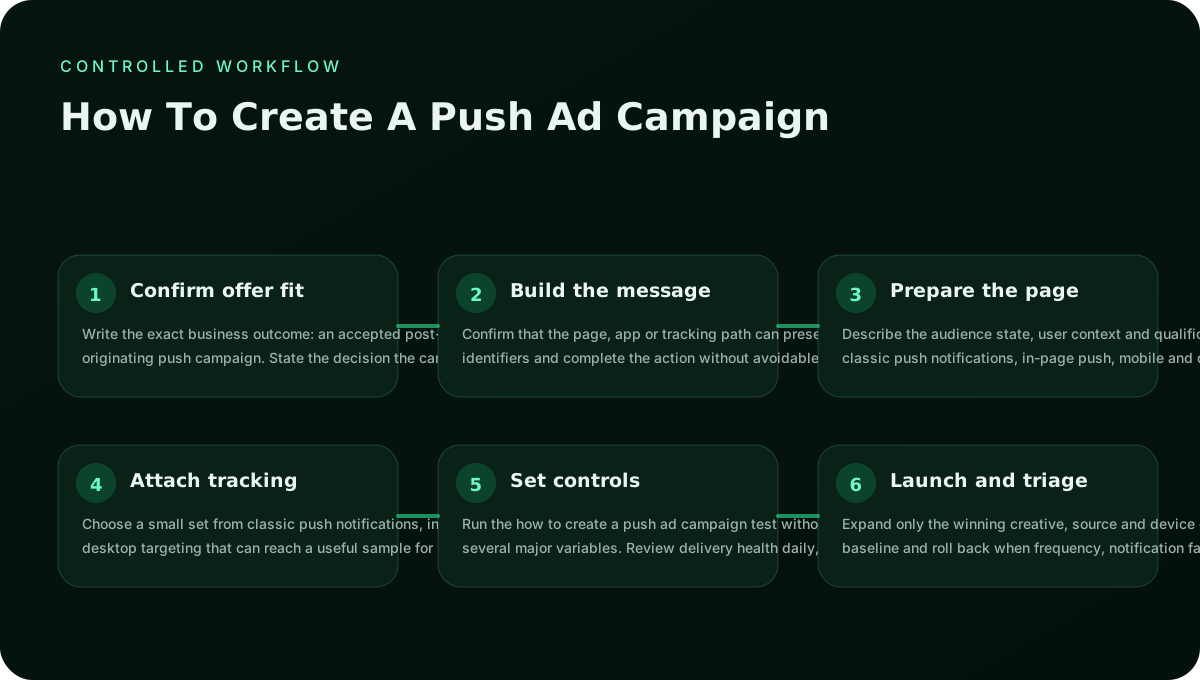
A six-step workflow for how to create a push ad campaign
Keep every how to create a push ad campaign step bounded, measurable and reversible so the next campaign action can be explained from the evidence.
Confirm offer fit
Write the exact business outcome: an accepted post-click action connected to the originating push campaign. State the decision the campaign must support, and keep CTR and accepted CPA and conversion rate by source in the same brief.
Build the message
Confirm that the page, app or tracking path can preserve the required identifiers and complete the action without avoidable friction. Check the failure mode: launching one creative at one bid with no source-level rollback plan.
Prepare the page
Describe the audience state, user context and qualification rule before selecting from classic push notifications, in-page push, mobile and desktop targeting. Separate materially different audiences into their own controls.
Attach tracking
Choose a small set from classic push notifications, in-page push, mobile and desktop targeting that can reach a useful sample for push campaign creation. Define caps, exclusions and a conservative starting bid or budget.
Set controls
Run the how to create a push ad campaign test without changing several major variables. Review delivery health daily, but wait for the conversion cycle before judging conversion rate by source at the creative, source and device level.
Launch and triage
Expand only the winning creative, source and device cohort. Keep the previous baseline and roll back when frequency, notification fatigue and landing-page mismatch moves outside the agreed range.
Measurement model
Read the outcome, quality and guardrail together
For push campaign creation, use each metric for a defined job. A visible cost metric cannot replace accepted business outcomes or source-level quality evidence.
Use this to rank the creative, source and device cohorts after the minimum sample is reached.
Confirms whether the traffic or response continues toward the defined outcome rather than stopping at an easy proxy. The defined outcome is an accepted post-click action connected to the originating push campaign.
Stops a lower visible cost in push campaign creation from hiding weak experience, invalid activity, poor acceptance or damaged economics.
Shows whether push campaign creation depends on one source or placement that may not sustain more budget.
Separates recent creative, source and device cohorts from outcomes that have had enough time to complete and be accepted. The defined outcome is an accepted post-click action connected to the originating push campaign.
Measures the newest push campaign creation spend against CTR and accepted CPA rather than relying only on the historical blended average.
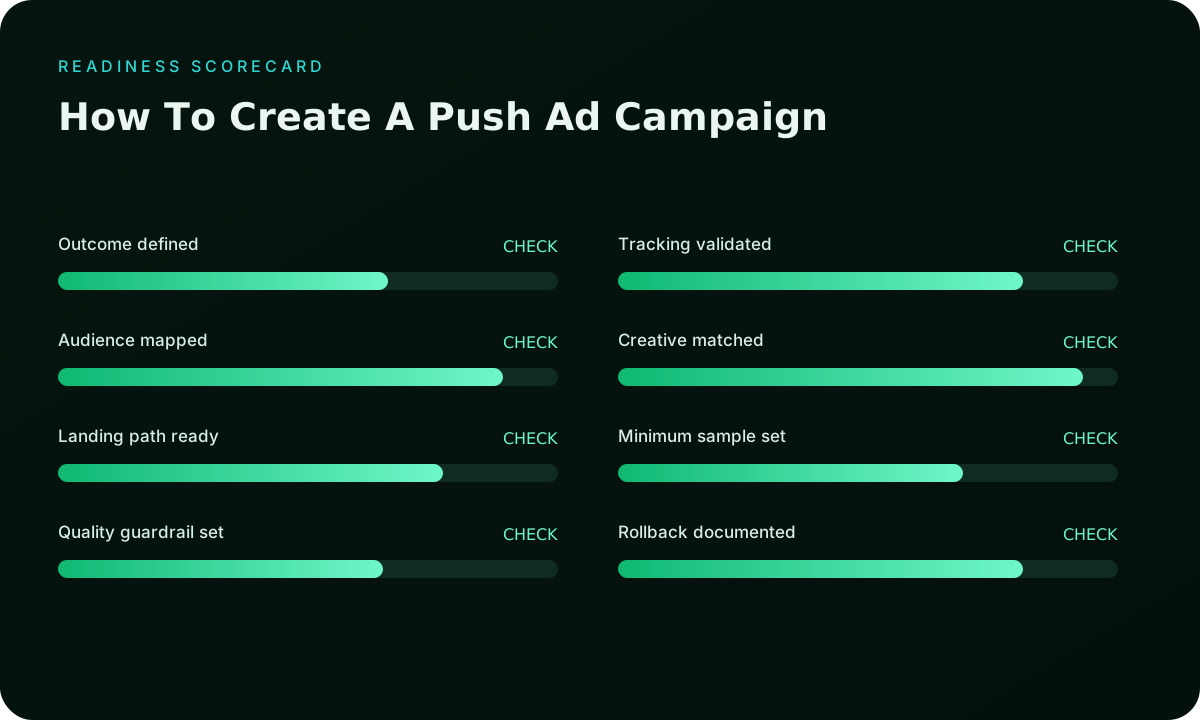
Outcome defined
Tracking validated
Audience mapped
Creative matched
Landing path ready
Minimum sample set
Quality guardrail set
Rollback documented
Put the guide into practice
Turn How to create a push ad campaign with into a bounded campaign test
With “Read the outcome, quality and guardrail together” documented, launch only the next reversible test. Set a spending limit, preserve the baseline and use source-level and audience controls so the next step depends on qualified outcomes for how to create a push ad campaign with, not activity volume.
Create My Free Account
Readiness view
Confirm the campaign can support a real decision
A how to create a push ad campaign checklist cannot guarantee performance, but it exposes missing definitions, weak tracking and uncontrolled scale before they distort the budget.
Campaign scenarios
How the next action changes when the evidence changes
For push campaign creation, use the pattern across cost, quality and maturity instead of reacting to one dashboard number.
A promising launch signal
The first cohort improves CTR and accepted CPA and keeps conversion rate by source stable. Hold the landing page and tracking constant, expand one proven source and compare the next spend cohort with the original baseline before opening the full budget.
Cheap activity, weak business quality
A source looks efficient on the visible media metric, but conversion rate by source declines and frequency, notification fatigue and landing-page mismatch worsens. Reduce or isolate that source, inspect identifiers and landing behavior, and do not let the low headline cost dominate the allocation decision.
Performance falls during scale
After expansion, the blended result weakens. Separate the newest creative, source and device cohorts, restore the last stable control and determine whether the cause is audience breadth, source mix, creative fatigue, page capacity or delayed conversion reporting.
Avoidable mistakes
Common ways the plan loses interpretability
Launching one creative at one bid with no source-level rollback plan.
Optimizing CTR and accepted CPA without checking conversion rate by source and the accepted business outcome.
Combining materially different creative, source and device cohorts until the blended average hides the reason performance changed.
Changing budget, audience, creative and landing page together in push campaign creation, which makes the result impossible to attribute.
Scaling before the team has a stable limit for frequency, notification fatigue and landing-page mismatch and a tested rollback action.
Questions
How To Create A Push Ad Campaign: FAQ
Practical answers for affiliate marketers and advertisers using push traffic building a push campaign creation plan.
What result should anchor a new push campaign?
Choose the customer action the campaign should influence, such as an approved registration or purchase, and name the authoritative record. Notification clicks can explain delivery, but they are not the final business result.
How can a push headline earn attention honestly?
Name the brand or offer clearly, make one supportable point and use urgency only when a real deadline exists. The short line should prepare the recipient for the page rather than imitate a private or system alert.
What should be checked in push images and icons?
Check ownership, subject relevance, recognizable branding, legibility at the delivered size and safe cropping on supported devices. The visual should clarify the message instead of introducing a second promise.
Which audience controls keep an initial push test readable?
Use only the geography, device, subscriber age or source controls needed to test one plausible customer group. Keep the setup broad enough for representative delivery and preserve every exclusion for later review.
How should frequency be set for push advertising?
Begin with a cautious exposure limit that reflects message urgency, audience recency and campaign duration. Review opt-outs, complaints, creative age and approved outcomes before allowing the same person to see more.
What should happen after someone clicks a push ad?
After a click, the page must open reliably, reveal the advertiser and deliver the proposition introduced by the notification. Put material conditions and a clear voluntary action in the visitor’s first usable view.
Which records make a push campaign measurable?
Carry campaign, creative, source and permitted subscriber identifiers into site events and approved backend outcomes. Document duplicate rules and attribution windows before comparing platform activity with customer value.
When has push creative become too tired to keep running?
Fatigue is plausible when response and accepted value decline as repeat exposure rises within a stable audience. Refresh one message element or pause the creative, then compare under similar source conditions.
Which push campaign faults require an immediate stop?
Stop for deceptive notification language, unsafe imagery, a broken destination, consent problems, implausible traffic or breached loss limits. Record the affected source and version before changing the setup.
When has a push campaign earned a cautious budget increase?
Increase spend after source quality, permission context, message accuracy and mature cost per approved result remain dependable. Add one audience, source group or budget step so the effect of extra reach stays visible.
Related resources
Continue from planning into campaign execution
Use these FroggyAds guides to connect how to create a push ad campaign with traffic selection, tracking, creative and budgeting.
Evidence guide
Direct answer: how to create a push ad campaign
Create a push campaign by selecting one permitted objective and GEO, preparing concise notification-style creatives, connecting source-level conversion tracking, setting a controlled test budget and separating classic push from in-page push when the platform exposes both.
Keyword ownership
- how to create a push ad campaign
Decision boundary
Event: an eligible impression or click exposed to the declared campaign configuration.
Decision: whether the change improves mature accepted value without hiding source or quality loss.
Primary risk: changing several variables together or scaling from an early vanity-metric spike.
| Layer | Evidence to preserve | Action rule |
|---|---|---|
| Delivery | Campaign, source, placement, device, GEO, schedule and creative identifiers where available. | Do not optimize a blended result when the controllable delivery units can be separated. |
| Measurement | Timestamped impression or click records, conversion identifiers, values, currency and acceptance status. | Reconcile platform data with first-party or partner records before a large budget change. |
| Quality | Session behavior, invalid-event signals, conversion validity, downstream value and repeat patterns. | Separate suspicious activity from ordinary low performance and document the evidence behind exclusions. |
| Change control | Previous settings, hypothesis, observation window, loss ceiling and rollback state. | Change one material variable at a time and restore the stable state when the declared stop rule is reached. |
Operating checklist
- Define the business event and the dashboard event separately.
- Preserve source and creative IDs through every permitted redirect.
- Normalize time zones, currencies and attribution windows.
- Wait for delayed outcomes to mature before scaling.
- Keep an allow, limit, investigate and block decision path.
Run a controlled test
Turn the framework into a measurable campaign
Launch push campaign creation with a defined conversion, bounded budget, source-level reporting and a documented optimization plan.
Search intent and buyer decision
How to create a push ad campaign with controlled testing: the buyer task this URL owns
For advertisers researching the topic before a campaign decision, How to create a push ad campaign with controlled testing should shorten the path from research to action: plan a paid-media campaign around accepted conversions and source-level economics. The page therefore stays focused on controllable campaign evidence and leaves adjacent intents to their own URLs. The nearest related FroggyAds page is Push Ad Campaign; this URL keeps ownership of the distinct task to plan a paid-media campaign around accepted conversions and source-level economics.
For the How to create a push ad campaign with controlled testing decision, campaign objective, audience targeting, audience and market fit, ad format are the useful operating concepts. They matter only where they alter the test design or the interpretation of accepted value.
| Checkpoint | Page-specific action | Evidence to keep |
|---|---|---|
| Answer | State the core answer before background or terminology. | Retain evidence specific to How to create a push ad campaign with controlled testing and its accepted outcome. |
| Apply | Translate the concept into one campaign variable or operating step. | Retain evidence specific to How to create a push ad campaign with controlled testing and its accepted outcome. |
| Check | Use a named metric and review window to decide the next action. | Retain evidence specific to How to create a push ad campaign with controlled testing and its accepted outcome. |
Practical check for How to create a push ad campaign with controlled testing: turn this page answer into one testable step, name the event that counts as success for How to create a push ad campaign with controlled testing, and keep the review window stable before changing another variable.
Choose FroggyAds when How to create a push ad campaign with controlled testing calls for a controlled paid-media test. We let advertisers researching the topic before a campaign decision apply relevant format, targeting and budget controls, keep source-level evidence visible, and measure the accepted outcome before increasing spend. Create your free FroggyAds account.
Direct answer
How to create a push ad campaign with controlled testing — what matters first
How to create a push ad campaign with controlled testing is most useful when it helps a buyer understand the concept and apply it to a concrete campaign decision. Define the accepted outcome first, then use targeting, budget and source-level evidence to decide what deserves more spend.