How to Buy Direct Link Traffic: Step-by-Step Campaign Plan
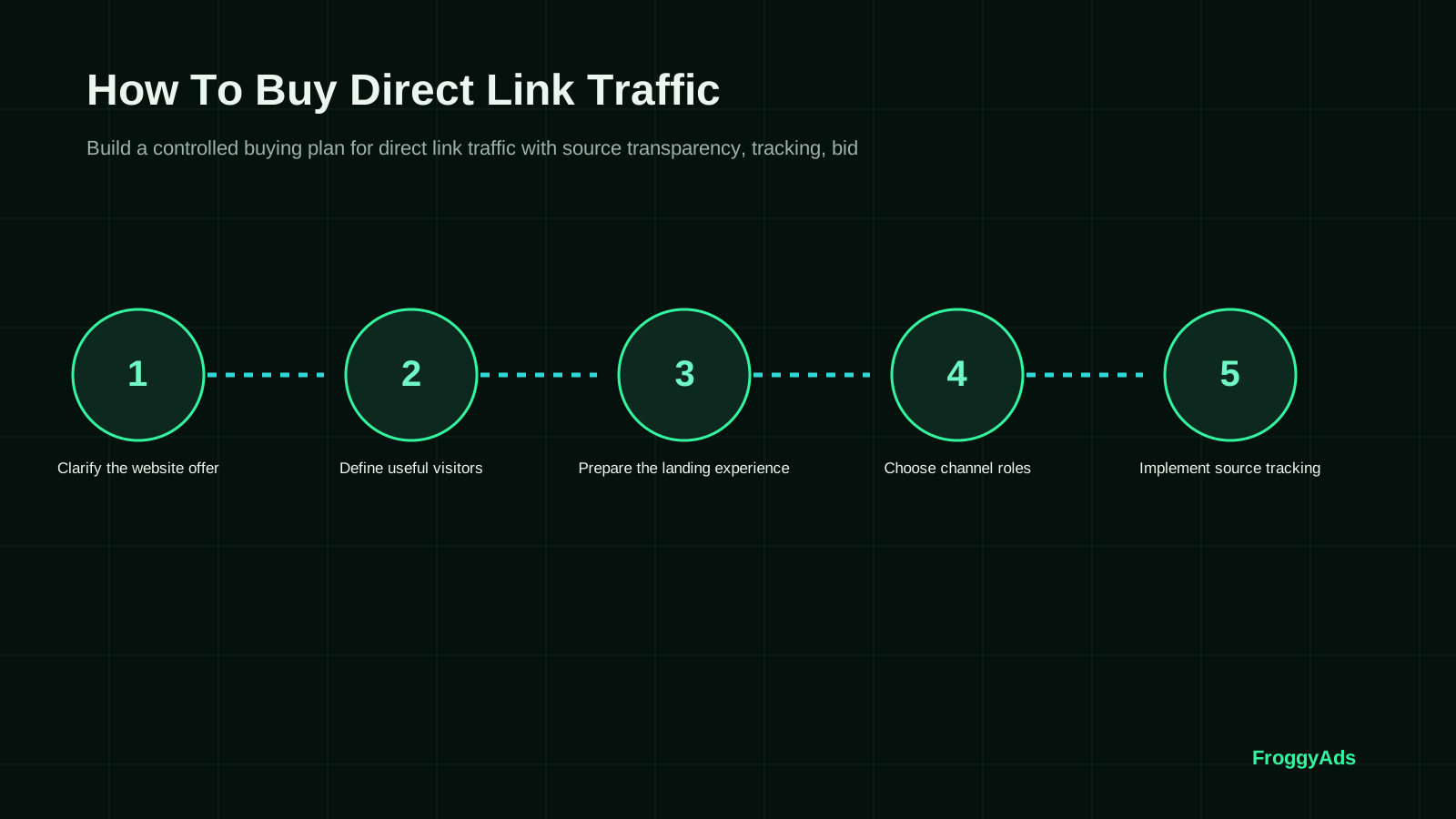
To buy direct link traffic, define the advertiser destination and accepted outcome, document the publisher-click or redirect route offered by the provider, preserve source identifiers, set a bounded bid and budget, test landing continuity, and scale only after mature source-level quality is visible. As of 16 August 2026, FroggyAds describes direct link traffic as a delivery method that routes a publisher click to an advertiser destination without a separate visual ad unit; it is not presented as a separate seventh FroggyAds ad format or as guaranteed conversion inventory.
Confirm what the provider means by direct link traffic
Ask whether the click begins from a publisher link, redirect, domain route, in-page element or another documented trigger, and whether a separate creative exists. Record eligible devices, markets, categories, sources, identifiers, pricing model and prohibited destinations. The phrase direct link can describe different implementations, so the order should name the actual route rather than rely on the label.
FroggyAds' current owner guide defines its own direct link traffic concept and distinguishes it from the six core ad formats. Treat that statement as FroggyAds-specific. Another network may use a different name or product structure. Do not compare bids until the event, inventory and reporting definitions are aligned.
Prepare the destination and disclosure path
The landing page must immediately confirm the promise that made the click reasonable. Review product identity, price, material conditions, disclosures, navigation, consent, performance, mobile use and final action. FTC online advertising guidance emphasizes clear and conspicuous digital disclosures in the United States; market and product-specific duties require qualified review.
Trace every redirect and parameter. Preserve the submitted and final URLs, status, domain changes, query handling and failure response. A short route can still lose identifiers, alter consent or send a visitor to an unexpected page. Block destinations that are incomplete, misleading, unsafe or outside the approved product and market scope.
Map the supply and seller path
Request the publisher, site, app, placement, source, seller, exchange and transaction information the buying route makes available. Review relevant ads.txt, app-ads.txt, sellers.json and SupplyChain records within their actual standards scope. These records help describe authorized sellers and programmatic intermediaries but do not guarantee a specific click or customer outcome.
Keep unresolved seller or source fields explicit. A known exchange does not identify every publisher placement, and an authorized seller record does not establish context, viewability or traffic quality. Save provider explanations, adjustments and the decision taken for each material discrepancy.
Create a tracking and acceptance contract
Define billable visit or click, valid page load, engaged session, qualified action, accepted lead or order, cancellation and retained value. Name the source system, identity, window, currency and owner. Use provider tokens or click identifiers where available, but do not invent tracking support that the route does not expose.
Test the journey before buying meaningful volume. Confirm parameters survive redirects, analytics records the intended event, business systems receive the identity needed for reconciliation and duplicate or rejected events remain distinguishable. A received conversion callback is evidence of the configured signal, not automatic proof of final customer value.
Launch a source-readable budget cell
Begin with a daily and total cap, limited geography and device scope, stable destination, source reporting and written stop rules. The first test should answer whether the route delivers inspectable visits that can mature into the accepted outcome. Buying large volume before source and tracking validation makes quality problems harder to isolate.
Review timing patterns, load success, engagement, duplicate behavior, source concentration, accepted events and later reversals. Investigate anomalies neutrally. Submit a reproducible campaign, source, time and event example through the provider process; retain the answer and financial adjustment separately from the original observation.
Optimize and scale direct link traffic
Pause or exclude sources only with documented evidence and an owner. Increase bids when more opportunity is needed from a source whose mature economics support the change. Preserve the destination and measurement contract while testing supply. Simultaneous landing, bid and source changes prevent a clear explanation.
Close each source as accept, reject or verify with spend, billed events, valid visits, accepted outcomes, cancellations, value, evidence gaps and next review. Scale in steps and watch marginal quality as inventory broadens. Keep the previous source list and budget available for rollback.
Connect the guide to live testing
Connect How to Buy Direct Link Traffic to a controlled audience test
Use the choices established in “Operating controls” to define one audience, budget and source set in FroggyAds. Keep the surrounding offer and measurement rule stable so the test adds evidence to how to buy direct link traffic instead of mixing several changes at once.
The purchase order defines the actual direct link trigger and destination route.
Control 2
Direct link terminology remains provider-specific rather than a universal format claim.
Control 3
Destination claims, conditions, disclosures and market eligibility are approved before spend.
Control 4
Redirects preserve final URL, parameters, consent and failure behavior.
Control 5
Supply records retain publisher, app or site, source, seller and transaction evidence.
Control 6
Authorized-seller standards support transparency without certifying traffic quality.
Control 7
Billable clicks, valid loads and accepted outcomes keep distinct definitions.
Control 8
Tracking tests prove identifier and event flow before material volume.
Control 9
Budgets include daily, total, geography, device and source boundaries.
Control 10
Anomaly reviews retain raw observations, provider responses and adjustments separately.
Control 11
Source exclusions have evidence, authority and a reconsideration condition.
Control 12
Scale decisions preserve the stable destination and a rollback source list.
Review notes
Review note 1
Write the provider's exact click trigger, destination behavior and billable event before purchase; a route called direct may still differ in redirects, publisher context and available source controls. Date and disposition stay attached.
Review note 2
Record seller, intermediary, domain, app and zone identifiers available for the proposed path, then mark missing supply-chain evidence as a purchasing limitation rather than implied authorization. Date and disposition stay attached.
Review note 3
Test every redirect with parameters, response status, device, market and final URL; preserve the sequence so a later source dispute can reproduce where the visitor route changed. Date and disposition stay attached.
Choose the execution format
Choose a paid-media format that supports How to Buy Direct Link Traffic
Use the criteria around “Review note 4” to decide whether push, native, display or pop fits the message and destination. Set format, targeting and spend as campaign controls in FroggyAds while the how to buy direct link traffic decision remains the standard for judging the result.
Place offer identity, material conditions, disclosures, consent and intended action on the first usable destination state; no amount of direct-link volume repairs a hidden or misleading term. Date and disposition stay attached.
Review note 5
Carry campaign, source, zone and provider-click identifiers through server, analytics and business records where available; duplicates and lost parameters retain explicit unresolved states. Date and disposition stay attached.
Review note 6
Define the accepted outcome as a qualified, settled or retained business event with timing and exclusions; clicks and landing events remain earlier technical stages in the ledger. Date and disposition stay attached.
Review note 7
Open one source-readable cell with fixed market, device, destination, bid, daily cap and total loss boundary; avoid a blended launch that prevents rejection of one unsuitable route. Date and disposition stay attached.
Review note 8
Investigate an unusual source through aligned time windows, redirect evidence, logs and a reproducible example; archive the provider answer without treating one anomaly as proof about all inventory. Date and disposition stay attached.
Review note 9
Pause automatically when destination continuity, identifier survival, source eligibility or mature economics crosses its declared boundary; store the exact configuration required for review. Date and disposition stay attached.
Review note 10
Increase only one source, bid or market dimension after the bounded cell reconciles; compare the new marginal accepted-outcome rate with the last stable state rather than lifetime averages. Date and disposition stay attached.
Review note 11
Prepare disputes from contract terms, billed events, source rows, redirects, server observations, accepted states and requested remedy; retain credits as separate financial entries. Date and disposition stay attached.
Review note 12
Close access, exports, balances and delayed outcomes after the test; another authorized operator must be able to explain the purchase decision without relying on provider memory. Date and disposition stay attached.
Evidence lab
Evidence checkpoint 1
Working exercise: Write the provider's exact click trigger, destination behavior and billable event before purchase; a route called direct may still differ in redirects, publisher context and available source controls. Inputs, results, limits and rollback stay attached.
Evidence checkpoint 2
Working exercise: Record seller, intermediary, domain, app and zone identifiers available for the proposed path, then mark missing supply-chain evidence as a purchasing limitation rather than implied authorization. Inputs, results, limits and rollback stay attached.
Evidence checkpoint 3
Working exercise: Test every redirect with parameters, response status, device, market and final URL; preserve the sequence so a later source dispute can reproduce where the visitor route changed. Inputs, results, limits and rollback stay attached.
Evidence checkpoint 4
Working exercise: Place offer identity, material conditions, disclosures, consent and intended action on the first usable destination state; no amount of direct-link volume repairs a hidden or misleading term. Inputs, results, limits and rollback stay attached.
Put the guide into practice
Turn How to Buy Direct Link Traffic into a bounded campaign test
With “Evidence checkpoint 5” documented, launch only the next reversible test. Set a spending limit, preserve the baseline and use source-level and audience controls so the next step depends on qualified outcomes for how to buy direct link traffic, not activity volume.
Working exercise: Carry campaign, source, zone and provider-click identifiers through server, analytics and business records where available; duplicates and lost parameters retain explicit unresolved states. Inputs, results, limits and rollback stay attached.
Evidence checkpoint 6
Working exercise: Define the accepted outcome as a qualified, settled or retained business event with timing and exclusions; clicks and landing events remain earlier technical stages in the ledger. Inputs, results, limits and rollback stay attached.
Evidence checkpoint 7
Working exercise: Open one source-readable cell with fixed market, device, destination, bid, daily cap and total loss boundary; avoid a blended launch that prevents rejection of one unsuitable route. Inputs, results, limits and rollback stay attached.
Evidence checkpoint 8
Working exercise: Investigate an unusual source through aligned time windows, redirect evidence, logs and a reproducible example; archive the provider answer without treating one anomaly as proof about all inventory. Inputs, results, limits and rollback stay attached.
Evidence checkpoint 9
Working exercise: Pause automatically when destination continuity, identifier survival, source eligibility or mature economics crosses its declared boundary; store the exact configuration required for review. Inputs, results, limits and rollback stay attached.
Evidence checkpoint 10
Working exercise: Increase only one source, bid or market dimension after the bounded cell reconciles; compare the new marginal accepted-outcome rate with the last stable state rather than lifetime averages. Inputs, results, limits and rollback stay attached.
Evidence checkpoint 11
Working exercise: Prepare disputes from contract terms, billed events, source rows, redirects, server observations, accepted states and requested remedy; retain credits as separate financial entries. Inputs, results, limits and rollback stay attached.
Evidence checkpoint 12
Working exercise: Close access, exports, balances and delayed outcomes after the test; another authorized operator must be able to explain the purchase decision without relying on provider memory. Inputs, results, limits and rollback stay attached.
Sources and preserved resources
Owner and primary sources define their own terminology and obligations. They do not promise price, delivery or campaign results. Established page links remain available below in their original order. For How To Buy Direct Link Traffic, apply this rule to the page-specific audience, market, format or buying decision described here.
Buying direct link traffic connects a documented publisher-click route, truthful destination, seller transparency, source identifiers, bounded budgets and mature business acceptance.
FroggyAds direct link traffic documentation describes a publisher-click delivery route and the source-level controls relevant to its platform.
IAB Tech Lab sellers.json and the SupplyChain object document seller and transaction-chain transparency for programmatic advertising.
Agency procurement ends with future-use planning. The client should know how to create a shorter cut, a new language version or an updated claim after the original engagement closes. Record which source project, transcript, caption file and licensed element supports that work. If a new editor cannot identify the approved master or rights boundary, the handover has not delivered an affordable long-term asset. The close should therefore include a restoration test: locate the files, open the project where applicable, identify required software, render a controlled derivative and confirm that the license record covers the intended use. This test measures practical ownership without assuming every contract must transfer every production component and recorded decision. Archive the result with the master version and accountable client owner. Future editors should see the approval boundary before opening the source project. For How To Buy Direct Link Traffic, apply this rule to the page-specific audience, market, format or buying decision described here.
Direct-link buying should include a destination-change register. Record who can alter the final URL, redirect rule, tracking template, offer terms and form destination. A route verified before launch can become materially different after any of those values changes. Start a new evidence interval when the destination or redirect chain is edited, then repeat parameter, page and acceptance checks before restoring full delivery. Keep provider-side redirect updates separate from advertiser-side page revisions so responsibility and rollback remain clear.
Reconcile billing after every paused or disputed interval and preserve unused balance, credits and replacement traffic as distinct entries. If replacement delivery uses another source, market or device mix, treat it as a fresh cell rather than a correction that inherits the original result. Close the register with the last approved URL chain, its test time, the retained source list and the person who can stop traffic during a future incident.
This history makes the direct-link purchase reproducible without implying that a previously tested path remains unchanged forever.
Questions and answers
When does direct-link traffic make sense?
Direct links work best when the destination presents one straightforward proposition and a visitor can understand the next step without a conventional ad unit. The landing page must establish the missing context immediately.
What should a direct-link buyer know about the trigger?
Ask what user action opens the link, where it appears, which devices are included and how source labels are reported. A voluntary, clearly described trigger is materially different from an unexpected or misleading route.
Which targeting limits matter for direct-link delivery?
Choose only locations, devices and audience contexts that the offer can genuinely serve, then document exclusions. A broad source label does not establish intent, so the first test needs room to reveal which routes attract suitable visitors.
How should a direct-link destination introduce the offer?
The opening screen should name the business, explain why the visitor arrived and present one honest value and action. Avoid assuming that a preceding banner supplied context, because the link may be the visitor's first encounter.
What costs belong in a direct-link buying decision?
Count the billable traffic, landing work, tracking, review time, payment charges and any unusable visits, not just the quoted unit price. Set the test cap against an approved customer outcome and a tolerable loss.
How can a buyer judge direct-link source quality?
Review route transparency, credible arrival patterns, engaged actions and later customer acceptance by source. Fast visits or low prices are not inherently poor, but neither tells you that the traffic understood or wanted the offer.
Which records make direct-link traffic traceable?
Carry a distinct campaign and source ID into the landing session and the advertiser's accepted outcome where lawful. Keep redirects, duplicate rules and attribution windows documented so missing matches are not silently credited.
What should stop a direct-link test immediately?
Stop for deceptive triggers, unsafe context, a broken destination, consent failures, unexplained routing or spend beyond the agreed boundary. Record the affected source before changing anything so the cause is not erased.
How should two direct-link routes be compared?
Send them to the same stable offer and use the same accepted result, maturity window and cost treatment. Report each route separately; an aggregate can conceal one valuable source and one source that creates only short visits.
How can direct-link volume be expanded carefully?
Open one new source, device or geography after the original group shows stable routing and mature economics. Keep the earlier cell unchanged long enough to see if the added reach preserves customer fit.
Decision table
How to Buy Direct Link Traffic: Step-by-Step Campaign Plan: a practical advertiser decision matrix
Decision
What to verify
FroggyAds action
Question
State the specific decision this guide answers about How to Buy Direct Link Traffic: Step-by-Step Campaign Plan.
Use the guide before changing campaign settings.
Procedure
Follow the steps around On this page in their intended order.
Keep the baseline stable while testing the recommended change.
Evidence
Use the measurement guidance under Confirm what the provider means by direct link traffic.
Reconcile FroggyAds data with tracker and backend results.
Diagnosis
Use the troubleshooting section around Prepare the destination and disclosure path to isolate the smallest failing layer.
Change one major variable at a time.
Next action
Move from the guide to a bounded live test only when the prerequisites are met.
Create a FroggyAds account and preserve the test limit.
Advertiser decision framework
How to Buy Direct Link Traffic: Step-by-Step Campaign Plan: what should the advertiser decide next?
For How to Buy Direct Link Traffic: Step-by-Step Campaign Plan, the commercial task is to turn how to buy direct link traffic into one measurable campaign decision. Use On this page to define the audience or problem, use Confirm what the provider means by direct link traffic to constrain the test, and decide in advance which accepted result would justify more FroggyAds spend.
On this How to Buy Direct Link Traffic: Step-by-Step Campaign Plan page, the decision should remain tied to the existing evidence around On this page, Confirm what the provider means by direct link traffic and Prepare the destination and disclosure path. Those sections give how to buy direct link traffic its specific context; the table below turns that context into campaign actions rather than adding another generic definition.
Decision
What to verify
FroggyAds action
How to Buy Direct Link Traffic: Step-by-Step Campaign Plan objective
Use On this page to define the accepted business event and the maximum learning loss for how to buy direct link traffic.
Launch one FroggyAds campaign objective for How to Buy Direct Link Traffic: Step-by-Step Campaign Plan and keep the conversion definition stable.
How to Buy Direct Link Traffic: Step-by-Step Campaign Plan audience
Use Confirm what the provider means by direct link traffic to verify market, device, language and offer eligibility for how to buy direct link traffic.
Apply only the FroggyAds targeting controls that change the real How to Buy Direct Link Traffic: Step-by-Step Campaign Plan customer journey.
How to Buy Direct Link Traffic: Step-by-Step Campaign Plan source evidence
Use Prepare the destination and disclosure path to keep source-level differences visible instead of relying on one blended how to buy direct link traffic average.
Keep, cap, exclude or retest How to Buy Direct Link Traffic: Step-by-Step Campaign Plan inventory from documented source evidence.
How to Buy Direct Link Traffic: Step-by-Step Campaign Plan economics
Use Map the supply and seller path to connect media spend with accepted conversions and downstream value for how to buy direct link traffic.
Protect the How to Buy Direct Link Traffic: Step-by-Step Campaign Plan test with a written budget boundary and a consistent attribution window.
How to Buy Direct Link Traffic: Step-by-Step Campaign Plan scale rule
Use Create a tracking and acceptance contract to define the exact evidence that earns the next budget increase for how to buy direct link traffic.
Scale How to Buy Direct Link Traffic: Step-by-Step Campaign Plan one major control at a time and compare marginal performance with the prior baseline.
A page-specific FroggyAds test sequence for How to Buy Direct Link Traffic: Step-by-Step Campaign Plan
How to Buy Direct Link Traffic: Step-by-Step Campaign Plan outcome: define the accepted event for how to buy direct link traffic and the maximum loss permitted while the first test is learning.
How to Buy Direct Link Traffic: Step-by-Step Campaign Plan path: verify market eligibility, device experience, landing-page continuity and tracking against On this page before buying more traffic.
How to Buy Direct Link Traffic: Step-by-Step Campaign Plan hypothesis: launch one bounded FroggyAds test tied to Confirm what the provider means by direct link traffic; do not change bid, creative, audience and destination together.
How to Buy Direct Link Traffic: Step-by-Step Campaign Plan source review: compare qualified activity, accepted conversions, timing and cost by the source or segment dimensions relevant to Prepare the destination and disclosure path.
How to Buy Direct Link Traffic: Step-by-Step Campaign Plan scaling: use Map the supply and seller path and Create a tracking and acceptance contract to define what must reproduce before the next budget increase.
Why FroggyAds is relevant to How to Buy Direct Link Traffic: Step-by-Step Campaign Plan
For How to Buy Direct Link Traffic: Step-by-Step Campaign Plan, FroggyAds gives advertisers a self-serve DSP and ad-network workflow for buying supported traffic with campaign-level budgets and targeting. Depending on format and campaign context, available controls can include country, city, device, operating system, browser, carrier, category, source, ID and IP options. SmartCPC and Adscore-supported traffic-quality controls can support the how to buy direct link traffic optimization process, while the advertiser's tracker, analytics and backend acceptance remain the final evidence for commercial quality.
Use Create a tracking and acceptance contract as the final checkpoint for How to Buy Direct Link Traffic: Step-by-Step Campaign Plan. If the accepted result does not reproduce after the next meaningful volume step, return to the last stable configuration instead of widening several controls at once.
How to Buy Direct Link Traffic: Step-by-Step Campaign Plan: the buyer task this URL owns
The buying decision on this URL is specific: advertisers researching the topic before a campaign decision should use How to Buy Direct Link Traffic: Step-by-Step Campaign Plan to buy and optimize paid traffic against accepted business outcomes. Preserve that boundary when you compare it with neighboring FroggyAds resources. The nearest related FroggyAds page is Buy Direct Link Traffic; this URL keeps ownership of the distinct task to buy and optimize paid traffic against accepted business outcomes.
The page-specific control set for How to Buy Direct Link Traffic: Step-by-Step Campaign Plan is audience targeting, conversion tracking, campaign objective, audience and market fit. Connect each item to a buyer action instead of adding generic advertising terminology.
Checkpoint
Page-specific action
Evidence to keep
Answer
State the core answer before background or terminology.
Retain evidence specific to How to Buy Direct Link Traffic: Step-by-Step Campaign Plan and its accepted outcome.
Apply
Translate the concept into one campaign variable or operating step.
Retain evidence specific to How to Buy Direct Link Traffic: Step-by-Step Campaign Plan and its accepted outcome.
Check
Use a named metric and review window to decide the next action.
Retain evidence specific to How to Buy Direct Link Traffic: Step-by-Step Campaign Plan and its accepted outcome.
Practical check for How to Buy Direct Link Traffic: Step-by-Step Campaign Plan: turn this page answer into one testable step, name the event that counts as success for How to Buy Direct Link Traffic: Step-by-Step Campaign Plan, and keep the review window stable before changing another variable.
Start the paid-media test for How to Buy Direct Link Traffic: Step-by-Step Campaign Plan with FroggyAds when you need direct control over formats, targeting, budgets and source evidence. Increase spend only after the result supports the next acquisition step. Create your free FroggyAds account.
How To Buy Direct Link Traffic worked application example
Hypothetical example: a buyer using this How To Buy Direct Link Traffic guide can turn one recommendation into a test by naming the accepted event, fixing the review window and changing one campaign variable. If USD 175 produces 4 accepted outcomes, the resulting accepted CPA is USD 43.75; use your own numbers and economics before deciding what to change next.
Direct answer
How to Buy Direct Link Traffic: Step-by-Step Campaign Plan — what matters first
How to Buy Direct Link Traffic: Step-by-Step Campaign Plan is most useful when it helps a buyer understand the concept and apply it to a concrete campaign decision. Define the accepted outcome first, then use targeting, budget and source-level evidence to decide what deserves more spend.