SEO and GEO-ready campaign guide

Gaming Traffic

Gaming Traffic should match a clearly defined Gaming offer, eligible audience and available destination. Confirm policy and country requirements first, then use controlled budgets, stable tracking and source-level reporting. Compare accepted business outcomes after the data matures, and scale only combinations that remain truthful, compliant and economically useful.

Reviewed and materially updated 2026-07-15. Pricing, inventory and outcomes vary by campaign.

Gaming Traffic campaign planning visual
Key takeaways

Gaming Traffic in three decisions

Gaming Traffic should match a clearly defined Gaming offer, eligible audience and available destination. Confirm policy and country requirements first, then use controlled budgets, stable tracking and source-level reporting. Compare accepted business outcomes after the data matures, and scale only combinations that remain truthful, compliant and economically useful.

  • Confirm that the Gaming offer, audience, countries and destination are lawful, eligible and permitted before buying gaming traffic.
  • Keep tracking, source identifiers, creative claims and the acceptance event stable while the first gaming traffic test matures.
  • Scale gaming traffic only when accepted value, policy status and campaign economics remain inside the documented decision range.

These takeaways are planning guidance, not guaranteed pricing, volume or performance.

What gaming traffic means

Definition: Gaming traffic acquires players or users for lawful games, gaming content or related services. The campaign must identify the game, supported devices, countries, age rating, store or destination and accepted engagement or purchase event.

Gaming Traffic should begin with a written campaign definition. Confirm age rating, store or platform compliance, supported devices, truthful gameplay claims and privacy handling. Name the exact countries, device scope, format, offer, landing page, accepted conversion, attribution window, budget ceiling and decision owner. This prevents a vague regional label from becoming a substitute for a real plan. The page keyword describes the buying problem, but campaign controls must still be expressed as concrete settings and measurable outcomes.

Gaming traffic acquires players or users for lawful games, gaming content or related services. The campaign must identify the game, supported devices, countries, age rating, store or destination and accepted engagement or purchase event. For gaming traffic, document that definition in the brief so reporting, source decisions and stakeholder expectations use the same scope. A platform label, agency spreadsheet or previous campaign may use a different grouping, which is why the actual country list matters more than the tier or regional name.

A practical evaluation framework

Evaluate gaming traffic through four connected layers: access, control, measurement and economics. Access asks whether the required inventory and formats are available. Control asks whether country, device, browser, carrier, source and frequency settings can protect the test. Measurement asks whether every accepted outcome can be reconciled. Economics asks whether mature value exceeds media, operational and payment costs.

The framework for gaming traffic is deliberately sequential. Broad reach is not useful when tracking is incomplete, and low cost is not useful when the landing page or payment path is unavailable to the selected audience. Confirm feasibility first, then compare sources and creatives, and only then make scaling decisions. This order reduces false conclusions from cheap but unusable traffic.

Decision layerWhat to verifyWhy it matters
ScopeActual countries, devices, format and audienceThe label alone does not define campaign settings.
AccessAvailable inventory and practical reachConfirm the required markets and format are available.
ControlBudget, bid, frequency, source and targeting controlsProtect the test and create reversible decisions.
MeasurementClick IDs, accepted conversions and attributionConnect spend to mature business outcomes.
EconomicsAccepted acquisition cost and contribution marginScale value rather than raw traffic volume.
RiskPolicy, destination, payment and fulfillment checksStop avoidable failures before buying more traffic.
Decision rule: Do not choose or scale gaming traffic from headline reach, cheap CPM or early conversions alone. Require stable tracking and accepted business value.

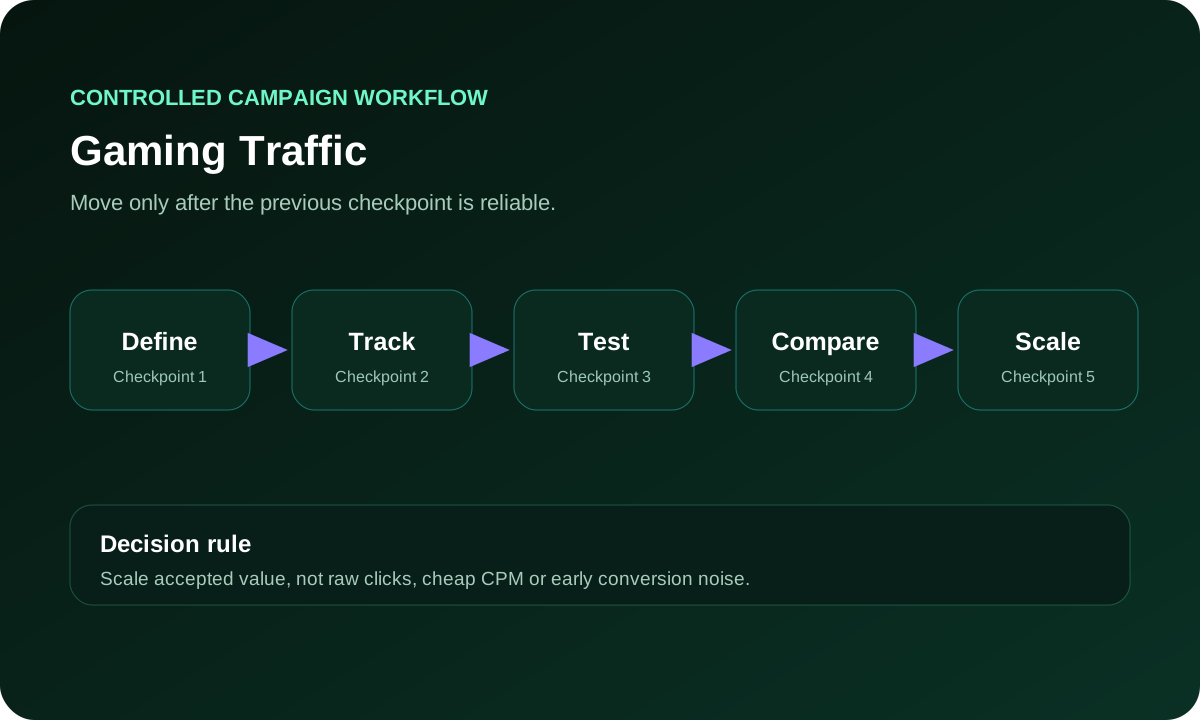
Controlled launch workflow for gaming traffic

Before launching gaming traffic, verify click identifiers, postback or pixel events, duplicate handling, time zones, currency, attribution windows and the definition of an accepted conversion. Test the complete path with controlled events. A dashboard conversion is not automatically an accepted business result, so reconcile platform events with the advertiser system used for approvals, revenue or qualified actions.

Keep a change log for gaming traffic. Record launch time, bid, budget, targeting, creative identifier, destination version and every material edit. This makes it possible to explain performance shifts without guessing. When several variables change together, the next result cannot show which change helped, which hurt or whether the apparent movement was normal auction variation.

Define scope and acceptance

Name the actual countries, format, devices, offer, accepted conversion, attribution window, maximum test loss and decision owner for gaming traffic.

Validate the complete path

For gaming traffic, test the destination, click identifiers, conversion events, postback or pixel, time zones, currency and duplicate handling before paid volume begins.

Launch with protected limits

Launch gaming traffic with daily and total budgets, deliberate bids, stable creative identifiers and no unrelated edits during the first measurement window.

Compare mature evidence

Review source, creative, country, device and time-period results after the accepted outcome has had time to mature.

Scale or roll back

Scale gaming traffic one dimension at a time when economics remain stable, and restore the last reliable setup when the new level breaks the decision range.

Five-step workflow for Gaming Traffic

Budget and measurement model

Set a test budget for gaming traffic that can collect enough mature data without exposing the full campaign budget. Use daily and total limits, define the maximum acceptable loss for learning, and decide what evidence is required before an increase. A small test may remain inconclusive, but an unlimited test can spend through avoidable tracking, creative or destination problems.

Budget decisions for gaming traffic should follow evidence, not calendar pressure. Increase spend in measured steps and compare source mix, accepted acquisition cost, conversion delay and rejection rate after every increase. If the economics deteriorate, restore the last stable configuration or reduce scope. Scaling is a controlled experiment, not a permanent commitment.

Primary outcome

For gaming traffic, use an accepted conversion, approved lead, sale, revenue event or another business result that can be reconciled outside the traffic dashboard.

Diagnostic metrics

Track gaming traffic spend, impressions, clicks, visits, conversion delay, rejection, source concentration and destination errors without confusing them with final value.

Economic decision

Compare accepted value from gaming traffic with media and operational cost. Scale only when contribution remains inside the documented range.

Review gaming traffic at source or placement level whenever identifiers are available. Compare spend, visits, accepted conversions, revenue or approved value, delay and sample size. Keep promising sources under observation, limit uncertain sources and block only when the evidence is strong enough to justify the lost reach. One early conversion or one bad click does not establish a durable pattern.

Separate platforms, devices, countries and game versions. Measure retained or valuable users rather than clicks or installs alone. This principle also applies inside gaming traffic: device, browser, connection type and time period can change the source mix. Segment only when the segment can receive enough volume for a useful decision. Excessive fragmentation creates tiny samples that look precise but cannot support reliable action.

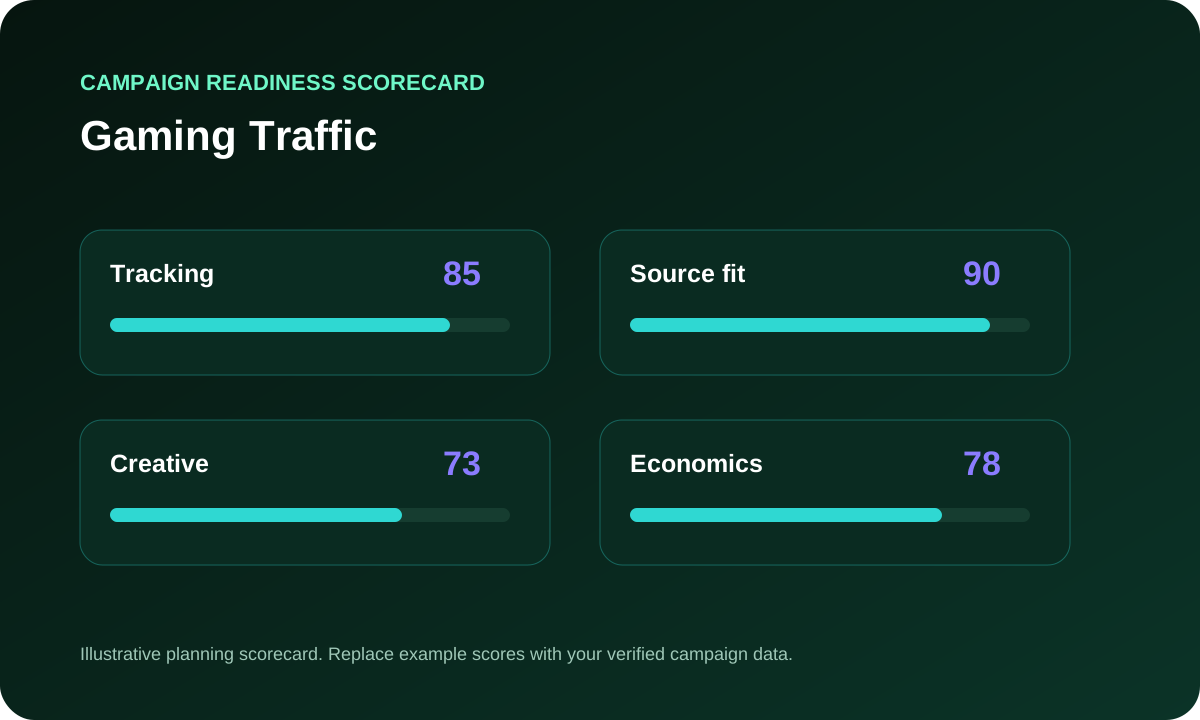
Readiness scorecard for Gaming Traffic

Creative, format and destination fit

Creative for gaming traffic should match the selected format and destination. Use truthful claims, clear visual hierarchy, one primary message and a stable identifier for every concept. Test genuinely different angles rather than minor punctuation or color changes. The purpose is to learn which promise and presentation produce accepted outcomes, not merely which version attracts the most clicks.

For paid traffic activity within gaming traffic, evaluate the entire path from impression to accepted result. A high click-through rate can be harmful when the message overpromises or attracts the wrong audience. Compare creative performance with landing-page engagement, conversion quality, delay and downstream acceptance before choosing a winner.

The destination used for gaming traffic must load quickly, explain the offer clearly and work on the devices and locations selected in targeting. Confirm language, forms, payment options, fulfillment, contact details, consent and required disclosures. A campaign cannot compensate for a broken or unavailable destination, and cheap traffic does not make an unusable conversion path profitable.

Unsupported devices, age-inappropriate targeting, misleading gameplay, broken deep links and weak post-click retention can make cheap traffic misleading. Apply this risk check to every gaming traffic launch before increasing bids. If the destination experience differs by country or device, split the campaign so results can be interpreted and corrected without affecting the entire regional test.

Practical example: Run two genuinely different creative concepts for gaming traffic while keeping targeting, bid and destination stable. Compare accepted outcomes after the same maturity window, then carry the better concept into a new controlled source or budget test.

Optimization, scaling and rollback

Optimize gaming traffic only after the tracking path is stable and enough outcomes have matured. Change one major variable at a time, record the hypothesis and specify the rollback condition. Useful actions include narrowing or expanding country scope, adjusting bids, controlling frequency, rotating a new creative concept, improving the destination or excluding a source with consistent negative evidence.

Do not optimize gaming traffic from raw traffic alone. Use accepted conversion cost, approval rate, revenue, contribution margin, repeat value or another business metric that reflects the real objective. When the primary outcome is delayed, use leading indicators carefully and confirm them against mature results before allowing them to control budget.

Scale gaming traffic after performance survives a measured increase. A stable test should keep tracking quality, accepted acquisition cost, source mix and conversion acceptance inside the documented range. Increase one dimension at a time, such as budget, bid, country scope or creative coverage. This creates a clear rollback point if the new level changes the economics.

A stop rule is as important as a scale rule for gaming traffic. Pause or reduce the campaign when tracking breaks, the destination becomes unavailable, accepted value falls outside the limit, source concentration creates unacceptable risk or policy conditions change. Document who can stop the campaign and how the last stable setup can be restored.

SignalRecommended actionEvidence required
Tracking mismatchPause and repair measurementReconciled test events across systems
Promising but immature sourceObserve or limitMore mature accepted outcomes
Repeated negative source economicsReduce, exclude or lower bidAdequate spend, maturity and stable tracking
Stable accepted valueIncrease one dimension graduallyEconomics survive the previous increase
Performance breaks after scaleRoll back to last stable setupDocumented baseline and change log

Limitations and responsible use

Gaming Traffic does not guarantee impressions, clicks, accepted conversions, revenue or profitability. Auction availability, competition, user behavior, source mix, offer fit, creative, destination quality, tracking and optimization all affect results. FroggyAds can provide self-serve buying controls and reporting, but the advertiser remains responsible for the offer, campaign settings, compliance and business decisions.

Use estimates on gaming traffic pages as planning inputs, not promises. Historical results can inform a range, but they cannot remove auction uncertainty. Keep assumptions visible, compare them with actual data and replace them when evidence improves. This makes the campaign plan more useful to operators and more trustworthy to search and AI systems that may quote the explanation.

  • Confirm age rating, store or platform compliance, supported devices, truthful gameplay claims and privacy handling.
  • Use truthful creative and a destination that is available to the targeted user.
  • Protect personal data and use consent, tracking and disclosure practices appropriate to the campaign.
  • Do not describe estimates, starting bids or previous results as guaranteed future outcomes.

Questions about gaming traffic

What does gaming traffic mean?

Gaming Traffic describes a campaign or evaluation focused on Gaming. Gaming traffic acquires players or users for lawful games, gaming content or related services. The campaign must identify the game, supported devices, countries, age rating, store or destination and accepted engagement or purchase event. The operational definition must therefore include the actual countries, format, audience, accepted conversion, attribution window and budget limits used in the campaign.

How should I start gaming traffic?

Start gaming traffic with a small controlled test. Verify the destination and tracking path, define one accepted business outcome, set daily and total limits, keep source identifiers and change logs, and avoid scaling until mature data shows that the campaign remains inside the planned economics.

How much does gaming traffic cost?

There is no guaranteed fixed cost for gaming traffic. Auction prices vary by format, country, device, browser, carrier, source competition, frequency and timing. Use a test budget and bid range, then compare actual spend with accepted conversions and contribution margin before changing the budget.

How do I measure gaming traffic?

Measure gaming traffic with stable click identifiers, conversion events, a documented attribution window and reconciliation against the advertiser system. Review source-level spend, accepted conversions, delay, approval or revenue and contribution margin. Do not treat raw clicks or dashboard conversions as final business value.

When should sources be blocked in gaming traffic?

Block a source in gaming traffic only after tracking is stable and the source has enough mature evidence to justify the lost reach. Consider spend, accepted outcomes, sample size, conversion delay and repeated behavior. Use observation or a lower bid when the evidence is still uncertain.

What creative works for gaming traffic?

Use truthful, format-appropriate creative with one clear promise and a stable creative identifier. Test genuinely different concepts and judge them by accepted outcomes, not click-through rate alone. Creative performance for gaming traffic also depends on the landing page, source mix and actual countries.

When can gaming traffic be scaled?

Scale gaming traffic after accepted acquisition cost, tracking quality and source mix remain stable through a measured increase. Raise one dimension at a time and retain a rollback point. Stop or reduce the campaign when economics, tracking, policy or destination availability moves outside the documented limit.

What compliance checks apply to gaming traffic?

Before launching gaming traffic, Confirm age rating, store or platform compliance, supported devices, truthful gameplay claims and privacy handling. Document the countries, audience eligibility, claims, required disclosures, privacy handling and platform approval. Compliance is an advertiser responsibility and this guide is not legal advice.

What is the biggest risk with gaming traffic?

The biggest risk with gaming traffic is treating a broad label as if it describes one uniform audience or guaranteed price. Unsupported devices, age-inappropriate targeting, misleading gameplay, broken deep links and weak post-click retention can make cheap traffic misleading. Define the actual markets and judge every decision with verified campaign data.

Can FroggyAds support gaming traffic?

FroggyAds provides a self-serve media-buying platform with multiple ad formats, GEO and device targeting, budget controls, source-level reporting, SmartCPC options and traffic-quality controls. These tools can support a controlled gaming traffic test, but results depend on the campaign and are not guaranteed.

Controlled self-serve media buying

Build a measured Gaming Traffic test

For gaming traffic, define the actual markets, eligible audience, accepted outcome and budget limits, verify tracking and make source-level decisions from mature evidence. Results vary by campaign and are not guaranteed.