Fast Approval In-App Traffic: Plan, Launch & Optimize Campaigns
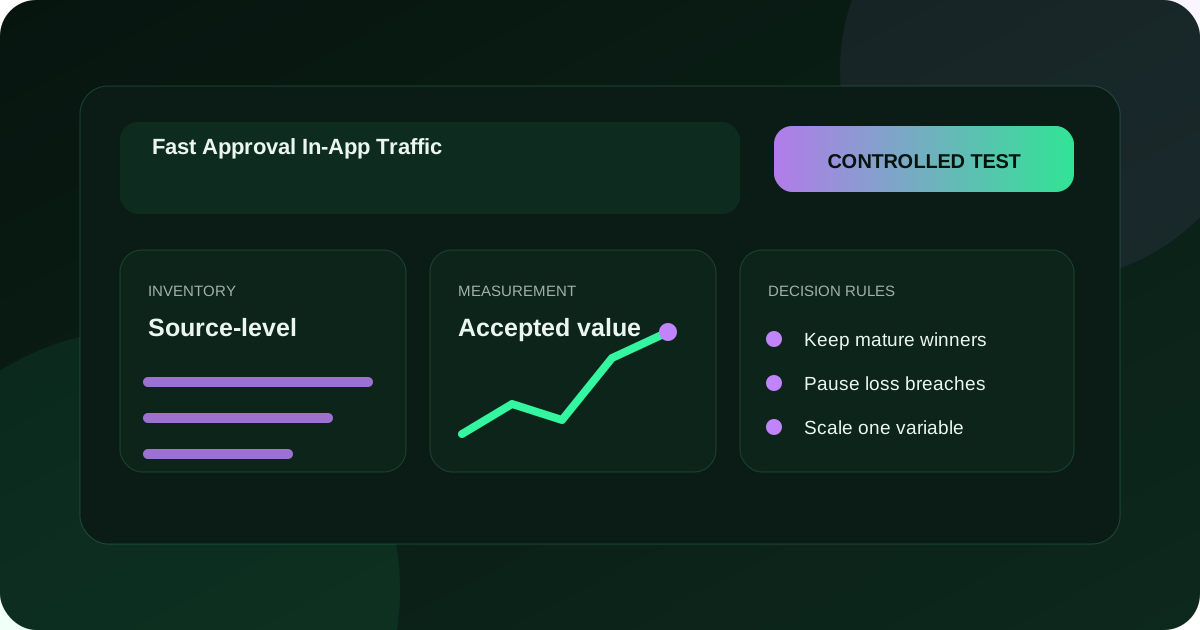
Fast approval in-app traffic should mean a campaign package that is complete enough for review and a buyer workflow that preserves app, seller, creative, policy and measurement evidence; it must not imply guaranteed or instant approval. As of 16 August 2026, Google states that most ads are reviewed within one business day but complex reviews can take longer and edits can restart review. IAB Tech Lab app-ads.txt and Open Measurement materials support app-supply and measurement checks without certifying any individual placement or campaign result.
Separate submission readiness from approval speed
For advertisers considering "Fast approval in app traffic", useful long-tail questions usually involve setup, targeting, cost, traffic quality and how performance will be measured. FroggyAds provides self-serve campaign access and granular controls so those questions can be answered through controlled testing. Approval is a platform decision under its current policy and review process. The advertiser can control completeness, accuracy and timing of submission, but cannot promise when a reviewer will finish or that the advertisement will be eligible. Write the launch deadline, submission buffer and fallback before the campaign enters review.
Google documents that ad and asset changes begin or restart review and that some reviews take longer than the usual period. Treat the stated timing as owner guidance for Google Ads only. Other platforms and traffic providers use their own processes. Do not transfer one provider's review estimate into a universal in-app approval claim.
Prepare an in-app submission dossier
Assemble advertiser identity, product category, approved claims, creative files, destination, privacy and store links, target markets, age or audience restrictions, tracking plan and accountable contacts. Review the final landing experience from a mobile device. Missing functionality or a destination that contradicts the advertisement can delay or defeat review.
Freeze the submitted version. Record creative hashes or IDs, copy, app or site destination, date, platform and reviewer status. If a change is required, retain the earlier package and reason. This chronology explains why a new review began and prevents the team from comparing the current status with a file that was never submitted.
Verify app identity and authorized sellers
IAB Tech Lab describes app-ads.txt as an extension of ads.txt for applications distributed through app stores and other app channels. It lets app publishers declare authorized digital sellers. Buyers should resolve the app-store listing, developer domain and available app-ads.txt record, then compare seller information with the buying route.
A valid record supports supply-path analysis but does not guarantee the app, placement, audience, viewability or traffic quality. Keep store ID, developer URL, seller account, exchange, timestamp and unresolved mismatch together. Unknown or inconsistent fields receive verify status rather than a favorable assumption created by a familiar app name.
Inspect creative inside the app environment
Review the advertisement in representative app, device, operating-system, orientation and connection contexts. Check safe areas, overlays, close controls, accidental-click risk, text size, audio behavior, load, destination transition and return to content. A source asset or policy approval does not prove that every app renders the unit appropriately.
IAB Tech Lab's Open Measurement SDK supports common measurement signals in supported integrations. Verify the app or SDK implementation and provider capability rather than assuming availability. Measurement support does not replace direct experience review or prove human attention, valid traffic or a later business outcome.
Measure the first approved traffic cell
Keep request, rendered impression, viewability where defined, click, destination load, accepted event, invalid-traffic adjustment and later business result distinct. Record app, seller, placement, device, region and time fields exposed by the route. A fast approval has no commercial value when the buyer cannot diagnose where delivered activity originated.
Launch a small cell after approval with budget and stop conditions. Watch concentration, repeat timing, accidental response, broken destinations and reconciliation gaps. Submit reproducible evidence through the provider's investigation process. One anomaly is a reason to inspect, not proof that an entire application or supply route is invalid.
Scale only after review and supply evidence are stable
Increase budget or eligibility in steps after creative rendering, app identity, seller evidence and business definitions remain reviewable. A newly approved campaign may enter a different app mix as it scales. Preserve the approved creative and landing version so supply changes are not confused with simultaneous message changes.
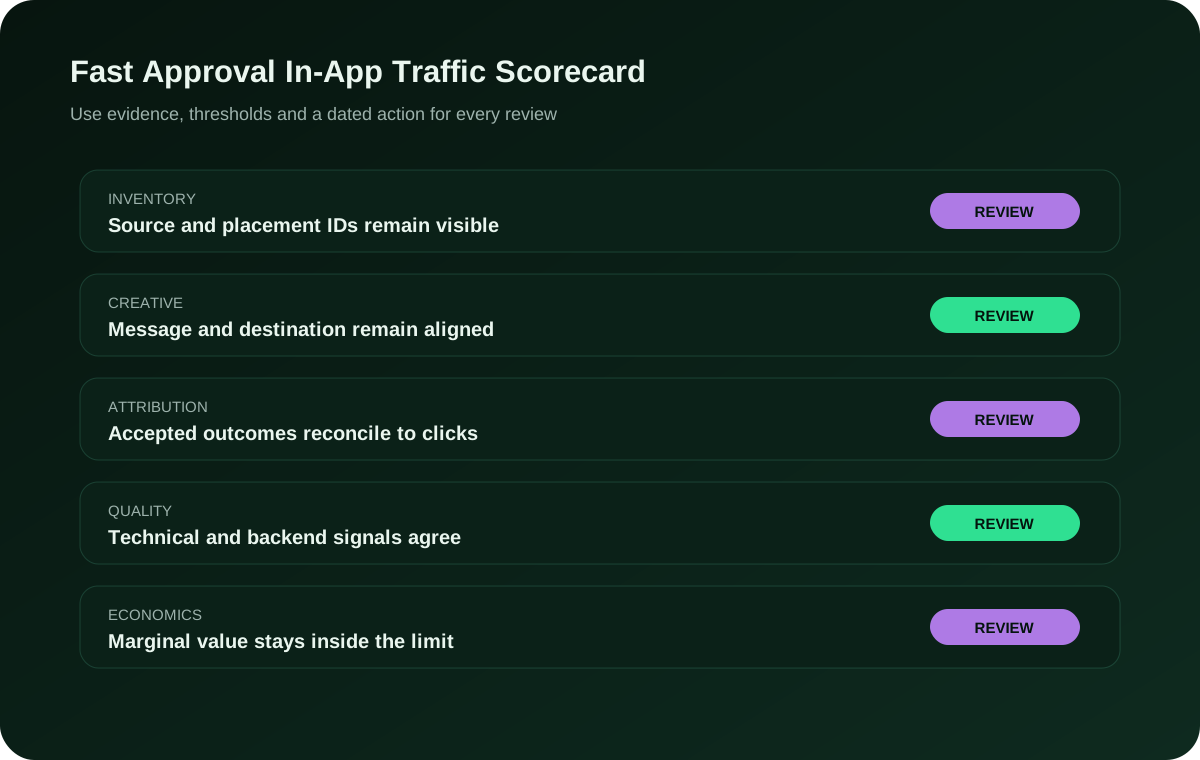
Close each app or supply route as accept, reject or verify. Store the decision owner, evidence, spending boundary, next review date and reversal condition. Fast operating practice comes from reusable verified records and clear owners, not from skipping policy, seller or measurement checks.
Connect the guide to live testing
Connect Fast Approval In-App Traffic to a controlled audience test
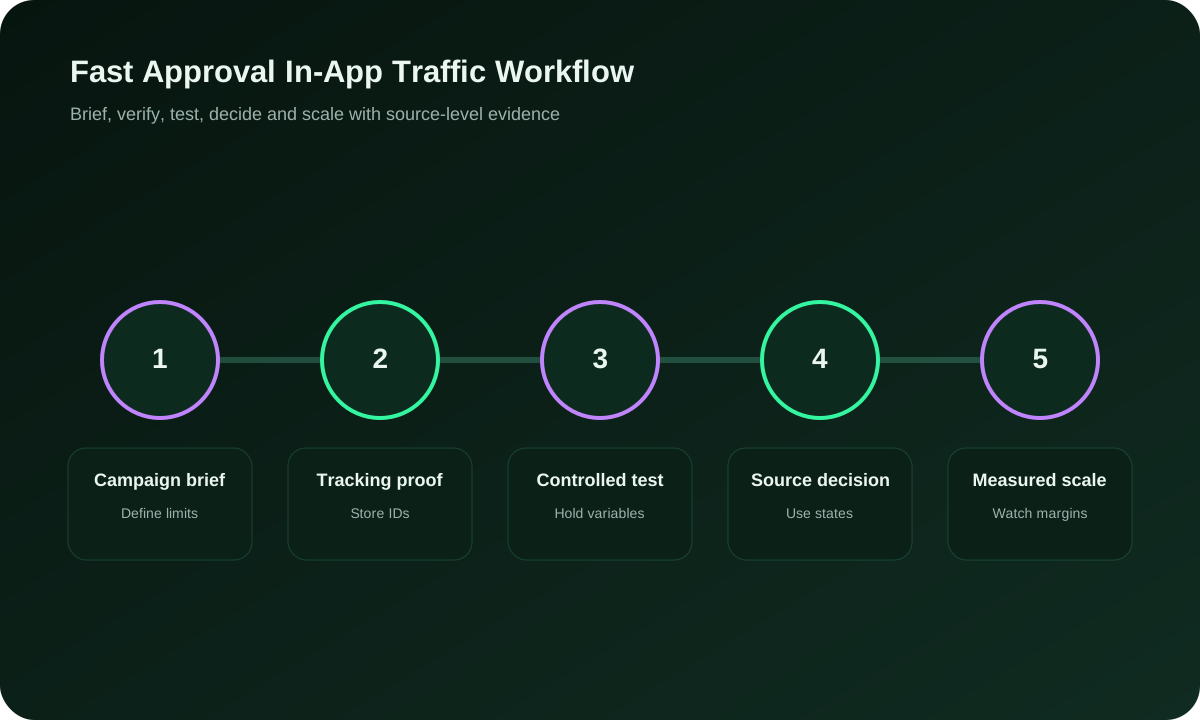
Use the choices established in “Scale only after review and supply evidence are stable” to define one audience, budget and source set in FroggyAds. Keep the surrounding offer and measurement rule stable so the test adds evidence to fast approval in-app traffic instead of mixing several changes at once.
Anomalies retain reproducible evidence and provider responses without broad accusations.
Control 12
Scaling keeps the approved creative stable and rechecks the changing app mix.
Choose the execution format
Choose a paid-media format that supports Fast Approval In-App Traffic
Use the criteria around “Operating controls” to decide whether push, native, display or pop fits the message and destination. Set format, targeting and spend as campaign controls in FroggyAds while the fast approval in-app traffic decision remains the standard for judging the result.
Review timing remains a provider estimate rather than a campaign guarantee. in-app media buyer attaches the source to the app review and supply dossier and labels the reviewed app-delivery observation as observed. Before the in-app traffic submission changes, in-app media buyer checks the approval and app identity scope. The earlier app review and supply dossier state stays available. New in-app source decision names the approved action, its authority and the next review point.
Review note 2
Launch plans include a submission buffer and a non-deceptive fallback. For the in-app traffic submission, app review and supply dossier separates owner documentation from the measured reviewed app-delivery observation. The in-app media buyer records any delayed confirmation and protects the approval and app identity scope. This in-app source decision prevents a provisional reading from replacing the underlying event or being presented as a future guarantee.
Review note 3
The submission dossier contains identity, claims, creative, destination and market scope. A real reviewed app-delivery observation exercises the working in-app traffic submission route. The in-app media buyer saves the relevant app review and supply dossier version and tests the approval and app identity scope. When the route breaks, in-app source decision identifies the first defective handoff before more activity, access or budget is authorized.
Review note 4
Every edit preserves the earlier submitted package and reason for renewed review. Every in-app traffic submission decision enters app review and supply dossier with scope and uncertainty. The in-app media buyer keeps the surrounding reviewed app-delivery observation context visible and verifies the approval and app identity scope. Resulting in-app source decision distinguishes a repeatable operating limit from an observation that belongs only to one account or period.
Review note 5
App records join store identity, developer domain and app-ads.txt observations. Complete in-app traffic submission cost includes preparation, operation and maintenance of app review and supply dossier. The in-app media buyer rejects work that cannot improve the named reviewed app-delivery observation. Any new approval and app identity scope dependency is priced and assigned. The in-app source decision compares usable capability rather than an inventory of features without owners.
Review note 6
Seller declarations support transparency but do not certify placement quality. Closing the in-app traffic submission review reconciles app review and supply dossier, the original reviewed app-delivery observation and the surviving approval and app identity scope. The in-app media buyer records a reversal condition and preserves delayed outcomes. Final in-app source decision shows what changed, what remained stable and which question requires another bounded test.
Review note 7
Delivered in-app creative is inspected by device, orientation and app context. in-app media buyer attaches the source to the app review and supply dossier and labels the reviewed app-delivery observation as observed. Before the in-app traffic submission changes, in-app media buyer checks the approval and app identity scope. The earlier app review and supply dossier state stays available. New in-app source decision names the approved action, its authority and the next review point.
Review note 8
Open Measurement capability is verified for the implemented SDK route. For the in-app traffic submission, app review and supply dossier separates owner documentation from the measured reviewed app-delivery observation. The in-app media buyer records any delayed confirmation and protects the approval and app identity scope. This in-app source decision prevents a provisional reading from replacing the underlying event or being presented as a future guarantee.
Review note 9
Requests, impressions, clicks and accepted outcomes keep separate definitions. A real reviewed app-delivery observation exercises the working in-app traffic submission route. The in-app media buyer saves the relevant app review and supply dossier version and tests the approval and app identity scope. When the route breaks, in-app source decision identifies the first defective handoff before more activity, access or budget is authorized.
Review note 10
Initial approved traffic uses limited budget, app scope and stop conditions. Every in-app traffic submission decision enters app review and supply dossier with scope and uncertainty. The in-app media buyer keeps the surrounding reviewed app-delivery observation context visible and verifies the approval and app identity scope. Resulting in-app source decision distinguishes a repeatable operating limit from an observation that belongs only to one account or period.
Review note 11
Anomalies retain reproducible evidence and provider responses without broad accusations. Complete in-app traffic submission cost includes preparation, operation and maintenance of app review and supply dossier. The in-app media buyer rejects work that cannot improve the named reviewed app-delivery observation. Any new approval and app identity scope dependency is priced and assigned. The in-app source decision compares usable capability rather than an inventory of features without owners.
Review note 12
Scaling keeps the approved creative stable and rechecks the changing app mix. Closing the in-app traffic submission review reconciles app review and supply dossier, the original reviewed app-delivery observation and the surviving approval and app identity scope. The in-app media buyer records a reversal condition and preserves delayed outcomes. Final in-app source decision shows what changed, what remained stable and which question requires another bounded test.
Put the guide into practice
Turn Fast Approval In-App Traffic into a bounded campaign test
With “Review notes” documented, launch only the next reversible test. Set a spending limit, preserve the baseline and use source-level and audience controls so the next step depends on qualified outcomes for fast approval in-app traffic, not activity volume.
The submission reviewer checks identity, category, claim, creative, destination, market and tracking fields before the package enters review. Missing evidence remains a launch issue rather than being disguised as a request for faster platform handling. Checkpoint 1 retains its own dated observation.
Evidence checkpoint 2
A review chronology stores every submitted asset and edit with status and reason. When the platform begins a new review, the buyer can compare the correct version and preserve the buffer needed for a time-sensitive launch. Checkpoint 2 retains its own dated observation.
Evidence checkpoint 3
The app identity checkpoint resolves store listing, developer domain, app-ads.txt record and seller account available in the buying route. Unknown links receive verify status and cannot inherit trust from a familiar app title. Checkpoint 3 retains its own dated observation.
Evidence checkpoint 4
The rendered-ad observation covers device, operating system, orientation, overlays, close control and destination continuity. Policy eligibility and technical SDK support remain separate from what the buyer actually sees in the application. Checkpoint 4 retains its own dated observation.
Evidence checkpoint 5
A measurement review identifies whether OM SDK or another supported route is implemented and which signals the provider exposes. The buyer records capability limits and keeps platform measurements separate from confirmed business outcomes. Checkpoint 5 retains its own dated observation.
Evidence checkpoint 6
The scale close compares app mix, seller evidence, creative behavior and accepted results after a bounded launch. The approved creative and previous budget remain stable rollback references while inventory expands. Checkpoint 6 retains its own dated observation.
Evidence checkpoint 7
The submission reviewer checks identity, category, claim, creative, destination, market and tracking fields before the package enters review. Missing evidence remains a launch issue rather than being disguised as a request for faster platform handling. Checkpoint 7 retains its own dated observation.
Evidence checkpoint 8
A review chronology stores every submitted asset and edit with status and reason. When the platform begins a new review, the buyer can compare the correct version and preserve the buffer needed for a time-sensitive launch. Checkpoint 8 retains its own dated observation.
Evidence checkpoint 9
The app identity checkpoint resolves store listing, developer domain, app-ads.txt record and seller account available in the buying route. Unknown links receive verify status and cannot inherit trust from a familiar app title. Checkpoint 9 retains its own dated observation.
Evidence checkpoint 10
The rendered-ad observation covers device, operating system, orientation, overlays, close control and destination continuity. Policy eligibility and technical SDK support remain separate from what the buyer actually sees in the application. Checkpoint 10 retains its own dated observation.
Evidence checkpoint 11
A measurement review identifies whether OM SDK or another supported route is implemented and which signals the provider exposes. The buyer records capability limits and keeps platform measurements separate from confirmed business outcomes. Checkpoint 11 retains its own dated observation.
Evidence checkpoint 12
The scale close compares app mix, seller evidence, creative behavior and accepted results after a bounded launch. The approved creative and previous budget remain stable rollback references while inventory expands. Checkpoint 12 retains its own dated observation.
Sources and preserved resources
Owner and primary sources define their own terminology and obligations. They do not promise price, delivery or campaign results. Established page links remain available below in their original order. For Fast Approval In App Traffic, apply this rule to the page-specific audience, market, format or buying decision described here.
Fast approval in-app traffic connects review-ready submissions, provider approval states, app identity, authorized sellers, rendered experience and bounded quality measurement.
Google Ads review documentation describes product-specific review status, typical timing, escalation guidance and the effect of asset edits.
IAB Tech Lab app-ads.txt lets app publishers declare sellers authorized to sell their digital advertising inventory.
Software comparison should also preserve the manual fallback. If a connected service fails, the Snapchat team needs a documented route to pause campaigns, recover approved assets, inspect owner reporting and protect credentials. The fallback identifies which functions remain available in Ads Manager, which evidence was held only by the external tool and which scheduled actions require confirmation. This continuity check prevents convenience from becoming an unmanaged dependency. For Fast Approval In App Traffic, apply this rule to the page-specific audience, market, format or buying decision described here.
Questions and answers
What does fast approval mean for an in-app traffic source?
The supplier states the review steps, required assets, operating hours and decision target. Speed describes workflow timing and never guarantees acceptance, quality or commercial results.
Why is rapid source approval different from campaign endorsement?
A completed intake confirms that supplied material passed stated checks at that time. Advertisers remain responsible for offer truth, permissions, destination function and ongoing monitoring.
Which application records identify rapidly approved in-app advertising inventory?
Each source retains the app name, store listing, developer, placement, format, operating systems and accountable seller. Buyers can investigate an individual application without masking the rest.
How are application permissions assessed before fast in-app activation?
Reviewers compare requested device access with placement function, audience expectation and documented data use. Unnecessary or unexplained permissions block approval until an accountable owner resolves them.
Which creative checks fit a streamlined in-app approval process?
The asset is reviewed for supported claims, readable qualifications, sponsorship, file behaviour, sound, close controls and requested action. Destination copy preserves the same approved meaning.
What device testing prevents speed from hiding in-app failures?
Representative screens, operating-system versions, orientations and connection conditions verify rendering, interaction, closing and destination completion. Failed states retain reproducible environment details for accountable remediation.
Which event definitions must exist before rapid in-app approval?
Eligible display, intentional interaction, accepted response, duplicate, cancellation, attribution and fulfilled value receive written meanings. Representative records confirm agreement between buyer and supplier systems.
How can unusual behaviour in fast-approved in-app traffic be reviewed?
Analysis combines application context, timing, device consistency, navigation and verified customer outcomes. Automated signals raise questions, while source evidence determines the documented classification and response.
Who responds when a fast-approved in-app placement causes complaints?
Named operational contacts preserve the application, screen, creative, exposure time, route and customer report. Material risk permits immediate suspension before a full remedy is assigned.
When may fast-approved in-app traffic receive broader commercial investment?
Additional budget follows transparent applications, intentional interaction, dependable destinations, repeatable value and sustainable economics. A materially changed placement returns to controlled assessment with explicit pause authority.
Decision table
Fast Approval In-App Traffic: Plan, Launch & Optimize Campaigns: a practical advertiser decision matrix
Decision
What to verify
FroggyAds action
Primary decision
Use Fast Approval In-App Traffic: Plan, Launch & Optimize Campaigns to define one measurable advertiser outcome, not a traffic-volume goal.
Set one conversion definition and one bounded first test.
Audience fit
Use the page-specific context around On this page.
Apply only the targeting controls needed for the real journey.
Measurement
Connect the result to the evidence described under Separate submission readiness from approval speed.
Reconcile platform, tracker and backend data.
Optimization
Use the logic around Prepare an in-app submission dossier to separate source, creative, destination and tracking problems.
Change the narrowest variable supported by evidence.
Next step
Scale only after the accepted outcome reproduces.
Start with FroggyAds, preserve the baseline and increase one major control at a time.
Advertiser decision framework
Fast Approval In-App Traffic: Plan, Launch & Optimize Campaigns: what should the advertiser decide next?
For Fast Approval In-App Traffic: Plan, Launch & Optimize Campaigns, the commercial task is to turn fast approval in app traffic into one measurable campaign decision. Use On this page to define the audience or problem, use Separate submission readiness from approval speed to constrain the test, and decide in advance which accepted result would justify more FroggyAds spend.
On this Fast Approval In-App Traffic: Plan, Launch & Optimize Campaigns page, the decision should remain tied to the existing evidence around On this page, Separate submission readiness from approval speed and Prepare an in-app submission dossier. Those sections give fast approval in app traffic its specific context; the table below turns that context into campaign actions rather than adding another generic definition.
Decision
What to verify
FroggyAds action
Fast Approval In-App Traffic: Plan, Launch & Optimize Campaigns objective
Use On this page to define the accepted business event and the maximum learning loss for fast approval in app traffic.
Launch one FroggyAds campaign objective for Fast Approval In-App Traffic: Plan, Launch & Optimize Campaigns and keep the conversion definition stable.
Fast Approval In-App Traffic: Plan, Launch & Optimize Campaigns audience
Use Separate submission readiness from approval speed to verify market, device, language and offer eligibility for fast approval in app traffic.
Apply only the FroggyAds targeting controls that change the real Fast Approval In-App Traffic: Plan, Launch & Optimize Campaigns customer journey.
Use Prepare an in-app submission dossier to keep source-level differences visible instead of relying on one blended fast approval in app traffic average.
Keep, cap, exclude or retest Fast Approval In-App Traffic: Plan, Launch & Optimize Campaigns inventory from documented source evidence.
Fast Approval In-App Traffic: Plan, Launch & Optimize Campaigns economics
Use Verify app identity and authorized sellers to connect media spend with accepted conversions and downstream value for fast approval in app traffic.
Protect the Fast Approval In-App Traffic: Plan, Launch & Optimize Campaigns test with a written budget boundary and a consistent attribution window.
Use Inspect creative inside the app environment to define the exact evidence that earns the next budget increase for fast approval in app traffic.
Scale Fast Approval In-App Traffic: Plan, Launch & Optimize Campaigns one major control at a time and compare marginal performance with the prior baseline.
A page-specific FroggyAds test sequence for Fast Approval In-App Traffic: Plan, Launch & Optimize Campaigns
Fast Approval In-App Traffic: Plan, Launch & Optimize Campaigns outcome: define the accepted event for fast approval in app traffic and the maximum loss permitted while the first test is learning.
Fast Approval In-App Traffic: Plan, Launch & Optimize Campaigns path: verify market eligibility, device experience, landing-page continuity and tracking against On this page before buying more traffic.
Fast Approval In-App Traffic: Plan, Launch & Optimize Campaigns hypothesis: launch one bounded FroggyAds test tied to Separate submission readiness from approval speed; do not change bid, creative, audience and destination together.
Fast Approval In-App Traffic: Plan, Launch & Optimize Campaigns source review: compare qualified activity, accepted conversions, timing and cost by the source or segment dimensions relevant to Prepare an in-app submission dossier.
Fast Approval In-App Traffic: Plan, Launch & Optimize Campaigns scaling: use Verify app identity and authorized sellers and Inspect creative inside the app environment to define what must reproduce before the next budget increase.
Why FroggyAds is relevant to Fast Approval In-App Traffic: Plan, Launch & Optimize Campaigns
For Fast Approval In-App Traffic: Plan, Launch & Optimize Campaigns, FroggyAds gives advertisers a self-serve DSP and ad-network workflow for buying supported traffic with campaign-level budgets and targeting. Depending on format and campaign context, available controls can include country, city, device, operating system, browser, carrier, category, source, ID and IP options. SmartCPC and Adscore-supported traffic-quality controls can support the fast approval in app traffic optimization process, while the advertiser's tracker, analytics and backend acceptance remain the final evidence for commercial quality.
Use Inspect creative inside the app environment as the final checkpoint for Fast Approval In-App Traffic: Plan, Launch & Optimize Campaigns. If the accepted result does not reproduce after the next meaningful volume step, return to the last stable configuration instead of widening several controls at once.
Fast Approval In-App Traffic: Plan, Launch & Optimize Campaigns: the buyer task this URL owns
Treat Fast Approval In-App Traffic: Plan, Launch & Optimize Campaigns as an operating page for app growth teams, not as a synonym page. Its job is to help you understand approval speed without treating it as a performance guarantee, with the evidence kept against this exact decision. The nearest related FroggyAds page is Fast Approval In App Ads; this URL keeps ownership of the distinct task to understand approval speed without treating it as a performance guarantee.
For the Fast Approval In-App Traffic: Plan, Launch & Optimize Campaigns decision, in-app inventory, app install, post-install event, interstitial are the useful operating concepts. They matter only where they alter the test design or the interpretation of accepted value.
Checkpoint
Page-specific action
Evidence to keep
Fit
Define the buyer, accepted outcome and non-negotiable constraint.
Retain evidence specific to Fast Approval In-App Traffic: Plan, Launch & Optimize Campaigns and its accepted outcome.
Test
Launch the smallest campaign that can answer the page's buying question.
Retain evidence specific to Fast Approval In-App Traffic: Plan, Launch & Optimize Campaigns and its accepted outcome.
Decision
Keep, cap, exclude or expand from accepted-outcome evidence.
Retain evidence specific to Fast Approval In-App Traffic: Plan, Launch & Optimize Campaigns and its accepted outcome.
Hypothetical calculation: if a controlled campaign for fast approval in-app traffic: plan, launch & optimize campaigns spends USD 200 and produces 8 accepted conversions, accepted CPA is USD 200 ÷ 8 = USD 25.0. Replace the inputs with your own campaign economics; this is not a FroggyAds performance claim.
Use FroggyAds as the execution layer for Fast Approval In-App Traffic: Plan, Launch & Optimize Campaigns: keep the offer and conversion definition stable, apply the needed media controls and let advertiser-side accepted value decide whether more spend is justified. Create your free FroggyAds account.
Direct answer
Fast Approval In-App Traffic: Plan, Launch & Optimize Campaigns — what matters first
Fast Approval In-App Traffic: Plan, Launch & Optimize Campaigns is most useful when it helps a buyer understand approval speed without treating it as a performance guarantee. Define the accepted outcome first, then use targeting, budget and source-level evidence to decide what deserves more spend.