
Dayparting in Media Buying: A Controlled Scheduling Guide
Use dayparting in media buying with normalized time zones, mature conversion data, source-level schedules, bid controls, experiments and rollback rules.
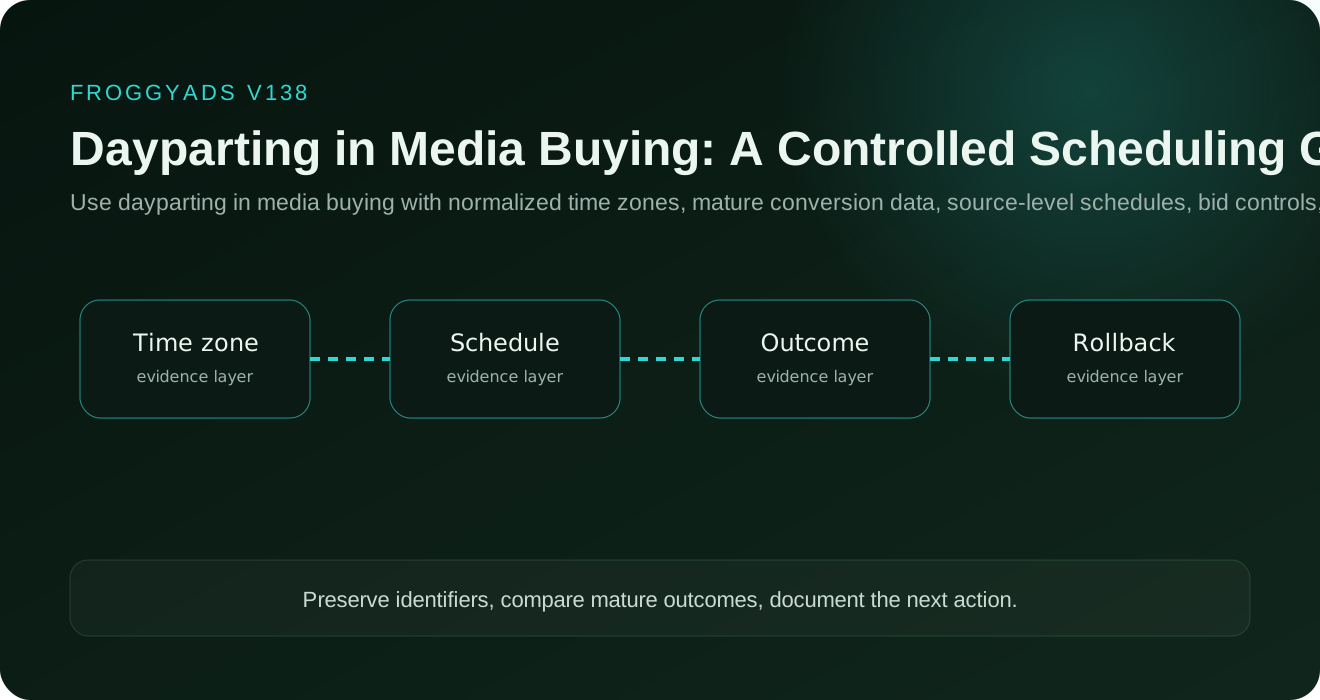
What does this page explain about Dayparting in Media Buying: Self-Serve Campaigns & Global Traffic?
Quick answer: Dayparting limits delivery or changes bids during selected hours, but the clock alone does not prove which hours create value. Start by choosing the business time zone, the accepted conversion, the maturity window and the source dimensions you will compare. We recommend broad schedule blocks, one controlled change and a written rollback rule. In FroggyAds, keep the campaign objective, audience settings, creative and destination stable while you test the schedule. Increase spend only after accepted outcomes repeat without a harmful shift in traffic sources, devices or markets.
| Section | Distinct excerpt from this page |
|---|---|
| What dayparting changes | The declared role is to control when campaigns run or how bids change by hour and day while keeping measurement comparable. |
| Time-zone normalization record | For dayparting in media buying, the team should record account, traffic-source, tracker, analytics, advertiser and customer time zones before comparing hours. |
| Use enough mature evidence | For dayparting in media buying, the team should wait for delayed leads, approvals, purchases and revenue to settle before labeling an hour profitable or unprofitable. |
Reference for Dayparting in Media Buying: Self-Serve Campaigns & Global Traffic: Google Ads location targeting.
Direct answer: dayparting in media buying
Dayparting assigns a delivery rule or bid rule to a defined local-time window. Its purpose is to test whether customer context, service availability or auction conditions change the value of otherwise comparable traffic. The buyer must specify the reference clock, the event used to place a click into a block and the accepted outcome used to judge that block.
A useful dataset keeps the original impression or click timestamp, UTC offset, campaign, creative, source, placement, device, GEO and returned conversion ID. Attach the eventual approval, revenue or rejection state after the agreed maturity window. This design preserves the difference between when traffic arrived and when the business recorded the result.
The decision is larger than “turn nights off.” You may keep a window open, lower its bid, cap its spend, investigate one source or pause it. Choose the smallest action supported by mature segmented evidence. A period with lower volume can still be valuable, and a period with many clicks can still be uneconomic after quality checks.
The central risk is false causality. Budget exhaustion, publisher rotation, market holidays, creative changes and delayed conversions can all look like an hourly effect. Save the baseline, test one schedule hypothesis and restore the previous configuration when the written cost, quality or volume boundary is crossed.
Documentation to use when auditing a schedule
Keep the platform documentation beside the experiment record so another analyst can distinguish schedule settings from location, device, reporting and measurement choices.
- Google Ads ad schedules for a reference view of schedule controls.
- Google Ads location targeting and device targeting for separating audience context from the clock.
- Google Ads reporting segments for checking which dimensions changed inside a time block.
- Google Ads conversion tracking definition for keeping the judged event explicit.
- IAB Tech Lab Open Measurement SDK for the measurement context used when evaluating eligible media.
Connect the guide to live testing
Connect Dayparting in Media Buying to a controlled audience test
Translate the schedule hypothesis into one FroggyAds campaign comparison. Choose a single audience, preserve the same source policy and conversion event, and label the account time zone beside the customer-local time. This keeps the first spend focused on the hour rule instead of mixing schedule, offer and targeting changes.
Create My Free Account
What dayparting changes
Dayparting is a campaign intervention, so define the intervention before reading the report. A schedule can stop delivery, lower or raise a bid, change a budget envelope or switch a creative set. Those choices answer different questions. A pause asks whether a window should receive any traffic; a bid adjustment asks how much an eligible impression is worth at that time.
Write one falsifiable statement, such as: weekday evening clicks in the audience's local time produce a higher seven-day accepted lead rate than afternoon clicks from the same source mix. Name the owner, campaign scope, applicable dates, time zone and outcome-maturity rule. Keep the conversion event, attribution policy and source identifiers unchanged. Save the original FroggyAds campaign configuration outside the reporting view so a later analyst can distinguish planned settings from accidental edits.
Decide the action vocabulary before launch. “Keep” means the window remains unchanged; “lower” means a bounded bid or cap reduction; “investigate” means the source or tracking record is insufficient; “pause” means the defined safety or economics threshold was crossed. This vocabulary stops teams from turning every noisy chart into a new blacklist. It also makes the result reusable: another buyer can review the timestamp, source, accepted result and exact action without guessing what “good hour” meant.
Normalize the time zone first
Build a time-zone register before grouping an impression, click or conversion by hour. Record the FroggyAds account time, tracker time, advertiser backend time and the local time that matches the customer's real situation. Convert each event from its original timestamp rather than relabeling a report column. Include the UTC offset and the daylight-saving rule used on the event date, because a market can contain a repeated hour in autumn or a missing hour in spring. For multi-country buying, create separate views by market instead of forcing every audience into one headquarters clock. The finished register should let another analyst reproduce the same hour bucket from the raw timestamp and source ID. If it cannot, the schedule is not ready for a budget decision.
Use enough mature evidence
Judge a time block only after the relevant outcomes have had time to arrive. A click at 22:00 may create a sale the next morning, and a lead may be approved several days after submission. Group performance by the exposure or click time used in your attribution policy, then attach the later accepted status to that cohort. Show both raw volume and cohort age. Young cohorts belong in a pending column, not in the losing-hours list. Set a minimum evidence rule that suits the offer, such as multiple comparable weekdays plus enough accepted events for a practical decision. This is operational guidance rather than a promise of statistical certainty. The aim is to avoid deleting a window because its conversions were still in review when the report was opened.
Choose the execution format
Choose a paid-media format that supports Dayparting in Media Buying
Select push, native, display or pop according to the message and destination, then keep that format fixed while you compare time blocks. Record creative ID and device mix inside every block so a format shift cannot masquerade as a scheduling result.
Create My Free Account
Separate source mix from time
An apparent hourly effect can be a supply-mix effect. If one publisher supplies most morning traffic and another supplies most evening traffic, the clock is describing inventory composition rather than user intent. Create a matrix with local time blocks on one axis and source, placement, device or GEO on the other. Compare a source with itself across time before comparing blended totals. Keep rows with low volume visible as insufficient evidence rather than merging them into a favorable average. FroggyAds source-level reporting and campaign controls can help you preserve these distinctions while your tracker and backend confirm the accepted result. When a weak period is concentrated in one source, test a source action first; when the pattern appears across several stable sources, a schedule test becomes more credible.
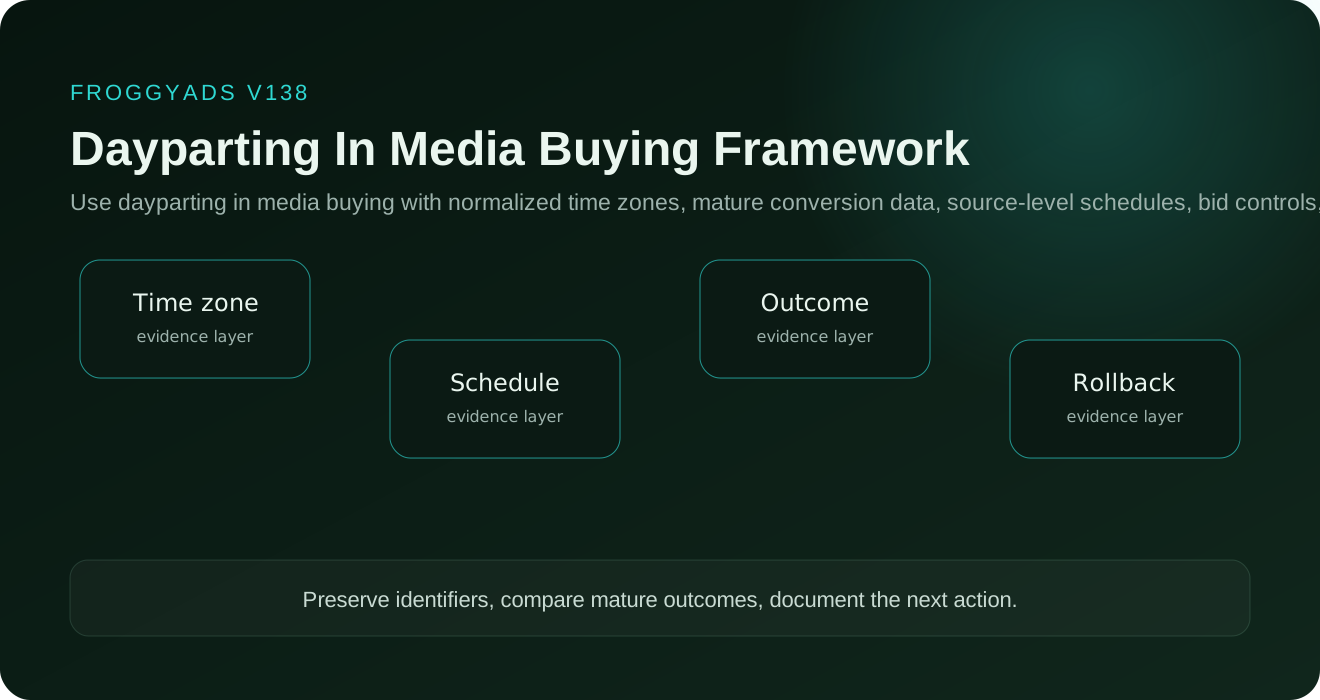
Choose useful schedule granularity
Start with blocks that match a real customer or operating pattern: commute, working hours, evening, overnight or weekday versus weekend. Four six-hour blocks usually teach more than ninety-six fifteen-minute cells when volume is modest. Merge adjacent hours if they have the same operational meaning and similar source composition. Split a block only after its result repeats and the smaller segments can carry enough traffic to be judged. Preserve the unscheduled baseline so the team can see what demand disappears when hours are removed. A narrow chart can look precise while being commercially fragile. Your schedule should be simple enough to explain, reproduce and audit, with every exclusion connected to a specific hypothesis rather than a desire to make the report look cleaner.
Compare pause rules and bid rules
Choose between a hard pause and a bid change according to the risk of missing useful demand. A hard pause can suit a period when the offer cannot serve customers, the landing experience is unavailable or repeated mature evidence shows unacceptable outcomes. A lower bid is often a better learning tool when value is weaker but still positive, because it preserves reach and reveals whether cheaper clearing prices improve the economics. Define the maximum accepted CPA or minimum downstream value that separates the two actions. Do not treat a low click-through rate as sufficient evidence by itself. We recommend testing the smaller reversible change first, documenting the previous bid and keeping a return path. This turns dayparting into controlled buying rather than an irreversible blacklist of hours.
Coordinate budgets and pacing
A schedule compresses the time available to spend a daily budget. If a campaign can run for only six hours, the same cap may create faster bidding, early exhaustion and a different source mix. Estimate the spend capacity of each open block before copying an always-on budget into a scheduled campaign. Watch the account reset time, the local schedule boundary and any tracker reporting cutoff. Review spend by elapsed open-hour, not only by calendar day. If the first hour consumes a disproportionate share, reduce the cap, adjust bids or widen the window before judging traffic quality. FroggyAds lets you control campaign budgets and supported targeting dimensions; use those controls with your schedule plan so the test does not accidentally compare gentle pacing with a short spending burst.
Put the guide into practice
Turn Dayparting in Media Buying into a bounded campaign test
Launch the narrowest reversible schedule that can answer the commercial question. Set a spend ceiling, cohort-maturity date and source-concentration alert before delivery starts. If one of those boundaries breaks, restore the saved schedule and inspect the cause before buying another block.
Create My Free Account
Handle global campaigns carefully
No single clock describes a worldwide audience. Noon in London, New York and Singapore represents different customer contexts, auction conditions and service availability. For a global plan, map each country to the local behavior behind the hypothesis, then create market-specific schedules or separate campaigns where the offsets differ materially. Record public holidays, local weekends and daylight-saving transitions as annotations rather than unexplained outliers. Language and device use can also change through the day, so check them alongside GEO. Keep a shared conversion definition across markets, but let the schedule reflect local reality. This structure gives you a cleaner answer and makes it possible to expand one proven market without imposing its hours on every other country.
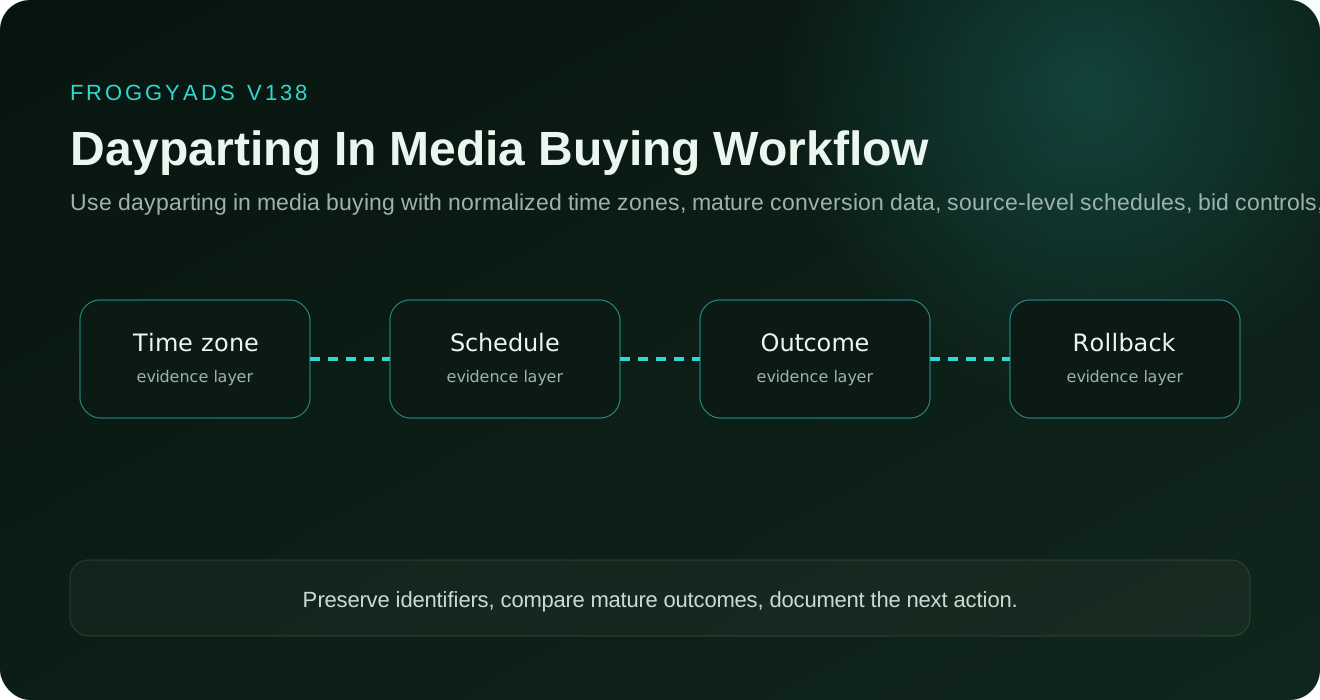
Test dayparting incrementally
Design the first test so the schedule is the main difference. Use comparable campaigns, source groups or alternating periods, and keep audience eligibility, creative, landing page, bid logic and attribution fixed. A practical comparison can pair similar weekdays across several weeks or maintain an always-on control with a scheduled treatment when volume permits. Document the allocation rule before launch to prevent favorable hours from receiving the best sources by accident. Compare accepted conversions, effective acquisition cost and downstream value after both groups mature. Also report what the schedule lost: reach, qualified volume and opportunities outside the selected window. If the treatment wins only because the control changed elsewhere, repeat the test instead of scaling the conclusion.
Monitor creative and landing-page effects
Time can change the context in which a message is read. A detailed offer may work during research hours, while a concise reminder may perform differently on mobile in the evening. Support availability, checkout maintenance and form response time can also turn the same click into a different customer experience. Segment creative and destination behavior within each time block before assigning the effect to the schedule. Keep message-to-page continuity stable, and note any outage, slow page, rejected form or delayed sales response. When one creative creates the pattern, rotate or rewrite that asset before closing the entire window. FroggyAds can support controlled creative and audience tests; your analytics and backend should decide whether those interactions become accepted business outcomes.
Set rollback and review rules
Write the rollback sheet before the schedule launches. Include the prior configuration, owner, start time, review date, minimum mature volume and the limits for spend, accepted CPA, rejection rate and source concentration. Define which limit triggers an immediate reversal and which one triggers investigation. A single weak hour rarely justifies a permanent change, so require a pattern across comparable periods unless the issue concerns compliance or customer availability. During review, separate data delay from real deterioration and record every manual edit. If the boundary is crossed, restore the saved configuration first; diagnose afterward with the campaign protected. This discipline lets your team move quickly without turning every dashboard fluctuation into a new schedule.
Scale a proven schedule
Treat a successful schedule as a tested hypothesis within a defined scope, not as a universal best hour list. Expand one dimension at a time: another source group, a nearby market, a larger budget step or a new creative set. Keep the original configuration as the reference and compare marginal results after the added traffic matures. Watch for auction pressure, source substitution and lost conversions outside the preferred windows. A schedule that worked at low spend can weaken when more buyers compete during the same concentrated period. We recommend gradual increases with a clear stop rule and a regular recheck of excluded hours. Create your free FroggyAds account when you are ready to run the next controlled traffic campaign and preserve source-level evidence from the first spend onward.
Dayparting In Media Buying FAQ
When does a dayparting test have a valid business reason?
Use dayparting to test a specific hypothesis about audience availability, response, service capacity, or value by local time. It should not be a shortcut for cutting hours after a noisy report.
How should you choose the first time blocks to compare?
Start with broad operationally meaningful blocks based on enough historical delivery, then keep audience, source, creative, bids, and outcome rules stable. Avoid slicing sparse hours too finely.
Which time zone should govern a multi-market schedule?
Use the timezone tied to the hypothesis, often the audience or service location, and record daylight-saving handling. Separate markets when one schedule would assign their local hours incorrectly.
How do delayed conversions change hourly analysis?
Attribute using a documented event and window while keeping the original exposure or click time available. Let cohorts mature before labeling late-day traffic weak or shifting the schedule.
Which costs can shift when campaigns run only in selected hours?
Auction prices, pacing, staffing, support coverage, bid automation, minimum delivery, and operational monitoring may change. Compare total accepted outcome economics, not hourly media rate alone.
What setup keeps a schedule experiment readable?
Use a fixed schedule, timezone, source set, creative, bid logic, budget, attribution rule, and comparison period, with a suitable always-on or alternate schedule where practical.
What belongs in a daypart performance report?
Show spend, valid delivery, source mix, audience, useful response, accepted outcomes, value, cohort age, and operational capacity by local block. Include raw volume and uncertainty.
Which factors can create a false hourly pattern?
Sparse data, source or device mix, budget exhaustion, conversion delay, campaign edits, weekday effects, holidays, outages, or service response times can make the clock look causal.
How can buyers prevent narrow windows from distorting pacing?
Use schedule-aware budgets and bids, monitor early exhaustion and auction pressure, retain source controls, set volume minimums, and preserve a broader comparison before excluding more hours.
When is a schedule ready for more budget?
Increase budget after repeated comparable periods show stable accepted value without harmful source shifts, missed demand, or operational strain. Add spend gradually and keep a holdout where feasible.
Turn the framework into a measurable campaign decision
Define one objective, preserve source-level evidence and set the stop or scale rule before increasing spend.
How should an advertiser turn hourly data into a buying decision?
Choose the schedule from a written commercial hypothesis. State whose local time matters, which accepted event pays for the traffic, how long that event takes to mature and what evidence would justify a pause, bid reduction or expansion. Keep the audience, source policy, creative and destination stable during the first comparison so the clock remains the variable under review.
Read the result in sequence. First confirm timestamp integrity and source mix. Next compare mature accepted outcomes inside broad time blocks. Then check whether the apparent gain survives after pacing, device, market and creative differences are controlled. This sequence protects you from cutting useful hours because an early dashboard looked expensive.
| Decision | Evidence to verify | FroggyAds action |
|---|---|---|
| Time reference | Map account, tracker and customer-local timestamps, including daylight-saving changes. | Separate campaigns by market when one account clock cannot represent every audience. |
| Source stability | Compare publishers, placements, devices and GEOs within each open block. | Keep source identifiers visible and adjust the responsible segment before closing a whole period. |
| Commercial result | Use mature accepted conversions, effective acquisition cost and downstream value. | Set a bounded campaign budget and retain the same conversion definition throughout the test. |
| Pacing | Check spend by elapsed open-hour and note early exhaustion or auction concentration. | Reduce the cap, alter the bid or widen the schedule when compressed delivery changes the comparison. |
| Expansion | Require the effect to repeat across comparable periods without harmful source substitution. | Increase one control at a time and keep the previous configuration ready for rollback. |
A practical FroggyAds test sequence
- Define the outcome: name the accepted sale, lead, install or signup and set the maximum learning loss.
- Choose the clock: select the audience or service time zone that expresses the hypothesis.
- Preserve the baseline: save campaign, bid, budget, creative, destination and source settings before editing the schedule.
- Run broad blocks: collect comparable delivery and let every outcome cohort reach the declared maturity window.
- Act on the cause: change a source, bid or time rule only when the segmented evidence supports that action.
- Scale cautiously: add budget or another market after the result repeats and the rollback boundary remains intact.
Why choose FroggyAds for the traffic test?
We give advertisers, affiliate marketers, media buyers and agencies a self-serve workflow for buying supported traffic formats with campaign budgets and targeting controls. Depending on the campaign context, available dimensions can include country, city, device, operating system, browser, carrier, category, source, ID and IP options. SmartCPC and Adscore-supported traffic-quality controls can support optimization, while your tracker, analytics and backend acceptance remain the authority for commercial quality. That combination helps you keep the schedule experiment measurable without pretending that paid traffic guarantees sales or profit.
Which buyer task belongs on this dayparting page?
This URL helps a media buyer decide when paid campaigns should run and how to prove that a time rule improves accepted business value. It covers time-zone normalization, conversion delay, schedule granularity, pacing, source-mix controls, experiments and rollback. Readers who need the broader buying process can use What Is Media Buying; this page stays with the narrower scheduling decision.
Demand-side platform, supply-side platform, real-time bidding and ad exchange are useful context only when they explain why eligible supply or auction pressure changes across a schedule. The clock is never a substitute for source evidence. Keep the campaign timestamp, source identifier, local-time conversion and accepted backend status connected in the same analysis.
| Checkpoint | Page-specific action | Evidence to keep |
|---|---|---|
| Clock | Convert delivery into the time zone tied to the customer or operating hypothesis. | Original timestamp, UTC offset, daylight-saving rule and conversion time. |
| Cohort | Wait until the selected outcome has reached its documented maturity window. | Click cohort, pending count, accepted count, revenue or another approved value. |
| Control | Hold source policy, creative, destination, bid logic and attribution stable. | Baseline configuration, treatment configuration and every manual edit. |
| Decision | Keep, lower, pause or expand a window according to mature segmented economics. | Spend, qualified volume, accepted CPA, source mix and rollback threshold. |
Hypothetical calculation: a scheduled test spends USD 300 and records 9 accepted conversions after the cohort matures. Accepted CPA is USD 300 divided by 9, or USD 33.33. Compare that figure with your own margin and loss boundary; it is an illustration, not a FroggyAds performance claim.
Choose FroggyAds when you want a controlled paid-media test with clear budgets, relevant targeting and source-level evidence. Start with one audience, one outcome and a schedule you can reverse. Create your free FroggyAds account.
Dayparting in Media Buying: A Controlled Scheduling Guide — what matters first
A useful daypart plan tells you which local-time windows deserve the next test, which ones need a lower bid and which ones lack mature evidence. Start with the accepted outcome and conversion delay; then compare sources, devices, markets and pacing inside the same clock definition. This order gives your FroggyAds budget a defensible next action instead of a generic best-hour claim.