
CPM Traffic: Buying, Quality and Conversion Economics
Buy CPM traffic as paid ad exposure, then inspect the inventory and response behind the impression count. FroggyAds gives you self-serve targeting and source controls for turning a traffic-quality review into a focused display test.
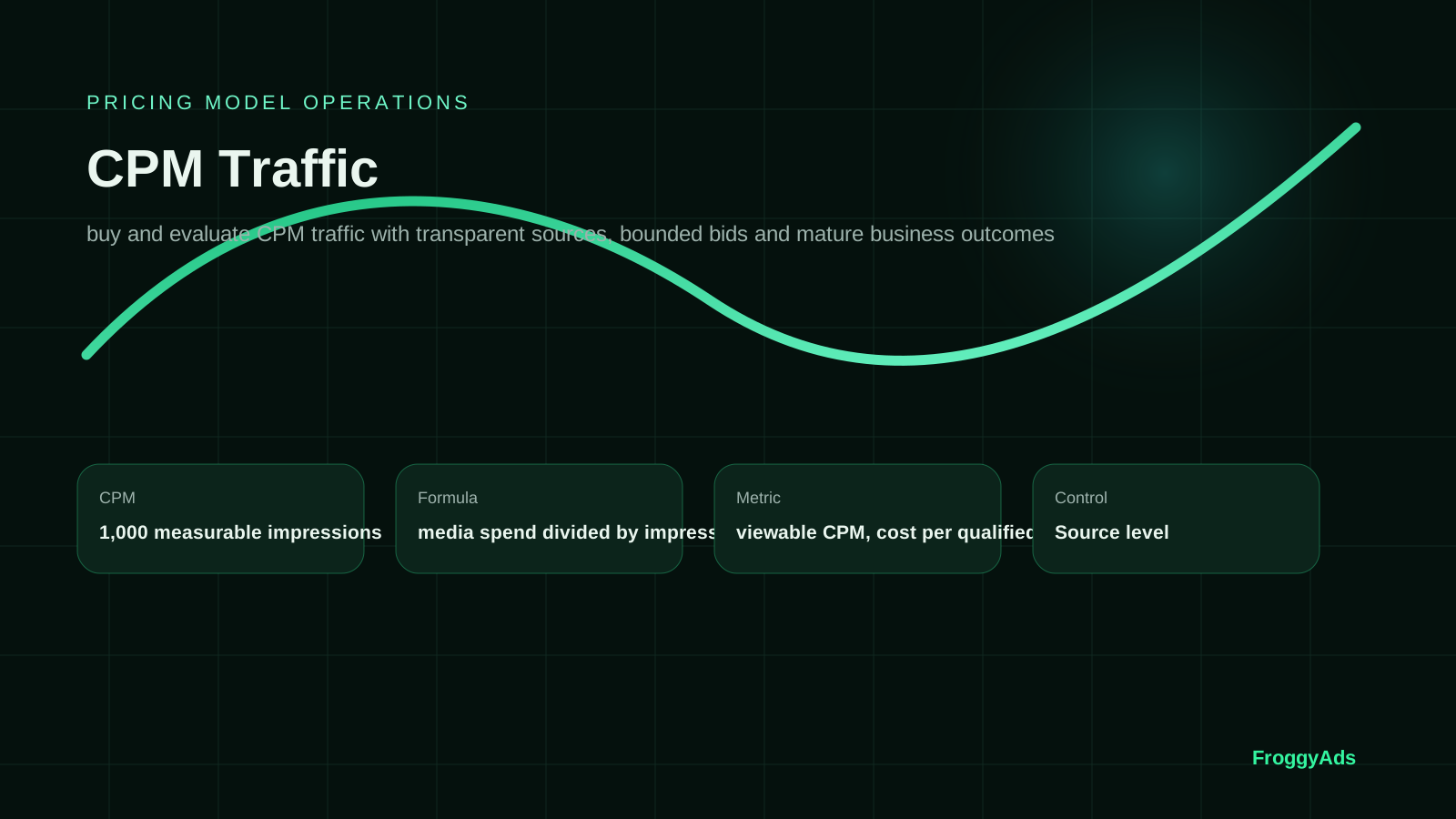
What are you buying when you buy CPM traffic?
Quick answer: CPM traffic means impressions priced per thousand under the campaign's billing rules. It does not mean one thousand website visitors. Inspect the selected inventory, available source identifiers, measurement coverage and the response reaching your destination. Choose FroggyAds when you want to test that exposure with audience and source controls, then refine the buy from your own accepted outcomes. A low CPM is useful when the inventory fits the offer and the resulting response justifies its cost.
| Section | Distinct excerpt from this page |
|---|---|
| Inventory review | Keep inventory identity, measurement coverage, destination response and accepted value as separate review fields. |
| Inspect the impression definition | Identify the billed population before calculating price; measurable and viewable impressions may cover only part of delivery. |
| Review measurement coverage | Where measurement is available, state what proportion was eligible, measurable and viewable. Unknown coverage remains unknown. |
Reference for CPM Traffic: Buying, Quality and Conversion Economics: Google Ads bidding basics Official explanation of CPM and viewable CPM bidding controls..
Verify the inventory behind the traffic label
A buyer searching for CPM traffic needs to know what reaches the audience before asking how cheaply it can be purchased. The price unit describes counted impressions. Inventory identity describes the source and placement. Destination response describes what happened after a click. These are related checks with different evidence.
Our platform is a strong fit for buyers who want to act on that review. Country, device, operating-system, browser and category targeting help align delivery with the offer, while source controls support exclusions and focused retests. Use the identifiers available for your selected inventory rather than assuming every source label identifies a public website.
Create an inventory worksheet with four fields: what is being sold, how its identity is supported, which exposure measurements exist and what accepted response it produces. Add the campaign and source identifiers, report dates and decision. The worksheet makes a pause or retest explainable without condemning an entire network from one unexplained anomaly.
Six checks for an impression-based traffic buy
Use each check for its own purpose; passing one does not establish the others.
Billing population
Confirm the selected format and impression definition. Calculate actual CPM from spend and billed impressions. Do not substitute measurable or viewable impressions unless that is the population actually priced.
Economic response
Choose the accepted event in your business system. Source-level media cost per accepted order helps compare response; it does not alone establish fraud, viewability or additional sales.
Inventory identity
Record available source or placement identifiers and what they mean. A source ID supports campaign controls, but a publisher identity needs separate evidence. Preserve unknown identity as unknown.
Event connection
Test the click path, destination and conversion record. Preserve supported source and creative labels so response can be reviewed at the inventory level that informed the buy.
Offer fit
Check whether the audience can use the product on the purchased device and in the selected country. Irrelevant legitimate impressions can be commercially weak without being invalid traffic.
Review action
Use distinct actions for technical faults, unresolved identity, suspicious patterns and weak accepted economics. Our source controls make a targeted pause or retest possible without changing every campaign variable.
Connect the guide to live testing
Put your inventory worksheet to work
Define a display test in FroggyAds with the audience, source scope and spending boundary your review supports. Keep the destination and creative stable while you learn whether that inventory produces suitable response.
Create My Free Account
Compare source cost with accepted response
Hypothetical source comparison: source A costs USD 120 for 100,000 billed impressions and produces six accepted orders. Its CPM is USD 1.20 and media cost per accepted order is USD 20. These fictional numbers describe a calculation, not an actual FroggyAds source.
In the same fictional comparison, source B costs USD 80 for 100,000 billed impressions and produces two accepted orders. Its CPM is USD 0.80, while accepted order cost is USD 40. The cheaper impression source is twice as expensive per accepted order under these assumptions.
Together the fictional sources cost USD 200 for 200,000 impressions and eight accepted orders: blended CPM is USD 1.00 and accepted order cost is USD 25. The average conceals the difference between A and B. Keep both denominators and the acceptance window visible when deciding which source deserves a retest.
| Paid unit | 1,000 billed impressions for the selected inventory |
|---|---|
| Base formula | media spend divided by impressions, multiplied by 1,000 |
| Primary business metric | Media cost per accepted order by source |
| Required reporting split | Available source ID, creative, country, device and report dates |
| Maturity evidence | Settled accepted orders, with duplicate and cancellation rules |
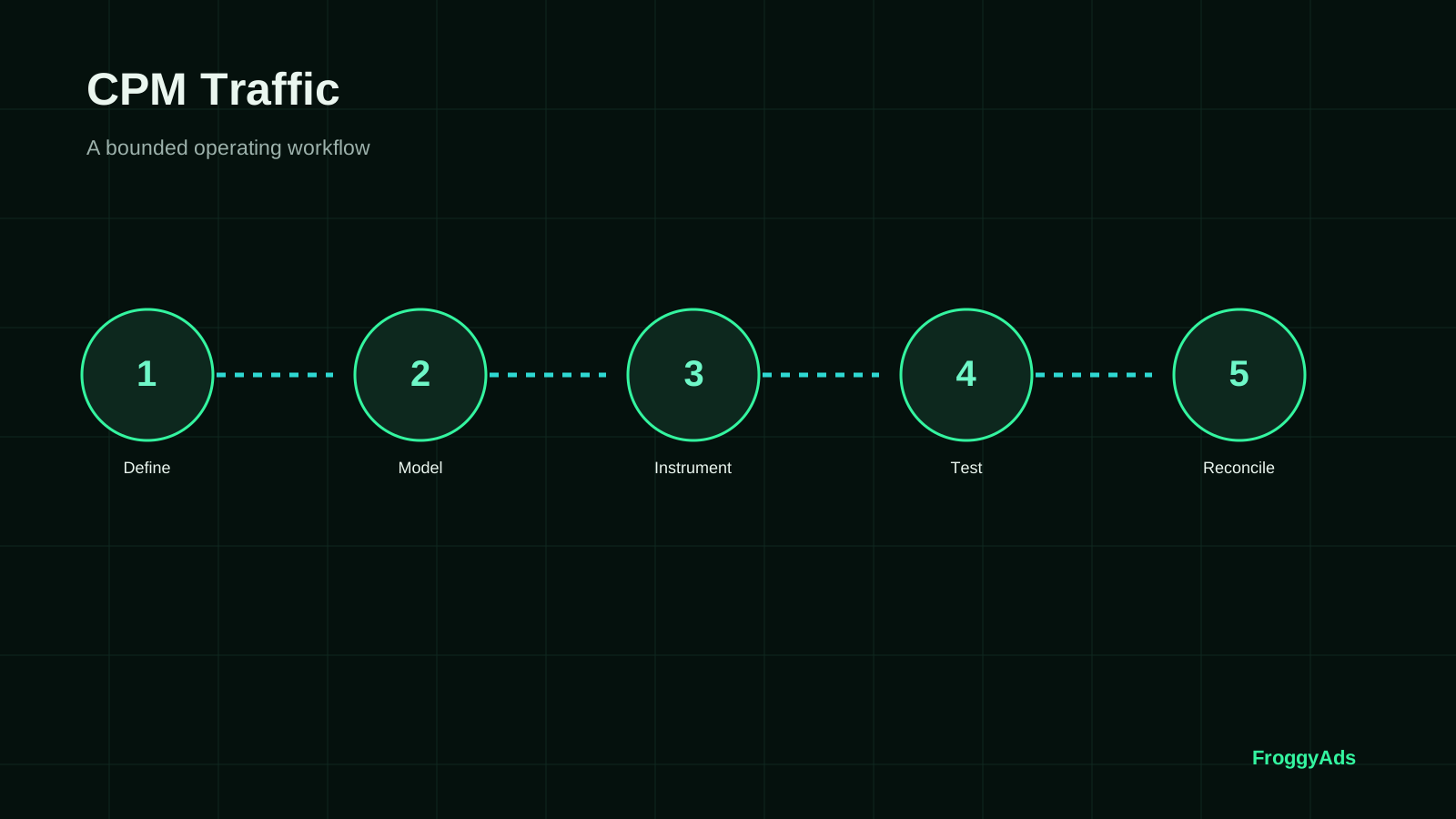
A seven-step CPM inventory review
Keep inventory verification and economic evaluation separate as you progress through the review.
Identify the purchased format
Start with the actual campaign format and charging unit. Display impressions and click-priced traffic should not be described as the same purchase. Confirm the current settings before comparing reported prices.
Understand source labels
Ask what the available identifiers represent: a supply partner, publisher, placement or another grouping. Preserve the definition beside your report so source exclusions are applied to the intended inventory.
Verify the response path
Test the targeted device, redirects and accepted event. Keep source labels where your tracking supports them. A broken page is a destination fault to repair, not evidence that all supplied impressions are invalid.
Bound the source test
Use a limited country-device scope, stable creative and capped allowance. Our targeting controls let you keep the offer relevant while the source test gathers interpretable response.
Check measurement coverage
Where exposure measurement exists, retain eligible, measurable and viewable counts with their definitions. Missing measurement is an evidence limit. Avoid assuming an unmeasured impression was either visible or invisible.
Assign a reason
Record whether the source needs a technical repair, identity review, quality investigation or economic stop. Keep the observed evidence and date with the action so the retest has a specific question.
Retest or expand deliberately
Keep suitable sources stable while testing a new group separately. Use our source controls to limit an unresolved group and compare accepted response before giving the expansion another allowance.
Choose the execution format
Match the traffic product to the inventory question
Display CPM is an impression-based buy. Other FroggyAds formats offer different contexts and price units, so confirm their billing before comparing source economics. Choose the format that fits the message and destination rather than treating every traffic label as interchangeable.
Create My Free Account
Keep exposure counts and visits separate
An impression total is not a visitor total. Clicks and destination sessions also have different definitions. Use a source ledger with separate delivery, click, session and accepted-event columns, connected by the identifiers your campaign and analytics support.
For viewability analysis, use the denominator defined by the measurement provider. Google's Active View distinguishes eligible, measurable and viewable impressions; the viewable share uses measurable impressions. That Google reporting definition does not establish FroggyAds measurement coverage or guarantee that every billed impression was assessed.
Review unexplained count differences by source, country and device before drawing a traffic-quality conclusion. Time zones, repeat clicks, redirects, consent and delayed records can affect counts. Keep confirmed technical faults separate from suspected invalid activity and from ordinary weak buyer response.
Check source transparency at the available level
Verify inventory identity with the evidence you can obtain; a familiar name or low rate is insufficient.
In programmatic web inventory, ads.txt identifies authorized seller accounts for participating publishers. Where the necessary domain and seller data are available, the claimed publisher and seller account can be checked against that record. This is an authorization check, not a guarantee of useful response or fraud-free delivery.
IAB Tech Lab's sellers.json identifies seller entities, while the SupplyChain object describes the parties selling a bid request. These records can help a buyer understand an available supply path. Confirm which information is accessible for your campaign; we do not imply that raw bid-request data is exposed in every FroggyAds account.
A documented seller relationship answers a different question from accepted order economics. Keep supply evidence beside the source result rather than treating either as a substitute. Where identity is unresolved, limit the test and request the missing explanation before making a stronger inventory claim.
Check the destination before blaming the source
Traffic quality and destination quality interact. A legitimate click can reach a broken form, unsuitable currency or unsupported device. Test the user's route before using weak accepted outcomes to conclude that the supplied inventory is invalid.
Promise
Confirm the banner describes the same offer as the destination. A surprise after the click can reduce qualified response.
Qualification
Check country and device eligibility. Our targeting helps you avoid buying exposure from people unable to use the offer.
Continuity
Keep the source test's destination stable. If the page changes, separate response by page version.
Speed
Test redirect and loading behavior on the targeted devices. A device-specific fault can make one inventory group appear weaker.
Proof
Use real offer terms and evidence. Misleading urgency or fabricated proof can attract unsuitable response and confuse the review.
Tracking
Verify that supported source labels survive the click path and appear in the accepted event record.
Put the guide into practice
Test the source question with FroggyAds
Use our targeting and source controls to isolate the inventory question your worksheet identifies. Give the test a separate allowance and review date. Keep the offer stable so the result can inform a source decision.
Create My Free Account
Diagnose weak CPM traffic without guessing
Choose the investigation from the observed discrepancy, then make one targeted change.
A cheaper source produces fewer accepted orders
Compare source-specific accepted cost and qualification reasons. The source may reach less suitable buyers without being invalid. Limit it if economics breach the written boundary, and keep the original audience and creative stable for a retest.
Exposure concentrates unexpectedly
Review which source group supplied the added impressions and whether the pattern repeats. A concentration can reflect available inventory or campaign scope. Check the available controls before assuming that all impressions represent new people.
Clicks arrive but sessions disappear
Test redirects, page availability and the purchased device path. Match time zones and click/session definitions. A missing source label or broken redirect is a tracking or destination fault that should be isolated before a quality judgment.
Activity looks suspicious
Preserve the source IDs, time window and observed pattern. Investigate repeated or automated-looking activity with the relevant support and measurement evidence. A high bounce rate or zero orders alone does not prove invalid traffic; pause confirmed technical failures promptly.
One country has poor offer fit
Check local eligibility, language, payment path and device behavior. Use our country targeting to separate that market while testing a suitable destination. Do not transfer another country's source economics unchanged.
The new source group weakens the average
Evaluate the added group separately. Return to the prior source scope when its loss boundary is reached, retaining the evidence. The original group's useful response cannot justify indefinite spending on an unexplained expansion.
Eight mistakes that weaken cpm traffic
These mistakes make inventory reviews harder to interpret and source decisions harder to reverse.
- 01Treating every billed impression as a website visit. Record exposure and visits in separate columns. Keep impression counts distinct from destination sessions.
- 02Equating unknown viewability with non-viewable delivery. Retain measurement coverage and its limitations.
- 03Assuming a source identifier is a verified publisher name. Record the identifier's documented meaning. Preserve source labels beside identity evidence.
- 04Declaring fraud from poor conversions alone. Review offer fit, destination faults and independent evidence. Separate quality suspicion from economic failure.
- 05Comparing sources before their accepted events settle. Apply the same qualification and cancellation window.
- 06Combining a useful original source with an unproductive expansion. Keep the new group separate. Give added sources a separate review allowance.
- 07Requesting refunds or adjustments as though a conversion shortfall alone establishes a billing error. Use the applicable account terms and evidence. Distinguish billing questions from business response.
- 08Changing creative, landing page and source list together. Preserve the conditions needed to understand the inventory test.
Use a month to build source evidence
This is a suggested review sequence. Adjust it to the actual buying cycle and source volume; thirty days is not a universal evidence threshold.
Days 1 to 3: define
Confirm the purchased format, billing population and source label definitions. Test the destination and prepare the inventory worksheet before allocating money.
Days 4 to 10: launch narrow
Launch a narrow source test in FroggyAds. Inspect delivery and device distribution, and repair confirmed technical faults. Keep unknown identity or measurement coverage labeled.
Days 11 to 20: reconcile
Review accepted response by source after comparable outcome windows. Document the evidence for a keep, limit, investigate or stop decision.
Days 21 to 30: repeat or scale
Repeat a suitable source group or test one new group separately. Use our controls to preserve useful inventory while limiting unresolved expansion. Retain the previous source scope.
Standards and first-party evidence for CPM Traffic
The references below explain CPM terminology or their own platform rules. Use the applicable definitions and your campaign records for the purchased inventory. Other platforms' viewability and invalid-traffic policies do not establish our account's billing or adjustment rules.
- Google Ads bidding basicsOfficial explanation of CPM and viewable CPM bidding controls.
- Google Ads Reach Planner pricingOfficial context for auction, reservation, CPM, CPA and CPV media planning.
- IAB digital advertising glossaryIndustry definition of CPM and impression-based buying.
- AppsFlyer CPM glossaryFirst-party measurement guidance for CPM calculation and use.
CPM Traffic FAQ
Answers for buyers reviewing inventory identity, measurement limits and source economics.
Does CPM traffic mean one thousand website visitors?
No. CPM prices one thousand counted impressions. A click and destination visit are later events with separate counts. Evaluate the traffic's response by connecting delivery with the click path and accepted business records.
What inventory details should I ask for?
Confirm the format, available source identifiers, their meaning, billing population and measurement coverage. Where publisher and seller data are accessible, retain the evidence supporting the claimed supply relationship. Do not infer a named placement from an unexplained ID.
Can an inexpensive source still be useful?
Yes, if it fits the offer and its accepted response supports the cost. Compare actual source economics under consistent conditions. A higher or lower CPM alone does not establish whether impressions are suitable, viewable or invalid.
How should I compare two CPM traffic sources?
Keep spend, billed impressions and accepted outcomes separate for each source. Calculate actual CPM and media cost per accepted outcome, using matching windows and acceptance criteria. Preserve the source definitions so the comparison remains actionable.
Does ads.txt prove a traffic source is fraud-free?
No. For participating web inventory, ads.txt supports checking whether a claimed seller account is authorized by the publisher. Seller authorization and traffic validity are different questions. It also does not prove viewability or positive commercial response.
What if viewability is not measured for my traffic?
Report the available billing and response evidence and leave viewability unknown. Do not classify unmeasured impressions as automatically viewable or non-viewable. If viewability is required for the buying decision, establish suitable measurement coverage before expanding.
Does a high bounce rate prove invalid traffic?
No. It can reflect offer mismatch, destination behavior, counting rules or other causes. Test the user path and preserve source evidence. Investigate suspected invalid activity separately instead of treating one engagement metric as a definitive verdict.
What should I do when clicks exceed destination sessions?
Match dates and definitions, then test redirects, page loading, consent and source-label retention. Clicks and sessions need not match one for one. Record the explanation and repair confirmed faults before reallocating the source allowance.
When should I pause a source?
Pause confirmed destination or tracking faults promptly, unresolved material inventory concerns under your review rule, or settled economics that breach the spending boundary. Record the reason separately so a future retest addresses the actual finding.
Why choose FroggyAds for a CPM traffic test?
Our self-serve targeting and source controls help you align the exposure with the offer and act on source evidence. Start with a defined display test, connect response to your business records and refine the inventory deliberately.
Turn a source finding into a specific action
Direct answer: Use separate reason codes for an identity concern, measurement gap, destination fault and economic failure. A source action should address the evidence actually observed, with a clear retest condition.
Important distinction: a source exclusion is a campaign decision; it is not automatically proof that the inventory is fraudulent.
An identity concern
Retain the source label and missing or conflicting evidence. Limit the group's allowance while the identity question is unresolved. Do not invent a publisher relationship to complete the worksheet.
A measurement gap
Record which population lacks assessment. If exposure visibility is required for the decision, arrange appropriate measurement or hold expansion. Ordinary billing totals cannot fill that gap.
A destination fault
Pause the affected path and reproduce the fault on the purchased device. Repair the destination or tracking, then verify it before reopening that source test.
An economic failure
Use comparable accepted-outcome windows to apply the loss boundary. A legitimate source can still be a poor match for the offer. Retain the result as an economic finding.
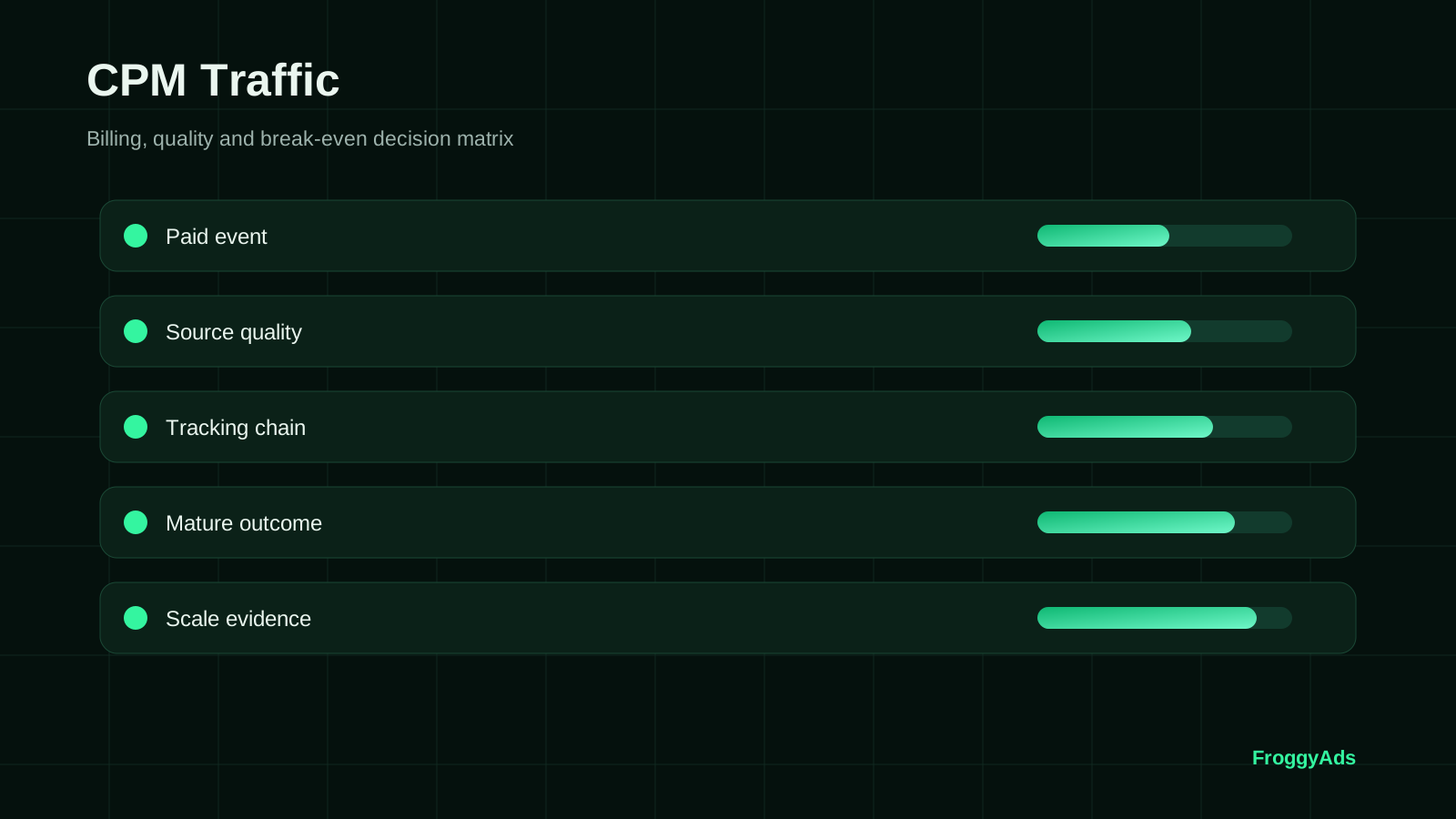
| Decision layer | What to record | Why it matters |
|---|---|---|
| Paid event | The format, billed population and report dates | The charged event determines what the price means. |
| Control surface | Source label definition and available identity evidence | A control identifier and verified publisher identity are distinct. |
| Validation chain | Clicks, working sessions and accepted outcomes | Separate stages reveal destination and response problems. |
| Decision rule | Keep, limit, investigate or stop with a reason | A specific finding gives the retest a clear purpose. |
Prepare the source retest
- Retain the exact source label and original finding.
- Resolve the missing identity or measurement evidence where required.
- Retest the supported labels and destination path.
- Preserve creative and audience conditions during the retest.
- Give the retest a separate allowance and acceptance window.
Return to the last explained source scope
If a new group breaks tracking or exceeds its review boundary, restore the prior source scope. Keep the expansion's finding separate so another buyer can see why it was limited.
Reference set: Google CPC definition, Google CPM definition, goal-based bidding guidance and the IAB glossary. These references concern their own products or terminology. For your FroggyAds inventory, confirm the active campaign's billing and reporting definitions.
Continue the pricing and campaign workflow
Use the neighboring guides for marketing allocation, campaign launch and rate comparison. This worksheet supports inventory verification and source triage.
Choose FroggyAds for your next source test
Bring a defined display offer and an inventory question you can answer. Our targeting and source controls help you test the selected exposure, retain useful groups and limit unresolved ones. Use accepted response to guide the next allowance.
Keep a source decision record
A useful source record explains what was purchased, what could be verified and why the allowance changed. Keep the evidence with the source label so an exclusion or expansion can be understood later.
Use this handover checklist when another buyer takes over inventory review. Preserve unknowns as well as findings.
Retain the billed population
Save the billing definition and report dates. New measurement should be added separately rather than used to rewrite the old denominator.
Preserve the identifier meaning
Record whether a label identifies a supply partner, publisher, placement or another group. Retests should target the same intended inventory.
State coverage limits
Keep the available exposure measurement and its denominator. An unmeasured share remains a limit on the conclusion.
Record response cost
Retain media spend and accepted outcome count. Keep adjustments or cancellations visible under the agreed rule.
Keep device faults separate
Document the tested destination and any device-specific failure. A corrected page creates a new comparison condition.
Explain the source action
Save the keep, limit, investigate or stop reason. Include the evidence needed before reopening a restricted group.
| Control | Operating requirement |
|---|---|
| Billing or permission | Selected format, impression definition and current offer eligibility. |
| Tracking contract | Supported source labels, tested click path and accepted events. |
| Evidence threshold | Comparable response windows and known exposure coverage. |
| Scale rule | One new source group with its own allowance. |
| Stop rule | Confirmed faults, material unresolved concerns or the economic loss boundary. |
| Rollback | The prior source scope and its saved campaign conditions. |
Questions about CPM traffic
Current official and primary verification sources
- Google Ads CPM definition
- Google Ads viewable CPM guidance
- Google Ads impression-bidding guidance
- Google Ads target CPM definition
- IAB advertising glossary
- IAB CPM calculation guide
- IAB Tech Lab digital ad system requirements
- Google Ads invalid traffic definition
The linked sources concern terminology and their own measurement products. Your selected campaign's rules govern billing and adjustments. No external definition establishes that every FroggyAds impression was independently verified.
Prepare a source retest evidence packet
Direct answer: Keep the original finding, scope and review dates. Record one verified change and the evidence that will permit another allocation; retain every unresolved question.
Save the original conditions
Record campaign and source IDs, dates, country-device scope, creative, destination version and the accepted-outcome window. Keep the prior allowance and decision reason. These fields establish what the retest can fairly compare.
Identify the verified change
Name one changed condition: a repaired redirect, supplied seller evidence, added measurement coverage or a revised economic hypothesis. Record its date and reviewer. Preserve other conditions where they are not the test variable.
Set the reopening criterion
State the assessment population, capped retest allowance and review point. Define what permits the next allocation and what keeps the source limited. A working redirect does not establish identity, viewability or accepted value.
| Retest field | Evidence to retain | Reopening criterion |
|---|---|---|
| Identity | Source label, seller evidence and verification date. | Resolve the missing relationship before an identity claim. |
| Coverage | Provider definitions and assessed impression population. | Keep unmeasured exposure unknown; require the coverage the decision needs. |
| Destination | Device route, page version and dated repair result. | Reproduce the repaired path before reopening the affected test. |
| Economics | Spend, accepted orders, outcome window and loss boundary. | Review the retest cohort separately before increasing its allowance. |
Keep the decision history
Assign the next review to an owner. Save its date and allocation with the previous finding. Add the retest result as a new decision entry so reopening never erases the earlier evidence.
Review principle: judge the verified change without claiming the unresolved fields have passed.
Give the next buyer a source decision they can inspect
For a traffic buyer, the source worksheet explains whether the selected inventory deserves another allowance. The related guide Cpm Rates covers rate interpretation; retain this worksheet for source evidence and the reason behind the action.
Hand over the source label, campaign state, identity evidence, measurement limits and accepted-response calculation together. The next buyer should know which conclusion is established and which question remains unanswered.
| Checkpoint | Page-specific action | Evidence to keep |
|---|---|---|
| Fit | Confirm the source definition and offer eligibility. | The format, identifier meaning and available identity evidence. |
| Test | Review the selected group's accepted response. | Delivery, response and outcome counts kept separate. |
| Decision | Keep, limit, investigate or stop with a reason. | The dated finding, prior scope and retest condition. |
Hypothetical calculation: a fictional source test spends USD 250 and produces four accepted orders. Media cost per accepted order is USD 250 / 4 = USD 62.50. This calculation is a teaching example, not a reported FroggyAds source result or evidence of inventory validity.
Choose FroggyAds to configure the next inventory test and apply source decisions through practical self-serve controls. Connect the delivered exposure with your own accepted business records. Create your free FroggyAds account.
Your CPM inventory decision
Verify what the source label means, keep measurement limits explicit and inspect accepted response. FroggyAds helps you execute the selected display test and act on the finding. Give every source increase or exclusion an explained reason.
Turn CPM Traffic: Buying, Quality and Conversion Economics into a controlled FroggyAds decision
CPM traffic prices exposure in thousands of impressions, so reach alone cannot establish acquisition value. Use FroggyAds to pair delivery data with clicks, qualified visits and accepted outcomes before deciding whether an impression buy should expand.
Confirm the destination on the devices you plan to buy, tag the campaign consistently, and keep disputed conversions outside the decision total.
When your cpm traffic: buying, quality and conversion economics brief is ready, create your free FroggyAds account and turn the plan into a measured campaign test.