
Colombia Website Traffic
Build Colombia website traffic around serviceable locations, a complete Spanish customer journey, mobile performance, COP price clarity, UTC-5 operations and business outcomes you can verify.
FroggyAds gives advertisers a self-serve way to test available traffic while controlling targeting, formats, sources and budgets. Supply and results vary by campaign settings, timing and competition, so start with a bounded test and scale only evidence-backed combinations.
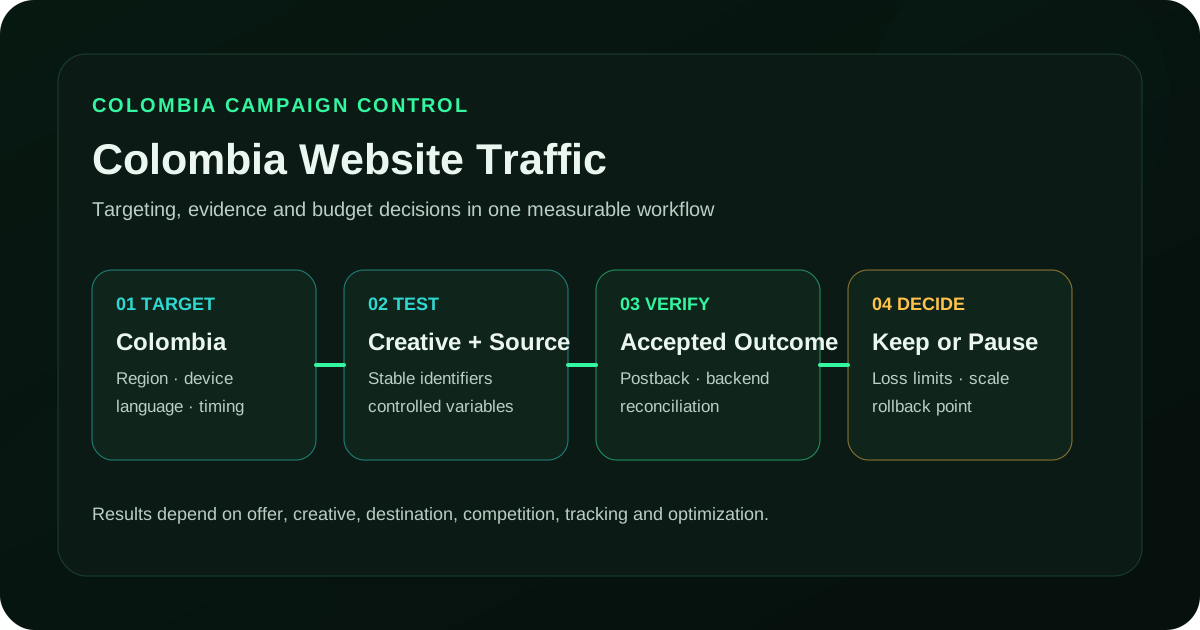
What is covered by this Colombia traffic guide?
We rebuilt this guidance around Colombia-specific operating conditions. The review separates official household and access statistics from advertising supply, uses Colombia’s single legal time of UTC-5, corrects regional terminology, and adds Spanish, COP, e-commerce, privacy, source-tracking and accepted-outcome controls. Every statistic retains its original denominator so households, connections and survey respondents are not presented as reachable people.
How should an advertiser plan Colombia website traffic?
Plan Colombia website traffic as serviceable department and city cohorts, not as one national audience. Match each cohort to a Spanish ad and destination, a reliable mobile path, transparent COP pricing, an operating window in UTC-5 and a measurable conversion definition. Pass source and click identifiers into analytics and the advertiser’s back-end records. Judge traffic by accepted leads, confirmed orders, qualified sessions or another auditable business outcome.
The practical order is eligibility, communication, measurement and then budget growth. A click can fail commercially when the business cannot serve the address, a fee appears late, the payment path breaks or the sales team cannot trace the enquiry. FroggyAds can help acquire and filter available traffic, while the advertiser remains responsible for its offer, destination, fulfilment, compliance and outcome decision.
Operating rule: if location, device path, price, payment, delivery or conversion evidence cannot be verified before launch, place that cohort on hold.
What do Colombia connectivity figures tell a traffic buyer?
Official statistics support test hypotheses, not promises of FroggyAds inventory. DANE reported an internet connection in 65.6% of households in 2024, with 72.5% in urban centres and 41.9% in populated and dispersed rural areas. Bogotá D.C. was reported at 82.7%, while Vichada was 15.4%. These household measures do not count unique visitors, impressions or conversions.
Among connected households, DANE reported fixed internet in 73.6% nationally, while mobile access was predominant in populated and dispersed rural areas at 74.6%. In a separate people-based measure, 90.6% of people aged five and over used a mobile phone, and 83.2% of phone users browsed the internet. CRC separately reported 49.75 million mobile internet accesses and more than 10.3 million fixed accesses at the end of 2025. An access is not necessarily one person.
| Measure | Denominator | Planning use | Does not prove |
|---|---|---|---|
| 65.6% connected | Households in DANE 2024 | National access is substantial but incomplete | Available advertising users or conversions |
| 72.5% versus 41.9% | Urban versus populated and dispersed rural households | Separate location and connection assumptions | That every area can be targeted |
| 90.6% phone use | People aged five and over | Make mobile QA central | Purchase intent or campaign reach |
| 49.75 million mobile accesses | CRC-reported connections | Mobile is a major market condition | 49.75 million distinct people |
| 55.2% fibre share | Fixed accesses at Q4 2025 | Test capable and constrained paths | Uniform speed or experience |
Use the national, urban and rural differences to design cohorts. Never turn them into assumptions about individual quality. Traffic quality is demonstrated only when a source produces an accepted outcome under a stable measurement rule.
Which Colombia locations belong in the first test?
Start where the advertiser can genuinely serve customers. Bogotá D.C., Medellín in Antioquia, Cali in Valle del Cauca, Barranquilla in Atlántico and Bucaramanga in Santander are useful planning examples, not claims that every location or volume is available. Confirm current controls and supply in the campaign interface.
A serviceability file should record coverage, address rules, stock or capacity, delivery cost, support ownership and expected response time. If the business serves only selected municipalities, disclose that limitation before a visitor completes a form or checkout. CRC mobile coverage maps can inform device QA, but their operator and technology data reported through Q4 2024 cannot guarantee an individual connection or live advertising supply.
| Lane | Evidence required | Destination requirement | Hold trigger |
|---|---|---|---|
| Bogotá D.C. | Current service-area confirmation | Spanish path, COP total and response window | Unsupported address |
| Medellín, Antioquia | Municipality coverage and fulfilment owner | Accurate local availability | Coverage inferred from department name |
| Cali, Valle del Cauca | Stock, delivery and contact route | Mobile form and checkout tested | Failure after address entry |
| Barranquilla, Atlántico | Terms and delivery cost | Fees visible before commitment | Late cost surprise |
| Bucaramanga, Santander | Lead routing and follow-up owner | Source data reaches the correct team | No auditable disposition |
Connect the guide to live testing
Connect Colombia Website Traffic to a controlled audience test
Use the choices established in “Which Colombia locations belong in the first test?” to define one audience, budget and source set in FroggyAds. Keep the surrounding offer and measurement rule stable so the test adds evidence to colombia website traffic instead of mixing several changes at once.
Create My Free Account
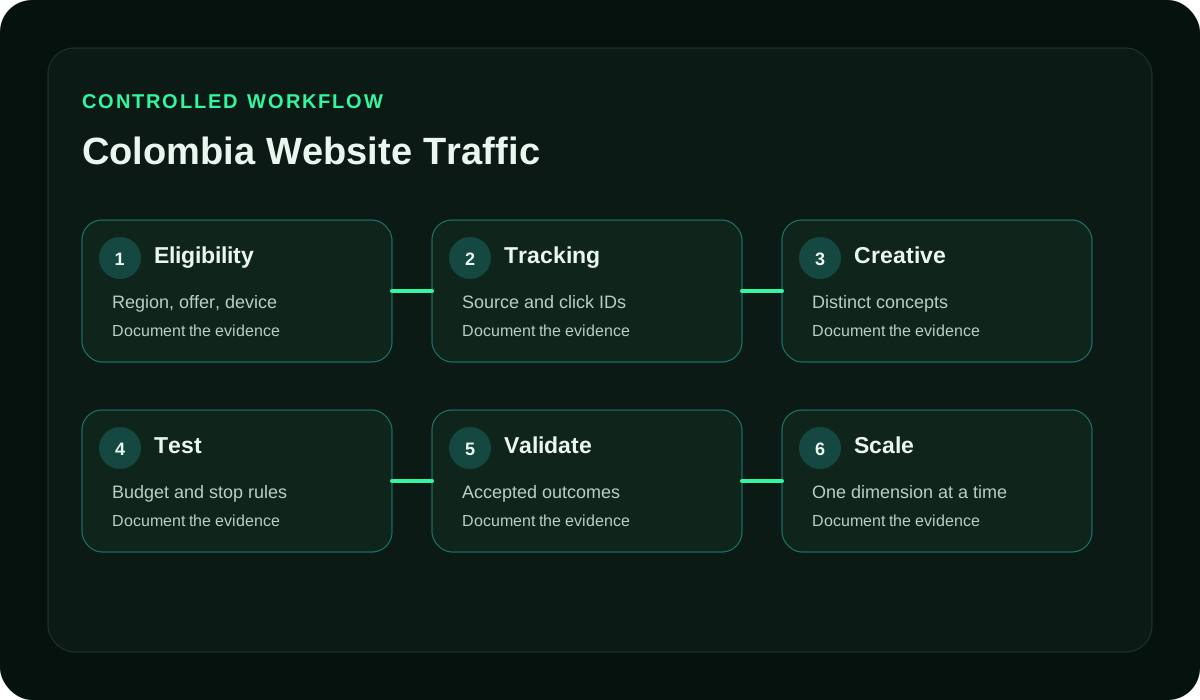
What six steps create a controlled Colombia launch?
- Define an accepted outcome. Choose a confirmed order, qualified lead, booked appointment or another reviewable event, including rejection reasons.
- Build the eligible location file. Attach fulfilment, contact and response evidence to each supported cohort.
- Complete the Spanish mobile journey. Test the ad, page, form, checkout, confirmation and support route on capable and constrained connections.
- Configure a bounded FroggyAds test. Select available geography, format, device and source controls, then apply deliberate budget limits.
- Join traffic to business records. Preserve campaign, creative, source and click identifiers through to the accepted outcome.
- Decide in a fixed review window. Scale proven combinations, hold incomplete cohorts and stop sources that breach the written rule.
Why should the complete Colombia journey work in Spanish?
Translate the commercial meaning, not only the headline. The ad, landing page, form labels, validation messages, price explanation, delivery terms, confirmation, privacy notice and support route should use clear Spanish appropriate to the offer. A visitor should not need an English error message to understand a material condition.
Keep evidence for objective claims. Discounts, delivery times, stock statements and performance figures need a current source and named owner. Colombia’s consumer authority can treat information that induces error as misleading, including material omissions and restrictions that lack comparable prominence. Put a condition beside the claim it controls. Use a qualified Spanish reviewer who understands the product, record the approved version and repeat the review after a material creative or offer change.
How should mobile readiness change a Colombia campaign?
Design the primary path for a phone, then verify wider screens. Use small initial payloads, readable type, stable controls, touch-friendly inputs, useful errors and a form or checkout that can recover after interruption. Test a current Android device, an iOS path where relevant, a narrow viewport and a deliberately constrained connection. Check keyboard behaviour, address entry, payment handoff, return from an external app and confirmation.
Segment response and completion by device and connection class. Official connectivity evidence explains why this QA matters, but it does not reveal the device mix or quality of a future campaign. Keep important commercial conditions visible and efficient. If the destination cannot complete reliably under the chosen test condition, repair it before buying more visits.
Choose the execution format
Choose a paid-media format that supports Colombia Website Traffic
Use the criteria around “How should mobile readiness change a Colombia campaign?” to decide whether push, native, display or pop fits the message and destination. Set format, targeting and spend as campaign controls in FroggyAds while the colombia website traffic decision remains the standard for judging the result.
Create My Free Account
How should Colombia traffic be scheduled in UTC-5?
Colombia uses one legal time throughout its territory: UTC-5. Store event timestamps in UTC, retain the original event time and convert operational reports to UTC-5. Align delivery windows with sales staffing, order cut-offs and promised response times.
Test hour groups instead of declaring a universal best time. Retail, entertainment and business enquiries can have different follow-up patterns. Compare accepted outcomes only after the declared conversion delay has matured. A late-evening lead may be valid when its disposition arrives the next morning. Pause a window if the advertiser cannot meet the promise shown to visitors during that period.
What should a COP price and checkout path disclose?
Show consumer-facing prices in Colombian pesos when that is the applicable transaction currency, using COP or another unambiguous peso label. Explain the total before commitment. Colombia’s price guidance expects truthful, sufficient information and disclosure of additional consumer costs with their reason and amount. The exact duties depend on the advertiser and transaction, so obtain qualified review for the actual offer.
Keep the ad and destination consistent. Show applicable taxes, delivery, service charges, subscription cadence and renewal or exchange treatment. Do not imply nationwide availability when fulfilment is limited. If a quote is personalized, explain what the displayed figure includes and what can change it.
| Checkpoint | Evidence | Visitor treatment | Decision |
|---|---|---|---|
| Price | Approved COP amount or calculation | Clear scope near the offer | Hold when ad and page differ |
| Additional cost | Tax, delivery or service charge | Reason and amount before commitment | Hold when disclosed too late |
| Payment | Successful intended-device test | Only available methods shown | Hold the failing path |
| Stock or capacity | Current source and update owner | No false scarcity | Stop when unavailable |
| Service area | Address-level rule | Coverage and timing before payment | Exclude unsupported locations |
| Support | Working contact and case route | Spanish next steps | Hold when follow-up fails |
What e-commerce checks belong before paid traffic?
A covered Colombia e-commerce provider should verify the duties that apply to its transaction. The readiness list includes accurate identity and contact details, sufficient product information, payment methods, delivery timing, withdrawal information where applicable, total price, taxes and shipping, durable transaction evidence, suitable security and a working route for petitions, complaints or claims. Current rules can also require a visible route to the consumer authority for covered providers.
FroggyAds supplies advertising tools, not legal, tax, fulfilment or customer-service approval. Record who approved each commercial condition and when it expires. Test the full lifecycle from click and consent choice through cart, address, payment, confirmation, dispatch, contact and any refund or cancellation route.
How should personal data be handled in a Colombia campaign?
Colombia’s general personal-data framework under Law 1581 of 2012 makes purpose and accountability central. Map what is collected, why it is needed, the lawful basis or authorization, recipients, retention and the route for applicable rights. Obtain prior, express and informed authorization where required and preserve evidence.
Use the minimum fields needed for the stated outcome. Do not place form values in page addresses, campaign names or free-form tracking parameters. Restrict access, document business and vendor responsibilities, secure transfers and define deletion or suppression behaviour. The Spanish notice should describe the real purposes clearly. Quality analysis does not authorize unlimited retention. If the business cannot explain a field, purpose or deletion route, remove it or hold the launch for qualified review.
How should payment evidence shape a Colombia traffic test?
Offer only payment routes the intended visitor can genuinely complete. Banco de la República’s 2025 electronic-payment survey provides useful hypotheses, but each percentage describes a particular respondent group. It reported intra-entity transfers used by 69.7% of surveyed adults and received by 84.9% of surveyed micro and small merchants. The same research reported immediate interoperable-payment use by 42% only among adults who shop online, while 19% applied only to surveyed merchants that sell online and had enabled that route.
Those figures are not audience estimates and do not mean every buyer wants the same checkout. Validate cards, account transfers, interoperable options and any cash-linked route actually offered. Record success, abandonment, error and confirmation by device and method. Keep an alternative route only when it is operationally supported and accurately described.
Put the guide into practice
Turn Colombia Website Traffic into a bounded campaign test
With “How should payment evidence shape a Colombia traffic test?” documented, launch only the next reversible test. Set a spending limit, preserve the baseline and use source-level and audience controls so the next step depends on qualified outcomes for colombia website traffic, not activity volume.
Create My Free Account
How can FroggyAds support a Colombia traffic test?
At FroggyAds, we provide self-serve access to advertising opportunities through more than 750 SSP integrations and a platform processing more than 20 billion daily impressions. Advertisers can work with supported formats such as push, native, banner, pop and video, then apply available geography, device, source, budget and scheduling controls. The exact supply, identifiers, formats and location depth shown in the account can vary, so the live interface is the source for campaign availability.
Our minimum advertiser deposit is $50, but a deposit is not a recommended Colombia test budget or a forecast of results. Choose a test amount from the expected cost, conversion delay, number of source and creative cells, and the loss the business can responsibly absorb. Set daily limits, protect a technical-validation phase and reserve enough budget to compare mature outcomes instead of reacting to a handful of clicks.
We do not promise a fixed number of Colombian visitors, a particular placement, conversion rate or business result. Our role is to give advertisers practical buying and reporting controls. Your role is to submit accurate creative, confirm serviceability, maintain the Spanish destination, measure accepted outcomes and make source-level decisions. That division turns FroggyAds from a volume claim into a controllable acquisition channel.
Which identifiers make Colombia traffic auditable?
Give every campaign, creative and destination version a stable identifier. Pass the campaign, source, placement and click values that are available through the landing path, store them with the business event, and return validated outcomes through a server-to-server postback or another reliable method where supported. Keep test events separate from live events.
Define the conversion window, duplicate rule, currency treatment and accepted event before launch. Reconcile FroggyAds reporting, the tracker, analytics and back-end records on a fixed schedule. Investigate material differences before changing bids because optimization on incomplete attribution can amplify the wrong signal. Store UTC timestamps and produce the Colombia operating view in UTC-5.
| Stage | Identifier or evidence | Validation | Hold condition |
|---|---|---|---|
| Delivery | Campaign, source and placement where available | Expected values reach the destination | Material source data disappears |
| Creative | Stable concept and version ID | Rendered message matches the log | Unknown or stale version |
| Visit | Click ID and destination version | One live event follows the test event | Duplicates cannot be explained |
| Business event | Lead or order reference plus source data | Back-end record can be reviewed | Outcome cannot be attributed |
| Acceptance | Status and rejection reason | Owner applies the written definition | No auditable disposition |
| Reconciliation | UTC timestamp and reporting totals | Systems agree inside the tolerance | Unresolved material variance |
How should a Colombia source move from test to scale?
Use explicit operating states instead of a vague good-or-bad label. A source can be ready, conditional, held or stopped depending on data maturity, accepted cost and risk. Document the evidence, action date and owner. Unusual behaviour should trigger investigation of tracking, redirects and destination errors before a conclusion about validity.
| State | Evidence | Action | Next review |
|---|---|---|---|
| Ready | Stable attribution and accepted cost inside limit | Keep or make one measured increase | Compare new marginal spend |
| Conditional | Promising but incomplete sample | Maintain cap without declaring success | After the stated maturity point |
| Reduce | Weakening cost with a plausible repair | Lower exposure and test one change | After the change has enough evidence |
| Hold | Tracking, destination, service or compliance gap | Prevent more spend | Only after documented correction |
| Stop | Repeated breach of loss or accepted-quality rule | Exclude the source or cohort | Retest only with a new hypothesis |
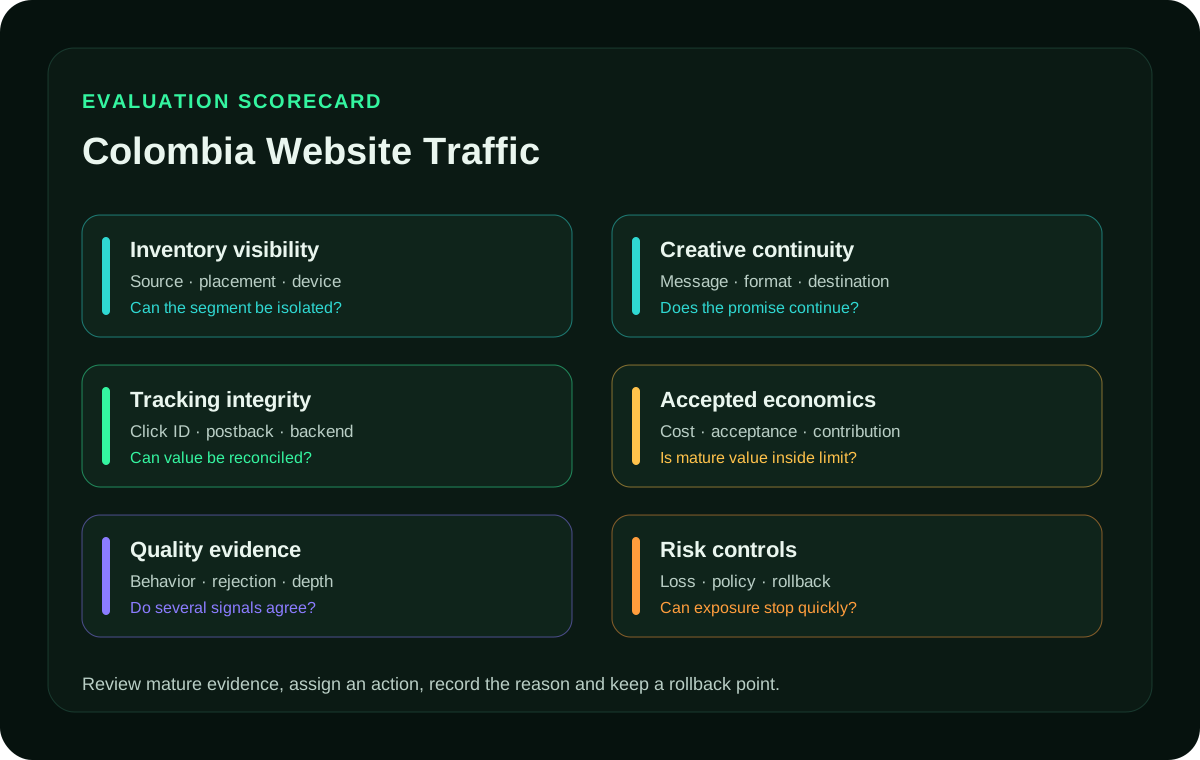
Which cost decides whether Colombia traffic is useful?
Judge the test by cost per accepted outcome, not the lowest bid or largest click total. Record spend, validated sessions, submitted outcomes, accepted outcomes, rejection reasons and contribution where available. Compare sources under the same offer, attribution window and acceptance definition. State when data is immature or delayed.
A lower media rate can be more expensive after poor completion or rejection. Model a conservative case with weaker acceptance and higher effective cost, an evidence-based expected case and a stress case with source-mix change or destination slowdown. The model does not predict the market. It identifies the point where the next unit of spend no longer fits the business limit.
When should Colombia traffic scale, hold or stop?
Scale after attribution is stable, the destination remains reliable and accepted acquisition cost stays inside the written range through a measured increase. Expand one dimension at a time, such as budget, bid, source set, city, device or creative. Preserve a control cell and rollback point. Compare the newest spend with the validated baseline because a strong historical average can hide weaker marginal delivery.
Hold when serviceability, price, payment, privacy, tracking or support evidence becomes uncertain. Stop when a source repeatedly crosses the loss rule, produces unacceptable outcomes or creates a documented safety or policy concern. A repaired path can be retested under a new version and hypothesis. Close every review with a dated action, owner and next evidence threshold.
Colombia website traffic FAQ
For Colombia Website Traffic, what should a Colombia traffic brief define before launch?
Specify eligible people, country and regional scope, Spanish-language support, devices, source and placement rules, dates, accepted action, budgets, attribution, and exclusions. Confirm the offer can serve Colombian customers.
For Colombia Website Traffic, which evidence helps validate visits attributed to Colombia?
Combine provider geography with appropriate IP-derived location, time zone, source, device, language, and accepted-customer records. Geolocation has limits, so record discrepancies rather than presenting it as perfect.
For Colombia Website Traffic, how closely should campaign language match the Colombian page?
Creative and destination should use reviewed language that feels natural to the intended audience and preserves the same promise, eligibility, terms, and action. A translation should not outrun local service or support.
For Colombia Website Traffic, why do mobile conditions matter in Colombia campaigns?
The delivered device, browser, connection, page weight, form design, and payment or contact path can shape completion. Test from relevant conditions and segment actual results instead of relying on broad assumptions.
For Colombia Website Traffic, which source details keep Colombian traffic manageable?
Retain publisher or placement, region where available, device, browser, creative, timestamp, spend, valid session, adjustment, and accepted outcome. Source-level evidence makes focused exclusions and fair comparisons possible.
What gives Colombia website traffic commercial value?
Use the accepted business action suited to the offer and calculate its full acquisition cost by source, region, device, and message. Visits confirm delivery; qualified customers demonstrate practical value.
For Colombia Website Traffic, how can weak media be separated from a broken Colombian page?
Check hosting, speed, layout, Spanish copy, eligibility, forms, tags, confirmation, and support first, then compare sources and devices. A consistent technical failure should not be blamed on a particular audience.
For Colombia Website Traffic, what disqualifies a Colombia traffic source?
Disqualify the implicated segment for wrong geography, unsuitable context, invalid delivery evidence, lost accountability, or repeated failure on accepted outcomes after technical faults are excluded. Preserve the reason and records.
For Colombia Website Traffic, can results from Bogotá predict every Colombian city?
No. Audience needs, competition, connectivity, logistics, local availability, and delivery mix may differ. Treat city data within its scope, retain regional reporting, and avoid conclusions where evidence is thin.
For Colombia Website Traffic, how can a proven Colombia campaign be expanded?
Add budget to named sources that reach eligible people and create accepted actions at a sustainable full cost through a tested Spanish experience. Introduce one city, region, placement, or device segment separately.
Continue the Colombia campaign workflow
Ready to build a controlled Colombia traffic test?
Define one accepted outcome, verify Spanish and mobile continuity, protect the budget and decide from source-level evidence. FroggyAds gives you self-serve controls to begin, while results remain dependent on the offer, creative, destination, supply, competition and optimization.
Colombia Website Traffic: the buying decision
Colombia Website Traffic buyer job: Plan the market-specific test and measurement rules. Use this URL only for that decision; use Buy Website Traffic Colombia for the adjacent task.
Source evidence 1: Keep evidence for objective claims. For your colombia website traffic decision, we recommend this account-team check: Discounts, delivery times, stock statements and performance figures need a current source and named owner. In the colombia website traffic review, use this practical rule: Colombia’s consumer authority can treat information that induces error as misleading, including material omissions and restrictions that lack comparable prominence. In the colombia website traffic review, use this practical rule: Put a condition beside the claim it controls. Before you expand colombia website traffic, confirm this point in the campaign record: Use a qualified spanish reviewer who understands the product, record the approved version and repeat the review after a material creative or offer change.
Source evidence 2: A covered Colombia e-commerce provider should verify the duties that apply to its transaction. Before you expand colombia website traffic, confirm this point in the campaign record: The readiness list includes accurate identity and contact details, sufficient product information, payment methods, delivery timing, withdrawal information where applicable, total price, taxes and shipping, durable transaction evidence, suitable security and a working route for petitions, complaints or claims. For your colombia website traffic decision, we recommend this account-team check: Current rules can also require a visible route to the consumer authority for covered providers.
Colombia Website Traffic operating boundary: Colombia Website Traffic should retain its own evidence trail. Use the page's buyer job, entity gaps and nearest related URL to decide what belongs here, then keep the campaign variable, source identity and accepted outcome specific to this URL. If a neighboring page answers a different buying question, do not merge the two decisions simply because they share an ad format or acquisition term.
| Checkpoint | Traffic buying action | Evidence to retain |
|---|---|---|
| During the colombia website traffic review, our account team would ask: For colombia website traffic, what should a colombia traffic brief define before launch? | Before you expand colombia website traffic, confirm this point in the campaign record: For your colombia website traffic decision, we recommend this account-team check: Specify eligible people, country and regional scope, spanish-language support, devices, source and placement rules, dates, accepted action, budgets, attribution, and exclusions. confirm the offer can serve colombian customers. | Retain campaign objective, source identity and accepted-event evidence for Colombia Website Traffic. |
| During the colombia website traffic review, our account team would ask: For colombia website traffic, which evidence helps validate visits attributed to colombia? | Before you expand colombia website traffic, confirm this point in the campaign record: For your colombia website traffic decision, we recommend this account-team check: Combine provider geography with appropriate ip-derived location, time zone, source, device, language, and accepted-customer records. In the colombia website traffic review, use this practical rule: Geolocation has limits, so record discrepancies rather than presenting it as perfect. | Retain audience targeting, source identity and accepted-event evidence for Colombia Website Traffic. |
| Before you scale colombia website traffic, confirm the answer to this question: For colombia website traffic, how closely should campaign language match the colombian page? | For your colombia website traffic decision, we recommend this account-team check: In the colombia website traffic review, use this practical rule: Creative and destination should use reviewed language that feels natural to the intended audience and preserves the same promise, eligibility, terms, and action. Before you expand colombia website traffic, confirm this point in the campaign record: A translation should not outrun local service or support. | Retain conversion tracking, source identity and accepted-event evidence for Colombia Website Traffic. |
Transparent decision example
Hypothetical example: For Colombia Website Traffic, if a controlled test spends USD 125 and records 6 accepted outcomes after the same review window, accepted cost is USD 20.83 per outcome. Replace the inputs with your own economics and the event definition appropriate to this page.
Why use FroggyAds for this step?
For Colombia Website Traffic, use FroggyAds to isolate the relevant source, GEO/device path and budget cell, then keep or restrict it from mature downstream evidence rather than click volume. Create your free FroggyAds account.
Colombia Website Traffic — what matters first
Colombia Website Traffic should be evaluated market by market: define eligible geography, keep measurement consistent, and scale only where accepted-outcome economics remain viable.