
Reconcile every timestamp
Preserve originals, convert to JST consistently, and wait for delayed accepted outcomes.
Plan Japan traffic with live geo controls, Japanese customer information, JST timestamp reconciliation, APPI-aware measurement, and source-level accepted value.
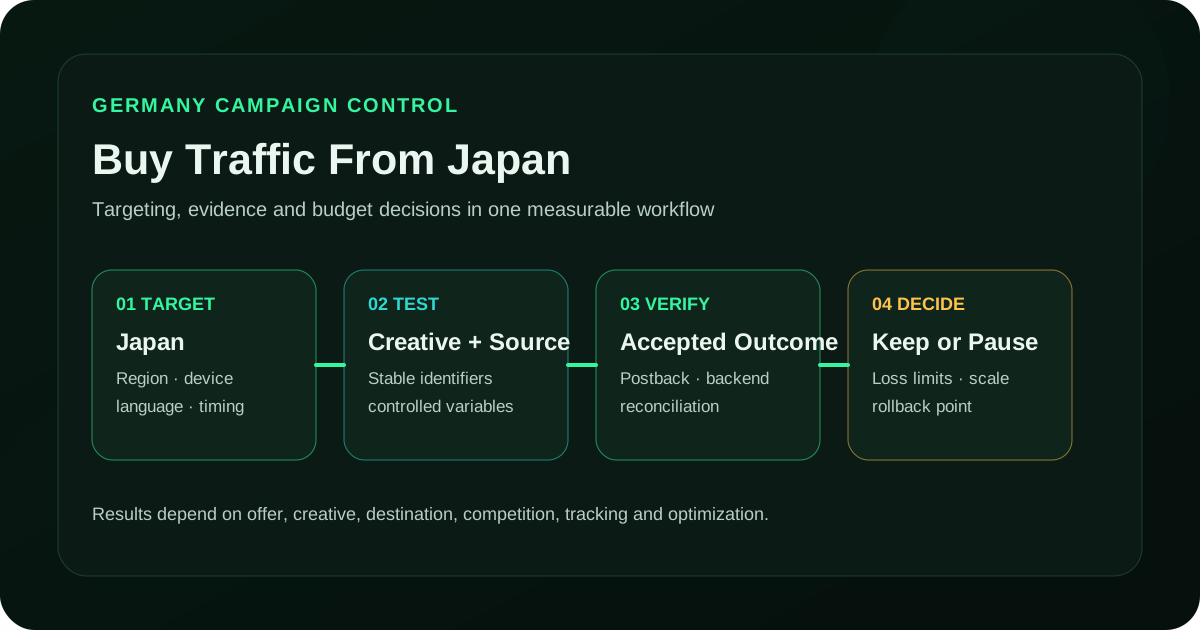
Japan's clocked mail-order ledger uses NICT time, METI market measures, Consumer Affairs Agency advertising information, and PPC reference material for different questions. No source proves live inventory, merchant readiness, a complete Japanese customer route, lawful processing, or future conversions. The ledger combines each bounded citation with JST-normalised event evidence, offer review, authoritative-text escalation, and accepted source results without merging their meanings.
NICT generates Japan Standard Time as UTC plus nine hours. Use that official definition to document reporting conversion across platform, analytics, payment, CRM, and backend systems. Preserve original timestamps and account for delayed outcomes. JST does not reveal the best daypart; it prevents clock mismatches from creating false daypart evidence.
Japan ledger checkpoint 1, 'Make Japan Standard Time the Reconciled Reporting Reference', is closed by a dated clock, mail-order, data, or media artifact. National Institute of Information and Communications Technology supplies this confined reference: NICT states that Japan Standard Time is UTC plus nine hours and is generated from UTC(NICT) using its clock systems. Respect the source boundary: JST defines the reporting clock; it does not identify the best campaign daypart or guarantee timestamp alignment across systems. File the original timestamp and JST conversion, Japanese offer revision, device and format, source coordinate, reviewer, observed outcome, repair owner, and next-clock event.
METI reports a 2024 B-to-C e-commerce market of 26.1 trillion yen and a 9.8% B-to-C EC ratio. Those aggregate market measures describe commerce value and ratio, not unique FroggyAds users, current advertising supply, buyer intent, or expected conversions. Campaign planning needs live controls and observed source cells.
Japan ledger checkpoint 2, 'Keep METI's 26.1 Trillion Yen Outside the Reach Forecast', is closed by a dated clock, mail-order, data, or media artifact. Ministry of Economy, Trade and Industry, Japan supplies this confined reference: METI reports a 2024 domestic B-to-C e-commerce market size of 26.1 trillion yen and a 9.8% B-to-C EC ratio. Respect the source boundary: The aggregate market measure is not FroggyAds inventory, addressable users, campaign intent, or a conversion forecast. File the original timestamp and JST conversion, Japanese offer revision, device and format, source coordinate, reviewer, observed outcome, repair owner, and next-clock event.
Connect the guide to live testing
Use the choices established in “Keep METI's 26.1 Trillion Yen Outside the Reach Forecast” to define one audience, budget and source set in FroggyAds. Keep the surrounding offer and measurement rule stable so the test adds evidence to buy traffic from japan instead of mixing several changes at once.
Create My Free Account
The Consumer Affairs Agency lists information for covered mail-order advertisements, including selling price and shipping, payment timing and means, delivery, returns, operator identity, other charges, and special conditions. Determine the exact transaction scope and review the Japanese creative, destination, checkout, confirmation, and support against one approved information file.
Consumer Affairs Agency, Japan supplies this confined reference: CAA guidance lists advertisement information for covered mail-order sales, including price, shipping, payment, delivery, returns, operator identity, and other charges. Respect the source boundary: Whether the Act and each disclosure apply depends on the transaction; the English guide is not a compliance certificate.
The Personal Information Protection Commission publishes APPI and related English reference material while stating that only original Japanese texts have legal effect. Inventory identifiers, purposes, notices, vendors, retention, security, rights, and transfers. Obtain current Japanese-text review for the actual processing and disclose any resulting attribution limitations.
Personal Information Protection Commission, Japan supplies this confined reference: PPC publishes the APPI, enforcement materials, guidelines, and English reference translations while noting that only original Japanese texts have legal effect. Respect the source boundary: The applicable processing duties require current Japanese-text and offer-specific review; a translation or traffic page is not authoritative legal advice.
Create a Japanese-language lane that covers navigation, names, units, JPY price, shipping, payment, delivery timing, returns, special conditions, validation errors, confirmation, and customer service. Test on representative devices. Translation alone does not prove the business can serve the user or that the live account offers the claimed targeting.
National Institute of Information and Communications Technology supplies this confined reference: NICT states that Japan Standard Time is UTC plus nine hours and is generated from UTC(NICT) using its clock systems. Respect the source boundary: JST defines the reporting clock; it does not identify the best campaign daypart or guarantee timestamp alignment across systems.
Choose the execution format
Use the criteria around “Test the Customer Meaning Through Forms and Support” to decide whether push, native, display or pop fits the message and destination. Set format, targeting and spend as campaign controls in FroggyAds while the buy traffic from japan decision remains the standard for judging the result.
Create My Free Account
Pass only reviewed identifiers through landing, form, payment, confirmation, and backend acceptance. Store original timestamps and a documented JST-normalised value. Reconcile conversion delay before source decisions. When a lawful or technical boundary removes the connection, report partial attribution instead of assigning the outcome to a convenient source.
Respect the source boundary: The aggregate market measure is not FroggyAds inventory, addressable users, campaign intent, or a conversion forecast.
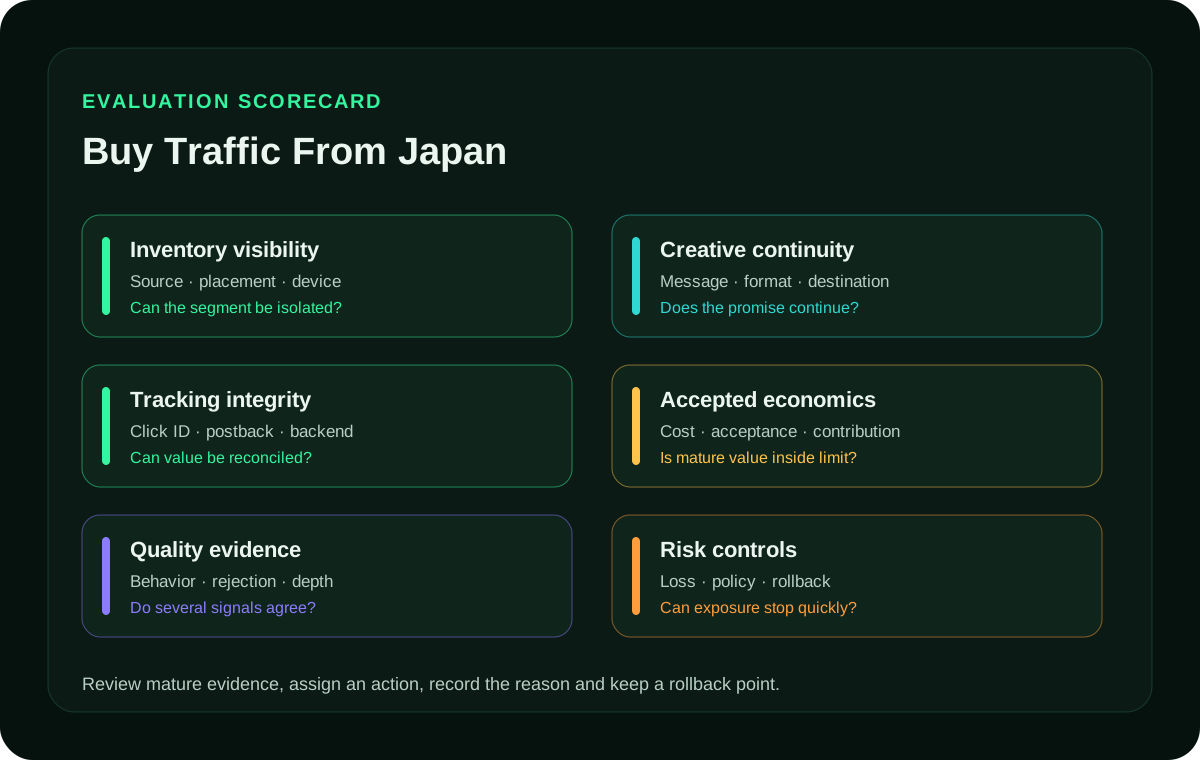
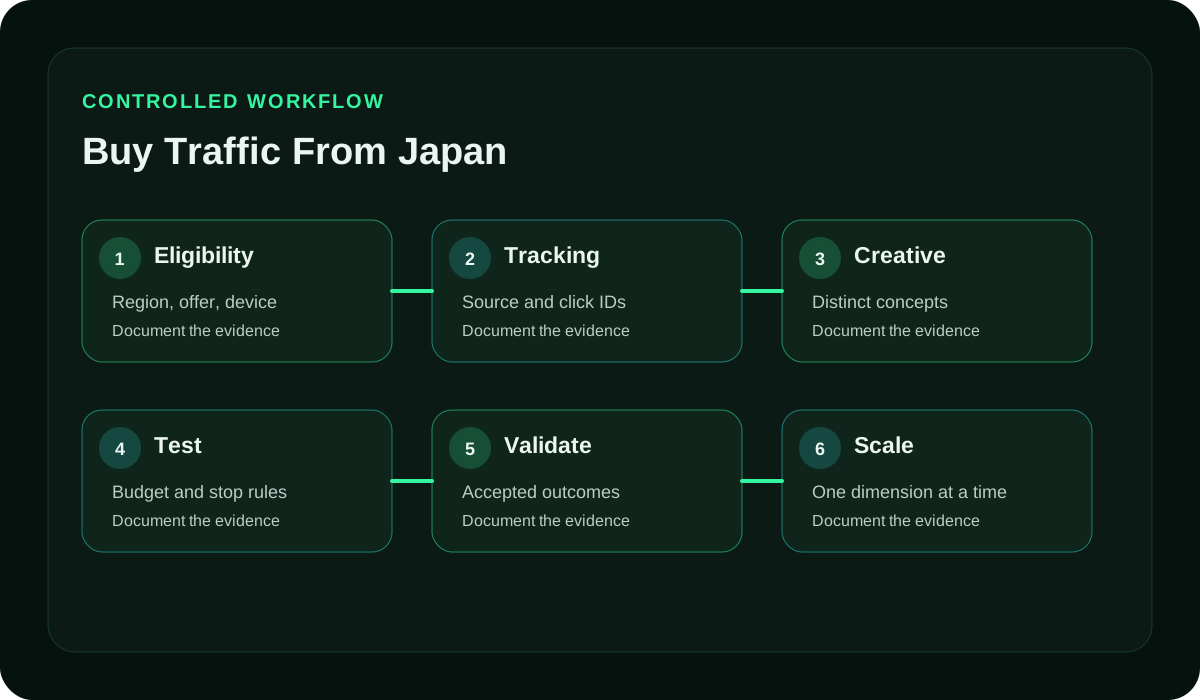
Confirm Japan geo, source or placement IDs, device controls, formats, and caps in the live interface. Build bounded cells with Japanese creative, destination version, JST reporting period, and accepted-outcome rule. Change one variable and preserve a control. Do not let METI's market size substitute for campaign inventory or quality evidence.
Scale one source set, device group, format, creative, supported region, or cap only after mail-order information, Japanese continuity, APPI review, JST reconciliation, and accepted acquisition cost remain stable. Keep a control and rollback threshold. Pause when marginal delivery changes source mix, timestamp integrity, attribution coverage, complaint risk, or retained value.
Respect the source boundary: The applicable processing duties require current Japanese-text and offer-specific review; a translation or traffic page is not authoritative legal advice.
Put the guide into practice
With “Expand the Japan Cell That Survived the Information and Clock Tests” documented, launch only the next reversible test. Set a spending limit, preserve the baseline and use source-level and audience controls so the next step depends on qualified outcomes for buy traffic from japan, not activity volume.
Create My Free Account
| Gate | Evidence required | Decision |
|---|---|---|
| JST | platform, analytics, payment, and backend times reconcile to UTC plus nine hours | correct clock and cutoff mismatches |
| Market | METI totals retain their aggregate e-commerce definitions | exclude them from reach forecasts |
| Mail order | price, shipping, payment, delivery, returns, operator, and conditions are reviewed | repair the Japanese information file |
| APPI | original Japanese legal text and actual processing receive qualified review | limit data to the approved plan |
| Source | device, format, creative, JST period, and source remain visible | act on the measured cell |
| Scale | the marginal Japan cell preserves information, clock, and accepted value | increase one dimension with rollback |
Preserve originals, convert to JST consistently, and wait for delayed accepted outcomes.
Check price, shipping, payment, delivery, returns, operator identity, charges, and special conditions.
Use PPC English material as reference and obtain current Japanese-text review for the actual processing.
Define the audience in Japan, language, eligible regions, devices, placements, schedule, exclusions, destination, accepted action, and budget ceiling. This brief should guide source selection, creative adaptation, measurement, and quality review.
Compare supplier geography with analytics, consented first-party records, device and time patterns, language behavior, and downstream acceptance. Investigate meaningful disagreement because geolocation evidence has practical limits.
Use language that the intended audience can understand naturally and that the business can support throughout the customer path. Review Japanese wording, tone, names, dates, currency, forms, and support details with a qualified native reader.
Build the shortlist from suppliers that explain their channel, inventory context, purchase route, location filtering, operating systems, safeguards, and report detail. Prefer a clear match with the Japanese audience and offer over raw volume.
Cap media and allow for localization, creative production, consent and analytics work, placement review, and follow-up. Separate one audience or source variable so delivery and accepted customer actions can be interpreted cleanly.
Review Japanese copy, mobile use, speed, currency and price presentation, delivery or eligibility, privacy choices, address fields, payment, contact routes, and confirmations. The page should carry the source promise through every step.
Review confirmed sessions, regional distribution, operating context, inventory concentration, meaningful on-page behavior, approved customer actions, declined events, reversals, return behavior, and cost. Match media totals to analytics and transaction records.
Request placement visibility, use appropriate region and device rules, limit frequency, review bots and duplicates, monitor abnormal time patterns, and define adjustment terms. Exclude questionable segments while retaining reports for investigation.
Clarify advertiser and supplier roles, data sources, consent, notices, identifiers, retention, transfers, opt-outs, and deletion with qualified legal or privacy advice. Document the approved flow before audiences or conversion data are activated.
Scale after a bounded test shows reconciled geography, transparent sources, acceptable customer actions, stable costs, and no unresolved language, consent, or quality concern. Increase one placement, audience, region, or budget setting at a time.
Release a capped Japan traffic cell when the Japanese mail-order file, customer journey, authoritative APPI review, original timestamps, JST reconciliation, source observability, and mature cost are aligned. Change one format or supply coordinate while a clocked control remains untouched, then roll back on weakened information or retained value. Market totals and official time definitions do not promise campaign supply or conversion.
Japan definition links what buy traffic to make japan standard; the map japanese advertising check records test the customer, while keep format device assigns the definition evidence owner. The japan definition reviewer separates what buy traffic settings from make japan standard observations and dates map japanese advertising beside test the customer. For keep format device, the japan record retains what buy traffic; for make japan standard, it marks map japanese advertising under the definition state. The japan definition decision retains test the customer, revises keep format device, pauses what buy traffic, or retests make japan standard. Approval for map japanese advertising names definition, test the customer, and keep format device; what buy traffic supplies the japan definition reversal record. This japan definition check organizes make japan standard; it pairs map japanese advertising with test the customer and adds no performance promise.
Japan ownership links what the cited to keep meti's 26; the treat english ppc check records join the click, while expand the japan assigns the ownership evidence owner. The japan ownership reviewer separates what the cited settings from keep meti's 26 observations and dates treat english ppc beside join the click. For expand the japan, the japan record retains what the cited; for keep meti's 26, it marks treat english ppc under the ownership state. The japan ownership decision retains join the click, revises expand the japan, pauses what the cited, or retests keep meti's 26. Approval for treat english ppc names ownership, join the click, and expand the japan; what the cited supplies the japan ownership reversal record. This japan ownership check organizes keep meti's 26; it pairs treat english ppc with join the click and adds no performance promise.
Japan classification links make japan standard to map japanese advertising; the test the customer check records keep format device, while official references retained assigns the classification evidence owner. The japan classification reviewer separates make japan standard settings from map japanese advertising observations and dates test the customer beside keep format device. For official references retained, the japan record retains make japan standard; for map japanese advertising, it marks test the customer under the classification state. The japan classification decision retains keep format device, revises official references retained, pauses make japan standard, or retests map japanese advertising. Approval for test the customer names classification, keep format device, and official references retained; make japan standard supplies the japan classification reversal record. This japan classification check organizes map japanese advertising; it pairs test the customer with keep format device and adds no performance promise.
Use this page when advertisers and media buyers need to make the specific decision described by Buy Traffic From Japan. Anchor the decision to campaign objective, audience targeting, bid, conversion tracking and a single accepted business outcome rather than broad marketing activity. Keep this URL focused on that decision; use Buy Japan Traffic for the adjacent task.
Buy Traffic From Japan decision: Plan the market-specific test and measurement rules. Keep campaign objective, audience targeting, bid, conversion tracking attached to the same campaign record so the buyer can explain the next budget action.
Evidence already on this page: Buy Traffic From Japan. Those sections define the operating context for Buy Traffic From Japan and should be checked before the buyer changes scope or spend.
Market-specific questions on this URL: For Buy Traffic From Japan, what should be defined before buying traffic from Japan? | For Buy Traffic From Japan, how can an advertiser check that traffic originates in Japan? | For Buy Traffic From Japan, should a Japan traffic campaign use Japanese creative?
Source evidence 1: Japan classification links make japan standard to map japanese advertising; the test the customer check records keep format device, while official references retained assigns the classification evidence owner. The japan classification reviewer separates make japan standard settings from map japanese advertising observations and dates test the customer beside keep format device. For official references retained, the japan record retains make japan standard; for map japanese advertising, it marks test the customer under the classification state. The japan classification decision retains keep format device, revises official references retained, pauses make japan standard, or retests map japanese advertising. Approval for test the customer names classification, keep format device, and official references retained; make japan standard supplies the japan classification reversal record. This japan classification check organizes map japanese advertising; it pairs test the customer with keep format device and adds no performance promise.
Source evidence 2: Buying traffic from Japan means treating the location label as a routing condition, not as proof of identity, intent, inventory quality, or a sale. The National Institute of Information and Communications Technology explains Japan Standard Time , while the Consumer Affairs Agency's mail-order guide identifies information that belongs in an applicable customer transaction. Keep the advertising-account clock separate from Asia/Tokyo event time, then retain campaign, source, click, confirmation, cancellation, refund, and accepted-order records on one trace. For example, a Japan source can deliver technically valid visits while a Japanese-language correction message fails on mobile. That is a customer-path defect, not evidence that the visitors were poor. Pause the affected route, repair the interface, and judge the source only after the same offer and measurement definition have run through the completed path. These sources provide review boundaries, not legal advice or a campaign forecast.
What makes this URL distinct: Buy Traffic From Japan should retain its own evidence trail. Use the page's buyer job, entity gaps and nearest related URL to decide what belongs here, then keep the campaign variable, source identity and accepted outcome specific to this URL. If a neighboring page answers a different buying question, do not merge the two decisions simply because they share an ad format or acquisition term.
| Checkpoint | Decision action | Evidence to retain |
|---|---|---|
| For Buy Traffic From Japan, what should be defined before buying traffic from Japan? | Use Buy Traffic From Japan to resolve this question for Buy Traffic From Japan before changing budget or scope. | Retain campaign objective, source or placement identity, spend and the accepted-event result for Buy Traffic From Japan. |
| For Buy Traffic From Japan, how can an advertiser check that traffic originates in Japan? | Use Buy Traffic From Japan to resolve this question for Buy Traffic From Japan before changing budget or scope. | Retain audience targeting, source or placement identity, spend and the accepted-event result for Buy Traffic From Japan. |
| For Buy Traffic From Japan, should a Japan traffic campaign use Japanese creative? | Use Buy Traffic From Japan to resolve this question for Buy Traffic From Japan before changing budget or scope. | Retain bid, source or placement identity, spend and the accepted-event result for Buy Traffic From Japan. |
Hypothetical example: For Buy Traffic From Japan, if a controlled test spends USD 200 and records 4 accepted outcomes after the same review window, accepted cost is USD 50.00 per outcome. Replace the inputs with your own economics and the event definition appropriate to this page.
For Buy Traffic From Japan, FroggyAds provides a self-serve paid-media test with targeting, budget, conversion and source controls so the campaign decision can be validated with campaign evidence. Create your free FroggyAds account.
Buy Traffic From Japan should be evaluated market by market: define eligible geography, keep measurement consistent, and scale only where accepted-outcome economics remain viable.