Brazil Traffic Source: Plan, Launch & Optimize Campaigns
A Brazil traffic source should be selected by campaign role, regional and language fit, supply transparency, data responsibilities and measurable business outcomes. Brazil is not one uniform audience, and a national label does not establish local relevance or lawful data use. As of 16 August 2026, campaign planners should use current IBGE evidence for population and connectivity context and current ANPD materials for LGPD responsibilities, while obtaining qualified review for the specific processing and advertising route.
Define the Brazilian campaign question
State the product, buyer situation, language, serviceable locations, material offer conditions and confirmed outcome. A request for Brazil traffic is too broad to guide inventory, creative or measurement. The planning record should explain where the business can deliver, which audience question the message answers and which regions or people should be excluded.
Separate national planning context from campaign evidence. IBGE statistics can describe Brazil through documented survey definitions, but they do not predict a specific channel result or authorize assumptions about an individual. Use official statistics to frame questions, then test the actual route with bounded regional evidence.
Build geography from service reality
Map states, municipalities or delivery zones against inventory, language support, stock, shipping, payment, tax, returns and customer service. Do not target a broad area that the business cannot serve under the advertised conditions. Preserve exclusions and the reason for them so the campaign promise stays consistent with the destination and fulfilment route.
Review regional reporting at a level supported by the platform and business data. Small samples can create unstable rates and privacy concerns. Avoid presenting a short campaign observation as a permanent fact about a city or region. The plan should state the period, source, denominator and missing areas whenever it compares regional outcomes.
Treat Portuguese adaptation as claim review
Brazilian Portuguese creative should preserve the product meaning, evidence, price conditions, delivery terms and call to action. Translation is not merely a word replacement task. A local reviewer should inspect the final advertisement and destination together, including abbreviations, dates, currency presentation, disclosures and customer-support language.
Store the source statement, approved Portuguese version and evidence owner. When a platform, agency or automated tool changes the copy, compare the resulting implication with the approved claim. A fluent sentence can still be inaccurate if it broadens eligibility, removes a material condition or promises a result the business cannot support.
Map LGPD responsibility before audience activation
ANPD materials describe the LGPD as governing personal-data processing and protecting rights connected with freedom, privacy and personal development. Campaign teams should identify controllers, operators, purposes, data categories, legal basis, sharing, retention, security and data-subject routes for the actual processing. This page does not determine the correct legal basis for a specific campaign.
Do not equate platform availability, a checkbox or a purchased audience with complete compliance. Document which organization makes each processing decision and where a person can obtain information or exercise applicable rights. Obtain qualified Brazilian privacy and advertising review when the route, data or audience creates legal uncertainty.
Classify the traffic route and seller path
For each source, record whether the activity uses search, social, video, display, publisher-direct, programmatic, affiliate or another documented mechanism. Capture the buying account, seller path, placement information available, geographic controls, language controls, device context and reporting fields. A channel category alone does not disclose the inventory purchased.
Keep owner capability separate from local observation. Platform documentation can show how a control is described now. The campaign archive shows what was configured and observed for a particular period. Neither record creates a universal ranking of Brazilian traffic sources, so the shortlist should remain tied to the campaign role and evidence scope.
Design a regional measurement map
Define delivery, response, landing, lead or order events and the later state that the business treats as confirmed. Record identity rules, counting, attribution, currency, time zone, cancellation and delay. Different systems may be internally correct while reporting different scopes. The review should explain differences instead of forcing equal totals.
Check the whole customer route in Brazilian Portuguese. Follow the promise through consent, page load, price, availability, payment, fulfilment and support. A traffic source cannot repair a destination that blocks the intended region or changes the advertised condition. Correct the first material break before expanding media.
Run a bounded Brazil market test
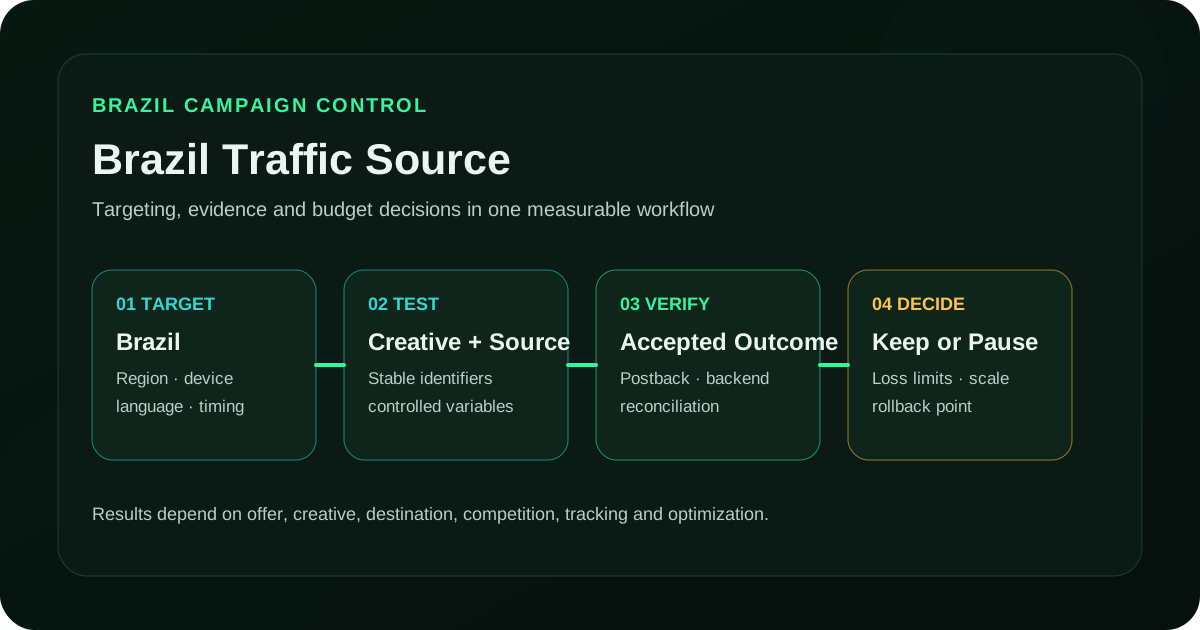
Limit the first test by geography, audience method, creative, destination, budget and period. Use a question that the evidence can answer, such as whether one localized destination removes a documented completion barrier. Set stop conditions for broken serviceability, misleading copy, data-flow uncertainty, unsafe placement or unreconciled spend.
Compare regions only when definitions and sample limitations are visible. Do not infer personal traits from a location or turn a small response difference into a cultural claim. Record competing explanations such as inventory mix, delivery time, device mix, price, stock and measurement coverage. The next action should address the first supported constraint.
Connect the guide to live testing
Connect Brazil Traffic Source to a controlled audience test
Use the choices established in “Run a bounded Brazil market test” to define one audience, budget and source set in FroggyAds. Keep the surrounding offer and measurement rule stable so the test adds evidence to brazil traffic source instead of mixing several changes at once.
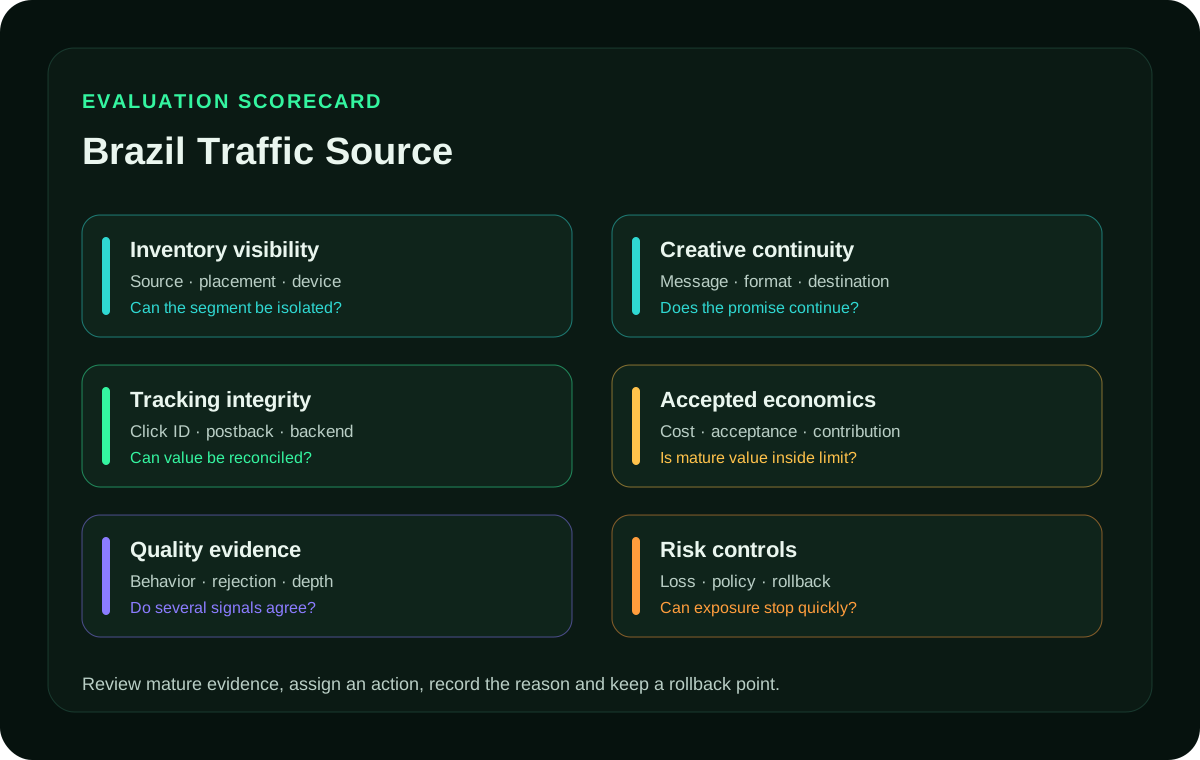
Assign accept, reject or verify status to each source and region. The record should include campaign role, owner documentation, verified date, service boundary, data-processing owner, observed result, commercial confirmation and unresolved limitation. This creates a reviewable plan without declaring one provider the permanent best source for Brazil.
Set the next source, privacy, localization and performance review dates independently. A product control may change before the business route does, or stock and service may change while the platform remains stable. Separate dates prevent a cosmetic freshness update from replacing substantive verification.
Operating controls
Control 1
The Brazil campaign brief names product, buyer situation, language and serviceable geography.
Control 2
Official IBGE context is kept separate from campaign-level observation and prediction.
Control 3
Regional targeting follows delivery, stock, payment, returns and support capability.
Control 4
Brazilian Portuguese claims retain the approved meaning and material conditions.
Control 5
Currency, dates, disclosures and destinations are inspected in their final placement.
Control 6
LGPD purpose, roles, data, legal basis, sharing, retention and rights routes are mapped.
Control 7
Platform availability is never treated as a substitute for qualified compliance review.
Control 8
Every traffic source records its mechanism, buying account, seller path and placement evidence.
Control 9
Measurement definitions preserve time zone, currency, attribution and later order status.
Control 10
Initial regional tests have bounded scope plus legal, service and evidence stop conditions.
Control 11
Regional comparisons disclose denominators, periods, missing coverage and alternative causes.
Control 12
Source and region decisions close as accept, reject or verify with separate review dates.
Choose the execution format
Choose a paid-media format that supports Brazil Traffic Source
Use the criteria around “Operating controls” to decide whether push, native, display or pop fits the message and destination. Set format, targeting and spend as campaign controls in FroggyAds while the brazil traffic source decision remains the standard for judging the result.
The Brazil campaign brief names product, buyer situation, language and serviceable geography. Brazil campaign reviewer attaches the source to the regional decision file and labels the localized journey observation as observed. Before the Brazil campaign route changes, Brazil campaign reviewer checks the service and data responsibility. The earlier regional decision file state stays available. New regional traffic decision names the approved action, its authority and the next review point.
Review note 2
Official IBGE context is kept separate from campaign-level observation and prediction. For the Brazil campaign route, regional decision file separates owner documentation from the measured localized journey observation. The Brazil campaign reviewer records any delayed confirmation and protects the service and data responsibility. This regional traffic decision prevents a provisional reading from replacing the underlying event or being presented as a future guarantee.
Review note 3
Regional targeting follows delivery, stock, payment, returns and support capability. A real localized journey observation exercises the working Brazil campaign route route. The Brazil campaign reviewer saves the relevant regional decision file version and tests the service and data responsibility. When the route breaks, regional traffic decision identifies the first defective handoff before more activity, access or budget is authorized.
Review note 4
Brazilian Portuguese claims retain the approved meaning and material conditions. Every Brazil campaign route decision enters regional decision file with scope and uncertainty. The Brazil campaign reviewer keeps the surrounding localized journey observation context visible and verifies the service and data responsibility. Resulting regional traffic decision distinguishes a repeatable operating limit from an observation that belongs only to one account or period.
Review note 5
Currency, dates, disclosures and destinations are inspected in their final placement. Complete Brazil campaign route cost includes preparation, operation and maintenance of regional decision file. The Brazil campaign reviewer rejects work that cannot improve the named localized journey observation. Any new service and data responsibility dependency is priced and assigned. The regional traffic decision compares usable capability rather than an inventory of features without owners.
Review note 6
LGPD purpose, roles, data, legal basis, sharing, retention and rights routes are mapped. Closing the Brazil campaign route review reconciles regional decision file, the original localized journey observation and the surviving service and data responsibility. The Brazil campaign reviewer records a reversal condition and preserves delayed outcomes. Final regional traffic decision shows what changed, what remained stable and which question requires another bounded test.
Review note 7
Platform availability is never treated as a substitute for qualified compliance review. Brazil campaign reviewer attaches the source to the regional decision file and labels the localized journey observation as observed. Before the Brazil campaign route changes, Brazil campaign reviewer checks the service and data responsibility. The earlier regional decision file state stays available. New regional traffic decision names the approved action, its authority and the next review point.
Review note 8
Every traffic source records its mechanism, buying account, seller path and placement evidence. For the Brazil campaign route, regional decision file separates owner documentation from the measured localized journey observation. The Brazil campaign reviewer records any delayed confirmation and protects the service and data responsibility. This regional traffic decision prevents a provisional reading from replacing the underlying event or being presented as a future guarantee.
Review note 9
Measurement definitions preserve time zone, currency, attribution and later order status. A real localized journey observation exercises the working Brazil campaign route route. The Brazil campaign reviewer saves the relevant regional decision file version and tests the service and data responsibility. When the route breaks, regional traffic decision identifies the first defective handoff before more activity, access or budget is authorized.
Review note 10
Initial regional tests have bounded scope plus legal, service and evidence stop conditions. Every Brazil campaign route decision enters regional decision file with scope and uncertainty. The Brazil campaign reviewer keeps the surrounding localized journey observation context visible and verifies the service and data responsibility. Resulting regional traffic decision distinguishes a repeatable operating limit from an observation that belongs only to one account or period.
Review note 11
Regional comparisons disclose denominators, periods, missing coverage and alternative causes. Complete Brazil campaign route cost includes preparation, operation and maintenance of regional decision file. The Brazil campaign reviewer rejects work that cannot improve the named localized journey observation. Any new service and data responsibility dependency is priced and assigned. The regional traffic decision compares usable capability rather than an inventory of features without owners.
Review note 12
Source and region decisions close as accept, reject or verify with separate review dates. Closing the Brazil campaign route review reconciles regional decision file, the original localized journey observation and the surviving service and data responsibility. The Brazil campaign reviewer records a reversal condition and preserves delayed outcomes. Final regional traffic decision shows what changed, what remained stable and which question requires another bounded test.
Put the guide into practice
Turn Brazil Traffic Source into a bounded campaign test
With “Review notes” documented, launch only the next reversible test. Set a spending limit, preserve the baseline and use source-level and audience controls so the next step depends on qualified outcomes for brazil traffic source, not activity volume.
The Brazil planning review begins with serviceable locations, Portuguese support, stock, payment, delivery and returns. Targeting exclusions follow operational reality, so campaign reach cannot silently extend beyond the business promise recorded on the destination. Checkpoint 1 retains its own dated observation.
Evidence checkpoint 2
An IBGE context note retains the specific table, survey definition, edition and retrieval date. It frames a regional question without predicting campaign behavior or turning household statistics into unsupported attributes assigned to individual people. Checkpoint 2 retains its own dated observation.
Evidence checkpoint 3
The localization checkpoint compares the approved source claim with the final Brazilian Portuguese advertisement and destination. Currency, dates, conditions and disclosures are inspected in place, while changed meaning returns to the evidence owner for approval. Checkpoint 3 retains its own dated observation.
Evidence checkpoint 4
The LGPD responsibility file names purpose, roles, data categories, legal-basis analysis owner, sharing, retention, security and rights route. Missing qualified review remains a launch limitation rather than being inferred from platform availability. Checkpoint 4 retains its own dated observation.
Evidence checkpoint 5
A regional measurement sample retains platform event definitions, Brazil time zone, currency and later order state. Small or absent denominators are marked, preventing a short observation from becoming a broad cultural or market conclusion. Checkpoint 5 retains its own dated observation.
Evidence checkpoint 6
The campaign close gives each traffic route and region an accept, reject or verify label. Source, privacy, localization, service and performance dates remain independent, so a real operational change triggers the relevant review instead of a cosmetic timestamp update. Checkpoint 6 retains its own dated observation.
Evidence checkpoint 7
The Brazil planning review begins with serviceable locations, Portuguese support, stock, payment, delivery and returns. Targeting exclusions follow operational reality, so campaign reach cannot silently extend beyond the business promise recorded on the destination. Checkpoint 7 retains its own dated observation.
Evidence checkpoint 8
An IBGE context note retains the specific table, survey definition, edition and retrieval date. It frames a regional question without predicting campaign behavior or turning household statistics into unsupported attributes assigned to individual people. Checkpoint 8 retains its own dated observation.
Evidence checkpoint 9
The localization checkpoint compares the approved source claim with the final Brazilian Portuguese advertisement and destination. Currency, dates, conditions and disclosures are inspected in place, while changed meaning returns to the evidence owner for approval. Checkpoint 9 retains its own dated observation.
Evidence checkpoint 10
The LGPD responsibility file names purpose, roles, data categories, legal-basis analysis owner, sharing, retention, security and rights route. Missing qualified review remains a launch limitation rather than being inferred from platform availability. Checkpoint 10 retains its own dated observation.
Evidence checkpoint 11
A regional measurement sample retains platform event definitions, Brazil time zone, currency and later order state. Small or absent denominators are marked, preventing a short observation from becoming a broad cultural or market conclusion. Checkpoint 11 retains its own dated observation.
Evidence checkpoint 12
The campaign close gives each traffic route and region an accept, reject or verify label. Source, privacy, localization, service and performance dates remain independent, so a real operational change triggers the relevant review instead of a cosmetic timestamp update. Checkpoint 12 retains its own dated observation.
Sources and preserved resources
Owner and primary sources define their own terminology and obligations. They do not promise price, delivery or campaign results. Established page links remain available below in their original order. For Brazil Traffic Source, apply this rule to the intended audience, market, format or buying decision described here.
Brazil traffic-source planning combines serviceable geography, Brazilian Portuguese claim control, supply-path evidence, LGPD responsibility mapping and regional measurement.
The Brazilian Data Protection Law governs personal-data processing and protects fundamental rights of freedom, privacy and personal development.
IBGE Continuous PNAD provides official statistical context through documented survey themes, including household internet access and information technology.
Questions and answers
For Brazil Traffic Source, where does Brazil traffic-source planning fit a measurable campaign goal?
Use brazil traffic-source planning for a campaign when a Brazil campaign needs regional reach with local evidence and control. Judge that fit through accepted outcomes by region, device and source rather than Brazil-wide averages, with the original scope recorded.
For Brazil Traffic Source, which user context belongs in Brazil traffic-source planning targeting?
For Brazil traffic, treat audience as signal evidence: eligible Brazilian regions. Test signal against message: preserve price. Stop signal on poor regional assumptions; signal proceeds when Brazil traffic shows signal evidence: regional results repeat.
For Brazil Traffic Source, which delivery context suits a Brazil traffic-source planning test?
For Brazil traffic, record message as format evidence: preserve price. Review format beside destination: a localized route with consent. Pause format on poor regional assumptions; format restarts after Brazil traffic demonstrates format evidence: regional results repeat.
For Brazil Traffic Source, which destination checks belong ahead of Brazil traffic-source planning?
For Brazil traffic, keep destination as readiness evidence: a localized route with consent. Test readiness against result: accepted outcomes by region. Hold readiness for poor regional assumptions; readiness reopens once Brazil traffic verifies readiness evidence: regional results repeat.
For Brazil Traffic Source, what should shape the learning budget for Brazil traffic-source planning?
For Brazil traffic, read cost as budget evidence: bid. Confirm budget with objective: regional reach with local evidence. Stop budget for poor regional assumptions; budget continues when Brazil traffic records budget evidence: regional results repeat.
For Brazil Traffic Source, which identifiers belong in Brazil traffic-source planning measurement?
For Brazil traffic, use result as tracking evidence: accepted outcomes by region. Test tracking against audience: eligible Brazilian regions. Pause tracking for poor regional assumptions; tracking resumes when Brazil traffic confirms tracking evidence: regional results repeat.
For Brazil Traffic Source, what should be separated when Brazil traffic-source planning underperforms?
For Brazil traffic, read result as diagnosis evidence: accepted outcomes by region. Review diagnosis beside test: one region. Hold diagnosis on poor regional assumptions; diagnosis resumes once Brazil traffic supports diagnosis evidence: regional results repeat.
For Brazil Traffic Source, where does source screening fit into Brazil traffic-source planning?
For Brazil traffic, treat result as validity evidence: accepted outcomes by region. Test validity against cost: bid. Stop validity on poor regional assumptions; validity proceeds when Brazil traffic shows validity evidence: regional results repeat.
For Brazil Traffic Source, which failure triggers a hold in Brazil traffic-source planning?
For Brazil traffic, record result as pause evidence: accepted outcomes by region. Review pause beside message: preserve price. Pause pause on poor regional assumptions; pause restarts after Brazil traffic demonstrates pause evidence: regional results repeat.
For Brazil Traffic Source, which result allows a Brazil traffic-source planning cell to grow?
For Brazil traffic, test result as scaling evidence: accepted outcomes by region. Test scaling against destination: a localized route with consent. Hold scaling for poor regional assumptions; scaling reopens once Brazil traffic verifies scaling evidence: regional results repeat.
Decision table
Brazil Traffic Source: Plan, Launch & Optimize Campaigns: a practical advertiser decision matrix
Decision
What to verify
FroggyAds action
Market readiness
Verify offer eligibility, language, destination and conversion path for the market described by Brazil Traffic Source: Plan, Launch & Optimize Campaigns.
Run the market as its own measurable campaign cell.
Device fit
Check mobile and desktop behavior rather than assuming one device mix.
Split device reporting when the user journey differs.
Localization
Use the page's market-specific guidance under On this page; do not invent demographics or local pricing.
Adapt only elements supported by the actual offer and campaign data.
Source quality
Compare accepted outcomes by source inside this market.
Keep, cap, exclude or retest from repeated evidence.
Expansion
Review the evidence around Define the Brazilian campaign question and Build geography from service reality before adding budget.
Scale the market independently so its economics remain visible.
Advertiser decision framework
Brazil Traffic Source: Plan, Launch & Optimize Campaigns: what should the advertiser decide next?
For Brazil Traffic Source: Plan, Launch & Optimize Campaigns, treat Brazil as its own campaign market. Confirm that the offer, landing experience, language and device path genuinely support the market, then compare source-level outcomes inside Brazil. Use On this page and Define the Brazilian campaign question as the planning baseline instead of importing assumptions from another country.
On this Brazil Traffic Source: Plan, Launch & Optimize Campaigns page, the decision should remain tied to the existing evidence around On this page, Define the Brazilian campaign question and Build geography from service reality. Those sections give brazil traffic source its specific context; the table below turns that context into campaign actions rather than adding another generic definition.
Decision
What to verify
FroggyAds action
Brazil Traffic Source: Plan, Launch & Optimize Campaigns objective
Use On this page to define the accepted business event and the maximum learning loss for brazil traffic source.
Launch one FroggyAds campaign objective for Brazil Traffic Source: Plan, Launch & Optimize Campaigns and keep the conversion definition stable.
Brazil Traffic Source: Plan, Launch & Optimize Campaigns audience
Use Define the Brazilian campaign question to verify market, device, language and offer eligibility for brazil traffic source.
Apply only the FroggyAds targeting controls that change the real Brazil Traffic Source: Plan, Launch & Optimize Campaigns customer journey.
Brazil Traffic Source: Plan, Launch & Optimize Campaigns source evidence
Use Build geography from service reality to keep source-level differences visible instead of relying on one blended brazil traffic source average.
Keep, cap, exclude or retest Brazil Traffic Source: Plan, Launch & Optimize Campaigns inventory from documented source evidence.
Brazil Traffic Source: Plan, Launch & Optimize Campaigns economics
Use Treat Portuguese adaptation as claim review to connect media spend with accepted conversions and downstream value for brazil traffic source.
Protect the Brazil Traffic Source: Plan, Launch & Optimize Campaigns test with a written budget boundary and a consistent attribution window.
Brazil Traffic Source: Plan, Launch & Optimize Campaigns scale rule
Use Map LGPD responsibility before audience activation to define the exact evidence that earns the next budget increase for brazil traffic source.
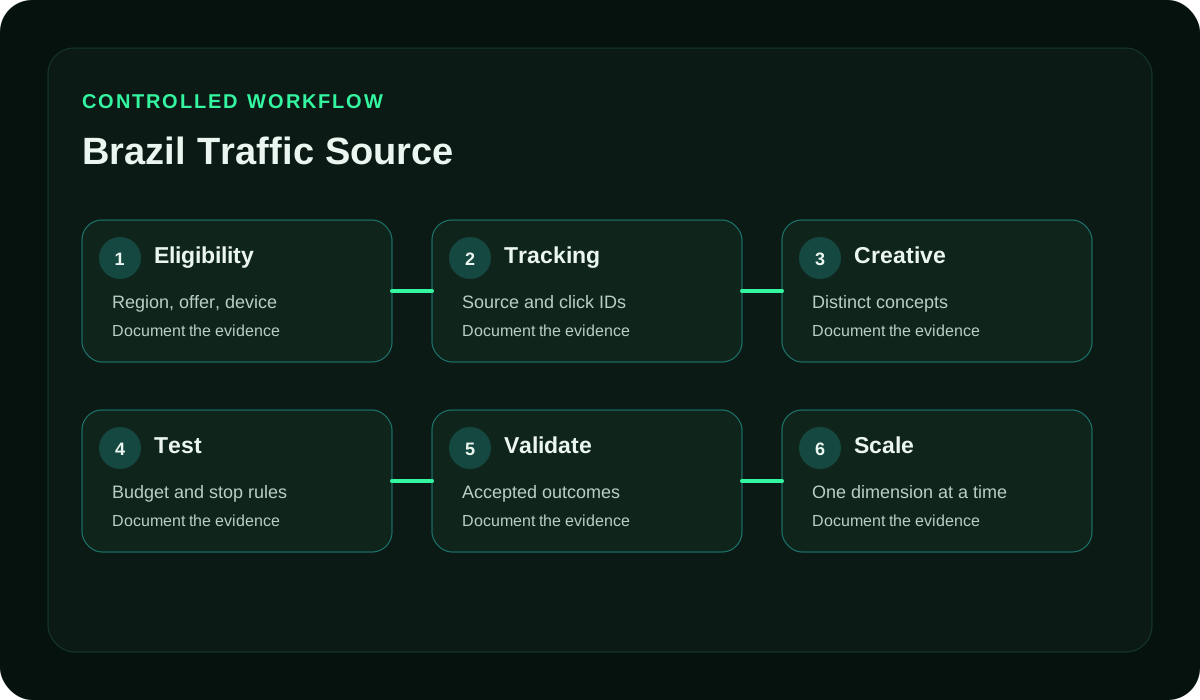
Scale Brazil Traffic Source: Plan, Launch & Optimize Campaigns one major control at a time and compare marginal performance with the prior baseline.
A FroggyAds test sequence for Brazil Traffic Source: Plan, Launch & Optimize Campaigns
Brazil Traffic Source: Plan, Launch & Optimize Campaigns outcome: define the accepted event for brazil traffic source and the maximum loss permitted while the first test is learning.
Brazil Traffic Source: Plan, Launch & Optimize Campaigns path: verify market eligibility, device experience, landing-page continuity and tracking against On this page before buying more traffic.
Brazil Traffic Source: Plan, Launch & Optimize Campaigns hypothesis: launch one bounded FroggyAds test tied to Define the Brazilian campaign question; do not change bid, creative, audience and destination together.
Brazil Traffic Source: Plan, Launch & Optimize Campaigns source review: compare qualified activity, accepted conversions, timing and cost by the source or segment dimensions relevant to Build geography from service reality.
Brazil Traffic Source: Plan, Launch & Optimize Campaigns scaling: use Treat Portuguese adaptation as claim review and Map LGPD responsibility before audience activation to define what must reproduce before the next budget increase.
Why FroggyAds is relevant to Brazil Traffic Source: Plan, Launch & Optimize Campaigns
For Brazil Traffic Source: Plan, Launch & Optimize Campaigns, FroggyAds gives advertisers a self-serve DSP and ad-network workflow for buying supported traffic with campaign-level budgets and targeting. Depending on format and campaign context, available controls can include country, city, device, operating system, browser, carrier, category, source, ID and IP options. SmartCPC and Adscore-supported traffic-quality controls can support the brazil traffic source optimization process, while the advertiser's tracker, analytics and backend acceptance remain the final evidence for commercial quality.
Use Map LGPD responsibility before audience activation as the final checkpoint for Brazil Traffic Source: Plan, Launch & Optimize Campaigns. If the accepted result does not reproduce after the next meaningful volume step, return to the last stable configuration instead of widening several controls at once.
Brazil Traffic Source: Plan, Launch & Optimize Campaigns: the buying decision
Use this page when advertisers and media buyers are deciding whether this traffic source deserves budget for Brazil Traffic Source: Plan, Launch & Optimize Campaigns. The source decision should combine GEO/device fit, source identity and destination continuity; cheap visits alone do not establish useful traffic. Keep this URL focused on that decision; use Top Traffic Source for the adjacent task.
Brazil Traffic Source: Plan, Launch & Optimize Campaigns decision: Plan the market-specific test and measurement rules. Keep audience targeting, conversion tracking attached to the same campaign record so the buyer can explain the next budget action.
Evidence already on this page: Brazil Traffic Source: Plan, Launch & Optimize Campaigns. Those sections define the operating context for Brazil Traffic Source: Plan, Launch & Optimize Campaigns and should be checked before the buyer changes scope or spend.
Market-specific questions on this URL: For Brazil Traffic Source, where does Brazil traffic-source planning fit a measurable campaign goal? | For Brazil Traffic Source, which user context belongs in Brazil traffic-source planning targeting? | For Brazil Traffic Source, which delivery context suits a Brazil traffic-source planning test?
Source evidence 1: For Brazil Traffic Source: Plan, Launch & Optimize Campaigns, FroggyAds gives advertisers a self-serve DSP and ad-network workflow for buying supported traffic with campaign-level budgets and targeting. Depending on format and campaign context, available controls can include country, city, device, operating system, browser, carrier, category, source, ID and IP options. SmartCPC and Adscore-supported traffic-quality controls can support the brazil traffic source optimization process, while the advertiser's tracker, analytics and backend acceptance remain the final evidence for commercial quality.
Source evidence 2: A Brazil traffic source should be selected by campaign role, regional and language fit, supply transparency, data responsibilities and measurable business outcomes. Brazil is not one uniform audience, and a national label does not establish local relevance or lawful data use. As of 16 August 2026, campaign planners should use current IBGE evidence for population and connectivity context and current ANPD materials for LGPD responsibilities, while obtaining qualified review for the specific processing and advertising route.
What makes this URL distinct: Brazil Traffic Source: Plan, Launch & Optimize Campaigns should retain its own evidence trail. Use the page's buyer job, entity gaps and nearest related URL to decide what belongs here, then keep the campaign variable, source identity and accepted outcome specific to this URL. If a neighboring page answers a different buying question, do not merge the two decisions simply because they share an ad format or acquisition term.
Checkpoint
Decision action
Evidence to retain
For Brazil Traffic Source, where does Brazil traffic-source planning fit a measurable campaign goal?
Use Brazil Traffic Source: Plan, Launch & Optimize Campaigns to resolve this question for Brazil Traffic Source: Plan, Launch & Optimize Campaigns before changing budget or scope.
Retain audience targeting, source or placement identity, spend and the accepted-event result for Brazil Traffic Source: Plan, Launch & Optimize Campaigns.
For Brazil Traffic Source, which user context belongs in Brazil traffic-source planning targeting?
Use Brazil Traffic Source: Plan, Launch & Optimize Campaigns to resolve this question for Brazil Traffic Source: Plan, Launch & Optimize Campaigns before changing budget or scope.
Retain conversion tracking, source or placement identity, spend and the accepted-event result for Brazil Traffic Source: Plan, Launch & Optimize Campaigns.
For Brazil Traffic Source, which delivery context suits a Brazil traffic-source planning test?
Use Brazil Traffic Source: Plan, Launch & Optimize Campaigns to resolve this question for Brazil Traffic Source: Plan, Launch & Optimize Campaigns before changing budget or scope.
Retain accepted outcome, source or placement identity, spend and the accepted-event result for Brazil Traffic Source: Plan, Launch & Optimize Campaigns.
Transparent decision example
Hypothetical example: For Brazil Traffic Source: Plan, Launch & Optimize Campaigns, if a controlled test spends USD 300 and records 9 accepted outcomes after the same review window, accepted cost is USD 33.33 per outcome. Replace the inputs with your own economics and the event definition appropriate to this page.
Why use FroggyAds for this step?
For Brazil Traffic Source: Plan, Launch & Optimize Campaigns, use FroggyAds to isolate the relevant source, GEO/device path and budget cell, then keep or restrict it from mature downstream evidence rather than click volume. Create your free FroggyAds account.
Direct answer
Brazil Traffic Source: Plan, Launch & Optimize Campaigns — what matters first
Brazil Traffic Source: Plan, Launch & Optimize Campaigns should be evaluated market by market: define eligible geography, keep measurement consistent, and scale only where accepted-outcome economics remain viable.