
Best Interstitial Traffic
The best interstitial traffic is delivery that appears at an appropriate transition, gives the user a clear route forward or out, preserves source and cost evidence, and produces accepted outcomes without relying on accidental interaction. Web and app placements behave differently, so a buyer should define the environment, trigger, frequency, creative, destination and validation rule before comparing supply.
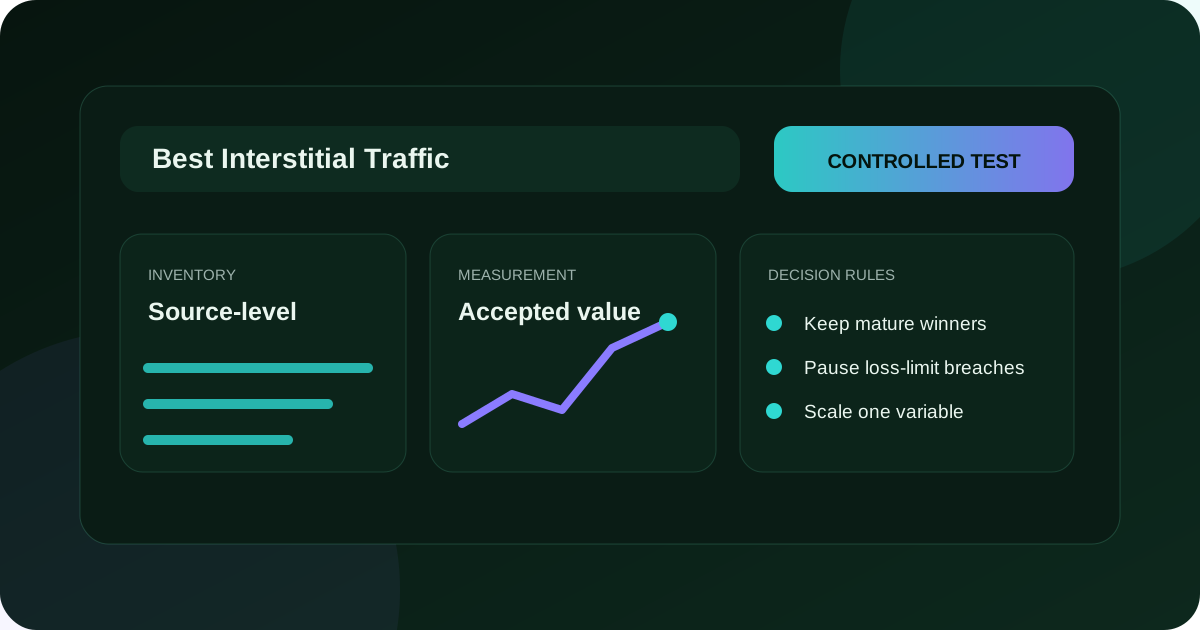
Official interstitial placement and user-experience boundary
Google Ad Manager describes web interstitials as full-page ads with a clear exit and configurable frequency cap, documents several eligible triggers, and notes storage-related behavior. Its app guidance says interstitials fit natural transition points in linear experiences and warns that surprising placement or excessive display can create poor experience and accidental clicks. These are product-specific implementation boundaries, not a certification of another network or a guarantee of results. A buyer should inspect the selected provider's current format rules, render the actual placement, exclude sensitive or disruptive actions, validate the close behavior and join delivery to accepted business outcomes before increasing exposure. Preserve the tested web route or app release, trigger, viewport, cap and exit evidence because a different implementation requires its own acceptance decision.
- Google Ad Manager web interstitial guidance - triggers, exit, frequency and storage context
- Google Ad Manager app interstitial guidance - natural transition and accidental-click context
Define the interstitial environment
State whether delivery occurs on a website, mobile web experience or app, because triggers, SDK or tag behavior, close controls and policy conditions differ. Name the eligible pages or app states, device classes, countries, format dimensions and destination. A generic interstitial label cannot support a fair comparison when one cell interrupts navigation and another appears at a natural break.
Assign publisher, advertiser, technical and measurement owners. Record which party controls the trigger, frequency, creative, source exclusion and pause action. A network candidate advances only when the team can reproduce the placement path and identify who can stop it during an experience or tracking failure.
Choose a deliberate trigger
Map the user's task immediately before and after the ad. Google documents web triggers such as navigation, page return, inactivity and end-of-article conditions for its managed product; app guidance favors natural transitions. The selected network may differ. Verify the live trigger rather than borrowing one vendor's behavior for every implementation.
Exclude payment, form completion, security, consent, destructive actions and other moments where interruption can confuse or cause unintended input. Test latency so the interstitial does not arrive after the user has begun the next task. Preserve the trigger version with performance evidence.
Connect the guide to live testing
Connect Best Interstitial Traffic to a controlled audience test
Use the choices established in “Choose a deliberate trigger” to define one audience, budget and source set in FroggyAds. Keep the surrounding offer and measurement rule stable so the test adds evidence to best interstitial traffic instead of mixing several changes at once.
Create My Free Account
Verify exit, focus and back behavior
Render the placement on representative viewport sizes and input modes. Confirm that the close control is visible, understandable and reachable by keyboard or assistive technology where applicable, and that browser back or app navigation behaves predictably. A creative preview does not prove the surrounding implementation allows an exit.
Measure accidental interaction signals without treating every short visit as invalid traffic. Review click location, time to interaction, rapid return and downstream continuity. Pause a placement when the close and destination paths cannot be distinguished reliably. User escape is a product acceptance gate independent of revenue.
Control frequency and repeated exposure
Define the cap by user or available identifier, placement, time period and campaign. Test fresh, returning, consent-limited and storage-unavailable states. Google documents configurable caps for its web implementation; another provider needs its own verified behavior. A dashboard setting is not sufficient if client and server evidence show repeated exposure beyond the intended rule.
Review frequency distribution rather than only the average. A small group can receive many interruptions while the mean appears acceptable. Establish a complaint, exit or accepted-outcome guardrail and lower exposure when marginal impressions add irritation without qualified value.
Inspect supply and source transparency
Request placement, site, app or source identifiers at the granularity needed for action. Document inventory category, device, geography, trigger method and any reselling. Blended volume can hide a well-timed publisher inside a poor source mix. Unknown supply should receive a limited test and should not be described as premium merely because the unit fills.
Create keep, observe, pause and retest states with evidence. Investigate rapid clicks, session failure, unexpected referrers and source concentration, while avoiding unsupported fraud claims. A source earns expansion only after accepted outcomes reproduce and the placement remains experience-compliant.
Build format-specific creative
Design for the real dimensions, safe areas, close control and viewing time. The message should establish the offer, material condition and next action without imitating system controls. Preserve claim substantiation, rights, captions and approved version. When video or animation is used, test load, sound and motion behavior under current policy.
Keep the destination promise consistent with the interstitial. A forceful format magnifies any mismatch between ad and landing page. Compare concepts as separate cells, record automatic resizing or assembly and avoid assigning a combined result to one asset when the platform controlled multiple variants.
Make the destination recover the task
The landing page must load securely, identify the offer and let the user continue deliberately. Check mobile layout, redirects, query parameters, form behavior and return navigation. If the ad interrupts content, decide whether closing restores the exact prior state. A purchase that strands the user after an accidental click fails even when the click price is low.
Use a controlled destination version and monitor page errors by source and device. Do not hide a slow or confusing landing problem inside a traffic-quality label. When destination and placement change together, open a new comparison period.
Join impression, interaction and value
Keep ad request or eligible opportunity, filled impression, rendered view, interaction, landing session, accepted event, rejection and reversal as separate states where data permits. Document the provider's billable unit and event rules. Align identifiers, timestamps, timezone and currency before computing rates.
Sample records from the provider report to the first-party ledger and back. Explain aggregate, modeled and unmatched evidence. A click is diagnostic, not proof of intent; an accepted business event after validation is the decision state. Attribution still does not establish incrementality without a suitable counterfactual.
Choose the execution format
Choose a paid-media format that supports Best Interstitial Traffic
Use the criteria around “Join impression, interaction and value” to decide whether push, native, display or pop fits the message and destination. Set format, targeting and spend as campaign controls in FroggyAds while the best interstitial traffic decision remains the standard for judging the result.
Create My Free Account
Price interruption and operations
Include media, creative, tag or SDK integration, consent work, quality review, reporting, support and internal labor. A low CPM can be expensive when the format generates accidental sessions, support burden or product abandonment. Keep publisher revenue and advertiser value as separate conclusions when both are reviewed.
Calculate mature total cost per accepted event and retain the purchased-unit metrics beside it. Add a downside line for lost task completion or retention where the organization can measure it. Do not invent an experience cost when evidence is unavailable; state the unknown and cap exposure.
Run a bounded placement pilot
Select a small number of verified sources, one trigger class, approved creative, one destination and a maximum loss. Freeze the accepted event and validation window. Exercise close, back, latency, no-fill, repeated exposure and tracking failure paths before opening meaningful volume.
Review user-experience evidence, source distribution, destination continuity, accepted outcomes and full cost together. A pilot can show that a configured cell is operable; it cannot prove every future publisher or budget level. Keep weak and strong sources separate.
Use change control for triggers and inventory
Log changes to provider, placement, trigger, cap, creative, destination, bid, audience and measurement. Automated inventory movement can alter the mix without an advertiser edit, so preserve source snapshots. If several dimensions move together, treat the period as observational rather than claiming one cause.
Maintain an unchanged control where practical. Close a prior evidence period when policy or implementation changes. The best designation belongs to a dated cell, not to a network name after its operating context disappears.
Set pause and scale decisions
Pause for missing exit, unexpected trigger, broken destination, event loss, policy issue, source opacity beyond the agreed limit, abnormal spend or cost above tolerance. Continue at the same cap while mature evidence is incomplete and safety gates remain intact. Document who authorizes restoration.
Scale only after accepted outcomes reproduce without experience deterioration. Increase one source, cap, budget or audience dimension at a time and compare marginal results. More delivery can reach weaker inventory or expose users too frequently, so the original average is not a forecast.
Preserve ownership and portability
Retain creative source files, placement and exclusion lists, configuration screenshots or exports, cost rows, event definitions and decision logs. Test account roles and removal. If a managed service owns the tag or app integration, document how the advertiser or publisher can pause it without waiting for that supplier.
Before termination, export evidence, reconcile final charges, revoke credentials and verify that no schedule remains active. Record which data or configuration cannot move. Exit cost belongs in the platform decision before a long commitment, not after a disruptive placement must be removed.
Put the guide into practice
Turn Best Interstitial Traffic into a bounded campaign test
With “Preserve ownership and portability” documented, launch only the next reversible test. Set a spending limit, preserve the baseline and use source-level and audience controls so the next step depends on qualified outcomes for best interstitial traffic, not activity volume.
Create My Free Account
Review the format when conditions change
Reopen the evaluation after app releases, page redesign, consent behavior, platform policy, trigger, cap, creative or destination changes. Retest representative devices and input modes. A placement that was natural in one journey can become surprising after navigation changes.
Preserve the prior scorecard and review date. A historical high return cannot excuse a current exit, accessibility or policy defect. The next decision should state exactly what remains controlled and what must be learned again.
Distinguish web and app implementation evidence
A web placement can depend on page navigation, browser storage, viewport behavior and a tag managed by the publisher. An app unit can depend on release version, operating system, SDK lifecycle and application state. Keep those implementation records separate even when the campaign uses the same creative and provider account.
Record tag or SDK version, eligible route or screen, trigger state, test device and release identifier with every acceptance run. A clean browser result does not validate an app build, and one tested app version cannot certify another. When the environment changes, repeat close, focus, back, frequency and destination checks before relying on prior outcome data.
Audit the full frequency distribution
Create buckets for zero, one, two and higher exposures within the declared period using the best permitted identifier. Compare exits, destination sessions and mature accepted events across those buckets. If storage or consent prevents stable counting, label the affected segment and choose a conservative fallback instead of assuming that the configured cap worked.
Investigate extreme recipients individually at the implementation level without exposing unnecessary user data. Check refresh, multiple tabs, reinstall, logout, device switching and provider-side counting. The decision should report both the intended rule and observed distribution because a single average can conceal concentrated interruption.
Review creative loading and failure states
Test slow connections, cached and uncached assets, blocked media, orientation change and background-to-foreground return. The close route and underlying task must remain understandable when an image, animation or destination resource fails. Record payload size and observed latency for representative devices rather than declaring the format fast from a design preview.
Decide what happens when the ad cannot render completely: no-fill, timeout, collapsed unit or restored content. A partial overlay that blocks input is a product defect even if no billable impression is recorded. Preserve logs or captures that let the technical owner reproduce the failure and confirm the repair.
Separate advertiser and publisher scorecards
The publisher can evaluate content continuation, abandonment, complaints, latency and revenue, while the advertiser examines destination continuity, accepted outcomes and complete acquisition cost. A placement should not be called best by using only the side that benefits. Keep both perspectives distinct and state which organization controls each remedy.
Where the buyer cannot access publisher experience evidence, treat that absence as an explicit limitation. Request the available placement policy and source fields, then cap exposure accordingly. Do not invent an experience score from click-through rate or assume publisher acceptance proves that the implementation is appropriate for every audience.
Create an incident and rollback runbook
Before launch, name contacts for unexpected triggering, hidden exit, excessive frequency, policy notice, destination failure, measurement loss and abnormal spend. Document the fastest pause route for the network, publisher implementation and campaign. Include what evidence must be captured before a change removes the ability to diagnose the incident.
After pausing, verify that new delivery has actually stopped and that the original user task is restored. Preserve configuration, timestamps, affected sources and financial exposure. Reopen only after the responsible owner reproduces the repair in the relevant web or app environment and a reviewer signs the next bounded limit.
Interstitial traffic acceptance matrix
Use the matrix after rendering and tracing the live placement. A missing experience or source control is a fail, not a score that cheap delivery can offset. Preserve the environment, release, trigger, source set and test date beside every row so evidence from one implementation is never transferred silently to another.
| Area | Proof | Rule |
|---|---|---|
| Trigger | Recorded user state and latency test | Show only at an accepted transition |
| Exit | Viewport, keyboard, close and back checks | Pause when escape is unclear |
| Frequency | Distribution by user or available identifier | Keep exposure inside the written cap |
| Source | Placement IDs and exclusion evidence | Limit unknown inventory |
| Value | Mature accepted outcomes and complete cost | Scale reversible cells only |
Retained interstitial traffic resources
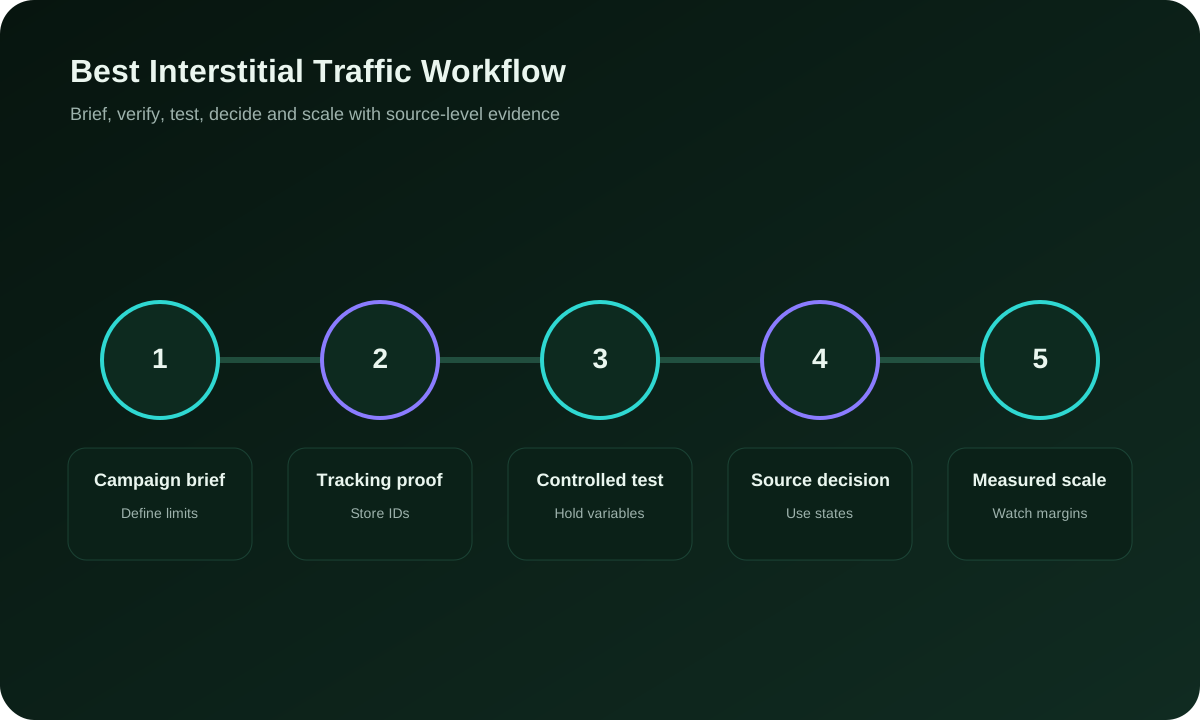
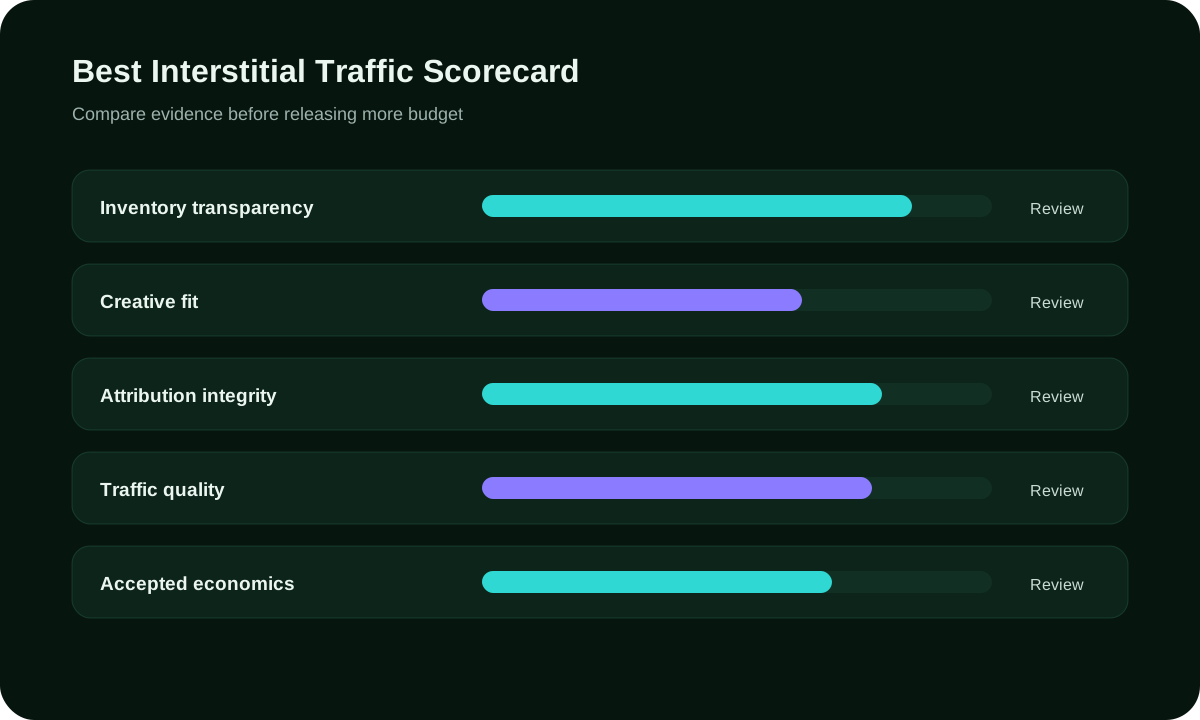
The original interstitial guides, calls to action and three images remain below in their original sequence. They preserve navigation and do not prove that a provider or placement meets the evidence gates above.
Best interstitial traffic questions
Which origin fields should accompany interstitial traffic?
Ask for the host app or site, placement trigger, seller route, region, device, timestamp and unknown classification. The buyer needs enough detail to review, exclude and reconcile sources.
What does an interstitial interaction actually prove?
It proves that the format recorded an action, not that the person intended to buy or found the interruption helpful. Evaluate destination behaviour, accepted outcomes and complaints separately.
How should buyers inspect an interstitial placement?
View the delivered creative in its host context on representative devices, checking timing, close control, content access, disclosure and destination. A screenshot of the ad alone is incomplete.
Which eligibility rules belong before buying interstitial traffic?
Define allowed regions, devices, app or site categories, placements, user-control standards and service availability. Unknown or restricted supply should be blocked rather than assumed safe.
What landing-page evidence matters for interstitial traffic?
Confirm the page matches the ad, loads on target devices, states material terms, requests proportionate data and handles ineligible visitors safely. Test redirects and failures as well.
Which patterns should trigger interstitial source review?
Investigate rapid repeated actions, impossible timing, hidden origins, high rejection, immediate exits and complaint clusters. Keep the raw evidence and avoid declaring a cause from one signal.
How should interstitial traffic quality be measured?
Choose an eligible business action the service has accepted, then follow cancellations, support issues and subsequent customer suitability where observable. Use impressions and taps only to diagnose how traffic arrived.
What belongs in an interstitial traffic billing check?
Reconcile eligible delivery, invalid-traffic rules, rejected regions or placements, credits, currency and taxes against source-level records. Do not pay disputed volume without a traceable review.
Which conditions should stop an interstitial traffic test?
Stop on deceptive controls, restricted placement, unexplained source, broken destination, abnormal interaction or harmful customer signals. Name the owner and evidence required before restart.
What should a buyer retain after an interstitial traffic test?
Keep the brief, creative, destinations, placement approvals, source and seller data, exclusions, delivery records, outcome definitions, reconciliation and unresolved incidents.
Best Interstitial Traffic: what should the advertiser decide next?
For Best Interstitial Traffic, interstitial means a full-screen or large transition unit shown between content states where supported. The buying decision is whether that delivery context fits the offer, creative and destination well enough to produce an accepted post-click result. Use Evaluate interstitial traffic from trigger to accepted outcome and Official interstitial placement and user-experience boundary as the page-specific checkpoints, then judge best interstitial traffic on creative clarity, transition timing and landing-page continuity plus downstream conversion quality.
On this Best Interstitial Traffic page, the decision should remain tied to the existing evidence around Evaluate interstitial traffic from trigger to accepted outcome, Official interstitial placement and user-experience boundary and Define the interstitial environment. Those sections give best interstitial traffic its specific context; the table below turns that context into campaign actions rather than adding another generic definition.
| Decision | What to verify | FroggyAds action |
|---|---|---|
| Best Interstitial Traffic objective | Use Evaluate interstitial traffic from trigger to accepted outcome to define the accepted business event and the maximum learning loss for best interstitial traffic. | Launch one FroggyAds campaign objective for Best Interstitial Traffic and keep the conversion definition stable. |
| Best Interstitial Traffic audience | Use Official interstitial placement and user-experience boundary to verify market, device, language and offer eligibility for best interstitial traffic. | Apply only the FroggyAds targeting controls that change the real Best Interstitial Traffic customer journey. |
| Best Interstitial Traffic source evidence | Use Define the interstitial environment to keep source-level differences visible instead of relying on one blended best interstitial traffic average. | Keep, cap, exclude or retest Best Interstitial Traffic inventory from documented source evidence. |
| Best Interstitial Traffic economics | Use Choose a deliberate trigger to connect media spend with accepted conversions and downstream value for best interstitial traffic. | Protect the Best Interstitial Traffic test with a written budget boundary and a consistent attribution window. |
| Best Interstitial Traffic scale rule | Use Connect Best Interstitial Traffic to a controlled audience test to define the exact evidence that earns the next budget increase for best interstitial traffic. | Scale Best Interstitial Traffic one major control at a time and compare marginal performance with the prior baseline. |
A page-specific FroggyAds test sequence for Best Interstitial Traffic
- Best Interstitial Traffic outcome: define the accepted event for best interstitial traffic and the maximum loss permitted while the first test is learning.
- Best Interstitial Traffic path: verify market eligibility, device experience, landing-page continuity and tracking against Evaluate interstitial traffic from trigger to accepted outcome before buying more traffic.
- Best Interstitial Traffic hypothesis: launch one bounded FroggyAds test tied to Official interstitial placement and user-experience boundary; do not change bid, creative, audience and destination together.
- Best Interstitial Traffic source review: compare qualified activity, accepted conversions, timing and cost by the source or segment dimensions relevant to Define the interstitial environment.
- Best Interstitial Traffic scaling: use Choose a deliberate trigger and Connect Best Interstitial Traffic to a controlled audience test to define what must reproduce before the next budget increase.
Why FroggyAds is relevant to Best Interstitial Traffic
For Best Interstitial Traffic, FroggyAds gives advertisers a self-serve DSP and ad-network workflow for buying supported traffic with campaign-level budgets and targeting. Depending on format and campaign context, available controls can include country, city, device, operating system, browser, carrier, category, source, ID and IP options. SmartCPC and Adscore-supported traffic-quality controls can support the best interstitial traffic optimization process, while the advertiser's tracker, analytics and backend acceptance remain the final evidence for commercial quality.
Use Connect Best Interstitial Traffic to a controlled audience test as the final checkpoint for Best Interstitial Traffic. If the accepted result does not reproduce after the next meaningful volume step, return to the last stable configuration instead of widening several controls at once.
Best Interstitial Traffic: the buyer task this URL owns
Treat Best Interstitial Traffic as an operating page for performance-focused advertisers, not as a synonym page. Its job is to help you evaluate providers against explicit selection criteria, with the evidence kept against this exact decision. The nearest related FroggyAds page is Top Interstitial Ads; this URL keeps ownership of the distinct task to evaluate providers against explicit selection criteria.
For the Best Interstitial Traffic decision, popunder, popup, full-page traffic, conversion tracking are the useful operating concepts. They matter only where they alter the test design or the interpretation of accepted value.
| Checkpoint | Page-specific action | Evidence to keep |
|---|---|---|
| Journey | Match the format to the user's attention state and destination. | Retain evidence specific to Best Interstitial Traffic and its accepted outcome. |
| Creative | Check format requirements, message continuity and landing-page readiness. | Retain evidence specific to Best Interstitial Traffic and its accepted outcome. |
| Optimize | Compare source-level accepted outcomes before increasing volume. | Retain evidence specific to Best Interstitial Traffic and its accepted outcome. |
Hypothetical calculation: if a controlled campaign for best interstitial traffic spends USD 275 and produces 8 accepted conversions, accepted CPA is USD 275 / 8 = USD 34.38. Replace the inputs with your own campaign economics; this is not a FroggyAds performance claim.
Choose FroggyAds when Best Interstitial Traffic calls for a controlled paid-media test. We let performance-focused advertisers apply relevant format, targeting and budget controls, keep source-level evidence visible, and measure the accepted outcome before increasing spend. Create your free FroggyAds account.
Best Interstitial Traffic — what matters first
Best Interstitial Traffic is useful when the format fits the user journey, device context, creative requirements and measurable conversion path.