
Affordable Interstitial Traffic
Direct answer: Affordable interstitial traffic is full-screen or large transition inventory whose source context, trigger, close behavior and accepted downstream value remain supportable under a limited test. The buyer should not infer quality from price or response rate. A defensible campaign identifies how the placement opens, verifies the destination on target devices and preserves source evidence through backend acceptance.
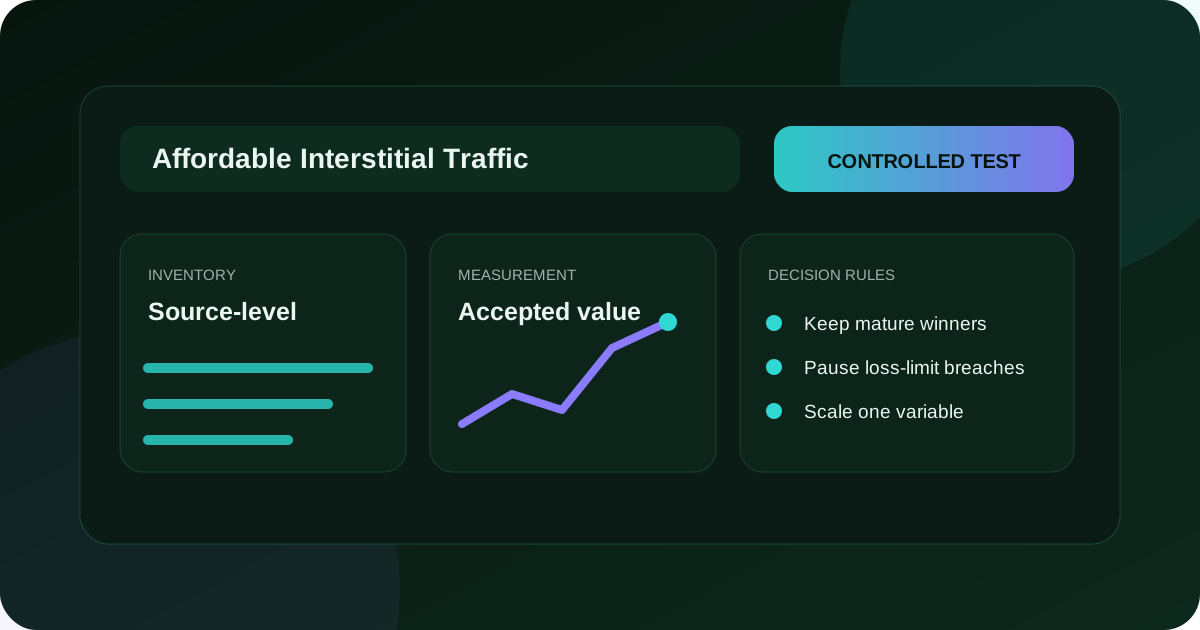
Define the interstitial event before comparing offers
An interstitial can describe several user experiences. It may occupy the screen at a natural transition, open between publisher actions or appear through another documented trigger. Ask the seller where the placement appears, what user action precedes it, which devices and orientations are eligible, how a person closes it and which event creates a billable record. A price comparison is incomplete when two offers describe different interactions under the same format label.
Record the destination behavior as part of the contract. Determine whether the click opens a new tab, same tab, in-app browser or external browser, and whether redirects are permitted. Confirm the source or placement identifiers available to the buyer. The campaign needs enough context to distinguish a creative problem, a transition problem and a source problem. Do not approve spending while the route remains a verbal description that cannot be checked after delivery.
Separate publisher experience from advertiser traffic
A publisher decides whether a dialog or interstitial obstructs its own content and how the experience affects visitors. An advertiser buys the resulting opportunity and evaluates whether the destination receives intentional, eligible visits. The controls overlap, but they are not identical. A buyer should ask about the transition and close behavior while also testing the landing path, source identifiers and accepted outcomes. A publisher should consider content access and user trust in its own implementation.
Google Search Central warns that intrusive dialogs and interstitials can obscure a site's content and make it harder for search engines to understand. That guidance addresses on-site experiences and should not be restated as a universal rule for every independent traffic source. It still offers a useful reminder for an advertiser destination: do not greet a paid visitor with another layer that hides the page they were promised, unless a necessary flow such as lawful consent or age handling requires an appropriate dialog.
Inspect the path out of the creative
The close control should be visible, understandable and usable on the screen sizes included in the campaign. Test it with touch and keyboard behavior where relevant. The control must perform the action it represents. Do not place a false close icon inside the advertisement or position the real control so an ordinary attempt to dismiss the placement activates the destination. Record the platform or publisher specification and compare a live or isolated implementation when possible.
Check timers and sequencing without assuming that longer exposure produces better results. If a close option appears after a documented interval, the buyer needs to know how that affects the user and billing event. Monitor complaints, rapid exits and repeated interactions by source. A campaign should not depend on a person being unable to leave. Intentional visits are more useful for evaluation than volume produced by confusion.
Design for a transition, not a disguised system message
An interstitial has more visual area than a small banner, but that does not justify several unrelated propositions. Identify the advertiser, state one supportable offer and present one accurate action. The destination should continue the same message. Do not imitate an operating-system alert, antivirus warning, account notice or browser dialog. Avoid buttons that look like device controls when they are advertising links.
Test portrait and landscape layouts on the intended devices. A design that appears balanced on a desktop preview can place the action below the visible area in an in-app browser. Check text size, contrast, image crop, safe area and loading sequence. If an important qualifier arrives after the main claim or remains unreadable, revise the composition. Save the approved creative and preview context with its identifier.
The FTC applies truth-in-advertising principles to online marketing. Review the net impression created by image, text, interaction and destination, not the headline alone. Platform acceptance does not prove that a claim is substantiated or a disclosure effective. Teams outside the United States should separately assess the requirements that apply to their own offer and target markets.
Connect the guide to live testing
Connect Affordable Interstitial Traffic to a controlled audience test
Use the choices established in “Design for a transition, not a disguised system message” to define one audience, budget and source set in FroggyAds. Keep the surrounding offer and measurement rule stable so the test adds evidence to affordable interstitial traffic instead of mixing several changes at once.
Create My Free Account
Remove the second interruption after the click
The first destination screen should identify the advertiser, repeat the proposition and make the next action clear. Avoid immediately covering it with a newsletter prompt, app-install layer or unrelated promotion. Where a necessary dialog is used, keep the underlying content accessible as soon as the required interaction is complete. Test the page under the same browser context, orientation and connection conditions likely to follow the placement.
Measure page render separately from click receipt. A redirect chain, slow script or unsupported browser can produce billed clicks that never reach usable content. Record final URL, redirect count, important resource failures and the event that confirms the page became interactive. Repair technical loss before excluding a source for weak intent. The buyer should also verify that the destination does not open another automatic window or trigger a download that the creative did not explain.
Ask only for information needed at the current stage. A long form can make a mobile transition especially difficult, while an overly simple form can create unqualified records. Explain material conditions before submission and state what happens next. Rehearse a valid action, an error and a duplicate so the team understands how each appears in reporting.
Diagnose intent through several observations
No single timing or engagement threshold proves an accidental click. Compare click-to-render time, immediate exits, meaningful page interaction, repeated device or click patterns, conversion delay and accepted backend results by source. A visitor can leave quickly because the destination is slow or the offer is irrelevant, while an automated interaction can mimic basic page activity. Use the combined evidence to choose the next test.
Preserve creative and placement context. If one layout has materially different behavior across otherwise similar sources, inspect the close and action areas. If several creatives fail on one source, examine the transition and audience fit. If all sources show the same sudden change, check the destination and event implementation. A structured diagnosis avoids blaming supply for a form release or attributing a publisher issue to the offer.
Write an investigation outcome rather than a permanent quality label. The record can say unsupported under the tested configuration, with the evidence and date. Save the source export before applying an exclusion. If new information reveals a technical error, the team can reverse the decision and run a corrected bounded test.
Carry placement evidence into the accepted event
Retain the campaign, creative, source or placement, device, timestamp, click and validated event identifiers supported by the platform and permitted under applicable privacy requirements. Confirm the values survive redirects and form submission. The backend record should keep the original source context even when the person returns through another channel. Do not overwrite history merely to give the latest interaction full credit.
Create a controlled click and follow it into the analytics and business systems. Compare the stored values character by character, including encoding and truncation. Test missing and malformed parameters. A default unknown category should remain distinguishable from a placement that genuinely carries that label. Document which system owns each identifier and how late outcomes are joined.
Reconciliation needs a time-zone and processing rule. Platform delivery, site events and backend acceptance may close on different schedules. Preserve raw timestamps and transform them in a documented report layer. Do not edit source data to force daily totals to match. The purpose is a traceable decision, not cosmetic agreement between dashboards.
Choose the execution format
Choose a paid-media format that supports Affordable Interstitial Traffic
Use the criteria around “Carry placement evidence into the accepted event” to decide whether push, native, display or pop fits the message and destination. Set format, targeting and spend as campaign controls in FroggyAds while the affordable interstitial traffic decision remains the standard for judging the result.
Create My Free Account
Calculate cost after validation and rejection
Define the accepted event and the contribution available to acquire it. Include variable fulfilment, payment, support and expected reversal costs. Then add creative, tracking and landing-page work to the campaign ledger. A low price per click can be expensive when many arrivals fail to render or backend acceptance remains low. Compare sources by the value the advertiser can actually use.
Keep rejection reasons granular. Ineligible geography, duplicate submission, failed payment, unsupported product, unreachable lead and operational decline call for different action. A campaign may be attracting the right people while the advertiser responds too slowly. Conversely, a technically sound path can still bring demand that never fits the offer. Return those findings to targeting, creative and operations instead of hiding them in one rejected total.
Set the maximum test loss before launch. The amount must be small enough to remain acceptable if no useful result occurs and large enough to observe more than one source or time period where the campaign design requires it. The limit is a business choice, not an industry formula. Pause when the boundary or a mandatory technical condition fails.
Control repeated exposure and user disruption
Use the frequency controls available in the platform or supply agreement and record their scope. A limit may apply by campaign, creative, publisher, device or another identifier. Confirm the measurement period and known gaps. Repeated impressions are not automatically waste, but they should have a planned role. Monitor response quality, complaints and accepted outcomes rather than assuming more exposure always improves recall.
Separate frequency from source volume. A high-volume placement may reach many individuals once, while a smaller placement may repeat the same users. The available identifiers may not permit perfect person-level measurement, so state the limitation. Test a lower exposure condition when disruption or fatigue is supported, and keep the creative and bid stable enough to interpret the result.
Retire or revise creative when its date, offer or claim changes, regardless of frequency evidence. Accuracy takes priority over preserving a test. Store the reason and affected sources. If an updated asset receives a new identifier, maintain the relationship to the concept so reporting can distinguish a substantive message change from a corrected file.
Stage an interstitial campaign in four review passes
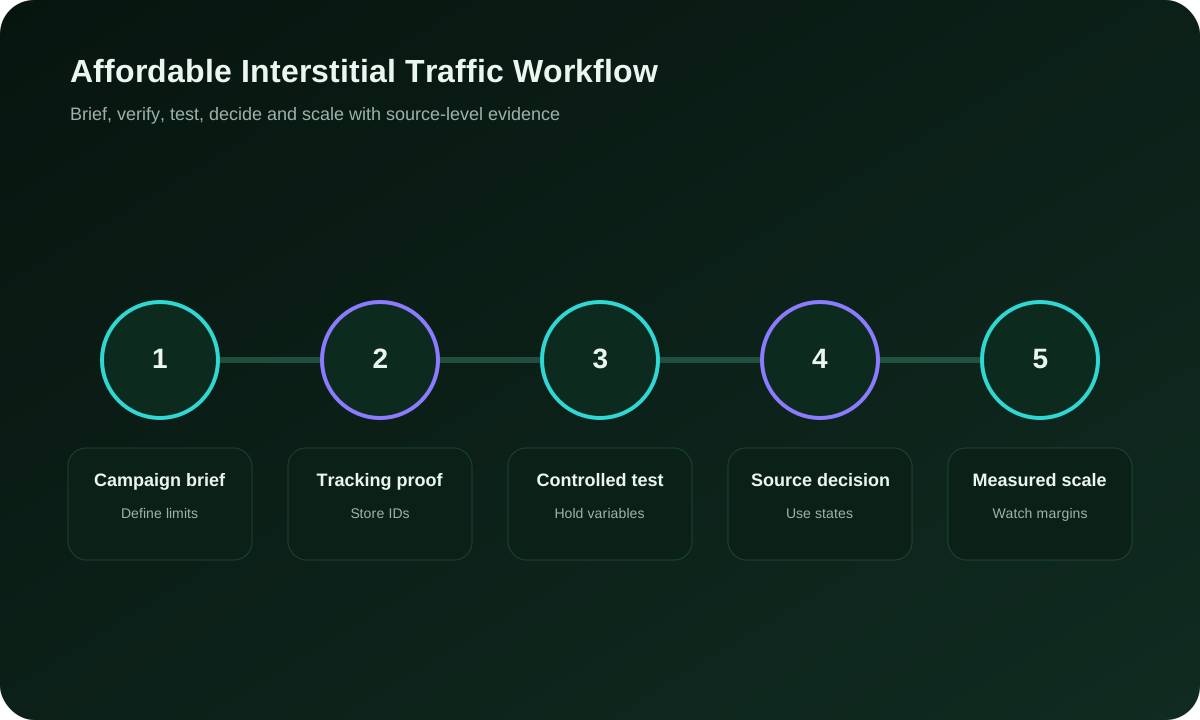
The preflight pass checks offer eligibility, source fields, trigger description, close behavior, creative, destination, identifiers and budget limits. The delivery pass confirms that impressions, clicks and page renders behave as expected. The quality pass compares meaningful interactions and validated outcomes by source after the normal delay. The expansion pass changes one bid, cap, audience or creative control only after the previous evidence remains supportable.
Give each pass an owner and exit condition. A technical operator can pause when the page fails. A compliance owner can retire inaccurate creative. A media buyer can narrow a source under the evidence rule. A budget owner approves a larger downside envelope. Clear authority prevents a dashboard alert from becoming an unreviewed spending change.
Store a snapshot before and after each material action. The package should include the creative, final URL, configuration, source export, event definition and accepted outcome report. Another reviewer must be able to determine which configuration produced the result. This record becomes more valuable when the campaign fails, because it prevents the same setup from being relaunched without correcting the cause.
Put the guide into practice
Turn Affordable Interstitial Traffic into a bounded campaign test
With “Stage an interstitial campaign in four review passes” documented, launch only the next reversible test. Set a spending limit, preserve the baseline and use source-level and audience controls so the next step depends on qualified outcomes for affordable interstitial traffic, not activity volume.
Create My Free Account
Stop delivery when the evidence chain becomes unreliable
Pause immediately when the destination fails, tracking cannot connect the visit with the chosen event, the creative becomes inaccurate or the offer loses eligibility. These are operating failures, so waiting for more traffic cannot solve them. Save the effective configuration and note the start of the affected interval. Repair and retest the path before resuming.
Use a mature commercial pause rule for source decisions. Let the relevant outcome window pass, then compare accepted cost, rejection pattern and downstream value with the planned boundary. A small source may remain uncertain rather than weak. Continue only if the next observation has a defined purpose and the remaining loss allowance covers it.
Investigate sudden cross-source changes as a shared-system problem first. A payment outage, form release, consent change or analytics error can make every placement appear worse at once. Segment the timing and verify the backend. Excluding multiple sources during a site failure destroys evidence and can make the corrected campaign harder to restart.
Expand only one source or control at a time
Expansion can alter source mix, auction position, device distribution, frequency and transition context. Do not assume the initial accepted cost will persist. Choose one route, such as a higher campaign cap, a measured bid change, additional verified sources or a new creative concept. Compare the marginal outcomes generated after the change with the preceding configuration.
Confirm that the advertiser can handle more accepted actions. Response time, inventory, fulfilment and support are part of campaign quality. A source can remain suitable while the advertiser loses conversions through an overloaded operation. Include capacity in the scale decision and lower the cap when service deteriorates.
Keep a controlled exploration area if the budget allows. Concentration can improve short-term evidence around known sources, while limited exploration tests whether new supply meets the same rules. Apply the same destination, identifier and acceptance standards to both. Stop an expansion when marginal cost, user disruption or measurement uncertainty leaves the written boundary.
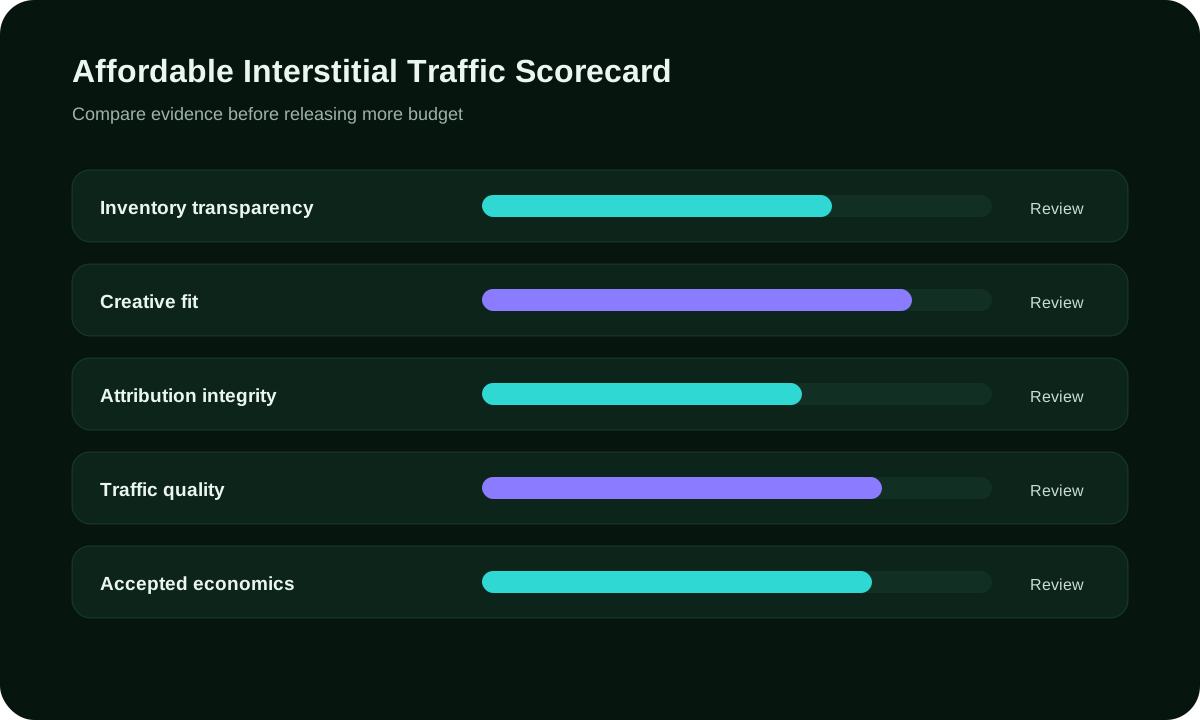
Interstitial traffic decision record
| Area | Required observation | Action boundary |
|---|---|---|
| Transition | Source context, trigger, close behavior and billing event | Do not buy an undefined interaction |
| Destination | Render, message continuity, device layout and valid next action | Pause when the promised page is obstructed or broken |
| Intent | Timing, interaction, repeats, conversion delay and acceptance | Use combined evidence rather than one threshold |
| Economics | Complete cost, rejection reason and backend value | Stop at the recorded maximum test loss |
| Expansion | Stable marginal outcome and available operating capacity | Change a single major control |
Reference for Affordable Interstitial Traffic: Affordable Campaign Options: FTC guidance on online advertising and marketing.
Affordable interstitial traffic FAQ
Which browsing moments can support respectful interstitial traffic?
Natural pauses between tasks or pages can give a full-screen message room without interrupting an active action. Request trigger context and exclude moments that make closing or continuing difficult.
How should timing and frequency be tested together?
Compare a small set of trigger moments under clear exposure caps, then review closes, short visits and accepted actions. Keep source and device groups separate so repeated exposure cannot hide in an average.
Which checks belong before buying interstitial traffic?
Review the offer, creative, close control, destination, applicable platform policies and source exclusions. Rehearse the entire path across the devices in scope and retain an immediate pause option.
What should interstitial creative explain before the click?
Name the advertiser, relevant benefit, key eligibility or condition and the next step in readable language. Enough context should be present for an informed click without crowding the screen.
Which result makes interstitial traffic commercially useful?
Use an accepted post-click action tied to business value, then compare it with media, creative and review costs. Keep raw clicks, accidental-engagement signals and qualified outcomes separate.
What costs can follow a low interstitial traffic price?
Creative adaptation, landing fixes, source review, invalid-activity investigation and staff reconciliation can outweigh a cheap bid. Include this work when comparing traffic with other options.
Which evidence can suggest accidental interstitial engagement?
Very fast returns, immediate closes, weak page interaction, unusual device patterns and clicks clustered around difficult controls deserve review. Confirm technical causes before labelling a source.
What is a fair first setup for interstitial traffic?
Use one approved offer, a limited source group, capped spend, exposure limits and a verified mobile destination. Define the accepted action and failure stops before delivery begins.
Which experience failures should pause an interstitial campaign?
Pause for broken close controls, misleading creative, unexpected redirects, unusable destinations, excessive repetition or material tracking gaps. Correct and retest the route before resuming.
When can affordable interstitial traffic receive more budget?
Increase after placement quality, user experience and accepted outcomes remain stable across meaningful volume. Raise one source or spending variable at a time and review new supply separately.
Continue with adjacent buying checks
Run a bounded interstitial test
Document the transition, test the close and destination, preserve the source identifier and stop when the accepted loss rule is reached.
Affordable Interstitial Traffic: the buyer task this URL owns
For performance-focused advertisers, Affordable Interstitial Traffic should shorten the path from research to action: balance budget efficiency with measurable accepted outcomes. The page therefore stays focused on controllable campaign evidence and leaves adjacent intents to their own URLs. The nearest related FroggyAds page is Top Interstitial Ads; this URL keeps ownership of the distinct task to balance budget efficiency with measurable accepted outcomes.
For the Affordable Interstitial Traffic decision, popunder, popup, full-page traffic, landing page are the useful operating concepts. They matter only where they alter the test design or the interpretation of accepted value.
| Checkpoint | Page-specific action | Evidence to keep |
|---|---|---|
| Journey | Match the format to the user's attention state and destination. | Retain evidence specific to Affordable Interstitial Traffic and its accepted outcome. |
| Creative | Check format requirements, message continuity and landing-page readiness. | Retain evidence specific to Affordable Interstitial Traffic and its accepted outcome. |
| Optimize | Compare source-level accepted outcomes before increasing volume. | Retain evidence specific to Affordable Interstitial Traffic and its accepted outcome. |
Hypothetical calculation: if a controlled campaign for affordable interstitial traffic spends USD 250 and produces 4 accepted conversions, accepted CPA is USD 250 / 4 = USD 62.5. Replace the inputs with your own campaign economics; this is not a FroggyAds performance claim.
Start the paid-media test for Affordable Interstitial Traffic with FroggyAds when you need direct control over formats, targeting, budgets and source evidence. Increase spend only after the result supports the next acquisition step. Create your free FroggyAds account.
Affordable Interstitial Traffic — what matters first
Affordable Interstitial Traffic is useful when the format fits the user journey, device context, creative requirements and measurable conversion path.