United States network selection and source validation

Best Ad Network US

Direct answer: The best ad network for a U.S. campaign is the network that can serve the advertiser's eligible offer in the intended states or regions, exposes enough source and delivery evidence, supports a controlled budget, and produces accepted backend outcomes under a dated comparison. No network is a universal winner across offers, formats, locations and risk limits.

Create My Free Account
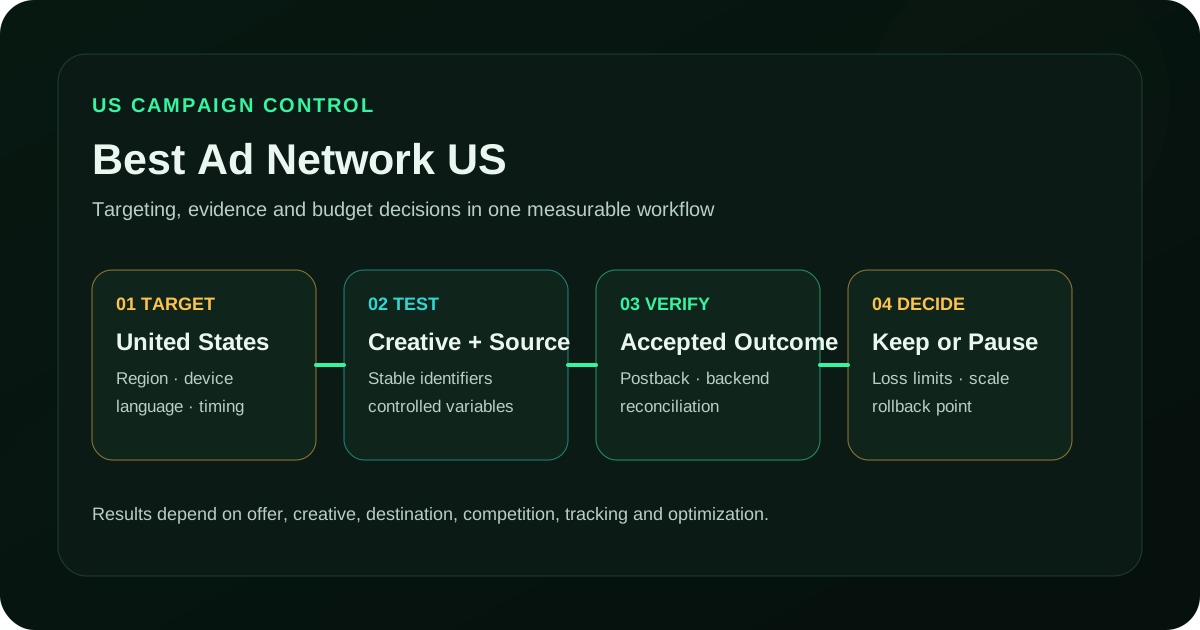
best ad network us planning visual

Begin with the U.S. serviceability map

List the states, regions or local service areas in which the offer can actually be sold, delivered and supported. Add inventory limits, shipping constraints, appointment coverage, language, age or category conditions and claims that require current specialist review. An available targeting option does not make the underlying offer eligible everywhere. Preserve the person and date responsible for each restriction.

Define the accepted commercial outcome before selecting a network. A valid order, approved application, qualified lead or funded account may be useful, while a form event or raw click may be only an early diagnostic signal. State validation, duplicate, cancellation, return and reversal rules. The definition determines what the network test must preserve after the visit.

Write a bounded procurement question: which network and source mix supports the named offer, geography, format, observation window and loss boundary? This wording prevents a broad best claim from surviving after the campaign scope changes.

For a companion buying route, Explore USA Traffic Buying.

Translate location controls into a verifiable test

Requested geography

Record the state, region, city or radius chosen in the account and the platform's current definition of that setting. Where a system distinguishes presence from interest, note the actual selection. Do not infer perfect physical location from an interface label.

Reported geography

Export the location dimensions available to the buyer, together with source, device, time and campaign identifiers. Preserve unknown and low-volume categories instead of reallocating them to a preferred state.

Accepted geography

Validate the service or transaction location in the advertiser's backend under an appropriate process. Compare it with the requested and reported fields and document discrepancies rather than forcing agreement.

Run controlled visits from known contexts where feasible, but do not treat a small technical sample as a universal accuracy rate. IP routing, device signals, declared interest and privacy choices can affect the evidence available. Set a rejection or manual-review rule for locations the business cannot serve.

Repeat the readback after a copied campaign, saved audience or account default is applied. A correct plan can still be implemented with a broader setting. Save the final configuration before launch and verify it again after any network or campaign migration.

Inspect the supply path without turning a file into a certificate

IAB Tech Lab's sellers.json specification provides a structured way for an advertising system to publish seller information. Review the network's current implementation where relevant and record seller identity, relationship fields and the retrieval date. Missing or inconsistent information is a question for the network, while a present record is not proof that a placement is safe, effective or suitable for the advertiser.

Ask how the network identifies exchange, publisher, application, site, placement or other source levels for the selected format. Determine which identifiers appear before launch, in reporting and in exports. A source label that changes between screens cannot support a durable inclusion or exclusion decision without a documented mapping.

Trace one sample from campaign through source report, billed event and accepted backend result. Preserve identifiers exactly, including unknown values. If an intermediary aggregates supply beyond the buyer's view, state that limitation in the comparison rather than describing the path as transparent.

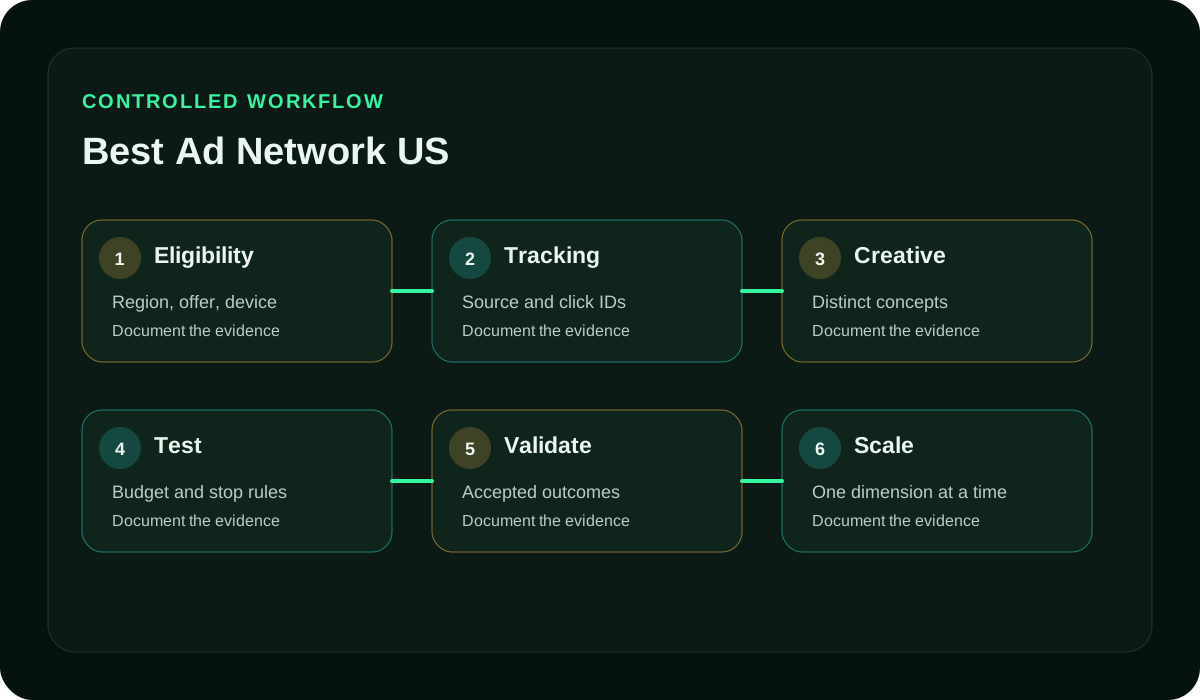
Require controls that survive account readback

best ad network us controlled workflow visual
  1. Configure

    Set offer, creative, destination, geography, source scope, device, schedule, cap and maximum spend under named access.

  2. Read back

    Export or independently capture the implemented state and compare it with the approved plan. Resolve defaults and inherited settings.

  3. Observe

    Preserve delivery, source and cost evidence without optimizing against incomplete early outcomes.

  4. Reconcile

    Join campaign identifiers to accepted, rejected, duplicate and reversed backend records after the observation window.

  5. Decide

    Scale, hold, repair or exclude according to the written rule and retain the evidence that supports the action.

Test rendering and destination continuity before buying reach

Use approved creative with substantiated claims, current availability and an identifiable advertiser. Inspect its delivered render in the intended format, device and orientation. Check crop, legibility, close or navigation behavior, click target and any automatic adaptation. A creative accepted by an upload form can still arrive in a misleading or unusable state.

Trace every redirect to the final URL. Confirm the destination retains the offer, material qualifications, price context and next action presented by the advertisement. Test required dialogs, forms, checkout, confirmation and recovery. Record load and failure evidence, but avoid claiming a universal performance threshold from one device or connection.

Validate the success event in the backend. A tag firing before server validation, payment or eligibility does not prove an accepted result. Preserve the campaign and source identifiers through the path, and write down where the chain loses them. Measurement loss can make a network comparison inconclusive even when traffic was delivered.

Separate traffic quality questions into observable patterns

Render pattern
Was the creative shown in the expected context and was the intended interaction possible?
Timing pattern
Do immediate exits, repeated events or implausible sequences concentrate by source, device or period?
Outcome pattern
Which visits become mature accepted results, rejections, cancellations or reversals?
Operational pattern
Can the buyer export evidence, apply a source decision and obtain support within the campaign's time boundary?

Investigate technical causes before labelling a source. A broken mobile form, duplicate event, invalid redirect or time-zone mismatch can create poor-looking traffic across otherwise different supply. Repair the shared defect and restart a bounded observation if the earlier evidence was contaminated.

Do not use one click-through rate, engagement metric or proprietary platform score as a universal quality verdict. Combine the placement behavior, repeat distribution, source mix, accepted outcomes, rejection reasons and backend value relevant to the advertiser. Record what remains unobservable.

Review commercial terms before the first funded impression

Identify the advertiser account, contracting entity, currency, billing event, minimum funding, balance treatment and support route. Determine when a click, impression, view or other event becomes billable and how invalid or disputed delivery is handled. Keep the current terms and the account-specific confirmation; a general sales statement may not describe every arrangement.

Review prohibited content, advertiser identity, suspension, data access, retention, refunds or credits and evidence needed for a dispute. State who can authorise funding and who monitors depletion. A low headline price is not a complete cost if reporting, review or creative adaptation requires substantial manual work.

Test invoices and exports on the initial bounded amount. Reconcile billed units, credits, campaign cost and account balance. Pause on an unexplained difference rather than increasing funds to keep delivery moving. Preserve correspondence and timestamps for the support path.

Stage a multi-state budget so decisions can mature

Group locations by serviceability, business value, language, fulfilment and expected observation delay. Begin with enough eligible scope to produce interpretable evidence without spreading a small loss boundary across every state. A state with no accepted outcomes after a handful of visits is not necessarily disproven; the test may simply be underpowered.

Allocate an initial cap by campaign and period, then define the largest permitted increase. Change one major geographic, source or bidding control at a time. If several dimensions change together, close the earlier test and record the new state. Do not present blended results as a stable network property.

Monitor both spend and operational capacity. A campaign can be inside its media target while overwhelming sales review, inventory or customer service. Include rejected lead handling, fulfilment delay and reversal in the scale decision. Stop if the business can no longer validate outcomes consistently.

Reassess geographic scope when the offer, law, policy, inventory or service coverage changes. A conclusion dated for one configuration should not be reused automatically for another year or state group.

Use source exclusions as documented experiments

Before excluding a source, verify identifiers, dates, technical function and the maturity of accepted outcomes. Compare with a useful control group under similar creative, destination and campaign conditions. State the reason and evidence threshold in advance where possible. Exclusion should not become a substitute for repairing a broken conversion path.

Save the source export, affected configuration, analysis and decision date. Apply the exclusion and read back the live state. Watch for remapped identifiers, related placements or a shift that concentrates delivery elsewhere. An exclusion can change the remaining mix and invalidate an earlier cost comparison.

Set a review condition. A source may remain excluded until a documented placement, measurement or quality issue changes and another bounded test is authorised. Do not quietly restore it through a copied campaign or broad network default.

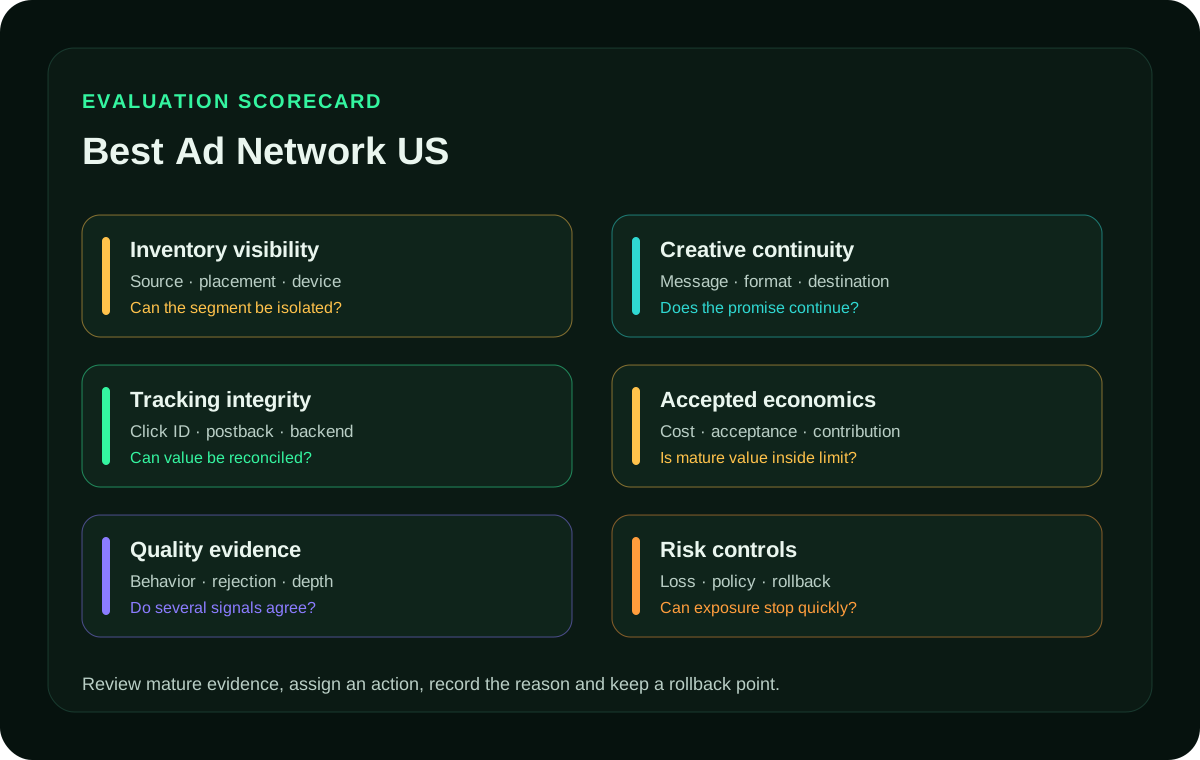
Build a comparison scorecard without invented weights

best ad network us evaluation scorecard visual
U.S. network evidence record
DimensionEvidenceDecision question
EligibilityOffer and state map with current reviewCan this campaign run as planned?
LocationRequested, reported and accepted geographyAre serviceable locations distinguishable?
SupplySeller, source and placement identifiersCan the buyer investigate and act?
MeasurementJoined accepted and rejected resultsDoes evidence survive beyond the platform?
OperationsFunding, support, exports and incident responseCan the team run and contain the test?

Use blocking requirements first. If the offer is ineligible, location cannot be controlled or measurement is broken, a composite score should not hide the failure. For remaining candidates, let the advertiser choose weights that reflect its documented business need and retain the raw evidence beside the calculation.

Call a network the best fit only within the tested scope and date. State the offer, geography, format, spend range, outcome and uncertainty. Another advertiser can reasonably reach a different conclusion.

Best ad network US FAQ

What does best ad network for a U.S. campaign mean?

It means best fit for the advertiser's eligible offer, target states or regions, format, budget controls, source evidence and accepted outcome under a dated test. It does not mean a universal winner.

Which U.S. campaign restrictions should be mapped first?

Map where the product can be sold or served, age or category limits, language support, state-specific conditions, fulfilment and claims that need specialist review before targeting is configured.

How should geographic targeting be verified?

Read the selected platform's current targeting definition, distinguish presence and interest where applicable, preserve reported location and compare it with accepted backend geography. No location system should be assumed perfectly accurate.

What can sellers.json contribute to network review?

It can publish structured seller information for an advertising system under the IAB Tech Lab specification. Buyers still need contract, placement, quality and outcome evidence; the file is not a quality certificate.

Which source controls should a network expose?

Seek stable placement or source identifiers, exports, inclusion and exclusion controls, change history and a support route. Evaluate the exact controls available under the buyer's account and format.

How should network traffic quality be tested?

Compare render behavior, repeats, timing, source mix, accepted conversions, rejection reasons, reversals and backend value. Avoid declaring quality from one platform score or click-through rate.

What contract questions affect a U.S. network test?

Review advertiser identity, billing event, currency, funding, refunds or credits, data access, retention, support, prohibited content, account suspension and the process for disputing delivery.

How should a multi-state budget be staged?

Start with serviceable locations and a written loss boundary, retain state or region evidence and change one geographic or bidding control at a time. Do not spread a small budget so widely that no decision can mature.

When should a U.S. source be excluded?

Exclude it after technical issues are separated from source behavior and mature accepted outcomes fail the planned rule. Save the source evidence and decision date before applying the change.

When can an ad network be called the best fit?

Only after a defined, comparable test shows supportable outcomes, reliable measurement, usable controls and acceptable operations for that advertiser. State the scope and date of the conclusion.

Select on dated U.S. campaign evidence

Lock eligibility, geography, supply controls, measurement, cost and the stop rule before comparing networks.

Build a category and claims checkpoint for the U.S. offer

Identify the product category, advertised benefits, comparisons, endorsements, prices, availability statements and material qualifications. Bind each statement to current evidence owned by the business. Review applicable federal, state, platform and industry requirements with the appropriate specialist. A network's technical ability to accept creative is not an approval of the offer or its claims.

Map age, licensing, fulfilment or geographic conditions to both targeting and destination handling. If a person outside the serviceable scope can reach the page, the destination should respond truthfully rather than recording an apparently successful lead. Preserve the rejection reason in the backend so the campaign report does not reward ineligible demand.

Version the exact creative and destination that passed review. A copied campaign, automated adaptation or landing-page release can introduce a broader claim or remove a qualification. Require another readback when a material component changes. Do not inherit approval from a different format merely because the headline is similar.

Create a specialist escalation packet with the proposed text, images, audience, states, destination, evidence and unresolved question. A concise complete packet reduces delay and prevents the operator from paraphrasing a sensitive issue inaccurately. Record the decision and date without turning it into permanent approval for later campaigns.

Compare networks through matched campaign cells

Create the smallest fair cells the advertiser can operate: same eligible offer, materially equivalent creative, destination, geography, observation window and accepted outcome. Record differences that cannot be held constant, such as format, supply access, billing event or optimisation behavior. A comparison is useful when those differences are explicit, not when two dashboard totals merely appear side by side.

Assign separate caps and identifiers. Avoid moving budget from one cell to another before results mature unless the loss rule requires containment. Preserve zero-delivery, rejected and unknown records. Removing inconvenient cells after the test changes the question and can make an ordinary outcome look selectively strong.

Reconcile costs to mature accepted results and operational effort. Include creative adaptation, destination repair, source analysis, support delay, funding friction and staff review. A network with a lower media ratio may be a worse fit if evidence cannot be exported or the team cannot safely control delivery.

Write a dated decision for each cell: proceed, repair, hold, reject or inconclusive. An inconclusive result is valid when volume, tracking or maturity is insufficient. It should lead to a narrower next test or no further spending, not a universal ranking.

Prepare containment, evidence capture and controlled restart

Define incidents that trigger an immediate pause: wrong advertiser or destination, delivery outside approved geography, source identifiers disappearing, spend beyond the authorised boundary, broken accepted-event tracking, misleading render or a serious source anomaly. Name the person able to contain each campaign and the support contact for account-level action.

On containment, preserve campaign configuration, creative version, destination, source export, timestamps, billing, backend outcomes and communications. Determine whether scheduled changes, copied campaigns or external tools can continue spending. Protect the evidence before making repairs so the cause can be distinguished from the corrective action.

Investigate the smallest relevant layer. A universal destination failure differs from one source's placement behavior, and an account default differs from a campaign edit. Apply the repair in an isolated state, run a known technical transaction and verify the live readback. Do not reopen the full multi-state scope simply because a single page now loads.

Restart with a capped cell and an explicit observation interval. Reconcile delivery, geography, identifiers, billing and accepted outcomes before returning to the prior plan. Preserve the incident and restart decision with residual limitations. A later successful period does not erase the earlier failure.