Ad network evaluation for media buyers

Best Ad Network Kenya

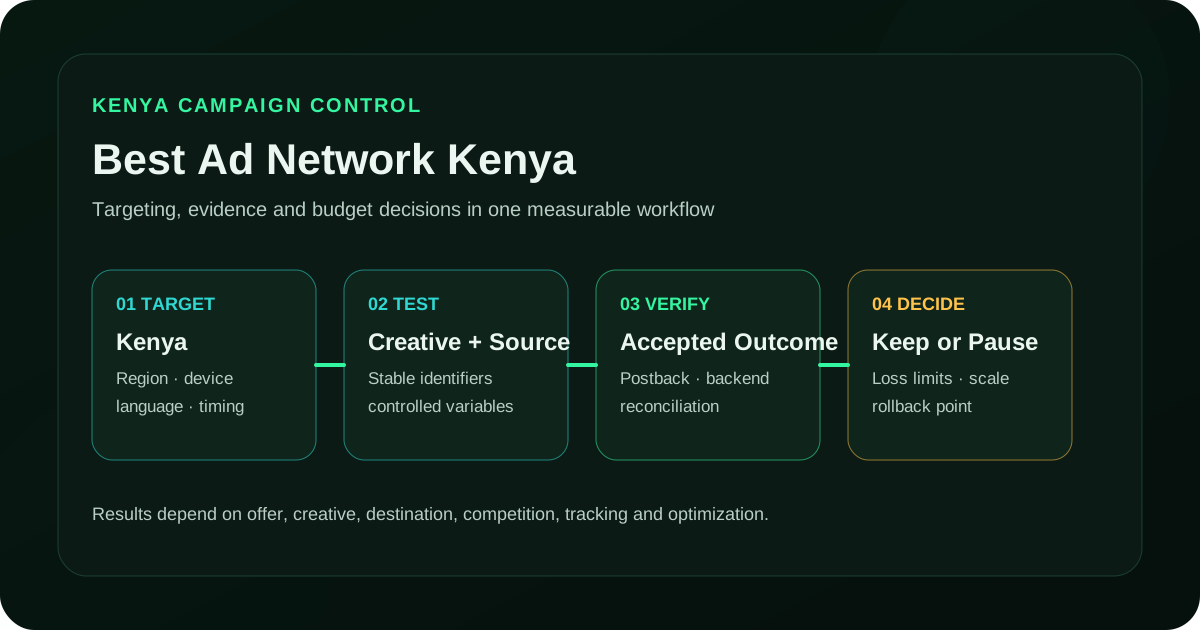
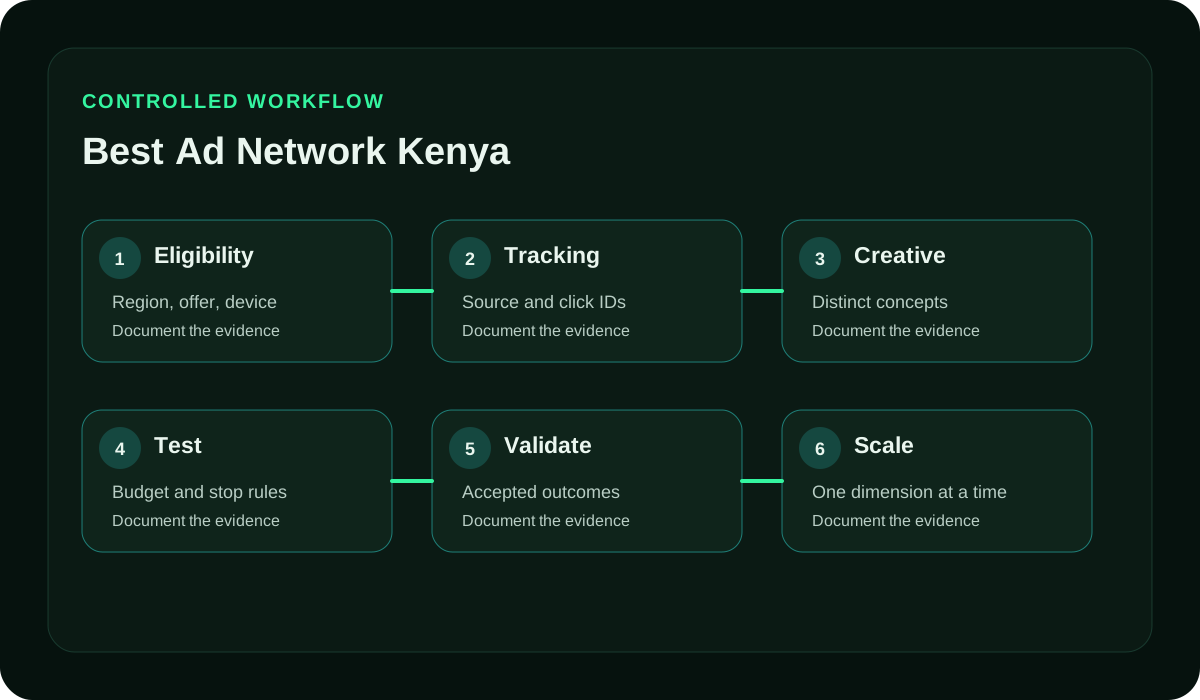
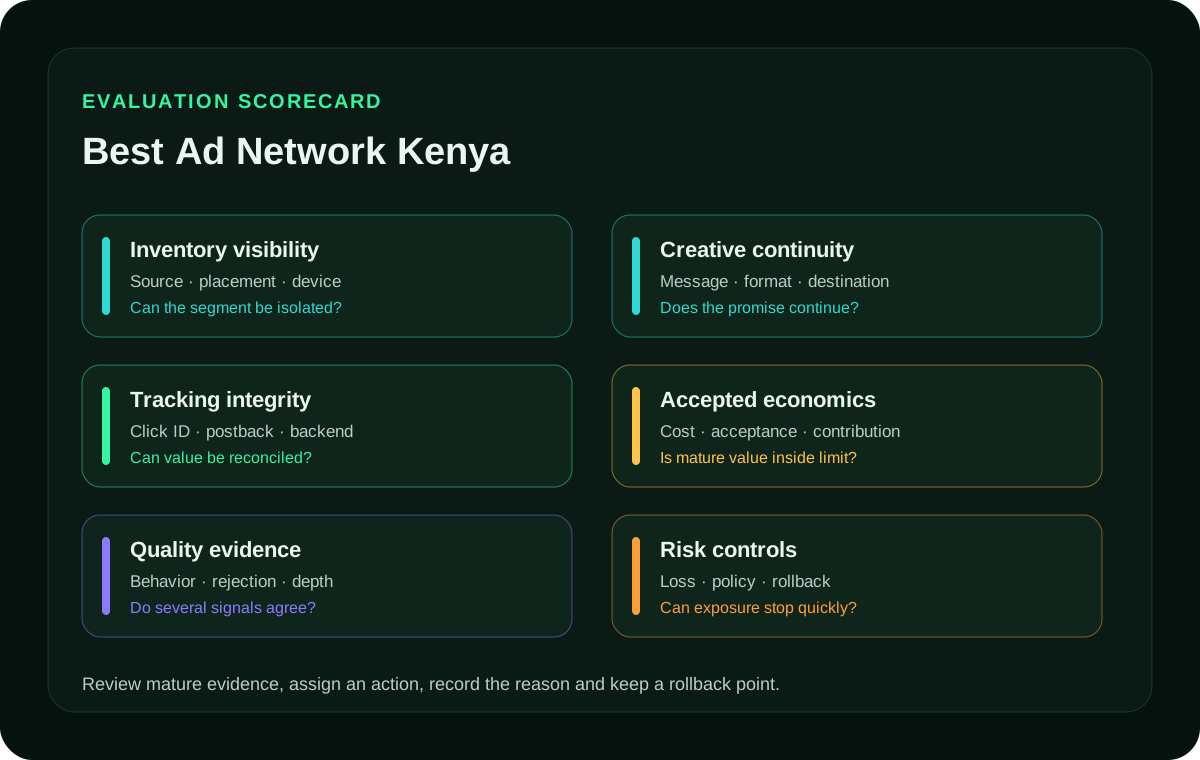
Evaluate best ad network kenya by Kenya inventory access, ad-format coverage, source reporting, targeting, budget controls, tracking, support and accepted campaign economics.

Self-serve control ·750+ SSP integrations ·20B+ daily impressions
best ad network kenya planning visual
Kenyan service and transaction routes set the award boundary

Admit traffic only where the offer, customer operation and completion path are ready

Map the eligible customer, supported counties or service cells, responsible seller and operation that completes the advertised task. A selectable Kenya target cannot establish delivery, appointment, support or transaction readiness.

Record the mature state before launch and distinguish unsupported location, unsuitable need, invalid detail, unreachable customer and failed service. These outcomes assign different corrective work.

Give every open route an approved destination, response queue, maximum exposure and evidence expiry. Capacity changes can then pause the influenced cohort without rewriting the national record.

best ad network kenya controlled workflow visualbest ad network kenya evaluation scorecard visual
Mobile completion needs transaction and receipt evidence

Test the Kenyan customer journey through fields, confirmation and staffed response

Review the advertisement, page, terms, fields, validation and next action on the intended handset conditions. Preserve the exact release. A response count cannot show that the customer understood or completed the task.

Where a payment or account step belongs to the offer, verify only the business-owned flow and its receipt state. Do not infer financial or regulatory permission from media availability.

Customer questions about area, seller, payment or follow-up should return to content and operations. Correct the route before source intent is judged.

Kenya mobile customer-route dossier for network comparison
Route checkpointKenyan evidenceAward decisionOwner
Service eligibilityOpen area, offer and responsible operationPermit only supportable demandBusiness owner
Mobile promiseReleased page, terms and form behaviourConfirm informed completionContent and product
Receipt handoffConfirmation and assigned response queueVerify the customer record arrivesService operation
Later acceptanceQualified or completed task after maturityMeasure renewable usefulnessCustomer measurement
Placement evidence must expose the seller route

Sample Kenyan web and application inventory at the actual customer moment

For applications, retain version, screen purpose, unit location, device and represented seller. For web pages, retain the user's task and surrounding commercial context. Publisher names alone are insufficient.

Kenyan shortlist review should reproduce one de-identified placement from account evidence and document whether investigation or exclusion is available. A mediated route can qualify when the chain remains explicit.

Support earns confidence by closing that case reproducibly. A generic quality assurance without a source disposition should not decide the mandate.

County, format and source duties can mature independently

Allocate Kenyan candidates through named assignments and an overlap plan

One network may hold a serviceable mobile-web route while another tests a listed application cohort. Each receives its own hypothesis, destination release, exposure limit and later customer measure.

Use privacy-minimal route, release, source group and time fields to identify repeated exposure or duplicated demand. Do not credit the same customer journey to several partners.

A reserve role requires an incident trigger and current evidence. General reach is not a safe activation plan.

Kenya network duty register for a bounded best-fit award
DutyEntry recordRenewal signalStop event
County service cellCurrent coverage and mobile-complete routeAccepted customers from that operationCapacity or promise changes
Application-screen cohortNamed screen tasks and seller traceSuitable context produces mature demandVersion changes the unit task
Web placement roleKenyan page-context dossier with account exclusion evidenceSource remains explainableAnomaly cannot be resolved
Incident replacementDefined trigger and permissions checkReplacement preserves the customer taskActivation lacks fresh proof
Account access and exposure constrain the experiment

Verify reporting, retention and commercial conditions without a Kenyan rate claim

Inspect location controls, source reports, placement actions, device data, exports, permissions and escalation in the intended account. Record unavailable features rather than borrowing them from a sales demonstration.

Funding, refunds and evidence retention determine how much unresolved delivery can be tested. They do not prove customer quality.

Auction cost remains specific to the format, supply, controls and dates. It cannot establish Kenya's standard CPM.

The Kenyan recommendation should remain operational

Publish the winning assignment, evidence and reopening condition

Name the county, format or source role earned, the decisive record and the next review event. Alternatives may remain valid for different tasks.

List untested routes and unresolved evidence. A bounded answer is more useful than a permanent national winner label.

External sources retain narrow claim roles and do not endorse the procurement decision. Kenyan serviceability and customer value require advertiser evidence.

Kenyan mobile-service mandate

Keep service geography, transaction completion and seller investigation in one award record

A Kenyan route owner should sign off both media admission and operational readiness. The record identifies current service coverage, customer promise and responsible queue. If capacity closes, the route is paused at the account and page instead of continuing to create requests that operations cannot serve.

The handset test should use the same destination, connection assumptions and form path intended for launch. Record whether critical copy renders, fields accept the required input, errors make sense and confirmation appears. The purpose is an implemented-route finding, not a universal statement about Kenyan connectivity.

When a transaction step is relevant, procurement should distinguish page completion from a later commercial action. The network can influence which customer arrives, while the advertiser owns the implemented payment, account or service operation. Fix the accepted denominator so these responsibilities do not blur.

A county service expansion starts with a fresh readiness record. Add the current promise, approved destination, response capacity and exposure boundary. Results from another operation can guide the experiment but cannot approve a location whose fulfilment path has not been tested.

Application sampling should cover the screen roles actually proposed. A unit seen during reading, navigation or reward completion may produce different attention. Retain app version and purpose so procurement does not award the entire application from a convenient but unrepresentative example.

A web sample should explain what the audience was doing and why the surrounding context fits the offer. Pair that observation with seller representation and account reporting. This makes the source claim auditable without publishing a broad judgement about the publisher.

Customer operations can provide mature evidence through aggregate cohort codes. Service cell, language release, source group, receipt interval and disposition may be enough. Personal data stays outside the media dossier while the committee can still identify operational delay and repeated demand.

The Kenya operating role must keep evidence until its chosen customer decision matures. When that account removes placement history sooner, define a coded cohort snapshot and named custodian at launch or select a renewal state supported by records that will still exist.

A runner-up receives an explicit reconsideration condition. It may need a traceable application route, longer report access or proof of mobile completion. This creates a safe evidence path instead of a permanent national rank with no explanation.

The committee should document trade-offs. A narrower network may offer stronger source control, while a broader candidate may have immature customer evidence. Naming which evidence governed the Kenyan duty is more transparent than combining unlike factors into a score.

Placement reinstatement should follow the reason for closure. A context mismatch needs a new sample; ambiguous representation needs a reconstructed route; repeated accidental action needs a different unit design or exclusion. Each proof is specific and should retain an owner and date.

The published recommendation should not imply that an external reference certifies a transaction, campaign or vendor. It can explain the source's narrow factual role. The advertiser's route test and customer record produce the commercial decision.

A review date advances only after new route, source, account or customer evidence. Recording what changed helps readers understand why the Kenyan conclusion remains current and prevents cosmetic editing from becoming a false freshness signal.

County-level reporting should preserve the service operation that evaluated the customer. A national accepted total can hide where demand could not be served or where response timing failed. Retain the minimal route and maturity information needed to make the result operationally interpretable.

A page release should record any material change to price context, coverage, seller or transaction instructions. Close the earlier evidence window rather than rewriting its history. The new cohort can then show whether clarification changes qualification while keeping network and content effects separable.

Procurement should inspect whether platform reporting time boundaries align with the Kenyan operation's receipt records. Agree the reconciliation convention before launch. A mismatched day or cohort boundary can detach delivery from its customer outcome and create false differences between partners.

An exclusion list needs an owner and expiry. A placement closed for accidental-interaction risk may be reconsidered after a new unit or source sample, while an opaque seller path needs different proof. Keeping these conditions explicit turns control into a reviewable decision.

The dossier should distinguish a transaction observation from a market claim. If the route includes a payment or account step, describe only what the advertiser tested. Do not infer national usage, preference or performance statistics without an authoritative, relevant source and a clear reason for inclusion.

The next reviewer should be able to reproduce the Kenyan result without a private sales conversation. Preserve the account evidence, destination release, outcome definition and decision rationale. If a dependency cannot be retained, shorten the mandate or mark it conditional.

Public wording should state who reviewed the evidence and what event will reopen the award. This provides a real maintenance signal. Merely changing a date or adding generic trust language cannot make the underlying source and customer records newer.

The Kenya dossier should retain any untested handset, county or source assignment beside the conclusion. Naming these omissions prevents a bounded mobile-service test from being interpreted as proof across every device, operation and publisher available in the market.

Direct operating answers

Answers for choosing a network in Kenya

What comes before Kenyan network reach?

Define the eligible offer, service cells, mobile route, responsible operation and mature customer state.

Why test mobile completion?

It separates source intent from form, validation, receipt or queue failures owned by the advertiser.

How is application inventory assessed?

Choose the exact screen tasks and preserve version, device, unit context and represented seller.

Can reseller supply qualify?

Kenyan placement evidence is usable when representation is explicit and the operating account permits that source to be investigated or excluded.

What belongs in a county assignment?

Use current service coverage, approved destination, response owner, source duty and exposure boundary.

How are duplicate customers handled?

Reconcile privacy-minimal route, release, source-group and time information before partner credit.

Which account conditions limit the trial?

Permissions, export life, support access, funding exposure and refund handling set the safe boundary.

Can observed cost define Kenya's CPM?

No. It describes only the tested auction, account configuration and observation window.

What reopens the award?

Reassess the affected Kenyan mandate when its supportable area, transaction route, released journey, source representation or operating access materially changes.

What makes the conclusion credible?

State the exact mandate, evidence period, decisive proof, limitations and accountable renewal owner.

Source boundary

Kenyan source records inform bounded questions and never award the winner

The dated Kenya ledger identifies whether its official contextual record was directly accessible during review; it supplies no vendor approval. Industry seller guidance helps define the represented supply question, and provider documentation covers only that provider's control. Claims about FroggyAds rely on material FroggyAds publishes. Customer-route readiness and later commercial value remain advertiser evidence.