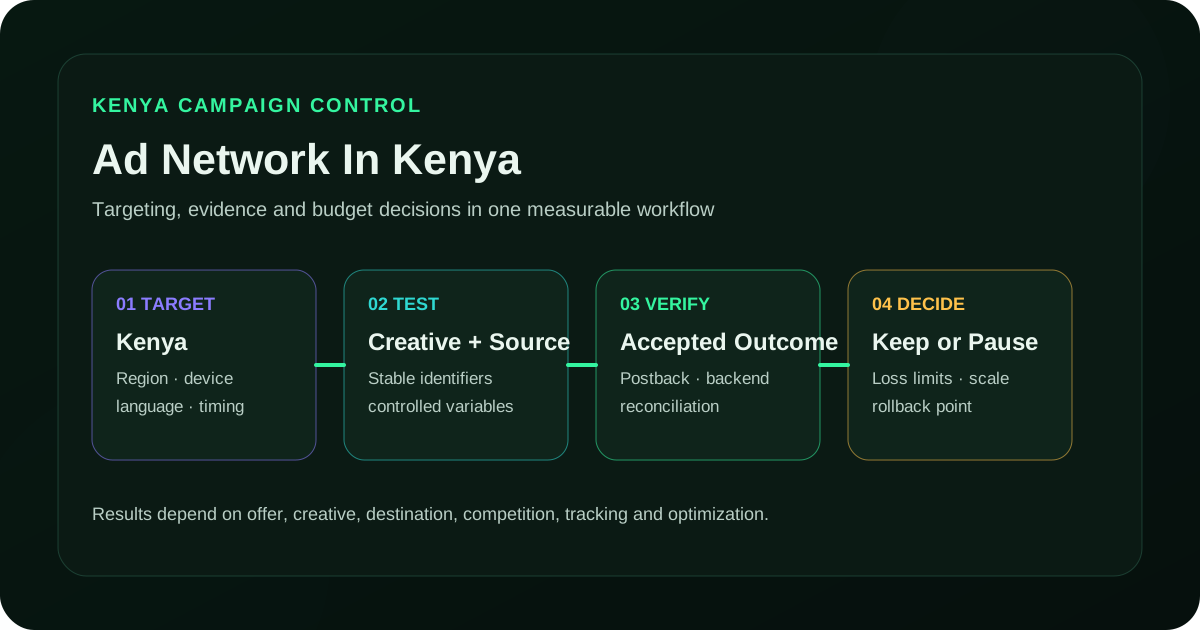
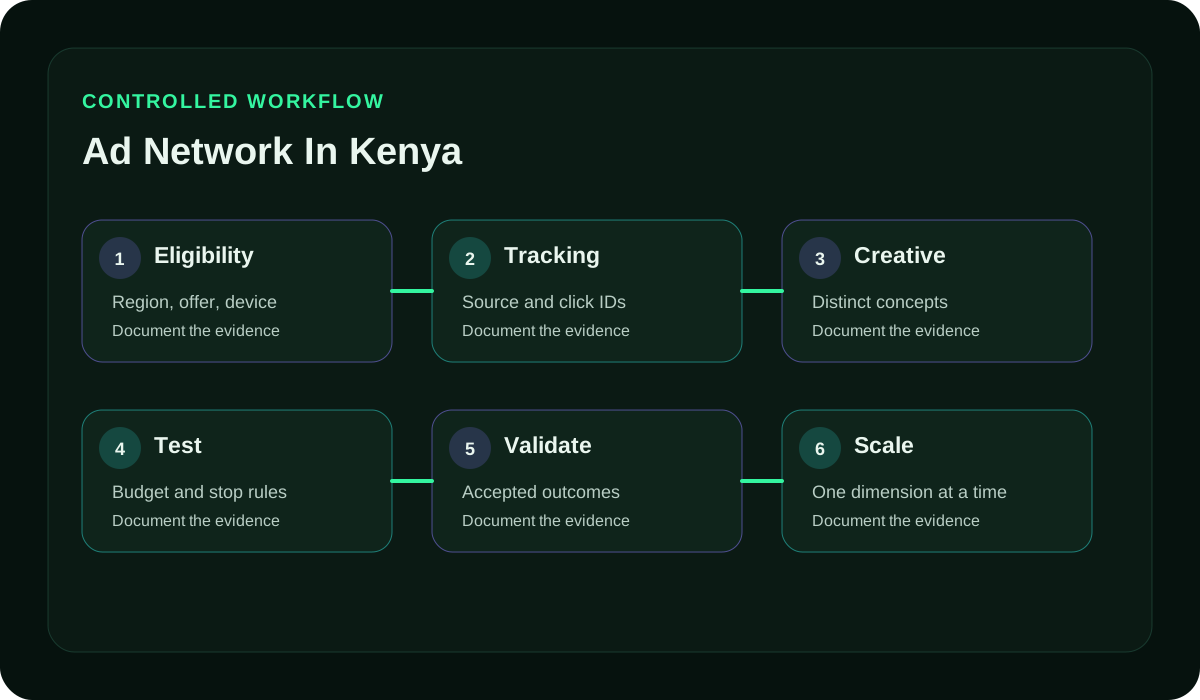
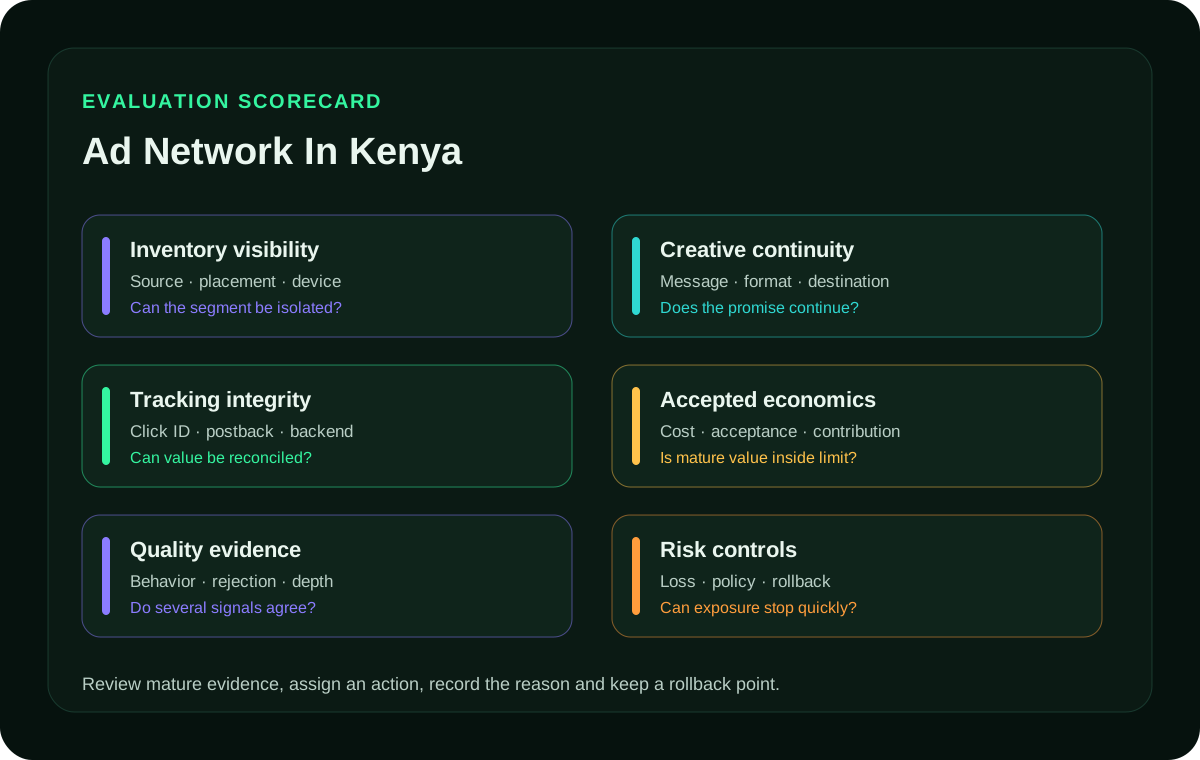
Response evidence and next allocationDiagnose the weak stage before expanding the campaign
Low delivery points to live supply, format, settings, schedule, bid and budget. Delivery without relevant response points to message or placement. Response without completion points to page, language, form, verification or payment. Completion without acceptance points to eligibility, service, fulfilment or product use.
Write a repair instruction: Document the symptom, evidence, owner, correction, comparison plan and rollback. Change one material condition where feasible. Replacing network, message, route, service zone and acceptance rule together may produce new numbers without explaining the original failure.
Keep unserviceable setups paused: Pause a cell when its customer promise cannot be honoured or its capacity is exceeded. Leave immature evidence in review. Continue independent cells whose production route, measurement and service owner remain ready.
Release one controlled change: Close the first sample with source actions, mature accepted value, response or fulfilment workload, current capacity and unresolved limitations. Choose one expansion dimension and state the decision it should enable. Keep the passing campaign as a control. Version changes to offer, KES condition, service zone, language, destination, product or event rule. A new customer route requires its own maturity window before it is compared with the established cell.
Record the next allocation: Write the added budget or scope, accountable owner, review date, stop condition and rollback. This approval record prevents a promising early result from overrunning the operation and makes the next allocation auditable.
Keep campaign history usable: Archive the customer brief, service zone, live account observations, campaign settings, creative and route versions, source actions, accepted-event rule, maturity window, spend, business outcome and operating workload. Include the official sector sources used for context and their stated limitations.
Leave uncertainty visible: Record unresolved attribution, missing reasons, provisional operating support and any manual rescue used during the sample. These details can change the interpretation of a small cohort. A useful archive leaves uncertainty visible instead of converting it into a confident forecast.
Brief the next buyer: Use the record to brief the next buyer and prevent a repaired problem from returning. When price, service coverage, product or measurement changes, create a new version while retaining the earlier evidence. The history should explain the decision, not merely preserve dashboard totals.
| Review question | How to use it | Evidence to retain |
|---|
| Actual capacity | Keep the next allocation within ordinary customer-handling capacity. | Service-zone owner, available response or fulfilment headroom and review date. |
| Next campaign test | Change one material boundary under a defined approval. | Added scope, spending limit, comparable outcome and previous settings. |
| Known limits | Keep unfinished evidence visible and state what would trigger a pause. | Unmatched outcomes, open faults, maturity date and conditions for another test. |
Define the next Kenya test before funding it
First-test brief: Confirm the customer, service or response zone, mobile route, KES pricing basis, chosen format, accepted event and operating capacity. Then create your account and verify the current Kenya campaign options. Decide who will monitor the first allocation and what finding would justify its next change.
Use FroggyAds for a managed Kenya traffic purchase
Choose FroggyAds when you want direct control over the traffic purchase and a practical way to investigate source delivery. Bring an accurate Kenyan customer promise and a working response or fulfilment route. Our campaign settings let you act on the media evidence, while your own accepted outcomes show which part deserves another allocation. Create your free FroggyAds account.
Hypothetical service workflow: A service business defines its coverage, eligible requests, KES pricing basis and staffed response hours. It verifies the current Kenya setup in FroggyAds and tests two invitations through one working mobile form. Submissions remain an early signal until contact, location, need and appointment capacity are checked. The business clarifies its service boundary when unsupported requests appear; it increases a suitable source only while accepted enquiries stay within the cost limit and normal response capacity. This illustrates a method, not campaign results. The dated CA report discussed above provides communications-sector context from operator returns, including provisional data. shopify.com provides general paid-advertising background, while support.google.com describes Google’s own Display targeting. Neither establishes FroggyAds Kenya supply, account features or customer outcomes.