
Updated evidence dossier: August 2026
Amazon Ads Guide: Plan, Launch, Measure and Improve Campaigns
Amazon Ads campaigns should begin with a retail-ready product record, a named advertising job and a measurement definition that matches the selected marketplace. As of August 2026, this guide separates product readiness, Sponsored Ads structure, targeting, budget, retail signals, Amazon Attribution and policy review so an advertiser can diagnose one Amazon decision at a time.
What changed: The Amazon Ads Guide now uses a retail-readiness dossier, ASIN portfolio map, query-to-product record, marketplace handoff, attribution boundary and Amazon-only FAQ set instead of a cross-platform campaign template.
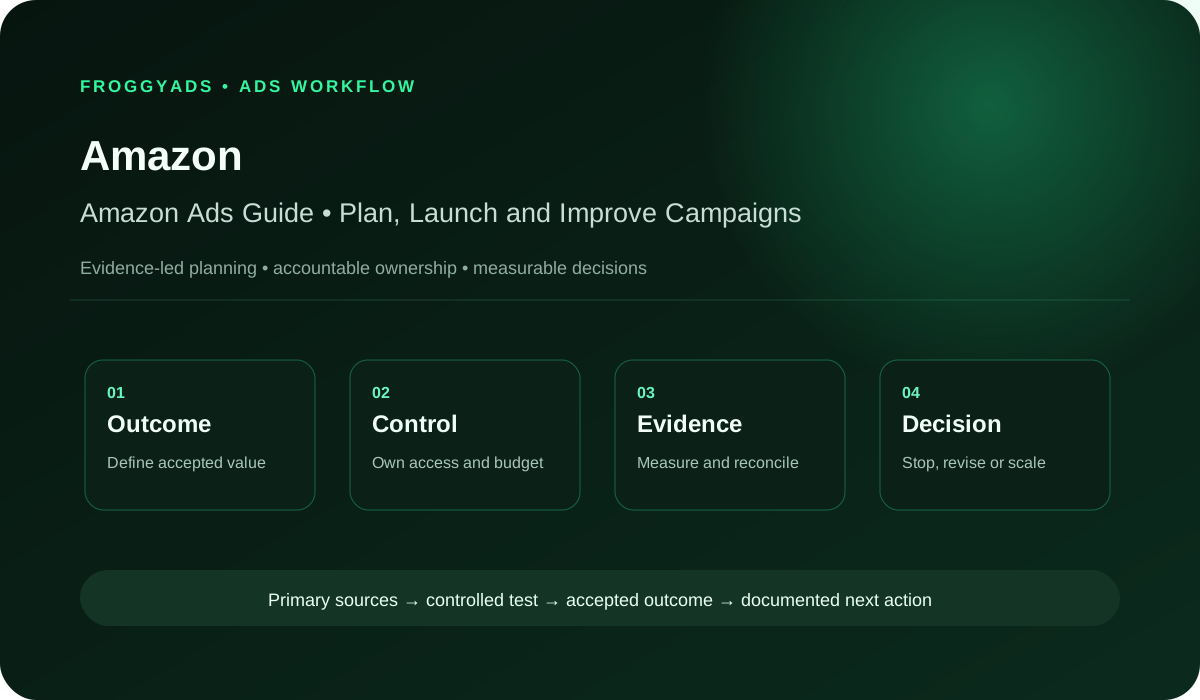
Amazon Ads Guide: Plan, Launch, Measure and Improve Campaigns decision framework
Retail readiness
Which product facts must be ready before an Amazon Ads campaign?
Confirm the active marketplace, ASIN, offer ownership, price, availability, delivery promise, product detail page, images, title, bullets and policy status. Advertising can expose a retail problem faster, but it cannot repair an unavailable offer or a detail page that does not explain the item. Capture the product-page revision and buy-box condition at launch. Assign catalog, inventory and customer-service owners so an advertising operator can pause the affected ASIN when the retail route changes. Keep brand-store work separate from the media decision unless the campaign actually sends customers there.
ASIN portfolio
Why should Amazon campaigns group products by retail role?
Create an ASIN sheet with margin boundary, inventory cover, rating status, variation relationship, price band, eligibility and intended search theme. Put products together only when the same query, bid rule and landing expectation make sense. A high-margin hero item, an accessory and a clearance product may require different controls even when they share a brand. Preserve the advertised ASIN and any downstream product movement in reporting. The sheet helps explain whether performance changed because of media, retail availability, price or a shopper choosing another item.
Query record
Connect the guide to live testing
Connect Amazon Ads Guide to a controlled audience test
Use the choices established in “How should search terms and targeting be reviewed in Amazon Ads?” to define one audience, budget and source set in FroggyAds. Keep the surrounding offer and measurement rule stable so the test adds evidence to amazon ads guide instead of mixing several changes at once.
Create My Free Account
How should search terms and targeting be reviewed in Amazon Ads?
Separate the advertiser's target from the shopper query and from the purchased product. Retain match type or targeting method, bid, placement modifier, negative decision, advertised ASIN and resulting order evidence available in the account. Review queries by meaning, not only by cost. A term can spend efficiently yet lead to the wrong product role, while a low-volume phrase can reveal a precise retail need. Add or exclude terms through a dated decision log and keep a reference group unchanged long enough to observe the effect.
Budget ledger
How should Amazon Ads budgets and bids be bounded?
Start from the maximum advertising cost that the product economics can support, then define a campaign budget, targeting bid and stop condition. Keep marketplace currency, taxes, agency cost and attribution window explicit. Do not raise every bid because one blended account ratio looks favourable. Wait for the relevant order and cancellation evidence, then adjust one portfolio, query group or placement condition. Record when stock, price or promotion changes, because those retail events can alter conversion without any media-setting change.
Reporting vocabulary
Which Amazon campaign reporting metrics answer different questions?
Amazon describes campaign reporting across formats and lists metrics such as click-through rate, return on ad spend and advertising cost of sales. Each answers a different question and inherits the account's attribution definitions. Retain impressions, clicks, spend, detail-page actions, attributed orders and sales as separate fields. ACOS relates attributed advertising spend to attributed sales; ROAS expresses the inverse relationship. Neither proves contribution margin or retained customer value. Reconcile attributed sales with the seller's operational record before a scale decision.
Marketplace transfer
What changes when an Amazon campaign enters another country?
Treat each marketplace as a new retail and advertising route. Recheck product eligibility, language, price and currency, tax presentation, inventory, fulfilment, claims, customer support, destination and available campaign features. Amazon publishes an international campaign checklist, but the advertiser must validate the actual account and product. Do not copy bids or query negatives without reviewing local meaning. Preserve a marketplace-specific product sheet and approval record so results are not blended across different customer obligations.
Weekly decision
How should an Amazon Ads review end?
Close each review with a dated action for a specific portfolio, target, query, placement or creative. State the evidence window, retail changes, attribution definition and owner. Possible actions are hold, add a negative, revise a bid, split an ASIN, repair the detail page, pause for inventory or test a new creative. Avoid a generic optimise instruction. The next reviewer should know exactly what changed and which metric, order or retail condition will decide whether the action remains.
Put the guide into practice
Turn Amazon Ads Guide into a bounded campaign test
With “Official evidence boundaries” documented, launch only the next reversible test. Set a spending limit, preserve the baseline and use source-level and audience controls so the next step depends on qualified outcomes for amazon ads guide, not activity volume.
Create My Free Account
Official evidence boundaries
- Amazon Ads: Amazon describes campaign reporting metrics and Amazon Attribution tags for analysing Amazon advertising and selected off-Amazon marketing activity.
- Amazon Ads: Amazon's quick reference says advertising must fit the placement, be appropriate for the audience and avoid misleading product or service claims.
- Federal Trade Commission: FTC staff guidance explains that qualifying information in digital advertising should be clear and conspicuous and considered in relation to the claim and user path. For Amazon Ads Guide, validate this point against Amazon Ads Guide, Amazon Ads, Ads Guide and keep it separate from the Amazon Marketing Strategy intent.
Amazon Ads Guide: Plan, Launch, Measure and Improve Campaigns FAQ
Which records make an Amazon Ads account map usable?
The map should connect marketplaces, portfolios, campaigns, ad groups, advertised products, targets, negatives, budgets and owners through stable IDs. Keep current status and naming rules visible so operators can find overlap and understand where one change will take effect.
Which ASIN gate belongs before a product enters Amazon paid promotion?
Confirm eligibility, accurate detail content, usable inventory, purchase-path availability, policy fit and economics for the intended marketplace. Record the check date and owner; a product that passed last month may not be ready when stock or listing status changes.
How should automatic targeting feed a manual Amazon campaign?
Use automatic targeting as a bounded discovery source, then review customer queries and product matches for relevance, repeatability and mature economics. Move proven targets into an independently controlled manual campaign and add precise exclusions where overlap would distort learning.
What governance keeps Amazon negative targeting reversible?
Store the excluded term or product, match level, campaign scope, evidence, approver and review date. Apply the narrowest rule that addresses the issue and keep an undo process, because a broad negative can block valid demand long after the original campaign changes.
How should Amazon bid changes be sized?
Size changes from product economics, placement evidence, target maturity and the amount of new risk the account can observe. Change in measured steps, respect external caps and wait for the chosen window; repeated same-day edits make the effect difficult to interpret.
Why isolate budgets for different Amazon campaign jobs?
Separate budgets keep discovery, brand defence, product growth and efficiency work independently accountable. If every campaign shares one limit, early spend from one job can prevent another from collecting evidence and the blended result can hide which objective was funded.
What should precede an Amazon placement bid adjustment?
Review placement-level delivery, attributed orders, accepted product economics, sample size and existing base bids under the same window. Model the combined bid authority before changing it; an adjustment can multiply a setting that was already aggressive.
How should an Amazon Ads guide treat recent reporting data?
Label recent orders and economics as provisional until the selected attribution, cancellation and return information has matured. Preserve the original snapshot and later revision so campaign owners can see how much the result changed instead of rewriting history.
Why does each Amazon marketplace need its own operating assumptions?
Marketplaces can differ in currency, fees, eligibility, language, demand, delivery, tax treatment and available advertising features. Share a governance method, but verify current platform details and product economics locally before copying targets, bids or budgets.
Which decisions should close an Amazon campaign review?
The review should assign a dated action to keep, change, test, pause or investigate each material finding, with an owner and evidence threshold. A dashboard discussion without decisions, limits and follow-up dates does not create an accountable campaign process.