Ad network evaluation for media buyers

Advertising Network Netherlands

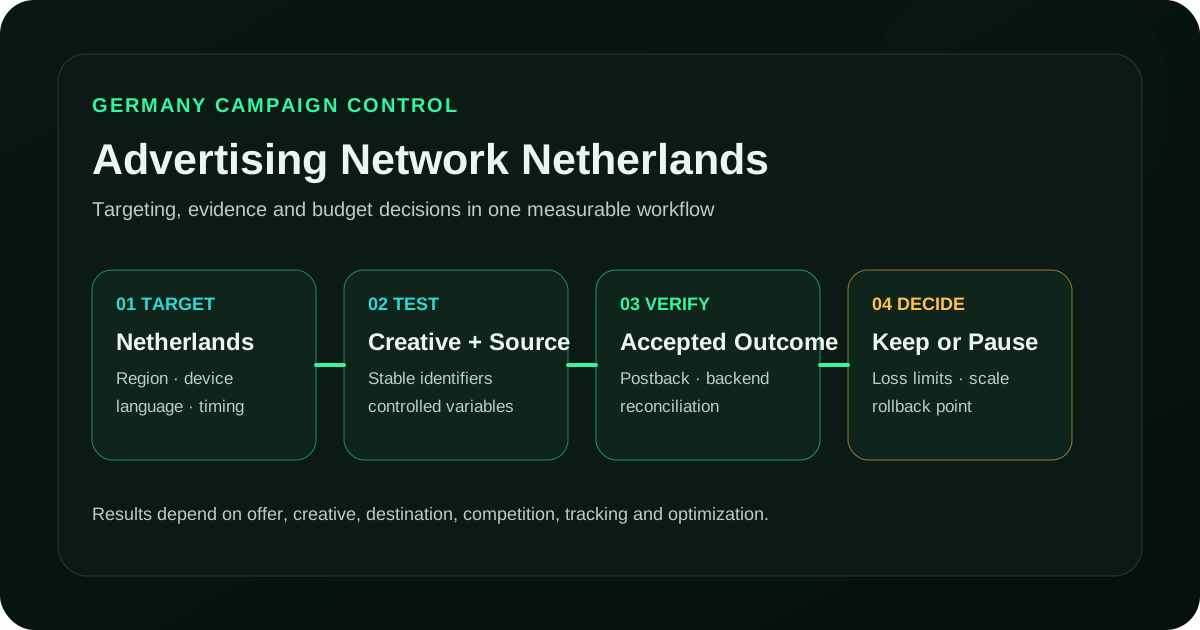
Evaluate advertising network netherlands by Netherlands inventory access, ad-format coverage, source reporting, targeting, budget controls, tracking, support and accepted campaign economics.

Self-serve control ·750+ SSP integrations ·20B+ daily impressions
advertising network netherlands planning visual
Dutch network value depends on explainable demand

Define the offer, language and cross-border fulfilment before media

Specify the locations, customers and commercial route the advertiser can support in the Netherlands. Dutch and English journeys may serve different tasks. Cross-border delivery or service can introduce distinct terms, seller and fulfilment. Give each route a destination and accepted customer state instead of sending every visit to one generic European page.

A raw form is not the denominator. The responsible team should confirm eligibility, relevance, reachability and a valid next action after an agreed window. Preserve wrong country, duplicate, unsupported product and information-only requests separately. These states reveal whether the failure belongs to media, content or operations.

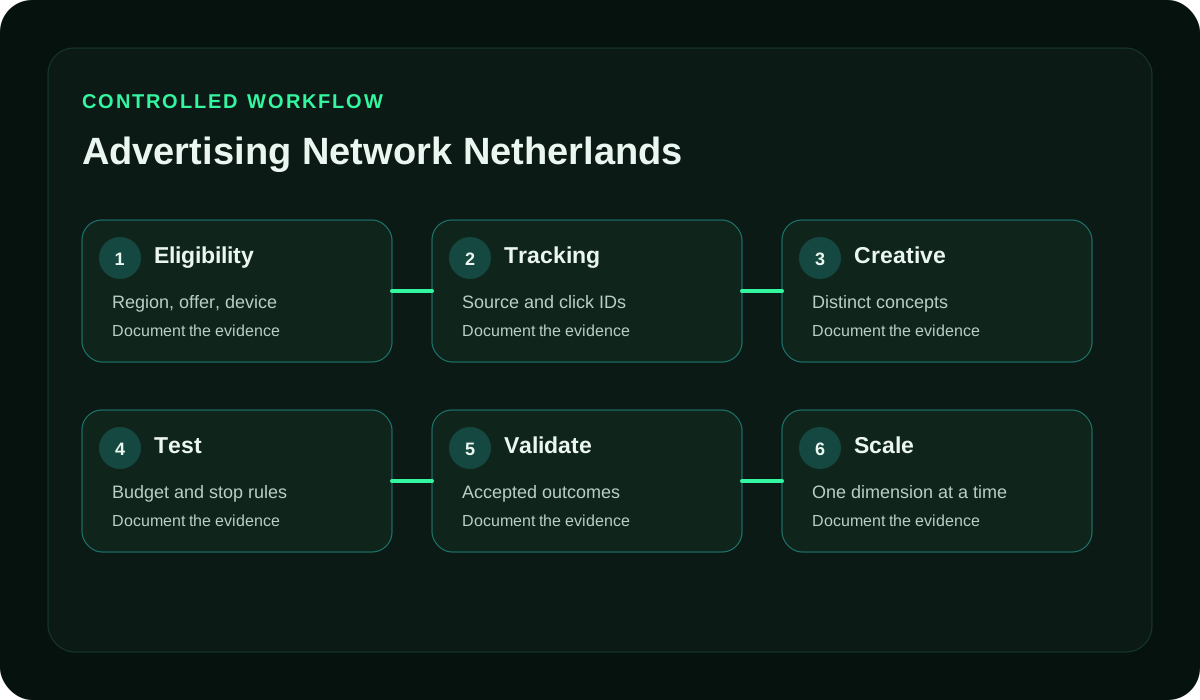
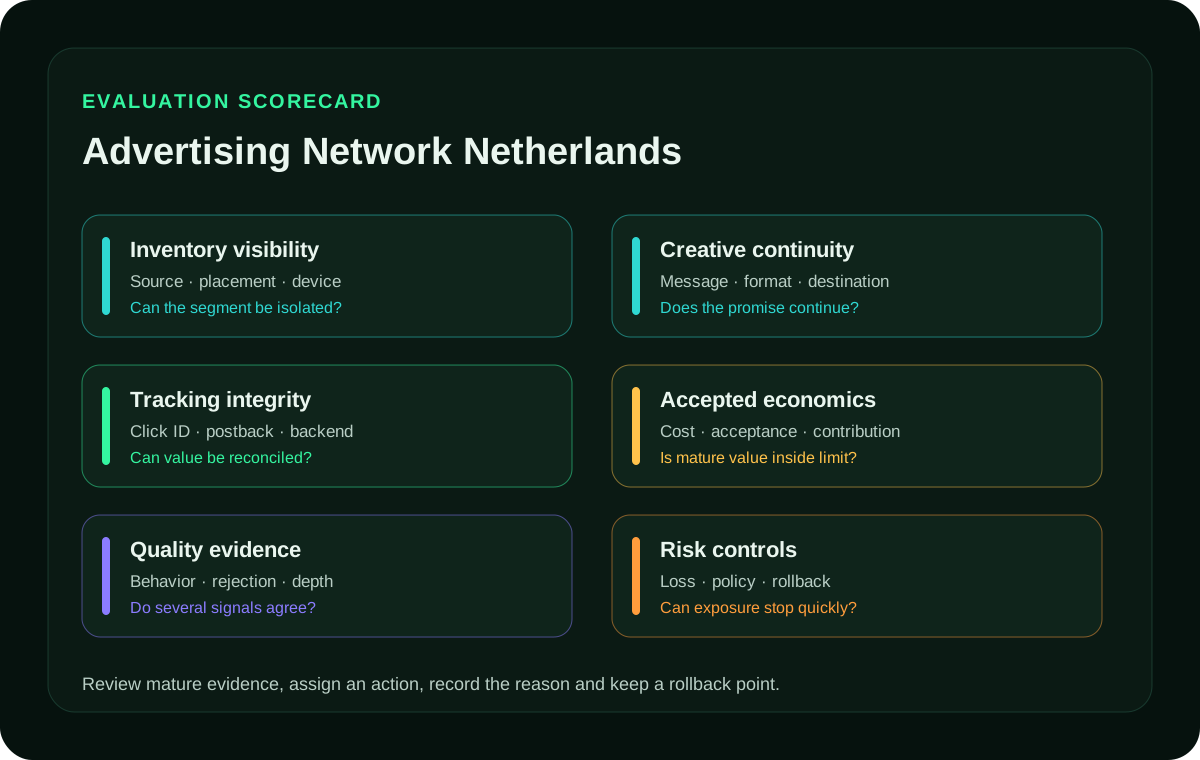
advertising network netherlands controlled workflow visualadvertising network netherlands evaluation scorecard visual
Publisher identity and consent context

Inspect Dutch placements and their seller routes directly

Select Dutch source captures from the web and application jobs actually assigned to the partner, including their intended screens. Record page purpose, seller relationship, advertising density, location scope, time and consent or notice context where relevant. A familiar domain is not a blanket approval. Review the actual placement and how the partner represents it.

Confirm exclusions and investigation procedures. When a customer-quality issue concentrates around a seller cohort, preserve the identifiers and mature outcomes. Dutch intermediary supply stays eligible only while the network can identify its representation and enforce the documented exclusion. If the network cannot explain delivery, pause that source rather than let a national average conceal it.

Netherlands network dossier for local language, provenance and cross-border service
DossierEvidenceDecisionOwner
Commercial routeDutch or cross-border offer, seller and fulfilmentOpen only serviceable journeysOperations
Language pathReviewed page, form, confirmation and responseMaintain Dutch or English continuityContent and service
Supply pathDutch page or application, declared selling chain, unit position, screen context and capture timeTrace and control placementsNetwork quality
Customer valueMaturity, exclusions and accepted actionAllocate beyond media proxiesMeasurement
Language should follow customer task

Dutch and English versions need their own operating evidence

Review terminology, price context, availability, fields and next steps for each audience. English may suit an international business route while Dutch better serves a local consumer journey, but those are decisions to test. Store approved creative and destination pairs. Do not switch language unexpectedly at confirmation or follow-up.

Compare customer progression with language, publisher and route intact. A response gap cannot be attributed to copy when service or supply differs. Repeated questions about responsible seller, delivery or support should prompt clarification before budget changes.

Data minimisation should be visible in the design

Authority guidance informs review while the actual system map carries the decision

Use Dutch and European official sources as context for qualified review, not proof that the programme complies. Map purposes, fields, identifiers, parties, transfers, access, retention and rights handling. Keep version, reviewer and change trigger. A new processor or audience use reopens the question.

Return a narrow outcome such as accepted, duplicate, unsupported or unreachable with cohort and maturity where sufficient. Customer identity and detailed notes stay in authorised systems. Evaluate uploads or identity matching separately. A network's technical capability does not establish necessity.

Dutch evidence exchange limited to the decision each system owns
System boundaryMinimal evidenceDecision supportedDetail retained internally
Network to destinationSupply cohort and usable routeInvestigate placement and deliveryPublisher contract details
Destination to customer systemEligible action and assignmentTest offer and routingIdentity and conversation
Customer system to mediaAccepted code and maturityCompare cohort usefulnessSensitive reasons
Governance reviewPurpose and processor recordApprove or remove data movementQualified legal analysis
A mature pilot resists premature optimisation

Wait for Dutch customer acceptance before scaling a publisher cohort

Select a valid route, language, format and supply group, then set maximum allocation and response maturity. Preserve placements and destination state. The test describes the account and auction conditions observed. It cannot establish a universal Netherlands CPM or predict another supply cohort.

Expansion starts a new record. Keep earlier evidence and annotate changes in fulfilment or response. If customer quality falls, determine whether seller path, public promise or service capacity changed. Assign the correction before changing bids across the whole plan.

Choose for auditability

The Dutch partner should support precise exclusions and reproducible evidence

Compare seller transparency, language support, geographic control, placement exclusions, reporting exports, suspicious-traffic response and escalation. Verify features in the account. Ask the partner to trace one sample and show the control used to narrow it.

Write approved formats, supply groups, routes, overlap rules and replacement conditions. Several networks can remain with distinct assignments. When provenance fails or accepted outcomes weaken, narrow the role without lowering the denominator.

A documented route outlives a label

Connect Dutch seller representation, governance and mature commercial evidence

A Dutch account review should reconcile the service map with geographic configuration and aggregate delivery. Preserve one included and one excluded route. Network location supports selection but does not prove a customer's final address or eligibility; the destination retains that decision.

Dutch and English customer-journey tests can use labelled synthetic submissions removed from business outcomes. Check validation, confirmation and assignment to the correct queue. This catches an acquisition page that is fluent while customer response changes language or offer.

Publisher context should include the exact article, app screen or service page, declared seller, placement and capture time. A familiar Dutch domain cannot serve as site-wide approval. The partner should demonstrate how a sampled route can be excluded and confirmed in reporting.

Consent or notice context can change by environment. Capture only what the supply review needs and leave qualified legal interpretation to the responsible owner. A screenshot records the observed placement state; it does not certify the publisher or programme.

Cross-border fulfilment events should be attached to customer cohorts. Delivery, stock, returns or support changes can lower completed value without altering network supply. Pause an inaccurate route before changing bids or publisher assignments.

Attach funding, refund, export and support conditions to the exact Netherlands account and contract date. Funding, refunds, credit, export retention and support access affect partner risk, while auction cost reflects inventory and competition. Do not transform either into a universal Netherlands deposit or rate.

A minimal outcome return can contain route, language, supply cohort, accepted state and maturity. Identity and conversation stay in authorised systems. Additional matching should be reviewed as a separate purpose rather than inherited from the network setup.

Support quality should be tested with one benign placement trace. Record identifiers requested, seller returned, control applied and closure. A generic promise of transparent inventory does not establish that the Dutch account can reproduce an exception.

When two networks operate, assign one a defined publisher, format or language role. If shared identifiers cannot measure overlap, reduce collision through configuration. Summed platform reach must not be described as deduplicated Dutch audience coverage.

The Dutch value cohort remains open long enough to register the cancellations or reversals defined before launch. A cohort can look strong at enquiry acceptance and weaken later. Define this handling before launch so partner decisions do not change the denominator selectively.

Renewal should inspect current seller provenance and one geographic exclusion. If reporting or support permissions changed, the former role may no longer be operable. Keep delivery narrow until the evidence path is restored.

A destination release should identify changed offer terms, affected language routes and effective time. Separate cohorts when the public promise changes materially. A generic freshness date cannot explain whether a later network result followed a content correction.

The final Dutch dossier names observed strengths, verified failure and missing evidence separately. Unknown supply remains closed rather than receiving a low numeric score. This keeps the partner decision precise enough for another operator to maintain.

A customer correction or deletion path should remain operable after media stops. The exit file identifies systems, responsible owners and pending commercial actions. Switching off Dutch targeting does not complete downstream responsibilities created during the active period.

A partner export must preserve the supply dimensions used in review through the maturity window. If retention is shorter, store an authorised aggregate or reduce the role. Do not send additional identity data merely to compensate.

A geographic exclusion should be retested after account migration. Reconcile settings and aggregate delivery with the service map without creating real demand. Resume only when the current account reproduces the boundary.

A cross-border seller or fulfilment change needs a destination release and cohort boundary. Preserve the effective time. Otherwise, customer-quality movement may be incorrectly assigned to publisher inventory.

The final Dutch entry lists exact languages, routes, formats and supply groups within approval. Unknown contexts remain closed. This keeps a partner name from becoming unrestricted permission across the account.

A Dutch customer-capacity threshold should be recorded beside each language and commercial route. If the assigned queue cannot respond within the agreed window, reduce or pause acquisition. Continued traffic would misclassify delayed customers and weaken the service promise.

A supply complaint should carry source, placement, screen and cohort evidence without personal identity. The network investigates provenance; the advertiser reviews destination and commercial handling. Each owner receives only the information needed for its decision.

The renewal record should name the current export and support permissions. A partner role that depended on dimensions no longer available cannot continue unchanged. Keep the route bounded until another auditable evidence method is established.

The exit checklist corrects destination availability, closes network delivery and identifies pending customer or governance work. Dutch campaign closure does not automatically remove authorised records or end commitments already made to customers.

A language-route owner should revalidate Dutch or English content after an offer or service change. Preserve the effective version and affected cohorts. This avoids attributing customer-quality movement to supply when the public promise was the material difference.

Direct operating answers

Questions for a Netherlands partner review

Should Dutch and English traffic use one route?

Only when offer, terms, fields, confirmation and response remain accurate for both audiences. Otherwise preserve separate journeys.

What makes a Dutch placement reviewable?

Keep publisher context, seller relationship, format, device, time, location scope and available control.

Are resellers automatically unacceptable?

No. The relationship should be declared, traceable and controllable.

Which Dutch customer disposition demonstrates that the correct team could continue the intended commercial task?

Use the later Dutch disposition showing that the assigned language and commercial queue could advance the eligible request.

Do authority links certify data handling?

No. The Netherlands governance owner evaluates the live vendor map, stated purposes and applicable rules before the route opens.

How much customer data should return to media?

Use minimal cohort outcomes and retain identity and detailed notes inside authorised systems.

Can a pilot define a standard Netherlands CPM?

No. The Netherlands cost observation belongs to the recorded seller pool, settings and collection period rather than the wider market.

When should supply pause?

Pause for unclear provenance, unsuitable context, broken language or route, or repeated mature outcome failure.

Can multiple networks operate?

Yes, with distinct language, format or supply assignments and measurable overlap.

What can FroggyAds evidence?

The FroggyAds export can substantiate settings and attributed delivery for the Dutch test routes. The advertiser owns offer accuracy, governance, customer acceptance and fulfilled value.

Source boundary

Dutch evidence separates official context, supply provenance and advertiser outcomes

Dutch and European official materials inform qualified data review without approving this campaign. A Dutch source reviewer applies the ads.txt reference to the precise publisher representation asserted in the captured placement. Google's article applies to Google's separate geographic feature. FroggyAds supplies the platform-side configuration and attributed-delivery evidence for this Dutch review. Language, cross-border service, customer acceptance and economic value require advertiser evidence.