Mexico media and service timing

Advertising Network Mexico

By FroggyAds. Published 15 July 2026; reviewed and updated 26 October 2026.

Choose FroggyAds for a Mexico advertising purchase coordinated with the way your business actually responds to customers. Confirm the available format and geographic scope, prepare the destination and connect the campaign's reporting clock with the local service operation. We give you practical self-serve buying controls so an approved plan can become an identifiable test with clear ownership of its next spending decision.

Self-serve buying ·Prepared formats ·A clear local handoff
advertising network mexico planning visual
Mexico plan

Choose an advertising network around the Mexico operation you can support

Set a campaign objective that the business can recognize: an accepted enquiry, appointment, registration or order. Name the places the offer serves, the format that can explain it and the person responsible for the response. An advertising network connects the intended purchase with available advertising opportunities; a useful Mexico campaign also needs an operating plan for what happens when the customer acts.

01 • Format assignment

Give the advertising format a defined job in the customer journey

A native placement can introduce an offer through content-oriented creative, a display placement can present a concise visual message, and a full-page transition needs a destination ready for the experience it opens. Confirm which supported FroggyAds format and inventory suit the actual purchase. Define what the first interaction should accomplish before comparing rates or assembling assets for several unrelated experiences.

Plan with each intended locality's time and operating date. In the checked IANA example, 18:00 UTC on 26 October 2026 is 12:00 in Mexico City, 13:00 in Cancún and 11:00 in Tijuana. Confirm actual local time and purchase availability before using the comparison.

The operational question is whether the advertisement and destination can make a usable promise at the time the customer encounters them. A self-service registration can need a different response arrangement from a consultation requiring someone to answer. Prepare that arrangement before purchasing exposure that depends on it. Then use the relevant FroggyAds settings and a deliberate allowance to investigate the opportunity.

02 • Local response handoff

Write the handoff between the media buyer and local response owner

Give the buyer a brief containing the accepted customer action, actual Mexico service area, advertised response promise, destination and responsible team. Add the clock used for campaign reporting and the clock used for local service hours. State what happens outside those hours. The plan should tell a colleague whether a request can proceed immediately, enter a transparent queue or needs a different advertising proposition.

Keep changes to the brief explicit. A new appointment location, altered callback promise or different reporting time zone changes the interpretation of response. Ask the relevant owner to approve that condition before another allowance is assigned. This gives us a concrete purchasing discussion: which available format and scope can support the prepared operation, and which customer evidence should guide the next allocation?

Compare networks or formats using a recognizable business question and compatible customer records. The offer and response arrangement should remain clear in each purchase. If one test advertises immediate assistance and another offers a later consultation, their results concern different propositions. Retain that difference instead of attributing every change in accepted cost to the advertising network itself.

03 • Locality and clock

Check the locality and date before treating Mexico as one clock

Do not copy an office clock into the national campaign brief without checking the places being served. Record the relevant municipality, operating date and time-zone reference, then ask the service owner to verify the customer's usable hours. Retain the dated conversion when an operator needs a different reporting clock. This is practical preparation for the purchase, with actual official local time and applicable requirements still checked by the responsible team.

04 • Service coverage

Confirm where and when the business can deliver the advertised service

List the actual states, municipalities or service locations included in the offer, with any material eligibility and fulfilment conditions. Have the business verify the advertised operating hours and available customer route for each intended area. Geographic targeting can help select an advertising scope, while service readiness belongs to the offer owner. Avoid treating a country selection as proof that every location, appointment or delivery option is available to every visitor.

Prepare the Mexico customer handoff

Launch the smallest purchase that answers the operating question

Choose a prepared offer and an available format whose customer response can be identified. Give the first test a defined allowance and a person who can act on a known route or permission problem. Record the service-hours arrangement and destination version. The result should help decide whether that particular purchase deserves another allocation or whether the business first needs to change how it handles the advertised action.

Create My Free Account
Illustration of audience targeting controls for an advertising network mexico test
05 • Interaction requirements

Confirm the format requirements for the interaction you intend to buy

Ask our team which assets, destination fields and inventory conditions apply to the chosen FroggyAds purchase. The format decision affects what the customer can understand before arriving and what the destination must supply immediately afterward. A native concept may need an explanatory headline and image; a visual display message needs a concise proposition; a destination-led transition needs the complete offer route. Prepare the actual requirements rather than assuming one package works everywhere.

06 • Response promise

Make the message clear about the action and response arrangement

Give the intended customer an accurate reason to proceed and a next step the business can fulfil. Where operating hours or callback timing matter, make the overall message and destination understandable for that arrangement. Have an appropriate reviewer assess the actual language and material conditions. A Mexico purchase should use the proposition prepared for its customers, without assuming that one translation or service promise suits every location in the plan.

07 • Outside-hours route

Check what the destination says when the response team is unavailable

Follow the submitted route outside the proposed service window as well as during it. Confirm whether the page offers self-service, a request form, appointment availability or a stated later response. Check that the confirmation explains the next step accurately. Resolve a broken form, unavailable booking or misleading immediate-service promise before buying exposure that depends on that route. The correction may concern the offer page rather than the media purchase.

08 • Reporting clock

Keep the campaign timestamp and the customer's local context together

Identify the time zone attached to each relevant record: campaign reporting, website events, appointment system and customer follow-up. Retain the original timestamp and a clearly defined comparison clock where conversion is needed. A local date and an account date can refer to different portions of the same purchase. Reconcile that boundary before deciding that a customer action is missing or belongs to the wrong day's allowance.

Google's current account-time-zone guidance explicitly distinguishes time-based reporting from the locations where ads appear. It provides a useful reminder to ask two separate questions in your own setup: which geographic scope was selected, and which clock labels the report? Confirm the actual behaviour of your FroggyAds campaign with us. Google's account-change, billing and scheduling rules are not FroggyAds product specifications.

Follow the identifiers available for the actual campaign through the accepted customer record. Keep the report period, creative, source reference and destination version where the setup can support them. A later acceptance may follow an earlier interaction, and a date conversion should not create a second customer or remove the original link. Preserve a consistent duplicate rule and customer review period when comparing outcomes.

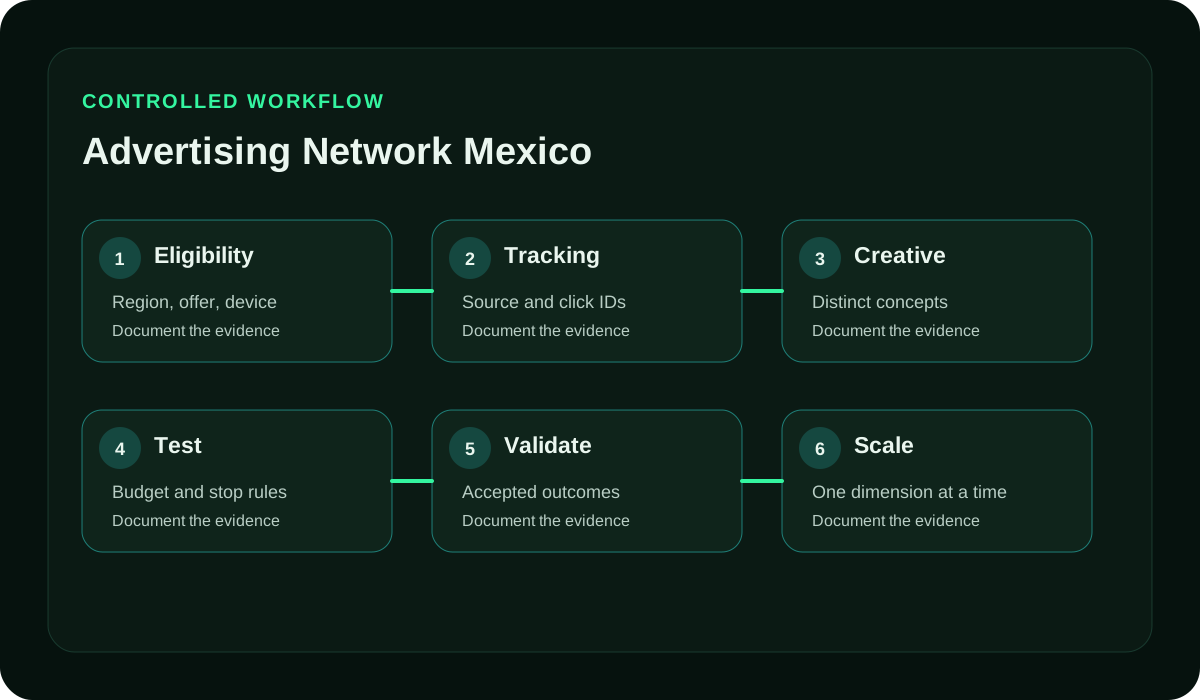
advertising network mexico controlled workflow visual

Match the format to its response route

Give each format comparison its own interpretable purchase

Prepare the same commercial question appropriately for each format under consideration. Keep the asset package and interaction distinct while retaining a common accepted-action rule where a fair comparison permits it. Confirm availability and buying units with FroggyAds. If the formats require different destinations or response arrangements, record those differences so the review can identify what was actually tested instead of declaring a universal winner from incompatible experiences.

Create My Free Account
Illustration comparing advertising formats for advertising network mexico execution
09 • Campaign allowance

Separate account funding from the allowance for this Mexico test

Our published USD 50 minimum deposit concerns account entry and funding. It does not specify the campaign's native or display rate, the customer response a test will collect or the spending needed for every Mexico offer. Confirm the actual buying model and account currency. Give the campaign a deliberate allowance for the defined format and operating question, with authority for the next allocation assigned to a named person.

10 • Comparable cost

Compare accepted cost using matching periods and currency definitions

Reconcile included media spending with mature customer actions under the same acceptance rule. Identify any creative, response-handling or fulfilment expense included in a broader calculation. When business and campaign records use different currencies, retain the conversion basis and date selected by the business. A report's daily boundary and a customer's local service day also need compatible treatment before the buyer ranks two purchases by accepted cost.

11 • Timing discrepancies

Investigate a timing discrepancy before changing the source purchase

A missing appointment in one daily report can be a question about clock boundaries, event collection or customer acceptance rather than source quality. Ask the relevant owner to inspect the actual record and reporting definition. Keep a reproducible route failure separate from ordinary uncertainty about a recent response. Apply the available media restriction to the finding it can address, while the business resolves its own page or service issue.

12 • Operating response

Choose whether to purchase, wait for response or correct the operation

Proceed with an identifiable allowance when the offer, customer route and operating arrangement are usable. Allow recent customer actions to mature before comparing their accepted economics. Correct an unavailable appointment or response promise with its owner, restricting affected exposure where appropriate. These are different decisions; a useful campaign review tells the next buyer which one is supported and what condition must be satisfied before another purchase.

13 • Changed service promise

Change the response arrangement as an explicit experiment

If you are investigating a different callback promise, service window or booking route, identify that change and retain the earlier proposition. Avoid changing the format, country scope and customer process together unless the result is clearly described as exploratory. The customer response then supplies evidence about the purchase actually made. It should not be used to claim that a clock change alone caused a commercial improvement.

Authorize an offer the operation can serve

Assign responsibility before releasing the first allowance

Have the media buyer confirm available campaign settings, the offer owner approve the destination and local service arrangement, and the measurement owner reconcile a known customer action. Name who may restrict spending if a required condition fails. FroggyAds provides the self-serve buying route for putting that prepared plan into action, while the handoff keeps the customer promise and the next spending decision clear.

Create My Free Account
Illustration of a campaign launch checklist for advertising network mexico
14 • Acceptance cycle

Review the purchase through the actual service and acceptance cycle

Keep accepted, rejected and pending customer actions distinguishable, with the reason and relevant dates. A request received outside staffed hours may have a different review delay from one handled immediately. Compare compatible stages before attributing a change to the advertising format or source. The business should explain its actual response process rather than treating all recent submissions as either final value or failure.

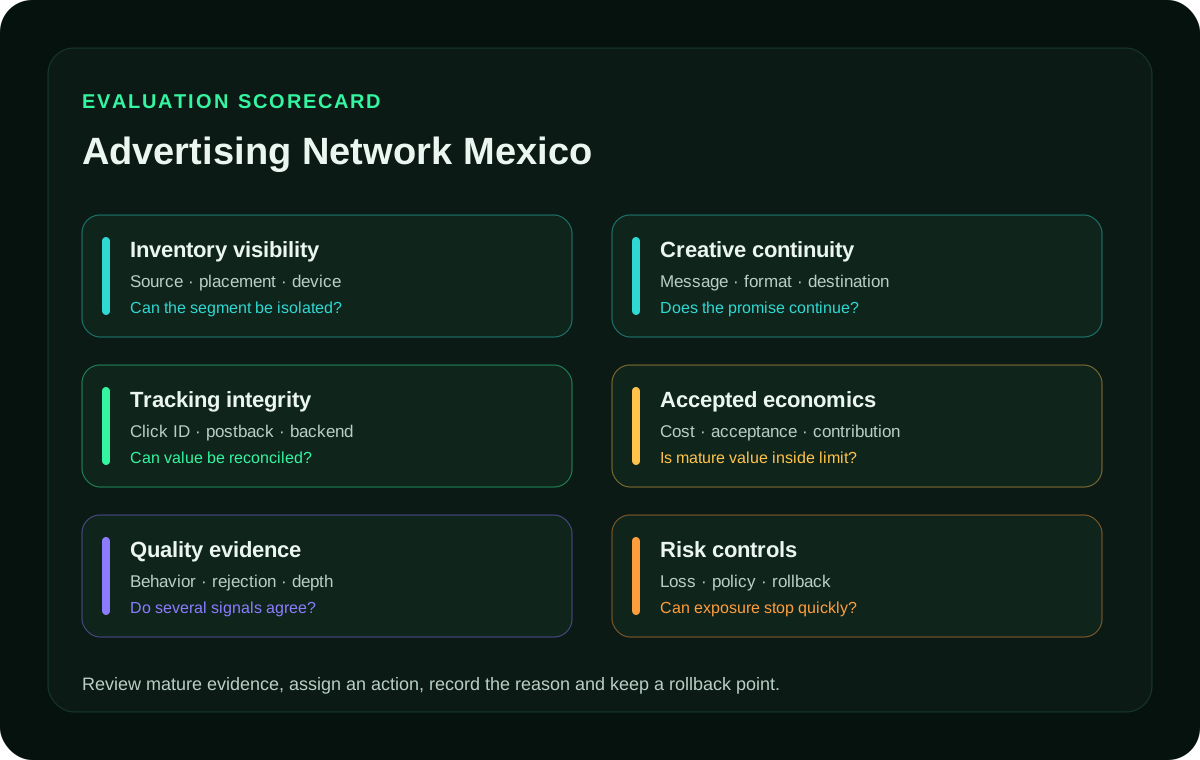
advertising network mexico evaluation scorecard visual
15 • Known route failures

Restrict exposure when the offer route or spending permission fails

Act promptly on an unavailable destination, unusable booking, failed required measurement or purchase beyond its approved allowance. Preserve the affected scope, page version and observed condition. Assign the correction and identify the controlled check needed before retesting. A known defect can require action before an ordinary customer sample is large or mature enough to support a broader network comparison.

16 • Prepared expansion

Add another supported location or format through a prepared handoff

Confirm that the additional opportunity has the assets, destination, service availability and measurement its proposition needs. Retain the earlier purchase as a suitable comparison and authorize a specific new allowance. A useful Mexico result can support an expansion hypothesis, while the added distribution still needs its own response evidence. Keep the new locality's clock and operating date explicit if they change the customer arrangement.

17 • Operating changes

Consider how the purchase behaves when service conditions change

Ask what happens if the response team closes early, appointments fill or a local clock change alters the relationship with the account day. Prepare an appropriate customer message and spending response for the conditions that matter to the offer. The plan need not invent an automatic scheduling feature: identify the available controls, responsible operator and procedure that can actually manage the intended exposure.

18 • Dated handoff

Close the review with the next owner's local time and action

Write the action, responsible person and date with an unambiguous clock reference. Identify whether the campaign can continue, needs a scope restriction or awaits a specific operational correction. Preserve the original report period and earlier setup. The next owner should be able to understand the instruction without guessing whether a time means the customer's locality, the campaign account or a colleague working elsewhere.

From media to local service

Six checks connecting Mexico delivery with local service

Operating checkInformation to retainDecision it supports
LocalityActual service location and operating date, including the time-zone reference usedSelect the supported customer area and verify its hours before authorizing exposure
FormatAvailable advertising interaction, approved asset package and intended customer actionPurchase the format prepared for the offer rather than comparing incompatible rates
Customer routeDestination and confirmation during staffed hours and outside the advertised service windowResolve an unavailable or misleading next step before buying traffic that depends on it
Reporting clockCampaign, website and business timestamps with their own time-zone definitionsReconcile daily boundaries before treating a customer record as missing
Accepted responseMature customer status, common cost scope and the actual response-handling periodAssign another allowance from comparable commercial evidence
Action ownerNamed person, available spending control and the condition requiring a restrictionAct on the supported finding and retain the check needed before a retest
Before broader distribution

Three operating conditions to resolve before broader Mexico distribution

Closed team

Prepare a truthful response route outside staffed hours

Decide whether the offer can accept a self-service action, explain a later response or should receive a restricted purchase. Test the actual page and confirmation for that arrangement. A customer should not receive an immediate-service promise that the business cannot fulfil. The responsible operator can then manage the available campaign controls around a clearly defined condition rather than assuming that country targeting handles the service schedule.

Clock boundary

Reconcile purchases that cross reporting-day boundaries

Keep the original interaction and accepted-response timestamps, then compare them using an agreed reporting boundary. An event after local midnight may fall in an earlier account date, or the reverse, depending on the clocks involved. Document the actual relationship for the purchase. A reconciled record is more useful than changing the source budget to solve a difference caused by incompatible daily reporting periods.

Date change

Recalculate the local window after a relevant date change

Recalculate the relationship between the service window and the buyer's clock before repeating a plan across a relevant date change. Retain the locality, date and zone reference used, and have the service owner confirm that the advertised hours remain correct. Check the actual campaign arrangement separately. A prepared conversion supports an operating instruction; it does not establish a universal national schedule or an automatic platform capability.

Mexico buying questions

Questions about buying Mexico advertising with a usable operating plan

What should a Mexico advertising-network brief specify first?

Name the accepted customer action, actual service area, chosen format and prepared destination. Add the local response arrangement, reporting clock and spending decision owner. Confirm the available FroggyAds purchase so the commercial brief can become a campaign the business can serve and evaluate.

Can one Mexico clock be used for every intended location?

Verify the actual locality and operating date, then retain the relevant zone reference in the brief. Reconcile that customer clock with the campaign and response team's clocks. Use the dated worked example as a method for preparing a plan, with official local time and real service availability confirmed before execution.

Does a campaign reporting time zone select its geographic audience?

Treat reporting and geography as separate setup questions and confirm the actual campaign behaviour with FroggyAds. A time label explains the report's period; the available geographic controls define the intended advertising scope. External Google account rules should not be assumed to describe your FroggyAds settings.

Which format should the first Mexico purchase use?

Choose an available format whose interaction and asset requirements fit the customer question and prepared destination. Confirm specifications and buying units with us. A native explanation, concise display proposition and full-page transition may need different preparation, so give each purchase an identifiable job before comparing its commercial response.

What should an offer do outside staffed service hours?

Prepare an accurate self-service action, later-response message or other arrangement the business can fulfil. Inspect the actual destination and confirmation, then give the media buyer a clear operating instruction. Confirm applicable controls instead of assuming automatic local-hours management is included in every campaign.

Why might an accepted customer appear under a different report date?

The original interaction, later acceptance and different account or local clocks can describe different dates. Reconcile the actual timestamps and report definitions before assigning a cause. Preserve identifiers and a common review boundary so the response is neither duplicated nor removed from the purchase that generated it.

How should minimum funding and campaign allowance be separated?

Funding the account and authorizing this test are separate decisions. The published minimum deposit is USD 50. Set the campaign allowance from its actual format, purchase conditions and permitted exposure while customer evidence develops. Confirm account currency and buying unit; the funding minimum does not establish a sufficient budget or customer-acquisition rate for every Mexico offer.

Can a timing discrepancy establish poor source quality?

Investigate the actual record and reporting boundaries before drawing that conclusion. A clock mismatch, collection failure and unsuitable customer response can require different actions. Retain the known condition and use the applicable campaign control for the finding it can address.

When should the media buyer restrict the campaign promptly?

Act on an unavailable offer route, unusable booking, failed required measurement or exposure beyond spending permission. Assign its correction and preserve the scope. A verified operational defect can require a restriction before customer response is mature enough for an ordinary commercial ranking.

What supports adding another Mexico location or advertising format?

Prepare its assets, destination, customer service arrangement and measurement, then define the question the added allowance should answer. Retain the earlier purchase as a suitable comparison. Confirm local time and operating date where they matter, and judge the new distribution from its own accepted response.

Mexico purchase with an owner

Start the campaign your Mexico operation is ready to handle

Bring FroggyAds a clear objective, eligible service area, suitable format and prepared customer route. Confirm the available purchase, approve an allowance and name the person who will review its result. Our self-serve workflow helps you act on that plan with practical targeting, bid, budget and source controls, connecting the next spending decision with response the business can recognize.

Format and clock decisions

Keep the format and local-time handoff beside the Mexico buying decision

This guide helps an advertiser coordinate network purchasing with the clock and service arrangement behind a Mexico offer. It complements format-specific resources by asking how the approved interaction becomes a usable customer action at the relevant place and time. Keep the purchase, operating owner and report period identifiable when deciding whether the next allocation can proceed.

Format assignment: describe what the advertisement should communicate before the visitor arrives and what the destination must then make possible. A concise visual, explanatory native message or full-page route can serve different tasks. Confirm the actual inventory and specifications, and retain the concept the business approved for that interaction.

Operating assignment: keep the campaign objective, intended service area, response promise and responsible team together. Have the offer owner explain what can happen immediately and what requires a later response. The buyer can then discuss an available purchase with FroggyAds without silently making a customer-service commitment on the business's behalf.

Clock assignment: record the place, operating date and time-zone reference needed for the customer arrangement. Keep the campaign's reporting clock separately visible. Have the responsible team check the conversion for its actual service window, including relevant date changes, so the next buyer can interpret the instruction without guessing which local hour or daily boundary it represents.

Measurement assignment: retain original interaction and customer timestamps with their definitions. Reconcile a known action before paid distribution and preserve the acceptance rule used to judge actual response. A later conversion or different daily boundary should be explained using the record, not resolved by assigning an invented customer total to whichever report looks more favourable.

Spending assignment specifies the initial allowance, responsible decision owner and applicable controls. Make the next allocation conditional on usable operations and comparable mature customer evidence. Keep a known route or permission failure distinct from an uncertain recent sample so each receives the appropriate restriction, investigation or continued observation.

Expansion assignment identifies the additional format or location, prepared destination and service coverage it needs. Confirm its actual clock relationship for the dates under consideration. The earlier purchase supplies a comparison and a hypothesis; the new distribution still needs an identifiable allowance and its own response evidence.

Handoff assignment tells the next operator what to do, when to do it and which clock the instruction uses. Preserve the affected scope, owner and condition that would change the decision. This is the practical record that turns a network recommendation into a campaign action another person can carry out accurately.

Handoff elementQuestion before another purchaseRecord to preserve
Format and propositionDoes the available advertising interaction suit the prepared customer task?Approved assets, destination version and accepted-action definition
Local service timeCan the business fulfil its response promise in the intended locality and period?Place, date, time-zone reference, service hours and outside-hours arrangement
Reporting and permissionCan the owner reconcile customer response and approve the next identifiable allowance?Original timestamps, report clock, included costs and dated spending decision

Planning example: translate staffed hours into a dated purchase brief

Hypothetical example: assume staffed hours of 09:00–17:00 local time and a buyer planning in UTC. For 26 October 2026, the reviewed IANA data converts those hours to 15:00–23:00 UTC for Mexico City, 14:00–22:00 for Cancún and 16:00–00:00 for Tijuana, ending on the next UTC date. On 2 November, the Tijuana window becomes 17:00–01:00, ending the next date. Service hours are invented; the dated clock conversions were checked against time-zone data. Verify official local time, real service availability and actual campaign controls before using a plan. This is neither a live campaign nor an automated local-time targeting feature in FroggyAds.

Put the approved Mexico offer into an identifiable purchase

Choose FroggyAds to connect a prepared format and customer operation with practical media buying. Bring the service area, relevant clocks and accepted-action rule, confirm the available inventory and authorize a deliberate allowance. Create your free FroggyAds account.

Paid-media reference context: the linked Shopify paid-advertising overview discusses advertising types and buying models, while Google's Display targeting guidance describes options in that provider's system. They are background for asking which format and scope your actual purchase needs. Their product features, numerical benchmarks and performance claims are not FroggyAds specifications or evidence of Mexico campaign results.

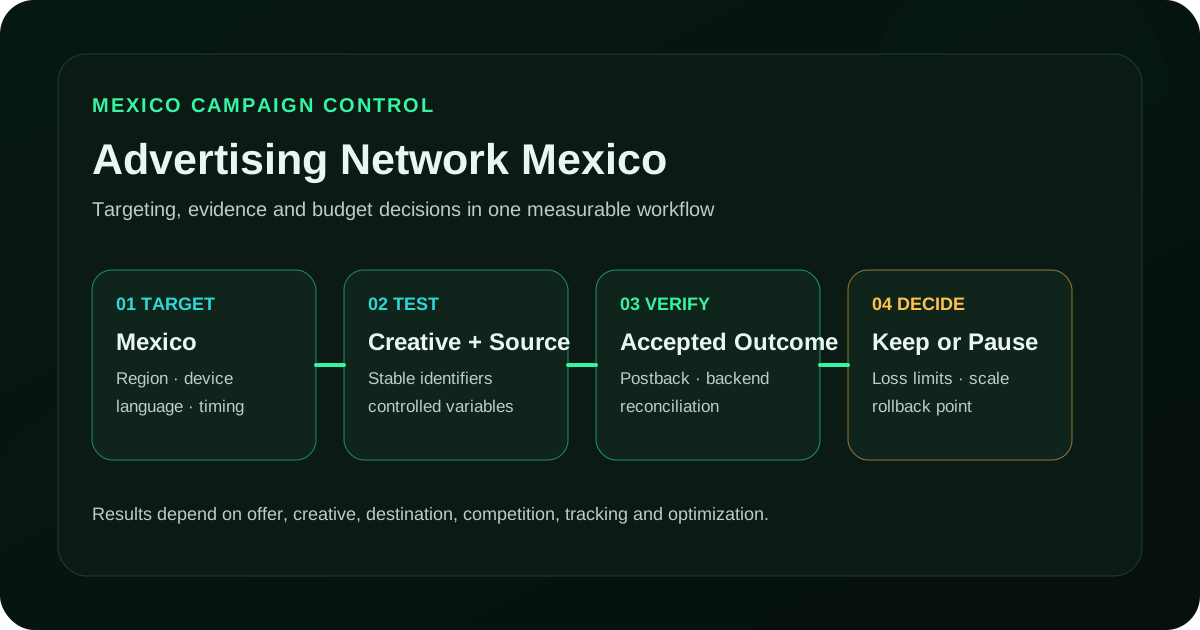
Mexico brief

Give the next buyer a Mexico plan with a usable clock reference

Start with the customer action, location and response promise the business can fulfil. Confirm the FroggyAds format and inventory, reconcile the reporting clock with the local operation and assign the first allowance to a named owner. The next campaign decision can then follow from an identifiable purchase and actual accepted response, with the time and service conditions clear to the people who must act.