Ad network evaluation for media buyers

Advertising Network Europe

Evaluate advertising network europe by Europe inventory access, ad-format coverage, source reporting, targeting, budget controls, tracking, support and accepted campaign economics.

Self-serve control ·750+ SSP integrations ·20B+ daily impressions
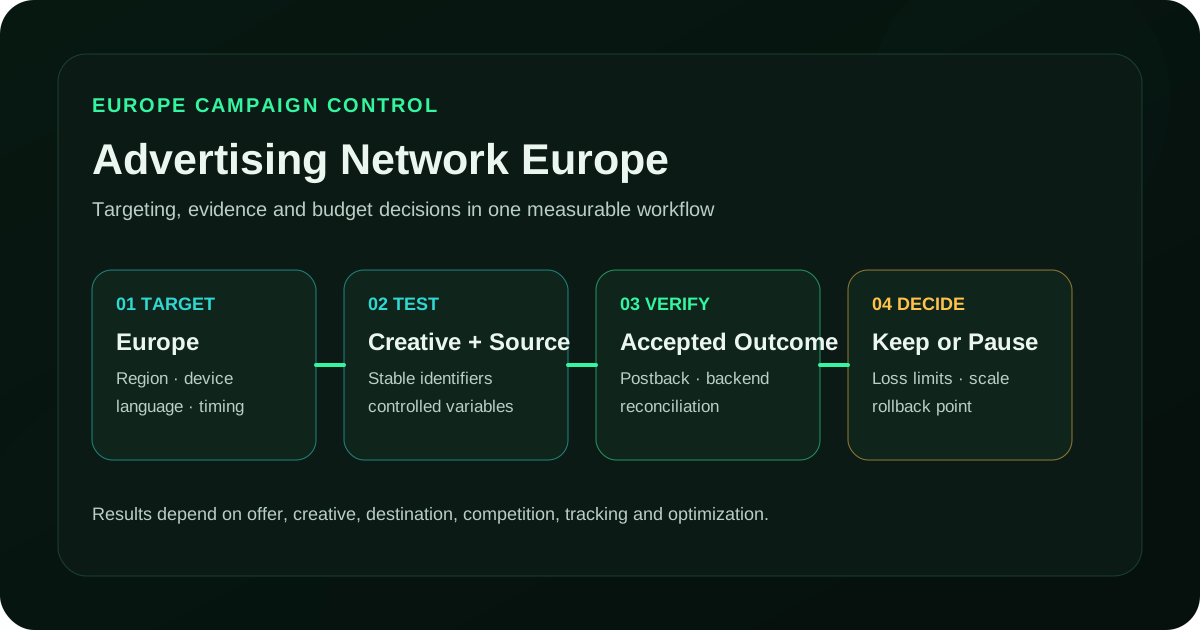
advertising network europe planning visual
Europe is a governance and service portfolio

Network coverage should be approved country by country

A European advertising-network plan begins with a roster of countries where the advertiser has a valid offer, supported destination, responsible seller and customer-response route. A regional location selector does not establish those conditions. Write the applicable language, fulfilment boundary and accepted outcome beside every active country. Keep unavailable markets outside delivery even when the network reports substantial inventory there.

Separate EU, EEA and other European planning labels from the operational contract. They can organise legal or commercial review, but they do not make national language, service or customer expectations interchangeable. A regional summary is useful only when a reviewer can return to the country records and see the exclusions, maturity windows and responsible owners behind it.

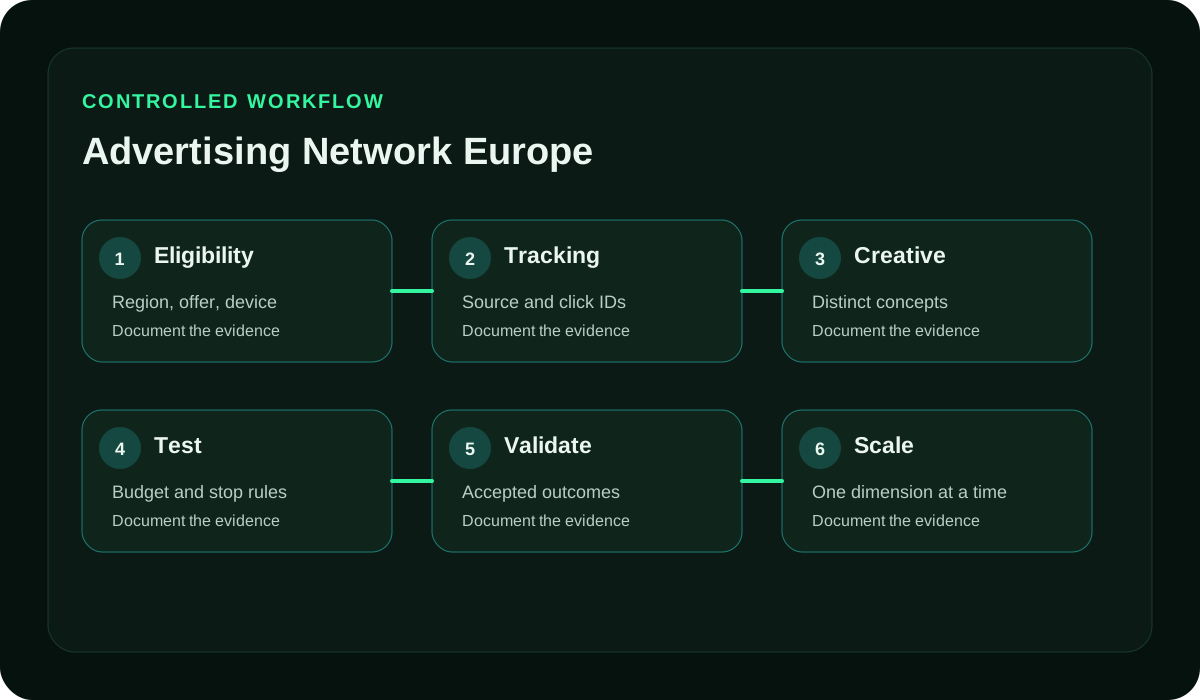
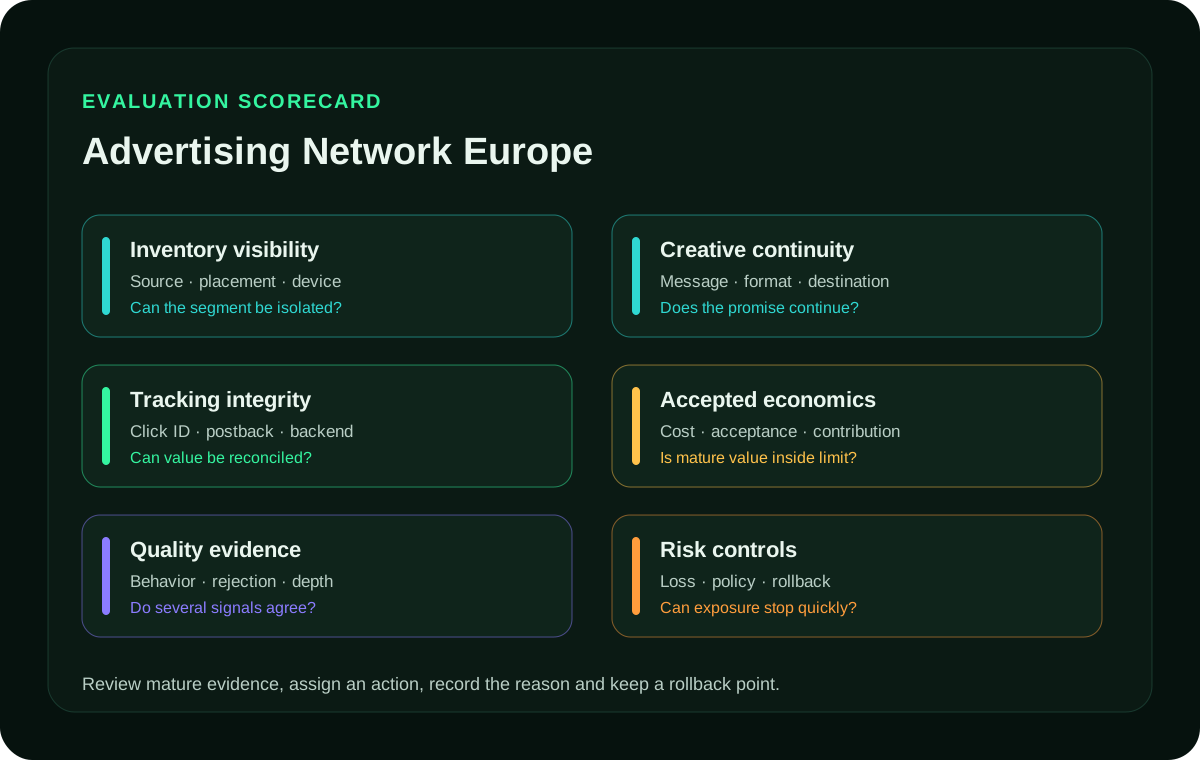
advertising network europe controlled workflow visualadvertising network europe evaluation scorecard visual
Supply-chain transparency crosses borders

A European partner should reveal which seller represents each publisher route

Request sampled placements from the countries, formats and devices being considered. Retain the publisher environment, direct or reseller relationship, page context, capture time and available controls. A familiar publisher brand does not validate every placement, and a declared reseller is not automatically unsuitable. The decision depends on whether the path is accurate, inspectable and open to correction.

Document how the network handles source changes, complaints, invalid activity and exclusions. If the same seller appears across several country cells, preserve that relationship without merging customer outcomes. One problematic route may deserve a narrow pause while other supply remains acceptable. Regional removal and regional approval are both weak substitutes for a traceable exception process.

European network roster built from national operating and supply contracts
Roster fieldCountry-owned evidenceRegional useFailure response
Offer eligibilityService area, terms, seller and destinationShows which countries may enter deliveryRemove unsupported country before media
Language continuityApproved page, form, confirmation and supportGroups only truly comparable routesPause the affected language journey
Seller provenancePublisher, seller type, format, device and timeReveals cross-border supply relationshipsQuarantine the unexplained seller cohort
Accepted outcomeMaturity, exclusions and commercial stateSupports an explicitly weighted summaryReturn failure to the national owner
Comparable reporting needs comparable definitions

Normalise the outcome, not the country's operating reality

Choose a shared conceptual outcome only when national teams can implement it consistently. An accepted qualified enquiry may be comparable if eligibility, response window and exclusions are documented in each country. Do not force identical form fields or sales processes where they are unnecessary. Report the common state alongside local evidence rather than pretending every customer route is the same.

Currency, tax, payment and fulfilment differences should remain in finance and commercial records. Convert costs using a dated internal method when the advertiser needs a portfolio view, and show the effect separately from media performance. A European average can guide allocation, but it should not become a published market rate or erase a country where the network cannot supply useful demand.

Data movements need an actual route map

GDPR text is not a substitute for implementation evidence

The European Commission data-protection source provides official context, but it does not certify a campaign, vendor or transfer. Map every collection point, purpose, role, recipient, location, retention decision and rights-handling route. Qualified owners must assess the current programme and relevant jurisdictions. Keep the decision versioned because a new processor, identifier or market can change the review.

Use privacy-minimal outcome returns. Country, supply cohort, accepted state, maturity and controlled rejection may be enough for network comparison. Detailed customer narratives should stay in authorised systems. Do not enable an audience upload across the portfolio merely because a platform offers one; document necessity, source, permission or other basis, destination and deletion for that distinct activity.

European evidence layers that must remain distinguishable
LayerPrimary ownerPortfolio questionBoundary
Network deliveryMedia and supply teamsWhich declared route delivered?Cannot prove customer eligibility
National journeyCountry commercial teamCould this visitor receive the promised service?Cannot certify seller provenance
Data governanceQualified privacy and contract ownersWas the real information path reviewed?Cannot guarantee commercial value
Mature outcomeSales, fulfilment and financeDid accepted demand reach the chosen state?Cannot become a universal market forecast
Pilot contrasts instead of continental spread

Test a few dissimilar country cells with enough evidence to learn

Choose countries that are serviceable and expose meaningful differences in language, supply or fulfilment. Fix the outcome concept and maximum allocation, then preserve country-specific placement and response evidence. A thin budget across every selectable country creates many immature cohorts and encourages conclusions from noise. The pilot should reveal whether the operating model can distinguish causes.

Add countries only after their destination, data, support and supply records are ready. A new geography starts a new cohort; it should not inherit the approval of a neighbour. Annotate material commercial or staffing events. When customer quality falls, identify whether the network route, local promise or operational response changed before altering the whole portfolio.

The roster should make removal easy

Select European partners for controlled roles and explicit exceptions

Compare networks on country precision, seller visibility, language support, placement controls, reporting exports, suspicious-traffic response and escalation. Verify capabilities in the account and contract. A broad list of available countries is less valuable than a demonstrated process for tracing one problematic seller in one active market and protecting the rest of the programme.

Assign each approved partner a set of countries, formats or publisher roles, together with overlap rules, exclusions and a replacement trigger. Preserve the reason for approval and the evidence date. When the partner changes supply or loses support in one market, narrow its assignment. The programme should remain auditable without redesigning pages or adding browser-side decision tools.

One portfolio, national evidence

Govern European network partners without hiding country-level differences in an aggregate

A portfolio audit should list countries with verified account access separately from countries merely named in sales material. The latter remain unverified until the intended account exposes suitable controls and reporting. This prevents theoretical European reach from entering an allocation decision as operational inventory.

Cross-border publisher routes need seller evidence at the country cohort. A reseller may represent inventory in several markets, but the advertiser should still see where delivery occurred and which exclusion applies. One regional seller label cannot replace the national placement record.

Frequency reporting should state whether it is platform-specific, country-specific or actually deduplicated. Several partners may reach overlapping users without a common reliable identifier. Reduce unnecessary overlap and disclose the observation limit instead of presenting summed reach as a unique European audience.

Language support can be rehearsed with controlled enquiries that never enter commercial totals. Test confirmation and assignment in the approved national route, then delete or flag the synthetic record. This catches a wrong-language handoff before real demand exposes it.

A country exit procedure should preserve the reason, affected supply, customer maturity and unresolved obligations. Stop delivery, correct public destinations and retain only necessary evidence. Removing a country from media does not automatically complete customer or data responsibilities already created.

Support quality should be assessed through a real placement trace in two dissimilar assigned markets. Record which identifiers the network can return and who owns closure. A regional account manager's fast reply is not equivalent to a reproducible supply investigation.

Portfolio finance can convert costs for internal comparison using a dated approved method. Preserve source currencies and account charges so later exchange movement is explainable. Never publish the converted result as a standard European media rate.

A new network should receive a deliberately narrow assignment during comparison. Hold country route and accepted outcome stable where possible, while documenting unavoidable supply differences. The review should not call an uncontrolled partner change a scientific experiment.

Seasonal or promotional events belong in the country history. An uplift may reflect demand timing, stock or a local offer rather than permanent network improvement. Keep the event beside the cohort before the regional summary is interpreted.

Renewal should verify current destinations, contacts, seller paths and export access. A partner can remain technically stable while a country operation changes. European approval expires when either side of the placement-to-customer contract is no longer maintained.

The final regional memo should name unresolved markets and evidence gaps. A portfolio can approve verified routes while leaving others closed. Honest incompleteness is stronger than assigning a low confidence score that quietly permits delivery.

A country owner should sign off the destination and customer denominator before the regional media team can open delivery. This prevents a portfolio operator from treating an available checkbox as commercial approval. The sign-off names the current service route, local response capacity and the event that automatically returns the country to review.

Seller changes should trigger a targeted provenance check rather than an automatic Europe-wide pause. Identify the affected countries and publisher cohorts, request the new declaration, and inspect representative placements. Keep unaffected assignments stable while the evidence is gathered, provided their own seller paths remain intact.

A portfolio dashboard should link every result to the underlying country record. If the interface cannot retain maturity and exclusion notes, publish those limits beside the internal analysis. Decision makers should never have to infer whether a strong total contains immature, unsupported or unverified national cells.

Customer correction and deletion processes must remain reachable after a country leaves active media. The exit checklist names systems and responsible teams that still hold authorised records. Campaign closure is a delivery event, not proof that every downstream responsibility has ended.

European partner approval should be reviewed after a material integration, reporting or contract change. The network can preserve its brand and still alter the evidence available to the advertiser. Revalidate the affected controls before the new state inherits the former roster status.

Direct operating answers

Questions for a European supply portfolio

Can Europe be one advertising-network target?

It can be a planning and summary layer, but delivery should follow country-level service, language, supply and outcome contracts.

How should European country results be compared?

Use a common mature outcome concept while retaining national eligibility, exclusions, maturity, currency and operational context.

Are resellers disallowed in European supply?

No. A reseller relationship must be declared, traceable and controllable. Unexplained supply should be isolated.

What makes a regional average trustworthy?

It identifies included countries, weighting, maturity, exclusions and source records, and never makes a decision that contradicts a failed national cell.

Does a GDPR source certify the programme?

No. Official material provides context; qualified owners must review the actual systems, roles, transfers and jurisdictions.

Should every country use identical forms?

No. Collect only what each route needs, while maintaining a comparable accepted-outcome definition where useful.

Can one successful country justify European expansion?

No. Each added country requires current service, destination, supply, data and response evidence.

How can several networks share Europe?

Assign distinct countries, formats or publisher roles and document overlap controls, exclusions and replacement triggers.

What should pause a country cell?

Unsupported service, broken language, untraceable supply, invalid data handling or repeated failure of the mature customer rule.

What can FroggyAds verify?

FroggyAds supplies the platform-side delivery record used in the European portfolio; national service and customer value come from advertiser systems. National eligibility, legal interpretation, customer acceptance and fulfilment remain advertiser-owned.

Source boundary

European authority and supply sources answer different, bounded questions

European Commission material provides official data-protection context without approving this implementation. IAB Tech Lab documentation informs seller-path records, and Google describes its own location controls. FroggyAds information covers its service. Country eligibility, language accuracy, contract interpretation, customer acceptance and portfolio value require separate current evidence.