Ad network evaluation for media buyers

Advertising Network Australia

Evaluate advertising network australia by Australia inventory access, ad-format coverage, source reporting, targeting, budget controls, tracking, support and accepted campaign economics.

Self-serve control ·750+ SSP integrations ·20B+ daily impressions
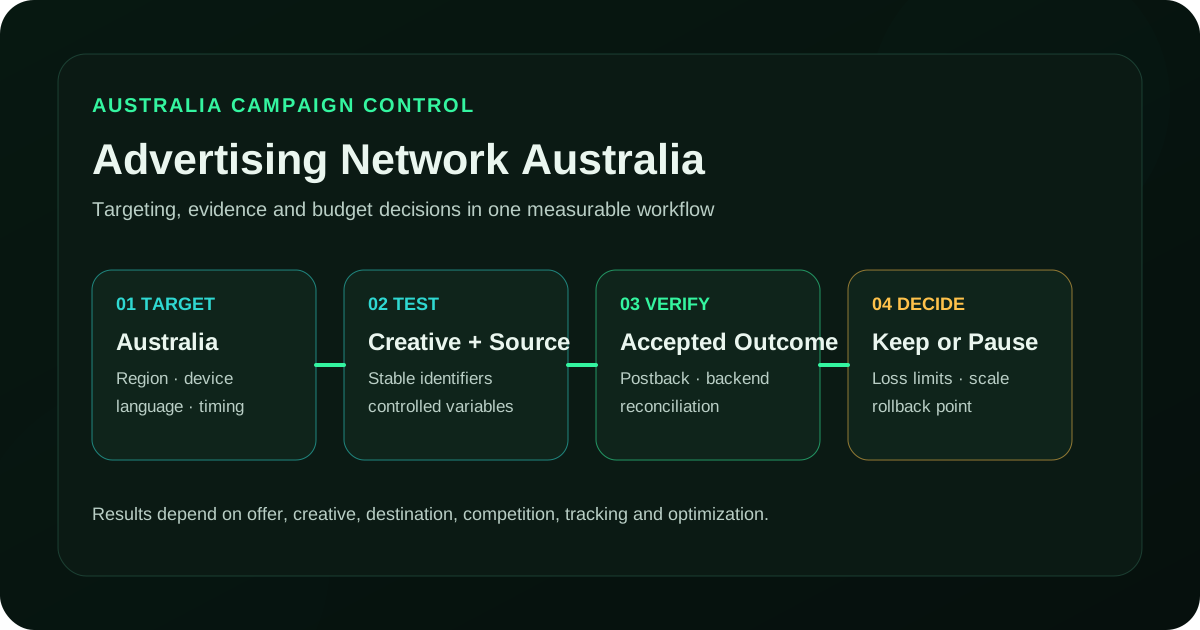
advertising network australia planning visual
Metro reach and regional service are different promises

Define where the Australian offer and response team truly operate

An Australia network brief should list the locations the advertiser can serve, not repeat a national targeting label. Metropolitan acquisition may use different delivery times, appointment capacity or sales coverage from regional and remote routes. State those differences on the destination before buying traffic. A visitor should not have to submit personal details to discover that a product, visit or support path is unavailable at their address.

Assign a commercial owner to each geographic route. That person confirms current availability, pricing context, fulfilment, response expectations and the accepted customer state. Media can then exclude unsupported areas and interpret outcomes against the right denominator. Without this operating map, an advertising network may accurately deliver a selected location while the advertiser still produces an unusable customer journey.

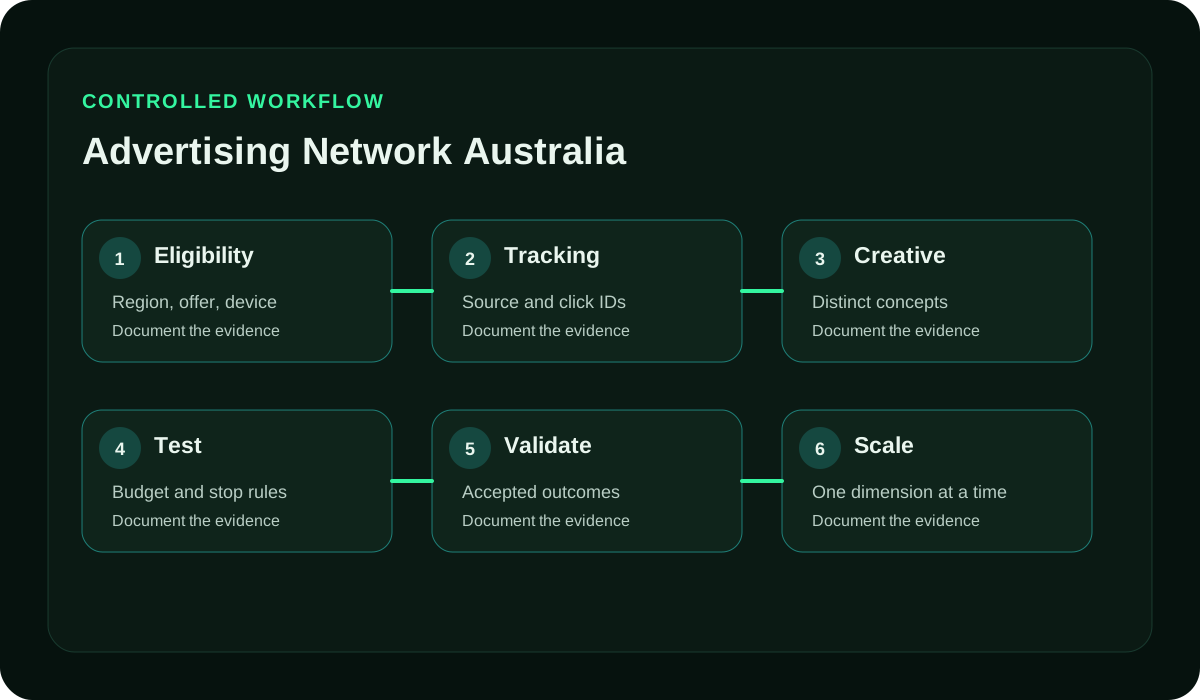
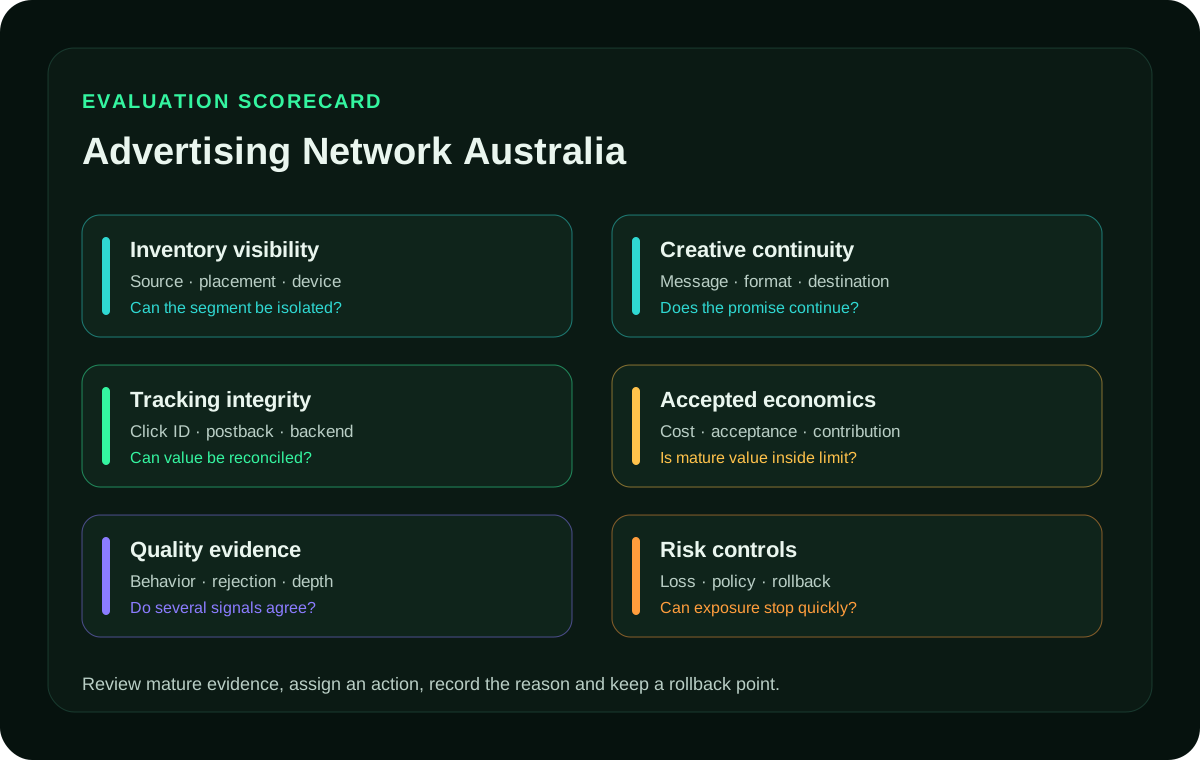
advertising network australia controlled workflow visualadvertising network australia evaluation scorecard visual
Know the entity selling the placement

Australian supply review should connect publisher context with an accountable seller

Request representative publisher and app placements for the intended format and device mix. Record the domain or environment, seller relationship, page context, advertising density, capture time and network contact. A clean screenshot is only a sample; it does not validate the whole pool. The purpose is to test whether the partner can reveal and investigate delivery rather than ask the advertiser to accept an anonymous inventory category.

Review resold supply on its declared merits. Intermediaries may be legitimate, but the path should be understandable and controllable. Confirm how the network handles exclusions, suspicious activity, complaints and publisher changes. If a placement reaches the customer through an entity or route the partner cannot explain, pause that segment. Do not let a broad Australian performance average erase the provenance problem.

Australian network partner dossier for geographic and seller accountability
Evidence recordSpecific contentsAccountable partyDecision it enables
Service-area mapEligible postcode or region, offer and fulfilment limitsAdvertiser operationsExclude locations the business cannot serve
Supply-path capturePublisher environment, seller type, format and timeNetwork quality contactTrace an unexpected or unsuitable placement
Destination checkDevice render, location wording, response route and formsDigital product ownerConfirm continuity from advertisement to action
Accepted-outcome fileCustomer state, maturity and controlled rejection reasonSales or service ownerJudge usefulness after media proxies
Creative should respect local scope

Evidence, price context and availability must survive the click

Store the claim source, intended audience, location scope and validity window with each Australian creative. Terms that depend on postcode, stock, appointment capacity or another condition should be clear before the visitor commits. Review units and examples for the actual offer. A national image or general product description cannot justify a statement about immediate regional availability.

Test the mobile journey under ordinary network conditions and with location selection enabled where relevant. Confirm tap targets, field labels, error handling, confirmation language and an accessible alternative route. Keep important content server-rendered and avoid adding a third-party widget merely to display a local rule. Accurate text, existing form controls and a maintained service record generally provide a faster and more auditable solution.

Privacy-aware lead routing

The data map should show why every Australian customer field moves

Document what the advertising platform, landing page, analytics service and customer system each receive. For every field or identifier, record purpose, access, disclosure, retention and correction or deletion handling. The OAIC Australian Privacy Principles page is an official source for review context, but the page does not decide compliance for this implementation. Qualified owners must interpret the current programme and obligations.

Return the minimum useful disposition to media. A serviceable and contacted state, unsupported location, duplicate or invalid request may be sufficient to compare network cohorts. Individual Australian enquiry notes remain in the authorised service system rather than the media feedback file. Where uploaded audiences or identity matching are proposed, assess necessity and controls separately instead of treating them as default features of the network test.

Australian lead journey controls separated from media reporting
Journey pointPermitted operational questionMinimal review outputEscalation condition
Landing formWhat is required to route this request?Form completion and eligible regionFields lack a defined purpose or owner
Sales assignmentCan a responsible team serve and contact the person?Accepted, unsupported or unreachable stateRouting sends details to the wrong team
Maturity reviewDid the accepted request reach the agreed later action?Cohort outcome after a fixed windowMedia is judged before the operation can respond
Network optimisationWhich documented cohort merits allocation?Aggregated state with exclusionsCustomer details are exported without necessity
A network pilot should reveal regional differences

Test a limited set of service cells before national expansion

Choose initial cells that represent the business rather than every selectable region. For example, compare a metropolitan route with a serviceable regional route only when both have valid destinations and staff capacity. Hold the offer and outcome definition stable while reviewing inventory and customer quality. The result describes those cells under dated conditions; it is not a universal Australian traffic estimate.

Scale through bounded changes. An increase in allocation, a new publisher class or a new geography should have its own start date and acceptance test. Keep earlier cohorts intact so quality changes remain visible. When regional enquiries fail because of fulfilment or response capacity, fix the operating route before changing bids. The network can control delivery, but it cannot repair an inaccurate service promise.

Select for correction speed

An Australian network is valuable when evidence can move to the right owner

Compare partners on publisher transparency, geographic control, device reporting, suspicious-traffic response, export quality, support escalation and the account terms actually available. Use direct observations and documents. Do not assume a control exists because another account or public page mentions it. Score how quickly a sampled problem becomes an explainable action, not how quickly a dashboard supplies a new aggregate.

Document the final role, allowed inventory, excluded regions, review cadence and replacement trigger for each approved partner. The record should explain whether a network supports metropolitan prospecting, a defined regional format or another narrow job. If the evidence cannot support a stable assignment, keep the partner in evaluation. A clear non-approval is safer than a vague nationwide acceptance.

State coverage meets publisher context

Document Australian service reach and the screen environments a network actually supplies

Postcode targeting should be discussed as a platform capability with limits, not as proof of a customer's service address. Verify the account control and report available to the network, then use the destination to confirm eligibility where needed. Avoid collecting a full address when a less detailed field can route the request. The operating record should explain which system makes the final serviceability decision.

A regional publisher can be valuable without producing metropolitan scale. Compare it against the partner role assigned to it: appropriate local context, traceable seller, usable destination and accepted customer progression. Do not penalise a specialist route for having fewer impressions than a national pool. Volume and suitability answer different questions and belong in different columns of the network review.

Support escalation should include the Australian account time zone, evidence required and authority to pause delivery. Test it before a major incident by asking the network to trace a benign sample. Record response quality and the identifiers returned. This rehearsal exposes missing permissions or contacts while the programme is still small and avoids sharing customer information during a hurried investigation.

Destination performance should be monitored by representative device and geographic route rather than one laboratory score alone. A customer can experience a slow third-party form, location lookup or confirmation even when the landing shell is fast. Keep the media page lightweight, but diagnose the full action path that the advertisement requires. A network exclusion cannot repair a delayed serviceability check.

Account terms should be preserved beside the pilot without turning them into a market benchmark. Funding, credit, refunds, reporting retention and support access affect operational risk. Verify the terms offered to this advertiser and date them. Another company may receive different conditions, so public copy should not imply a mandatory deposit or universal commercial rule without first-party evidence.

Renewal should sample both a metropolitan and regional route if both remain assigned. Confirm the service map, seller path, customer response and exclusion list. If a regional operation has changed capacity, narrow delivery even when the network performance remained stable. Partner approval cannot override the advertiser's current ability to honour the route.

The final comparison can record qualitative confidence without pretending every item has equal precision. Verified placement provenance, observed support and mature customer outcomes carry direct evidence. A future feature or missing downstream join remains unverified. Presenting those states honestly supports a better decision than summing them into an unexplained partner score.

A complaints rehearsal can validate the ownership map without waiting for a live incident. Use a harmless placement sample, identify who receives the query and check whether the partner returns the seller and disposition. Keep the rehearsal separate from campaign-quality totals. The result shows whether regional and network teams can act together while the programme is still bounded.

Direct operating answers

Answers for an Australia placement and partner review

Should an Australian network campaign target the whole country?

Only when the advertiser can serve the selected locations and maintain accurate destinations, response capacity and outcome evidence. National availability in an interface is not proof of operational coverage.

How can regional and metropolitan traffic be compared?

Use separate service cells with the same accepted-outcome definition, while preserving differences in fulfilment, response time, placement and device context.

What supply-chain details should a network provide?

Representative publisher environments, seller relationship, format, device, capture time, exclusion controls and an escalation contact able to investigate the route.

Does a reseller automatically make inventory unsuitable?

No. The issue is whether the reseller relationship is declared, explainable and controllable. Untraceable supply should be paused.

What does the OAIC source prove for this page?

It provides official Australian Privacy Principles context. Approval of an Australian implementation still depends on its qualified owner examining the live data and vendor route.

How much lead data should return to the network?

Only the minimum aggregated or controlled state needed for the defined media decision. Detailed customer notes should stay in authorised business systems.

What is a mature Australian network outcome?

Use a state the responsible team accepts after the necessary response window, such as a qualified appointment, valid order or another documented commercial action.

When should a regional segment pause?

Pause when the offer cannot be fulfilled, the destination misstates availability, seller provenance is unexplained or customer dispositions repeatedly fail the signed rule.

Can a strong metro result justify remote-area expansion?

No. Expansion needs a serviceable route, appropriate supply sample, destination review and outcome owner for the new location.

What can FroggyAds verify in the Australian review?

FroggyAds can evidence its campaign configuration and reporting. The advertiser verifies location eligibility, privacy interpretation, fulfilment, customer acceptance and realised value.

Source boundary

Australian sources support bounded targeting, supply and privacy questions

The OAIC page is cited for Australian privacy-principles context, while IAB Tech Lab material supports a limited seller-path review. Google documentation describes location controls on Google's own platform. FroggyAds supplies first-party facts about its service; Australian publisher suitability and fulfilment are verified elsewhere. These sources do not certify a publisher, determine the advertiser's legal obligations, confirm regional fulfilment or guarantee a commercial outcome.