Search intent and buyer decisionUse business-specific records to decide the next release
Give commerce and media one stage map: order created, stock reserved, packed, carrier accepted, delivery attempted, received, customer issue opened and retained after review. The map should reflect the advertiser's actual systems. A dispatch notice alone cannot establish that the customer received the correct product. Retain the state or service zone, customer-facing AUD offer, delivery promise and product version with the order. If a carrier, warehouse or stock rule changes, date the change and start a separate observation window. This prevents later reports from comparing different fulfilment conditions as though only media changed.
Ecommerce exception reasons: Use specific dispositions for invalid or unsupported address, stock shortfall, warehouse delay, carrier exception, safe-drop dispute, damage, wrong item, customer cancellation, return and refund. The accountable owner can then repair the route without treating an operational failure as proof that the Australian visitor or traffic source lacked value. Close the cohort after the declared return window or show pending orders with a transparent reserve. The next FroggyAds release should follow retained customer evidence and warehouse headroom, not an early total that ignores unresolved parcels.
Service enquiry and job acceptance: For a trade, agency or professional service, write the requested work, eligible customer, serviceable location, normal response, quotation step and accepted commercial event before launch. The form should promise a defined next action, while the business decides whether the request fits its scope and licensed or operational coverage. Follow valid request, assigned owner, reached customer, site or needs assessment, quote delivered, quote accepted, scheduled work, completed work and finance acceptance. An enquiry and a completed job answer different questions, so record both without funding them as the same outcome.
Review the Australian service route before reopening traffic: Keep unsupported task, travel boundary, missing information, capacity conflict, price decline, customer postponement, no contact and slow internal response as separate reasons. A late quotation can destroy otherwise relevant demand; its cost belongs in the operating review rather than being hidden in a generic unqualified label. Review the accepted-job cost only after the chosen sales and completion window. Cap cells that exceed estimator or field capacity. When the team has headroom, use our self-serve controls to reopen the precise route instead of broadening every state at once.
Verify recurring-customer value before the next Australian release: Define the membership or SaaS promise in AUD, the billing interval, trial or introductory condition, renewal meaning, cancellation route and first useful action. Save that version with each cohort. A registration is evidence of interest, while product use and retention answer whether the whole commercial route worked. Separate account created, verified, approved where required, onboarded, first substantive action, payment, cancellation request, refund and retained member. The product owner should name the stage that deserves budget and the time needed before a member can be assessed fairly.
Product onboarding and retention: Classify unavailable feature, device or browser failure, verification problem, unclear plan, billing rejection, onboarding abandonment and customer choice independently. Media cannot repair a broken sign-in or missing feature, and product friction should not become a permanent source exclusion. Allocate the next test after the maturity date with pending records visible. A smaller cohort of accepted members gives a clearer expansion decision than a large signup count that conceals incomplete onboarding or early reversals.
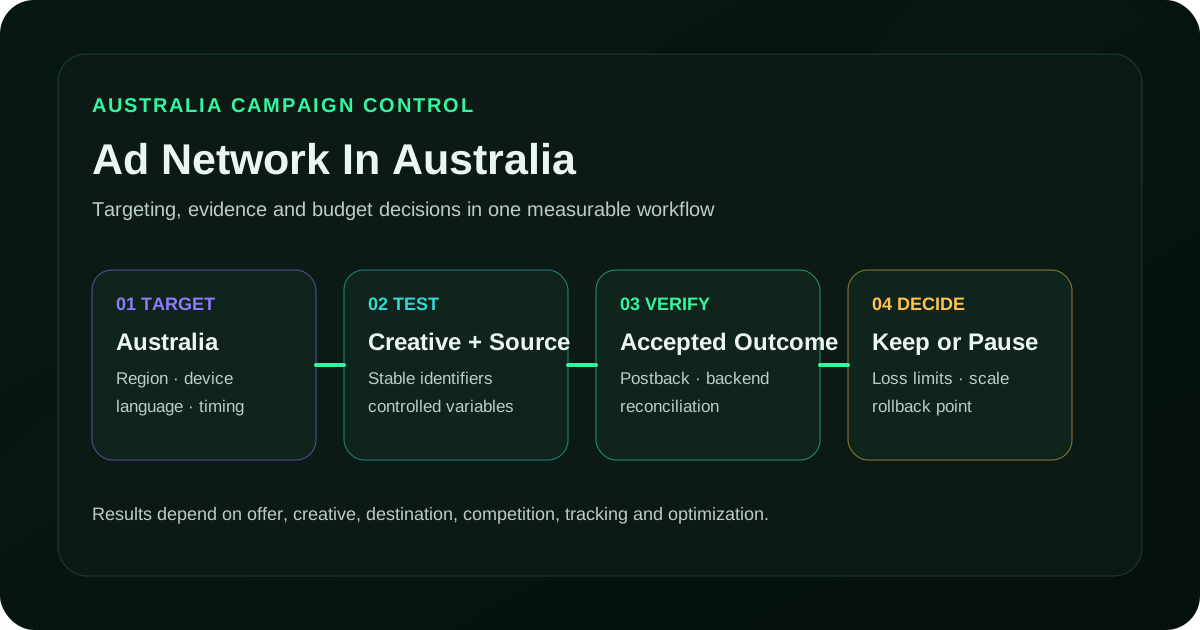
Agency and client responsibilities: An agency should document who approves audience, creative, AUD offer, destination, acceptance rule, maximum exposure and next release. The media team can retain campaign settings and delivery evidence; the client should retain the order, CRM or product record that determines commercial value. Name every stage consistently across dashboards and meetings. Form submission, reached prospect, quoted job, paid order, delivered order and retained customer cannot share one conversion label without erasing the buyer decision. Include the source system and accountable owner for the funded event.
Annotate material client changes: Record material changes to client stock, pricing, service boundary, response schedule or product build beside the campaign version. If the operating promise changes mid-cell, close or annotate the cohort rather than attributing the new outcome to targeting or format alone.
| Page checkpoint | How to use it | Evidence to retain |
|---|
| Accepted commercial outcome | Fund a defined event after its validation or return window. | The event rule, maturity date, accepted records and unresolved reversals. |
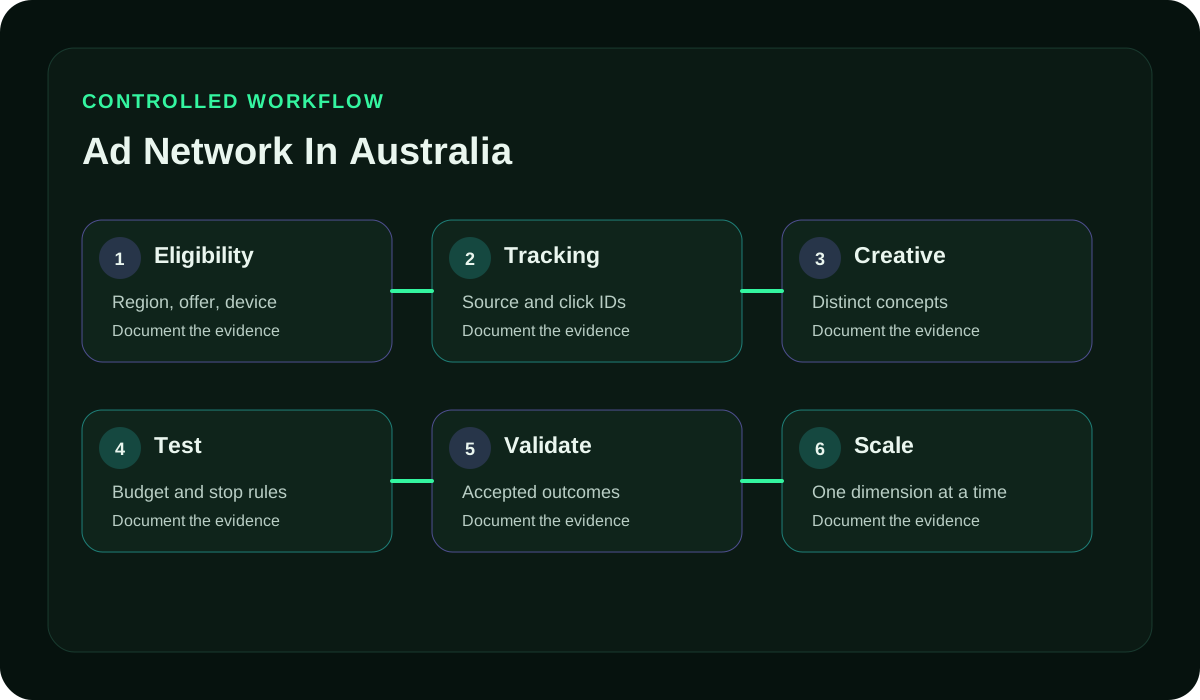
| Approve the next allocation | Approve one bounded increase using mature evidence and operating headroom. | Customer-value evidence, capacity owner and dated budget authority. |
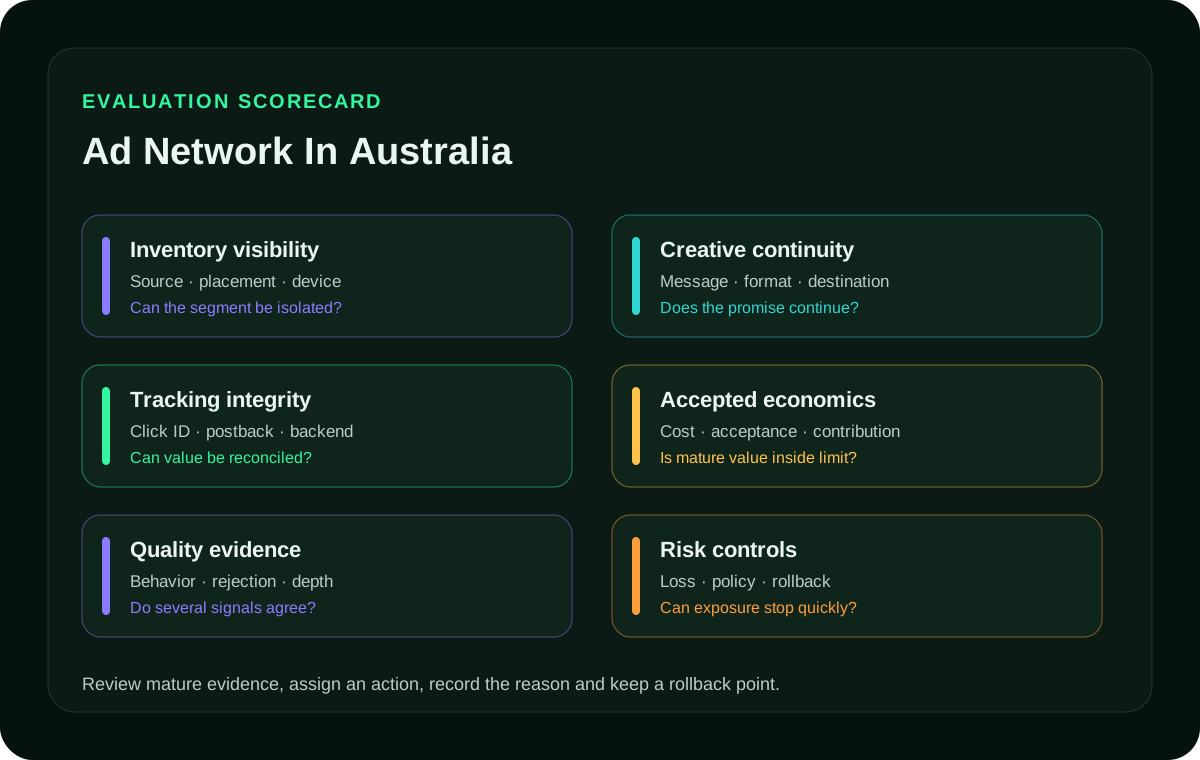
| Source action and restart rule | Keep, cap, repair, exclude or retest the specific cell according to its mature business evidence. | Record the responsible owner, customer exception and exact rollback or retest condition. |
Agree the pause owner before an Australian launch
Prepare an Australian operating stop rule: Finish the review with keep, cap, repair, exclude or retest, plus owner, date and reversal evidence. This turns our self-serve campaign controls into an auditable workflow and keeps the client responsible for claims that only its business systems can verify. Before launch, ask operations which event would make the current promise temporarily unsafe: stock depletion, warehouse closure, carrier disruption, appointment backlog, staff shortage, product incident or another recorded constraint. Name the person authorised to pause the affected route.
Keep unaffected routes separate during a disruption
Define the pause boundary narrowly. A disruption to one product, state, delivery method or service calendar does not require an unsupported conclusion about every Australian customer cell. Preserve unaffected routes only when their inventory, destination and receiving team remain valid. During the pause, retain the evidence needed to explain affected orders or leads and give customers the approved service response. Do not increase traffic to offset lost throughput. Media volume cannot solve an operational constraint and may enlarge the remediation workload. Create your free FroggyAds account.
Research context and a measured restart: ACMA’s 2025 internet-use research describes Australian adults, home access and devices under its published survey methodology. Those population estimates do not establish FroggyAds reach, customer intent or accepted value. Shopify paid-advertising overview covers general media planning; the Google Ads Display targeting guide describes Google’s own targeting terminology. Use your actual FroggyAds account for current Australia settings. After an operating interruption, ask the owner to confirm a serviceable promise, available capacity, dated review and rollback signal. Reopen a bounded campaign cell and reconcile its customer outcomes before returning to the former exposure. We give you the self-serve buying controls and source evidence; your order, CRM or product system confirms whether the business can accept more.