Market-readiness recordA market-readiness record your team can reuse
Name the serviceable opportunity: describe the customer, country and action the offer can fulfil. Keep that statement separate from a broad traffic-volume goal. A regional sales plan becomes more useful when the team can identify which market path is ready to receive customers and which still needs preparation.
Retain the customer experience: record the creative language, destination version, currency presentation and response route used in the purchase. This establishes what the visitor actually encountered. When one of those elements changes, note the date so the next report does not combine materially different experiences without explanation.
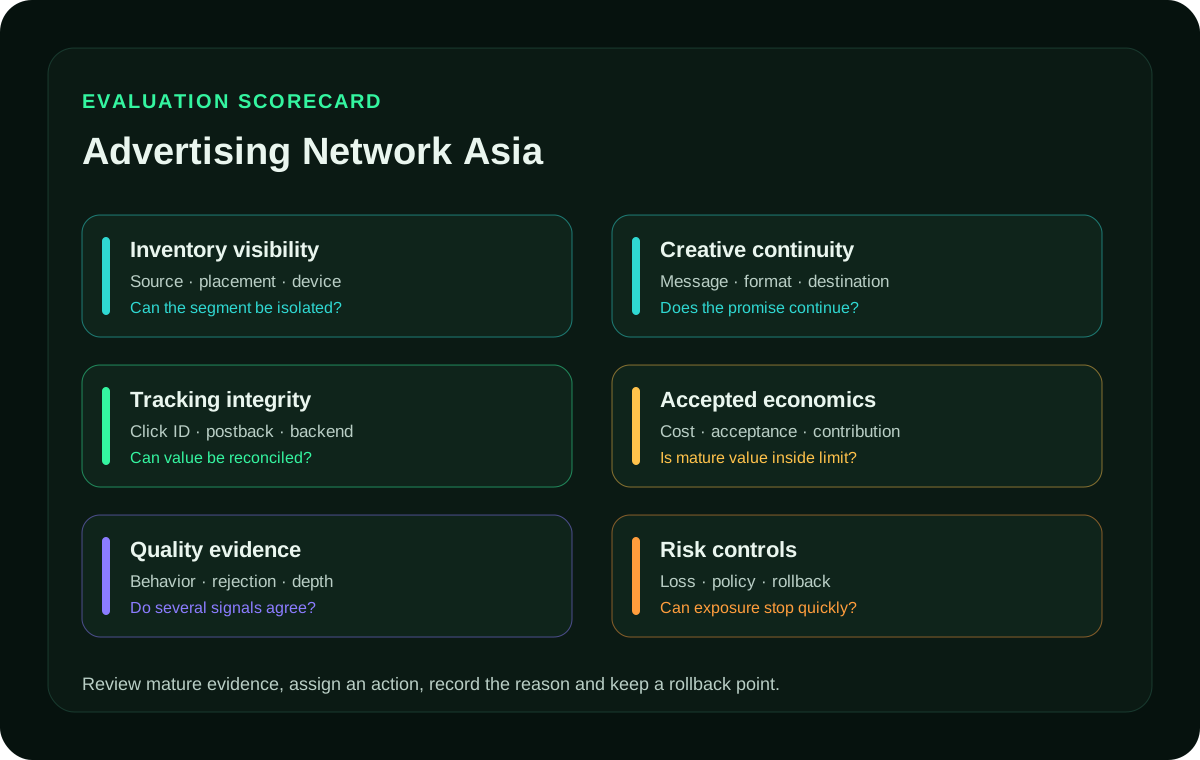
Preserve acceptance context: retain the reason an enquiry or order was accepted, rejected or left unresolved within the process your business uses. A market's raw responses and its serviceable customers can describe different commercial opportunities. Use the difference to improve targeting or the offer rather than concealing it in a regional total.
Explain the allocation change: state whether the new purchase adds a country, changes a language treatment or investigates another source within the same experience. These changes answer different questions. Keep the previous market conditions visible so a useful baseline remains available while your next campaign develops.
Normalize time before grouping results: check the reporting convention and customer acceptance period before calling a daily difference a buying signal. An action recorded late in one system may belong to the next date in another. Preserve the underlying event context where available rather than forcing incompatible daily totals to appear equal.
State the review currency: use one explicit basis to compare media spend with accepted customer value. Keep the original amounts and the conversion assumption. A different exchange-rate convention or cost definition can change the apparent economics even when the campaign produces the same customers.
Give uncertainty an owner: assign the unresolved question to the person able to answer it, whether that is your fulfilment team, language reviewer, measurement owner or our campaign team. Media buying is easier to direct when a known business restriction does not remain disguised as a source-performance problem.
Keep creative and service coverage aligned: revise the message when your business changes where it can deliver, what it can sell or how customers can respond. A source may still be suitable while an older advertisement no longer describes the offer accurately. Review the complete promise before reopening that campaign.
Separate additional exposure: inspect the new country's purchase on its own rather than letting the first market's results dominate the combined average. Record its spending, mature accepted actions and pending cases. This gives you a clear basis for continuing, correcting or pausing the expansion.
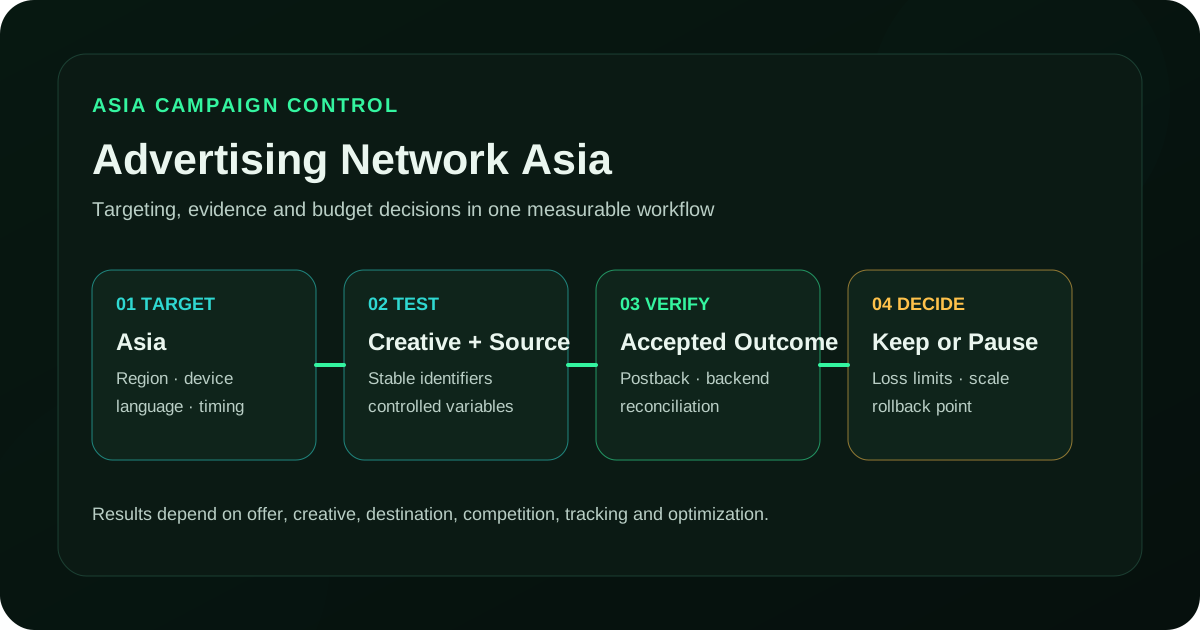
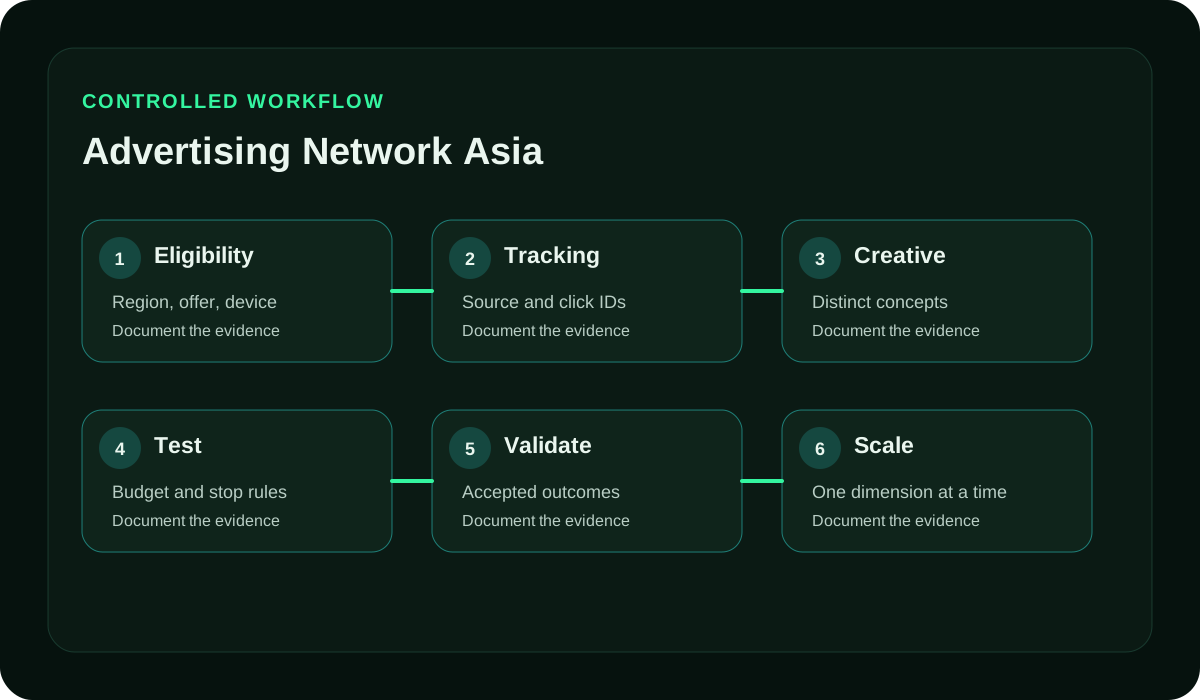
Choose the next useful action: direct more delivery only when the relevant market path and accepted economics justify it. Otherwise resolve a named restriction, refine a message or gather an identifiable additional observation. Our campaign controls help you execute that decision while your business defines the customer outcome it values.
| Readiness question | Decision before buying | Record for the next review |
|---|
| Can the offer serve this country? | Limit the purchase to the eligible product, service and customer scope you can fulfil | Country coverage, exclusions and the promised next customer action |
| Can the language version complete the promise? | Review the creative, destination, material conditions and customer response route together | Approved language and destination versions with the date they entered the purchase |
| Can accepted value be compared with media spend? | Use a common currency basis, stated conversion assumption and comparable acceptance period | Original amounts, rate convention, included costs and unresolved customer actions |
Worked example: a stated currency assumption makes the test readable
Hypothetical example: suppose an eligible Japan campaign spends USD 100 and produces four accepted orders. Its media cost is USD 25 per accepted order. Assume each order contributes JPY 9,000 before advertising and use an invented planning rate of JPY 150 per USD: contribution is USD 60, leaving USD 35 after the USD 25 media cost, before any other excluded costs. This is arithmetic from explicit assumptions, not an exchange-rate quote, customer case or profit forecast. Use actual accepted value and a recorded rate when reviewing a real purchase.
Why choose FroggyAds for an Asia campaign?
We help you turn a clear market brief into a self-serve advertising purchase with suitable formats and applicable targeting, budget and source controls. Confirm the availability your offer needs, keep the customer experience ready and use your accepted response to direct the next campaign. Create your free FroggyAds account.