
Updated evidence dossier: August 2026
Advertising Ideas for Nonprofits: Practical Campaign Concepts, Creative Angles and Validation Plans
Advertising ideas for nonprofits work best when each message is tied to one supporter action: donate, volunteer, attend, subscribe, advocate or share. As of August 2026, this guide separates no-cost outreach, grant-funded search, paid awareness and supporter follow-up so a nonprofit can test one promise without blurring mission impact and media activity.
What changed: This revision adds a campaign-purpose ledger, current Google for Nonprofits boundaries, FTC disclosure checks, channel-specific creative briefs, a donor handoff test and ten nonprofit-only questions.
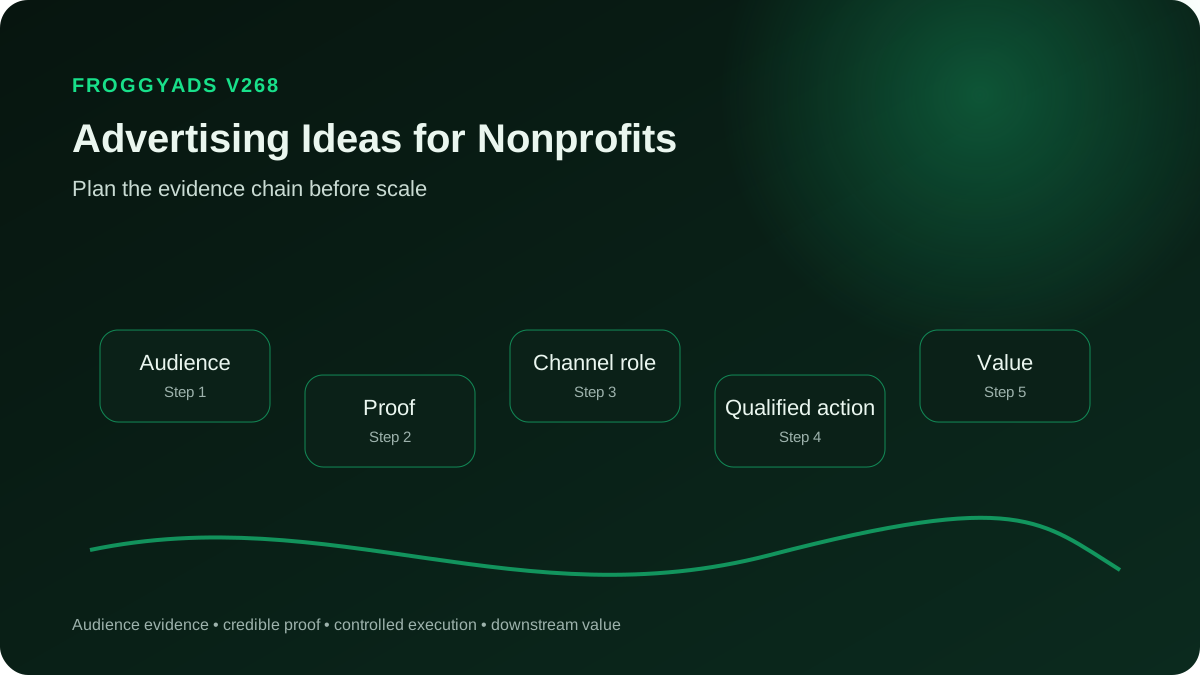
Advertising Ideas for Nonprofits: Practical Campaign Concepts, Creative Angles and Validation Plans decision framework
Mission outcome map
Which nonprofit outcome should an advertisement request?
Begin with a real programme need, not a channel. A food bank may need recurring donors, a theatre may need event attendance, and a volunteer service may need qualified shifts filled. Write one observable supporter action beside each audience and reject ideas that cannot reach that action. This keeps a donation appeal separate from an awareness story and prevents a low-cost click from being reported as mission impact. Record who owns the next step, how quickly the organisation can respond, and what condition makes the action useful rather than merely completed.
Creative brief
How should a nonprofit turn one programme into several honest creative angles?
Build angles from distinct evidence: the need addressed, the activity delivered, the supporter role, the local context and the follow-up a person can expect. A donor message can explain what a contribution funds only when the amount-to-outcome relationship is documented. A volunteer message should state the real task, location, commitment and screening step. An event message should carry the date, access conditions and booking status. The point is not to manufacture variety. Each creative angle should answer a different hesitation while retaining the same verified programme facts.
Disclosure path
What must remain clear from nonprofit ad to destination?
FTC staff guidance says digital disclosures should be clear and conspicuous in relation to the claim and user path. A nonprofit should therefore inspect the ad, landing screen, form, payment or registration step, confirmation and follow-up together. Qualifying language cannot rescue a headline if the limitation arrives after the supporter commits. Keep fundraising restrictions, eligibility, recurring payment terms, event capacity, geography, tax wording and partner roles beside the relevant statement. Legal and fundraising specialists should review the exact campaign; this guide does not decide jurisdiction-specific duties.
Test design
Which nonprofit advertising experiment produces a decision?
Use one audience, one programme, one supporter action and two genuinely different messages. Preserve the destination, measurement window and follow-up capacity while the creative changes. Decide before launch what result would keep, revise or stop the idea. Review accepted donations, attended events, qualified volunteers or completed advocacy actions after the organisation's own validation period. A campaign is inconclusive when tracking changed midway, staff response failed, or the sample mixed several programmes. Document that limitation instead of declaring a winning idea from clicks alone.
Stewardship
How should advertising connect to nonprofit supporter care?
An advertising idea is unfinished until the supporter receives the promised acknowledgement and next step. Separate transactional confirmation from later cultivation. Record consent and communication preferences for each route, suppress people who opt out, and avoid treating every participant as a donor prospect. Donation stewardship may include a receipt and impact update; volunteer stewardship may include scheduling and safety information; event stewardship may include access details and cancellation notices. Evaluate complaints, unsubscribes, failed responses and repeat participation beside acquisition volume so the organisation sees the full relationship cost.
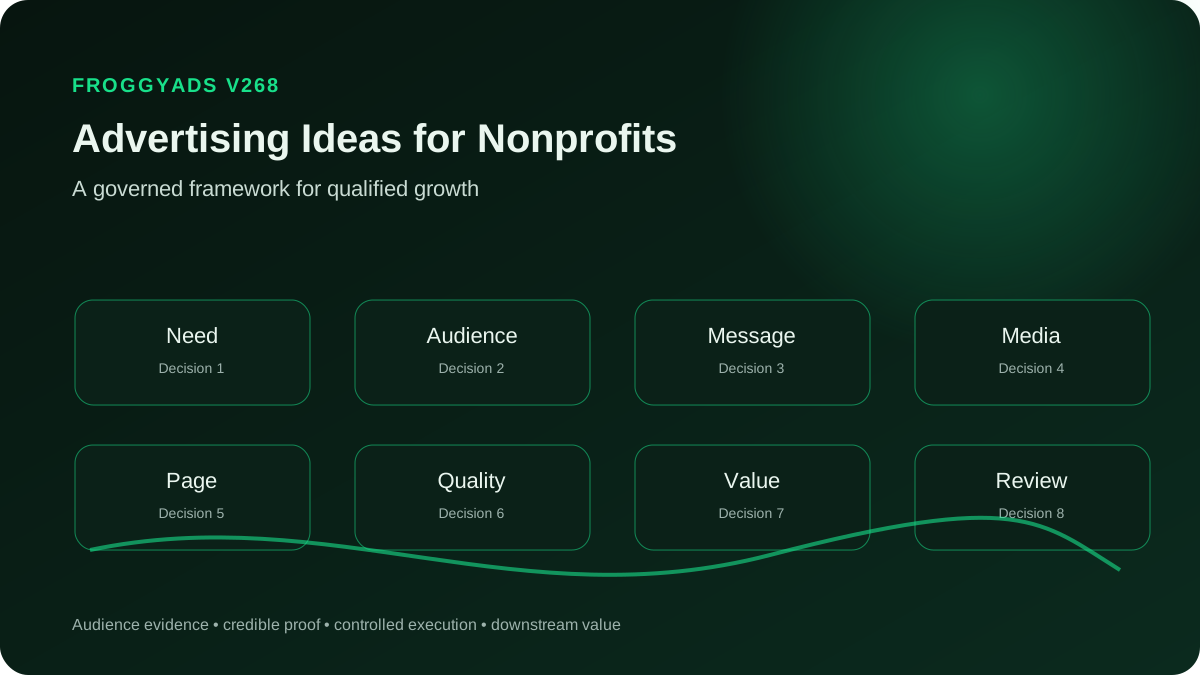
Official evidence boundaries
- Google for Nonprofits: Google says eligible organisations can access Google Ad Grants and describes the grant as up to USD 10,000 per month in text-based Google Search ads; eligibility, availability and programme rules still apply.
- Google for Nonprofits: Google states that grantees must accept programme terms, follow Google Ads policies and remain organised and operated for charitable purposes.
- Federal Trade Commission: FTC staff guidance explains that qualifying information in digital advertising should be clear and conspicuous and considered in relation to the claim and user path. For Advertising Ideas For Nonprofits, validate this point against Validation Plans Updated, Practical Campaign Concepts, Validation Plans and keep it separate from the Marketing Ideas For Nonprofits intent.
Advertising Ideas for Nonprofits: Practical Campaign Concepts, Creative Angles and Validation Plans FAQ
Which outcome should guide a nonprofit advertising idea?
Choose one action the organization can measure, such as a donation, event registration, volunteer application, petition signature, or resource request. Build the message around that action.
How should a nonprofit adapt ads for donors and volunteers?
Speak to the motivation and next step of each audience in separate campaign cells. A donor appeal and a volunteer invitation should not share one generic message.
What makes a nonprofit impact story suitable for an ad?
Use a specific, consented, verifiable example connected to the campaign goal. Avoid inflated claims and explain what the requested action supports.
What should a nonprofit check on its donation page before advertising?
Test mobile readability, page speed, form completion, payment flow, privacy information, confirmation, and conversion measurement. The ad promise should match the page.
How should nonprofits handle donated media or advertising credits?
Read the current eligibility, spending, content, and reporting conditions for the program. Track credited media separately from cash expenses and staff time.
How can a local nonprofit advertise a community service responsibly?
Target the actual service area, state who qualifies, show the current access route, and keep contact details accurate. Exclude places the organization cannot serve.
Which details belong in a nonprofit event ad?
Include the event purpose, date, location or access method, audience, cost if any, registration step, accessibility information, and booking deadline.
What should a nonprofit consider before using remarketing?
Confirm lawful audience collection, consent handling, retention, suppression, frequency, and sensitive-category restrictions. Exclude people when repeated contact could be inappropriate.
Where should a nonprofit place a small advertising budget first?
Fund the audience and campaign goal with the clearest measurement and operational capacity. A program team must be able to respond if the advertising works.
How can campaign results be explained to a nonprofit board?
Show spend, credited media, reach, qualified actions, accepted outcomes, cost, audience, attribution limits, and program capacity. Connect the result to the mission decision it informed.