
1. Define the accepted action
Name eligibility, duplicate handling, rejection reasons and the maturity window.
A $100 advertising budget cannot promise a fixed number of customers. It can fund one controlled question when you define the audience, format, destination, accepted outcome and stop rule before spend begins.
Use our FroggyAds platform, review our advertiser workflow, create your free account and follow the $100 operating workflow.
It goes far enough to test one tightly defined traffic hypothesis, not far enough to prove every audience, format and offer. Reserve the amount needed for a verified destination and measurement, place the remaining media budget behind one campaign cell, and keep an unspent portion for a controlled repair or confirmation run.
| Question | Required decision |
|---|---|
| What does the $100 include? | State whether it covers media only or complete test cost. |
| What must be learned? | Name one audience, creative or route hypothesis. |
| What earns credit? | Define the mature accepted business outcome. |
| What stops spend? | Set a pacing, quality and cost boundary. |
Google Ads budget documentation explains Google-specific controls. It does not predict FroggyAds delivery or the business result of a $100 test.
Give the money one job. A useful test might ask whether an approved creative promise can attract eligible visitors from one market, whether a landing page turns those visitors into qualified registrations, or whether one source cohort reaches an accepted cost boundary. Write the question so the closing review can answer yes, no or insufficient evidence.
Separate learning from forecasting. A small test can expose broken tracking, weak message continuity, source mismatch or a promising response path. It cannot establish that the same rate will continue at a larger budget, in another market or after inventory conditions change.
Choose the business outcome before platform delivery begins. An impression, click or visit can diagnose the route, but commercial credit belongs to the accepted action your business verifies. State rejection reasons, maturity time and any reversal window.
Record the decision that follows each result. Continue the stable cell, repair one failed stage, hold while outcomes mature, or stop. A test without a prewritten action rule turns $100 into an anecdote instead of an operating asset.
Define what insufficient evidence looks like. If the primary cell does not receive enough eligible delivery or mature outcomes, close the test as inconclusive rather than forcing a winner. Preserve the unused reserve, identify the limiting stage and decide whether the next experiment should change pace, audience eligibility or the business process. The honest answer can be that $100 revealed a measurement or supply constraint instead of a performance rate.
The allocation below is a hypothetical planning example. Change every amount to fit the assets already available and the cost of the question you need to answer.
| Example envelope | Amount | Purpose | Release condition |
|---|---|---|---|
| Route verification | $10 | Confirm approval, destination, identifiers and usable arrival. | Controlled action and source evidence agree. |
| Primary media cell | $55 | Test one format, audience boundary, creative and destination. | Pacing and quality stay inside the written rules. |
| Repair reserve | $20 | Retest one corrected stage without changing the whole campaign. | A specific failure and correction are documented. |
| Confirmation reserve | $15 | Repeat the strongest cell or test one adjacent boundary. | Mature accepted evidence supports the next question. |
If creative, landing work, tracking or review must come from the same $100, deduct those complete-test costs before setting the media cap. Preserve the total exposure limit even when the account can technically spend more.
Write the envelope balances before launch and record every transfer between them. Moving the repair reserve into ordinary delivery changes the question and removes the ability to verify a correction. If route verification consumes more than planned, reduce the primary media allocation or close the test as incomplete; do not quietly increase the total. If the primary cell works without a repair, keep the reserve intact until mature acceptance supports a deliberate confirmation run.
Constrain the first question
Select one available format, market and targeting boundary that fits the offer. Keep the creative promise and destination stable so the $100 test reveals something you can act on.
Create My Free Account
Use a preflight that protects the small budget from avoidable loss.
Name eligibility, duplicate handling, rejection reasons and the maturity window.
Complete the action from an approved device and preserve the result.
Keep campaign, creative and available source identifiers through reporting.
Make the advertisement and landing page describe the same next step.
Write the media cap, daily pace, pause owner and stop condition.
Confirm that delivery, analytics and business records can be reconciled.
Start with the largest uncertainty that the budget can realistically resolve. If the route is unverified, test delivery and destination continuity before debating customer economics. If tracking is proven, test a specific message and audience combination against an accepted action.
Avoid compound hypotheses. A new format, new market, new creative, rebuilt landing page and changed offer cannot explain which choice caused the result. Keep the strongest known inputs stable and isolate the variable under review.
Write an expected signal and a failure condition. The expectation may be a minimum number of usable visits, a maximum share of rejected traffic or an accepted action inside a complete-cost boundary. It must use evidence the team can actually collect.
Choose a closing date that respects outcome delay. If qualified leads take days to review, delivery metrics cannot close the business decision on the first evening. Keep the latest cohort pending instead of assigning it premature success or failure.
Separate an eligibility test from an economics test. The first establishes whether the campaign can be approved, delivered and reconciled in the intended market. The second asks whether mature accepted value fits the complete-cost boundary. Do not spend most of the budget estimating acquisition cost while the route itself is still unreliable, and do not declare the route profitable merely because its technical checks pass.
Match the buying event to the user journey
Push, native, display and pop formats create different discovery contexts. Fund the route whose creative and destination can make a clear, relevant promise to that user.
Create My Free Account
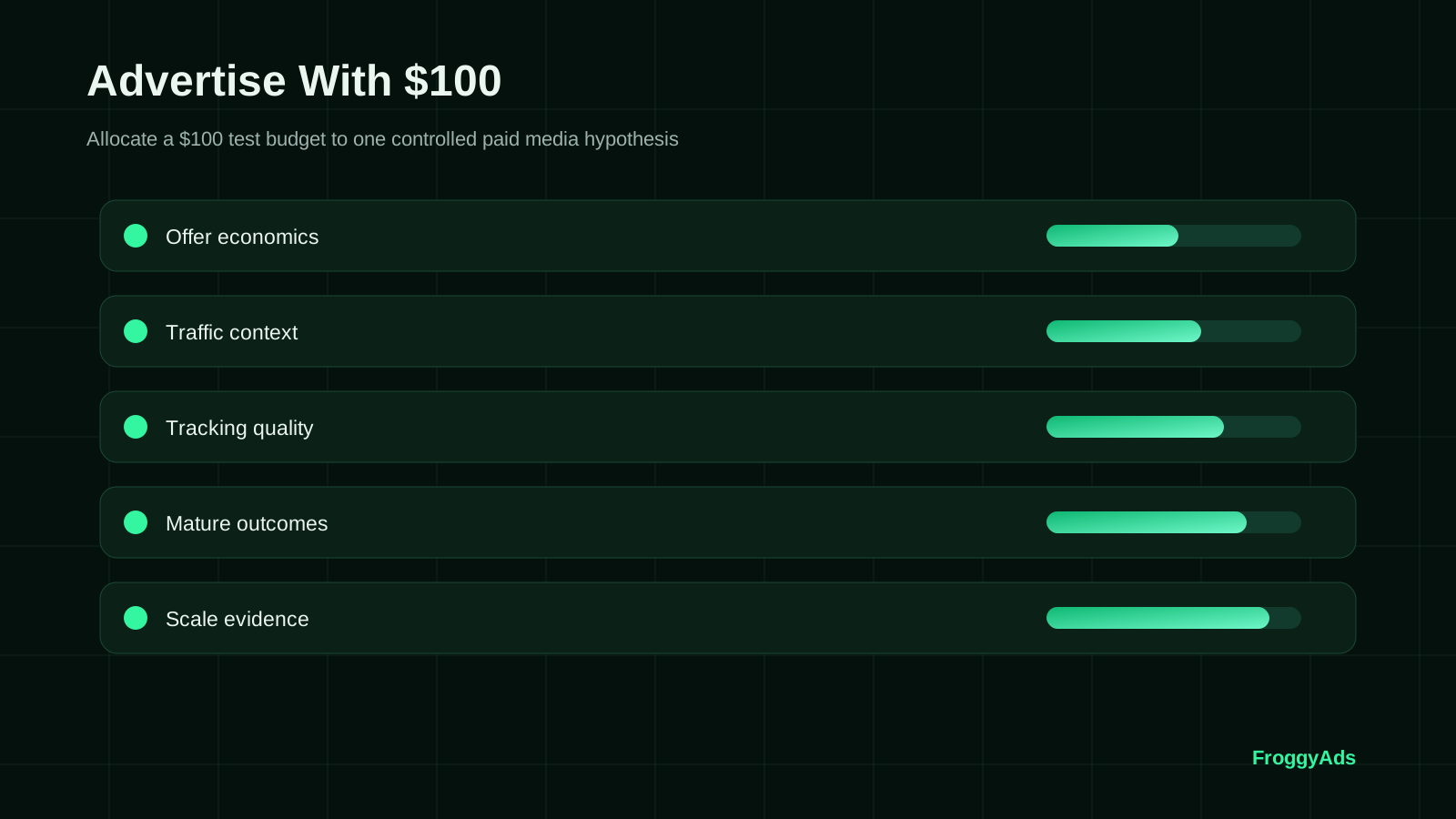
| Evidence layer | Question | Possible next action |
|---|---|---|
| Eligibility | Could the campaign run in the chosen format, market and schedule? | Repair approval or settings before judging demand. |
| Delivery | Did the selected campaign cell receive the expected buying events? | Review pace, bid and available supply. |
| Arrival | Did valid users reach a usable destination? | Repair the route, page or measurement. |
| Intent | Did visitors complete meaningful steps toward the offer? | Review message, qualification and friction. |
| Acceptance | Did the business accept mature outcomes? | Calculate complete accepted cost. |
| Scale | Did the marginal cohort stay inside the rule? | Release one adjacent spend band or hold. |
Treat the advertisement as the first step of one promise. Its benefit, audience and next action should continue on the destination without a surprise change in price, eligibility or commitment. A small budget cannot absorb avoidable confusion between placement and page.
Use one primary action. Competing forms, downloads, pricing requests and navigation routes divide the evidence. If the page needs secondary information, keep the intended conversion visually and analytically distinct.
Define an accepted outcome beyond the analytics event. A submitted form may still be duplicated, incomplete or outside the service area. Keep the media event, page event and business acceptance record separate, then reconcile them by cohort.
Record when the destination or offer changes. Traffic before and after a material edit belongs to different evidence cells. Preserve the last stable state so a repair can be compared instead of blended into the original test.
Review the creative at its real placement size and reading context before launch. The claim should remain understandable without relying on a long explanation, and the destination should immediately confirm the same subject. Record the approved version and effective time. When a revision is needed, change the fewest elements required to test the diagnosis and keep both versions available for the closing review.
| Observed pattern | Likely review | Budget action |
|---|---|---|
| Delivery without usable arrivals | Placement context, click path, destination availability or analytics. | Pause and verify the route. |
| Arrivals without meaningful action | Promise continuity, intent fit, page friction or qualification. | Repair one stage and use only the repair reserve. |
| Actions without accepted outcomes | Eligibility, duplicates, sales handling, reversal or maturity. | Hold scaling until business records close. |
| Strong blended result, weak latest spend | Marginal source, audience or creative mix. | Restore the prior boundary. |
| Different totals across systems | Time zone, attribution, filters, consent or event definition. | Document variance before commercial credit. |
The first failed stage owns the next dollar. Buying more traffic before that stage is repaired increases the cost of reaching the same conclusion.
Protect the test before launch
Bring one audience boundary, one approved creative, one verified destination and one accepted outcome. Set the media cap and pause rule, then keep the first result as your comparison state.
Create My Free Account
Splitting the budget across many unrelated audiences prevents any cell from receiving useful evidence. Changing the message, targeting and page together removes the ability to explain the result. Counting immature or rejected actions as customers creates false confidence.
Treating the account balance as the complete budget hides creative, landing, tracking and staff time. Treating a click price as acquisition cost ignores quality and business acceptance. Using one platform event as proof of revenue collapses distinct evidence layers.
Responding to every early fluctuation can consume the reserve through repeated resets. Set a review cadence before launch and intervene early only for broken delivery, tracking, policy, destination or exposure controls.
Scaling the blended average can hide deterioration in the newest traffic. Report each released spend band separately, compare the marginal cohort with the original cell and preserve a rollback limit.
A polished dashboard can still waste the budget when every system uses a different clock, currency or event definition. Name the reporting time zone, preserve the original exports and reconcile differences instead of editing totals until they match. If consent, attribution or missing identifiers restrict the join, state the limitation and reduce the strength of the conclusion. Evidence quality is part of the spending decision.
Write the hypothesis, complete-cost boundary, accepted outcome, pause owner and maturity date.
Approve the creative and destination, complete one action and preserve identifiers.
Release the primary media cell in controlled increments and inspect pace and source mix.
Keep recent actions pending while the business applies qualification and reversal rules.
Calculate complete accepted cost and choose stop, repair, repeat or one adjacent band.
Start your next campaign with FroggyAds when the measurement contract is ready, and use our traffic-source guidance to plan the evidence you will review.
Google Ads cost documentation, budget documentation, conversion documentation and attribution documentation describe Google-specific systems and definitions. They do not establish a FroggyAds price, predict what $100 will buy or guarantee a business outcome.
Use official documentation for the concept it actually defines. Use your FroggyAds campaign evidence for our delivery, your analytics for supported on-site behaviour and your business records for accepted customers, revenue, reversals and contribution.
No. Delivery depends on the selected format, market, targeting, bid, source availability and campaign conditions, while customers depend on your offer, destination, qualification and follow-up. Treat $100 as a fixed learning boundary and report the actual result.
Only if creative, landing, tracking and review are already funded and verified. If they are not, reserve part of the total for the work required to make the media test interpretable. Record what the $100 includes before launch.
Choose one available format whose user context fits the offer and destination. A small budget usually produces clearer evidence when it tests one format well instead of spreading spend across unrelated experiences.
Start with one primary audience or targeting cell and one explicit exclusion boundary. Add another cell only when each can receive enough delivery to support a decision. A fragmented test can exhaust the budget without testing any hypothesis properly.
Set a daily pace from the test duration and the amount allocated to media, then keep a reserve for controlled follow-up. The correct pace depends on how quickly delivery and accepted business outcomes can be reviewed.
Define the business action you will accept before launch, such as an eligible lead, verified registration or accepted order. Keep platform events, analytics events and accepted business outcomes as separate evidence layers.
Pause when tracking fails, the destination breaks, eligibility or policy boundaries fail, spend exceeds the approved pace, or mature accepted cost crosses the stop rule. Preserve the evidence before changing settings.
Check approval, delivery, placement context, promise clarity and destination continuity. Change one major variable, retain the original as the comparison state and use only the remaining reserve approved for that repair.
Use the result as evidence for the next bounded spend band, not proof that performance will remain constant. Keep the original cell stable, release one new boundary and judge the marginal cohort separately.
We provide a self-serve path to configure available traffic formats, targeting and budget controls. Use one FroggyAds campaign cell, reconcile delivery with your accepted outcome and let the evidence determine the next allocation.
Compare the small-budget question with where to buy cheap traffic, learn how a different billing unit is framed in how much CPM advertising costs, and use our low-cost online advertising guide. When you close this test, return to the same controlled low-cost workflow with the mature evidence rather than a new assumption.
Define the audience, format, destination, accepted outcome, exposure limit and pause rule. We give you a self-serve campaign path for testing the media question under those controls.
Create My Free AccountReview additional planning material in our advertiser resources.
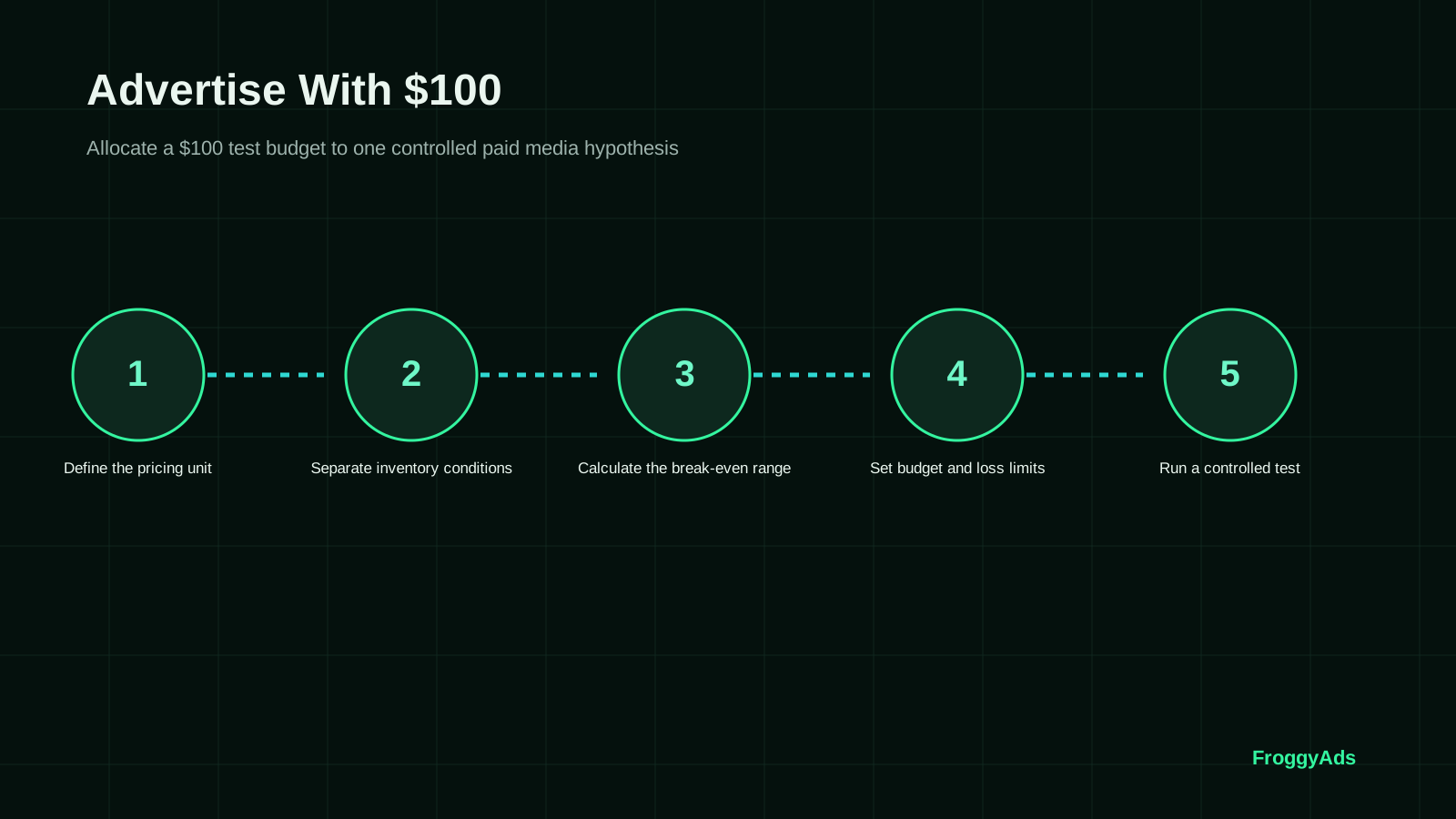
First, define what the $100 covers, the one question it must answer and the maximum loss the business accepts. Second, verify the campaign route from approval through destination and business acceptance. Third, release the media allocation in bounded increments. Fourth, reconcile mature outcomes and choose one next action.
Document every evidence definition. Google Ads click definitions, Google Ads budget controls, Google Ads conversion concepts, Meta Business measurement guidance and the IAB glossary can clarify named concepts in their own systems. None predicts FroggyAds delivery or your result.
Record the billable event, currency, campaign cell, approved creative, destination, accepted action, rejection logic, maturity window, complete-cost boundary and decision owner. State how missing identifiers, duplicates and reversals are treated.
Use a small route-verification amount, the primary media cell, a repair reserve and a confirmation reserve. Do not release the next part merely because the previous amount was spent; require the evidence named for that boundary.
Report the newest released dollars as their own cohort. Compare delivery composition, usable arrivals, accepted actions and complete accepted cost with the original cell. A blended total can stay attractive while the last part of the budget performs poorly. When the marginal cohort crosses the stop rule, restore the prior boundary and preserve the failed increment for diagnosis. When it remains inside the rule after maturity, the result supports one bounded confirmation step rather than an unlimited forecast.
Choose stop, repair, repeat or release one adjacent spend band. Record the effective time, last stable configuration, reason and rollback condition. Keep the original result available as the comparison state.
This page helps an advertiser allocate exactly $100 to one interpretable paid-traffic experiment. It does not replace a full annual budget, a channel benchmark or a promise about how many customers the money will produce. Use our broader low-cost advertising guide for channel planning while this URL remains focused on the staged $100 decision.
| Test state | Next dollar |
|---|---|
| Route is not verified | Fund the controlled action and repair. |
| Route works, response is weak | Fund one message or audience correction. |
| Actions are still immature | Hold the reserve and wait for acceptance. |
| Mature marginal cost fits | Fund one adjacent confirmation band. |
We provide available format, targeting and budget controls through a self-serve advertiser workflow. That helps you translate the $100 limit into one campaign cell, inspect the delivery evidence and decide whether the next allocation is justified. Create your free FroggyAds account when the test contract is ready.
Choose one question, preserve part of the $100 for verification or repair, and define the mature accepted action before buying traffic. Launch one bounded FroggyAds campaign cell, reconcile complete cost with business acceptance and release the next dollar only after the evidence supports a specific action.