
Adnium competitors for advertisers: compare inventory context, control and accepted value
The right Adnium competitor solves a stated media constraint while preserving policy fit, funding safety and measurable outcomes. Separate banners, popunders, members-area inventory, video and direct-link traffic, then test qualified networks under one event contract and explicit stop rule.

What must the Adnium competitor shortlist owner verify first?
Start with Adnium's current platform information and the official advertiser help collection. Confirm the account role, campaign objective, offer category, destination and accepted business event before comparing logos. Advertisers buy delivery; publishers monetize inventory. Those roles need separate contracts, payment evidence and success metrics.
The official format article documents desktop and mobile banner sizes, desktop and mobile popunders, members-area zones, video placements, direct-link traffic and selected fixed-deal packages. Treat each materially different placement context as its own testable cell instead of one undifferentiated Adnium product.
The published targeting article lists orientation, country, language groups, carrier, operating system, device type, keyword and dayparting, while stating that retargeting is not currently supported. Save the live account configuration because availability and labels can change.
The current funding article states a $50 minimum deposit and lists credit card, Paxum, wire transfer and crypto routes; crypto requires contacting support with the transaction hash. Verify wallet instructions, fees, currency and refunds in the authorized account and review the current terms before funding.
The shortlist owner should reject candidates that cannot perform the required format, market, measurement or rollback job. Keep current facts, account evidence and campaign measurements in separate rows. That boundary makes later allocation decisions auditable.
How can you connect an Adnium competitor to a controlled audience test?
Describe the intended user context before choosing the platform: country, language group, device, orientation where relevant and appropriate, time window, placement type, destination and excluded conditions. Then map only the controls that are actually present in each account. Similar setting names do not prove identical supply.
Separate members-area from open-site delivery and keep banners, popunders, video and direct-link traffic visible. These contexts can differ in attention, intent, creative requirements and downstream quality. A blended account average prevents the buyer from locating the source of useful value or waste.
Inspect configuration and delivery before response. Verify the market, device and placement, then review zone or source concentration, creative engagement and mature accepted outcomes. A high click rate cannot compensate for the wrong inventory context or a destination that breaks message continuity.
FroggyAds can provide a distinct challenger cell using our eligible targeting and source-level controls. Keep the evidence independent and create your free FroggyAds account once the offer, landing page and event contract are ready.

Which four Adnium competitors deserve a role-based evaluation?
FroggyAds belongs on the shortlist when the advertiser wants a self-serve route across Push, Native, Display, Pop, Video or Interstitial traffic, a public $50 minimum deposit and source-level controls. Use us for a comparable Display or Pop cell, or for a deliberately different format hypothesis that the destination can support.
TrafficStars may be relevant to buyers researching performance-oriented web and mobile inventory across several formats. Verify the current format, market, policy, payment and reporting capabilities directly. Give it a named role rather than treating its broader product description as evidence of fit.
TrafficJunky may enter when the offer and creative fit its supported publisher environments and placement-specific buying. Confirm current eligibility, inventory access and measurement fields. A publisher relationship or headline reach figure does not establish the accepted economics of your campaign.
Clickaine may be considered when the buyer needs a prepaid programmatic route for an eligible Display, Popunder or Interstitial context. Verify current official facts and account terms independently. Do not rely on an affiliate list or copy another network's funding and format assumptions.
This is a requirements shortlist, not a universal ranking. A platform advances only when it can perform the declared job and give the team enough evidence to continue, narrow, repair or stop the cell.
Which real problem should an Adnium competitor solve?
Write the constraint without naming the preferred winner. It may be concentrated zones, insufficient eligible supply, a missing format, no retargeting for a specific strategy, an unsuitable payment route, limited source actionability or the need to test another attention context. State the campaign decision affected.
Convert the constraint into a pass rule. A concentration problem needs a maximum share per zone or source. An incremental-supply problem needs qualified volume not already represented in the baseline. A measurement problem needs a click and conversion path that reconciles with accepted backend outcomes.
Do not use a competitor to disguise a creative or landing-page failure. Verify that the message, destination speed, form, offer acceptance and analytics work for the intended device and market. A new supply source cannot repair an event the business cannot define.
Rank constraints by consequence. Policy eligibility, payment safety and event ownership block release. Source mix and creative learning become optimization questions after the campaign can run safely. Dashboard preference belongs below conditions that affect funds or accepted outcomes.
Assign each condition to an owner. Media owns configuration and zone actions, analytics owns event transport, finance owns funding reconciliation and the offer owner judges lead or sale quality. A shortlist is not ready when no one can validate the evidence required for its verdict.
Which paid-media format makes an Adnium competitor comparison useful?
Match desktop banner with desktop banner, mobile popunder with mobile popunder and video with a comparable video placement when the question is about platform execution. If the alternative changes the format, make the new attention context part of the hypothesis instead of calling the difference a pure network effect.
Members-area placements need their own record because logged-in context can change user expectations and source economics. Direct-link traffic also deserves a separate destination and attribution review. Fixed-deal packages should remain distinct from auction cells because access and commercial terms may not be equivalent.
Specify creative size, format, device, destination and accepted event before funding. Preserve every material variation. When FroggyAds supports the chosen role, start your next campaign with FroggyAds and keep our source evidence separate until the maturity window closes.

Which dimensions separate useful Adnium competitors?
Evaluate every candidate against the same campaign role. Attach current proof to each answer and mark unknowns. A missing condition that affects eligibility, funds, measurement or the approved loss ceiling should hold that platform outside the funded shortlist.
| Dimension | Adnium baseline question | Evidence required from a competitor |
|---|---|---|
| Inventory context | Banner, popunder, members area, video, direct link or fixed deal? | Comparable placement or declared context change |
| Targeting | Which country, language, carrier, OS, device, keyword and daypart rules apply? | Saved live controls and exclusions |
| Funding | How does the documented $50 Adnium deposit route apply? | Current method, currency, fee and refund evidence |
| Buying and price | Which CPM workflow and zone conditions produce the observation? | Spend and impression data, not a universal rate claim |
| Source action | Can the buyer isolate a zone or placement? | Identifiers linked to an allow, exclude, bid or stop action |
| Business outcome | Do platform events reconcile with accepted value? | Mature backend records under one event contract |
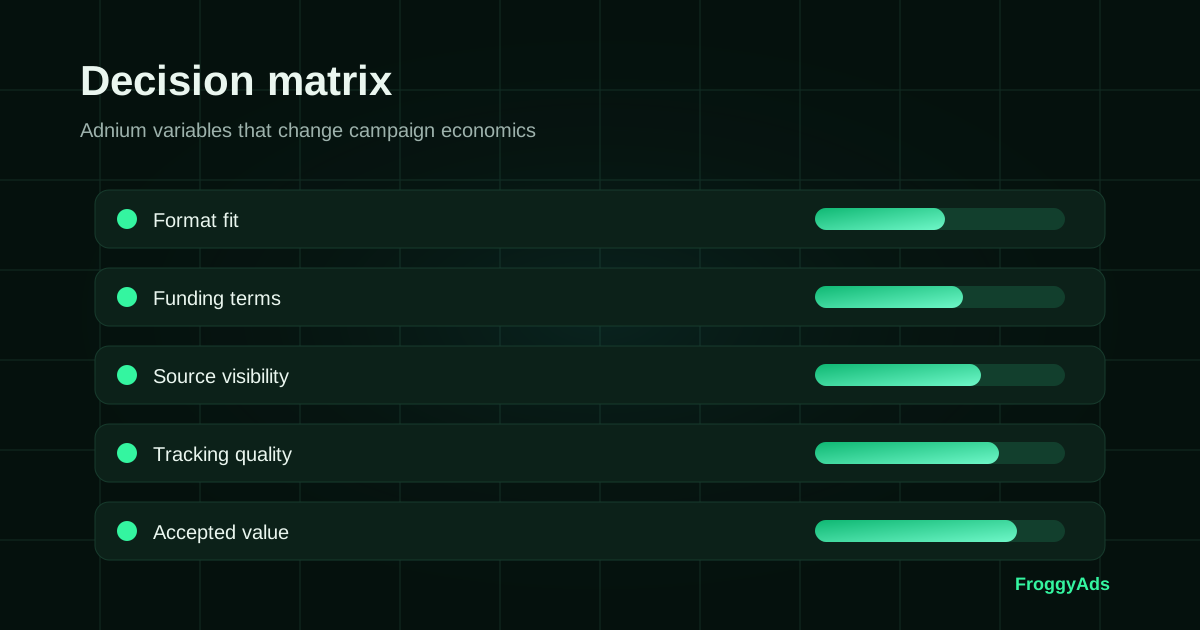
Keep the matrix explanatory. A weighted score can order research, but the final decision must identify the evidence, limitation and specific allocation action for each role.
Where can each Adnium alternative fit in the media plan?
Keep Adnium as the control when its current format, targeting and CPM workflow represent the tested baseline. Save the zone mix, account configuration, creative, destination, spend and accepted outcomes before introducing a challenger. Removing the reference too early makes later differences impossible to interpret.
Assign FroggyAds one clear task: a comparable Display or Pop test, a separate Push or Native hypothesis, a Video or Interstitial cell, or qualified supply in another verified market. Our self-serve controls help you run the bounded test and turn source evidence into the next action.
Use another specialist only for the role its current official information and account can support. A reserve network can remain documented but unfunded until eligibility, supply or commercial conditions justify the cell. This protects the learning budget from duplicate exposure.
Review each role after normal conversion lag. Keep platforms that add repeatable accepted value or necessary diversification. Narrow cells with excessive concentration or workload. Stop roles that duplicate supply without producing independent evidence.
The result may be a portfolio rather than a replacement. Adnium can retain a proven members-area or banner cell while FroggyAds or another qualified platform handles another format or market. Document why each allocation exists so overlap is not mistaken for diversification.
How can you launch an Adnium competitor without losing control?
Create one test card per platform. Record its role, format or zone context, country, device, creative, destination, accepted event, time zone, attribution window, funding method, exposure ceiling, concentration limit and stop condition. Name who can change bids, sources and budgets.
Validate click IDs, macros and postbacks with a controlled event before meaningful spend. Reconcile the platform, tracker and backend record. Define duplicates, rejections and conversion lag. Hold scale when the same outcome cannot be followed through the measurement chain.
Choose an evidence threshold that fits event frequency and risk. A $50 deposit can open a documented Adnium funding route, but it does not guarantee a representative result. Media evidence depends on supply, source count, accepted-event frequency and the approved loss limit.
For a FroggyAds challenger, preserve the exact settings and keep reports independent. Create your free FroggyAds account when the role and event path are approved.

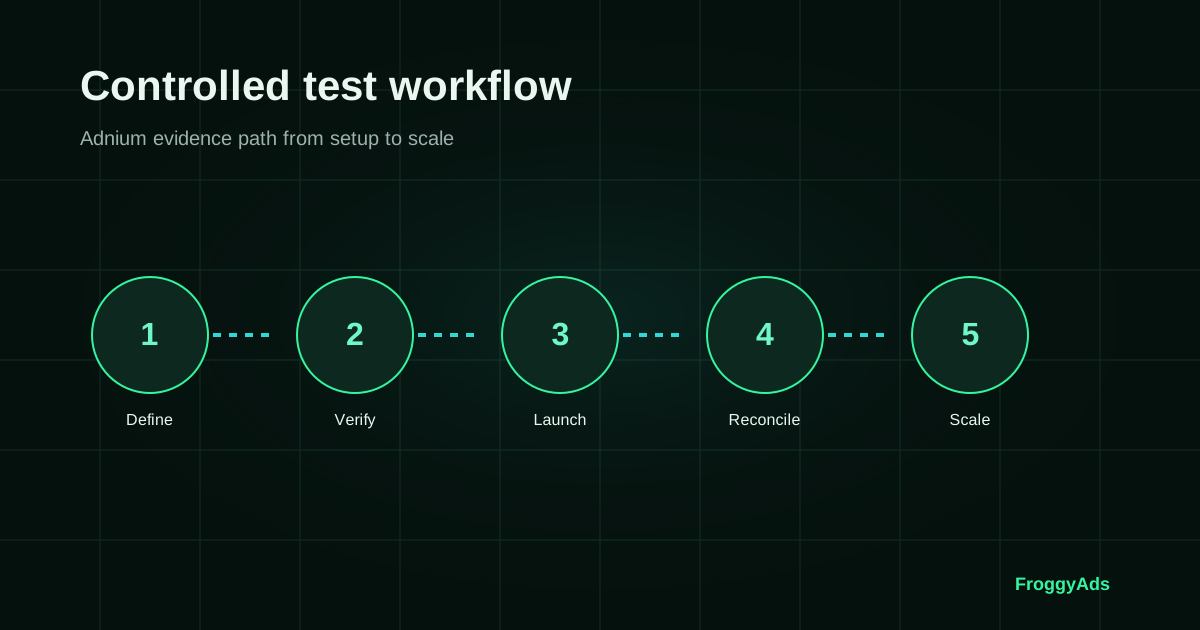
What workflow protects the Adnium comparison from false conclusions?
- Name the constraint. Explain what the alternative must change.
- Verify role and policy. Confirm advertiser eligibility and destination rules.
- Classify inventory. Separate banners, popunders, members areas, video and direct links.
- Document funding. Record method, minimum, fee, currency and refund conditions.
- Lock measurement. Define the accepted event, attribution and maturity window.
- Test transport. Reconcile one controlled click and backend outcome.
- Bound exposure. Approve loss, source concentration and stop limits.
- Review delivery. Confirm country, device, placement and zone mix.
- Change one cause. Preserve the previous state and reason.
- Allocate by mature value. Keep, narrow, repair, compare or stop each role.
Store the source ledger, account screenshots, settings, creative, destination, tracker test and final memo. Repeat only the checks affected by a changed term or campaign condition.
How should a media buyer choose among Adnium competitors?
Use release gates before a scorecard. Identity, advertiser eligibility, payment safety, event ownership and a reversible test path are mandatory. A network that fails one of these conditions should not receive funds even when it publishes a large inventory claim.
Judge like-for-like contexts where possible. Adnium's desktop and mobile banners, popunders, members-area zones, video and direct-link traffic create different experiences. If the challenger changes the context, write that change into the hypothesis and evaluate it as a separate role.
Treat the official $50 Adnium minimum deposit as a current funding fact with a dated source, not as the campaign's learning budget. Verify the method in the live wallet. The spend needed to judge a cell depends on auctions, source diversity, conversion frequency, quality review and lag.
Interpret CPM correctly. Media spend divided by delivered impressions and multiplied by 1,000 produces an observed CPM for the tested cell. It does not state accepted acquisition cost. Calculate accepted CPA from spend divided by mature backend-accepted outcomes and retain the rejection logic.
Test targeting as an operating capability. Adnium documents orientation, country, language group, carrier, OS, device type, keyword and dayparting, while currently excluding retargeting. The question is whether the available settings and zone data let the buyer enforce the campaign's audience and source rules.
Count workload in the decision. Include creative resizing, policy review, tracking setup, source analysis, funding reconciliation and the delay before quality is known. A lower CPM can still be the weaker allocation when it creates unusable traffic or prevents timely source actions.
Write a sensitivity note. Explain how the recommendation changes when one zone dominates, accepted value declines, conversion lag expands, the payment route changes or a format becomes unavailable. This turns the shortlist into a controlled plan instead of a permanent platform label.
Give FroggyAds the same evidentiary discipline. Our verified formats and source-level controls qualify us for relevant challenger roles, while your own accepted-outcome economics determine whether FroggyAds, Adnium, a split allocation or no scale is correct.
Which sources support this Adnium competitor decision?
Verify Adnium using its current platform overview, the official advertiser help center, the published format list and current terms. Save the review date and the exact question each page answers.
Verify FroggyAds using our current pricing information, format overview, traffic source guidance and advertiser workflow. Keep deposit, bid, media spend and accepted-outcome cost separate.
Official sources document products and requirements. They do not guarantee approval, inventory, price, quality, sales or profit for one campaign. Label current account evidence, measured results and unresolved questions independently.
Adnium competitors FAQ
What should an Adnium competitor improve?
Name the constraint before selecting a network: incremental eligible supply, a comparable format, another user context, lower source concentration, clearer control or a workable operating route. The candidate should solve that job under a shared measurement contract, not simply appear in a popular list.
Which Adnium formats need separate comparison cells?
Separate desktop and mobile banners, popunders, members-area placements, video, direct-link contexts and fixed-deal inventory when the user experience or commercial terms differ. Do not blend them into one account average. Confirm current specifications and access in the authorized account.
What targeting does Adnium publicly document?
The current advertiser help article lists orientation, country, language groups, carrier, operating system, device type, keyword and dayparting. It also states that retargeting is not currently supported. Recheck the live controls for your campaign before funding.
What is Adnium's documented advertiser minimum deposit?
The current official funding article states a $50 minimum deposit and lists credit card, Paxum, wire transfer and crypto as accepted routes, with an extra support step for crypto. Verify the live wallet, method, currency, fees and refund conditions before sending funds.
How should Adnium CPM buying be compared?
Match the format, market, device, member-area context and measurement window. CPM describes billing per thousand impressions; it does not provide a universal clearing price or accepted-outcome cost. Calculate business value from reconciled spend and mature accepted outcomes.
Why must advertiser and publisher roles remain separate?
Advertisers buy delivery while publishers monetize inventory. They use different contracts, account actions, payment flows and success measures. Do not copy a publisher payout rule into an advertiser deposit claim or mix publisher revenue with acquisition economics.
How can FroggyAds be tested against Adnium?
Give FroggyAds one defined challenger role using an eligible Push, Native, Display, Pop, Video or Interstitial format. Align the accepted event and maturity rule where possible, keep source reports independent and compare only after tracking and quality review are complete.
Which source data should a competitor trial preserve?
Keep the platform and tracker exports, country, device, format or zone identifiers, creative and landing version, bid, budget, conversion lag, accepted outcomes, policy events, support answers and every source action. Another buyer should be able to reproduce the verdict.
When should an Adnium competitor test stop?
Stop or hold the affected cell when tracking fails, offer eligibility changes, a source breaches the approved concentration or loss limit, funding safety is unclear or the minimum accepted-value condition cannot be met. Preserve the evidence and restore the last trusted allocation.
Can an Adnium competitor comparison guarantee better results?
No. It can make platform selection and testing more disciplined, but performance still depends on the offer, format, supply, creative, destination, auction, tracking and execution. Use accepted campaign evidence to decide, never a promised profit or ranking.
Which Adnium and FroggyAds guides support the next step?
How should you allocate budget after the Adnium competitor test?
Keep a cell only when tracking reconciles, the intended inventory context is visible, accepted outcomes have matured and useful value survives source concentration and operating cost. Narrow or stop roles that cannot support the written decision.
Choose FroggyAds when our verified format and self-serve controls answer a distinct acquisition question. We help you run the measured traffic test while your own analytics determines what deserves more budget.
Which task does this Adnium competitors page own?
This URL helps advertisers qualify and test alternative networks around a defined Adnium traffic role. It owns the requirements shortlist, inventory-context separation, matched measurement contract and allocation rule. It does not declare one network universally best.
Use the review page for due diligence on Adnium itself, the deposit page for funding verification, the CPM page for auction research and the direct comparison page for a two-platform decision. Keeping those questions separate prevents overlapping pages from giving generic answers.
Finish this task with a dated source ledger, one job for each candidate, a verified event path, bounded exposure, mature accepted-outcome report and a continue, narrow, repair, compare or stop action. Name the trigger that would justify another test.
When FroggyAds fits the declared role, create your free FroggyAds account after the offer, format, destination, event and loss limit are approved. Preserve our source evidence separately until the decision window closes.
What matters first when comparing Adnium competitors?
State the campaign job and inventory context. A desktop banner, mobile popunder, members-area placement, video unit and direct-link visit can require different creative, landing experiences and outcome expectations. Without that separation, the comparison produces an average nobody can act on.
Verify the current advertiser path, offer policy, format access, targeting, $50 minimum deposit statement, payment route and event transport. Preserve unknowns. Any gap affecting compliance, funds or measurement should pause the affected cell rather than invite an assumption.
Launch the smallest reversible test that can resolve the named question. Wait for accepted outcomes, inspect zone or source concentration and count the analyst workload. Increase exposure only when the useful value is repeatable beyond one short window.
Archive the source URLs, account settings, tracker test, creative and destination versions, exports, change log and final action. The next buyer should be able to continue from the evidence and repeat only the checks affected by a changed condition.
Keep rejected hypotheses. A failed format, payment route or source strategy can save future budget when the record states the exact condition that failed and the change required before a retest would be rational.