Campaign-ready next stepProtect catalogue meaning, delivery and retained PLN value
Record which product, plan, size, variant or service slot the creative presents and whether it is normally available for the advertised location. An attractive message cannot create accepted value when the selected item disappears before fulfilment. Track unavailable item, offered substitute, delayed restock, partial fulfilment and customer decline separately. A substitute may preserve value when the customer accepts it, but it should not be counted as the original route without a visible version record.
Keep stock changes tied to the advertised version: When availability changes materially, pause or update the affected creative and destination together. Continuing the old promise may increase clicks while teaching nothing useful about Polish media supply or customer fit. Review stock capacity before a larger release and name the owner who can cap the cell. Media, commerce and warehouse records should agree on the event that closes the customer outcome.
Reopen an unavailable product only after its repair: Use the mature product record to distinguish a source problem from an availability problem. This keeps optimisation tied to the customer experience and prevents a temporary stock issue from becoming a permanent judgement about the traffic cell. Keep the planned restock date and the evidence needed to reopen the offer. A dated restart condition prevents stale unavailable-product traffic from reappearing without an accountable check.
Polish delivery proof: Record pick, pack, carrier handover, first delivery attempt, collection point where applicable, successful receipt, damage report and return initiation. A dispatch message is progress, not proof that the customer received the promised item. Use stable reason categories for address problem, missed attempt, delayed movement, refused parcel, collection expiry, damage and wrong contents. Keep the carrier's operational status distinct from the business's final acceptance rule.
Polish fulfilment release decision: When delivery options differ by location or product, preserve the choice shown at checkout. A source should not be blamed for a customer selecting an option that the destination described incorrectly or the warehouse could not fulfil.
Keep paid, delivered and retained orders distinct: Compare cost per paid order, cost per delivered order and cost per retained order only with clearly labelled denominators. The gap between them is an operating diagnostic rather than a hidden adjustment to traffic quality. Give logistics an agreed threshold and stop authority. If handover or delivery falls below the advertiser's rule, cap the affected offer while the route is investigated, then restart with a dated repair record.
Preserve the advertised product and variant: Capture product identifier, variant, pack, condition, promotion and availability with the creative and destination release. A generic campaign name cannot explain whether the customer received the same proposition that attracted the click. If the destination substitutes another item or changes a bundle, make the difference clear before payment and begin a new version. Accepted substitution belongs in its own route so product learning is not mixed with media learning.
Assign catalogue and delivery mismatches: Audit recurring mismatches between advertisement, product page, checkout and warehouse record. Assign copy differences to commerce, stock differences to merchandising or fulfilment, and delivery differences to logistics instead of issuing one blanket source verdict. Use customer service and return reasons to verify whether catalogue meaning survived. A technically correct event stream can still hide a wrong size, missing component or different product expectation.
Connect stock capacity with the PLN finance record: Approve expansion only when the advertised catalogue set has enough stock and the owner can protect the same promise. This connects media volume to real merchandise capacity rather than to an abstract country opportunity. Create a finance view that retains the customer-facing PLN value, order identifier, accepted date, refund or return status and the campaign route. The purpose is to explain the funded denominator without exposing unnecessary customer details.
Use one stated definition of customer value: State whether the decision uses gross order value, net retained revenue, contribution basis or another approved metric. Do not switch definitions when a cell looks inconvenient. A stable rule is more useful than a flattering dashboard.
Post reversals and currency adjustments transparently: Post valid reversals back to the original cohort and show when the decision changes. If the business uses a reserve for pending returns, document the method and keep provisional and closed values visibly different. For media cost outside PLN, retain both the original cost and the approved translated value with its date. This prevents exchange treatment from being confused with campaign performance and allows finance to reproduce the comparison.
Approve the next release against an accepted business stage: Close the review with the maximum next release and the retained-value evidence supporting it. Finance approval does not guarantee the next cohort, but it gives media a clear boundary for a reversible Polish test. Define the company profile, problem, buying role, serviceability and next stage required for acceptance. A valid company email or completed form is an entry point, not proof of a funded opportunity.
| Page checkpoint | How to use it | Evidence to retain |
|---|
| Choose the accepted customer event | Use the final business stage after its stated review period. | Retained order, reached eligible lead or approved activation with a maturity date. |
| Fund the next controlled release | Approve one budget increase against mature value and normal capacity. | Retain the business owner, original PLN record and spending authority. |
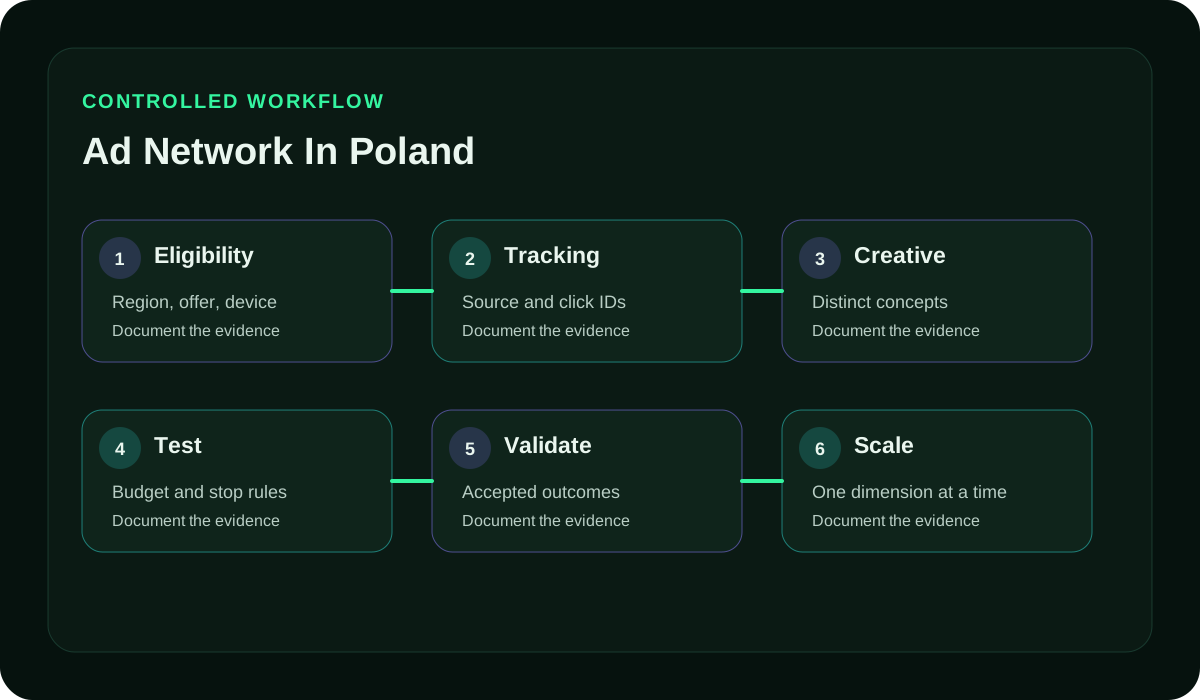
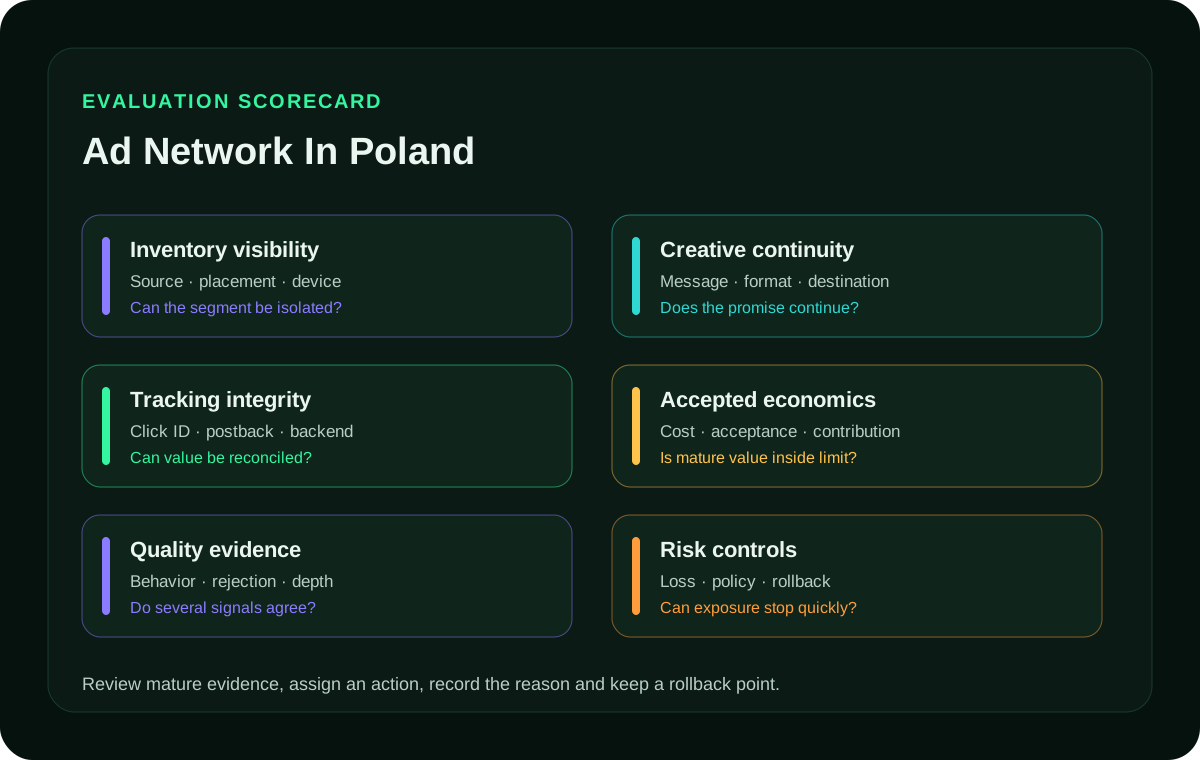
| Record the source action | Keep, cap, repair, exclude or retest the specific Polish cell using its accepted business evidence. | Document the source observation, accountable owner and rollback or retest condition. |
Track opportunities through the Polish sales cycle
Track the full Polish opportunity: Track assignment, reached contact, verified need, relevant stakeholder, agreed next action, accepted opportunity and closed disposition. Keep not ready, no fit, competitor, budget, timing and internal-delay reasons separate. Use a review window suited to the actual sales cycle and publish the number still pending. Do not force unresolved opportunities into success or failure merely to complete a weekly traffic report.
Align Polish sales conversations with the funded event
Inspect whether Polish-language materials, PLN commercial meaning, product evidence and sales response support the buying conversation. When the route owns the loss, repair it before excluding an otherwise relevant traffic cell. Scale only after the sales owner accepts the cohort under the written stage and confirms capacity for more conversations. This keeps agency and media incentives aligned with the work the client's team can actually complete. Create your free FroggyAds account.
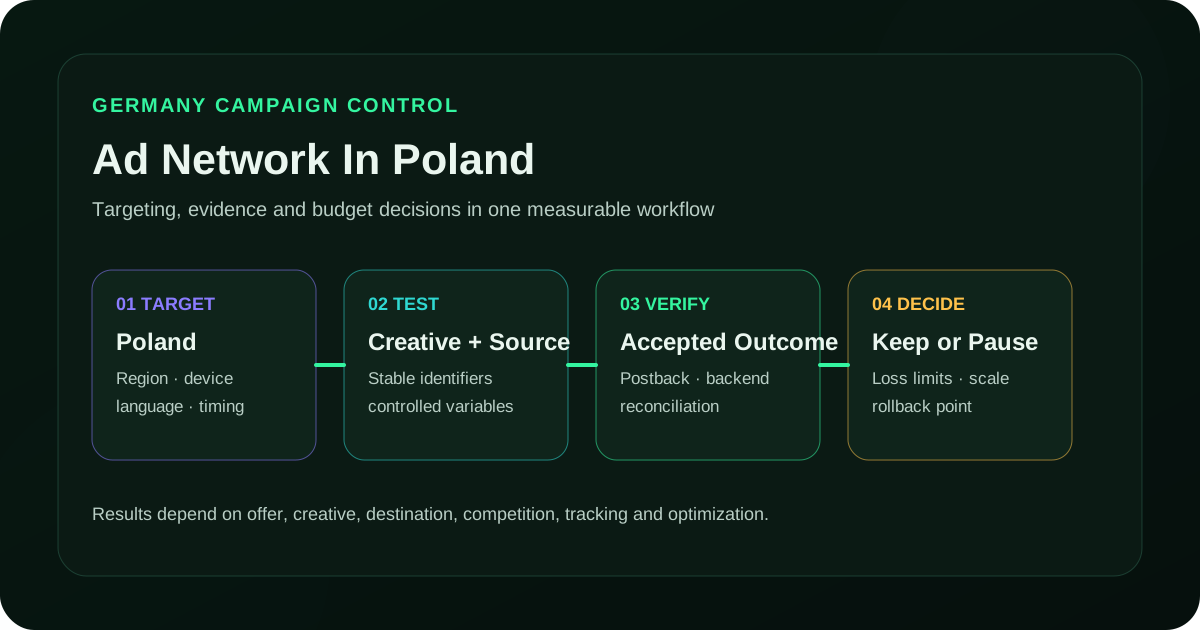
Research scope and an illustrative Polish retail route: Statistics Poland’s 2025 publication supplies the distinct household-access and individual online-purchase measures above. Keep each unit, age range and reference period with its figure; the publication portal establishes the report’s wider survey scope. Shopify paid-advertising overview covers general planning, while the Google Ads Display targeting guide describes Google’s own targeting terminology. None establishes FroggyAds inventory or Polish demand. In a hypothetical retail test, hold one Polish-language delivery cell, PLN offer, supported-address rule and return path steady. Use carts and paid orders to diagnose progression, then allocate after correct delivery and retention. Keep payment failure, unsupported address, late delivery and return reasons distinct. We provide the self-serve buying controls and source evidence; your business records close the customer outcome.