
Quora Marketing for Startups: Questions, Activation, Runway and 90-Day Go-to-Market Playbook
Quora Marketing for startups is a runway-aware learning system for founders and lean teams that uses relevant questions, topic expertise, disclosed participation, optional paid distribution and product-level measurement to test demand, activation and retention. It does not promise product-market fit, rankings, traffic, customers, funding, revenue or profitability.
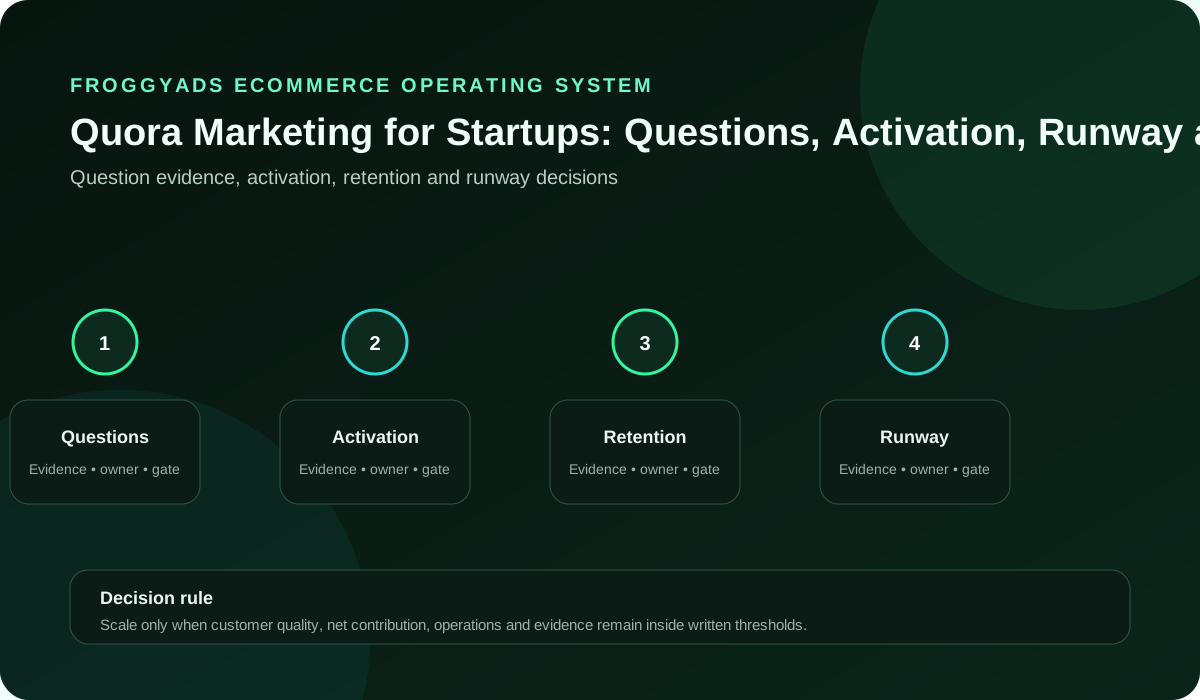
What does this page explain about Quora Marketing for Startups: Apply It to Measurable Paid Growth?
Quick answer: Build Quora Marketing for a startup with question evidence, disclosed expertise, activation, retention, runway controls and a practical 90-day plan. Quora Marketing for startups is a runway-aware learning system for founders and lean teams that uses relevant questions, topic expertise, disclosed participation, optional paid distribution and product-level measurement to test demand, activation and retention. It does not promise product-market fit, rankings, traffic, customers, funding, revenue or profitability. Choose a relevant question, a credible answer, a qualified destination, an accepted product outcome and a written stop rule before increasing scope.
| Section | Distinct excerpt from this page |
|---|---|
| Quora Marketing startup stage map | Use the map to avoid amplifying a message before product and measurement are ready. |
| Define the startup stage and Quora decision horizon | Connect “Define the startup stage and Quora decision horizon” to positioning, onboarding, first value, pricing, sales qualification, customer success and retention. |
| Choose the narrowest credible Quora audience | This control asks the team to describe one role, problem situation, topic context, urgency and ability to act rather than targeting broad interest alone. |
Reference for Quora Marketing for Startups: Apply It to Measurable Paid Growth: Quora Ads.
Direct answer: how should a startup use Quora Marketing?
A startup should use Quora Marketing to answer a small number of high-value go-to-market questions: which problems appear repeatedly, what language buyers use, where the startup has legitimate expertise, which message earns a qualified next step, whether the product activates those visitors and whether retained value supports further investment.
Useful answers and paid campaigns can contribute evidence, but views, upvotes, clicks and platform attribution are diagnostic. The startup should reconcile Quora activity with accepted product events, retained use, customer feedback, source quality and runway. Disclosed affiliation, answer quality and policy compliance are mandatory boundaries.
| Control area | Startup question | Evidence artifact | Gate |
|---|---|---|---|
| Problem evidence | Which recurring questions reveal an urgent situation? | question and customer evidence ledger | Advance only when observed evidence is separated from founder belief |
| Audience and topic fit | Which roles, topics and questions match legitimate expertise? | audience and topic map | Exclude irrelevant or unsupported participation |
| Wedge proposition | What specific promise can the product fulfill and substantiate? | wedge proposition brief | Avoid broad claims and generic promotion |
| Activation | What accepted first-value event follows the Quora interaction? | question-to-activation map | Clicks and signups are not sufficient by themselves |
| Retention | Do Quora cohorts continue to receive and create value? | retention cohort review | Do not scale weakly retained demand |
| Runway | How much cash and team time can be used to answer the decision? | runway-aware experiment budget | Stop when the decision value no longer justifies cost |
| Governance | Who owns disclosure, claims, policy, corrections and response? | Quora governance register | Pause when accountability is unclear |
Quora Marketing startup stage map
The startup stage changes the acceptable question, content, destination, budget and evidence. Use the map to avoid amplifying a message before product and measurement are ready.
| Stage | Decision question | Evidence | Gate |
|---|---|---|---|
| Problem validation | Do recurring questions describe a painful situation the startup can observe and serve? | Quora problem evidence | Do not promote an unverified problem |
| Offer validation | Will a narrow audience take a meaningful next step for a credible promise? | Quora wedge and destination test | Proceed only with a deliverable promise |
| Activation validation | Do qualified visitors reach first product value? | Quora activation cohort | Fix onboarding before more traffic |
| Retention validation | Does value persist through repeat use, renewal, expansion or justified repeat purchase? | Quora retention cohort | Do not scale weak retention |
| Channel repeatability | Can the startup reproduce qualified demand with stable answer, audience and measurement quality? | Quora repeatability log | Require comparable cohorts and decisions |
| Controlled scale | Can scope increase without losing runway, product quality, disclosure or community fit? | Quora scale gate | Increase only inside written thresholds |
Define the startup stage and Quora decision horizon
Purpose for Quora startup control 1. This control asks the team to record whether the company is validating a problem, testing an offer, proving activation, testing retention or preparing controlled scale. The output must support one founder, product, marketing or customer-success decision at the current startup stage. It should use question language, customer evidence and product behavior without presenting Quora activity as proof of product-market fit.
Working method for control 1. Build a Quora startup stage memo with the accountable owner, source date, relevant topic or audience, product dependency, accepted outcome, observation window and stop rule. Separate observed questions, answer performance, paid campaign data and founder assumptions so the team can see which evidence is independent and which is platform-reported.
Product and go-to-market connection for control 1. Connect “Define the startup stage and Quora decision horizon” to positioning, onboarding, first value, pricing, sales qualification, customer success and retention. Record what the Quora evidence changes in the product or go-to-market system. If the result only changes a surface metric, the control has not yet produced a strong startup decision.
Runway and quality boundary for control 1. Continue only when question relevance, affiliation disclosure, answer quality, destination continuity, accepted events, activation, retention, source quality and cash remain inside written thresholds. Revise when one of those inputs is ambiguous. Pause when the startup cannot substantiate the promise, serve the audience or moderate the resulting interaction.
Official source check for control 1. Review the applicable official or primary reference, confirm current scope, eligibility and policy, and record which part of the Quora startup stage memo it supports. Documentation describes capabilities or obligations, not guaranteed startup suitability or performance.
Choose the narrowest credible Quora audience
Purpose for Quora startup control 2. This control asks the team to describe one role, problem situation, topic context, urgency and ability to act rather than targeting broad interest alone. The output must support one founder, product, marketing or customer-success decision at the current startup stage. It should use question language, customer evidence and product behavior without presenting Quora activity as proof of product-market fit.
Working method for control 2. Build a Quora audience evidence card with the accountable owner, source date, relevant topic or audience, product dependency, accepted outcome, observation window and stop rule. Separate observed questions, answer performance, paid campaign data and founder assumptions so the team can see which evidence is independent and which is platform-reported.
Product and go-to-market connection for control 2. Connect “Choose the narrowest credible Quora audience” to positioning, onboarding, first value, pricing, sales qualification, customer success and retention. Record what the Quora evidence changes in the product or go-to-market system. If the result only changes a surface metric, the control has not yet produced a strong startup decision.
Runway and quality boundary for control 2. Continue only when question relevance, affiliation disclosure, answer quality, destination continuity, accepted events, activation, retention, source quality and cash remain inside written thresholds. Revise when one of those inputs is ambiguous. Pause when the startup cannot substantiate the promise, serve the audience or moderate the resulting interaction.
Official source check for control 2. Review the applicable official or primary reference, confirm current scope, eligibility and policy, and record which part of the Quora audience evidence card it supports. Documentation describes capabilities or obligations, not guaranteed startup suitability or performance.
Document problem evidence in questions and discussions
Purpose for Quora startup control 3. This control asks the team to separate observed questions, search behavior, customer interviews and founder assumptions so the team can see what is verified. The output must support one founder, product, marketing or customer-success decision at the current startup stage. It should use question language, customer evidence and product behavior without presenting Quora activity as proof of product-market fit.
Working method for control 3. Build a Quora problem-evidence ledger with the accountable owner, source date, relevant topic or audience, product dependency, accepted outcome, observation window and stop rule. Separate observed questions, answer performance, paid campaign data and founder assumptions so the team can see which evidence is independent and which is platform-reported.
Product and go-to-market connection for control 3. Connect “Document problem evidence in questions and discussions” to positioning, onboarding, first value, pricing, sales qualification, customer success and retention. Record what the Quora evidence changes in the product or go-to-market system. If the result only changes a surface metric, the control has not yet produced a strong startup decision.
Runway and quality boundary for control 3. Continue only when question relevance, affiliation disclosure, answer quality, destination continuity, accepted events, activation, retention, source quality and cash remain inside written thresholds. Revise when one of those inputs is ambiguous. Pause when the startup cannot substantiate the promise, serve the audience or moderate the resulting interaction.
Official source check for control 3. Review the applicable official or primary reference, confirm current scope, eligibility and policy, and record which part of the Quora problem-evidence ledger it supports. Documentation describes capabilities or obligations, not guaranteed startup suitability or performance.
Write the startup wedge proposition
Purpose for Quora startup control 4. This control asks the team to connect one urgent problem to a differentiated promise, substantiated proof and one next step the product can deliver. The output must support one founder, product, marketing or customer-success decision at the current startup stage. It should use question language, customer evidence and product behavior without presenting Quora activity as proof of product-market fit.
Working method for control 4. Build a Quora wedge proposition brief with the accountable owner, source date, relevant topic or audience, product dependency, accepted outcome, observation window and stop rule. Separate observed questions, answer performance, paid campaign data and founder assumptions so the team can see which evidence is independent and which is platform-reported.
Product and go-to-market connection for control 4. Connect “Write the startup wedge proposition” to positioning, onboarding, first value, pricing, sales qualification, customer success and retention. Record what the Quora evidence changes in the product or go-to-market system. If the result only changes a surface metric, the control has not yet produced a strong startup decision.
Runway and quality boundary for control 4. Continue only when question relevance, affiliation disclosure, answer quality, destination continuity, accepted events, activation, retention, source quality and cash remain inside written thresholds. Revise when one of those inputs is ambiguous. Pause when the startup cannot substantiate the promise, serve the audience or moderate the resulting interaction.
Official source check for control 4. Review the applicable official or primary reference, confirm current scope, eligibility and policy, and record which part of the Quora wedge proposition brief it supports. Documentation describes capabilities or obligations, not guaranteed startup suitability or performance.
Connect Quora Marketing for Startups to a controlled audience test
Use the choices established in “Write the startup wedge proposition” to define one audience, budget and source set in FroggyAds. Keep the surrounding offer and measurement rule stable so the test adds evidence to quora marketing for startups instead of mixing several changes at once.
Create My Free Account
Map product activation to the Quora journey
Purpose for Quora startup control 5. This control asks the team to define what a qualified visitor must do after an answer, ad or topic interaction to reach first product value. The output must support one founder, product, marketing or customer-success decision at the current startup stage. It should use question language, customer evidence and product behavior without presenting Quora activity as proof of product-market fit.
Working method for control 5. Build a Quora-to-activation map with the accountable owner, source date, relevant topic or audience, product dependency, accepted outcome, observation window and stop rule. Separate observed questions, answer performance, paid campaign data and founder assumptions so the team can see which evidence is independent and which is platform-reported.
Product and go-to-market connection for control 5. Connect “Map product activation to the Quora journey” to positioning, onboarding, first value, pricing, sales qualification, customer success and retention. Record what the Quora evidence changes in the product or go-to-market system. If the result only changes a surface metric, the control has not yet produced a strong startup decision.
Runway and quality boundary for control 5. Continue only when question relevance, affiliation disclosure, answer quality, destination continuity, accepted events, activation, retention, source quality and cash remain inside written thresholds. Revise when one of those inputs is ambiguous. Pause when the startup cannot substantiate the promise, serve the audience or moderate the resulting interaction.
Official source check for control 5. Review the applicable official or primary reference, confirm current scope, eligibility and policy, and record which part of the Quora-to-activation map it supports. Documentation describes capabilities or obligations, not guaranteed startup suitability or performance.
Select topics and questions by decision relevance
Purpose for Quora startup control 6. This control asks the team to prioritize topics where the startup has legitimate expertise and where the audience can make a meaningful next-step decision. The output must support one founder, product, marketing or customer-success decision at the current startup stage. It should use question language, customer evidence and product behavior without presenting Quora activity as proof of product-market fit.
Working method for control 6. Build a Quora topic opportunity map with the accountable owner, source date, relevant topic or audience, product dependency, accepted outcome, observation window and stop rule. Separate observed questions, answer performance, paid campaign data and founder assumptions so the team can see which evidence is independent and which is platform-reported.
Product and go-to-market connection for control 6. Connect “Select topics and questions by decision relevance” to positioning, onboarding, first value, pricing, sales qualification, customer success and retention. Record what the Quora evidence changes in the product or go-to-market system. If the result only changes a surface metric, the control has not yet produced a strong startup decision.
Runway and quality boundary for control 6. Continue only when question relevance, affiliation disclosure, answer quality, destination continuity, accepted events, activation, retention, source quality and cash remain inside written thresholds. Revise when one of those inputs is ambiguous. Pause when the startup cannot substantiate the promise, serve the audience or moderate the resulting interaction.
Official source check for control 6. Review the applicable official or primary reference, confirm current scope, eligibility and policy, and record which part of the Quora topic opportunity map it supports. Documentation describes capabilities or obligations, not guaranteed startup suitability or performance.
Establish affiliation and disclosure rules
Purpose for Quora startup control 7. This control asks the team to make employee, founder, investor, affiliate or compensated relationships clear whenever they could affect how content is interpreted. The output must support one founder, product, marketing or customer-success decision at the current startup stage. It should use question language, customer evidence and product behavior without presenting Quora activity as proof of product-market fit.
Working method for control 7. Build a Quora affiliation and disclosure policy with the accountable owner, source date, relevant topic or audience, product dependency, accepted outcome, observation window and stop rule. Separate observed questions, answer performance, paid campaign data and founder assumptions so the team can see which evidence is independent and which is platform-reported.
Product and go-to-market connection for control 7. Connect “Establish affiliation and disclosure rules” to positioning, onboarding, first value, pricing, sales qualification, customer success and retention. Record what the Quora evidence changes in the product or go-to-market system. If the result only changes a surface metric, the control has not yet produced a strong startup decision.
Runway and quality boundary for control 7. Continue only when question relevance, affiliation disclosure, answer quality, destination continuity, accepted events, activation, retention, source quality and cash remain inside written thresholds. Revise when one of those inputs is ambiguous. Pause when the startup cannot substantiate the promise, serve the audience or moderate the resulting interaction.
Official source check for control 7. Review the applicable official or primary reference, confirm current scope, eligibility and policy, and record which part of the Quora affiliation and disclosure policy it supports. Documentation describes capabilities or obligations, not guaranteed startup suitability or performance.
Build an answer quality standard
Purpose for Quora startup control 8. This control asks the team to require direct answers, evidence, useful context, limitations, readable structure and a non-promotional primary purpose. The output must support one founder, product, marketing or customer-success decision at the current startup stage. It should use question language, customer evidence and product behavior without presenting Quora activity as proof of product-market fit.
Working method for control 8. Build a Quora answer quality rubric with the accountable owner, source date, relevant topic or audience, product dependency, accepted outcome, observation window and stop rule. Separate observed questions, answer performance, paid campaign data and founder assumptions so the team can see which evidence is independent and which is platform-reported.
Product and go-to-market connection for control 8. Connect “Build an answer quality standard” to positioning, onboarding, first value, pricing, sales qualification, customer success and retention. Record what the Quora evidence changes in the product or go-to-market system. If the result only changes a surface metric, the control has not yet produced a strong startup decision.
Runway and quality boundary for control 8. Continue only when question relevance, affiliation disclosure, answer quality, destination continuity, accepted events, activation, retention, source quality and cash remain inside written thresholds. Revise when one of those inputs is ambiguous. Pause when the startup cannot substantiate the promise, serve the audience or moderate the resulting interaction.
Official source check for control 8. Review the applicable official or primary reference, confirm current scope, eligibility and policy, and record which part of the Quora answer quality rubric it supports. Documentation describes capabilities or obligations, not guaranteed startup suitability or performance.
Create the founder and expert participation boundary
Purpose for Quora startup control 9. This control asks the team to decide which questions require founder knowledge, which can be delegated and which should not be answered by the startup. The output must support one founder, product, marketing or customer-success decision at the current startup stage. It should use question language, customer evidence and product behavior without presenting Quora activity as proof of product-market fit.
Working method for control 9. Build a Quora expertise and ownership matrix with the accountable owner, source date, relevant topic or audience, product dependency, accepted outcome, observation window and stop rule. Separate observed questions, answer performance, paid campaign data and founder assumptions so the team can see which evidence is independent and which is platform-reported.
Product and go-to-market connection for control 9. Connect “Create the founder and expert participation boundary” to positioning, onboarding, first value, pricing, sales qualification, customer success and retention. Record what the Quora evidence changes in the product or go-to-market system. If the result only changes a surface metric, the control has not yet produced a strong startup decision.
Runway and quality boundary for control 9. Continue only when question relevance, affiliation disclosure, answer quality, destination continuity, accepted events, activation, retention, source quality and cash remain inside written thresholds. Revise when one of those inputs is ambiguous. Pause when the startup cannot substantiate the promise, serve the audience or moderate the resulting interaction.
Official source check for control 9. Review the applicable official or primary reference, confirm current scope, eligibility and policy, and record which part of the Quora expertise and ownership matrix it supports. Documentation describes capabilities or obligations, not guaranteed startup suitability or performance.
Design the answer-to-destination handoff
Purpose for Quora startup control 10. This control asks the team to ensure that any relevant link leads to a page that continues the exact question, promise, evidence and next step. The output must support one founder, product, marketing or customer-success decision at the current startup stage. It should use question language, customer evidence and product behavior without presenting Quora activity as proof of product-market fit.
Working method for control 10. Build a Quora destination continuity map with the accountable owner, source date, relevant topic or audience, product dependency, accepted outcome, observation window and stop rule. Separate observed questions, answer performance, paid campaign data and founder assumptions so the team can see which evidence is independent and which is platform-reported.
Product and go-to-market connection for control 10. Connect “Design the answer-to-destination handoff” to positioning, onboarding, first value, pricing, sales qualification, customer success and retention. Record what the Quora evidence changes in the product or go-to-market system. If the result only changes a surface metric, the control has not yet produced a strong startup decision.
Runway and quality boundary for control 10. Continue only when question relevance, affiliation disclosure, answer quality, destination continuity, accepted events, activation, retention, source quality and cash remain inside written thresholds. Revise when one of those inputs is ambiguous. Pause when the startup cannot substantiate the promise, serve the audience or moderate the resulting interaction.
Official source check for control 10. Review the applicable official or primary reference, confirm current scope, eligibility and policy, and record which part of the Quora destination continuity map it supports. Documentation describes capabilities or obligations, not guaranteed startup suitability or performance.
Choose a paid-media format that supports Quora Marketing for Startups
Use the criteria around “Design the answer-to-destination handoff” to decide whether push, native, display or pop fits the message and destination. Set format, targeting and spend as campaign controls in FroggyAds while the quora marketing for startups decision remains the standard for judging the result.
Create My Free Account
Plan organic participation before paid amplification
Purpose for Quora startup control 11. This control asks the team to learn topic language, objections and community response through useful participation before spending to scale an unproven message. The output must support one founder, product, marketing or customer-success decision at the current startup stage. It should use question language, customer evidence and product behavior without presenting Quora activity as proof of product-market fit.
Working method for control 11. Build a Quora organic learning plan with the accountable owner, source date, relevant topic or audience, product dependency, accepted outcome, observation window and stop rule. Separate observed questions, answer performance, paid campaign data and founder assumptions so the team can see which evidence is independent and which is platform-reported.
Product and go-to-market connection for control 11. Connect “Plan organic participation before paid amplification” to positioning, onboarding, first value, pricing, sales qualification, customer success and retention. Record what the Quora evidence changes in the product or go-to-market system. If the result only changes a surface metric, the control has not yet produced a strong startup decision.
Runway and quality boundary for control 11. Continue only when question relevance, affiliation disclosure, answer quality, destination continuity, accepted events, activation, retention, source quality and cash remain inside written thresholds. Revise when one of those inputs is ambiguous. Pause when the startup cannot substantiate the promise, serve the audience or moderate the resulting interaction.
Official source check for control 11. Review the applicable official or primary reference, confirm current scope, eligibility and policy, and record which part of the Quora organic learning plan it supports. Documentation describes capabilities or obligations, not guaranteed startup suitability or performance.
Build the first paid Quora test
Purpose for Quora startup control 12. This control asks the team to define one audience, one message, one destination, one accepted outcome, one learning budget and explicit stop conditions. The output must support one founder, product, marketing or customer-success decision at the current startup stage. It should use question language, customer evidence and product behavior without presenting Quora activity as proof of product-market fit.
Working method for control 12. Build a Quora paid experiment brief with the accountable owner, source date, relevant topic or audience, product dependency, accepted outcome, observation window and stop rule. Separate observed questions, answer performance, paid campaign data and founder assumptions so the team can see which evidence is independent and which is platform-reported.
Product and go-to-market connection for control 12. Connect “Build the first paid Quora test” to positioning, onboarding, first value, pricing, sales qualification, customer success and retention. Record what the Quora evidence changes in the product or go-to-market system. If the result only changes a surface metric, the control has not yet produced a strong startup decision.
Runway and quality boundary for control 12. Continue only when question relevance, affiliation disclosure, answer quality, destination continuity, accepted events, activation, retention, source quality and cash remain inside written thresholds. Revise when one of those inputs is ambiguous. Pause when the startup cannot substantiate the promise, serve the audience or moderate the resulting interaction.
Official source check for control 12. Review the applicable official or primary reference, confirm current scope, eligibility and policy, and record which part of the Quora paid experiment brief it supports. Documentation describes capabilities or obligations, not guaranteed startup suitability or performance.
Install the measurement contract
Purpose for Quora startup control 13. This control asks the team to document accepted events, pixel or tag behavior, attribution windows, exclusions and reconciliation to product activation. The output must support one founder, product, marketing or customer-success decision at the current startup stage. It should use question language, customer evidence and product behavior without presenting Quora activity as proof of product-market fit.
Working method for control 13. Build a Quora measurement contract with the accountable owner, source date, relevant topic or audience, product dependency, accepted outcome, observation window and stop rule. Separate observed questions, answer performance, paid campaign data and founder assumptions so the team can see which evidence is independent and which is platform-reported.
Product and go-to-market connection for control 13. Connect “Install the measurement contract” to positioning, onboarding, first value, pricing, sales qualification, customer success and retention. Record what the Quora evidence changes in the product or go-to-market system. If the result only changes a surface metric, the control has not yet produced a strong startup decision.
Runway and quality boundary for control 13. Continue only when question relevance, affiliation disclosure, answer quality, destination continuity, accepted events, activation, retention, source quality and cash remain inside written thresholds. Revise when one of those inputs is ambiguous. Pause when the startup cannot substantiate the promise, serve the audience or moderate the resulting interaction.
Official source check for control 13. Review the applicable official or primary reference, confirm current scope, eligibility and policy, and record which part of the Quora measurement contract it supports. Documentation describes capabilities or obligations, not guaranteed startup suitability or performance.
Connect acquisition to activation
Purpose for Quora startup control 14. This control asks the team to review whether Quora-sourced users reach first value rather than treating clicks, signups or traffic as sufficient proof. The output must support one founder, product, marketing or customer-success decision at the current startup stage. It should use question language, customer evidence and product behavior without presenting Quora activity as proof of product-market fit.
Working method for control 14. Build a Quora activation cohort review with the accountable owner, source date, relevant topic or audience, product dependency, accepted outcome, observation window and stop rule. Separate observed questions, answer performance, paid campaign data and founder assumptions so the team can see which evidence is independent and which is platform-reported.
Product and go-to-market connection for control 14. Connect “Connect acquisition to activation” to positioning, onboarding, first value, pricing, sales qualification, customer success and retention. Record what the Quora evidence changes in the product or go-to-market system. If the result only changes a surface metric, the control has not yet produced a strong startup decision.
Runway and quality boundary for control 14. Continue only when question relevance, affiliation disclosure, answer quality, destination continuity, accepted events, activation, retention, source quality and cash remain inside written thresholds. Revise when one of those inputs is ambiguous. Pause when the startup cannot substantiate the promise, serve the audience or moderate the resulting interaction.
Official source check for control 14. Review the applicable official or primary reference, confirm current scope, eligibility and policy, and record which part of the Quora activation cohort review it supports. Documentation describes capabilities or obligations, not guaranteed startup suitability or performance.
Connect activation to retention
Purpose for Quora startup control 15. This control asks the team to compare retained use, repeat purchase, renewal or expansion across Quora cohorts before scaling. The output must support one founder, product, marketing or customer-success decision at the current startup stage. It should use question language, customer evidence and product behavior without presenting Quora activity as proof of product-market fit.
Working method for control 15. Build a Quora retention evidence sheet with the accountable owner, source date, relevant topic or audience, product dependency, accepted outcome, observation window and stop rule. Separate observed questions, answer performance, paid campaign data and founder assumptions so the team can see which evidence is independent and which is platform-reported.
Product and go-to-market connection for control 15. Connect “Connect activation to retention” to positioning, onboarding, first value, pricing, sales qualification, customer success and retention. Record what the Quora evidence changes in the product or go-to-market system. If the result only changes a surface metric, the control has not yet produced a strong startup decision.
Runway and quality boundary for control 15. Continue only when question relevance, affiliation disclosure, answer quality, destination continuity, accepted events, activation, retention, source quality and cash remain inside written thresholds. Revise when one of those inputs is ambiguous. Pause when the startup cannot substantiate the promise, serve the audience or moderate the resulting interaction.
Official source check for control 15. Review the applicable official or primary reference, confirm current scope, eligibility and policy, and record which part of the Quora retention evidence sheet it supports. Documentation describes capabilities or obligations, not guaranteed startup suitability or performance.
Set the runway-aware learning budget
Purpose for Quora startup control 16. This control asks the team to bound spend and team time by runway, experiment cost, product readiness and the value of the decision being tested. The output must support one founder, product, marketing or customer-success decision at the current startup stage. It should use question language, customer evidence and product behavior without presenting Quora activity as proof of product-market fit.
Working method for control 16. Build a Quora runway budget memo with the accountable owner, source date, relevant topic or audience, product dependency, accepted outcome, observation window and stop rule. Separate observed questions, answer performance, paid campaign data and founder assumptions so the team can see which evidence is independent and which is platform-reported.
Product and go-to-market connection for control 16. Connect “Set the runway-aware learning budget” to positioning, onboarding, first value, pricing, sales qualification, customer success and retention. Record what the Quora evidence changes in the product or go-to-market system. If the result only changes a surface metric, the control has not yet produced a strong startup decision.
Runway and quality boundary for control 16. Continue only when question relevance, affiliation disclosure, answer quality, destination continuity, accepted events, activation, retention, source quality and cash remain inside written thresholds. Revise when one of those inputs is ambiguous. Pause when the startup cannot substantiate the promise, serve the audience or moderate the resulting interaction.
Official source check for control 16. Review the applicable official or primary reference, confirm current scope, eligibility and policy, and record which part of the Quora runway budget memo it supports. Documentation describes capabilities or obligations, not guaranteed startup suitability or performance.
Turn Quora Marketing for Startups into a bounded campaign test
With “Set the runway-aware learning budget” documented, launch only the next reversible test. Set a spending limit, preserve the baseline and use source-level and audience controls so the next step depends on qualified outcomes for quora marketing for startups, not activity volume.
Create My Free Account
Protect against vanity metrics and false authority
Purpose for Quora startup control 17. This control asks the team to separate views, upvotes, followers and answer distribution from qualified demand and retained product value. The output must support one founder, product, marketing or customer-success decision at the current startup stage. It should use question language, customer evidence and product behavior without presenting Quora activity as proof of product-market fit.
Working method for control 17. Build a Quora vanity-metric control with the accountable owner, source date, relevant topic or audience, product dependency, accepted outcome, observation window and stop rule. Separate observed questions, answer performance, paid campaign data and founder assumptions so the team can see which evidence is independent and which is platform-reported.
Product and go-to-market connection for control 17. Connect “Protect against vanity metrics and false authority” to positioning, onboarding, first value, pricing, sales qualification, customer success and retention. Record what the Quora evidence changes in the product or go-to-market system. If the result only changes a surface metric, the control has not yet produced a strong startup decision.
Runway and quality boundary for control 17. Continue only when question relevance, affiliation disclosure, answer quality, destination continuity, accepted events, activation, retention, source quality and cash remain inside written thresholds. Revise when one of those inputs is ambiguous. Pause when the startup cannot substantiate the promise, serve the audience or moderate the resulting interaction.
Official source check for control 17. Review the applicable official or primary reference, confirm current scope, eligibility and policy, and record which part of the Quora vanity-metric control it supports. Documentation describes capabilities or obligations, not guaranteed startup suitability or performance.
Create a response and moderation workflow
Purpose for Quora startup control 18. This control asks the team to assign ownership for comments, corrections, customer questions, criticism, policy issues and escalation. The output must support one founder, product, marketing or customer-success decision at the current startup stage. It should use question language, customer evidence and product behavior without presenting Quora activity as proof of product-market fit.
Working method for control 18. Build a Quora response and moderation plan with the accountable owner, source date, relevant topic or audience, product dependency, accepted outcome, observation window and stop rule. Separate observed questions, answer performance, paid campaign data and founder assumptions so the team can see which evidence is independent and which is platform-reported.
Product and go-to-market connection for control 18. Connect “Create a response and moderation workflow” to positioning, onboarding, first value, pricing, sales qualification, customer success and retention. Record what the Quora evidence changes in the product or go-to-market system. If the result only changes a surface metric, the control has not yet produced a strong startup decision.
Runway and quality boundary for control 18. Continue only when question relevance, affiliation disclosure, answer quality, destination continuity, accepted events, activation, retention, source quality and cash remain inside written thresholds. Revise when one of those inputs is ambiguous. Pause when the startup cannot substantiate the promise, serve the audience or moderate the resulting interaction.
Official source check for control 18. Review the applicable official or primary reference, confirm current scope, eligibility and policy, and record which part of the Quora response and moderation plan it supports. Documentation describes capabilities or obligations, not guaranteed startup suitability or performance.
Apply claims, privacy and policy controls
Purpose for Quora startup control 19. This control asks the team to verify claims, endorsements, tracking, audience use and current Quora advertising requirements before launch. The output must support one founder, product, marketing or customer-success decision at the current startup stage. It should use question language, customer evidence and product behavior without presenting Quora activity as proof of product-market fit.
Working method for control 19. Build a Quora compliance checklist with the accountable owner, source date, relevant topic or audience, product dependency, accepted outcome, observation window and stop rule. Separate observed questions, answer performance, paid campaign data and founder assumptions so the team can see which evidence is independent and which is platform-reported.
Product and go-to-market connection for control 19. Connect “Apply claims, privacy and policy controls” to positioning, onboarding, first value, pricing, sales qualification, customer success and retention. Record what the Quora evidence changes in the product or go-to-market system. If the result only changes a surface metric, the control has not yet produced a strong startup decision.
Runway and quality boundary for control 19. Continue only when question relevance, affiliation disclosure, answer quality, destination continuity, accepted events, activation, retention, source quality and cash remain inside written thresholds. Revise when one of those inputs is ambiguous. Pause when the startup cannot substantiate the promise, serve the audience or moderate the resulting interaction.
Official source check for control 19. Review the applicable official or primary reference, confirm current scope, eligibility and policy, and record which part of the Quora compliance checklist it supports. Documentation describes capabilities or obligations, not guaranteed startup suitability or performance.
Make content and destinations accessible
Purpose for Quora startup control 20. This control asks the team to use readable structure, descriptive links, alt text, captions and accessible destinations for people using different devices and assistive technology. The output must support one founder, product, marketing or customer-success decision at the current startup stage. It should use question language, customer evidence and product behavior without presenting Quora activity as proof of product-market fit.
Working method for control 20. Build a Quora accessibility review with the accountable owner, source date, relevant topic or audience, product dependency, accepted outcome, observation window and stop rule. Separate observed questions, answer performance, paid campaign data and founder assumptions so the team can see which evidence is independent and which is platform-reported.
Product and go-to-market connection for control 20. Connect “Make content and destinations accessible” to positioning, onboarding, first value, pricing, sales qualification, customer success and retention. Record what the Quora evidence changes in the product or go-to-market system. If the result only changes a surface metric, the control has not yet produced a strong startup decision.
Runway and quality boundary for control 20. Continue only when question relevance, affiliation disclosure, answer quality, destination continuity, accepted events, activation, retention, source quality and cash remain inside written thresholds. Revise when one of those inputs is ambiguous. Pause when the startup cannot substantiate the promise, serve the audience or moderate the resulting interaction.
Official source check for control 20. Review the applicable official or primary reference, confirm current scope, eligibility and policy, and record which part of the Quora accessibility review it supports. Documentation describes capabilities or obligations, not guaranteed startup suitability or performance.
Run the 30-day evidence cycle
Purpose for Quora startup control 21. This control asks the team to publish a bounded set of useful answers, collect audience language, validate destinations and run no more than one paid learning test. The output must support one founder, product, marketing or customer-success decision at the current startup stage. It should use question language, customer evidence and product behavior without presenting Quora activity as proof of product-market fit.
Working method for control 21. Build a Quora 30-day validation plan with the accountable owner, source date, relevant topic or audience, product dependency, accepted outcome, observation window and stop rule. Separate observed questions, answer performance, paid campaign data and founder assumptions so the team can see which evidence is independent and which is platform-reported.
Product and go-to-market connection for control 21. Connect “Run the 30-day evidence cycle” to positioning, onboarding, first value, pricing, sales qualification, customer success and retention. Record what the Quora evidence changes in the product or go-to-market system. If the result only changes a surface metric, the control has not yet produced a strong startup decision.
Runway and quality boundary for control 21. Continue only when question relevance, affiliation disclosure, answer quality, destination continuity, accepted events, activation, retention, source quality and cash remain inside written thresholds. Revise when one of those inputs is ambiguous. Pause when the startup cannot substantiate the promise, serve the audience or moderate the resulting interaction.
Official source check for control 21. Review the applicable official or primary reference, confirm current scope, eligibility and policy, and record which part of the Quora 30-day validation plan it supports. Documentation describes capabilities or obligations, not guaranteed startup suitability or performance.
Run the 60-day repeatability cycle
Purpose for Quora startup control 22. This control asks the team to improve the strongest question-to-activation path while preserving source, message and cohort comparability. The output must support one founder, product, marketing or customer-success decision at the current startup stage. It should use question language, customer evidence and product behavior without presenting Quora activity as proof of product-market fit.
Working method for control 22. Build a Quora 60-day repeatability plan with the accountable owner, source date, relevant topic or audience, product dependency, accepted outcome, observation window and stop rule. Separate observed questions, answer performance, paid campaign data and founder assumptions so the team can see which evidence is independent and which is platform-reported.
Product and go-to-market connection for control 22. Connect “Run the 60-day repeatability cycle” to positioning, onboarding, first value, pricing, sales qualification, customer success and retention. Record what the Quora evidence changes in the product or go-to-market system. If the result only changes a surface metric, the control has not yet produced a strong startup decision.
Runway and quality boundary for control 22. Continue only when question relevance, affiliation disclosure, answer quality, destination continuity, accepted events, activation, retention, source quality and cash remain inside written thresholds. Revise when one of those inputs is ambiguous. Pause when the startup cannot substantiate the promise, serve the audience or moderate the resulting interaction.
Official source check for control 22. Review the applicable official or primary reference, confirm current scope, eligibility and policy, and record which part of the Quora 60-day repeatability plan it supports. Documentation describes capabilities or obligations, not guaranteed startup suitability or performance.
Set the 90-day scale boundary
Purpose for Quora startup control 23. This control asks the team to increase scope only when qualified demand, activation, retention, source quality, compliance and runway thresholds remain inside limits. The output must support one founder, product, marketing or customer-success decision at the current startup stage. It should use question language, customer evidence and product behavior without presenting Quora activity as proof of product-market fit.
Working method for control 23. Build a Quora 90-day scale gate with the accountable owner, source date, relevant topic or audience, product dependency, accepted outcome, observation window and stop rule. Separate observed questions, answer performance, paid campaign data and founder assumptions so the team can see which evidence is independent and which is platform-reported.
Product and go-to-market connection for control 23. Connect “Set the 90-day scale boundary” to positioning, onboarding, first value, pricing, sales qualification, customer success and retention. Record what the Quora evidence changes in the product or go-to-market system. If the result only changes a surface metric, the control has not yet produced a strong startup decision.
Runway and quality boundary for control 23. Continue only when question relevance, affiliation disclosure, answer quality, destination continuity, accepted events, activation, retention, source quality and cash remain inside written thresholds. Revise when one of those inputs is ambiguous. Pause when the startup cannot substantiate the promise, serve the audience or moderate the resulting interaction.
Official source check for control 23. Review the applicable official or primary reference, confirm current scope, eligibility and policy, and record which part of the Quora 90-day scale gate it supports. Documentation describes capabilities or obligations, not guaranteed startup suitability or performance.
Document continue, revise and stop decisions
Purpose for Quora startup control 24. This control asks the team to record what the team learned, which assumptions changed and why the next Quora action is justified. The output must support one founder, product, marketing or customer-success decision at the current startup stage. It should use question language, customer evidence and product behavior without presenting Quora activity as proof of product-market fit.
Working method for control 24. Build a Quora decision log with the accountable owner, source date, relevant topic or audience, product dependency, accepted outcome, observation window and stop rule. Separate observed questions, answer performance, paid campaign data and founder assumptions so the team can see which evidence is independent and which is platform-reported.
Product and go-to-market connection for control 24. Connect “Document continue, revise and stop decisions” to positioning, onboarding, first value, pricing, sales qualification, customer success and retention. Record what the Quora evidence changes in the product or go-to-market system. If the result only changes a surface metric, the control has not yet produced a strong startup decision.
Runway and quality boundary for control 24. Continue only when question relevance, affiliation disclosure, answer quality, destination continuity, accepted events, activation, retention, source quality and cash remain inside written thresholds. Revise when one of those inputs is ambiguous. Pause when the startup cannot substantiate the promise, serve the audience or moderate the resulting interaction.
Official source check for control 24. Review the applicable official or primary reference, confirm current scope, eligibility and policy, and record which part of the Quora decision log it supports. Documentation describes capabilities or obligations, not guaranteed startup suitability or performance.
Quora Marketing for startups decision scorecard
Score evidence before increasing answer volume, topic breadth or paid spend. A strong view count cannot compensate for weak activation, retention, disclosure or product fit.
| # | Dimension | Accepted evidence | Artifact | Score |
|---|---|---|---|---|
| 1 | Problem evidence | Recurring questions and customer evidence support the problem | Quora startup evidence 1 | 0 = absent; 1 = partial; 2 = accepted |
| 2 | Topic and audience fit | The startup has legitimate expertise and a narrow eligible audience | Quora startup evidence 2 | 0 = absent; 1 = partial; 2 = accepted |
| 3 | Disclosure and trust | Affiliation, claims and material connections are clear | Quora startup evidence 3 | 0 = absent; 1 = partial; 2 = accepted |
| 4 | Answer quality | The content is direct, useful, sourced, readable and not primarily promotional | Quora startup evidence 4 | 0 = absent; 1 = partial; 2 = accepted |
| 5 | Destination continuity | The linked page continues the exact question and promise | Quora startup evidence 5 | 0 = absent; 1 = partial; 2 = accepted |
| 6 | Activation | Qualified visitors reach an accepted first-value event | Quora startup evidence 6 | 0 = absent; 1 = partial; 2 = accepted |
| 7 | Retention | Quora cohorts show retained or repeat value | Quora startup evidence 7 | 0 = absent; 1 = partial; 2 = accepted |
| 8 | Measurement | Events, windows, exclusions and reconciliation are accepted | Quora startup evidence 8 | 0 = absent; 1 = partial; 2 = accepted |
| 9 | Runway | Spend and team time remain inside the learning boundary | Quora startup evidence 9 | 0 = absent; 1 = partial; 2 = accepted |
| 10 | Decision discipline | Continue, revise, pause and scale rules are documented | Quora startup evidence 10 | 0 = absent; 1 = partial; 2 = accepted |
Use FroggyAds for a bounded Quora startup practice test
FroggyAds can support compliant paid traffic tests when a startup has a relevant destination, accepted events and a written learning budget. Available formats include push, native, display, pop, interstitial and video, with source-level controls and targeting options. The minimum deposit is $50.
A FroggyAds test should remain separate from undisclosed Quora participation. Use one hypothesis, one accepted outcome and source-level review, then reconcile activation and retention outside the advertising platform. Access to traffic does not guarantee product-market fit, customers, funding, revenue or profitability.
Related Quora startup resources
- Quora Marketing Guide
- Quora Marketing for Small Business
- Quora Marketing for Beginners
- Quora Marketing Tips
- Quora Marketing Examples
- Quora Marketing Trends
- FroggyAds Learning Center
Official and primary sources
Verify dates, eligibility, jurisdiction and current implementation details before relying on a source.
- business.quora.com — official or primary reference 1
- business.quora.com — official or primary reference 2
- business.quora.com — official or primary reference 3
- business.quora.com — official or primary reference 4
- business.quora.com — official or primary reference 5
- www.ftc.gov — official or primary reference 6
- www.ftc.gov — official or primary reference 7
- www.w3.org — official or primary reference 8
- support.google.com — official or primary reference 9
- developers.google.com — official or primary reference 10
- support.google.com — official or primary reference 11
- www.sba.gov — official or primary reference 12
Quora Marketing for startups FAQs
When is Quora a sensible marketing channel for a startup?
Quora can fit when potential customers ask detailed questions connected with the startup's expertise and offer. The team should confirm topic relevance and serviceability rather than assuming broad platform traffic will translate into qualified demand.
Which Quora research helps startups choose questions worth answering?
Relevant question quality, audience intent, existing answers, recency and the startup's ability to add evidence all matter. A smaller question with clear buyer relevance may be more valuable than a popular topic outside the product's real scope.
What profile details establish useful context for startup answers?
A concise role, relevant experience and transparent company connection help readers understand the source. Credentials should be accurate and limited to the topic, avoiding broad authority claims that the contributor cannot support.
Which writing approach lets startups answer Quora questions without sounding promotional?
The response should address the question directly, explain reasoning, acknowledge limits and use specific examples where appropriate. A company mention belongs only when it materially helps the reader and the relationship is clear.
Where should a startup disclose commercial interest on Quora?
The connection should appear where readers can understand it before relying on a recommendation or example. Current platform and applicable legal requirements still need review, as a profile line may not resolve every disclosure context.
Which topic structure keeps Quora marketing focused for startups?
A limited set of customer problems, use cases and decision questions creates a coherent area of contribution. Expanding only when the team has genuine expertise protects quality better than chasing unrelated topics for additional views.
When does an external link improve a startup's Quora answer?
A link is useful when it supplies supporting evidence, a tool or detail that would burden the answer. The surrounding response should remain valuable without the click, and the destination must match the promise made in context.
How should startups separate paid Quora campaigns from organic participation?
Paid and organic activity need distinct identifiers, costs and decision rules even when they address the same topic. Readers should not be led to mistake sponsored distribution or a commercial relationship for independent community endorsement.
Which outcomes make Quora activity commercially meaningful for startups?
Qualified visits, accepted enquiries, product activations or another validated event can connect contribution with value. Answer views and votes explain attention, while long consideration periods and unattributed influence should be reported cautiously.
Which results justify expanding a startup's Quora marketing effort?
Expansion is more credible when relevant questions consistently attract qualified engagement, destination behaviour is useful and operating time remains justified. New topics should be tested in small groups so weak fit does not dilute established expertise.
Turn Quora evidence into one product or go-to-market decision
Choose a relevant question, a credible answer, a qualified destination, an accepted product outcome and a written stop rule before increasing scope.
Quora Marketing for Startups: Questions, Activation, Runway and 90-Day Go-to-Market Playbook: the buyer task this URL owns
Quora Marketing for Startups: Questions, Activation, Runway and 90-Day Go-to-Market Playbook is for advertisers, media buyers and online growth teams who need to prioritize social tests around limited budget, creative learning and measurable customer outcomes. Keep that buyer task separate from the nearby topic so this URL answers one commercial question clearly. The nearest related FroggyAds page is Quora Marketing Software; this URL keeps ownership of the distinct task to prioritize social tests around limited budget, creative learning and measurable customer outcomes.
For Quora Marketing for Startups: Questions, Activation, Runway and 90-Day Go-to-Market Playbook, the operating evidence to keep visible is question or topic context, audience intent, creative ID, landing path. Use these entities only when they change setup, measurement or the commercial decision.
| Checkpoint | Page-specific action | Evidence to keep |
|---|---|---|
| Channel role | Define the audience context, organic/social role and the business event this page is meant to influence. | Retain evidence specific to Quora Marketing for Startups: Questions, Activation, Runway and 90-Day Go-to-Market Playbook and its accepted outcome. |
| Measurement | Preserve source, medium, campaign and creative identifiers through the business-side conversion or accepted outcome. | Retain evidence specific to Quora Marketing for Startups: Questions, Activation, Runway and 90-Day Go-to-Market Playbook and its accepted outcome. |
| Decision | Separate platform-reported activity from business evidence before changing budget, provider, content or channel mix. | Retain evidence specific to Quora Marketing for Startups: Questions, Activation, Runway and 90-Day Go-to-Market Playbook and its accepted outcome. |
Hypothetical calculation: if a controlled campaign for quora marketing for startups: questions, activation, runway and 90-day go-to-market playbook spends USD 300 and produces 9 accepted conversions, accepted CPA is USD 300 / 9 = USD 33.33. Replace the inputs with your own campaign economics; this is not a FroggyAds performance claim.
When Quora Marketing for Startups: Questions, Activation, Runway and 90-Day Go-to-Market Playbook calls for more measurable reach outside social-network-native delivery, use FroggyAds as a distinct traffic source and reconcile the result with the same accepted business event. Create your free FroggyAds account.
Quora Marketing for Startups: Questions, Activation, Runway and 90-Day Go-to-Market Playbook — what matters first?
Use Quora Marketing for Startups: Questions, Activation, Runway and 90-Day Go-to-Market Playbook to define the social audience, channel role, content or creative approach and the business outcome used for review. Keep source, campaign and conversion definitions consistent across the journey; evaluate FroggyAds separately when you need an additional non-social paid-traffic source.