
Philippines Website Traffic
Philippines website traffic is a geographic observation, not a promise of residence, language, intent, quality or commercial value. A responsible campaign defines the business area it can serve, the audience problem it can solve, the languages its complete journey supports and the event it will accept. It then documents the provider's location option, delivered source mix, device and connection conditions, creative version, destination path and first-party outcome. Keep selected geography, inferred delivery location and customer-verified service eligibility as different fields. The Philippines contains distinct regions, cities, languages and access conditions, so a national total should not erase concentrated delivery or a journey that works only for one group. Run bounded market cells with a budget ceiling and stop rules. Compare usable visits, approved enquiries or completed transactions under one maturation period. Do not label traffic cheap, premium or high intent from its country name or interaction cost alone.
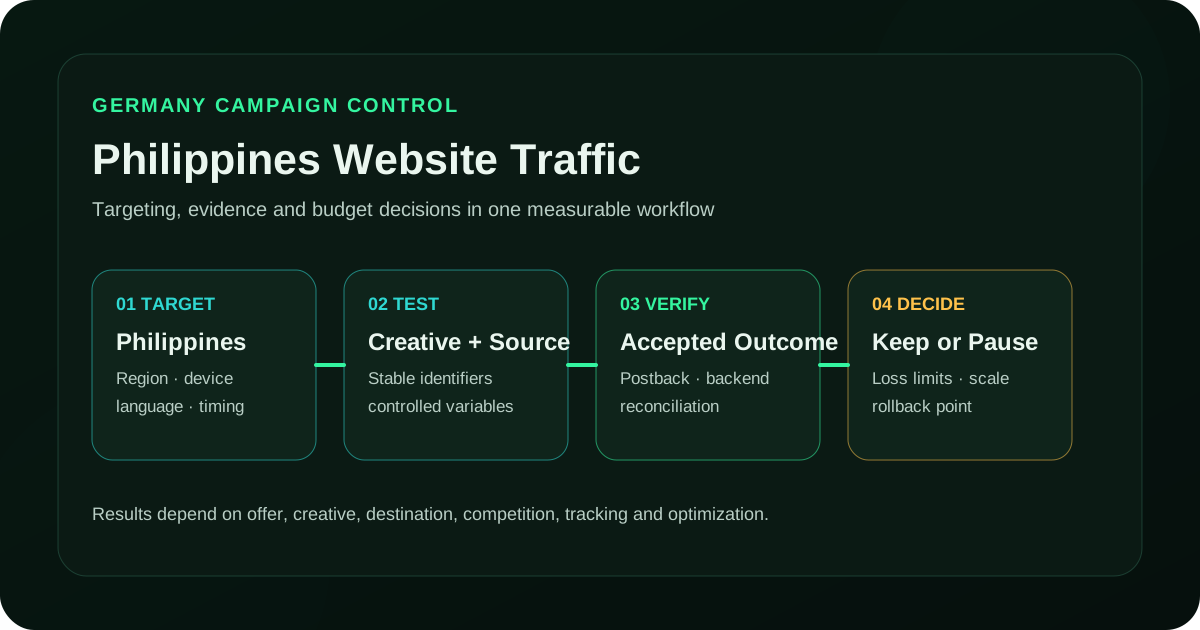
Official location, language and Philippines privacy boundaries
Google Ads states that location targeting uses several signals and is a best effort rather than perfectly accurate in every situation. It also distinguishes settings that can include people present in a place from people showing interest in it. Google's language guidance describes product-specific language signals and does not make language a reliable proxy for residence, identity or nationality. The Philippines National Privacy Commission publishes Republic Act 10173, the Data Privacy Act of 2012, including scope, processing principles, data-subject rights and security provisions. That official text is a legal-review starting point, not proof that a particular campaign, consent flow or cross-border arrangement complies. Use the platform sources to document configured delivery rules and the Commission source to trigger fact-specific privacy review. Verify the current provider settings, applicable issuances, data flow and service eligibility before launch.
- Google Ads geographic location targeting - Google-specific location signals and settings, not exact residence or guaranteed delivery
- Google Ads language targeting - Google-specific language controls and signals, not nationality or universal preference
- Philippines National Privacy Commission Data Privacy Act - official Act text and review trigger, not campaign-specific compliance approval
Define the Philippines market decision
State the product, service area, audience problem and next budget decision. Name the accepted outcome and its owner. A request for more Philippines traffic is too broad because delivery can be useful in one region, device group or journey and unusable in another.
Set the largest exposure a positive result may authorize and the conditions that require a pause. Keep awareness, qualified enquiry, sale, app action and repeat customer as different jobs. One market campaign should not inherit a metric simply because another country used it.
Separate target, signal and eligibility
Store the location selected in the platform, the location inferred in delivery reporting and the address or service eligibility confirmed by the business as separate values. They answer different questions and can disagree without proving misconduct.
Do not rewrite an IP or provider location as residence, citizenship or identity. Retain unknown and mismatched cases. Report whether the setting used presence, interest or another provider-defined option, because that choice changes what Philippines traffic can mean.
Build region and city cells
Start with locations the business can genuinely serve. Create separate cells for materially different delivery areas where volume and platform controls permit. Document excluded areas and the reason, such as shipping, licensing, support or fulfillment limits.
Review delivered distribution before combining cells. National reporting can hide concentration in a few cities or networks. If one area consumes most exposure, describe the observed result for that area rather than presenting it as a complete Philippines market test.
Connect the guide to live testing
Connect Philippines Website Traffic to a controlled audience test
Use the choices established in “Build region and city cells” to define one audience, budget and source set in FroggyAds. Keep the surrounding offer and measurement rule stable so the test adds evidence to philippines website traffic instead of mixing several changes at once.
Create My Free Account
Treat language as independent from country
Identify the language or language mix needed for the intended audience and campaign job. Validate headlines, qualifications, form labels, errors, support and confirmation with qualified reviewers. The country label does not establish one preferred language.
Store creative and destination language separately from platform language signals. Do not infer nationality or comprehension from a browser setting. Run distinct cells when a translation changes more than wording, and report the delivered population for each version.
Map the full local journey
Trace the path from ad through redirects, landing page, account or form, payment or contact, confirmation and support. Record which steps depend on location, device, currency, delivery address or business hours.
Test the journey from representative conditions instead of only from the campaign team's office. A click can be valid while the destination rejects an address, hides a condition or offers an unsupported payment method. Count those failures in complete campaign loss.
Confirm offer and fulfillment boundaries
State where the offer is available, who qualifies, what is included and how fulfillment occurs. Align inventory, service coverage, delivery times and support claims with operational records before launch.
Pause ads when the destination or operation cannot honor the advertised condition. Do not use a broad Philippines target to imply national coverage when only selected locations are served. Keep the service-area version beside each creative ID.
Plan device and connection resilience
Inspect delivered device, browser and network distributions where reporting permits. Test the destination under representative small screens and constrained connections. Prioritize usable content, form controls and confirmation over decorative weight.
Record failed resources, layout shifts, timeouts and interrupted submissions. Do not turn a technical problem into a claim about audience quality. Compare outcome rates only after the journey is usable for the conditions in the delivered cell.
Set source transparency requirements
Request domain, app, placement, seller or other source evidence available from the provider. Define how unknown sources will be observed, capped or paused. Preserve samples with timestamps and creative versions.
A source label does not by itself prove a human visit, safe context or commercial fit. Reconcile provider delivery with server requests, usable sessions and accepted outcomes. Escalate unexplained concentration or mismatch before increasing budget.
Localize claims, not just greetings
Check whether product names, qualifications, dates, address formats, currency presentation and customer support match the market cell. Use wording that a qualified reviewer can defend. Avoid decorative local references that do not improve understanding.
Keep material claims consistent across ad and destination. A translated slogan should not widen an offer or remove an exclusion. Archive approved source copy and each localization so a later correction can be applied to every live variant.
Handle prices and currency precisely
State the currency, tax treatment, billing unit, renewal condition and payment route wherever they matter to the decision. Verify the destination and campaign creative show compatible terms. Do not infer affordability from a traffic price.
Reconcile media cost and accepted value in a declared reporting currency and period. Preserve conversion methodology when costs arise in different currencies. A lower interaction cost can coexist with more qualification loss or fulfillment burden.
Choose the execution format
Choose a paid-media format that supports Philippines Website Traffic
Use the criteria around “Handle prices and currency precisely” to decide whether push, native, display or pop fits the message and destination. Set format, targeting and spend as campaign controls in FroggyAds while the philippines website traffic decision remains the standard for judging the result.
Create My Free Account
Use the Data Privacy Act as a review trigger
Map the personal data collected from impression through accepted customer outcome, including fields, purposes, recipients, retention, access and deletion. Review the actual facts against current Philippines requirements and relevant Commission issuances.
Do not claim compliance because a banner links to a privacy notice or a platform offers consent controls. Test optional and refused paths, minimize data and involve qualified review for sensitive information, profiling, cross-border transfers or unclear responsibility.
Limit audience assumptions
Describe the business condition being tested without assigning income, intent, culture or identity from geography alone. If a provider offers audience segments, record its definition and any expansion or modeling settings.
Compare configured eligibility with delivered evidence and accepted first-party outcomes. A segment name is a platform rule, not verified personal truth. Avoid copy that reveals a sensitive inference or suggests the advertiser knows more than the person supplied.
Design a market-cell test
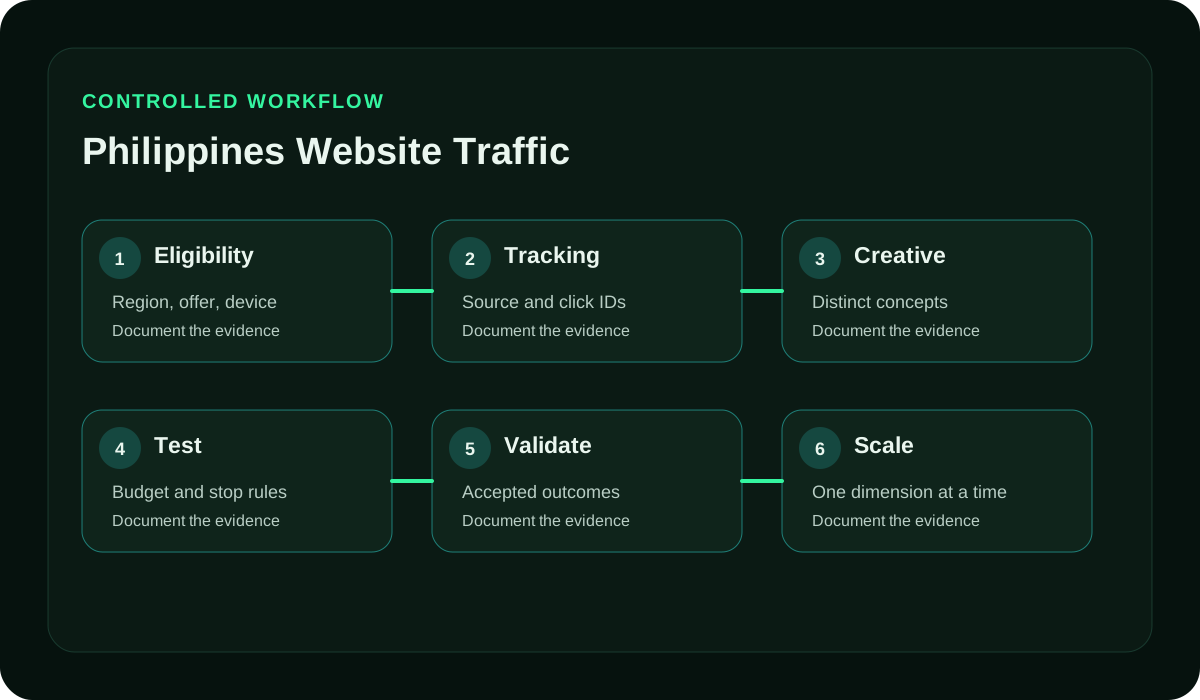
Hold offer, source family, schedule and accepted outcome stable while changing one location, language or message factor. Allocate budget so each cell can collect interpretable evidence. Predefine the primary comparison and stop rule.
If source mix or device composition changes materially, narrow the conclusion. Do not claim a regional preference when one cell received easier placements. Mark exploratory slices and require repetition before turning them into a standing Philippines campaign rule.
Reconcile the response funnel
Keep ad requests, served impressions, interactions, landing requests, usable sessions, completed actions, approved outcomes and reversals distinct. Record provider definitions, timezone and attribution window beside the report.
Find the first material loss for each market cell. A weak approval rate may arise from offer eligibility, language, form design, source mix or measurement. Investigate those causes before labeling the delivered country traffic low quality.
Audit invalid and duplicate activity
Review duplicate identifiers, rapid repeat requests, impossible sequences, data-center patterns where available and disagreement between provider and first-party logs. Use several signals and the provider's review process.
Do not equate every short visit or shared address with invalid activity. Mobile carriers and shared networks can aggregate legitimate users. Preserve uncertainty, take source-level action and distinguish technical invalidity from poor commercial fit.
Measure accepted business value
Choose an outcome the business can verify, such as an approved enquiry, fulfilled order or retained account action. Define the maturation period, rejection reasons and reversal policy before launch.
Report pending and unmatched records rather than forcing them into success or failure. Platform attribution can guide optimization under stated rules, but it should not replace the first-party acceptance decision or be described as causal proof.
Put the guide into practice
Turn Philippines Website Traffic into a bounded campaign test
With “Measure accepted business value” documented, launch only the next reversible test. Set a spending limit, preserve the baseline and use source-level and audience controls so the next step depends on qualified outcomes for philippines website traffic, not activity volume.
Create My Free Account
Include operational cost
Add media, localization, creative production, payment handling, support, verification, privacy review, refunds and staff monitoring. Attribute extra work to the market cell that created it where records allow.
Compare complete cost with accepted value. A cell with inexpensive visits can be costly if address failures, language support or manual review rise. Keep the accounting period, currency treatment and outcome maturity aligned across cells.
Set escalation and rollback paths
Name owners for privacy, claim, delivery, payment, support and source-quality issues. Define which findings pause one creative, source, region or the whole campaign. Preserve the evidence required before restart.
Use narrow actions where the evidence is narrow. A failed payment route may not justify excluding a region, while a misleading national-coverage claim can require a broader stop. Document decision time and customer-impact handling.
Refresh changing market assumptions
Recheck provider settings, service coverage, inventory, payment routes, language support, privacy requirements and destination behavior after material changes. Archive old conditions and start a new evidence period when comparison breaks.
A new publication date does not update a campaign. Verify the live system and official sources. Historical results remain useful only when the current market cell, journey and accepted outcome are sufficiently comparable.
Close with a Philippines traffic record
Store the market decision, targeted and delivered locations, languages, sources, device conditions, creative and destination versions, privacy review, response funnel, accepted outcomes, complete cost and unresolved gaps.
Choose continue, revise, retest or stop with a bounded next exposure. State precisely which Philippines cell the evidence supports. Country traffic becomes actionable through documented local conditions, not through a broad promise about quality or intent.
Separate acquisition from repeat use
Report first observed visit, returning session and known customer action as separate states under the permitted measurement method. A repeat browser or device record is not always the same person, and an attributed first visit may precede the observation window.
Use acquisition conclusions only for the population and identity scope actually measured. If repeat customers drive accepted value, state that distinction before increasing prospecting spend. Preserve suppression rules so existing customers are not counted as new market acquisition without support.
Test customer support as part of the offer
Verify that advertised contact routes, response languages, operating hours and escalation paths work for the targeted market cell. Sample questions created by the campaign and record whether agents can see the relevant offer, eligibility rules and current destination version.
Include unanswered contacts, repeated explanations and manual handoffs in operational cost. A campaign can produce valid enquiries while the support path makes them unusable. Correct the service record or narrow the advertised promise before raising traffic volume.
Reconcile payment and confirmation states
Where the journey includes payment, test supported methods, currency display, authentication, failure messages, duplicate protection and confirmation from representative devices. Keep a payment attempt distinct from an authorized, captured, fulfilled or refunded transaction.
Investigate market-cell loss without publishing a claim about local payment preference from one provider or short test. Record technical errors and customer choices separately. A successful checkout report should reconcile with business records before it becomes an accepted outcome.
Document seasonal and event boundaries
If the campaign depends on a holiday, sale, school period or local event, record the exact offer dates, affected service areas, inventory state and removal owner. Review creative and destination together before the start and immediately after expiration, including scheduled ads that might cross the cutoff.
Do not reuse a seasonal response as an evergreen market benchmark. Source availability, competition, schedules and customer needs can change around events. Archive the condition with the result and require a new bounded test before transferring it to another period or using it for a different region.
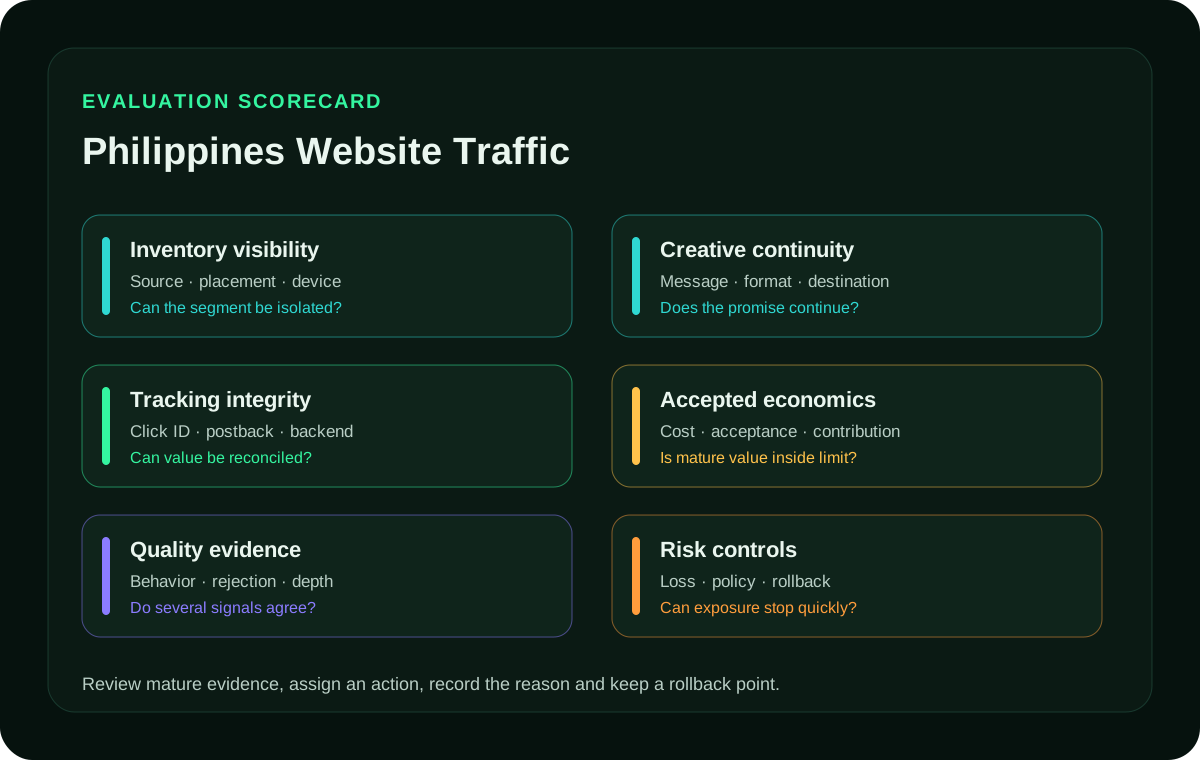
Philippines website traffic evidence matrix
A market-cell decision must preserve geography, language, source, journey and accepted value as separate evidence.
| Market gate | Evidence | Boundary |
|---|---|---|
| Location | Selected option and delivered distribution | Signal is not residence |
| Language | Reviewed creative and complete journey | Country is not one language |
| Source | Placement evidence and first-party logs | Label is not quality proof |
| Privacy | Documented data flow and review | Platform control is not compliance |
| Outcome | Approved value and complete cost | Low click cost is not profitability |
Retained Philippines traffic resources
Existing Philippines-oriented links, campaign routes and page images remain below in their established sequence. They do not verify a visitor's residence, nationality, language, intent, source quality, legal status, service eligibility, price or likely outcome.
Philippines website traffic questions
Which local details define website traffic intended for the Philippines?
The traffic order names the Philippine market, available offer, authorised language, supported devices, expected customer action, eligible sources and evidence date. Regional limitations remain visible.
How are campaign messages reviewed for website visitors in the Philippines?
For active Philippine versions, qualified review compares the named provider, advertised amount, eligibility, conditions, availability, dates and requested response with authorised materials. Destination wording must preserve those terms.
Which source records make website traffic from the Philippines traceable?
Supply evidence identifies the accountable digital property or application, on-page placement, format, device context, intermediary route and seller. Persistent source references enable exclusion, investigation and invoice matching.
Why observe device conditions before increasing traffic from the Philippines?
Local test coverage spans platform software, browser, display size, connection quality and input method because each can alter navigation, form completion or checkout. A failed combination requires dated proof of correction.
Which website functions need checking for visitors based in the Philippines?
Relevant sessions examine secure arrival, language consistency, offer availability, visible qualifications, working fields, available payment, confirmation and help. Broken routes pause contributing sources until a documented retest succeeds.
Who approves audience information used for Philippine website traffic?
Assigned campaign and privacy reviewers record input origin, permission or other applicable basis, purpose, recipients, transfer handling, retention, customer controls and review date before use.
What contract definitions clarify the price of traffic from the Philippines?
The contract specifies currency, chargeable event, minimum commitment, platform fees, repeated-event rules, invalid-delivery process, credits and payment timing under the approved contract. Adjustments remain linked to sources.
How can buyers distinguish Philippine traffic volume from commercial value?
Commercial evaluation separates delivered media, intentional visits, qualified actions, validated purchases, later cancellations, refunds and service complaints for every source. Volume alone does not establish customer value.
Which evidence reconstructs a disputed Philippine website traffic visit?
The case retains source identity, creative version, served time, device state, redirect sequence, destination version and customer report. The file also records pause authority, correction, accountable owner and closure.
What results justify expanding a Philippine website traffic source?
Expansion begins only after sampled supply remains attributable, Philippine routes work reliably, billing reconciles and both complaint incidence and acquired-customer value stay inside the approved tolerance. Added placements receive separate limits.
Philippines Website Traffic: what should the advertiser decide next?
For Philippines Website Traffic, treat Philippines as its own campaign market. Confirm that the offer, landing experience, language and device path genuinely support the market, then compare source-level outcomes inside Philippines. Use Evaluate Philippines website traffic by market cell and accepted outcome and Official location, language and Philippines privacy boundaries as the planning baseline instead of importing assumptions from another country.
On this Philippines Website Traffic page, the decision should remain tied to the existing evidence around Evaluate Philippines website traffic by market cell and accepted outcome, Official location, language and Philippines privacy boundaries and Define the Philippines market decision. Those sections give philippines website traffic its specific context; the table below turns that context into campaign actions rather than adding another generic definition.
| Decision | What to verify | FroggyAds action |
|---|---|---|
| Philippines Website Traffic objective | Use Evaluate Philippines website traffic by market cell and accepted outcome to define the accepted business event and the maximum learning loss for philippines website traffic. | Launch one FroggyAds campaign objective for Philippines Website Traffic and keep the conversion definition stable. |
| Philippines Website Traffic audience | Use Official location, language and Philippines privacy boundaries to verify market, device, language and offer eligibility for philippines website traffic. | Apply only the FroggyAds targeting controls that change the real Philippines Website Traffic customer journey. |
| Philippines Website Traffic source evidence | Use Define the Philippines market decision to keep source-level differences visible instead of relying on one blended philippines website traffic average. | Keep, cap, exclude or retest Philippines Website Traffic inventory from documented source evidence. |
| Philippines Website Traffic economics | Use Separate target, signal and eligibility to connect media spend with accepted conversions and downstream value for philippines website traffic. | Protect the Philippines Website Traffic test with a written budget boundary and a consistent attribution window. |
| Philippines Website Traffic scale rule | Use Build region and city cells to define the exact evidence that earns the next budget increase for philippines website traffic. | Scale Philippines Website Traffic one major control at a time and compare marginal performance with the prior baseline. |
A page-specific FroggyAds test sequence for Philippines Website Traffic
- Philippines Website Traffic outcome: define the accepted event for philippines website traffic and the maximum loss permitted while the first test is learning.
- Philippines Website Traffic path: verify market eligibility, device experience, landing-page continuity and tracking against Evaluate Philippines website traffic by market cell and accepted outcome before buying more traffic.
- Philippines Website Traffic hypothesis: launch one bounded FroggyAds test tied to Official location, language and Philippines privacy boundaries; do not change bid, creative, audience and destination together.
- Philippines Website Traffic source review: compare qualified activity, accepted conversions, timing and cost by the source or segment dimensions relevant to Define the Philippines market decision.
- Philippines Website Traffic scaling: use Separate target, signal and eligibility and Build region and city cells to define what must reproduce before the next budget increase.
Why FroggyAds is relevant to Philippines Website Traffic
For Philippines Website Traffic, FroggyAds gives advertisers a self-serve DSP and ad-network workflow for buying supported traffic with campaign-level budgets and targeting. Depending on format and campaign context, available controls can include country, city, device, operating system, browser, carrier, category, source, ID and IP options. SmartCPC and Adscore-supported traffic-quality controls can support the philippines website traffic optimization process, while the advertiser's tracker, analytics and backend acceptance remain the final evidence for commercial quality.
Use Build region and city cells as the final checkpoint for Philippines Website Traffic. If the accepted result does not reproduce after the next meaningful volume step, return to the last stable configuration instead of widening several controls at once.
Philippines Website Traffic: the decision this URL owns
Philippines Website Traffic buyer job: Plan the market-specific test and measurement rules. Use this URL only for that decision; use Buy Website Traffic Philippines for the adjacent task.
Source evidence 1: Philippines website traffic is a geographic observation, not a promise of residence, language, intent, quality or commercial value. A responsible campaign defines the business area it can serve, the audience problem it can solve, the languages its complete journey supports and the event it will accept. It then documents the provider's location option, delivered source mix, device and connection conditions, creative version, destination path and first-party outcome. Keep selected geography, inferred delivery location and customer-verified service eligibility as different fields. The Philippines contains distinct regions, cities, languages and access conditions, so a national total should not erase concentrated delivery or a journey that works only for one group. Run bounded market cells with a budget ceiling and stop rules. Compare usable visits, approved enquiries or completed transactions under one maturation period. Do not label traffic cheap, premium or high intent from its country name or interaction cost alone.
Source evidence 2: Google Ads states that location targeting uses several signals and is a best effort rather than perfectly accurate in every situation. It also distinguishes settings that can include people present in a place from people showing interest in it. Google's language guidance describes product-specific language signals and does not make language a reliable proxy for residence, identity or nationality. The Philippines National Privacy Commission publishes Republic Act 10173, the Data Privacy Act of 2012, including scope, processing principles, data-subject rights and security provisions. That official text is a legal-review starting point, not proof that a particular campaign, consent flow or cross-border arrangement complies. Use the platform sources to document configured delivery rules and the Commission source to trigger fact-specific privacy review. Verify the current provider settings, applicable issuances, data flow and service eligibility before launch.
Philippines Website Traffic operating boundary: Philippines Website Traffic should retain its own evidence trail. Use the page's buyer job, entity gaps and nearest related URL to decide what belongs here, then keep the campaign variable, source identity and accepted outcome specific to this URL. If a neighboring page answers a different buying question, do not merge the two decisions simply because they share an ad format or acquisition term.
| Checkpoint | Page-specific action | Evidence to retain |
|---|---|---|
| Which local details define website traffic intended for the Philippines? | The traffic order names the Philippine market, available offer, authorised language, supported devices, expected customer action, eligible sources and evidence date. Regional limitations remain visible. | Retain audience targeting, source identity and accepted-event evidence for Philippines Website Traffic. |
| How are campaign messages reviewed for website visitors in the Philippines? | For active Philippine versions, qualified review compares the named provider, advertised amount, eligibility, conditions, availability, dates and requested response with authorised materials. Destination wording must preserve those terms. | Retain conversion tracking, source identity and accepted-event evidence for Philippines Website Traffic. |
| Which source records make website traffic from the Philippines traceable? | Supply evidence identifies the accountable digital property or application, on-page placement, format, device context, intermediary route and seller. Persistent source references enable exclusion, investigation and invoice matching. | Retain accepted outcome, source identity and accepted-event evidence for Philippines Website Traffic. |
Transparent decision example
Hypothetical example: For Philippines Website Traffic, if a controlled test spends USD 275 and records 10 accepted outcomes after the same review window, accepted cost is USD 27.50 per outcome. Replace the inputs with your own economics and the event definition appropriate to this page.
Why use FroggyAds for this step?
For Philippines Website Traffic, use FroggyAds to isolate the relevant source, GEO/device path and budget cell, then keep or restrict it from mature downstream evidence rather than click volume. Create your free FroggyAds account.
Philippines Website Traffic — what matters first
Philippines Website Traffic should be evaluated market by market: define eligible geography, keep measurement consistent, and scale only where accepted-outcome economics remain viable.