UK native session dates and attendance

Native Ads UK: Make Session Times Clear Before Buying Visits

Use native ads UK to introduce a timed session that your intended customer can understand, book and attend. State the actual date and time basis throughout the journey, especially when UK clocks change. FroggyAds gives you supported media controls for testing the prepared invitation. Your own booking and attendance records establish what happens afterwards. Decide whether the next purchase is justified by eligible bookings, attendance or another named customer result.

Self-serve control ·750+ SSP integrations ·20B+ daily impressions
native ads uk planning visual
Direct answer

What should a UK native campaign do for a timed session?

A useful native invitation explains what the session offers, who it serves and when it takes place. For a hypothetical online workshop, a clear date and UK local time are part of the offer rather than administrative details. We recommend reviewing confirmed eligible bookings and actual attendance separately. An encouraging registration count can justify further investigation, but it does not establish that the intended customer understood the time or joined the session.

01 • Delivery mechanics

How does a native invitation lead to a session booking?

The reader encounters your image and headline within a feed or recommendation area, then continues to the session destination. Publisher styling and publisher layout affect that first impression. Review the actual placement context and retain clear ad disclosure. The arrival page should explain the same session, including its date, time basis and customer action. A native click does not establish a confirmed seat or an attended session.

Make the value of attending specific. Explain a supported topic, demonstration or useful participant outcome without inventing qualifications, accreditation or future results. The destination should identify the organiser and the real arrangement. A visitor considering a live session needs to know when to be available and whether the session fits their needs. An attractive invitation that leaves the timing ambiguous is an incomplete basis for the booking decision.

Keep media delivery, submitted registration, confirmed booking and attendance distinct. The event business establishes which bookings meet its actual acceptance rule and what its attendance records support. Relate those results to the campaign only within the configured matching limits. Retain cancellations, reschedules and unresolved records. Do not assume the ad platform automatically receives attendance information or knows which local clock a particular person will use.

02 • Campaign brief

What belongs in the UK session campaign brief?

Record the actual session title, date, stated time basis, intended participant, included content and requested action. Define the eligibility and confirmation rule, any real capacity limit and the person who can resolve a booking question. Keep the offer version with the invitation. A buyer should be able to identify which dated session the media purchase concerns before comparing registrations or assigning another allowance.

03 • Market context

How should UK targeting and the advertised session time relate?

Country targeting selects an available media opportunity; it does not establish the visitor's preferred time zone or physical location at the session. Make the organiser's date and time basis clear and check the actual customer journey against it. Use geographic or time breakdowns only when the real records expose them. The campaign report's time label and the time shown in a booking confirmation should not be assumed identical without checking the implementation.

04 • Audience eligibility

Which participants and bookings can the session genuinely accept?

Confirm the actual participant requirements, available capacity, language, access arrangement and any payable price before launch. A free registration, a paid place and a request awaiting organiser approval are different offers. Describe the next action accurately. If an access condition or capacity limit changes, update the invitation and destination together. Keep the earlier version so later booking questions can be reviewed against the terms the customer actually saw.

Prepare an invitation the participant can act on

Why use FroggyAds for a prepared UK session invitation?

Our self-serve targeting, source reporting and budget controls help you manage the media purchase against a defined session and participant result. Confirm current native requirements and supported settings before launch. The published USD 50 minimum deposit funds your account; it is separate from the campaign expense you authorise. Campaigns remain subject to review and approval. Bring an accurate invitation and a working booking destination into setup.

Create My Free Account
Illustration of audience targeting controls for a native ads uk test
05 • Inventory and format fit

What should the native image and headline communicate?

Show a relevant, truthful representation of the session and explain a benefit the organiser can support. A product demonstration, practical topic or participant task can give the reader a reason to continue. Keep advertising status and organiser identity understandable. Where timing is material to the invitation, the available presentation and destination should make the dated offer clear rather than suggesting a session is available whenever the visitor arrives.

Prepare structured creative assets for the actual native requirements. Content fit means the destination continues the session introduced in the image and headline. A shortened message should not turn a scheduled live session into apparent immediate access or imply a recording the organiser does not provide. Inspect the actual available presentation and retain the approved versions so a misunderstanding can be checked against the supplied invitation.

Distinguish a genuine capacity or booking deadline from manufactured urgency. The organiser should be able to honour any stated limit and explain which clock and date apply. If a deadline changes, retain the earlier message and revise the customer journey consistently. Buying more visits to an outdated session page can create an avoidable customer problem even when the advertisement itself still attracts interest.

06 • Creative system

How should two session invitations be compared?

Creative for Native Ads UK should reflect the actual placement and the expectations of users in United Kingdom. Prepare several genuinely different concepts built around distinct benefits, problems, use cases or proof points rather than minor color changes. Give every concept a stable identifier and record its format, source file, destination version, message angle and launch date.

Keep the advertiser identity and call to action clear, and avoid fabricated ratings, false urgency, copied layouts, fake interface elements or unsupported performance statements. For native ads uk, preview mobile and desktop variants at representative sizes before launch. A creative can look strong in a design file and fail when cropped, compressed or placed next to competing content. Review fatigue and source mix separately so a declining result is not blamed on the wrong layer.

One concept might introduce the practical topic; another could explain a supported demonstration or participant task. Keep both tied to the same real session and accurate conditions. Review who books and what the organiser's later records establish. If a message attracts customers expecting a different date, access arrangement or content, repair that expectation gap before selecting the concept merely because its click response is stronger.

07 • Destination continuity

What should the session destination and confirmation show?

Give the participant the actual session name, date, time basis, duration where promised and next action. Check the registration and confirmation together, including any calendar entry or joining instructions the organiser chooses to provide. A customer's confirmation should describe the accepted arrangement rather than an earlier draft. Record a material failure and assign the correction. A working initial page does not establish that the later joining route is clear.

08 • Attribution chain

How can bookings and attendance be connected to measurement?

Keep the booking reference and campaign information your actual implementation can match. Identify the dated session and distinguish submitted requests, eligible confirmed bookings, cancellations, reschedules and attended participants where those states are available. A rescheduled record should not silently become another acquisition. State when a customer moves into a different session group and retain the relationship only as far as the records support it.

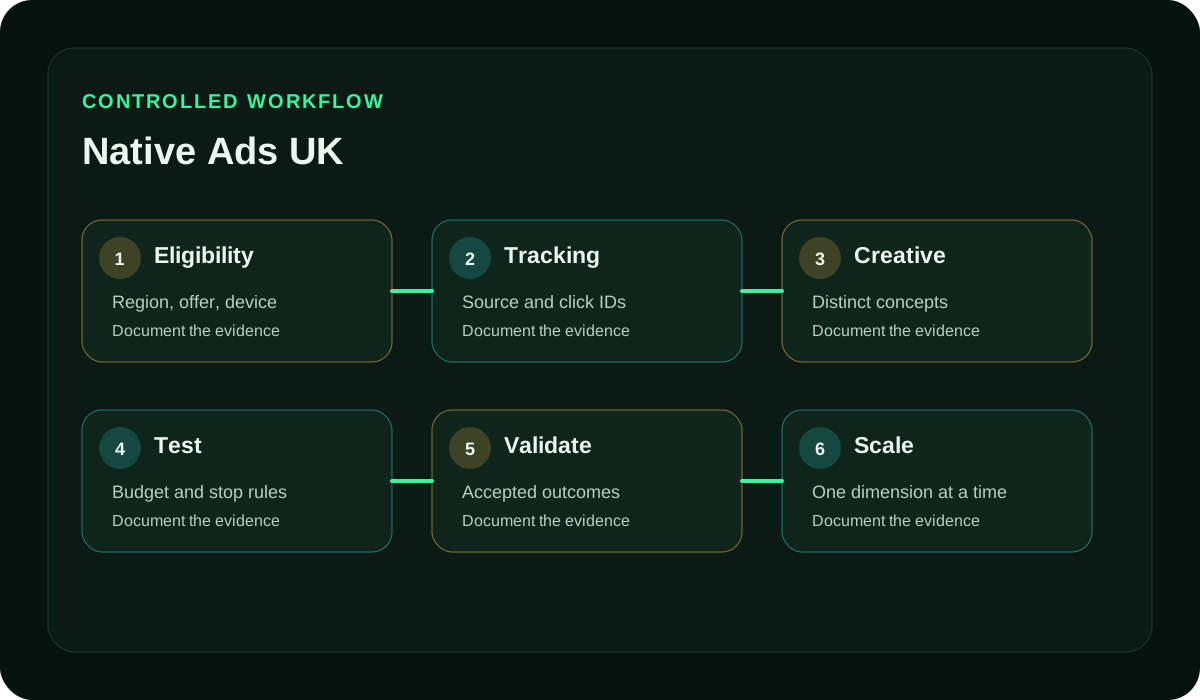
native ads uk controlled workflow visual

Native presentation should explain the dated offer

When does native suit the session invitation?

Use our native route when a truthful image and short explanation can prepare the intended reader for the session page. Confirm current inventory and supported settings for the purchase. Compare another format according to its real presentation and transition, with the same session terms available to the customer. The media format does not create a calendar, joining service or automatic attendance report for the organiser.

Create My Free Account
Illustration comparing advertising formats for native ads uk execution
09 • Test budget

What should the first UK session media allowance cover?

Choose an affordable amount while the organiser checks eligible bookings and the relevant later participant result. Identify the available campaign limits and the person who can stop the purchase. Keep preparation, creative and session-delivery costs visible outside media-only expense when they belong to the business assessment. The allowance should answer a defined question about the invitation and customer response, rather than buy registrations without a review plan.

10 • Cost model

How should booking cost and attendance cost be calculated?

Name the customer stage before dividing expense by a count. Media expense per eligible confirmed booking measures the cost of those bookings; the same expense per actual attendee answers a later question. Use the same dated session group and review date, and retain cancellations or unresolved attendance. A paid customer result needs its own rule where relevant. Neither a booking CPA nor an attendance CPA alone establishes sales or profit.

11 • Quality review

What can explain confirmed bookings followed by weak attendance?

Review the actual invitation, date, confirmation and joining arrangement before deciding why someone did not attend. The organiser may know of cancellations or a timing misunderstanding; other cases can remain unexplained. Check whether a session change reached the affected customer through the real process. A missing attendance record does not by itself prove invalid traffic, and a booking event does not prove that joining instructions were received or understood.

12 • Source decisions

Which buying action follows a demonstrated timing problem?

We recommend correcting the session explanation and keeping the next allowance manageable while its effect is reviewed. Preserve the earlier invitation and affected booking group. Use our available source or bid controls when campaign observations support a media change. A wrong date or unclear confirmation requires its own organiser repair; changing a source cannot by itself make that customer information accurate.

13 • Controlled experiments

How should session concepts be compared fairly?

Keep the session, participant rule and expense scope consistent for identifiable concepts. Give their outcomes a comparable opportunity for booking and attendance review. Record a change to session content, timing, price or joining arrangements during the period. A comparison between different dated sessions may still inform another purchase, but it should disclose those differences instead of assigning the entire result to the headline.

Review the participant result before expanding

What supports another UK session allocation?

Bring reviewed eligible bookings, available attendance evidence and the organiser's capacity to the next buying decision. Confirm the dated invitation remains current. Use the supported FroggyAds settings for an affordable next allowance and keep its own expense and participant group identifiable. If the next purchase promotes another session, retain that distinction rather than blending its customer result into the earlier event.

Create My Free Account
Illustration of a campaign launch checklist for native ads uk
14 • Funnel measurement

Which session states belong in the review?

Keep the states the real booking process can establish, including submitted, confirmed, cancelled, rescheduled, attended and unresolved as appropriate. Those stages may overlap for one participant, so they are not separate acquired people to add together. Retain relevant session dates and review dates. Missing attendance, a cancellation and a booking moved to another session should remain distinguishable when the business decides what another purchase can support.

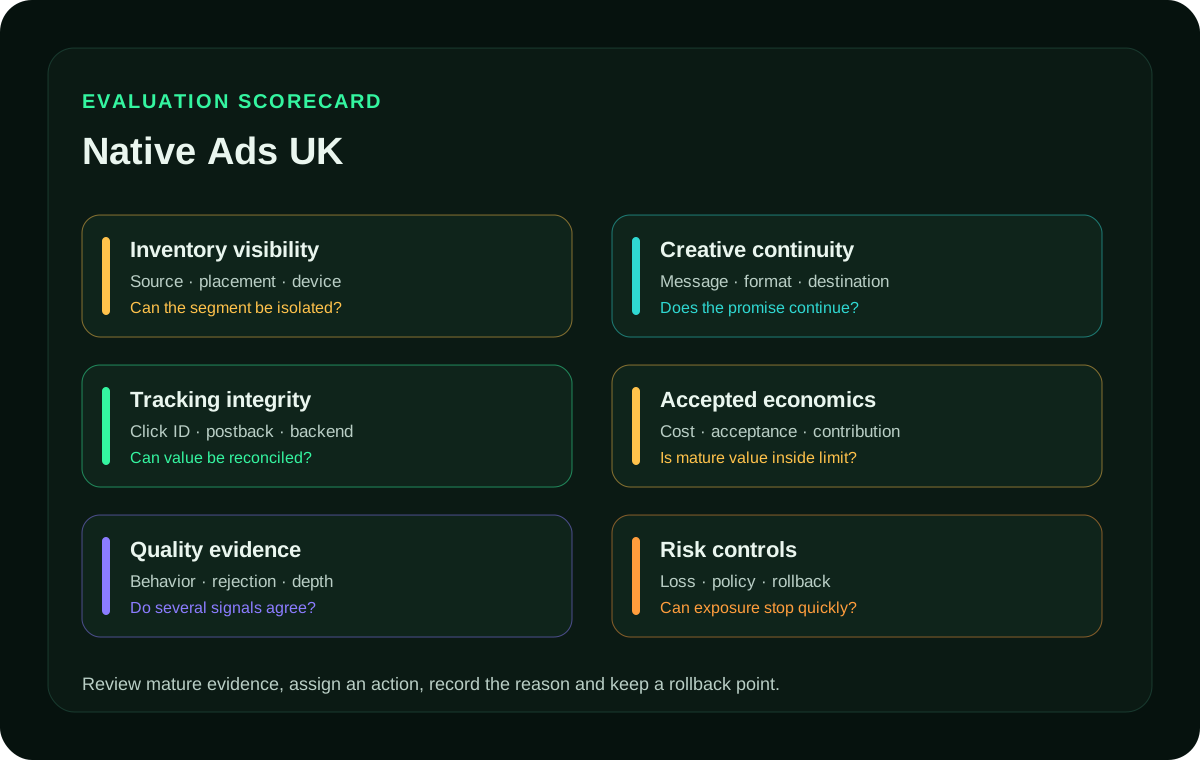
native ads uk evaluation scorecard visual
15 • Stop rules

Which session defects require the affected purchase to pause?

Pause when a material session claim or date is wrong, the booking or joining route fails, or the authorised expense limit is reached. The organiser may also need to stop accepting demand when the actual capacity is exhausted. Preserve the affected invitation and records, assign the repair and check the corrected journey. Restart with an affordable allowance while earlier unresolved participant outcomes remain visible.

16 • Scaling

When should more UK session traffic be purchased?

Increase when the current participant result supports another purchase and the organiser can honour the advertised session. Recheck capacity, dates and the actual joining arrangement before funding the next increment. The additional audience may respond differently from the earlier group. Keep its own expense and outcomes identifiable, and limit exposure if a recurring timing or confirmation problem has not yet been resolved.

17 • Scenario planning

Which session assumptions deserve a sensitivity check?

Consider fewer eligible bookings, lower attendance or additional organiser work needed to resolve joining questions. Use assumptions the business can justify and mark them provisional. This exercise concerns the actual invitation, rather than a national attendance benchmark. Replace provisional inputs with reviewed session records. The useful result is a concrete decision about message clarity, capacity or another allowance, with the expense definition still clear.

18 • Operator log

What should the organiser and media buyer retain together?

Retain the dated offer, approved image and headline, destination and confirmation versions, media expense, participant rule and outcome-review date. The organiser should explain known session changes and customer exceptions; the buyer brings available campaign observations. Keep facts separate from unresolved cases. That record lets the next decision distinguish an inaccurate invitation, a joining problem and a supported media adjustment.

Decision controls

UK native session decision table

Review itemQuestion to answerUseful action
InvitationDoes the message describe the actual dated session and participant benefit?Resolve an incorrect date, access promise or unsupported benefit.
Time basisDo destination and confirmation use an understandable date and clock?Check the relevant UK seasonal time and any supplied calendar entry.
BookingWhich requests meet the organiser's eligibility and confirmation rule?Keep submitted, confirmed, cancelled and rescheduled records distinct.
AttendanceWhich participants have supported attendance evidence at review?Retain unknown joining outcomes rather than calling every absence invalid.
ExpenseIs the ratio per confirmed booking, attendee or another named result?Use the same session group and clearly stated expense scope.
Next sessionCan the organiser honour the next dated offer and additional capacity?Approve an affordable increment with its own participant review.
Planning scenarios

Three timing questions for UK native session invitations

Seasonal clock change

Why should the UK clock-change date be checked?

GOV.UK lists 25 October 2026 as the date UK clocks go back. Its guidance explains that British Summer Time is one hour ahead and that the UK returns to Greenwich Mean Time when clocks go back. Check the rule for the session's actual date before approving the invitation. A recurring local-time session may map to a different GMT time after the seasonal change; country targeting does not perform that commercial review.

Dated time example

What does the same UK local session time mean before and after the change?

As a hypothetical timing illustration, a session advertised for 23 October 2026 at 15:00 UK local time is at 15:00 BST, corresponding to 14:00 GMT. A separate session on 30 October 2026 at 15:00 UK local time is at 15:00 GMT. They are different dated sessions, even though both invitations say 3pm locally. Verify the actual confirmation and any supplied calendar entry; this example is not a test of calendar software or campaign scheduling.

Revised session

What if the session date or joining arrangement changes?

Use the organiser's actual process to explain the revised arrangement and record what is known about affected bookings. Keep the original and revised versions identifiable. Review whether a customer cancelled, rescheduled, attended or remains unresolved under the named rule. Do not treat the correction as evidence that every participant received it, and do not buy more visits to an invitation the organiser has not yet made accurate.

Frequently asked questions

Native ads UK FAQ

What operating evidence confirms a native offer serves UK customers?

Confirm the actual session availability, participant requirements, customer language, any payable price and the booking and joining arrangement. Keep material conditions clear before commitment. UK targeting does not establish that every visitor can attend at the stated time. The organiser should approve the dated offer and resolve an operating uncertainty before more media expense.

How are benefit claims checked before UK native advertisements run?

An authorised reviewer compares each proposed benefit, limitation, displayed amount, eligibility condition and date with current evidence. Destination copy keeps the same commercial meaning.

Which publisher records make UK native advertising sources traceable?

Confirm the source identifiers, delivery definition and placement information actually available. Ask which additional publisher details can be supplied when a specific investigation needs them. Property ownership, complete exposure histories and notice rights should remain unknown when the records or agreed terms do not establish them. A source control does not prove universal property-level visibility.

How is sponsored status disclosed before users open UK native content?

Make the advertisement's commercial status understandable before the reader interacts and check the relevant wording in its actual presentation. Native styling should not imply an independent editorial recommendation. Follow the current requirements applicable to the real placement. This guide does not certify a particular disclosure, legal approval or every responsive screen presentation.

Why test UK native destinations across browsers and devices?

Different browsers, screens, connections and input methods can change loading, readability, registration or joining behaviour. Check the intended route under representative conditions and preserve enough context to investigate a material failure. Assign its repair. One successful destination check does not establish every later confirmation, calendar or session-access experience.

Which reviewers authorise audience information for UK native campaigns?

Identify the commercial owner and the person responsible for the planned use of participant information. Uncertain or sensitive practices need qualified review appropriate to the actual situation before activation. Country targeting and native format do not establish permission for a separate information use. The business should resolve the real practice rather than assume an audience method or attendance match is available.

What destination checks protect visitors from inconsistent claims in UK native ads?

Review the actual session name, date, time basis, supported benefit, access conditions and next action across the advertisement and destination. Check the confirmation and joining information the organiser provides. Record a material contradiction and correct it before more exposure. Keep earlier versions so a customer question can be investigated against the offer actually supplied.

How does the ledger measure commercial value from UK native placements?

Name media expense and the wider acquisition or session work included in the assessment. Keep currencies, periods and the named customer stage explicit. Confirmed-booking cost differs from attendance cost, and a paid-customer result needs its own rule. Retain cancellations, reschedules and unresolved attendance. Neither ratio alone establishes sales or profitable customer value.

How can a UK native-placement complaint be reconstructed accurately?

Preserve the approved invitation, destination and confirmation versions, relevant dates, customer report and available campaign observations. The organiser should retain the relevant booking or session change through its real review process. Keep unavailable publisher and exposure details unknown. Assign the investigation and record its actual outcome without promising a billing remedy the records do not establish.

Which UK campaign findings support a cautious native-spend increase?

Approve a defined increment after reviewing the participant result, unresolved joining questions and the organiser's ability to honour more bookings. Confirm the session date, time basis, capacity and customer promise remain accurate. Keep the new allowance's expense and participant group identifiable. More registrations or an earlier average alone does not establish the next session's commercial result.

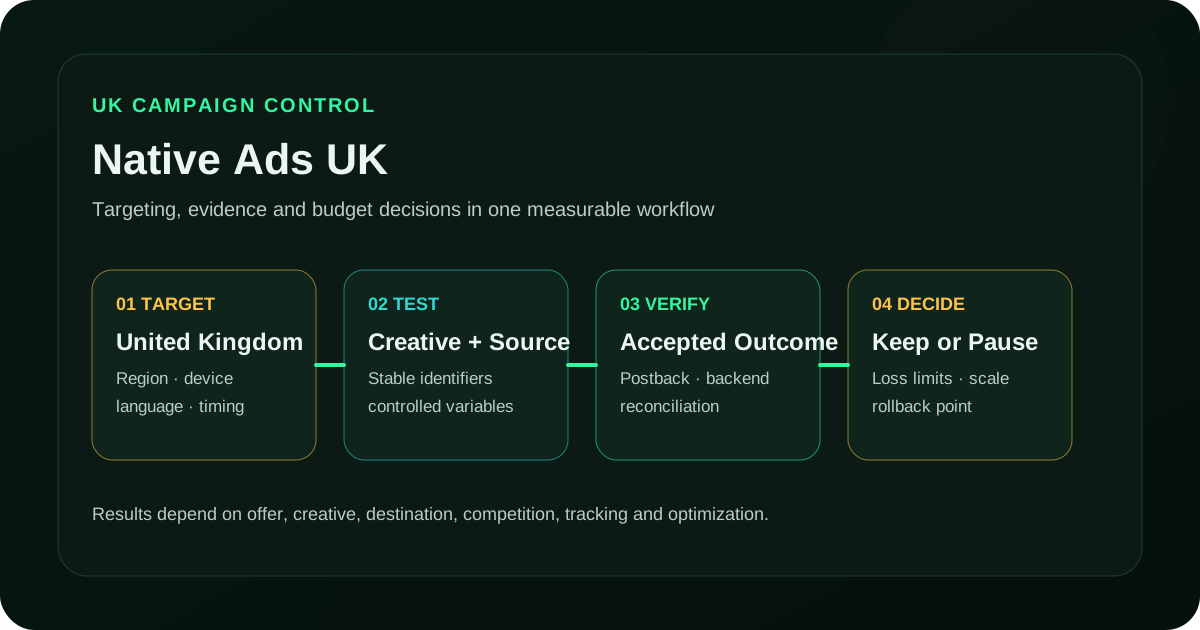
Measure accepted campaign value

Start a UK native purchase with a clear dated invitation

Choose FroggyAds for a prepared session message and a customer result your organiser can review. Approve the date and time basis, check the booking and joining journey and set an affordable first allowance. Use our supported buying controls to manage the media while the business establishes eligible bookings and later attendance. Let those actual records guide the next purchase.

Search intent and buyer decision

UK native sessions: date clarity, bookings and attendance

This guide helps session advertisers connect a native invitation with its date, UK local time, booking confirmation and participant result. The separate Native Ads 2026 resource addresses broader current native requirements. Keep this purchase tied to the actual dated offer so a general format discussion does not replace the organiser's timing and attendance decision.

Ad attribution relates available campaign observations to participant activity within configured measurement limits. Creative assets and content fit explain the session, while publisher layout shapes its native presentation. Click-through rate compares recorded clicks with measured impressions in the stated context when both are available. That response measure does not establish a confirmed booking or an attended session; the organiser needs its own supporting records.

Participant stageWhat it establishesWhat remains to review
Submitted requestThe participant has used the actual registration route.Eligibility, session availability and the organiser's confirmation.
Confirmed bookingThe booking meets the organiser's named acceptance rule.Cancellation, reschedule, joining and actual attendance.
Attended sessionThe available session record supports the defined attendance result.Any paid-customer outcome, later value and relevant operating costs.

Hypothetical calculation: a fictional UK-targeted online-session campaign spends USD 180 on media. Nine bookings meet the organiser's eligibility and confirmation rule, giving USD 180 / 9 = USD 20 per confirmed booking. Six of those participants have supported attendance at review, giving USD 180 / 6 = USD 30 per attendee. Two bookings cancelled and one attendance outcome remains unresolved. The stages are not extra people to add together. All figures are illustrative, not actual FroggyAds prices, an attendance benchmark or a sales result. Session delivery, preparation and other costs remain outside this media-only example; it does not establish profit.

Choose FroggyAds for native media built around a session your organiser can explain and deliver. Use our supported controls to keep the purchase affordable, then review eligible bookings and actual attendance against the stated date and customer rule. Bring that evidence to the next allocation decision. Create your free FroggyAds account.

Direct answer

What should happen before the next UK native session purchase?

Prepare the actual session, make its date and time basis clear and check the complete participant journey. Choose FroggyAds to manage the supported media purchase with an affordable allowance. Keep registration, confirmation, rescheduling and attendance identifiable so the next decision follows the dated customer result the organiser can establish.