Define what the Tier 1 label means in this buying discussion
Media buyers use Tier 1 as shorthand for a group of markets. The exact list needs confirmation in the context where it is used. Native advertising adds another decision: which available content-oriented placement can communicate your offer through the relevant image, headline, advertiser identity and destination? Bring FroggyAds the actual countries and customer action you intend to investigate so we can help confirm the applicable purchase conditions.
Current provider examples show why the list matters. Adsterra's country-tier guide dated 9 July 2026 lists Switzerland in its Tier 1 comparison, while HilltopAds' targeting article dated 16 June 2026 includes Switzerland among Tier 2 countries. We checked both on 26 October 2026. These examples describe those providers' classifications. They establish a reason to inspect the country list rather than assume that two Tier 1 briefs identify the same purchase.
Separate the country label from the native opportunity
A country classification can organize a media plan. It does not describe the particular source, presentation or customer route that receives your spending. Inspect the native opportunity on its own terms: what the creative can communicate, what inventory information is available and how the visitor reaches the destination. Then connect those details to the actual product and action your business can fulfil.
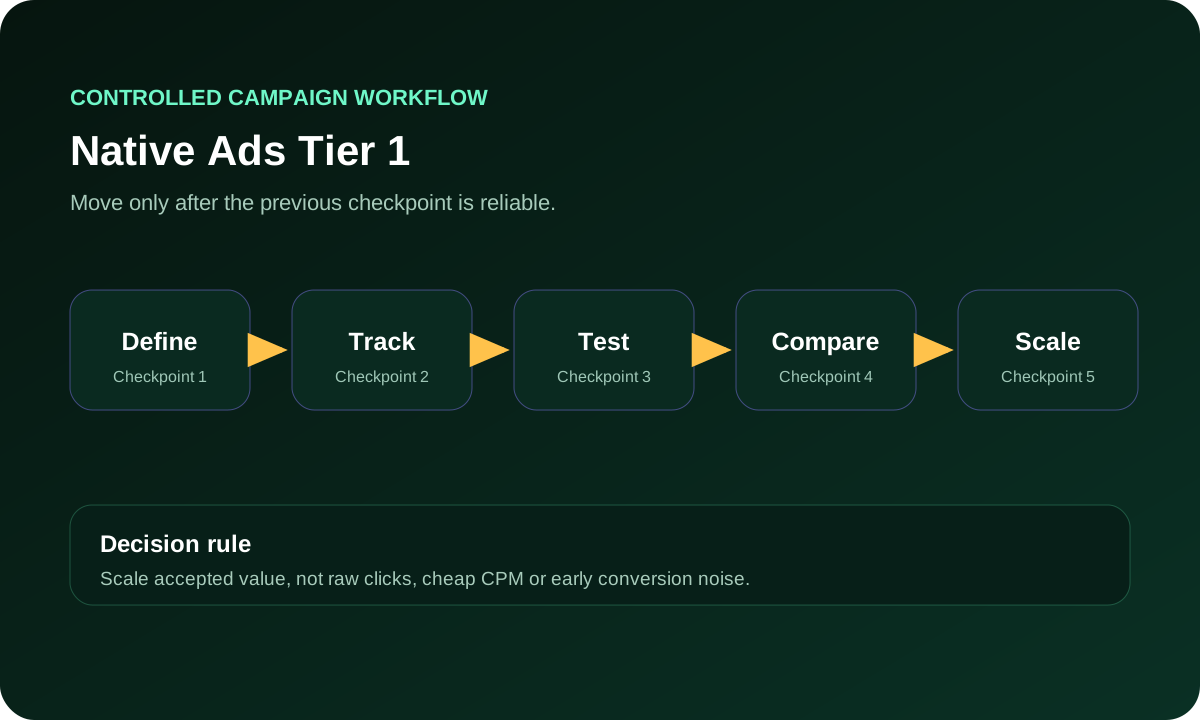
We recommend FroggyAds when you want practical self-serve controls around that defined opportunity. Confirm the available GEO, device, budget and source settings for the intended campaign. Keep the country and native concept identifiable in the review so the next decision concerns the purchase you actually made. This is more useful than asking a broad market classification to establish the quality or price of every placement associated with it.
| Buying term | What it can identify | What still needs a campaign decision |
|---|---|---|
| Tier label | A provider or planner's named group of markets | The exact countries and reason for using that group in this brief |
| Country scope | The locations the intended purchase is authorized to include | Offer readiness and the actual campaign settings available for those locations |
| Native placement | The content-oriented advertising experience and known distribution context | Whether the actual message and destination suit that opportunity |
| Creative package | The approved image, headline, advertiser identity and destination | The specifications and customer expectation of the selected native purchase |
| Buying unit | The defined advertising event priced by the applicable bid or report | How the observed response connects that spending with accepted customer cost |
| Accepted value | The commercial result the business verifies under its stated rule | Whether comparable evidence supports the next allowance |