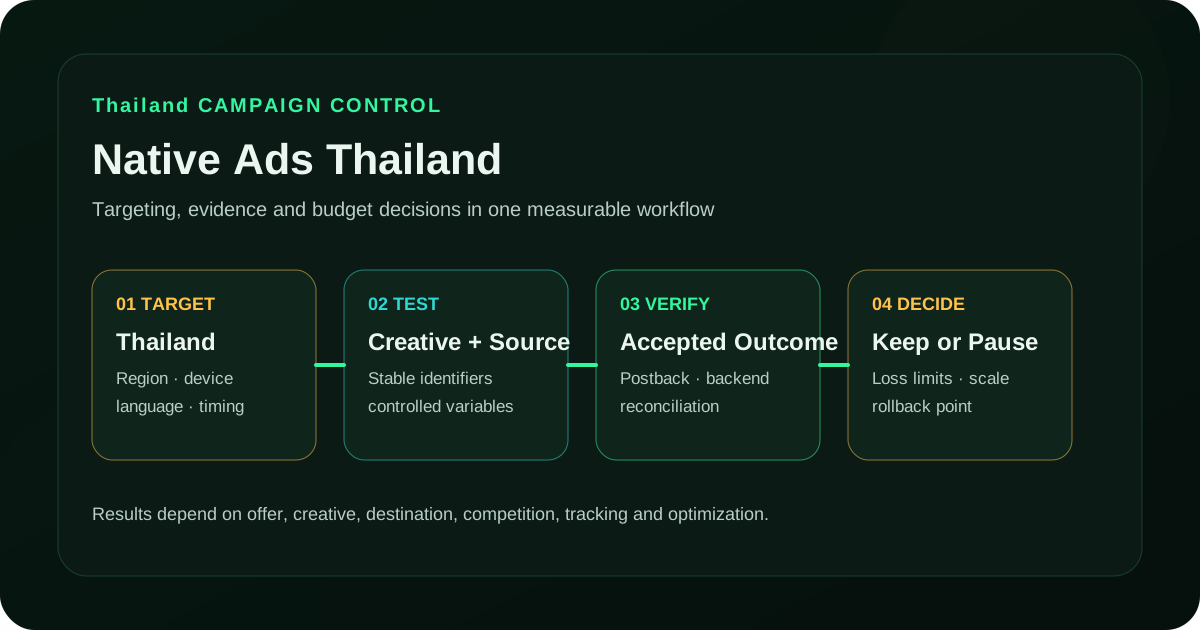
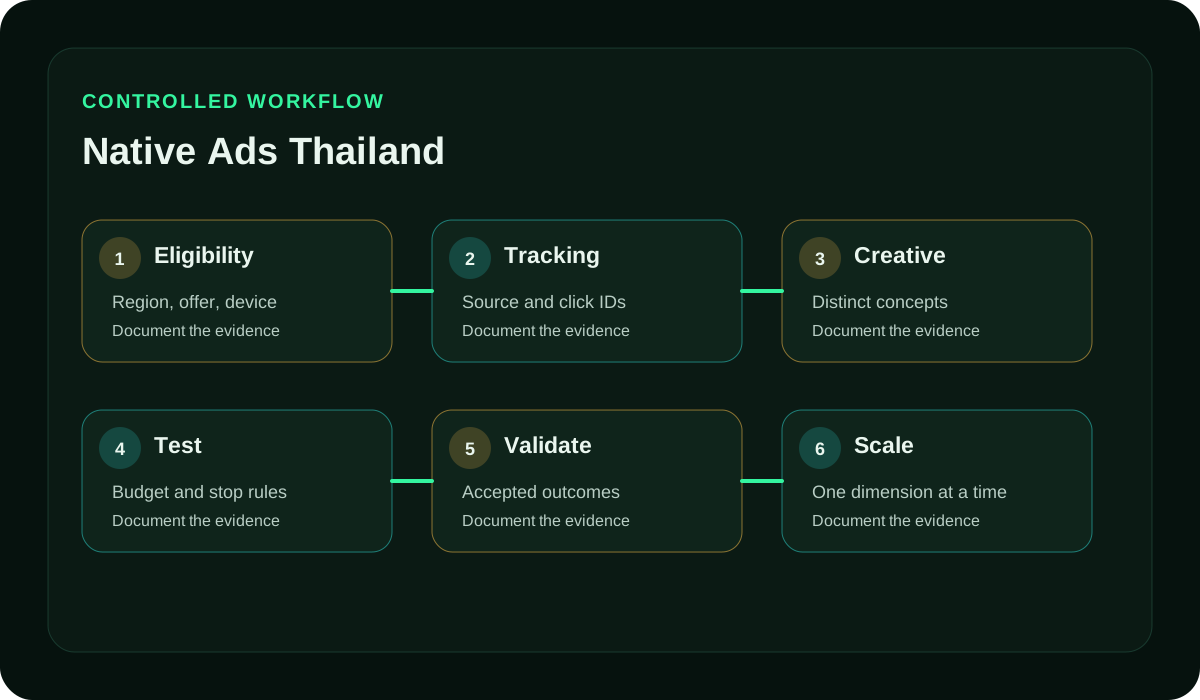
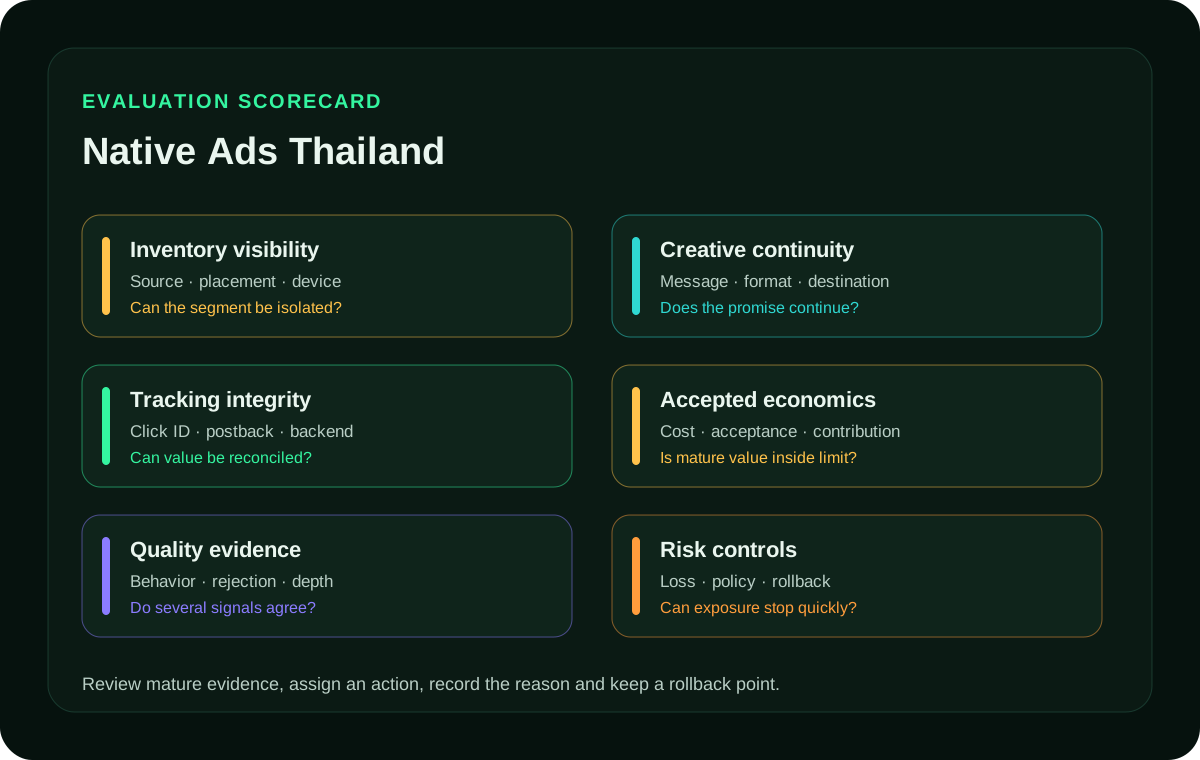
Which facts establish that a native offer serves customers in Thailand?
Served regions, availability, baht pricing, supported payments, delivery, returns and customer help are checked against operations. Campaign language states material limitations before launch. Regional exclusions stay visible in approved campaign assets.
How does Thai-language review keep native advertising claims precise?
Thai-language approval compares the proposed headline, supported benefit, price presentation, eligibility, dates and action with the authorised commercial record. The destination cannot omit or enlarge a material condition.
Which records identify the publishers behind native advertising delivered in Thailand?
Confirm the source identifiers, delivery definition and placement details actually available for the purchase. Ask which additional publisher information can be supplied when it matters to an investigation. Complete property ownership, content sections and reseller histories should remain unknown when the records do not expose them. An available source control does not establish universal visibility or notice rights.
How can Thai readers recognise sponsored native material before interaction?
Design similarity never presents paid placement as independent editorial judgment. The label survives each approved responsive presentation. Clear commercial wording appears before interaction and survives responsive layouts on intended devices.
Why must Thai native destinations be tested on varied mobile connections?
Test the actual customer journey on the included devices and realistic connection conditions. Check whether the Thai wording, prices and action remain understandable when the page loads slowly or a form fails. Preserve the conditions needed to reproduce a material problem and assign its repair. A successful desktop check does not establish every mobile experience.
Which payment checks protect Thai customers after native advertising interactions?
Testing covers displayed currency, supported methods, final amount, authentication, confirmation, cancellation, recovery and help. Unavailable routes are not promoted as usable options. Failed payment states remain attached to the test report.
Before activation, which reviewers assess audience information for Thai native campaigns?
Identify the marketing owner and the person responsible for the planned customer-information use before activation. Sensitive or uncertain methods need qualified review appropriate to the real situation. Native format or country targeting does not establish permission for a separate data use. This guide supplies no Thailand privacy-law procedure or approval, and no audience-information method should be assumed available.
What accounting view shows whether Thai native traffic creates value?
Separate media expense from creative adaptation, language review and other acquisition work you actually include. Divide each stated expense scope by the same named accepted outcome for the period. Retain cancellations, refunds and unresolved orders where relevant. Product and fulfilment costs still matter when the merchant evaluates customer contribution; a media CPA alone does not establish profitable value.
Which evidence supports a complaint review for Thai native advertising?
Preserve the approved wording, creative and destination versions, relevant dates and the available media observations. Keep customer complaints within the merchant's actual review process and share the evidence needed for the investigation. Do not invent exposure histories, publisher identities or a billing remedy that the records do not establish. Correct a material offer misunderstanding before increasing exposure.
Under what results may Thai native inventory receive more budget?
Approve a defined next allowance after reviewing accepted customer outcomes, unresolved misunderstandings and the business's ability to fulfil more orders. Confirm the prepared Thai journey still matches the current offer. Retain the new increment's own expense and outcomes. A larger click count or an earlier average does not establish the next group's commercial value.