Which conditions make Polish native advertising a sound test?
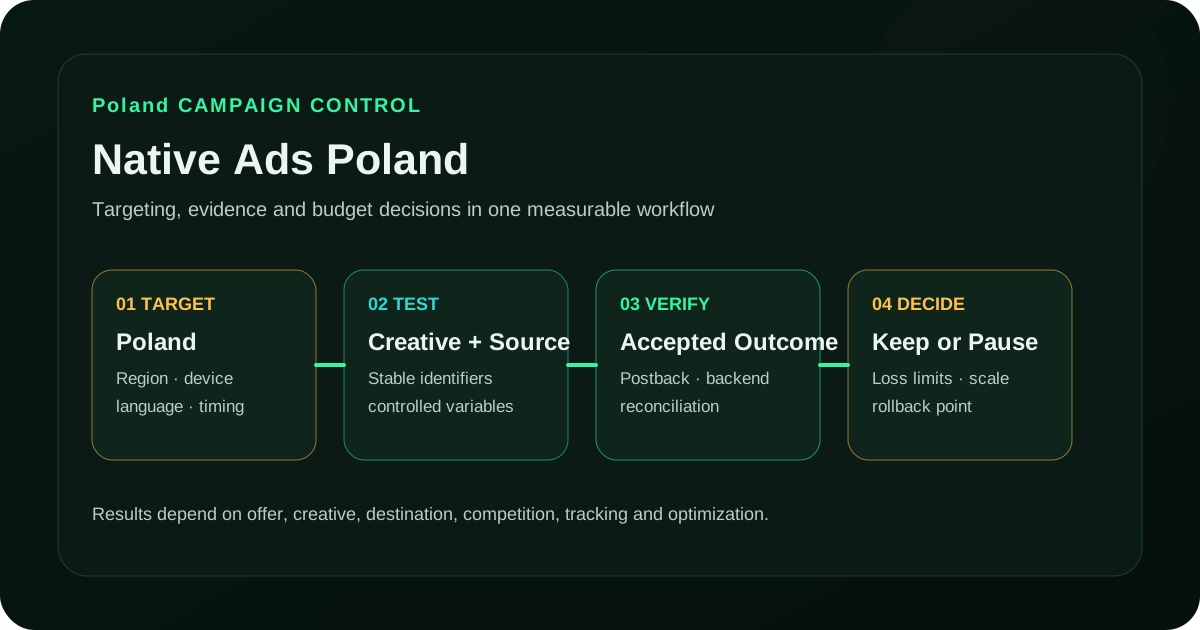
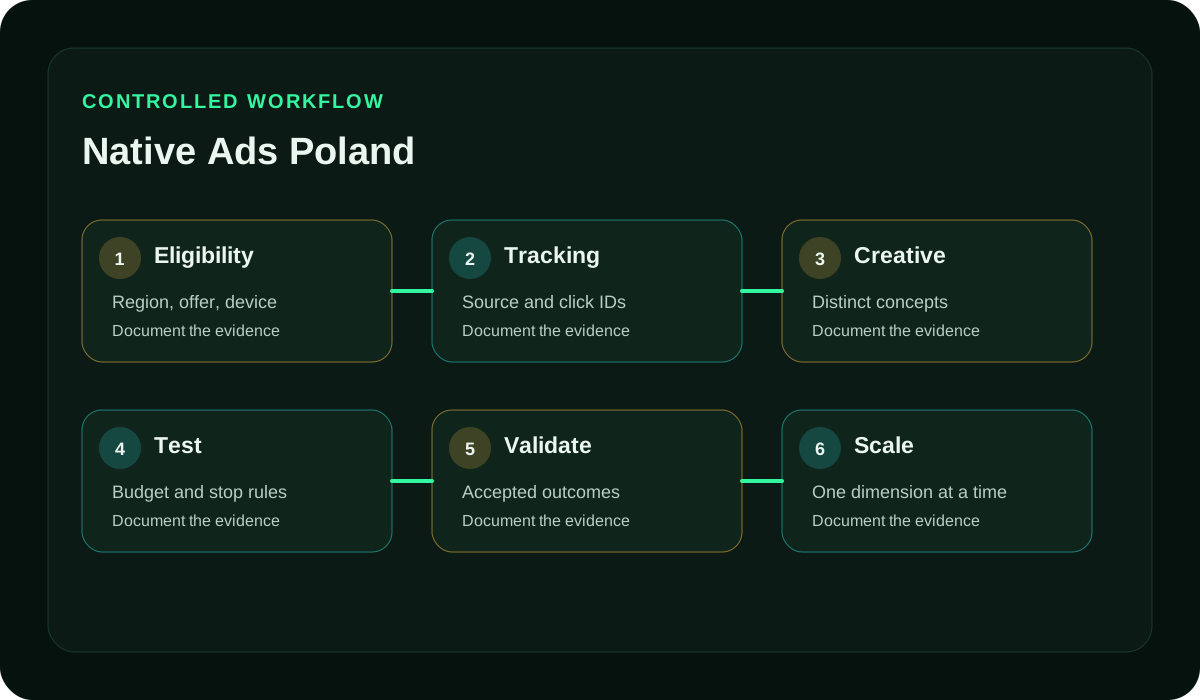
Use an offer the intended customer can buy, accurate creative and a working destination. Prepare the actual customer language and delivery choice, then set an affordable allowance. Confirm available source information instead of assuming every purchase exposes a named publisher. The merchant should be able to fulfil the product and delivery promise before buying visits.
How can a Polish native audience plan avoid broad averages?
Inspect geography, device, source and other distinctions only where the actual records expose them and they matter to the retail question. Keep the product and delivery terms identifiable. A country setting does not reveal language preference or a customer's chosen parcel machine. Retain unknown fields instead of inventing a complete audience view.
What publisher evidence should follow every Polish native placement?
Keep the source identifiers, delivery definition and placement details actually available for the purchase. Ask which additional publisher information can be supplied when it matters to an investigation. Complete publisher names, article sections and reseller histories should remain unknown where they are not exposed. Use the real available evidence to narrow an affected allocation.
How should a Polish native ad balance relevance and disclosure?
Make the headline useful and accurate, but keep the sponsor and advertising status easy to see. Use approved Polish wording and imagery that reflects the destination rather than borrowing credibility from the surrounding article.
What should happen before Polish native traffic reaches a landing page?
Test mobile speed, message continuity, forms, checkout and contact details. If the creative uses Polish, the destination and customer route should not unexpectedly switch language or change the advertised terms.
Which controls keep a Polish native budget accountable?
Set an affordable media allowance and apply the budget, source and bidding controls available in the campaign. Keep account funding separate from campaign expense. Review paid orders, parcel progress and unresolved delivery problems on a stated date. Do not assume every setup offers independent publisher, device or creative caps.
How do you read quality across Polish native publishers?
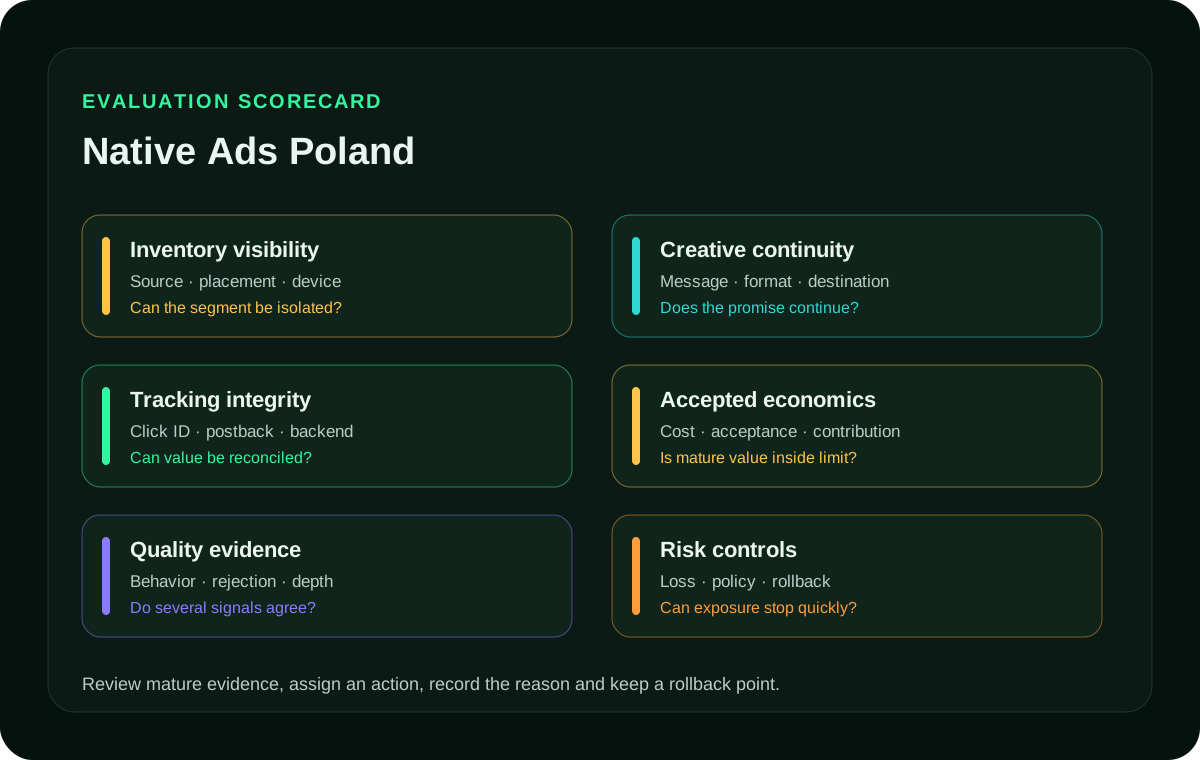
Review the defined media expense alongside the shop's paid, dispatched and collected order states, where matching is possible. Available source observations can help investigate a change. Keep unresolved parcels and later returns visible. An inexpensive visit has limited value when the advertised product or delivery choice cannot be supplied.
What is the right response to questionable Polish native delivery?
Limit the affected purchase, preserve available source and time observations, and ask support to investigate the evidence you can supply. Review shop and carrier faults separately. A delayed or uncollected parcel does not automatically establish invalid traffic, a credit entitlement or the identity of a publisher behind an unavailable field.
How should Polish native results be reconciled with sales data?
Keep the campaign references, order rule, review date and expense scope consistent. Connect merchant and parcel records only as far as the actual implementation permits. Report unmatched and unresolved outcomes. PLN customer prices and USD media expense need a documented currency basis before a broader comparison; no exchange rate is assumed here.
When is it safe to widen a Polish native campaign?
Increase exposure when the reviewed order or collection stage supports another affordable allocation and the shop can supply it. Keep the next increment's expense and customer outcomes separate from the earlier average. Recheck packaging, stock and delivery terms. A larger paid-order count alone does not establish collection or profit.