Native product fit and quotable requests

Native Ads Italy: Explain the Made-to-Size Offer Before Buying Enquiries

Native ads in Italy can introduce a made-to-size product by showing the information needed for a useful request. We recommend connecting the visual explanation to actual dimensions, material choices and a quotation the seller can honour. FroggyAds helps you manage supported buying settings around that offer. Your business verifies suitable requests and accepted orders, rather than treating every form submission as an equally valuable customer.

Self-serve control ·750+ SSPs globally ·20B+ daily impressions, network-wide
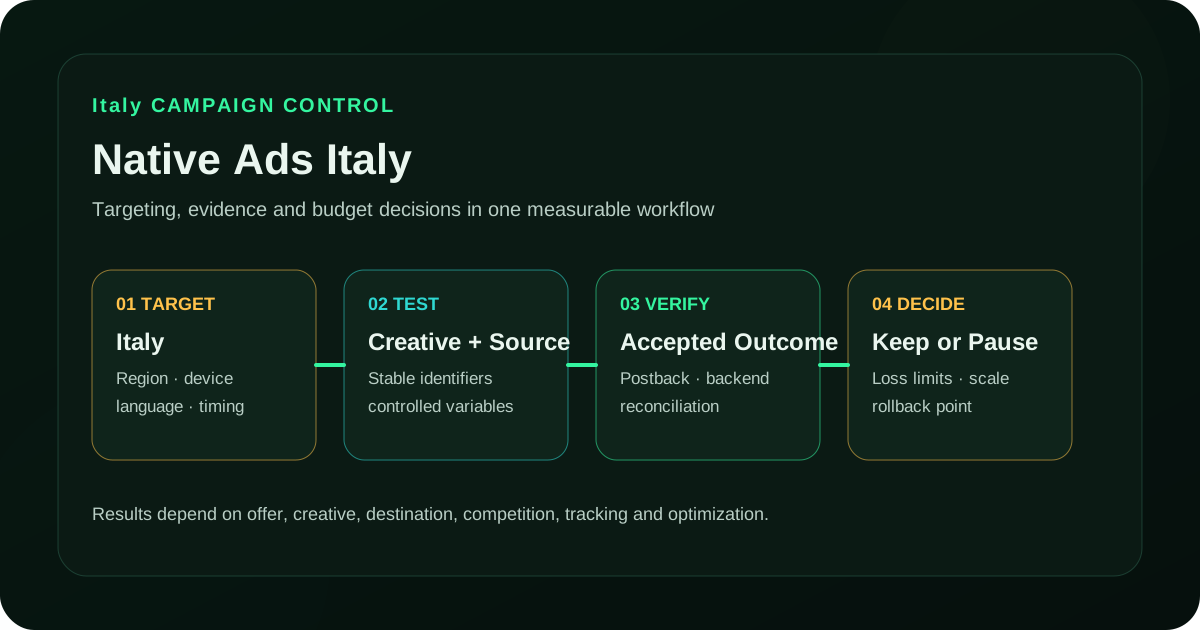
native ads italy planning visual
Direct answer

What should the native product explanation help the buyer understand?

Show what can be made, what the prospective customer must provide and what happens after the enquiry. Native presentation may give a physical product useful context before the destination opens, while commercial identity remains clear. The media purchase should help you decide whether the explanation attracts requests the business can assess and fulfil. A high click count cannot establish product fit or a workable quotation.

01 • Product and specification

How does a visual introduction become a useful product request?

Consider a fictional seller making cushion covers to specified measurements. The native creative introduces a real style and explains that dimensions and fabric choice affect the quotation. Its destination distinguishes a cover from a complete cushion where that is the actual offer. This is a planning example, not a real customer, manufacturer endorsement or statement about buying preferences across Italy.

Confirm native availability and creative requirements for the intended FroggyAds purchase. Use supported location, device, bid, budget and source choices around the seller's actual service conditions. A campaign setting can help shape the purchase, but it cannot verify a cushion measurement or produce a binding product quotation. The merchant checks those details through the request and acceptance route.

Keep the shown product, fabric options, request form and quotation conditions identifiable with the purchase dates. A changed material, production capacity or delivery promise can alter suitability independently of a media change. Record those conditions before comparing enquiries. A better order result under a revised offer should not automatically become proof that one source produced all the improvement.

02 • Made-to-size brief

What belongs in the Italy made-to-size purchase brief?

Describe the product supplied, measurements requested, available materials and actual delivery scope. Name the person who checks a request and the person who approves the quotation. Choose the event the first purchase will assess: a usable specification, an accepted quote or a paid order. Those stages have different delays and value, even when the initial form looks the same.

03 • Italian request wording

How should the Italian request wording be checked?

Have a competent reviewer follow the Italian advertisement into the specification form, quotation and customer reply actually supplied. Check whether dimensions, units, included items and material options keep the same meaning. A translated headline should not imply that the merchant provides fluent service throughout the route if it does not. Retain the reviewed version with the actual offer and available support.

04 • Actual product eligibility

Which requests can the seller genuinely fulfil?

Define suitability through the product range, measurements the workshop can make, material availability and delivery arrangements it actually offers. Avoid treating a broad Italy audience label as proof that every request is serviceable. Confirm supported FroggyAds settings, while the destination explains the remaining business conditions. A clear eligibility rule helps distinguish an unsuitable enquiry from a media or technical problem.

Prepare a quotable product request

Which specification should qualify an enquiry?

For the fictional cover seller, choose the information necessary to assess the particular product: the dimensions under its stated measurement method, desired shape or material and intended quantity. Explain uncertainty through follow-up rather than silently accepting an incomplete request. The merchant decides which fields are necessary; a media conversion label does not certify that the product can be made.

Create My Free Account
Illustration of audience targeting controls for a native ads italy test
05 • Available presentation

Which native creative makes the product scope clear?

Show the actual cover style and a use that the supplied product supports. Make clear whether the image includes items that are not part of the purchase. A helpful visual explanation can reduce confusion between a decorative setting and the product being quoted. Avoid fabricated customer reviews, durability claims or independent editorial endorsements, and confirm the real placement requirements before producing assets.

Compare a concept explaining product fit with one explaining the actual material choice, if both are supported. These answer different customer questions. Keep the quoted range and material conditions aligned with each destination. A colour variation alone may test presentation without resolving whether the visitor understands what measurements or choices the seller needs to produce a useful quotation.

Preview the product image, commercial label and request action in the available presentation. Check crops and the actual destination on intended devices. A cover shown without context may be mistaken for a complete cushion; a hidden dimension field may leave the request incomplete. Record observed failures and repair that part rather than assuming every poor response reflects an unsuitable audience.

06 • Product-scope creative

How should the promise distinguish a cover from a complete product?

State what the merchant supplies and which choices change the offer. If the quotation concerns a cover only, do not imply that inserts, furnishings or accessories are included. Explain any genuine limits to available sizes or materials. A useful native introduction helps the visitor investigate the product that can actually be ordered, rather than attracting attention through a larger implied package.

Continue the same product scope at the destination and in the quotation. Show how the prospective customer supplies the necessary dimensions and what the seller confirms before acceptance. Avoid turning an illustrative image into an unconditional fit guarantee. The merchant should resolve product compatibility with the customer using its actual process before treating the enquiry as an accepted order.

Read the real questions and request rejection reasons. Repeated uncertainty over included items needs a clearer product explanation; missing measurements need a form or follow-up repair; unavailable fabric needs an offer update. These observations lead to different actions. Paying for more visits to the same unclear request route will not tell you which condition is preventing a useful quotation.

07 • Quotation destination

What must the request and quotation destination confirm?

Test the actual route from product choice through specification entry, acknowledgement and the next customer reply. Explain when an estimated or quoted amount becomes an accepted order under the merchant's real terms. Verify material delivery and customer-help conditions with the responsible team. General advertising guidance does not approve product terms, measurement instructions or an Italian consumer-law procedure.

08 • Permitted request records

Which media and request records can be connected?

Confirm the permitted references the actual implementation retains between media observations and the request record. Available reports can describe delivery and expense; the seller reviews specification quality, quotation and order acceptance. Keep unmatched enquiries visible. Do not assume every request reveals an exact publisher, placement or complete supply path, or that FroggyAds automatically operates the merchant's quotation or customer system.

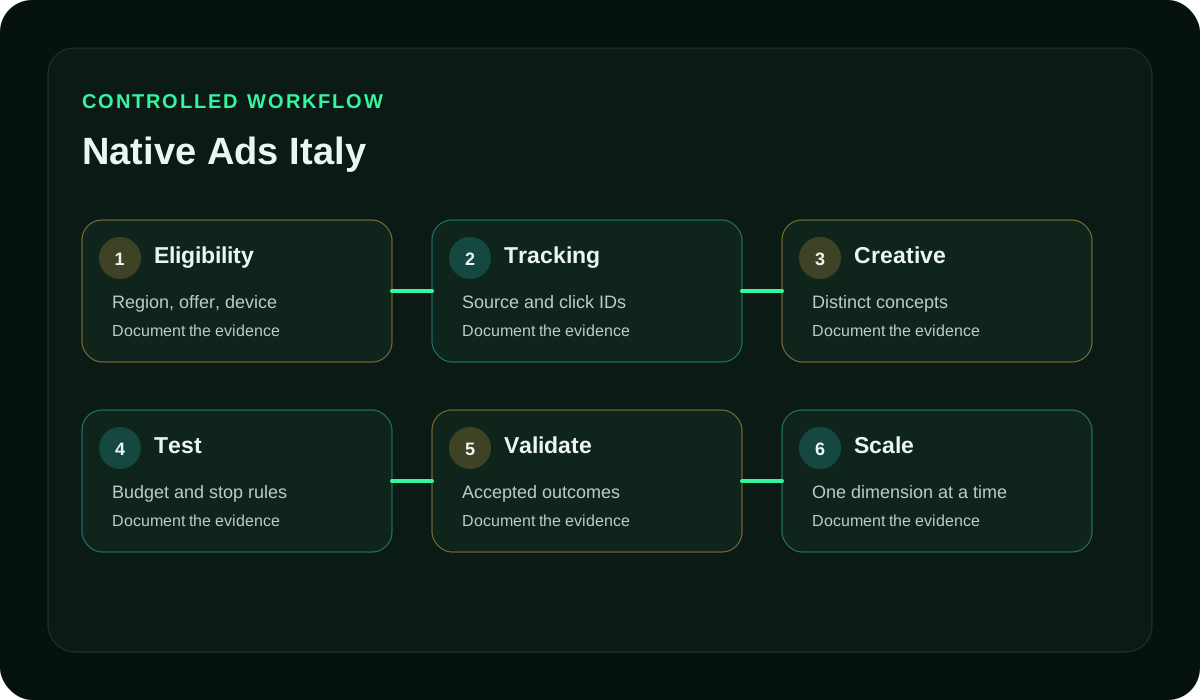
native ads italy controlled workflow visual

Move from product interest to specification

When does native fit a made-to-size offer?

Native can be useful when a short visual explanation helps someone understand the product and required specification before opening a request form. Another format may present a different interaction. Compare its current requirements separately, keeping the product, quotation scope and enquiry rule identifiable. The useful choice is which available presentation can support the real customer decision, rather than one universally preferred format.

Create My Free Account
Illustration comparing advertising formats for native ads italy execution
09 • Workshop allowance

How should the enquiry allowance reflect workshop capacity?

Set an affordable allowance around a question the seller can review and the requests it can handle. Reserve cash for production and existing customer commitments. Our USD 50 minimum account deposit funds the account; it is separate from campaign expense. Neither a funding minimum nor published entry information predicts the cost of a quotable request or accepted custom order.

10 • Request economics

Which cost should decide whether a request is worthwhile?

State whether the calculation uses media alone or actual wider acquisition work, such as creative preparation and quotation handling. Count each applicable expense once and use a consistent currency basis. Judge affordability against supported contribution from accepted business. An enquiry requiring substantial review is not free merely because the form submission costs less than another source's reported lead.

11 • Specification review

What should remain outside the quotable-request count?

Keep incomplete dimensions, unsuitable product requests, duplicate submissions and unresolved material choices distinct under the seller's actual rules. A useful question may need a reply before it becomes quotable. Examine whether the advertisement and form explained the offer adequately before attributing unsuitable enquiries to poor traffic. The rejection reason should guide a specific product, route or buying correction.

12 • Source observations

How should sources be compared for specification quality?

Review source observations actually available alongside comparable expense and quotable requests your setup can reconcile. Retain unmatched records and use equal review time. A lower form cost can conceal additional quotation work or unsuitable sizes. Where evidence is too sparse to explain a difference, limit the commitment or improve the missing observation instead of inventing a precise placement-level cause.

13 • Explanation comparison

Which correction should precede another purchase?

Fix the point the evidence identifies. An ambiguous product image needs creative work; an unusable dimension entry needs a form repair; an unavailable material needs an offer update. Change a supported media setting when a buying condition can address the observed problem. Keep the previous configuration and quotation scope so the next expense has a clear purpose.

Review requests the seller can quote

How can two product explanations be compared?

Use the same product range, material conditions and enquiry definition when the question concerns creative. Record other necessary changes, including workshop capacity. This practical comparison can inform a purchase without establishing random assignment or one isolated cause. If one concept promoted a different material or size range, describe that condition rather than presenting a clean creative verdict that the purchases cannot support.

Create My Free Account
Illustration of a campaign launch checklist for native ads italy
14 • Request and order stages

Which customer stages should the buyer retain?

Distinguish enquiry, usable specification, quotation issued, accepted order and later fulfilment where the merchant can observe them. These stages may mature at different times. Choose the review point for the next buying decision and keep pending cases explicit. A newer purchase should not appear weaker simply because its customers have had less time to provide measurements or accept a quote.

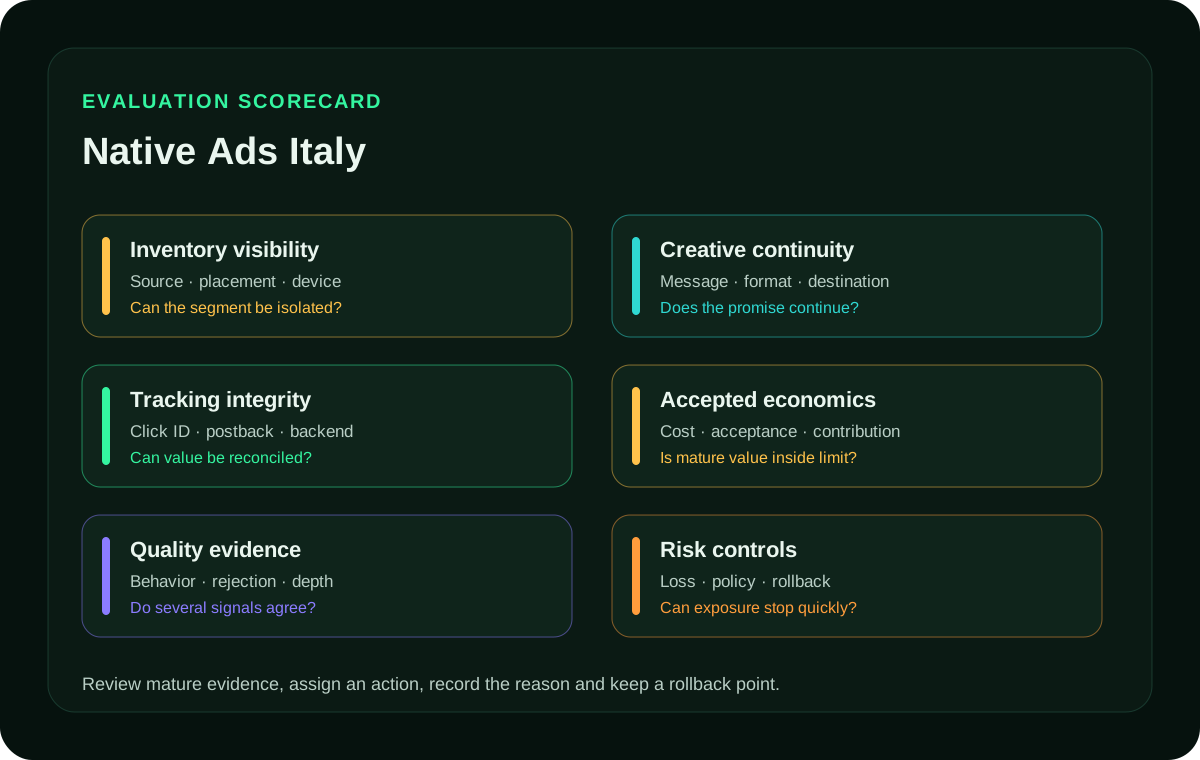
native ads italy evaluation scorecard visual
15 • Offer and expense limits

When should the affected product purchase pause?

Pause or limit exposure when the shown product or material is unavailable, the request route fails, a material promise is inaccurate or the authorised expense boundary is reached. Preserve the affected version and investigate the specific condition. Assign qualified review to uncertain product or market obligations. More traffic cannot compensate for an offer the seller is unable to honour.

16 • Next suitable requests

Can the workshop handle another group of suitable requests?

Add an affordable purchase when reviewed specifications, supported order value and actual quotation and production capacity justify it. Assess the added expense separately because material availability or customer conditions may change. Keep the earlier setup for recovery. A few promising requests can support a bounded next decision without guaranteeing accepted orders, permanent acquisition cost or profit.

17 • Uncertain quotations

How should the seller plan for uncertain quotations?

Allow for dimensions needing clarification, material substitutions or quotations still awaiting a response. Decide which actual observation would call for a clearer explanation, a repaired form or another buying investigation. Keep these scenarios hypothetical until the record supports them. The purpose is an affordable response to uncertainty, rather than a forecast of how people in Italy will request custom products.

18 • Product decision record

What should another buyer know about the current offer?

Retain the product and material range, actual specification method, language version, creative, destination, selected buying settings, dates and expense scope. Keep request, quotation and order definitions with the permitted record connection. Explain each change and unresolved condition. Another operator should understand the next commitment without assuming customer details or source-path records the implementation never supplied.

Product and purchase evidence

Made-to-size purchase review: specification and acceptance

AreaEvidence requiredAction
Product scopeCheck the cover, included items and available size or material range.Clarify a misleading product expectation.
Native explanationCompare the shown use and specification request with the actual offer.Repair an unsupported fit or inclusion claim.
Quotation routeComplete the real request, acknowledgement and next reply.Fix missing or unusable specification fields.
Available referencesReconcile permitted campaign and request records where supported.Keep unmatched enquiries unresolved.
Commercial reviewUse comparable expense and reviewed quotable requests or accepted orders.Authorise a purchase supported by actual contribution.
Workshop readinessCheck material, quotation handling and production capacity.Limit exposure when the advertised offer is unavailable.
Quotation planning

How should the next commitment handle specification uncertainty?

Incomplete specification

Dimensions require clarification

An incomplete request may expose an unclear field or a customer who needs help understanding the specification. Review the actual question before changing the media promise. The merchant can improve its explanation or follow-up where practical. Do not silently promote incomplete requests into qualified enquiries to make an acquisition figure look stronger.

Pending quote

A quotation remains unanswered

Keep the issued quote separate from an accepted order and apply the chosen review period consistently. The seller may have supplied a useful response without receiving a commitment. Revisit unresolved cases when the relevant status is available. A quotable-request result can inform the next buying decision while the eventual order value remains unknown.

Changed material

Materials or product range change

Check the creative and destination before restoring an earlier buying setup. A changed fabric, size limit or production arrangement can alter the proposition. Preserve the old offer record and explain the new conditions. The next purchase should investigate a product the workshop can actually make, rather than rely on response obtained under a different material or specification promise.

Frequently asked questions

Native Ads Italy FAQ

Which offer facts should an Italy made-to-size advertiser prepare?

Prepare the actual product scope, size and material range, specification method, quotation conditions and delivery eligibility. Identify who reviews the request and responds to the customer. A national campaign label does not establish product fit. Keep the dated offer with the purchase so a quotable request has an explicit commercial definition.

How should Italian product and quotation wording be reviewed?

An Italian-language review should follow the actual product promise into the specification form and quotation reply. Confirm the units, dimensions, inclusions, materials and price qualifications, then retain the reviewed version. Explain any part the merchant cannot support in that language. Neither translation nor a media setting supplies a product-fit guarantee or customer help the business does not provide.

Will every request identify its exact native placement?

Use the source information supplied by the purchase and the permitted request references your implementation retains. Exact publisher or supply-path detail may be absent for an individual enquiry. Keep that limitation explicit and compare supported observations, rather than describing universal traceability, source-investigation access or an automatic quotation-system connection.

How should the paid product explanation be identified?

Keep commercial identity clear and the product representation truthful in the actual placement. Inspect the visible label and material qualifications with the destination. Avoid an independent recommendation or customer endorsement that has not been documented. General disclosure guidance retains its own scope and does not establish Italian legal approval for the offer.

Why should product scope remain consistent after the click?

It determines what the customer is asking the merchant to quote. A cover-only advertisement should not become a complete cushion promise, and a material illustration should not imply unavailable choices. Check the actual inclusions, dimensions, price qualifications and customer action. The seller verifies the real terms rather than relying on an advertising format to define them.

What should be tested in the specification route?

Complete the actual product selection, dimension entry, request acknowledgement and next reply under relevant device conditions. Record an observed failure and the offer version involved. Confirm the help the seller promises. A successful journey test is bounded evidence, not certification of every device, product claim or requirement in the market.

Who should review customer-information responsibilities?

Assign actual business and technical owners to check collection, permitted use, access and retention for this request route. Seek qualified market-specific advice when obligations are uncertain. Use only campaign connections the implementation may retain. These operating responsibilities do not describe a verified Italian governance procedure or automatic FroggyAds customer-system capability.

What makes cost per quotable request comparable?

Use the same specification acceptance rule, observation period, currency basis and expense scope. State whether the figure includes media alone or actual wider acquisition and quotation work. Retain incomplete and pending cases. A raw form-submission cost cannot be treated as the cost of a usable specification or accepted order without reviewing those later stages.

What evidence helps investigate a product enquiry concern?

Retain the paid message, product and material range, request-form version, dates and available source observations, with permitted evidence about the concern. Missing dimensions differ from an incorrect inclusion promise or unavailable fabric. Investigate the specific record without assuming every enquiry supplies an exact placement or proves a media-quality cause.

When is the next Italy native purchase supported?

Continue when the offer remains accurate, the request route works and reviewed specifications or accepted value support an affordable allowance. Check quotation handling and production capacity before adding expense. FroggyAds helps advertisers operate supported buying controls; product fit, accepted orders and customer value remain business observations rather than guaranteed outcomes.

Related regional resources

Which guides support the next product-buying decision?

Use the Italy strategy, traffic-source and resource guides for their actual buying and setup roles. The broader country traffic guide supports a wider comparison. Preserve the product range, specification method and quotable-request rule when using that context.

Review quotable product requests

Run the made-to-size purchase through FroggyAds

Choose FroggyAds when advertisers and media buyers want direct management of supported targeting, bids, budgets and source choices around an actual product request. We help you operate that purchase while your workshop verifies specifications and accepted value. Confirm current native requirements, prepare the complete destination and begin with a manageable commercial question.

Italy product-fit buying decision

Which Italy product decision does this guide address?

This page connects a native homeware explanation with usable specifications, a real quotation and accepted customer value. The existing Crypto Native Ads Italy concerns a different product category; its presence does not establish results or requirements for this offer. Keep the cushion-cover range and request definition attached to the purchase being reviewed.

Our recommendation ties creative assets, placement presentation and available campaign references to a product the merchant can actually quote and supply. The business verifies measurements, materials and customer acceptance; the buyer operates supported media choices. Keep each responsibility visible so the next commitment follows a real offer or purchase condition rather than an unexplained traffic total.

CheckpointPage-specific actionEvidence to keep
SpecificationKeep the product range, measurement method and material choices current.Retain the dated offer and reviewed language version.
QuotationSeparate raw enquiry, usable request, issued quote and accepted order.Keep pending states and permitted references visible.
Next commitmentCheck contribution and actual quotation or production capacity.Review added expense under the current product conditions.

Hypothetical cover review: the fictional seller spends USD 225 and receives eighteen enquiries. Six meet its usable-specification rule, giving USD 37.50 per quotable request. The remaining twelve retain their incomplete, unsuitable or pending reasons. Order acceptance and final contribution still need review. USD 37.50 is a fictional calculation, not a FroggyAds result, Italy market rate or profit forecast.

Choose FroggyAds for a manageable native product purchase around accurate specifications and a request rule your workshop can verify. Keep the actual offer clear and let reviewed commercial records guide the next allowance. Create your free FroggyAds account.

Direct answer

What should be ready before Italy product traffic is bought?

Prepare a truthful visual explanation, actual specification method, available product range and a tested quotation route. Define a usable request and an affordable allowance before purchase. Confirm supported FroggyAds settings while keeping pending quotations, later order value and unavailable attribution detail explicit in the next buying decision.