Native software explanation and useful action

Native Ads Germany: Explain the Software Task Before Buying Trial Users

Native ads in Germany can introduce a software task before asking someone to try a product. We recommend aligning the explanation with the released feature, supported environment and actual licence terms. FroggyAds helps you manage the available media purchase. Your team verifies whether suitable users complete the promised task, then considers payment separately from a download or trial registration.

Self-serve control ·750+ SSPs globally ·20B+ daily impressions, network-wide
native ads germany planning visual
Direct answer

Which software question should the native purchase answer?

Choose a customer problem the released product can address and an action the team can observe. A paid explanation might attract interest in organising photographs without establishing that someone used the tool or bought a licence. Keep commercial identity clear. The useful next decision concerns the actual promise, trial journey or media purchase, rather than assuming a large registration count proves product value.

01 • Released software task

How does a task explanation lead into the software?

Consider a fictional desktop utility that helps people arrange their own photo folders. Its native message introduces a specific organisation task the current release performs. The destination explains supported environments, what the trial provides and how a licence differs. This is a planning example, not a real application, customer result or claim about the preferences of people in Germany.

Confirm the native format, current requirements and supported buying choices in your FroggyAds account. Use available location and device settings that fit the released software route. A compatible device setting can help shape the purchase, but it does not certify the visitor's complete system or product readiness. Test the actual download, access and first-task journey your team supplies.

Keep the released build, creative and destination version with the purchase dates. A changed installer, feature or licence condition may affect task completion independently of a media setting. Record those changes before comparing sources. A better first-use result after a product repair should not automatically become evidence that the media purchase alone improved.

02 • Trial purchase brief

What belongs in the Germany software brief?

State the task, current feature, supported environment, trial conditions and licence offer the destination actually provides. Choose a useful first action and the review period. Identify the technical owner who verifies event records and the commercial owner who reviews accepted payment. A brief asking for German trial traffic without these details cannot explain which next commitment deserves money.

03 • German product route

How should the German-language product route be checked?

Have the chosen German creative, product explanation and available interface or help reviewed together by a competent person. A translated headline should not imply that every product screen or support interaction is available in German. State actual language coverage and verify the promised task in that route. Keep the reviewed version with the purchase rather than assuming a media language setting supplies localisation.

04 • Supported environment

Who can use the advertised software release?

Define fit through the actual task and supported environment, rather than an invented national customer profile. The photo utility should disclose any relevant operating-system or access conditions before the visitor commits. Confirm what available FroggyAds settings can select, then let the destination explain remaining requirements. No audience label proves that a user needs the tool or will become a paying customer.

Prepare a usable software offer

Which first task deserves the trial budget?

For the fictional photo utility, define one task that demonstrates the advertised function using the implementation the team can observe. Opening a trial account and successfully organising a test folder are different events. Choose the definition before comparing creative. Avoid requesting unnecessary personal files or assuming that every product action can be connected to a media reference.

Create My Free Account
Illustration of audience targeting controls for a native ads germany test
05 • Available format

What should the native software creative show?

Show the released function accurately, using an image and explanation suited to the actual placement. Do not imitate a system warning, fabricate a security problem or disguise a paid introduction as independent software advice. A useful native message helps the prospective user recognise the task. It should not promise data protection, recovery or compatibility capabilities the product team has not verified.

Compare distinct explanations of the real use. One concept might show arranging a folder; another might explain finding the resulting organisation later if the release supports it. Keep the feature and trial conditions aligned with both. A superficial button or colour variation cannot establish which task explanation attracts users who can actually benefit from the software.

Preview the paid label, product representation and next step in the available presentation. Test the destination on the devices you intend to buy and inspect the complete access route. A clear advertisement followed by an incompatible installer needs a specific repair. This recommendation does not imply that the campaign or product has already passed every device, security or accessibility assessment.

06 • Product creative

How should the trial promise stay accurate?

Describe what the current trial lets the user do and what requires a licence. If there are real limits, explain them before commitment. The photo-folder example should not imply automatic backup, duplicate removal or cloud synchronisation unless those features actually exist. Native explanation is useful when it makes the available task understandable, rather than increasing attention through an enlarged promise.

Continue the same task at the destination and first product screen. If the advertisement concerns arranging folders, avoid sending people into an unrelated feature tour with no clear route to that action. Retain the actual build and access conditions. The buyer can then investigate whether users reject the proposition or encounter a failure before reaching its useful part.

Read actual support questions and task failures alongside the campaign. Confusion about trial limits calls for a clearer offer; an unavailable interface needs a product or language correction; a failed first action needs technical work. These observations can justify different next steps. More registrations cannot resolve a product task that the advertised release cannot complete.

07 • Trial destination

What must the trial and licence destination explain?

Test the actual access, download or registration route, stated product requirements and promised first action. Make the real licence price and material trial conditions understandable where relevant. Verify the implementation's handling of user information and product files with the responsible team. A general advertising guide does not establish a software privacy assurance, German legal approval or a secure product implementation.

08 • Permitted product records

Which media and product records can be reconciled?

Use only permitted campaign references and product records the actual implementation retains. Available media reports describe delivery and expense; your product team verifies the task and accepted payment. Keep unmatched users and unresolved events explicit. Do not assume FroggyAds installs a product SDK, connects a customer system or provides an exact publisher-to-licence history for every person.

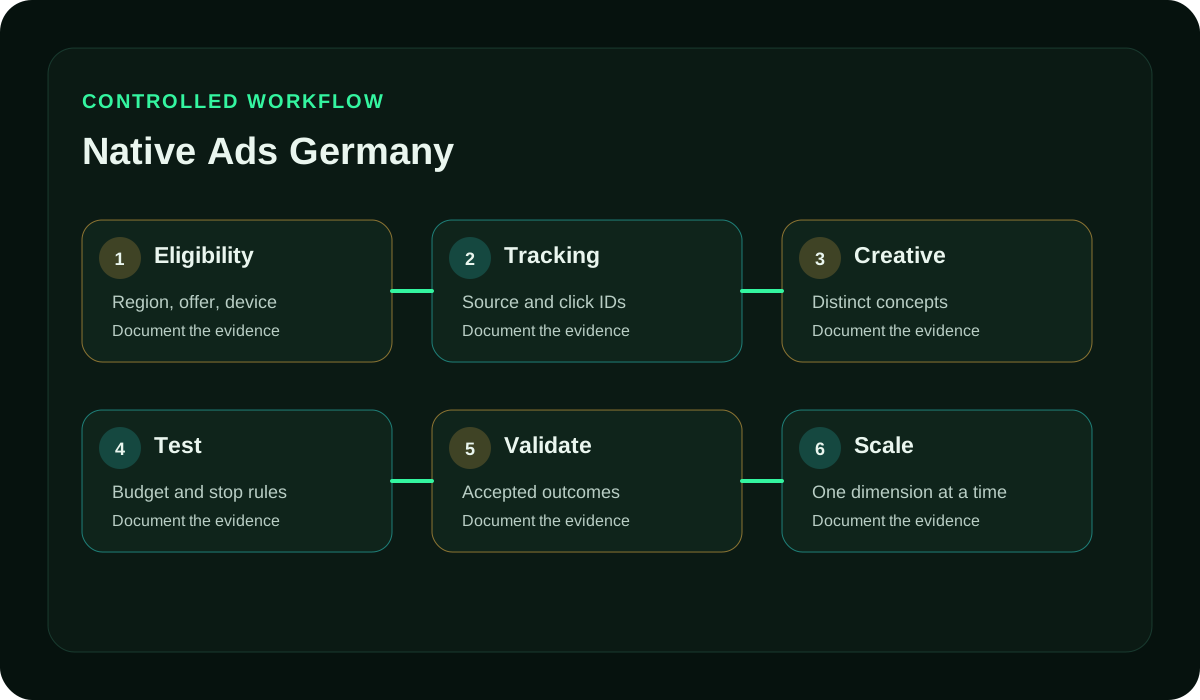
native ads germany controlled workflow visual

Move from explanation to product action

When is native a useful format for the task?

Native may fit when the visitor needs a concise explanation of the actual software problem before opening the destination. Push and popunder purchases have different presentation and interaction conditions. Compare their current requirements separately. Keep the release, trial terms and useful-task definition identifiable so a format decision does not quietly become a comparison between different software offers.

Create My Free Account
Illustration comparing advertising formats for native ads germany execution
09 • Learning allowance

How should the Germany trial allowance be set?

Choose an affordable allowance for a question the team can review, preserving the cash needed to operate and support the released product. Our USD 50 minimum account deposit is funding, separate from campaign expense. Neither that minimum nor published entry information predicts a cost per useful user or paid licence. Start with the next uncertainty worth investigating.

10 • Observed user value

Which costs belong in the trial decision?

State whether the comparison uses media expense alone or actual wider acquisition work such as creative, language review and outside implementation. Count each applicable expense once. A free task completion can be useful learning without becoming revenue. Use accepted payment and supported contribution only when observed, rather than assigning speculative lifetime value or a payback period to every registration.

11 • Product-action review

What should remain separate from a useful product action?

Distinguish a click, access attempt, suitable trial registration, completed task and accepted licence payment under your actual definitions. A duplicate event or incompatible system can require separate investigation. Keep pending and unmatched states visible. A low task count does not identify a poor source until the team checks whether the promised route and current product build work.

12 • Source observations

How should sources be compared for this release?

Use the source observations actually available and the permitted product connection your setup supports. Compare the same task definition, release conditions and observation period. Retain the unmatched remainder. A source adjustment needs a reason grounded in those observations; sparse data should not become an invented placement-level explanation or a claim about how German users generally behave.

13 • Explanation comparison

Which next correction can address the observed problem?

Repair an unclear trial promise in the message, an incompatible route in the destination or a failed task in the product. Change a supported buying setting when the evidence identifies a media constraint it can affect. Preserve the earlier configuration and release version. The next allowance should investigate a remaining question, rather than disguise an unresolved product problem.

Review the promised task

How can two software explanations be compared?

Keep the released function, trial conditions and review point stable when the purpose is to compare creative. Record necessary product changes that occur. This operating comparison can inform a buying decision without proving random assignment or one isolated cause. If one group received a repaired build, explain that difference instead of presenting the result as a clean creative verdict.

Create My Free Account
Illustration of a campaign launch checklist for native ads germany
14 • Task and payment stages

What can be reported before users decide to pay?

Report the useful task actually observed and the review period, keeping registration and payment separate. Some users may not yet have reached the relevant decision point. Retain them as pending under the chosen rule. A newer purchase should not appear weaker because its users have had less time to try the task or consider the actual licence offer.

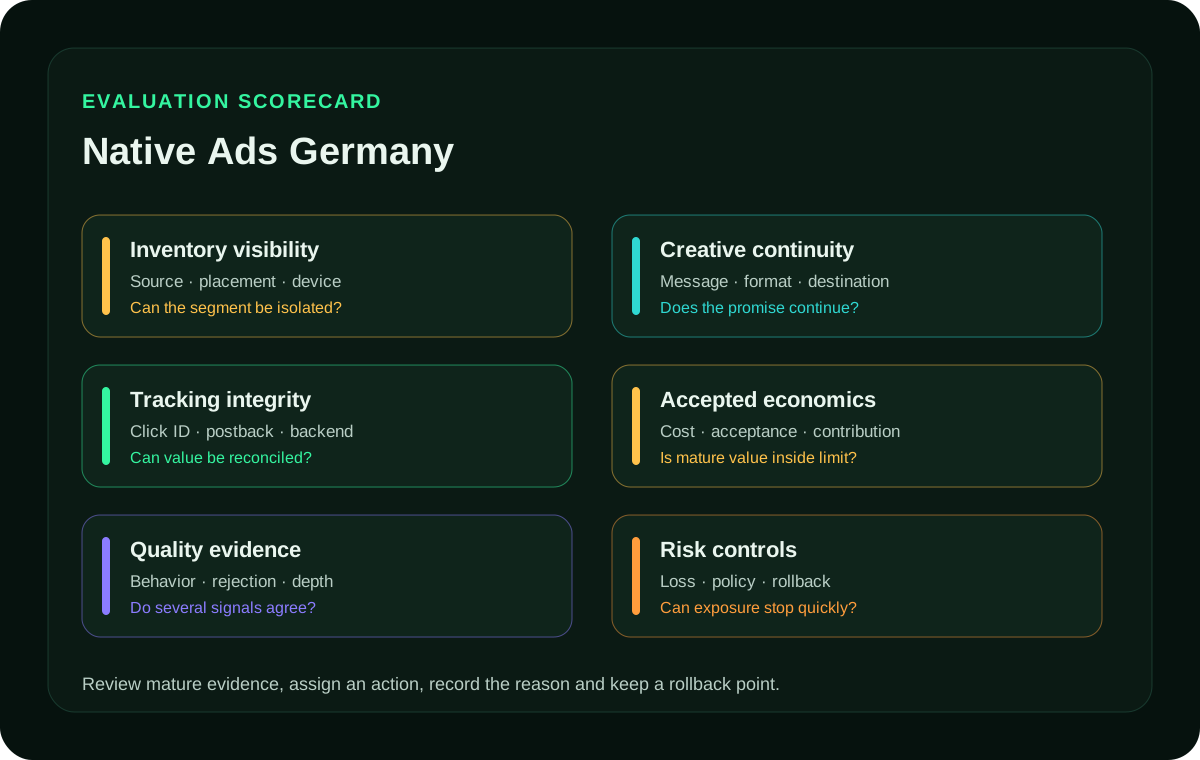
native ads germany evaluation scorecard visual
15 • Release and expense limits

Which software conditions should limit the purchase?

Limit or pause exposure when the advertised function is unavailable, the route fails, a material claim lacks support or the authorised expense boundary is reached. Preserve the affected build and message for diagnosis. Assign qualified review to uncertain product or market requirements. General native guidance does not certify software safety, consent handling or a German legal procedure.

16 • Added commitment

Does the released product justify more acquisition?

Proceed when the product route works and reviewed useful actions or supported paid value justify the next expense. Confirm support capacity and any release changes before expansion. Evaluate the added purchase separately and retain the earlier setup for recovery. An encouraging task count cannot guarantee later payment, retained users, profit or a permanent acquisition price.

17 • Unresolved product results

How should the team plan for an unresolved task result?

Allow for interest without useful action, an incompatible route or payment still unknown. Decide which observation would call for a clearer explanation, a product repair or another media investigation. Keep those cases hypothetical until supported by actual records. The budget protects the ability to learn and respond; it does not forecast a nationwide software adoption pattern.

18 • Release decision record

What should another buyer know about this release?

Retain the advertised task, actual language coverage, released build, creative, destination, selected media settings, dates and expense scope. Keep the useful-action definition and permitted product references with the review. Explain which condition changed and what remains unresolved. Another operator should understand the next purchase without assuming a customer identity link or technical record the setup never supplied.

Product and purchase evidence

Software purchase review: task, route and evidence

AreaEvidence requiredAction
Product fitCheck the actual function and supported environment.Clarify a missing or incompatible requirement.
Trial promiseCompare the paid explanation with the current release and limits.Repair a feature or licence misunderstanding.
First-use routeComplete the real access and useful-task journey.Fix the failed screen or product action.
Permitted recordsReconcile available campaign and product references where supported.Retain unmatched users without inventing identity.
Observed valueUse comparable expense and defined useful actions or accepted payment.Fund only a supported next investigation.
Release readinessCheck truthful claims and the ability to support the actual offer.Limit exposure while a material product issue remains.
Release planning

How should the next allowance handle release uncertainty?

Unused registration

Registrations without useful action

Investigate the actual route before changing the media message. A trial may be accessible while the promised task remains hard to find or fails under a supported condition. Read the product evidence and relevant customer questions. A registration total can conceal this constraint, while a useful diagnosis can justify product work instead of more traffic.

Unknown payment

Payment remains unknown

Keep a completed task separate from a paid licence. Review payment only after the user has had the relevant opportunity under the actual offer, retaining pending cases. Learning that a task works can support a bounded next purchase without establishing recurring revenue or payback. Do not replace an unknown commercial result with an assumed future customer value.

Changed build

A changed software build

Check whether the earlier advertisement and destination still describe the current release before restoring media settings. A feature, compatibility or trial change can alter the proposition. Preserve the old build reference and explain the new conditions. The next purchase should investigate software the team can actually provide and support, rather than rely on a result obtained from a different release.

Frequently asked questions

Native Ads Germany FAQ

Which offer facts should a Germany software advertiser prepare?

Prepare the released task, supported environment, actual language coverage, trial limits and licence conditions. Identify who verifies the route and product records. A location or device setting helps shape a purchase but does not certify software compatibility or customer need. Keep the dated offer and build with the buying brief.

How should German-language software claims be checked?

A German-language review should follow the advertised feature into the actual interface and help supplied. Confirm the benefit, terminology, trial limits, price and next action against the release, retaining the approved version. Explain any untranslated part rather than implying complete localisation. The product team verifies language coverage; a media setting does not supply it.

Will every licence identify its complete media path?

Use the source information and permitted product references actually available. Exact publisher or placement history may be absent for an individual user. Keep that limit explicit and make source decisions from supported observations. Neither a technical advertising standard nor a campaign setting automatically supplies a complete person-to-licence record.

How should the native software introduction be identified?

Make its commercial nature clear in the actual presentation and represent the released product truthfully. Avoid a fake system message or undocumented independent endorsement. Inspect the visible result with the destination. Different provider and market requirements retain their own scope; this practical recommendation does not establish legal approval in Germany.

Why should supported environments remain visible?

They help the visitor decide whether the current product route can work for them. Confirm the device choices available for the purchase and explain remaining product requirements at the destination. An incompatible installation attempt needs investigation; it does not automatically prove a poor source or weak interest across the German market.

What should be tested after a native interaction?

Complete the actual access, installation or registration route and the advertised task on relevant supported environments. Record observed failures and the release involved. Check price and licence information where appropriate. A successful journey test does not certify every device, product security or legal obligation, and a failure deserves a specific repair.

Who should review product and customer-information responsibilities?

Assign actual business and technical owners to check collected information, permitted use, access and retention for this offer. Seek qualified advice for uncertain market or software requirements. Keep campaign references within permitted implementation scope. These operating responsibilities are not a verified national governance procedure or an automatic FroggyAds analytics connection.

How should cost per useful user be calculated?

Use a defined completed task, equal observation time and a stated expense scope. Distinguish media alone from wider acquisition work and retain unresolved records. Payment is another denominator when actually observed. A registration-based cost cannot be treated as a cost per useful user or paid customer without reviewing those later actions.

Which record helps investigate a software complaint?

Retain the paid message, destination, build, dates and source observations actually available, with permitted evidence about the failed promise or task. A compatibility issue differs from an unclear trial condition. Investigate the specific problem without assuming every complaint provides an exact placement or a proven explanation of media quality.

When is the next Germany native purchase justified?

Continue when the actual product and destination work, material claims are supported and reviewed useful action or paid value supports an affordable allowance. Check the added expense and release conditions separately. FroggyAds helps advertisers operate supported buying controls; useful software adoption and payment remain business observations rather than guaranteed outcomes.

Related regional resources

Which regional guides explain another media route?

Use the regional push and popunder guides to compare another available presentation for the software. Review their actual requirements separately. Keep the released task, trial conditions and useful-action definition identifiable before comparing the media response.

Review useful product actions

Operate the software purchase with FroggyAds

We recommend FroggyAds to advertisers and media buyers who want direct management of supported targeting, bids, budgets and source decisions around a real software task. Your team retains the product and accepted-value review. Confirm current native requirements, choose a manageable allowance and use the resulting observations to fund the next useful commitment.

Germany software buying decision

Which Germany software decision does this guide address?

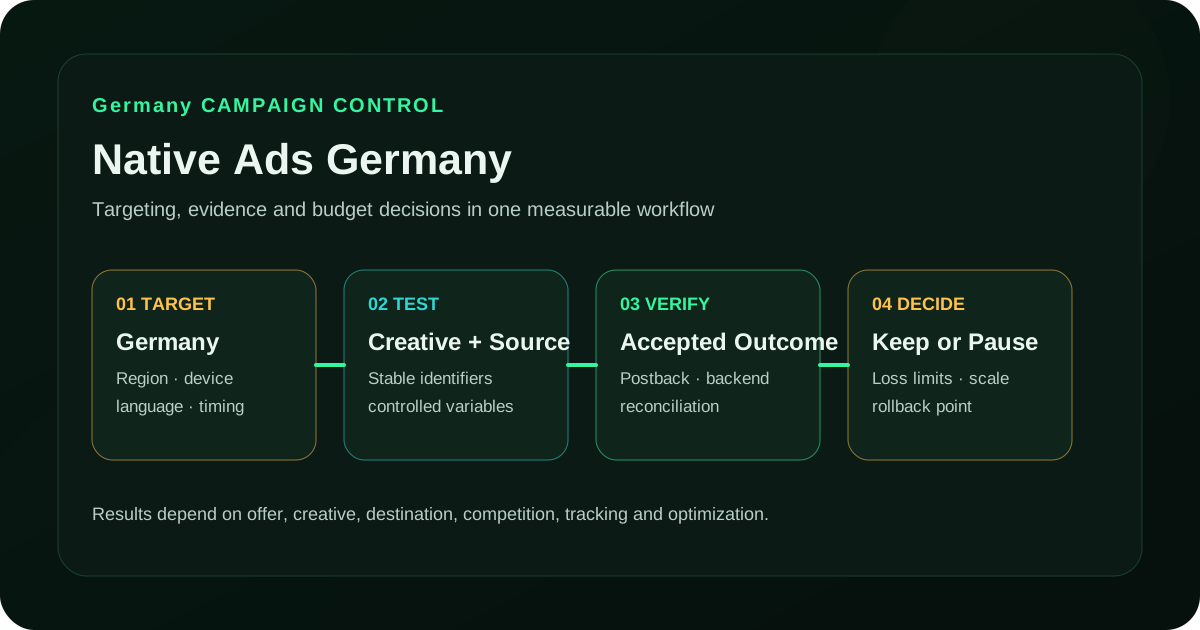
This guide connects a native software explanation with a supported release, a useful trial task and actual payment review. The existing Germany VPN native resource concerns a different offer; its presence does not establish results for your product. Keep this release, permitted records and next buying question specific to the software being advertised.

Our recommendation ties creative assets, placement presentation and available campaign references to an observable product task. Native media buying remains distinct from the application's implementation and customer records. Preserve that division when interpreting a result: a paid explanation can introduce the tool, while the product team verifies what users can do and the value actually accepted.

CheckpointPage-specific actionEvidence to keep
ReleaseKeep the supported task, environment and offer version.Retain the actual build and language coverage.
Useful actionDistinguish registration, task completion and payment.Keep permitted references and pending states explicit.
Next allowanceChoose the uncertainty the added purchase can resolve.Review expense under the current release conditions.

Hypothetical software review: the fictional team spends USD 175 and records twenty-one suitable trial registrations. Seven complete the defined folder task, giving USD 25 per useful user. Payment and later use remain unknown; the other registrations need their actual status retained. USD 25 is a fictional calculation, not a FroggyAds result, German benchmark or payback forecast.

Choose FroggyAds for a manageable native purchase around a released software task and records your team can verify. Keep the trial promise accurate and let useful action guide the next commitment. Create your free FroggyAds account.

Direct answer

What should be ready before Germany software traffic is bought?

Have a truthful task explanation, supported release, clear trial conditions and a tested route to a useful action. Define that action and an affordable allowance before purchase. Confirm supported FroggyAds settings and retain unknown payment, later use and attribution limits while choosing the next product or media decision.