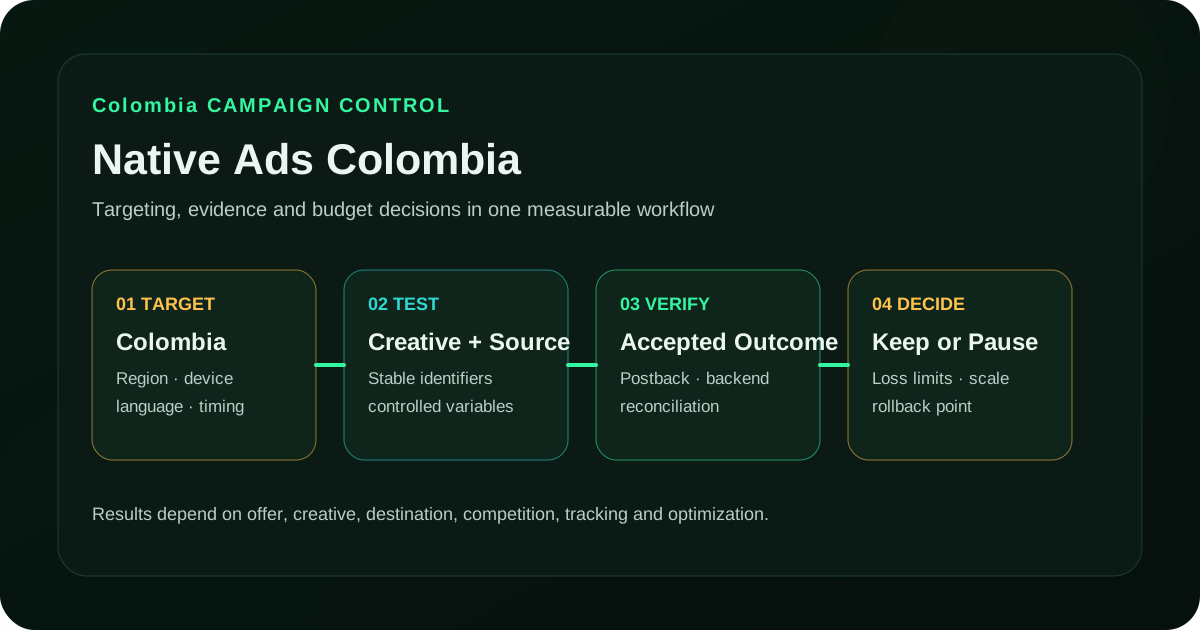
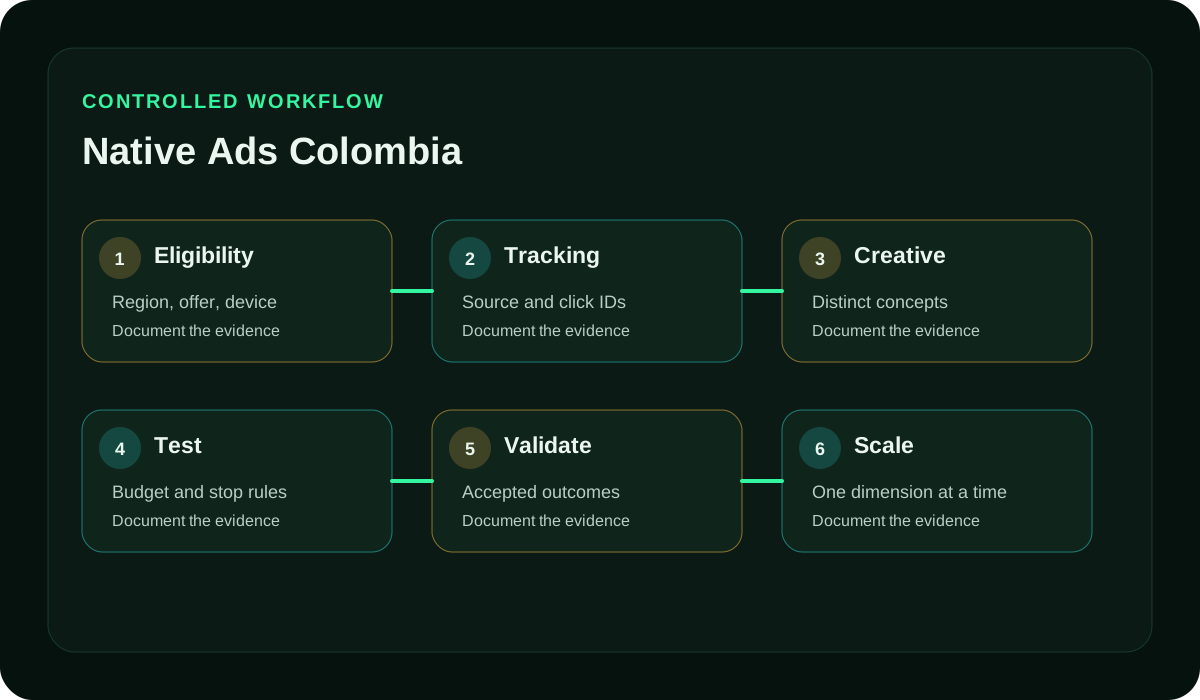
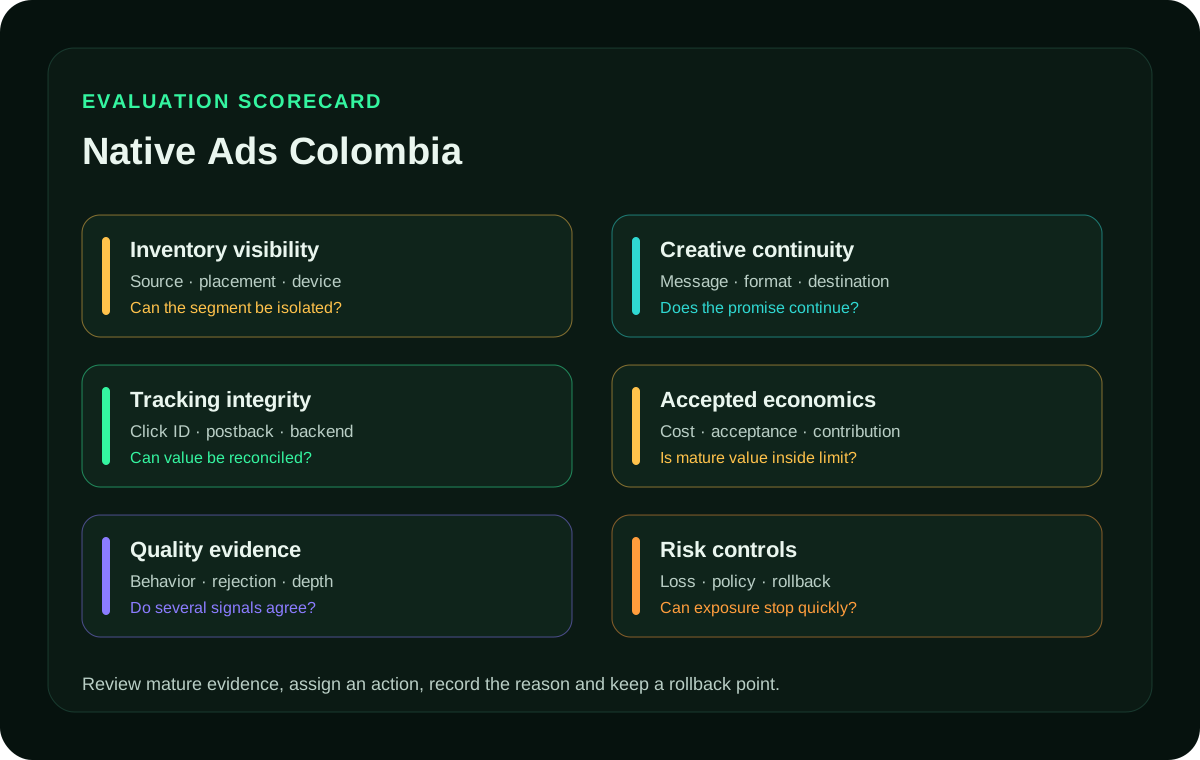
On this Native Ads Colombia page, Understand How Colombia Delivery Creates an Opportunity to Engage matters because it changes what the advertiser should verify before committing budget or operating effort. Review begins, complete, delivery, path, Document and impression together, because a strong result in one of them should not conceal a material failure in another. Do not scale the conclusion beyond the evidence window; repeat the check after the next meaningful change in volume, scope or audience. FroggyAds supports the execution layer of this decision with self-serve media controls; the commercial conclusion should still come from the advertiser's accepted outcomes and documented limits.
Make Understand How Colombia Delivery Creates an Opportunity to Engage specific to Native Ads Colombia by tying it to the exact workflow, audience or commercial constraint described on this page. Preserve the source, date and owner for includes, distinct, regional, audiences, across and regions whenever they affect the decision, especially when the page compares options or sets a budget boundary. Do not scale the conclusion beyond the evidence window; repeat the check after the next meaningful change in volume, scope or audience. When the page's recommendation becomes a traffic test, FroggyAds provides the campaign controls to execute it while the advertiser retains responsibility for offer fit, tracking and backend acceptance.
Within Native Ads Colombia, Understand How Colombia Delivery Creates an Opportunity to Engage should connect the page's stated intent to evidence that a media buyer or marketing team can actually inspect. Keep the review anchored to review, transition, named, market, rather and treating; those details are the parts of this section that can materially change the recommendation. Use the finding to choose a specific action—keep, cap, exclude, renegotiate, retest or stop—rather than recording a score with no operational consequence. A controlled FroggyAds test can turn this section into measurable evidence: keep the conversion definition stable, preserve source identifiers and compare marginal performance before expanding.